Expert Buyer’s Guide: 7 Data-Backed Metrics for Finding the Best PLA in 2026


Abstract
The pursuit of optimal outcomes in fused deposition modeling (FDM) necessitates a nuanced understanding of material selection, particularly concerning Polylactic Acid (PLA). In a market saturated with options, identifying the “best PLA” transcends simple brand loyalty, demanding a rigorous, data-driven evaluation. This analysis establishes a comprehensive framework based on seven critical performance metrics: dimensional accuracy, mechanical properties, printability, thermal stability, high-speed performance, aesthetics, and material purity. An examination of these factors reveals that superior filament performance is a product of manufacturing precision, polymer formulation, and additive integrity. The discourse moves beyond subjective assessments to empower users with the analytical tools needed to correlate material specifications with application-specific requirements. By dissecting concepts such as tensile modulus, melt flow index, and colorimetric consistency, this guide provides a systematic methodology for professionals and enthusiasts to navigate the complexities of the filament market, ensuring the selection of a material that yields predictable, reliable, and high-quality 3D printed objects.
Key Takeaways
- Prioritize filaments with a verified dimensional accuracy of ±0.02mm for reliability.
- Evaluate tensile strength and impact resistance data for functional part requirements.
- Select a filament with a consistent melt flow index to minimize printing failures.
- For high-speed printing, choose a specially formulated PLA to maintain quality.
- The best PLA for your project balances mechanical performance with aesthetic needs.
- Ensure the material is dried properly, as moisture is a primary cause of print defects.
- Use hardened steel nozzles when printing with abrasive, fiber-reinforced PLA variants.
Table of Contents
- Understanding the Quest for the Best PLA
- Metric 1: Dimensional Accuracy and Consistency
- Metric 2: Mechanical Properties and Material Science
- Metric 3: Printability and Flow Characteristics
- Metric 4: Thermal Stability and Environmental Resilience
- Metric 5: High-Speed Printing Performance
- Metric 6: Aesthetic Quality and Color Fidelity
- Metric 7: Material Purity and Additive Integrity
- Frequently Asked Questions
- Conclusion
- References
Understanding the Quest for the Best PLA
The journey into 3D printing often begins with a simple question: which material should I use? For many, the answer is Polylactic Acid, or PLA. It is lauded for its ease of use, low printing temperature, and minimal warping, making it the default choice for hobbyists, educators, and professionals alike. Yet, this apparent simplicity masks a deep and complex reality. The market in 2026 is flooded with countless brands, each proclaiming to offer the “best PLA.” This declaration, however, is profoundly contextual. The best PLA for a mechanical engineer creating a functional prototype is fundamentally different from the best PLA for an artist crafting a detailed sculpture.
To navigate this landscape is to become a student of materials science, to learn that a simple spool of plastic is a marvel of polymer chemistry, manufacturing precision, and thoughtful design. The difference between a flawless print and a frustrating failure often lies in microscopic variations—a deviation in diameter, an impurity in the resin, or a poorly integrated additive. The challenge, then, is not to find a single, universally “best” filament, but to develop a framework of understanding that allows you to select the optimal PLA for your specific application. It requires moving beyond marketing claims and looking at the data, the science, and the subtle characteristics that define a truly high-quality material.
This guide is structured as an intellectual toolkit. We will systematically dissect seven core metrics that define the quality of a PLA filament. Think of this not as a simple buyer’s guide, but as a course in material evaluation. We will explore the physics of polymer flow, the chemistry of color, and the engineering principles behind mechanical strength. Through this process, you will gain the capacity to look at a technical data sheet (TDS) not as a list of numbers, but as a detailed story about the filament’s potential and its limitations. You will learn to ask the right questions of a manufacturer and to interpret their answers with a critical eye, transforming you from a passive consumer into an informed and empowered creator.
The Evolution of PLA: From Basic to Advanced
PLA’s journey is a story of continuous innovation. It began as a straightforward, biodegradable thermoplastic derived from renewable resources like corn starch. Early PLA was known for its printability but also its brittleness and low heat resistance. However, the material landscape of today is vastly different. Polymer scientists and manufacturers have developed an incredible array of PLA-based filaments, each tailored for specific needs.
We now have “PLA+” or “Tough PLA,” which incorporates additives to improve layer adhesion and impact resistance, bridging the gap between PLA and more durable materials like ABS or PETG. There are silk PLAs, which contain elastomeric additives to create a highly glossy, smooth surface finish that is visually stunning. For engineering applications, we see the rise of composite materials, such as carbon fiber-reinforced PLA. These carbon fiber reinforced filaments integrate chopped carbon fibers into the PLA matrix, dramatically increasing stiffness and strength without significantly increasing weight (SigmaFilament, 2026). This allows PLA to be used for applications once reserved for industrial-grade polymers, such as drone frames, jigs, and fixtures.
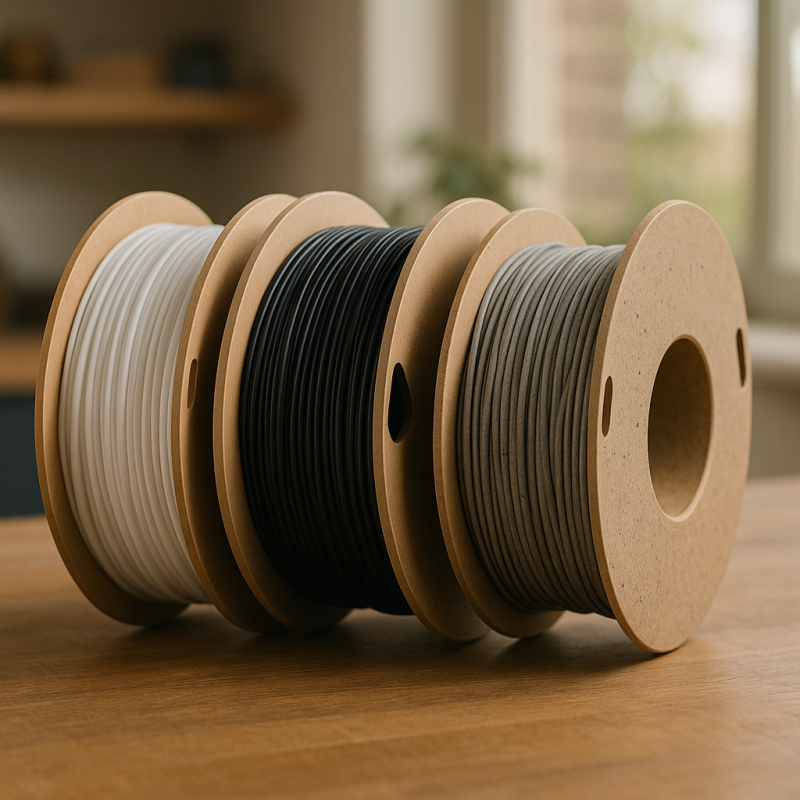
Understanding this diversity is the first step. The term “PLA” is no longer a monolith; it is a family of materials. The table below provides a comparative overview of common PLA variants, helping to illustrate the trade-offs involved in selecting one over another.
| Filament Type | Key Characteristics | Common Applications | Tensile Strength | Surface Finish |
|---|---|---|---|---|
| Standard PLA | Easy to print, rigid, low cost | Prototypes, models, non-functional parts | Moderate | Glossy/Satin |
| PLA+ / Tough PLA | Improved layer adhesion, higher impact resistance | Functional prototypes, mechanical parts | Moderate-High | Satin |
| Silk PLA | Very high gloss, smooth appearance | Vases, decorative objects, sculptures | Low-Moderate | High Gloss |
| Carbon Fiber PLA | High stiffness, lightweight, dimensionally stable | Drone parts, jigs, fixtures, automotive parts | High | Matte, fibrous |
| Wood/Metal Fill PLA | Contains fine particles for a unique finish | Aesthetic models, architectural mockups | Low-Moderate | Textured/Matte |
Metric 1: Dimensional Accuracy and Consistency
At the heart of fused deposition modeling lies a simple principle: a machine extrudes a precise amount of molten plastic, layer by layer, to build an object. The success of this entire process hinges on one fundamental assumption: that the filament being fed into the machine is perfectly consistent. This is where the metric of dimensional accuracy becomes paramount. It refers to how close the filament’s diameter is to its stated value (typically 1.75mm or 2.85mm) and, just as crucially, how little it varies along the entire length of the spool.
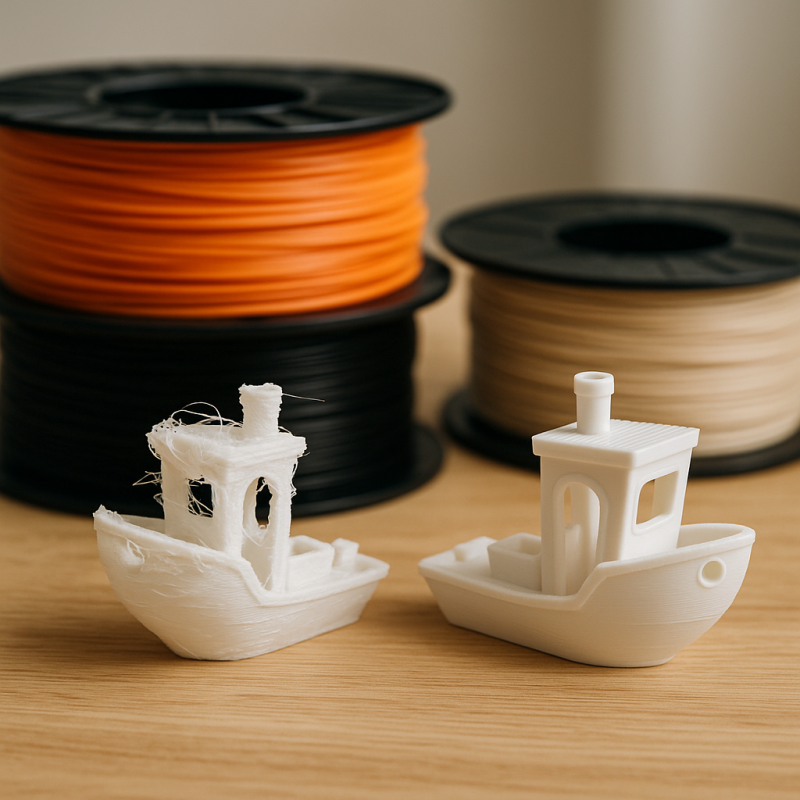
Imagine you are trying to paint a perfectly straight line with a brush. If the bristles of the brush were constantly changing in thickness, your line would become uneven, with thick and thin patches. The same logic applies to your 3D printer’s extruder. It is calibrated to push a specific volume of plastic through the nozzle based on a pre-set filament diameter. If the filament suddenly becomes thicker, the extruder will force too much plastic out, leading to over-extrusion, blobs, and dimensional inaccuracy in your print. If it becomes thinner, the extruder will push too little, resulting in under-extrusion, weak layer adhesion, and gaps in the print.
Why ±0.02mm is the Gold Standard
For years, the industry standard for acceptable filament tolerance was ±0.05mm. This meant a 1.75mm filament could range from 1.70mm to 1.80mm. While functional, this wide tolerance was a hidden source of countless printing headaches. A modern, well-calibrated printer, especially a high-speed one, is highly sensitive to these fluctuations.
The current gold standard, adopted by premium manufacturers, is a dimensional accuracy of ±0.02mm or even ±0.01mm. This seemingly tiny improvement from ±0.05mm represents a monumental leap in manufacturing control and has a profound impact on print quality. A filament with a ±0.02mm tolerance will only vary between 1.73mm and 1.77mm. This narrow band of deviation ensures that the flow rate from the nozzle remains incredibly stable. The result is smoother surfaces, sharper details, stronger layer bonds, and a dramatic reduction in extrusion-related artifacts.
Achieving this level of precision is not trivial. It requires a sophisticated manufacturing process involving dual-axis laser micrometers that continuously measure the filament’s diameter in real-time as it is extruded. This data is fed back into the system, which makes micro-adjustments to the puller speed to maintain a consistent diameter. When a manufacturer guarantees a ±0.02mm tolerance, they are not just selling a product; they are making a statement about their investment in quality control and process engineering.
Ovality: The Hidden Dimension of Inaccuracy
Beyond simple diameter variation, another critical factor is ovality—the measure of how round the filament is. An ideal filament has a perfectly circular cross-section. A poor-quality filament may be slightly oval-shaped. Even if its average diameter is within tolerance, this ovality can cause problems. As the filament rotates while being fed into the extruder, its effective diameter changes, leading to the same inconsistent flow issues as a varying diameter.
Think of it like trying to push a slightly squashed cylinder through a perfectly round hole. It will bind and release, causing uneven flow. High-quality production lines use dual-axis laser measurement to check for both diameter and ovality simultaneously, ensuring the filament is as close to a perfect cylinder as possible. For users seeking the best PLA, especially for demanding applications requiring precision, inquiring about a manufacturer’s control over both diameter and ovality is a sign of an informed consumer. This precision is what separates a merely adequate filament from one that performs with unwavering reliability.
Metric 2: Mechanical Properties and Material Science
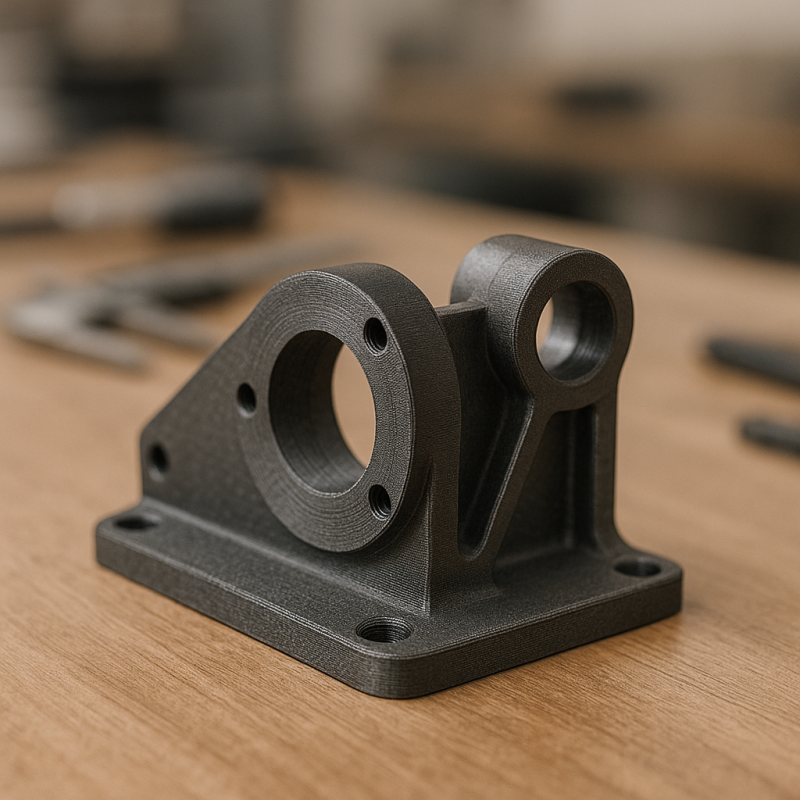
When we move beyond printing decorative objects and begin to create parts that need to perform a function—a bracket that holds a shelf, a gear in a machine, or a protective case for a device—the mechanical properties of the filament become the central concern. A beautiful print that shatters under the slightest stress is ultimately a failure. Understanding the mechanical data of a PLA filament allows you to predict its behavior under real-world conditions and select the best PLA for the physical demands of your project.
The most common mechanical properties provided on a technical data sheet (TDS) are tensile strength, flexural modulus, and impact resistance. These are not arbitrary numbers; they are standardized measurements, typically derived from tests defined by organizations like ASTM or ISO. Learning to interpret this data is akin to learning the language of material performance.
Tensile Strength and Modulus: Resisting the Pull
Tensile strength is perhaps the most frequently cited mechanical property. It measures the maximum stress a material can withstand while being stretched or pulled before breaking. Imagine pulling on a rope from both ends; its tensile strength is the force required to snap it. This is typically measured in megapascals (MPa). A standard PLA might have a tensile strength of around 50-60 MPa. For comparison, this is similar to the tensile strength of some types of aluminum, though the plastic will deform much more before it fails.
However, strength alone doesn’t tell the whole story. We also need to consider the material’s stiffness, which is described by its tensile modulus (or Young’s modulus). This measures the material’s resistance to being deformed elastically when a force is applied. A material with a high tensile modulus is very stiff and rigid; it will not bend much under load. A material with a low modulus is more flexible.
Standard PLA is known for being quite rigid, with a high tensile modulus. This makes it great for parts that need to hold their shape and resist bending. However, this same rigidity is linked to its primary weakness: brittleness. It tends to fail suddenly by shattering, rather than bending or deforming first. This is where engineered PLA variants, like PLA+, come in. They often sacrifice a small amount of stiffness (a slightly lower modulus) in exchange for significantly improved ductility and impact resistance, making them a better choice for parts that might experience sudden shocks or loads.
Impact Resistance: Surviving the Shock
Impact resistance, often measured using an Izod or Charpy impact test, quantifies a material’s ability to absorb a sudden shock or impact without fracturing. This is arguably the most significant weakness of standard PLA. It is a brittle material, meaning it has low impact resistance. If you drop a print made from standard PLA, it is likely to crack or shatter.
This is where the formulation of the polymer becomes critical. Manufacturers have developed impact-modified PLA filaments by blending the base PLA resin with other polymers or elastomers. These additives act like microscopic shock absorbers within the material matrix, allowing the part to absorb energy and deform slightly upon impact rather than breaking. A good PLA+ or tough PLA can have an impact resistance several times higher than that of standard PLA, making it a far superior choice for any part that might be dropped, hit, or subjected to sudden loads. When evaluating a filament for functional use, the impact strength value on the TDS is one of the most important indicators of its real-world durability.
The integration of fibers, like in carbon fiber PLA, also dramatically alters mechanical behavior. The short carbon fibers distributed throughout the polymer act as a reinforcement, much like rebar in concrete. They significantly increase the stiffness (tensile modulus) and tensile strength of the material, making it ideal for high-performance applications where rigidity and low weight are key (sigmafilament.com). However, this often comes at the cost of even lower impact resistance, as the stiff fibers can concentrate stress. This illustrates the fundamental principle of material selection: it is always a game of trade-offs. The best PLA is not the one with the highest number in every category, but the one with the right balance of properties for the intended function.
Metric 3: Printability and Flow Characteristics
A filament may boast world-class mechanical properties and perfect dimensional accuracy, but if it cannot be reliably printed, it is effectively useless. “Printability” is a broad term that encompasses several key characteristics related to how the material behaves during the extrusion process. Central to this is the concept of melt flow, which is the physical transformation of the solid filament into a molten state that can be precisely deposited by the nozzle.
The ideal printing material melts consistently, flows smoothly without requiring excessive force, and solidifies quickly upon cooling to hold its shape. Any deviation from this ideal behavior can lead to a host of common printing problems, including clogging, stringing, and poor layer adhesion. Understanding the science behind these behaviors empowers a user to diagnose problems and select a filament with superior flow characteristics.
Melt Flow Index (MFI): The Heart of Flow
The most direct scientific measure of a polymer’s flow characteristics is its Melt Flow Index or Melt Flow Rate (MFR). This standardized test (ASTM D1238) measures how many grams of a polymer flow through a specific-sized die in ten minutes at a given temperature and pressure. A higher MFI value indicates a lower viscosity, meaning the material flows more easily when molten. A lower MFI value indicates a higher viscosity and a stiffer flow.
For 3D printing, the MFI is a delicate balancing act. If the MFI is too high (the material is too runny), it can lead to oozing from the nozzle when not extruding, resulting in significant stringing and blobbing on the print surface. It can also make it difficult to bridge gaps or print sharp overhangs, as the molten plastic will droop before it has a chance to cool. Conversely, if the MFI is too low (the material is too stiff), the extruder motor has to work much harder to push the filament through the nozzle. This can lead to under-extrusion, extruder gear skipping (a clicking sound), and even complete nozzle clogs, especially at higher print speeds.
A high-quality PLA filament is formulated to have an MFI in a “Goldilocks” zone—not too high, not too low. Manufacturers achieve this by carefully controlling the molecular weight of the base polymer and by using specific flow-enhancing additives. While not all manufacturers publish the MFI of their filaments, those that do are providing a valuable piece of data about the material’s fundamental printability. Consistency in MFI from spool to spool is a hallmark of a top-tier manufacturer, as it ensures that print settings that work for one spool will work for the next.
The Role of Additives and Common Printing Issues
The smooth flow of pure PLA can be significantly altered by the inclusion of additives used to create specialty filaments. These additives are what give materials their unique properties, but they can also introduce printing challenges.
- Stringing and Oozing: This is often caused by a combination of factors, including a filament with a high MFI and improper retraction settings. Retraction is a feature where the extruder motor pulls the filament backward slightly before a travel move to relieve pressure in the nozzle. A good filament is less prone to oozing, making it more forgiving of retraction settings. Some brands like Polymaker and Sunlu are often mentioned by users for their consistent performance in this regard.
- Clogging: Clogs are the bane of every 3D printing enthusiast. They can be caused by heat creep (where heat travels too far up the hotend, softening the filament prematurely), impurities in the filament, or particles from additives. Composite filaments like wood-fill, glitter-fill, or carbon fiber PLA are inherently more prone to clogging because they contain solid particles. For these materials, using a larger nozzle diameter (e.g., 0.5mm or 0.6mm instead of the standard 0.4mm) is highly recommended to provide a clearer path for the particles.
- Layer Adhesion: The bond between layers is what gives a 3D print its strength in the Z-axis. Poor layer adhesion results in parts that are weak and can easily delaminate. This is often a result of printing at too low a temperature, printing too fast, or excessive part cooling. However, the filament’s chemistry plays a huge role. PLA+ formulations are specifically designed with additives that promote better polymer chain entanglement between layers as they cool, resulting in a much stronger bond than standard PLA. Finding the best PLA often means finding one that creates these strong interlayer bonds reliably.
The following table summarizes common issues and connects them to material properties and potential solutions, serving as a quick diagnostic tool.
| Printing Issue | Primary Cause(s) | Material Factor | Common Solutions |
|---|---|---|---|
| Stringing/Oozing | High nozzle temperature, incorrect retraction | High MFI, wet filament | Lower temperature, increase retraction, dry filament |
| Nozzle Clogging | Heat creep, impurities, particulate additives | Inconsistent diameter, large particles | Use larger nozzle, print at correct temp, use quality filament |
| Poor Layer Adhesion | Low temp, printing too fast, too much cooling | Poor polymer formulation | Increase temp, slow down print speed, reduce fan speed |
| Warping/Lifting | Poor bed adhesion, thermal contraction | High thermal shrinkage | Use heated bed (60°C), use brim/raft, use bed adhesive |
| Brittleness | Inherent property of standard PLA | Low impact resistance | Use PLA+ or Tough PLA, anneal the print |
Metric 4: Thermal Stability and Environmental Resilience
A 3D printed part does not exist in a vacuum. It must function within an environment, and that environment includes temperature fluctuations, humidity, and exposure to ultraviolet (UV) light. A material’s ability to withstand these environmental factors determines its long-term viability and durability. For PLA, its primary environmental vulnerabilities are its low thermal resistance and its hygroscopic nature (its tendency to absorb moisture from the air).
Understanding these limitations is not about dismissing PLA as a material, but about using it intelligently. It involves selecting the right type of PLA for the intended environment and taking the proper steps to mitigate its inherent weaknesses. This proactive approach is essential for creating parts that last.
Glass Transition Temperature (Tg): PLA’s Achilles’ Heel
Every amorphous polymer, like PLA, has a characteristic temperature at which it transitions from a hard, glassy state to a soft, rubbery state. This is known as the Glass Transition Temperature, or Tg. It is not a melting point; the material does not become liquid. Instead, it loses its structural rigidity. For most standard PLA filaments, the Tg is quite low, typically around 55-60°C (131-140°F).
This has significant real-world implications. A PLA part left inside a car on a hot summer day can easily reach its Tg. When this happens, the part will soften, deform under its own weight, and be permanently ruined. This makes standard PLA unsuitable for any application that will be exposed to even moderate heat. This is a fundamental limitation of the base polymer.
However, material science offers solutions. Manufacturers have developed “High-Temperature PLA” or “Annealable PLA” filaments. These are special formulations that can undergo a post-processing step called annealing. Annealing involves baking the printed part in an oven at a specific temperature (typically 80-120°C) for a period of time. This process causes the polymer chains to reorganize themselves into a more ordered, crystalline structure. This crystalline structure significantly increases the material’s thermal resistance, often raising its heat deflection temperature to over 80°C or even 120°C in some cases. While this process can cause some shrinkage and requires extra effort, it transforms PLA into a material capable of handling much more demanding thermal environments, making it a contender against materials like ABS and PETG for certain applications.
Hygroscopicity: The Invisible Enemy
Perhaps the most common and least understood cause of printing problems is moisture. PLA is hygroscopic, meaning it readily absorbs water molecules from the ambient air. When a spool of filament is left out in a humid environment, it acts like a sponge, slowly soaking up moisture. This absorbed water has a disastrous effect on the printing process.
When the wet filament enters the hotend, the trapped water instantly boils into steam. This creates tiny, violent explosions of pressure inside the nozzle. The audible signs are often a popping or crackling sound coming from the extruder during printing. The visual results on the print are far worse:
- Poor Surface Finish: The steam bubbles create a rough, inconsistent, and sometimes “fuzzy” surface texture.
- Stringing and Oozing: The steam pressure forces extra material out of the nozzle, leading to excessive stringing.
- Weak Parts: The steam introduces voids and porosity into the extruded plastic, dramatically weakening the material and compromising layer adhesion. The polymer chains themselves can also be broken down by a process called hydrolysis at high temperatures, further degrading the material’s strength.
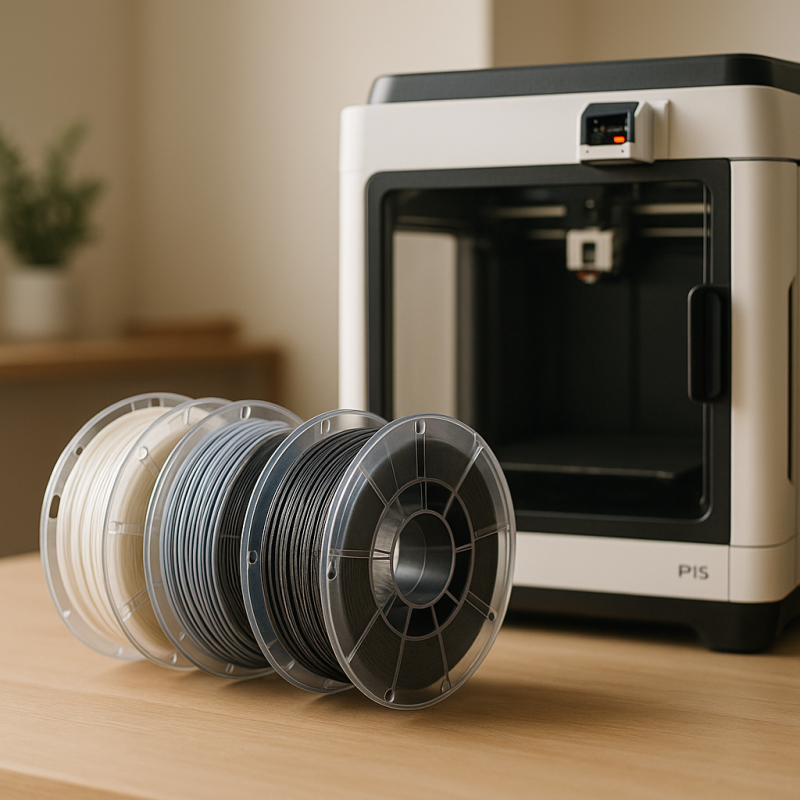
The solution is simple but requires discipline: keep your filament dry. The best PLA in the world will print poorly if it is wet. A brand-new filament spool comes vacuum-sealed with a desiccant packet for this very reason. Once opened, it should be stored in an airtight container or a dedicated filament dry box, ideally with a renewable desiccant. If a spool does become wet, it can be salvaged by drying it in a food dehydrator or a dedicated filament dryer at a low temperature (around 45-50°C) for several hours. This simple step of filament management is one of the most effective ways to ensure consistent, high-quality prints.
Metric 5: High-Speed Printing Performance
The 3D printing landscape was fundamentally reshaped in the mid-2020s by the widespread adoption of high-speed printers. Machines capable of printing at speeds of 300, 400, or even 500+ mm/s became commonplace, drastically reducing print times. However, this leap in mechanical speed created a new bottleneck: the filament. Printing at high speeds places extreme demands on a material, and standard PLA formulations are often not up to the task.
This has spurred the development of a new category of materials: High-Speed PLA. These are not just standard filaments with a new label; they are specifically engineered polymers designed to perform under the intense conditions of rapid extrusion. Selecting the best PLA for a high-speed printer means looking for a material optimized for this demanding application.
The Physics of High-Speed Extrusion
To understand the need for high-speed PLA, consider what happens inside the hotend at high speeds. The printer is trying to push a large volume of filament through the nozzle in a very short amount of time. This creates two primary challenges:
- Melting Throughput: The filament has a much shorter “residence time” inside the melt zone of the hotend. It needs to absorb enough thermal energy to melt completely in a fraction of a second. A standard PLA may not melt fast enough, leading to a semi-molten, highly viscous material being forced through the nozzle. This causes immense back-pressure, which can lead to extruder skipping, under-extrusion, and jams.
- Cooling and Solidification: Once the material is extruded, it needs to cool and solidify almost instantly to hold its shape, especially on sharp corners or overhangs. At high speeds, the print head moves on so quickly that the previously laid line may still be partially molten. This can lead to a loss of detail, rounded corners, and drooping overhangs.
Manufacturers of high-speed PLA materials tackle these challenges through advanced polymer chemistry. To address the melting issue, they often use a base resin with a lower molecular weight and a tailored MFI, combined with thermally conductive additives. These changes allow the filament to absorb heat more quickly and flow more easily with a lower viscosity, reducing the pressure on the extruder. Brands like Polymaker have introduced lines like PolySonic™ specifically engineered for this purpose (Plamadiala et al., 2025).
To solve the cooling problem, they incorporate nucleating agents into the formula. These are microscopic particles that encourage the polymer chains to crystallize and solidify much more rapidly as they cool. This allows the extruded line to “set” faster, preserving fine details and enabling sharp geometric features even at incredible speeds.
Identifying a True High-Speed PLA
In a market eager to capitalize on trends, many brands may simply label their standard PLA as “high-speed.” A true high-speed PLA will typically have specific characteristics and supporting data. When evaluating a filament, look for:
- Explicit Formulation: The manufacturer should state that the filament is specifically formulated for high-speed printing, not just “compatible with” it.
- Higher Flow Rate: The technical data should indicate a higher MFI or explicitly mention “high flow” characteristics.
- Optimized Cooling: Look for terms like “rapid cooling” or “fast crystallization,” which point to the inclusion of nucleating agents.
- Recommended Print Settings: A reputable manufacturer will provide specific temperature and speed recommendations for their high-speed material. They may, for example, recommend a slightly higher printing temperature to facilitate faster melting.
Using a dedicated high-speed PLA is not just about enabling fast printing; it is about maintaining quality at speed. While you can often print faster with standard PLA by simply raising the temperature, this is a crude solution that often leads to increased stringing, oozing, and a loss of surface quality. A properly engineered high-speed PLA allows you to achieve significant speed gains without the same compromises in print quality, representing a true advancement in material technology.
Metric 6: Aesthetic Quality and Color Fidelity
While mechanical performance and printability are critical for functional parts, the aesthetic quality of a print is often the primary concern for artists, designers, and hobbyists. A print’s visual appeal is determined by its surface finish, its color, and the absence of visible defects. The filament itself is the foundation of this aesthetic outcome. The base resin, the quality of the color pigments, and the consistency of the manufacturing process all contribute to the final look and feel of the object.
The pursuit of the best PLA from an aesthetic standpoint involves an appreciation for the subtleties of color, texture, and light. It requires a filament that can translate a digital design into a physical object that is not just accurate, but also beautiful.
Color Consistency and Pigment Quality
The vibrant colors of PLA filaments are achieved by adding pigments to the natural, semi-translucent base resin. The quality and consistency of this process are what separate premium filaments from their budget counterparts. Two factors are key:
- Pigment Dispersion: For a filament to have a rich, uniform color, the pigment particles must be completely and evenly dispersed throughout the polymer matrix. Poor dispersion leads to color variations along the length of the filament, which can manifest as subtle streaks or bands of lighter and darker color in the finished print. This is often a sign of a subpar mixing and compounding process during manufacturing.
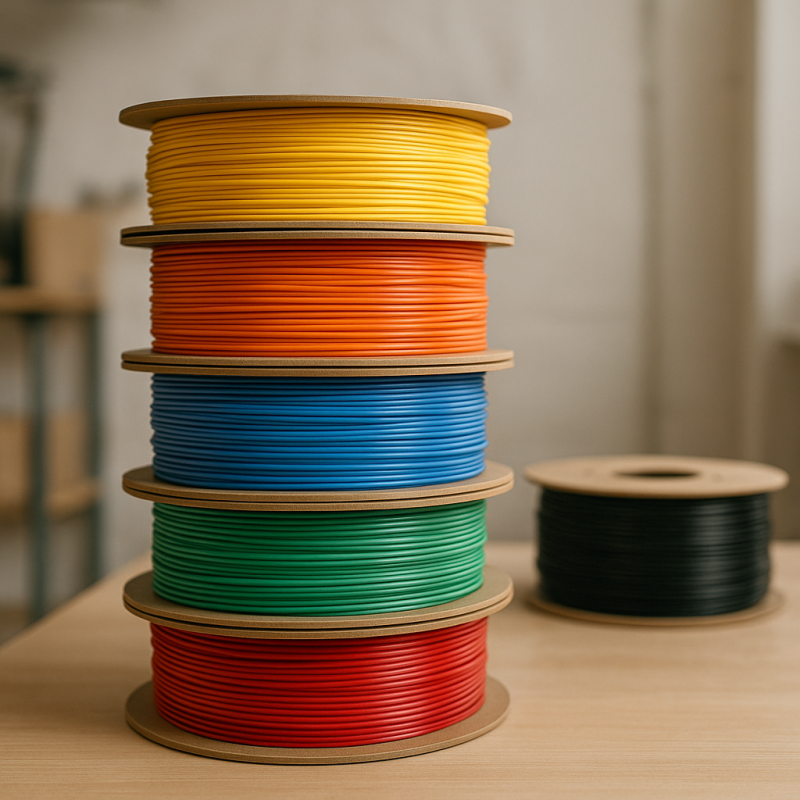
- Color Fidelity: For professionals who need to match specific brand colors or design palettes, color fidelity is essential. This means that a spool of “Royal Blue” purchased today should be the exact same shade as a spool of “Royal Blue” purchased six months from now. Achieving this level of consistency requires stringent quality control over the pigment supply and the masterbatch production. Top-tier manufacturers often use spectrophotometers to measure and verify the color of each batch against a precise standard, such as a Pantone or RAL color code. While many brands like eSun and Overture offer a wide variety of colors, consistency across batches can vary, which is a key differentiator for professional-grade suppliers.
Surface Finish: From Matte to Silk
The surface finish of a PLA print is one of its most defining visual characteristics. This is largely controlled by the filament’s formulation and the printing temperature.
- Glossy Finish: Standard PLA typically produces a glossy or semi-glossy finish. Printing at the higher end of the recommended temperature range tends to increase this gloss, as the slower cooling allows the surface to form a smoother, more reflective skin.
- Matte Finish: In recent years, matte PLA has become exceptionally popular, especially for architectural models, prototypes, and artistic prints. The matte surface has a sophisticated, professional look and does an excellent job of hiding layer lines, which can be prominent on glossy prints. This finish is achieved by incorporating microscopic, light-diffusing particles into the filament. Brands like Polymaker have gained recognition for their PolyTerra PLA, which is known for its beautiful matte finish and wide color palette.
- Silk Finish: Silk PLA takes glossiness to an extreme. These filaments contain elastomeric additives that create a highly reflective, almost metallic sheen. The way light plays across the curved surfaces of a silk PLA print can be truly mesmerizing. However, this aesthetic comes with a trade-off. The additives that create the silk effect can sometimes compromise layer adhesion and part strength, making silk PLA a better choice for decorative objects than for functional parts.
The choice of finish is subjective and application-dependent. What is important is that the filament delivers the advertised finish consistently. The ability to choose from a wide range of aesthetic options, from functional matte to decorative silk, is a testament to the versatility of the PLA material family.
Metric 7: Material Purity and Additive Integrity
The final metric, and perhaps the one that underpins all others, is the fundamental purity and quality of the raw materials. A 3D printing filament is only as good as the ingredients used to make it. Contaminants in the base resin or poorly formulated additives can undermine dimensional accuracy, compromise mechanical properties, and ruin printability.
For a user, this is the most difficult metric to assess directly. You cannot see microscopic impurities or analyze the chemical composition of a filament by looking at it. Instead, you must rely on the reputation, transparency, and quality control processes of the manufacturer. This is where certifications and a commitment to using high-quality raw materials become crucial indicators of a superior product.
The Importance of Virgin Resin
The best PLA filaments start with high-purity, virgin PLA resin. The leading supplier of high-quality PLA resin for 3D printing is NatureWorks, with their Ingeo brand. Many premium filament manufacturers will proudly state that they use 100% virgin Ingeo resin as their base. This is a mark of quality, as it ensures a consistent molecular weight, low moisture content, and the absence of contaminants that can be found in lower-grade or recycled resins.
While using recycled material is an important environmental goal, it presents significant challenges for high-precision applications like 3D printing filament. Recycled plastic streams can contain a mix of different polymer grades, residual colorants, and foreign contaminants. While some companies, like ProtoPasta, have successfully created high-quality recycled filaments from their own clean, internal manufacturing waste (tomshardware.com), using post-consumer or unsorted industrial waste is far more difficult. For users who demand the utmost consistency and reliability, a filament made from 100% virgin resin is generally the safer choice.
Certifications and Quality Control: Trust but Verify
In the absence of the ability to test the raw materials yourself, you can look for external signals of a manufacturer’s commitment to quality.
- ISO 9001 Certification: This is an international standard for a quality management system. A manufacturer with an ISO 9001:2015 certification has demonstrated that they have robust, documented, and audited processes for everything from raw material sourcing to final product inspection. This provides a high level of confidence in their ability to produce a consistent product.
- RoHS and REACH Compliance: These are European Union directives that restrict the use of specific hazardous materials in electronic and electrical equipment (RoHS) and manage chemical substances (REACH). Compliance indicates that the filament and its additives are free from harmful substances like lead, mercury, and cadmium. This is particularly important for filaments that may be used to print objects that come into contact with skin or are used in an office or home environment.
- Manufacturer Transparency: A trustworthy manufacturer is open about their processes. They provide detailed technical data sheets (TDS) and material safety data sheets (MSDS). They may publish information about their quality control procedures, such as their use of laser micrometers, and be transparent about the origin of their base resins. This openness is a strong indicator of a company that is confident in the quality of its product.
Ultimately, selecting a filament based on material purity is an act of trust. It is trust that the manufacturer has invested in the best raw materials and the most rigorous processes to create a product that is pure, consistent, and reliable. This foundation of quality is what enables the exceptional performance across all the other metrics we have discussed.
Frequently Asked Questions
What is the single most important factor when choosing a PLA filament?
While all seven metrics are interconnected, for most users, dimensional accuracy is the most critical starting point. A filament with a tight, consistent diameter (e.g., ±0.02mm) provides a reliable foundation that eliminates a huge range of potential printing problems. Without consistent extrusion, it’s impossible to achieve good mechanical performance or aesthetic quality.
Is PLA+ always better than standard PLA?
Not necessarily. “PLA+” is a marketing term, not a scientific standard, and its properties can vary widely between brands. Generally, it offers better impact resistance and layer adhesion than standard PLA, making it superior for functional parts. However, for purely decorative models where brittleness is not a concern, a high-quality standard PLA may offer a better surface finish or a wider range of colors at a lower cost.
How can I tell if my PLA filament is wet, and can I fix it?
The most common signs of wet filament are an audible popping or crackling sound from the nozzle during printing, excessive stringing, and a rough or fuzzy surface finish on the print. You can fix it by drying the spool in a dedicated filament dryer or a food dehydrator at 45-50°C for at least 4-6 hours. Storing open spools in an airtight container with desiccant is the best way to prevent the problem in the first place.
Do I need a special printer to use carbon fiber or other composite PLAs?
The main hardware upgrade required for abrasive composite filaments like carbon fiber PLA is a hardened nozzle. Standard brass nozzles will be worn down very quickly by the abrasive particles, leading to poor print quality and nozzle failure. A hardened steel, ruby-tipped, or other wear-resistant nozzle is essential for printing these materials reliably.
Why are some PLA filaments so much more expensive than others?
The price difference reflects variations in raw material quality, manufacturing precision, additive packages, and quality control. A more expensive filament likely uses premium virgin resin (like Ingeo), is manufactured to a tighter dimensional tolerance (±0.02mm), includes sophisticated additives for improved performance (e.g., impact modifiers or high-speed flow enhancers), and undergoes rigorous batch-to-batch quality testing for color and consistency. Budget filaments often cut corners in these areas, leading to less reliable performance.
Can PLA be used for parts that will be left outdoors?
Standard PLA is generally not suitable for long-term outdoor use. It has poor UV resistance and will become brittle and fade over time when exposed to sunlight. Its low glass transition temperature also makes it susceptible to deforming in direct sun. For outdoor applications, materials like ASA or PETG are much better choices due to their inherent UV stability and higher heat resistance.
Conclusion
The search for the best PLA is not a quest for a single, perfect spool, but rather a journey of education and discernment. We have moved beyond simplistic brand recommendations to establish a robust, analytical framework built on seven fundamental metrics. From the microscopic precision of dimensional accuracy to the macroscopic strength revealed in mechanical testing, each metric tells a part of the filament’s story. We have seen how the subtle chemistry of additives can transform a brittle material into a tough, functional one, and how process engineering enables flawless prints at breathtaking speeds.
The empowered user in 2026 understands that “printability” is a function of a consistent melt flow index, that thermal stability is governed by the glass transition temperature, and that aesthetic beauty is born from the quality and dispersion of pigments. They know that the foundation of it all is material purity, guaranteed not just by marketing claims, but by transparent manufacturing and verifiable certifications like ISO 9001.
This knowledge transforms the act of buying filament from a gamble into a calculated decision. It allows you to read a technical data sheet with understanding, to diagnose print failures with precision, and to match the right material to the unique demands of your project. Whether you are an engineer creating robust engineering-grade PLA prototypes, an artist chasing the perfect surface finish, or a hobbyist seeking reliability, this framework equips you to navigate the market with confidence. The best PLA is the one that consistently and reliably translates your digital vision into physical reality, and now you have the tools to find it.
References
- All3DP. (n.d.). Everyone needs to print with these PLA filaments – no exceptions. All3DP. Retrieved January 29, 2026, from
- Plamadiala, I., Croitoru, C., Pop, M. A., & Roata, I. C. (2025). Enhancing polylactic acid (PLA) performance: A review of additives in fused deposition modelling (FDM) filaments. Polymers, 17(2), 191. https://pmc.ncbi.nlm.nih.gov/articles/PMC11768329/
- Rist Innovations. (2025, March 14). Which is the BEST brand of PLA filament for 3D printing? [Video]. YouTube. https://www.youtube.com/watch?v=TR-3xfhnMv0
- SigmaFilament. (2026, January 25). Actionable buyer’s guide: 7 factors for success with carbon fiber PETG in 2026. https://sigmafilament.com/carbon-fiber-petg-printing-guide/
- Bochnia, J., Blasiak, M., & Kozior, T. (2021). A comparative study of the mechanical properties of FDM 3D prints made of PLA and carbon fiber-reinforced PLA for thin-walled applications. Materials, 14(22), 7062. https://pmc.ncbi.nlm.nih.gov/articles/PMC8623718/
- Kargar, E., & Ghasemi-Ghalebahman, A. (2023). Experimental investigation on fatigue life and tensile strength of carbon fiber-reinforced PLA composites based on fused deposition modeling. Scientific Reports, 13, 18194. https://www.nature.com/articles/s41598-023-45046-x
- Tom’s Hardware. (2025). Best filaments for 3D printing 2025. https://www.tomshardware.com/best-picks/best-filaments-for-3d-printing
Last reviewed and updated: January 2026. Author: SigmaFilament Engineering Team. For custom filament solutions and wholesale inquiries, contact our team.