A Data-Backed Guide: Finding the 7 Best Deals on PLA Filament in 2026


Abstract
The pursuit of affordable Polylactic Acid (PLA) filament for fused deposition modeling (FDM) 3D printing is a defining characteristic of the contemporary maker and professional landscape. An examination of the market in 2026 reveals that a simplistic focus on cost-per-kilogram is an inadequate metric for determining genuine value. This analysis deconstructs the concept of a “deal” by extending the evaluative criteria beyond price to include material science and supply chain logistics. Critical factors such as dimensional accuracy, raw material purity, the quality of spool winding, and filament density collectively determine the true cost-of-ownership. A filament with a low purchase price but inconsistent diameter or high moisture content invariably leads to failed prints, wasted time, and increased net expense. Consequently, a holistic assessment methodology is required. This involves understanding the manufacturing processes, such as laser-monitored extrusion and ISO-certified quality control, and evaluating the supplier, from anonymous marketplace resellers to factory-direct OEM partners. This guide provides a systematic framework for navigating these variables, enabling users to identify and secure the best deals on PLA filament by balancing initial cost with long-term reliability and performance.
Key Takeaways
- Evaluate filament cost by price-per-meter, not just price-per-kilogram, to account for density differences.
- Prioritize filaments with a tight dimensional accuracy tolerance (±0.03mm or better) to prevent jams.
- Verify the use of virgin raw materials and high-quality colorants for consistent, reliable printing.
- Inspect spool winding for neatness to avoid tangles that can ruin long prints.
- Consider buying in bulk or directly from manufacturers to find the best deals on PLA filament.
- Dry every new spool of PLA, even if it is factory-sealed, to eliminate moisture-related issues.
- Consult community forums and objective reviews before committing to a new brand.
Table of Contents
- Beyond the Price Tag: Deconstructing the True Cost Per Meter
- The Measure of Quality: Why Dimensional Accuracy is Non-Negotiable
- The Soul of the Spool: Raw Material Purity and Its Consequences
- The Winding Road: Spooling Quality and Tangle-Free Performance
- The Supplier Spectrum: From Resellers to Factory-Direct Partners
- The Bulk Buying Dilemma: When Does It Make Financial Sense?
- The Data-Driven Decision: Leveraging Reviews and Community Insights
- Frequently Asked Questions (FAQ)
- Conclusion
- References
Beyond the Price Tag: Deconstructing the True Cost Per Meter
The initial intellectual movement when seeking to acquire goods, particularly consumables, is to gravitate toward the lowest unit price. In the world of 3D printing, this manifests as a search for the lowest cost-per-kilogram of PLA filament. This instinct, while understandable from a purely economic perspective, represents a profound misunderstanding of the material realities and hidden expenditures inherent in the FDM printing process. To truly understand value, we must dismantle the simplistic cost-per-kilogram metric and reconstruct our evaluation around a more nuanced and accurate concept: the true, all-inclusive cost of a successfully printed part. This requires an intellectual shift, moving from the role of a mere consumer to that of a process engineer, where inputs are measured not just by their upfront cost but by their effect on the entire system’s efficiency and output. The search for the best deals on PLA filament is not a hunt for the cheapest spool; it is an investigation into the most reliable and cost-effective material that minimizes failure and maximizes productive output.
The Fallacy of Cost-Per-Kilogram
Let us begin by interrogating the foundational unit of sale: the kilogram. A one-kilogram spool of filament is a measure of mass, not of length. Yet, a 3D printer consumes filament by length. The slicer software calculates the meters of material required to fabricate an object, and the extruder mechanism feeds a specific length of filament through the hotend to deposit it layer by layer. The mass is, in this direct mechanical sense, an almost irrelevant property. Its primary relevance is as a commercial convention. The critical variable that connects mass to length is density.
PLA, while often treated as a monolithic material, is a polymer base to which various additives are introduced. These include colorants to provide hue, modifiers to alter properties like impact strength or surface finish (e.g., matte or silk PLA), and sometimes fillers like wood dust, carbon fiber, or metallic powders. Each of these additives has its own density, and their inclusion alters the overall density of the final composite filament. As a result, two different spools of PLA, both weighing precisely one kilogram, can have significantly different lengths.
Consider a simple thought experiment. Spool A is a “standard” PLA with a density of 1.24 g/cm³. Spool B is a “lightweight” or foamed PLA, or perhaps one with less dense additives, resulting in a density of 1.20 g/cm³. While the difference seems minuscule, its effect on the total length is not.
The volume of Spool A is 1000 grams / 1.24 g/cm³ ≈ 806.45 cm³. The volume of Spool B is 1000 grams / 1.20 g/cm³ ≈ 833.33 cm³.
For a standard 1.75mm diameter filament, the cross-sectional area is π * (0.0875 cm)² ≈ 0.02405 cm².
The length of filament on Spool A is 806.45 cm³ / 0.02405 cm² ≈ 33,532 cm, or 335.3 meters. The length of filament on Spool B is 833.33 cm³ / 0.02405 cm² ≈ 34,650 cm, or 346.5 meters.
Spool B contains over 11 more meters of printable material for the same mass. If both spools cost $20, the cost-per-meter for Spool A is approximately 5.96 cents, while for Spool B it is 5.77 cents. The spool with the lower density, in this case, offers more material for the money. This illustrates that a true cost analysis must normalize for length. An informed consumer, therefore, does not ask “What is the price per kilogram?” but rather “What is the price per meter?” While manufacturers rarely list the total length, they often provide the density. A simple calculation can empower you to make a far more intelligent purchasing decision.
Hypothetical Filament Cost-Per-Meter Comparison
| Feature | Spool A (Standard PLA) | Spool B (High-Density PLA) | Spool C (Low-Density PLA) |
|---|---|---|---|
| Price | $20.00 | $20.00 | $20.00 |
| Mass | 1000 g | 1000 g | 1000 g |
| Density | 1.24 g/cm³ | 1.28 g/cm³ | 1.21 g/cm³ |
| Volume (1000g / Density) | ~806 cm³ | ~781 cm³ | ~826 cm³ |
| Length (1.75mm dia.) | ~335 m | ~325 m | ~343 m |
| True Cost Per Meter | ~$0.0597 | ~$0.0615 | ~$0.0583 |
This table demonstrates how Spool C, despite being the same price and weight, represents the superior value proposition purely based on the amount of printable material provided. This is the first step in moving beyond a superficial price analysis in the search for the best deals on PLA filament.
The Hidden Costs of Failed Prints
The analysis of cost-per-meter, while a significant improvement, still only addresses the direct material input. It fails to account for the single largest potential expense in 3D printing: failure. A failed print is not merely a loss of the filament used; it is a catastrophic loss of time, electricity, and machine wear. The cost of a few dozen grams of wasted plastic is often trivial compared to the cost of the 12 hours the printer was running, consuming power and accumulating wear on its motors, belts, and bearings, only to produce a useless object.
Imagine you are printing a large, complex model that requires 20 hours and 500 grams of filament. You have two choices. Filament X costs $15/kg and has a reputation for occasional inconsistencies, leading to a 10% failure rate on long prints. Filament Y costs $25/kg but is manufactured to exceptionally high standards, with a failure rate of less than 1%.
The material cost for the print using Filament X is $7.50. However, with a 10% failure rate, you can statistically expect to have one failure for every ten such prints. Let us say the print fails 18 hours in, wasting 90% of the material and time. The cost of that single failure includes:
- Wasted Filament: 450g, costing $6.75.
- Wasted Time: 18 hours. If your time is valued at a modest $15/hour, this is a $270 loss in opportunity cost or labor.
- Wasted Electricity: An average printer consumes about 100W, so 18 hours is 1.8 kWh. At a national average of $0.17/kWh, this is about $0.31.
- Machine Wear: A difficult-to-quantify but very real cost.
The total tangible and intangible cost of that one failure far exceeds the $10 price difference for the entire spool of the more reliable Filament Y. When you average this risk over many prints, the “cheaper” filament becomes astronomically more expensive. A truly cheap PLA filament is not one that has a low sticker price, but one that you can trust to work, every single time. It allows you to start a 30-hour print and walk away with confidence. This peace of mind, this reliability, is the cornerstone of a genuine deal. The pursuit of the best deals on PLA filament is, therefore, a pursuit of maximum reliability at a reasonable price point.
The Measure of Quality: Why Dimensional Accuracy is Non-Negotiable
Having established that reliability is paramount, we must now investigate the physical characteristics of the filament that produce it. Of these, none is more fundamental than dimensional accuracy. The filament is the lifeblood of the FDM printer, and its consistent geometry is the foundation upon which every successful print is built. The entire printing process is predicated on a simple assumption: that the volume of material being fed into the hotend is constant and predictable. When the filament’s diameter varies, this assumption breaks down, leading to a cascade of failures that can be maddeningly difficult to diagnose.
Understanding Diameter and Ovality
Filament is specified by its nominal diameter, most commonly 1.75mm or 2.85mm. However, no manufacturing process is perfect, and there will always be some variation. Dimensional accuracy is expressed as a tolerance, such as ±0.05mm or ±0.02mm. A spool with a ±0.05mm tolerance means the diameter can range anywhere from 1.70mm to 1.80mm. A spool with a ±0.02mm tolerance will only vary between 1.73mm and 1.77mm.
Let us consider the volumetric implications. The volume of plastic extruded per millimeter of length is a function of the radius squared (V = πr²L).
- At 1.70mm diameter (radius 0.85mm), the volume per mm is ~2.27 mm³.
- At 1.75mm diameter (radius 0.875mm), the volume is ~2.40 mm³.
- At 1.80mm diameter (radius 0.90mm), the volume is ~2.54 mm³.
A swing from 1.70mm to 1.80mm represents a change in flow rate of over 11% (from -5.4% to +5.8% of the nominal volume). Your slicer software, unaware of this variation, continues to tell the extruder to push the filament at a constant rate. When the diameter swells to 1.80mm, the hotend is suddenly trying to melt and extrude 5.8% more plastic than it was designed for, leading to over-extrusion. This manifests as blobs, zits, and imprecise outer walls. When the diameter shrinks to 1.70mm, the opposite occurs. The hotend receives 5.4% less plastic than expected, causing under-extrusion. This results in weak interlayer adhesion, gaps in walls, and a structurally compromised part.
An even more insidious problem is ovality, where the filament is not perfectly round. It might measure 1.75mm on one axis but 1.80mm on another. As this non-circular filament is fed through the round extruder gear and into the round heat break, it can cause pulsing in the extrusion and inconsistent feeding.
The most catastrophic failure mode for poor dimensional accuracy is, of course, a jam. A section of filament that is too thick (e.g., 1.85mm on a 1.75mm system) can become physically wedged in the tight tolerances of the heat break or the Bowden tube, grinding the print to a halt. This is why a tight tolerance is not a luxury; it is a prerequisite for reliable printing. Seeking out the best deals on PLA filament must involve a rigorous check of the manufacturer’s stated dimensional accuracy. A tolerance of ±0.03mm is a good standard for quality, while premium filaments often achieve ±0.02mm. Anything greater than ±0.05mm should be approached with extreme caution, as the low price is likely a false economy.
The Science of Extrusion: How Manufacturers Achieve Consistency
To appreciate why good filament costs what it does, it helps to understand the complex process of its creation. The process begins with raw polymer resin, in the form of small pellets, which are dried to an exacting moisture level. These pellets are fed into a large, sophisticated machine called a single-screw extruder.
Inside the extruder, a long, rotating screw conveys the pellets through a heated barrel. The screw’s design and the barrel’s temperature profile are precisely controlled. As the pellets move forward, they are compressed, melted, and mixed into a homogenous molten polymer. This molten plastic is then forced through a circular die, which shapes it into the filament strand.
The moment the filament exits the die, a fascinating and challenging physical phenomenon called “die swell” occurs. The long-chain polymer molecules, which were aligned under pressure inside the die, relax and expand, causing the filament’s diameter to increase. The amount of swell is dependent on the material type, temperature, and extrusion speed.
Immediately after the die, the still-soft filament enters a long cooling trough, typically filled with temperature-controlled water. This is a critical stage. The rate of cooling must be carefully managed to solidify the filament at the correct diameter and to control its crystallinity, which affects its mechanical properties. The filament is pulled through this bath by a machine called a puller, and the speed of this puller is what ultimately determines the final diameter. If the puller speeds up, it stretches the soft filament, reducing its diameter. If it slows down, the diameter increases.
The Role of Laser Micrometers and ISO 9001 Certification
This is where the distinction between a budget manufacturer and a quality-conscious one becomes starkly clear. To control the diameter, you must measure it in real-time. High-quality production lines use a dual-axis laser micrometer positioned right after the cooling trough. This device uses lasers to measure the filament’s diameter on two axes (X and Y) hundreds or even thousands of times per second.
This data is fed into a sophisticated feedback loop. If the laser detects the diameter is drifting to 1.76mm, it signals the puller to increase its speed by a minuscule amount. If the diameter shrinks to 1.74mm, it tells the puller to slow down slightly. This constant, high-frequency measurement and adjustment is what allows a manufacturer to achieve a tight tolerance like ±0.02mm. Such equipment is a significant capital investment, which is reflected in the filament’s price. A manufacturer skimping on this technology will rely on manual spot-checks, which cannot possibly maintain the same level of consistency.
Furthermore, certifications like ISO 9001:2015 provide an additional layer of assurance. ISO 9001 is not a product standard; it is a process standard. It certifies that the manufacturer has a robust and documented Quality Management System (QMS). This means they have formal procedures for everything from inspecting raw materials and calibrating their laser micrometers to handling customer complaints and ensuring traceability of their products. When you buy from an ISO-certified manufacturer, you are buying confidence that they have the systems in place to consistently produce what they promise. This process-oriented approach is a hallmark of a reliable production partner and a key signal for those seeking the best deals on PLA filament that do not compromise on quality.
The Soul of the Spool: Raw Material Purity and Its Consequences
If dimensional accuracy is the skeleton of a good filament, then the raw material is its soul. The quality of the base polymer and the additives used to create the final product have a profound impact on every aspect of its performance, from printability and strength to color consistency and even safety. A cheap price tag can often be a mask for compromises made in the sourcing of these fundamental components, leading to a host of frustrating and difficult-to-diagnose issues.
Virgin Pellets vs. Recycled Content: A Trade-off
PLA is typically derived from renewable crops such as corn and sugarcane (Simplify3D, 2019), making it a popular choice for its environmental credentials. The highest quality PLA filaments are made from 100% “virgin” polymer pellets. These pellets, such as those from NatureWorks Ingeo, are produced in a controlled industrial process, ensuring high purity and a consistent molecular weight. This consistency is critical for predictable melting behavior, flow characteristics, and interlayer adhesion.
However, to cut costs, some manufacturers may incorporate “recycled” or “regrind” material into their mix. This regrind can come from various sources, including post-industrial waste (e.g., off-spec filament from their own production runs) or even post-consumer waste. While recycling is an admirable goal, its uncontrolled application in filament manufacturing is fraught with peril.
Each time a polymer like PLA is melted and re-extruded, it undergoes some degree of thermal degradation. Its long polymer chains break down into shorter ones, reducing its molecular weight. This leads to a material that is more brittle and has poorer layer adhesion. Furthermore, recycled content can introduce contaminants. Dust, dirt, or even traces of other plastic types can find their way into the mix. These contaminants can clog the small orifice of a 3D printer nozzle (typically 0.4mm), causing a sudden and complete print failure. Even if they do not cause a full clog, they can create inconsistencies in the extrusion, appearing as zits or voids in the printed part. Some manufacturers use recycled content responsibly, carefully filtering and blending it in small, controlled percentages. Others, chasing the lowest possible price, may use a high percentage of poorly-sorted regrind, resulting in a filament that is a gamble to use. The best deals on PLA filament are almost always found with manufacturers who are transparent about their use of 100% virgin resin.
The Impact of Additives: Colorants, Modifiers, and Fillers
Even when using virgin PLA, the choice of additives is a critical differentiator. Color is achieved by mixing a “masterbatch” containing a high concentration of pigment with the natural, translucent PLA pellets. High-quality manufacturers use expensive, high-quality pigments that are designed for high-temperature polymer processing. These pigments disperse evenly, resulting in a rich, consistent color from the beginning of the spool to the end, and from one batch to the next. Cheap, low-grade pigments can fail to disperse properly, leading to color streaking. Worse, some pigments can have an abrasive effect, causing premature wear on brass nozzles.
The same principle applies to special-effect filaments. “Silk” PLA, for example, achieves its sheen through the addition of a crystalline polymer additive. The quality and percentage of this additive determine the intensity of the effect and can also impact the material’s strength and printing temperature. “Matte” PLA often uses fine mineral-based additives to diffuse light from the surface. If these are not of a consistent and tiny particle size, they can act as contaminants, increasing the risk of clogs.
This is especially true for composite filaments containing fillers like wood, carbon fiber, or metal powder. The quality, particle size, and consistency of these fillers are paramount. Low-quality wood filament might contain larger, inconsistently sized wood particles that are highly prone to clogging standard nozzles. Similarly, the performance of a carbon fiber reinforced filament, as detailed in guides on materials like carbon fiber PETG (SigmaFilament, 2026), depends entirely on the quality and length of the chopped fibers. The principles of composite manufacturing, as seen in advanced sectors using materials from companies like Sigmatex, emphasize the critical role of the reinforcement material (Sigmatex, n.d.). While our focus is on PLA, the lessons from these advanced materials apply: the quality of the additive is just as important as the quality of the base polymer.
Recognizing Signs of Impure Filament
As a user, it can be difficult to know for sure what is inside your filament. However, there are several tell-tale signs of low-purity material:
- Inconsistent Color: Look for streaks or shifts in hue along the length of the filament. This suggests poor pigment dispersion or batch-to-batch inconsistency.
- Unusual Odor: While PLA is known for its sweet, low-odor profile during printing, a filament with contaminants or made from degraded polymer may emit a sharper, more acrid, or burnt smell.
- Nozzle Clogs: This is the most obvious sign. If you experience frequent clogs with a particular brand of filament, especially after ensuring your printer is mechanically sound and your filament is dry, it is highly probable that the filament itself contains contaminants.
- Popping and Sizzling: While often a sign of moisture, excessive popping from a thoroughly dried filament can indicate volatile impurities burning off in the hotend.
- Brittle Raw Filament: Take a length of the filament and bend it. While PLA is naturally quite stiff, it should have some flex before it snaps. If it is extremely brittle and shatters with little force, it may be a sign of degraded, low-molecular-weight polymer.
A filament that exhibits these properties is no deal, regardless of its price. The time spent dealing with clogs and failed prints quickly negates any initial savings. A truly good deal comes from a filament that is clean, pure, and consistent, like those from manufacturers who emphasize their material quality and offer a broad, reliable a comprehensive portfolio of 3D printing materials.
Filament Quality Defect Identification Guide
| Defect | Visual/Physical Cue | Impact on Printing | Common Root Cause |
|---|---|---|---|
| Inconsistent Diameter | Noticeable thick/thin spots on the raw filament. | Over/under-extrusion, blobs, gaps, jams. | Poor manufacturing process control (no laser feedback loop). |
| High Ovality | Filament is not round; measures differently across axes. | Pulsing extrusion, inconsistent line width. | Worn-out die, improper cooling during manufacturing. |
| Moisture Contamination | Popping/sizzling from nozzle, stringing, brittle prints. | Poor layer adhesion, weak and rough parts. | Improper drying before packaging, poor packaging, user storage. |
| Material Impurity | Frequent nozzle clogs, color streaking, burnt smell. | Clogs, print failures, poor surface finish. | Use of recycled/regrind material, low-quality colorants/additives. |
| Poor Spooling | Overlapping strands, filament wound too tight or loose. | Tangles, feed resistance, print failure from snagging. | Inadequate tension control during the winding process. |
The Winding Road: Spooling Quality and Tangle-Free Performance
We have examined the filament’s internal character—its dimensions and material purity. Now, we turn our attention to its external presentation: the way it is wound onto the spool. This may seem like a purely aesthetic concern, but it is, in fact, a deeply functional one. A poorly wound spool can be a ticking time bomb, waiting to ruin a long print by introducing a tangle that the extruder cannot overcome. The quality of the wind is a direct reflection of the manufacturer’s attention to detail and process control.
The Mechanics of a Perfect Wind
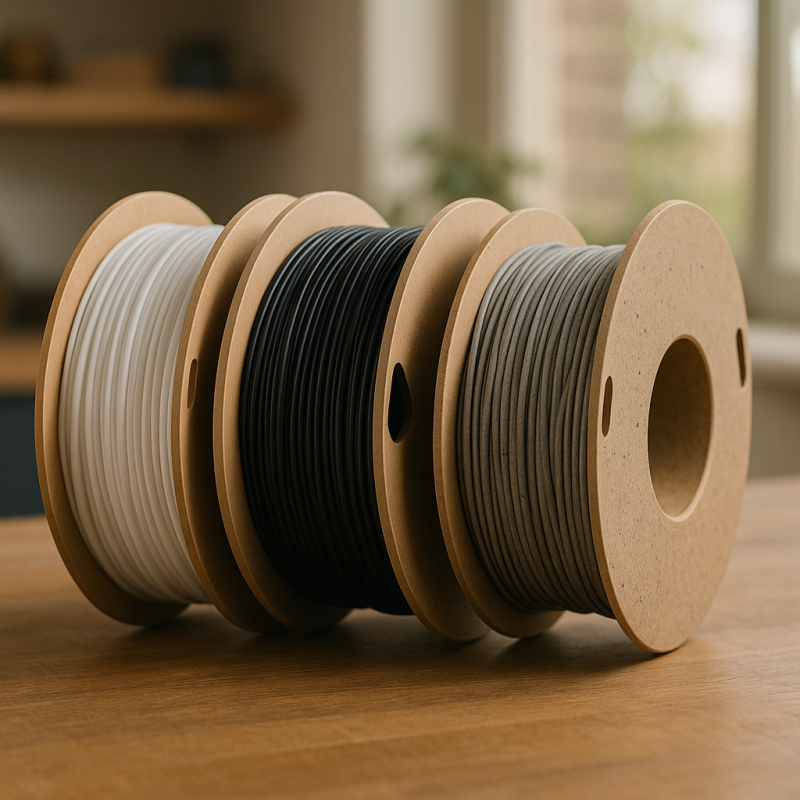
The process of spooling filament occurs at the very end of the production line. After being pulled, cooled, and measured, the finished filament is wound onto a final spool for packaging. The ideal wind is one where the filament is laid down in neat, parallel rows, with each subsequent layer nesting perfectly on top of the one below it. There should be no crossovers where one strand has been wound over another in the same layer.
Achieving this requires a sophisticated winding machine that precisely coordinates the rotation of the spool with the lateral movement of a guide arm that lays the filament down. The tension must be perfectly controlled. If the tension is too loose, the filament can unspool and create loops that can get tangled later. If the tension is too tight, it can deform the filament or, in extreme cases, even crack the plastic spool itself. The machine must account for the increasing diameter of the spool as it fills up, constantly adjusting its rotation and traversal speeds to maintain a perfect lay.
This level of robotic precision is another area where quality manufacturers invest and budget operations cut corners. A perfectly wound spool is a sign that the manufacturer respects the material and the end-user’s experience. It is a silent promise that the filament will feed smoothly from beginning to end.
How Poor Spooling Leads to Print Failure
A filament tangle is one of the most frustrating failure modes in 3D printing because it often occurs hours into a print, with no warning. The most common cause is a strand of filament that has become trapped underneath another strand on the spool.
This typically happens during the manufacturing and winding process. If the filament briefly loses tension, it can form a small loop on the spool. The subsequent winding can then trap this loop, laying hundreds of meters of filament on top of it. Everything will appear fine to the user. The filament will unspool without issue for hours. Then, the printer will reach the point of the trapped loop. The extruder motor will try to pull the filament, but the strand will be snagged under the other winding.
The extruder’s drive gear will continue to turn, but the filament will not advance. The gear will begin to grind away at the stationary filament, stripping it until the teeth can no longer get a grip. At this point, filament stops feeding into the hotend entirely. The printer, unaware of this mechanical failure, will continue its print path, moving the hotend through the air, printing nothing. The user returns hours later to find a half-finished print and a pile of plastic shavings around their extruder—a failure state often called “air printing.”
This failure is not the user’s fault. It is a manufacturing defect. The only way to fix it is to unwind a significant portion of the spool by hand until the tangle is released, a tedious and often messy process. The search for the best deals on PLA filament must include a visual inspection of the winding.
Assessing Spool Quality Before You Buy
While you cannot always see the entire spool through the packaging, there are several things to look for:
- Look at the visible layers: Are the strands laid down in neat, parallel lines? Or do they look messy and crisscrossed, like a tangled ball of yarn? A neat wind is a very good sign.
- Check for gaps: Look at the sides of the spool. A well-wound spool will be very dense, with no large gaps between the filament and the flange of the spool. Gaps can be a sign of inconsistent tension.
- Read reviews: This is one of the most common complaints users have about low-quality filament. Search for reviews of the brand you are considering and specifically look for terms like “tangle,” “snag,” or “poorly wound.” One or two such complaints might be a fluke, but a consistent pattern is a major red flag.
- Brand Reputation: Established brands that have been around for years understand that their reputation depends on reliability. They have invested heavily in their winding technology because they know a single tangled spool can lose them a customer for life. A new, unknown brand found on a marketplace might not have this long-term perspective.
A perfectly wound spool that guarantees a tangle-free experience is a significant component of a filament’s value. It contributes directly to the reliability that, as we have established, is the true hallmark of a good deal. Paying a few extra dollars for a spool that you know will not tangle is an investment that pays for itself the first time it saves a 20-hour print from failure.
The Supplier Spectrum: From Resellers to Factory-Direct Partners
The path a spool of filament takes from the factory floor to your printer is as important as the manufacturing process itself. The type of supplier you purchase from influences not only the price but also the level of quality control, support, and consistency you can expect. Navigating this spectrum, from anonymous online resellers to direct OEM/ODM manufacturers, is a critical skill for anyone serious about optimizing their 3D printing workflow and finding the best deals on PLA filament.
Navigating Marketplaces like Amazon and AliExpress
For many, the journey begins on large e-commerce marketplaces. These platforms offer an enormous selection, competitive pricing, and fast shipping, making them an attractive first stop. Community discussions often highlight great deals found on these sites, with users sharing finds like 10-roll packs for under $100 or specific brands like Sunlu offering multi-packs at aggressive price points ; .
However, these marketplaces are a double-edged sword. The sellers are often resellers, not the actual manufacturers. This introduces a layer of abstraction between you and the source of the product. The brand name on the spool might simply be a label applied by the reseller to filament sourced from one or more anonymous factories in a practice known as “white-labeling.” This can lead to staggering inconsistency. You might buy a spool of “Brand X” black PLA in January and have a wonderful experience. You reorder the exact same item in March, sold by the same reseller, but this time the filament is sourced from a different factory with lower quality standards. It clogs your nozzle, has poor layer adhesion, and a slightly different finish. The product is nominally the same, but its performance is completely different.
When buying from these platforms, it is crucial to focus on sellers that are the official storefronts for a specific manufacturer. Many reputable brands use these marketplaces as a distribution channel. The key is to differentiate between a brand that manufactures its own product and a reseller that simply rebrands a commodity item. Look for consistency in reviews over time and be wary of brands that appear overnight with thousands of suspiciously glowing reviews.
The Value of Specialized Retailers
A step up from the wild west of general marketplaces are the specialized 3D printing retailers. These can be online stores or even brick-and-mortar locations like Microcenter (when they have sales) or regional suppliers like 3D Printing Canada . These retailers typically curate their selection. They have a reputation to uphold within the 3D printing community, so they are less likely to carry notoriously unreliable filaments.
The staff at these stores often have genuine expertise and can offer valuable advice. They build relationships with the filament manufacturers they carry and have a vested interest in providing their customers with reliable products. While their prices might not always be the absolute lowest on the market, the value they add through curation, support, and consistency can be well worth a small premium. They act as a filter, doing some of the quality control for you. Purchasing from a dedicated retailer like Matter3D in Canada, which even produces its own budget-friendly line, can provide a level of trust that is hard to find on a massive, undifferentiated platform . These specialists understand that their success is tied to your success as a printer.
The OEM/ODM Advantage: Buying from the Source
For businesses, print farms, schools, or serious hobbyists who consume a significant amount of filament, the most effective strategy is often to bypass the middlemen entirely and establish a relationship directly with a manufacturer. This is known as an OEM (Original Equipment Manufacturer) or ODM (Original Design Manufacturer) relationship.
An OEM/ODM manufacturer is the factory that actually produces the filament. They have the extruders, the laser micrometers, and the quality control systems. Many of the “brands” you see on the market are simply customers of these large factories. By going directly to the source, you gain several powerful advantages:
- Ultimate Consistency: You are receiving the product directly from the production line. There is no risk of a reseller switching suppliers on you. Batch-to-batch consistency for color and performance will be at its maximum.
- Cost Savings: By eliminating the markups from distributors and retailers, you can achieve a significantly lower cost-per-kilogram, especially on bulk orders. This is the most direct way to secure the best deals on PLA filament for high-volume users.
- Customization (ODM): A true ODM partner can work with you to create custom products. Need a specific Pantone color for your corporate branding? They can create a custom color masterbatch. Need a filament with slightly higher temperature resistance or impact strength? They have the material science expertise to develop a custom formulation. This allows you to create a product perfectly tailored to your application, something impossible when buying off the shelf. Manufacturers often provide a wide range of options, including various materials like PETG, ABS, and flexible TPU, alongside their PLA offerings.
- Quality Assurance: Working directly with an ISO 9001-certified manufacturer like SigmaFilament gives you direct access to their quality control processes. You are not just buying a product; you are buying a stake in a proven manufacturing system. They can provide documentation on their dimensional accuracy, material sourcing, and testing procedures, giving you an unparalleled level of confidence in the product. You can procure not just standard materials but also advanced specialty engineering filaments tailored for demanding applications.
This direct-from-factory approach transforms the act of buying filament from a simple transaction into a strategic partnership. It is the end-game for anyone who wants to scale their 3D printing operations while maintaining absolute control over their most critical consumable.
The Bulk Buying Dilemma: When Does It Make Financial Sense?
The logic of bulk purchasing is ingrained in consumer culture: buying more of something at once typically yields a lower per-unit cost. This principle holds true in the world of 3D printing filament, where manufacturers and retailers frequently offer discounts for multi-spool purchases. Deals like “buy 2 get 1 free” or tiered discounts for buying 10 or more spools are common tactics to encourage larger orders ; . While the immediate financial appeal is obvious, a deeper analysis reveals a more complex set of considerations. The decision to buy in bulk is not just an economic one; it is a logistical and chemical one, requiring a careful assessment of consumption rate, storage conditions, and material degradation over time.
Manufacturer Deals and Multi-Spool Discounts
The most straightforward advantage of bulk buying is the direct cost savings. A single spool of quality PLA might cost $25. A 10-pack of the same filament from the same supplier might cost $200, dropping the per-spool price to $20—a 20% savings. For a print farm running dozens of machines, or a business prototyping constantly, these savings are substantial and directly impact the bottom line. This is often the most visible path to what many perceive as the best deals on PLA filament.
These deals can be found through various channels. Manufacturers’ own websites are a primary source, as they benefit from the increased order value and reduced per-unit shipping and handling costs. Specialized retailers also offer bulk packs as a way to compete with larger marketplaces. The key is to ensure you are buying a filament you have already tested and trust. Committing to 10 kilograms of an unknown filament, no matter how cheap, is a risky proposition. It is wise to first purchase a single spool, put it through its paces, and only then, if you are satisfied with its performance, commit to a bulk purchase.
The Hidden Costs of Storage: Humidity and Degradation
Here we arrive at the critical counterpoint to bulk buying: filament is not an inert substance. PLA, in particular, is hygroscopic, meaning it readily absorbs moisture from the surrounding atmosphere. This is the Achilles’ heel of many polymers used in FDM printing. When a filament absorbs moisture, it causes a host of problems during printing.
As the wet filament enters the hotend, the trapped water instantly boils into steam. This small explosion creates a void in the flow of molten plastic, causing a characteristic popping or sizzling sound from the nozzle. The consequences for the print are dire:
- Poor Surface Finish: The voids created by the steam result in a rough, porous, and unattractive surface on the print.
- Weak Interlayer Adhesion: The steam disrupts the clean deposition of one layer onto the next, leading to drastically reduced part strength. A print made with wet filament can often be pulled apart by hand.
- Stringing and Oozing: The inconsistent pressure in the nozzle caused by the steam explosions leads to excessive stringing and oozing as the print head moves between different parts of the model.
- Brittleness: The moisture can contribute to hydrolysis of the PLA at high temperatures, breaking down the polymer chains and resulting in a finished part that is exceptionally brittle.
Filament arrives from the manufacturer in a vacuum-sealed bag, usually with a small packet of desiccant. This is designed to protect it during shipping and initial storage. However, once that seal is broken, the clock starts ticking. In a humid environment (e.g., >50% relative humidity), a spool of PLA left out in the open can become too wet to print reliably in a matter of days.
This is the hidden cost of bulk buying. If you purchase 20 spools of filament but only use one per month, you must have a robust storage solution for the other 19 spools. Simply leaving them on a shelf, even in their sealed bags (which are not perfectly impermeable forever), is not sufficient. A proper storage solution involves placing the spools in airtight containers (such as large plastic totes with a rubber gasket) along with a generous amount of rechargeable desiccant. Many serious users invest in dedicated filament drying cabinets that maintain a constant low-humidity environment.
The cost of these storage solutions—the containers, the desiccant, the electricity for a dryer—must be factored into the total cost of the bulk purchase. If you save $100 on a bulk order but have to spend $80 on a storage system, your net savings are significantly reduced. Furthermore, if you fail to store it properly and even one spool goes bad, the cost of that wasted kilogram can wipe out the savings from the entire bulk purchase. Therefore, bulk buying only makes sense if your consumption rate is high enough to use the material before it degrades, or if you are willing and able to invest in a proper, long-term, dry storage solution.
Creating a Filament Co-op
For hobbyists or small businesses whose individual consumption does not justify a large bulk order, a creative solution is the formation of a filament cooperative or buying group. By pooling resources with other local makers, you can collectively place a large order directly from a manufacturer or distributor to unlock maximum bulk pricing.
The group can order a 50kg shipment of a standard color like black or white PLA, and then divide the spools among the members. This allows each individual to enjoy the per-unit cost savings of a massive order without having to personally store dozens of spools for years. It fosters a sense of community and allows for shared knowledge about the performance of different materials. This collaborative approach can be one of the most effective ways for smaller-scale users to access the very best deals on PLA filament that are typically reserved for large commercial operations. It transforms a solitary purchasing decision into a collective strategic action.
The Data-Driven Decision: Leveraging Reviews and Community Insights
In an ideal world, every filament manufacturer would provide a comprehensive, standardized data sheet for their products, detailing everything from melt flow index and tensile strength to a graph of diameter consistency along an entire spool. In the absence of such universal transparency, the user must become a detective, piecing together a picture of a filament’s quality from a variety of disparate and often subjective sources. This final pillar of our analysis is perhaps the most human: the act of gathering and interpreting the collective experience of the community. A data-driven approach to finding the best deals on PLA filament is not just about numbers on a spreadsheet; it is about systematically processing qualitative human experience into actionable intelligence.
How to Read Between the Lines of Customer Reviews
Product reviews on retailer websites and marketplaces are the most abundant source of user feedback, but they are also the most fraught with noise. Learning to interpret them effectively is a critical skill.
- Look for Patterns, Not Anecdotes: A single one-star review complaining of a tangle might be a fluke or user error. Ten reviews, posted over six months, all complaining about tangles on the same color of filament, is a pattern. It is a strong signal of a persistent manufacturing issue. Conversely, a hundred five-star reviews that simply say “Great filament!” are less useful than five four-star reviews that say, “Prints beautifully at 215°C with 5mm retraction, but the color is a shade darker than the picture.” The latter contains specific, useful data.
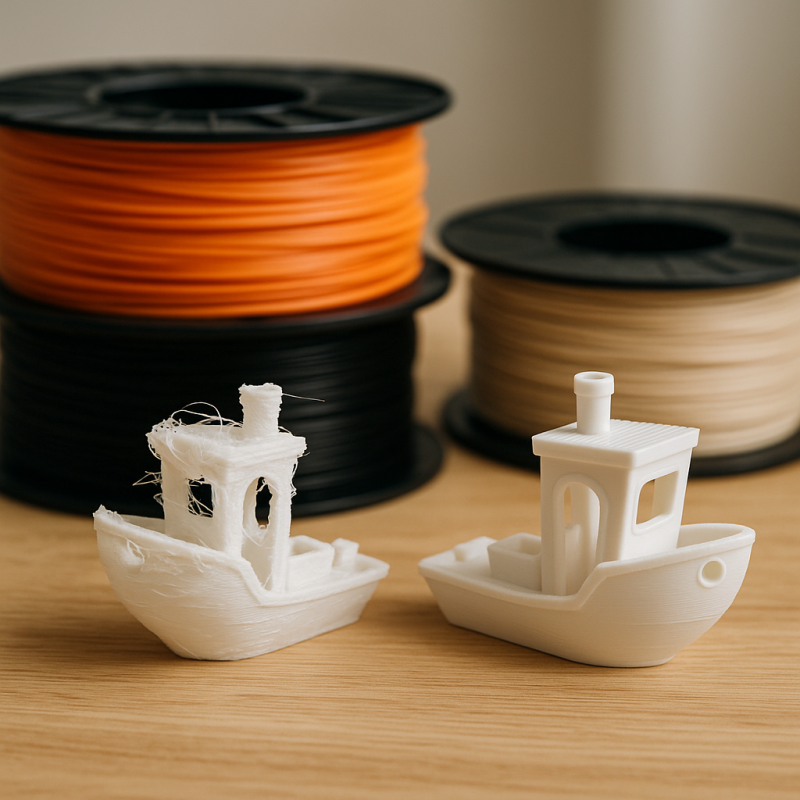
- Filter for Experience Level: A review from a user who includes their printer model, slicer settings, and a photo of a well-calibrated test print (like a Benchy) carries far more weight than a review from someone who might be struggling with a poorly assembled printer or basic setup issues. Look for reviews that demonstrate the user knows how to isolate variables.
- Consider the Date: A product with glowing reviews from 2024 might not be the same product being sold in 2026. As discussed, resellers can switch suppliers. Look for recent reviews to get a picture of the current quality of the product being shipped.
- The “Bell Curve” of Reviews: The most reliable products tend to have a large number of four- and five-star reviews, with a small number of lower ratings. Be wary of products with a “barbell” distribution—lots of five-star reviews and lots of one-star reviews, with few in the middle. This often indicates a highly inconsistent product where some users get a perfect spool and others get a complete dud. This is the opposite of the reliability we are seeking.
The Role of Online Communities and Forums like Reddit
Beyond vendor-hosted reviews, online communities provide a more interactive and often more candid source of information. Subreddits like r/3Dprinting, as well as various Facebook groups, are invaluable resources.
In these forums, you can do more than just read static reviews; you can ask questions. You can post a query like, “I’m considering Brand Z’s matte white PLA for printing miniatures. Has anyone used it on a Bambu Lab printer? How does it handle fine details?” You are likely to get responses from experienced users with the exact same hardware, providing tailored advice that is impossible to find elsewhere. Users in these communities often share their findings on filament deals they have discovered, creating a real-time pulse of the market .
These communities are also excellent for troubleshooting. If you are having trouble with a filament, you can post photos of your failed prints and share your settings. The collective expertise of the community can help you determine if the problem is with the filament, your printer, or your slicer profile. This collaborative problem-solving is a powerful tool for vetting materials.
Building Your Own Filament Database
The ultimate expression of a data-driven approach is to become your own source of truth. This involves systematically testing and documenting the performance of every new filament you purchase. This does not need to be an onerous process.
- Establish a Baseline: Choose a set of standard test prints. A temperature tower (to find the ideal print temperature), a retraction test, a Benchy, and a simple strength test piece are a good starting point.
- Create a Log: Use a simple spreadsheet or notebook. For each new spool, record the brand, color, material type, purchase date, and price.
- Print and Document: When you open a new spool, first dry it for 4-6 hours as a standard procedure. Then, print your suite of test models. Record the optimal settings you discover (temperature, retraction, speed). Take photos of the finished test prints. Make notes on the surface finish, color consistency, strength, and any issues you encountered.
- Analyze and Compare: Over time, you will build a personal database of filament performance. When you are looking to buy more, you can consult your own objective data. You will know for a fact that Brand A’s red PLA, while slightly more expensive, gives you a much cleaner finish than Brand B’s. You will have proof that Brand C’s filament, despite its low price, is too brittle for your functional parts.
This personal database is the most reliable guide you will ever have. It replaces guesswork and reliance on the subjective opinions of others with your own empirical evidence, gathered on your own machines. It is the final and most powerful step in mastering the art and science of finding the best deals on PLA filament—deals that are defined not by their cheapness, but by their predictable, reliable, and data-backed value.
Frequently Asked Questions (FAQ)
Is it worth paying more for a well-known brand of PLA filament?
In most cases, yes. Established brands have a reputation to protect and have typically invested more in their quality control processes, including laser-monitored extrusion lines, high-quality raw materials, and robust spool-winding machinery. While a higher price is not an absolute guarantee of quality, it often correlates with tighter dimensional accuracy, better material purity, and more reliable, tangle-free performance. The small premium paid for a reputable brand is often an inexpensive insurance policy against the high cost of failed prints in terms of time, electricity, and wasted material.
How can I tell if my PLA filament has absorbed too much moisture?
The most common signs of “wet” filament are a sizzling or popping sound coming from the nozzle during printing, excessive stringing or oozing, a rough or porous-looking surface finish on the print, and very poor layer adhesion, resulting in a weak, brittle part. If you take a finished print and it breaks apart easily along the layer lines, moisture is a likely culprit.
What is the best way to store my PLA filament to keep it dry?
The best method is to store spools in an airtight container, such as a large plastic tote with a rubber gasket seal. Inside the container, you should place a desiccant to absorb any moisture. Rechargeable silica gel beads are a popular and cost-effective option. For more advanced users or those in very humid climates, a dedicated filament drying cabinet that uses heat and fans to maintain a constant, low-humidity environment is an excellent investment.
I found a very cheap PLA filament online. What are the biggest risks?
The biggest risks associated with extremely cheap PLA filament are poor dimensional accuracy (leading to jams and inconsistent extrusion), material contamination (from using recycled plastics or low-grade additives, causing nozzle clogs), high moisture content (due to cheap packaging or improper handling), and poor spool winding (resulting in tangles that can ruin long prints). Any one of these issues can lead to failed prints that cost you more in the long run than a slightly more expensive, reliable filament.
Does the color of PLA filament affect how it prints?
Yes, the pigments and additives used to create different colors can slightly alter the filament’s properties. Some pigments, particularly those in dark colors like black, can be mildly abrasive and cause slightly more wear on brass nozzles over time. Additives for effects like “silk” or “matte” can change the ideal printing temperature and may result in a slightly weaker part compared to a standard PLA of the same brand. It is good practice to print a temperature tower for each new color you use, even if it is from a brand you are familiar with, to dial in the optimal settings.
Conclusion
The path to identifying the best deals on PLA filament is an intellectual journey that moves beyond the simple allure of a low price tag. It requires a fundamental shift in perspective, from viewing filament as a mere commodity to understanding it as a critical precision component in a complex manufacturing process. A true “deal” is not found in the cost-per-kilogram but is calculated in the currency of reliability, consistency, and the successful realization of a printed object.
We have seen that this calculation involves a multi-faceted analysis. It begins with deconstructing the price itself, moving from mass to length to understand the true material cost. It then proceeds to the physical characteristics of the filament, where the non-negotiable importance of dimensional accuracy and the profound impact of raw material purity come into focus. We have also explored the mechanical aspects of presentation, recognizing that a perfectly wound spool is a crucial feature, not a cosmetic luxury. Finally, we have situated this technical analysis within the human and commercial ecosystem, evaluating the spectrum of suppliers and leveraging the collective intelligence of the community.
By embracing this holistic framework—by becoming a more discerning and data-driven consumer—you elevate your practice. You minimize the frustration and waste of failed prints and maximize your productive output. The ultimate goal is to achieve a state of confidence in your materials, where you can initiate a print, whether it is a two-hour trinket or a forty-hour masterpiece, with the quiet assurance that the filament will perform its role flawlessly. That assurance, that reliability, is the best deal of all.
References
- SIGMAFILAMENT. (2026, January 25). Actionable buyer’s guide: 7 factors for success with carbon fiber PETG in 2026. https://sigmafilament.com/carbon-fiber-petg-printing-guide/
- Sigmatex. (n.d.). Product. Retrieved January 29, 2026, from
- Simplify3D. (2019). Ultimate materials guide: Tips for 3D printing with PLA. Simplify3D. https://www.simplify3d.com/resources/materials-guide/pla/
Last reviewed and updated: January 2026. Author: SigmaFilament Engineering Team. For custom filament solutions and wholesale inquiries, contact our team.