Filament for Schools & Universities | Education Bulk Supply for STEM Labs & Makerspaces | SigmaFilament
Solution: Schools & Universities

Filament for Schools & Universities

Equip STEM labs, engineering programs, and makerspaces with reliable bulk filament — easy to print, consistent across every student group, and procurement-friendly. Clear safety guidance, storage SOPs, and semester-based budgeting tools included.
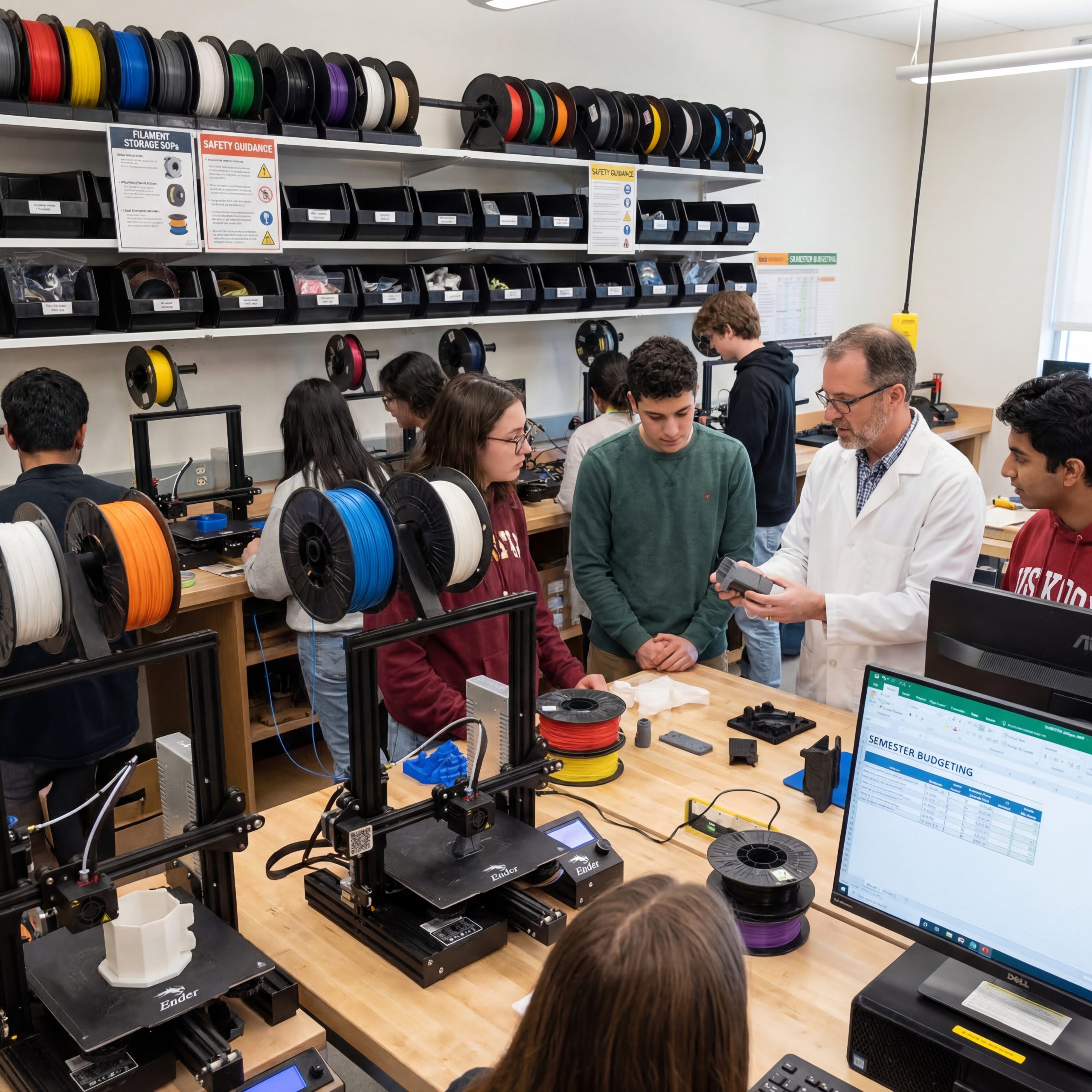
3D printing lab setup — multiple printers for educational use
±0.02mm
Fewer Failed Student Prints
ISO 9001
Certified Consistency
57+ SKUs
Full Material Range
Education Procurement Packs

Buy the Right Material for Your Courses — Not Just the Cheapest Spool

You don't need to understand all 57 SKUs. Pick the pack that matches your teaching level and application. Each one is designed for a specific educational context with the right balance of ease, performance, and cost.

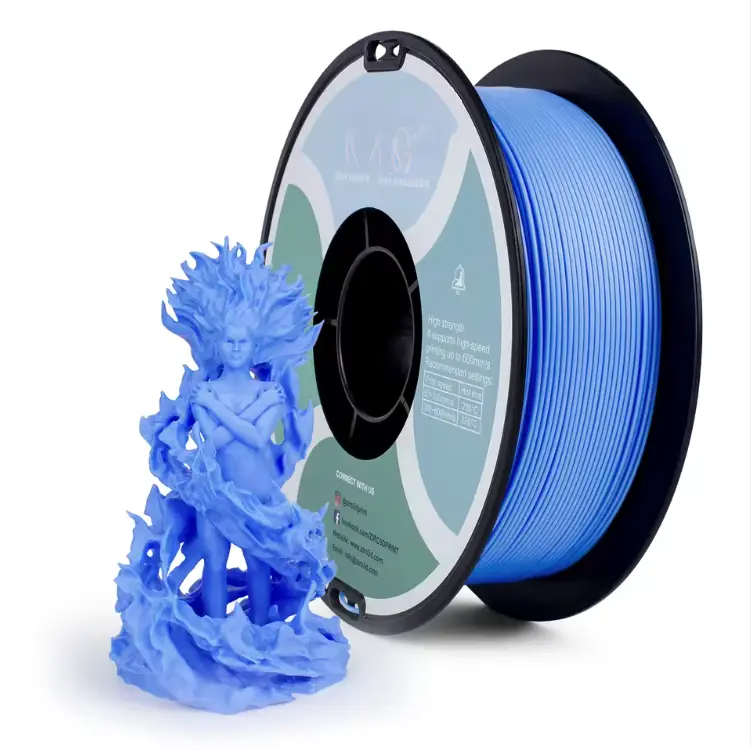
PLA filament for classroom use
Most Popular
A
Classroom Starter Pack
Intro courses · Design class · Art & modeling · General makerspace

PLA is the most forgiving material for new users. It prints at low temperatures, has minimal odor, and virtually eliminates warping — meaning less troubleshooting and more teaching time. PLA+ adds ~10× impact resistance for sturdier student projects.
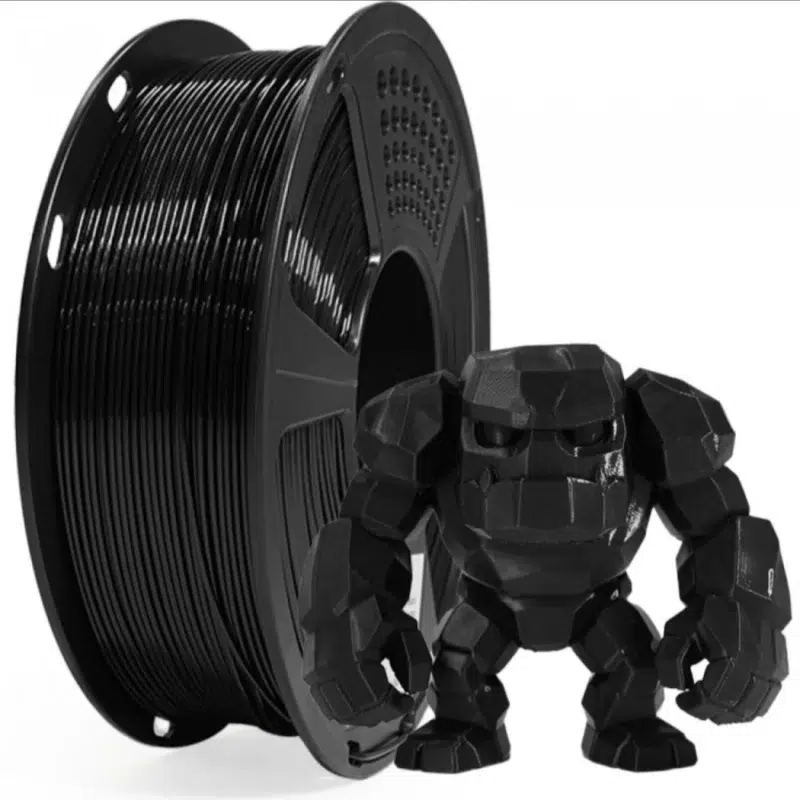
Standard PLAPLA+1kg spools190–220°CNo enclosure needed
View Wholesale PLA →
PETG filament for functional lab parts
Functional Parts
B
Functional Lab Pack
Robotics · Mechanical engineering · Fixtures · Functional prototypes

When student projects need to survive real-world stress — snapping together, bearing loads, or resisting chemicals — PETG is the step up from PLA. Stronger layer adhesion, better impact resistance, and ~70°C heat tolerance. Low odor and safe for well-ventilated indoor labs.
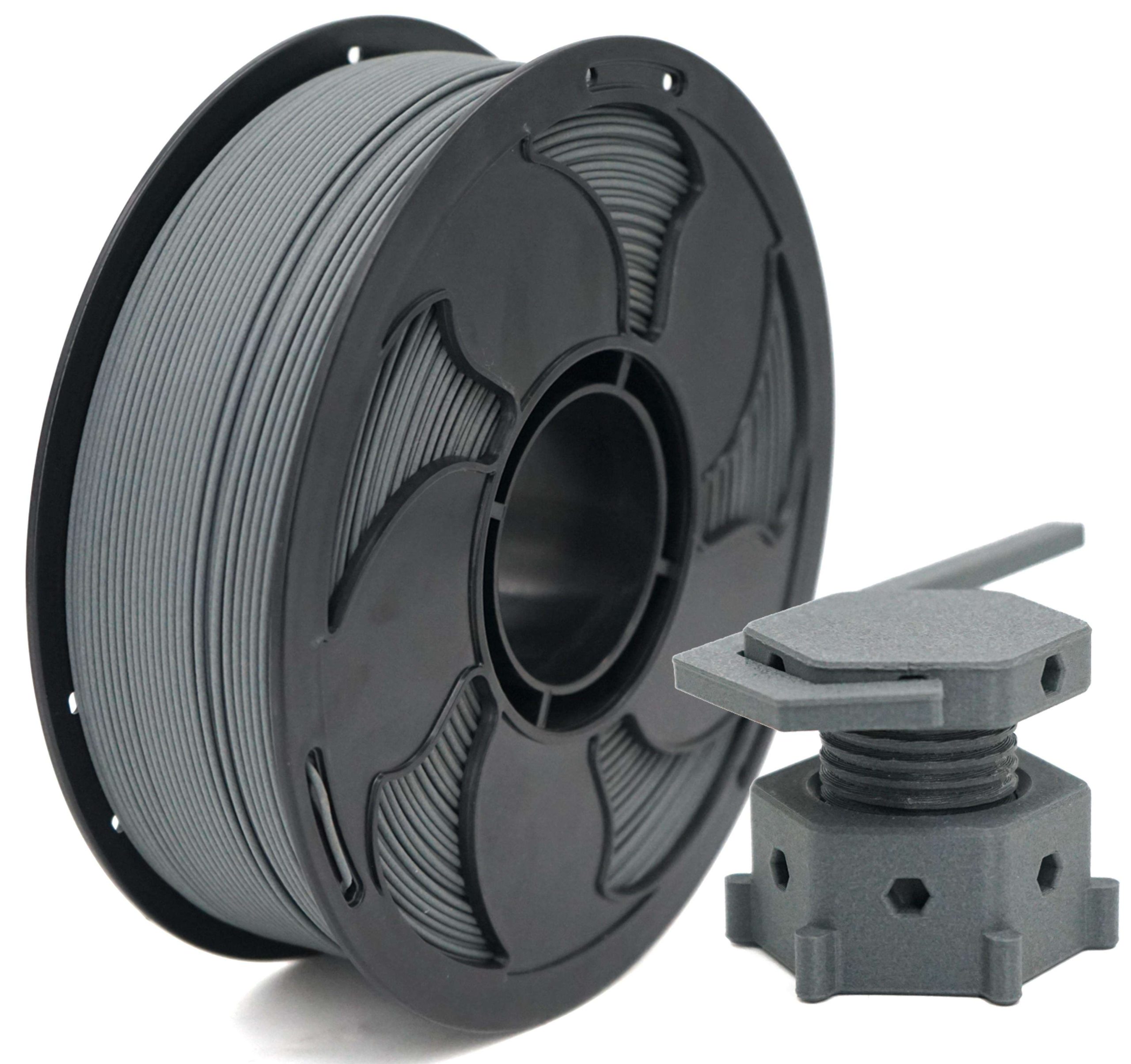
Standard PETGPETG+1kg spools220–250°CVentilation recommended
View Wholesale PETG →
ABS ASA engineering filament for university labs
Advanced
C
Engineering Module
Materials science · Senior capstone · Graduate research · Advanced engineering

ABS, ASA, and Carbon Fiber composites for labs with the right equipment: enclosed printers, heated beds (95–110°C), and proper ventilation. These materials teach real-world engineering trade-offs — heat resistance, UV stability, and composite behavior.
ABS / ASAPLA-CF / PETG-CFEnclosure requiredHardened nozzle for CFVentilation mandatory
View Engineering Materials →
3D print quality close-up — safe indoor printing
Safety Guidance

Indoor Safety for Classrooms & Makerspaces

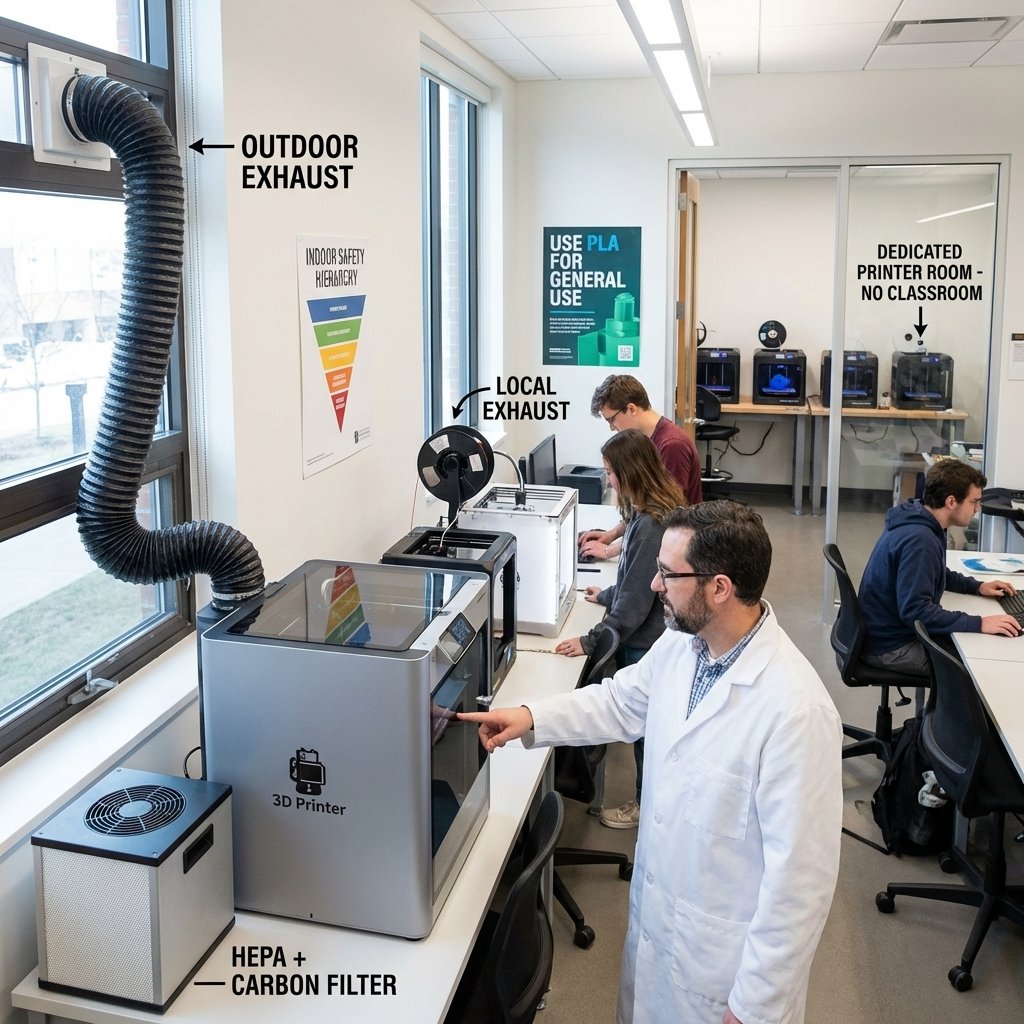
All FDM 3D printers emit ultrafine particles (UFPs) and some volatile organic compounds (VOCs) during operation. The level of concern depends on the material and the ventilation in your space. Here's a practical hierarchy of controls for educational settings:

🟢
Best: Enclosed printers with exhaust to outdoors
A printer enclosure with a duct to an exterior vent is the gold standard. HEPA + activated carbon filter enclosures are the next best option.
🟡
Good: Local exhaust ventilation (LEV) near printers
A fume extractor or ventilation fan positioned near the print bed. Open a window if possible. NIOSH recommends local exhaust for school/makerspace environments.
🔵
Minimum: Administrative controls
Group printers in a dedicated room (not a classroom). Schedule long prints outside class hours. Use PLA for general use — it has the lowest emissions. Reserve ABS/ASA for ventilated, enclosed setups only.
Read: Is PETG Safe to Print Indoors? (Data-Backed Guide)
Consistent filament quality — batch-to-batch reliability
Reliability

Less Troubleshooting, More Teaching Time

When 20 students run the same file on 20 printers, inconsistent filament means some printers jam, some under-extrude, and some produce parts that don't match. Your instructors become tech support instead of educators.

Our ±0.02mm diameter tolerance (dual-axis laser monitored) means every spool in your order performs identically. Students get repeatable results. Instructors get their class time back.
±0.02mm
Diameter tolerance
ΔE <1.5
Color consistency
100%
Virgin resin
Vacuum
Sealed + desiccant
Learn about our wholesale quality standard
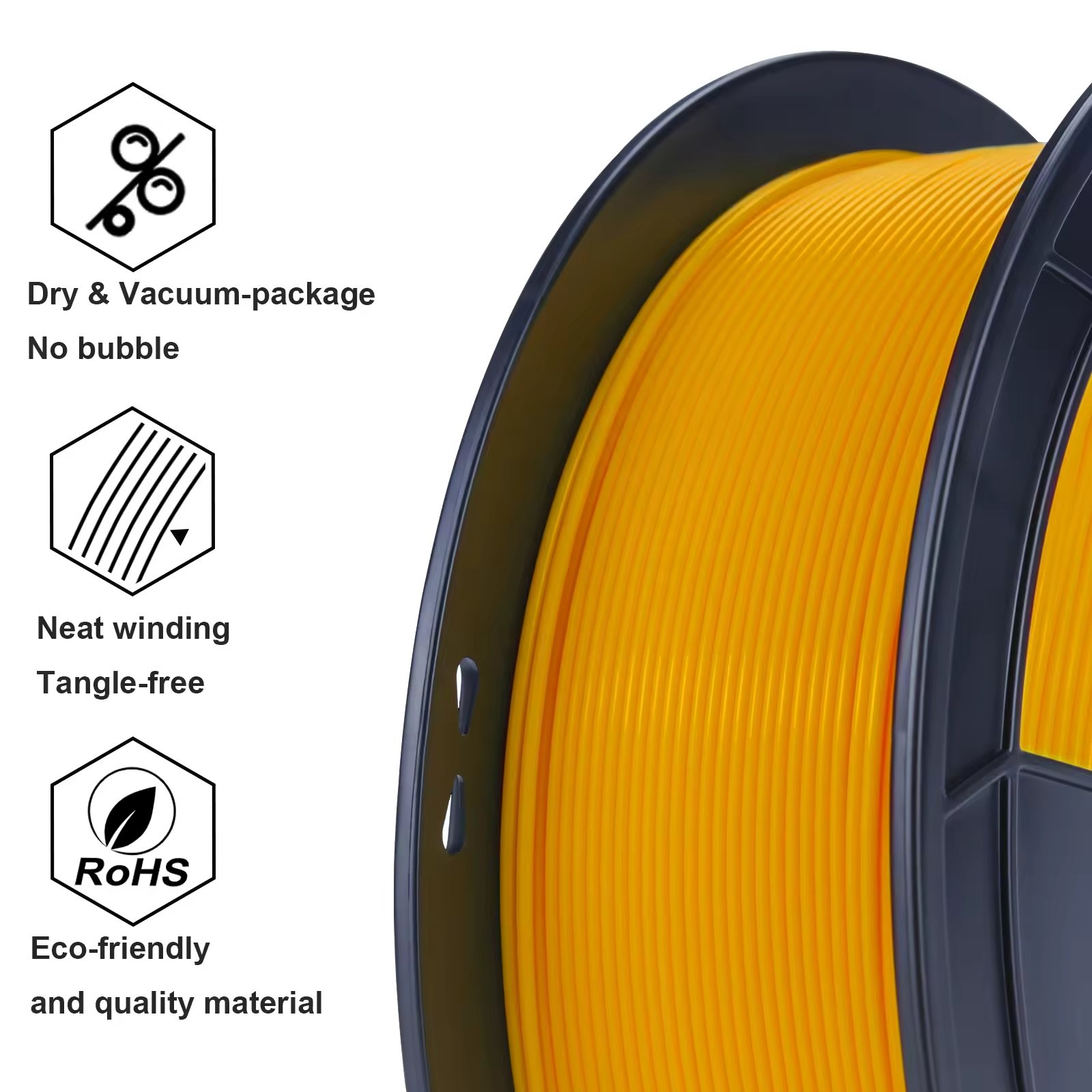
Vacuum-sealed filament storage for education
Storage SOP

Filament Storage for Schools — Reduce Waste, Prevent Problems

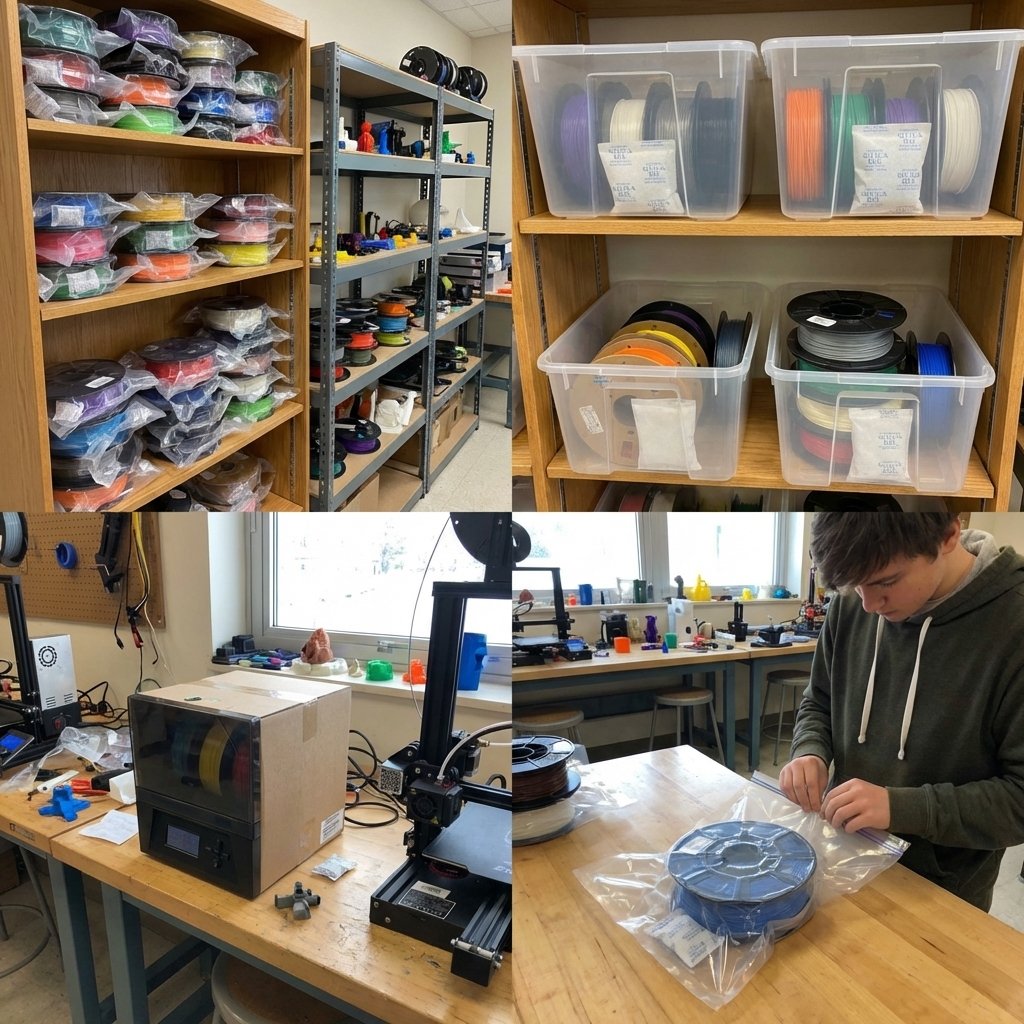
Moisture-damaged filament causes popping, stringing, weak parts, and rough surfaces — symptoms that waste class time on troubleshooting. A simple storage routine prevents most of these issues.

01Unopened spools: Keep in original vacuum seal until ready to use (12+ month shelf life)
02After opening: Reseal in airtight bag or container with fresh desiccant after each use
03If you hear popping/crackling: Filament has absorbed moisture — dry at 50°C for 4h (PLA) or 65°C for 6h (PETG) before printing
04High-humidity regions: Invest in a filament dryer box — especially for PETG and engineering materials
05Label & FIFO: Date each opened spool and use oldest stock first to minimize moisture exposure
Read: How to Dry PLA Filament & Avoid 3 Common Mistakes
Budgeting

How Much Filament Per Semester?

Use this framework to estimate your filament budget and avoid both running out mid-semester and over-ordering.

📐 Semester consumption estimate:

Total kg = Students × Projects per semester × Avg grams per project ÷ 1000

Typical project weight: small items 20–50g · medium parts 50–150g · large assemblies 150–500g

Small Lab (5–10 printers)

~20–50 students/semester → estimate 15–40 kg/semester → 15–40 spools (1kg)

Large Lab (10–30+ printers)

~50–200 students/semester → estimate 40–200 kg/semester → 40–200 spools (1kg)

→Add 15–20% buffer for failed prints, test prints, and calibration
→Consider 3kg or 5kg spools if running high-volume single-color projects (view large spool PLA)
→Our MOQ is 100 spools (mixed freely) — enough for most semester orders

For a deeper understanding of spool sizes and how material density affects cost: How Many Grams in a Roll & 5 Standard Spool Sizes →
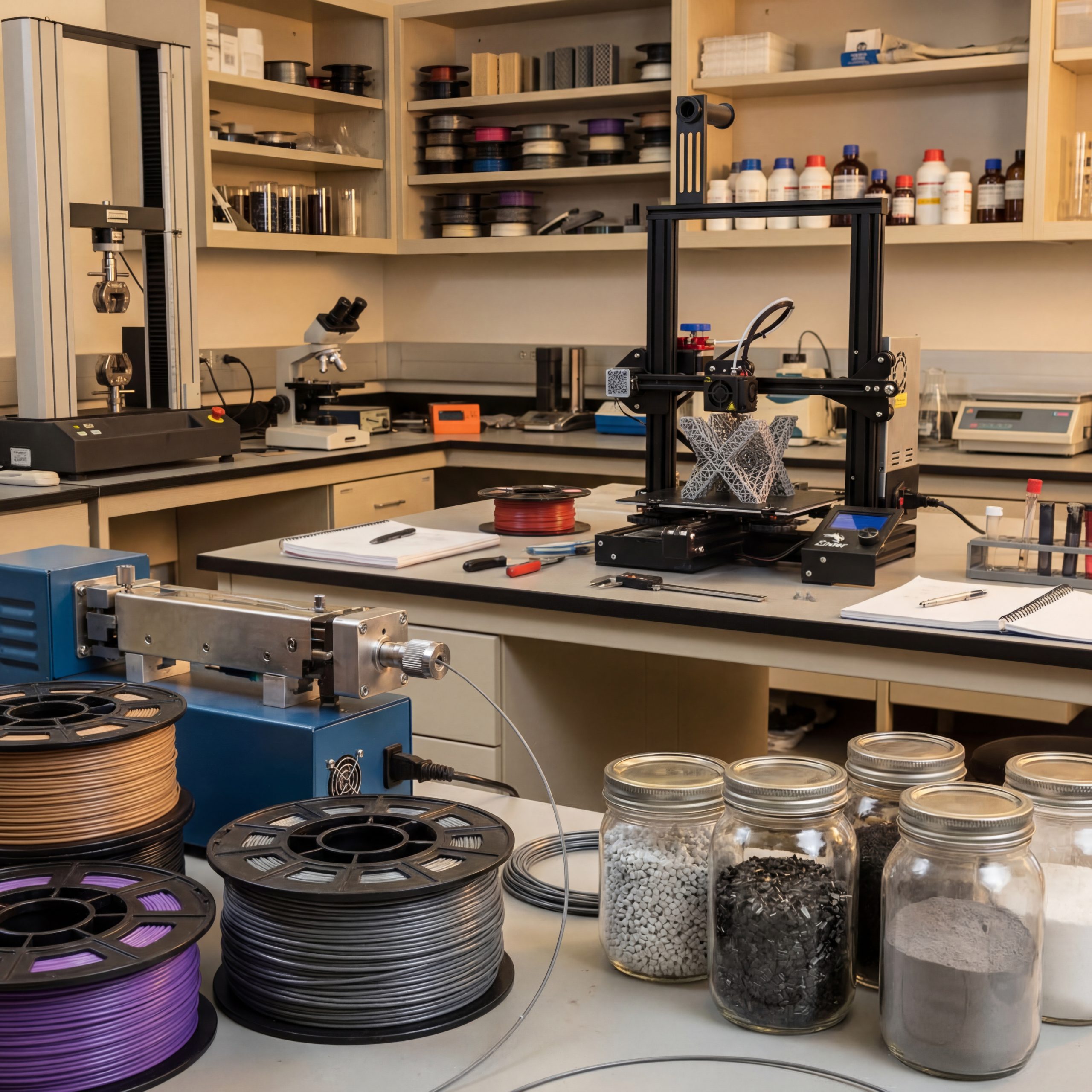
Carbon Fiber composite filament — university research material
University Research

Custom Filament R&D for University Labs (ODM)

For research teams where off-the-shelf filament is a limitation, we support projects that require material modification, custom compounding, or performance tuning — from pilot runs to scalable supply, with documented QC and batch traceability for repeatable experiments.

What we can customize:

→Property tuning: adjust stiffness, impact strength, heat resistance, or flexibility for your target application
→Composite reinforcement: carbon/glass-fiber variants for higher rigidity and dimensional stability
→Research formulations under NDA: exclusive material development when standard grades don't meet experimental requirements

What you receive:

✓Pilot batches for validation (sample → iteration → small batch → scale)
✓COA / QC summary + batch traceability for repeatable research workflows
✓Material notes & suggested print parameters aligned with your validation plan
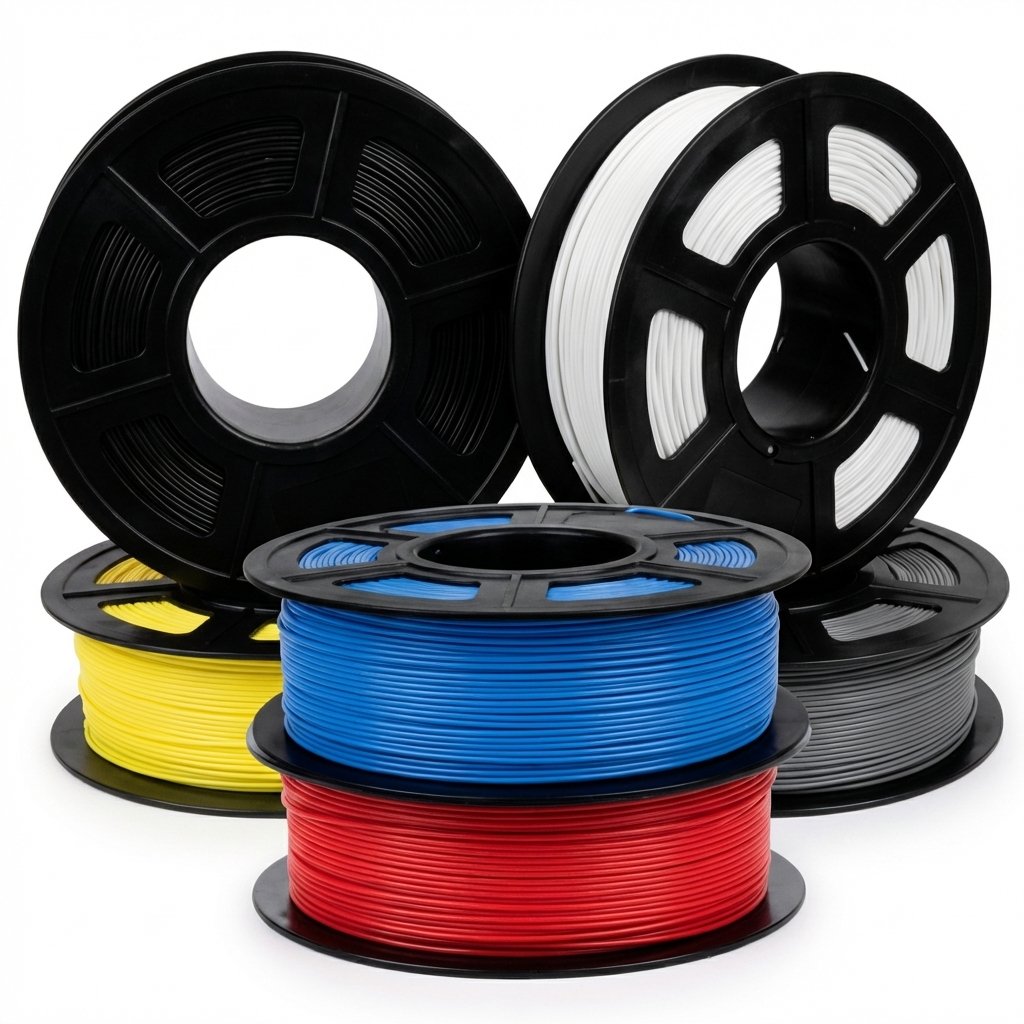
SigmaFilament product range — education procurement
Procurement

Making Procurement Easy for Schools

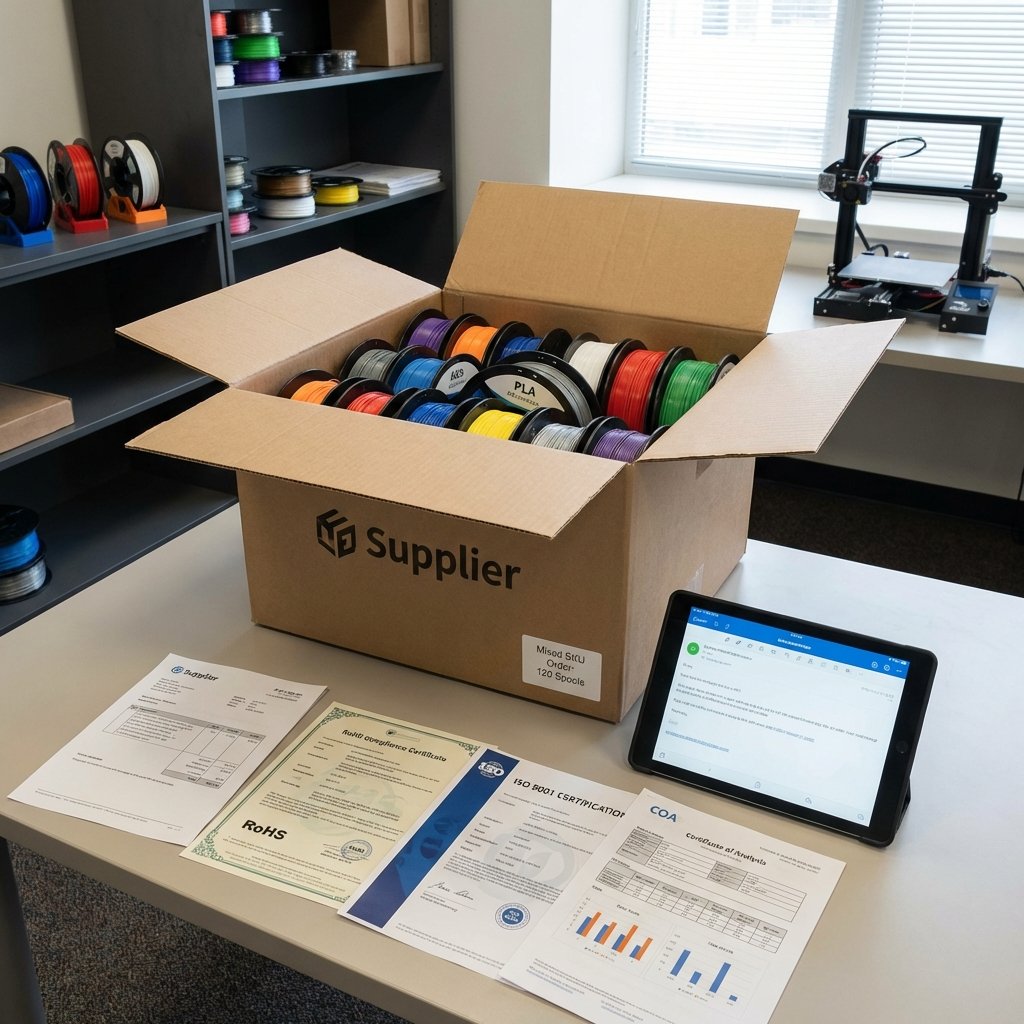
We understand that educational procurement involves paperwork, approvals, and compliance checks. Here's what we provide to make the process smooth:

✓Quote response: Within 1–2 business days via email or WhatsApp
✓Compliance documents: RoHS, REACH, CE documentation available for all products
✓ISO 9001 certification: Verified manufacturing quality system — view our company profile
✓COA per batch: Certificate of Analysis with diameter, color, and moisture data for incoming inspection
✓Mixed SKU ordering: 100-spool minimum, mix any materials and colors freely in one PO
✓Shipping: FOB, DDP, or DAP to simplify import. Air freight 5–7 days, sea freight 25–35 days

Payment via T/T (bank transfer). Free samples (1–3 spools) are available for material evaluation before bulk orders; customers only need to cover the shipping cost.

Education Knowledge Base & Inquiry

Frequently Asked Questions for Schools & Universities

Practical answers about material safety, indoor use, budgeting, storage, and procurement for educational institutions.

PLA and PLA+ are the best starting point for any educational environment. PLA prints at low temperatures (190–220°C), produces minimal odor and low emissions, and doesn't require an enclosed printer or heated bed. It's forgiving for new users — meaning fewer failed prints and less instructor troubleshooting. For projects requiring more durability, PETG is the next step — it's stronger, more impact-resistant, and still safe for indoor use with reasonable ventilation. We do not recommend ABS or ASA in standard classrooms — these materials emit higher levels of VOCs and require enclosed printers with proper exhaust. Reserve them for dedicated engineering labs with ventilation. See our PLA vs PETG comparison guide for a detailed breakdown.
It depends on the material and the number of printers. For PLA: a well-ventilated room (operable windows or HVAC) is generally sufficient for up to 10–15 printers. For PETG: local exhaust ventilation (LEV) or printer enclosures with filtration are recommended, especially with 5+ printers in a single room. For ABS/ASA: enclosed printers with exhaust to outdoors are strongly recommended — NIOSH guidelines for school and makerspace environments emphasize ventilation controls for styrene-based materials. The general principle: concentrate printers in a dedicated area (not spread across classrooms), ensure air movement, and schedule long prints outside class hours when possible. For a deep dive into the emissions data, read our guide on whether PETG is safe to print indoors.
Every spool we ship arrives vacuum-sealed with desiccant — unopened, they stay dry for 12+ months. After opening, the key is to minimize exposure to humidity: reseal in an airtight container or ziplock bag with fresh desiccant when not in use. If filament has been left out and shows symptoms (popping sounds during extrusion, stringing, rough surfaces), dry it before use — PLA at 50°C for 4 hours, PETG at 65°C for 4–6 hours. For schools in high-humidity regions, a dedicated filament dryer box is a worthwhile investment. For a complete walkthrough: How to Dry PLA Filament & Avoid 3 Common Mistakes.
Use this formula: Students × Projects per semester × Average grams per project ÷ 1000 = Total kg. Typical project weights: small items 20–50g, medium parts 50–150g, large assemblies 150–500g. For example: 40 students × 3 projects × 100g average = 12 kg + 20% buffer = ~15 kg (15 spools of 1kg). For labs running 10+ printers continuously, estimate consumption via Printers × Hours/day × Flow rate (g/h). PLA at typical speeds uses ~25–35 g/h per printer. Add 15–20% buffer for failed prints and calibration. Our spool sizes & grams guide covers the math in detail.
PETG or PETG+ is the go-to choice for most robotics and functional engineering projects in educational settings. It offers significantly better impact resistance and layer adhesion than PLA, with a heat deflection temperature of ~70°C — enough for parts near motors or electronics. For maximum stiffness (brackets, structural members), consider PLA-CF or PETG-CF (carbon fiber composites) — these are 2–5× stiffer than base polymers and print on standard printers with a hardened nozzle. For parts exposed to high heat (>80°C) or outdoor UV, ABS/ASA is the engineering choice, but requires enclosed printers and proper ventilation.
Yes. Our minimum wholesale order is 100 spools combined — mix freely across all materials, colors, and spool sizes (1kg, 3kg, 5kg). There is no per-SKU minimum for standard products. A typical education order might look like: 30× PLA White + 20× PLA Black + 10× PLA Assorted Colors + 15× PETG White + 10× PETG Black + 15× PLA+ Grey = 100 spools, one purchase order, one shipment. This lets you cover multiple courses and printer setups without overcommitting to any single color.
We do not recommend ABS or ASA for standard classroom environments without proper controls. Both materials emit styrene-based VOCs and higher levels of ultrafine particles compared to PLA or PETG. They should only be used in labs that have: (1) enclosed 3D printers with filtration or exhaust, (2) dedicated ventilation (not shared classroom HVAC), and (3) instructor oversight on material handling and print monitoring. For most educational purposes, PETG provides a better balance of strength and safety — it offers ~70°C heat resistance and strong impact performance without the emission concerns of ABS.
Yes. We support research labs that need custom polymer blends, composite reinforcement modifications, or property-tuned formulations — all under NDA if required. The typical workflow: share your target properties and base polymer preference → we propose formulation directions and run a pilot extrusion → your lab validates → we iterate with controlled change logs → confirm spec and scale with batch traceability. Pilot batches include COA documentation for repeatable research workflows. Full details on our custom R&D capabilities, timeline, and NDA process are on our OEM/ODM services page.
We provide RoHS, REACH, and CE documentation for all products as standard — these satisfy procurement requirements for most educational institutions globally. Additional documents available on request: MSDS (Material Safety Data Sheets) for workplace safety records, COA (Certificate of Analysis) with batch-specific quality data, and our ISO 9001 certification for supplier qualification files. If your procurement department requires specific documentation not listed here, contact us — we'll work with you to provide what's needed.
It depends on your consumption rate and storage capacity. Small labs (5–10 printers): a single order at the start of each semester usually covers the full term. Medium labs (10–20 printers): consider ordering quarterly to avoid tying up too much budget in advance. Large labs (20+ printers): monthly or bi-monthly orders give you better inventory control and cash flow management. Our lead time is 5–15 business days for standard wholesale (in-stock SKUs). For recurring orders, we can establish a production schedule aligned with your academic calendar — tell us your term dates and we'll plan accordingly.
WhatsApp
+86 15999903211
We typically reply within 1 business day
Get an Education Quote
Replies within 1–2 business days

    ISO 9001 Certified
    RoHS / REACH / CE
    100 Spool Mixed MOQ
    Custom R&D for Research
    Get Started

    Ready to Equip Your Lab with Reliable Filament?

    Tell us about your institution, number of printers, courses, and material preferences. We'll put together a tailored education quote within 1–2 business days.

    📧 [email protected] · 💬 WhatsApp: +86 159-9990-3211 · 🌍 Shipping to 50+ countries