Production-Ready Filament for OEM & Manufacturers | Material Selection, Qualification & Supply Planning | SigmaFilament
Solution: OEM & Manufacturers

Production-Ready Filament for OEM & Manufacturers

Choose the right material for your application, qualify it with a structured test plan, and scale supply with documented QC and full batch traceability. This page answers: What material should I use? How do I validate it? What documentation can I get? How fast can I scale?
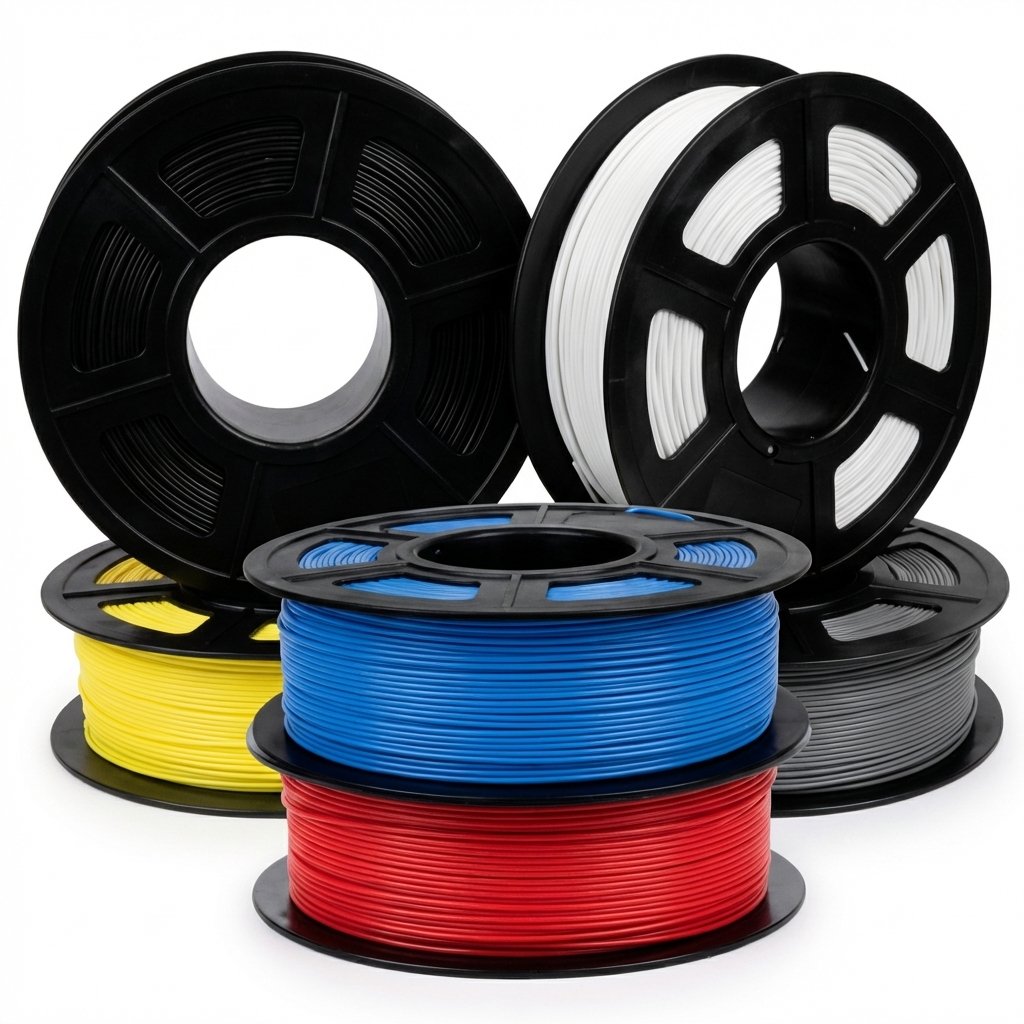
SigmaFilament OEM filament production — ISO 9001 certified manufacturing
ISO 9001
Certified Facility
±0.02mm
Diameter Tolerance
COA
Per Batch Available
Where Do You Start?

Three Paths — Pick the One That Fits Your Project

Not every OEM project is the same. Find your starting point below — we'll route you to the right resources.

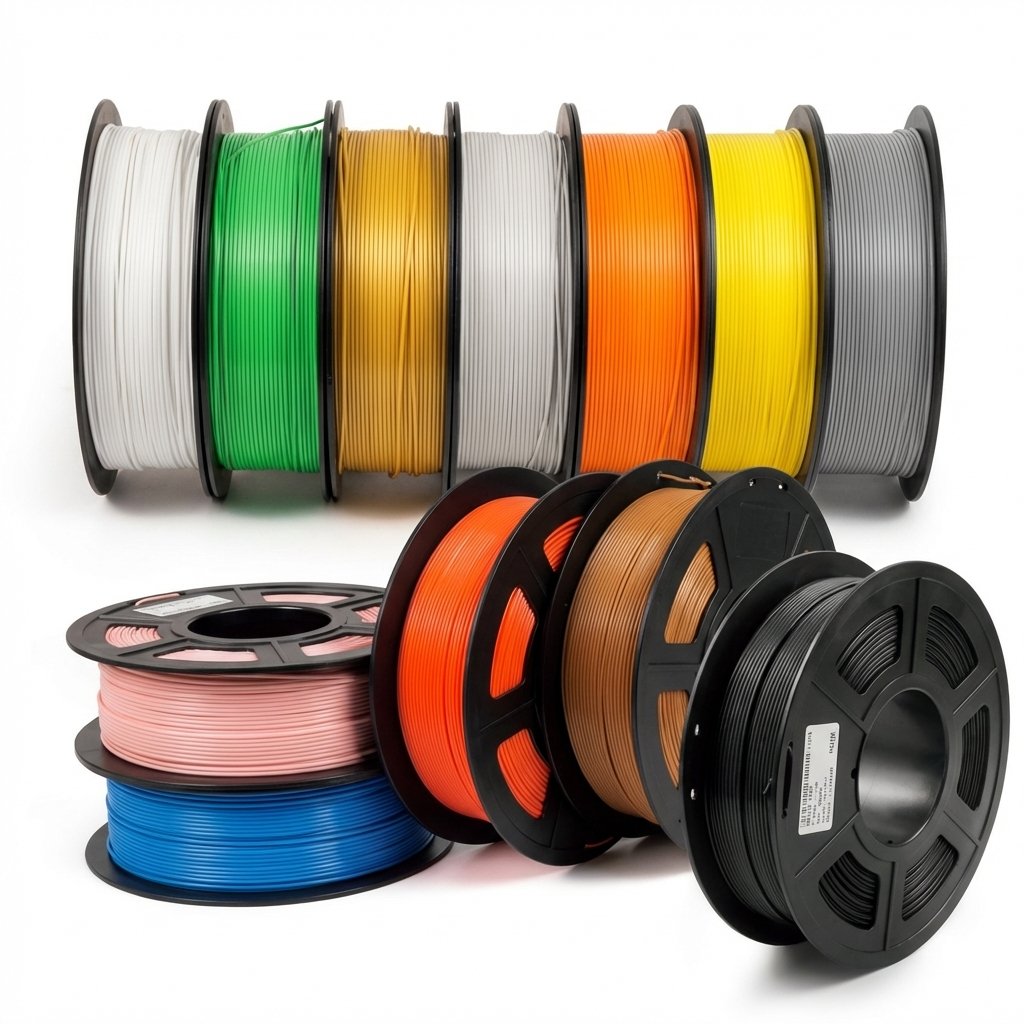
SigmaFilament wholesale filament showroom
Path 01
Fast Bulk Supply — No Branding

Production-grade filament with documented quality, shipped fast. Standard SigmaFilament packaging with full QC documentation and COA per batch.

View Wholesale Material Catalog →
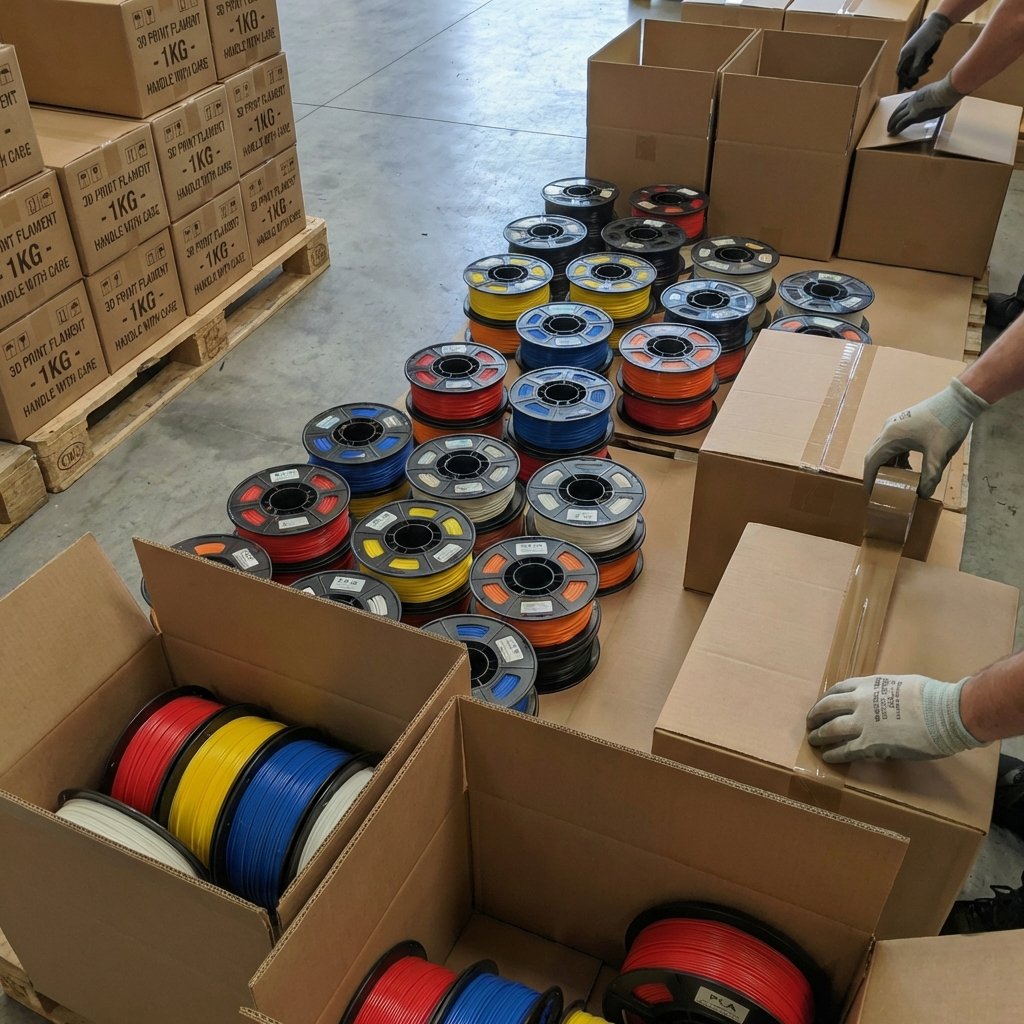
OEM private label filament packaging
Path 02
Private Label / OEM Packaging

Our manufacturing quality under your brand. Custom spool labels, box design, and packaging — using our 30+ proven standard formulations.

Explore OEM Packaging & MOQ →
Custom color filament — Pantone matching
Path 03
Custom Formulation / ODM R&D

Unique material development — custom Pantone/RAL color matching, modified mechanical properties, or entirely new formulations under NDA.

Start a Custom R&D Project →

Not sure which path? Send us your application requirements — we'll recommend the most efficient approach.

Material Selection

Application-Based Material Shortlist

When OEM parts fail, it's rarely because the filament was "cheap" — it's because the material spec didn't match the use case. Start with the application requirement, not the material name.

💡 Not sure which material fits? If your application has specific mechanical/thermal targets, our engineering team will recommend the best polymer family. Send your application requirements → · For deeper methodology, read our 5-Point Sourcing Checklist.

Qualification Plan

How to Qualify a New Filament Supplier — Step by Step

Before committing to production volumes, run this four-step qualification process. It works for any material in our catalog.
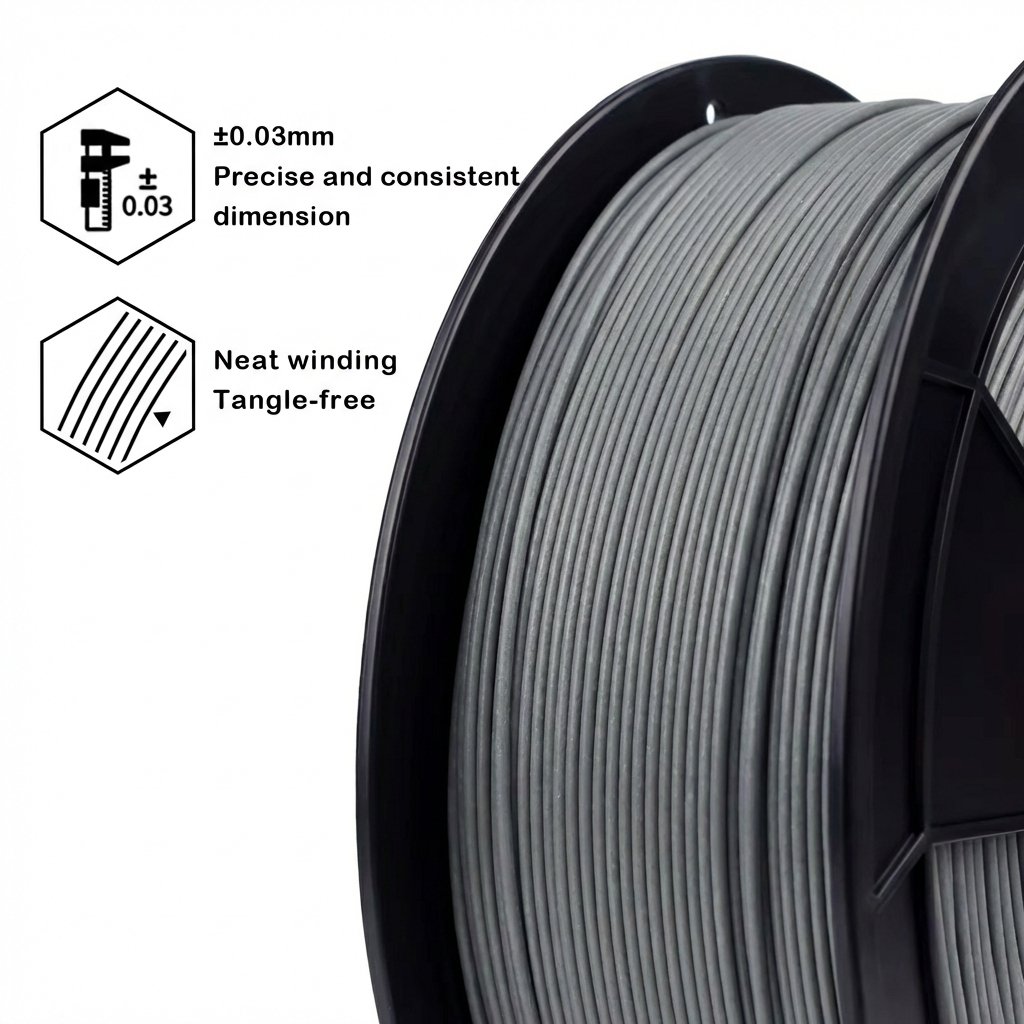
Define filament specification
1 Define Spec
Document Requirements

The more precise your spec, the faster the qualification and the fewer surprises at scale.

  • Material family & diameter
  • Color standard (Pantone / RAL / sample)
  • Spool format (1kg / 3kg / 5kg)
  • Target printer model & speed
  • End-use environment (temp, UV, chemical)
  • Performance thresholds if applicable
Validate filament with test prints
2 Sample & Validate
Test Under Real Conditions

Request 1–3 sample spools. Run validation on your actual production equipment.

  • Measure diameter at 10+ points
  • Print your hardest production job
  • Test across multiple printers with same G-code
  • Check dimensional accuracy of parts
  • Evaluate surface finish & color
  • For HS: validate at your target speed
Review QC documentation — COA and TDS
3 Review Docs
Verify Consistency at Scale

Documentation proves that consistency isn't just a one-spool sample result.

  • Certificate of Analysis (COA) for batch
  • Technical Data Sheet (TDS)
  • Batch QC summary (diameter, ΔE)
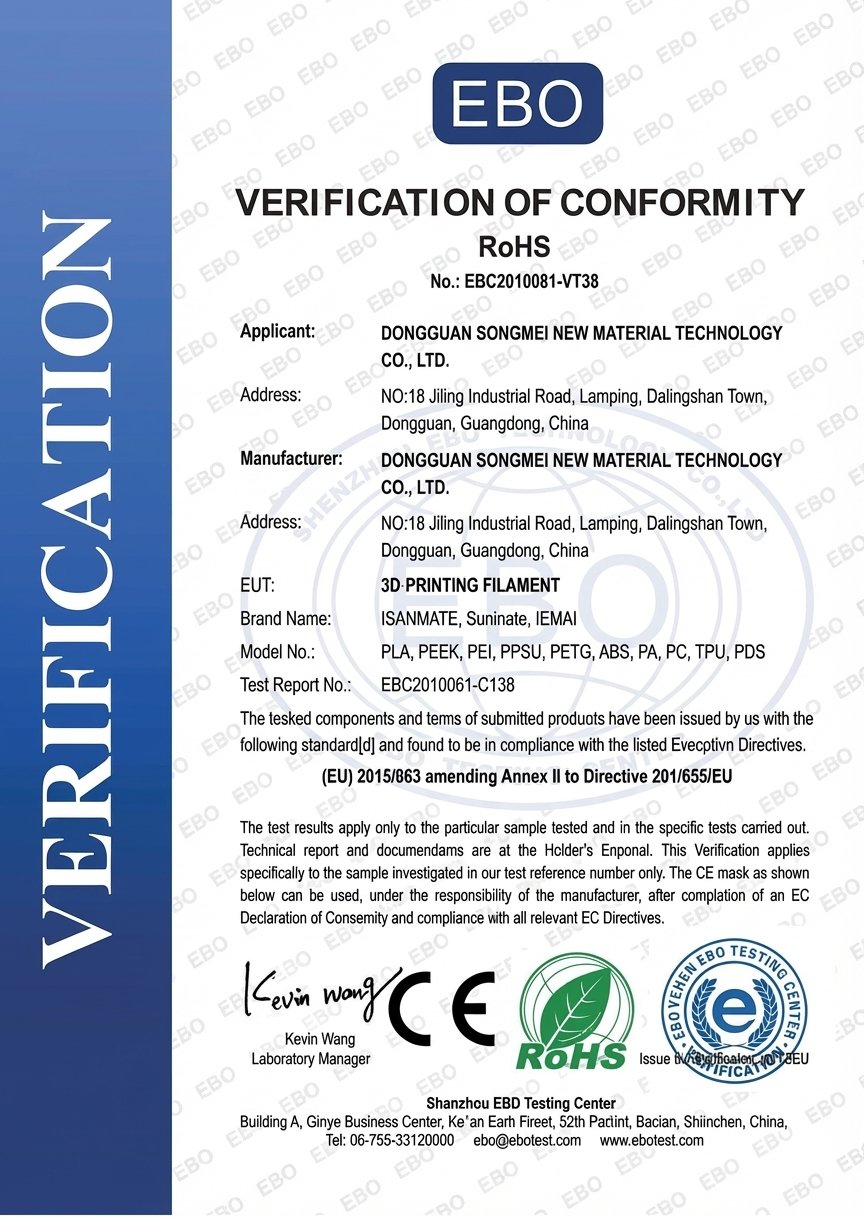
  • RoHS / REACH / CE compliance
  • MSDS if required by supply chain
Scale filament production — bulk spools
4 Scale Production
Lock In Supply

Establish reorder cadence and production capacity allocation.

  • First production order (100 spools MOQ)
  • Request COA with each batch
  • Set reorder point & safety stock
  • Establish recurring schedule
  • Monitor incoming quality (spot-checks)

For a detailed methodology on evaluating color consistency, resin quality, and supplier scalability:

Read: 5-Point Sourcing Checklist for Consistent Color & Performance →
Documentation Pack

What You Can Request — and How Your Team Uses It

OEM manufacturers need traceable documentation for incoming inspection, supplier approval, and audit readiness. Here's what ships with your order.

Certificate of Analysis — batch QC report
📋
Certificate of Analysis (COA)

Batch-specific report: measured diameter, ovality, tensile strength, color ΔE, and moisture content against spec limits. Issued with batch/lot number for full traceability.
Used for: Incoming inspection — verify each shipment meets approved spec. Attach to supplier qualification file for audit trail.
Technical Data Sheet — mechanical properties
📊
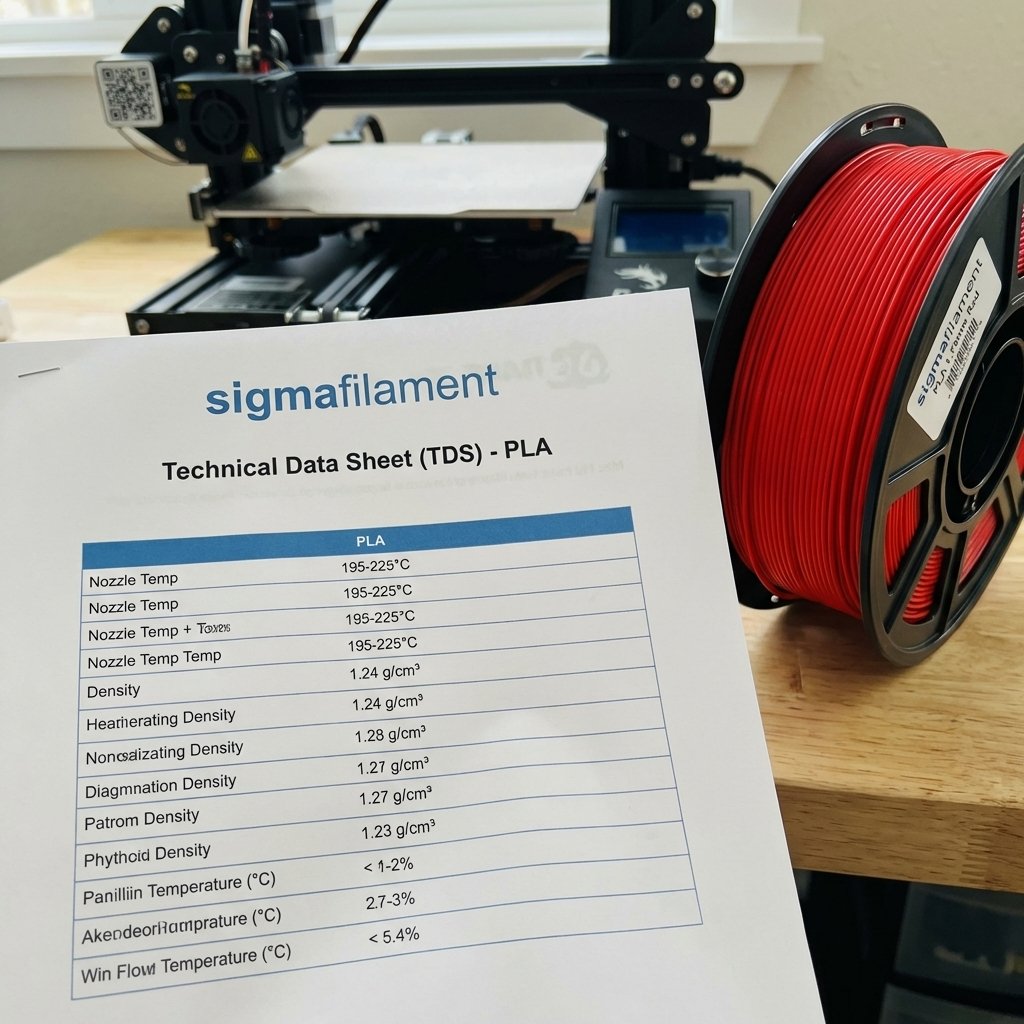
Technical Data Sheet (TDS)

Full mechanical and thermal data: tensile strength, elongation, flexural modulus, HDT, MFI, density. Test-method referenced (ISO 527, ISO 75).

Used for: Material selection & engineering justification. Share with end customers for part validation and comparison against alternatives.
Batch traceability — vacuum sealed filament
🔍
Batch Traceability & QC Report

Every spool traceable to production batch, resin lot, and extrusion run. QC report includes diameter measurement logs and visual inspection results.
Used for: Batch change control — trace quality issues to exact material lot. Required by ISO 9001 / IATF 16949 quality systems.
Compliance documentation — RoHS REACH CE
🛡️
Compliance & Safety Documents

RoHS, REACH, CE documentation for all products as standard. MSDS on request. Satisfies EU/US/UK marketplace compliance requirements.

Used for: Regulatory compliance — product certification, market access, workplace safety audits. Attach to product dossier for end-customer delivery.

📥 Need a document pack with your sample order?

Include "COA + TDS requested" in your inquiry — we'll ship documentation alongside your sample spools at no extra cost.

Request Samples + Documentation →
Supply Planning

Lead Times, Reorder Cadence & Inventory Planning

Know exactly when to order, how much safety stock to hold, and how long each project type takes from PO to delivery.

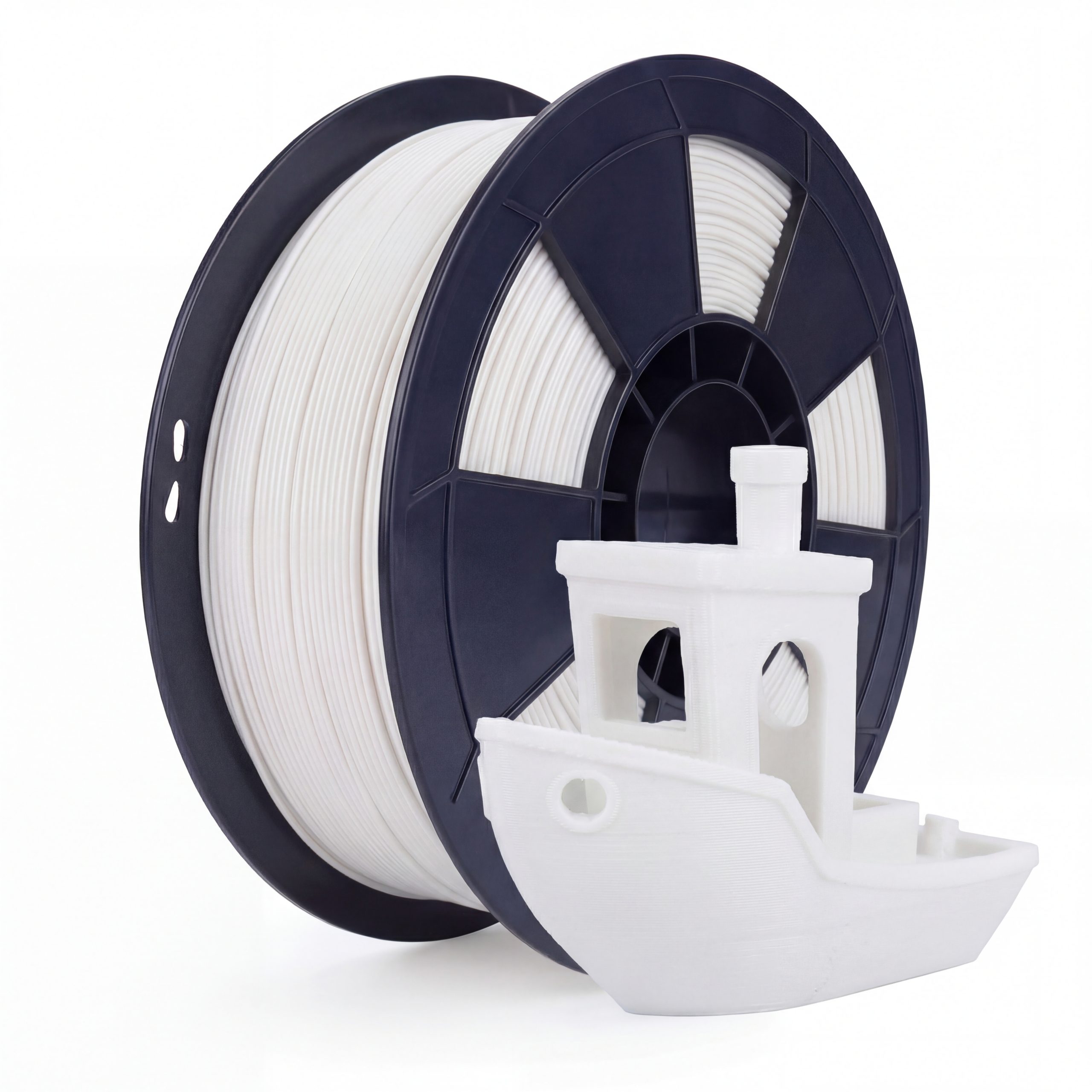
Standard wholesale filament — fast delivery
5–15business days
Standard Wholesale

In-stock SKUs with SigmaFilament packaging. Production, QC, and packaging included. High-demand colors (White, Black, Grey) can ship in 3–5 days.
OEM private label filament — custom packaging
15–20business days
OEM / Private Label

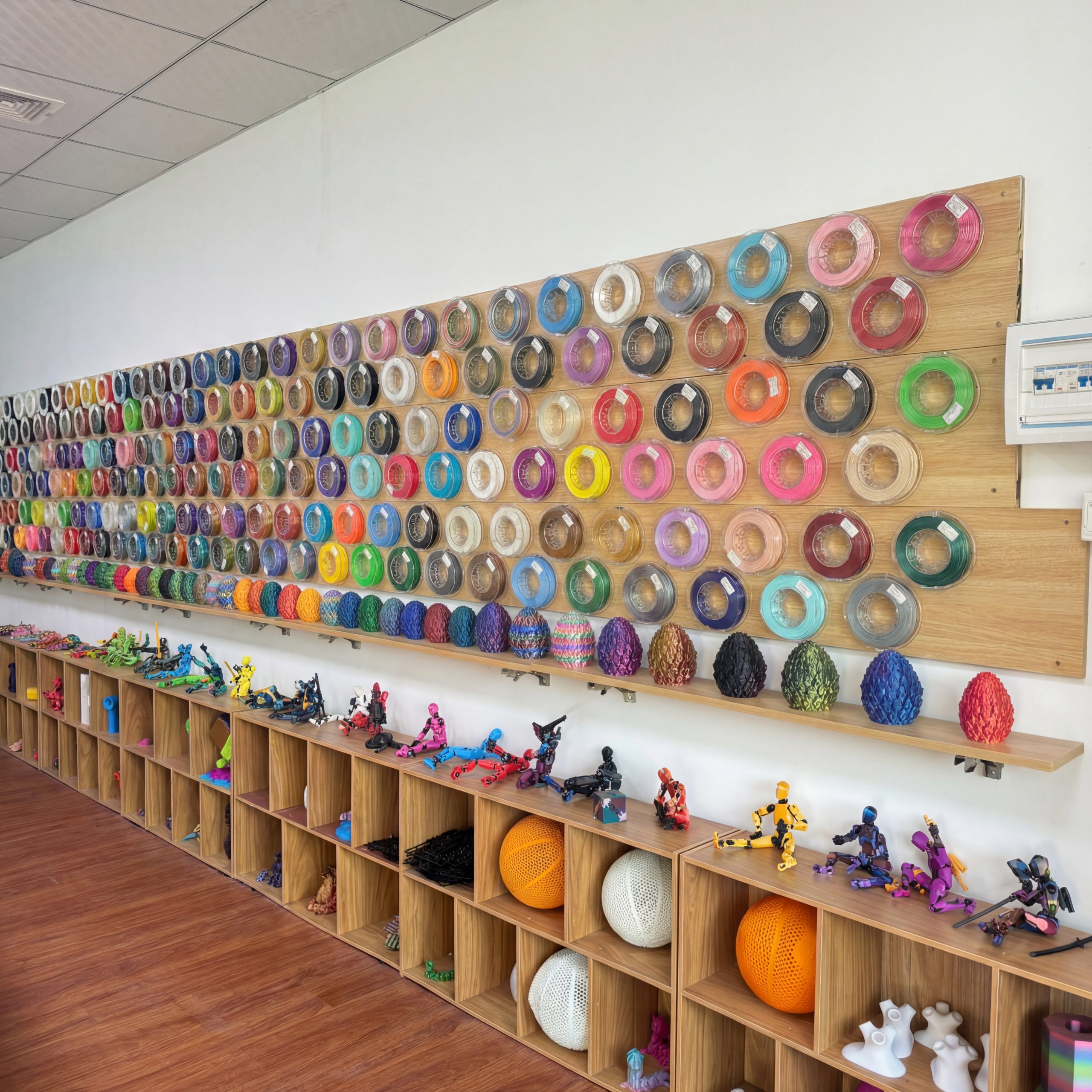
Custom packaging setup, spool labels, and box printing. Uses standard proven formulations under your brand identity.

ODM custom formulation — color matching
20–30business days
ODM / Custom Formulation

New color chip in 3–5 days → sample approval → production. NDA available. Includes spectrophotometer-verified color lock.

Filament inventory management — vacuum sealed storage
Inventory Framework

Inventory Planning for OEM Procurement Teams

Use these formulas and rules of thumb to set your reorder cadence and safety stock levels.

Monthly consumption formula:

Monthly kg = Printers × Hours/day × 30 × Flow rate (g/h) ÷ 1000

PLA @ 60mm/s ≈ 30 g/h · HS-PLA @ 300mm/s ≈ 100 g/h · PETG ≈ 25 g/h
→Safety stock: 3–4 weeks of consumption
→Reorder trigger: Current stock = lead time consumption + safety stock
→Recurring orders: 200+ spools/month = pre-allocated production capacity
→Shipping: Air 5–7 days · Sea 25–35 days · FOB / DDP / DAP supported
Get a timeline estimate for your project
SigmaFilament full product range — ISO 9001 manufacturing
Manufacturing Standard

Why These Numbers Matter for OEM Qualification

We won't repeat our full capability list here — that's covered on our OEM/ODM services page. For qualification purposes, these are the numbers your engineering team needs:

±0.02mm
Diameter tolerance
(dual-axis laser)
ΔE <1.5
Color accuracy
batch-to-batch
70+
QC checkpoints
per spool
100%
Virgin resin
no regrind

These specs are documented on the COA that ships with every production batch. For full details on custom color matching, packaging, and formulation capabilities:

View Full OEM/ODM Services & Custom Capabilities
OEM Knowledge Base & RFQ

Questions OEM Procurement & Engineering Teams Actually Ask

Qualification, incoming inspection, change control, and supply continuity — the questions that matter for production.

A production-grade incoming inspection covers three checks: (1) Diameter verification: measure at 5–10 points across 2–3 randomly selected spools using digital calipers — confirm all readings fall within ±0.02mm of 1.75mm. (2) Visual inspection: check for surface defects, tangling, and vacuum seal integrity. A broken seal means potential moisture absorption — quarantine and dry before use. (3) COA review: compare Certificate of Analysis values against your approved specification. We include batch number, diameter measurements, color ΔE, and moisture content on every COA. If any parameter is outside spec, contact us before using the material — we'll replace or investigate. For detailed methodology: 5-Point Sourcing Checklist.
Every production batch has a unique lot number tracing to specific resin lot, masterbatch lot, and extrusion run. When transitioning between batches: (1) Run a comparison print — same part, old vs new batch side-by-side. (2) Review COAs — compare ΔE values. If both <1.5 vs reference, they're functionally identical. (3) Document the transition in your quality system (old lot → new lot + comparison results). For large-volume OEM accounts, we hold your approved reference sample in our quality lab and measure every subsequent batch against it — continuous COA data tied to your specific standard.
Yes — and we strongly recommend it. (1) Sample spools (1–3 units) at retail price for initial material evaluation. (2) First production order (100 spools MOQ) — your validation batch. Run through full production process, not just test prints. Evaluate yield rate, dimensional consistency, and color match across spools. (3) Scale up once validated. The 100-spool minimum is designed for OEM qualification at meaningful volume without overcommitting. Mix materials and colors freely. For private label requiring custom packaging, MOQ is 500 spools/SKU — but validate the material first with standard-packaged spools.
(1) Submit your color spec (Pantone / RAL / physical sample). (2) We produce a color chip in 3–5 business days via spectrophotometer-calibrated color lab. (3) You approve or request adjustments. (4) Approved standard is locked — physical reference + spectrophotometer reading retained. Every future batch measured against this reference to guarantee ΔE <1.5. Your 50th reorder matches your 1st within a threshold invisible to the human eye. Full color workflow and MOQ (200+ spools per custom color) on our OEM/ODM page.
Our Technical Data Sheets (TDS) cover: tensile strength (MPa), elongation at break (%), flexural modulus (MPa), impact strength (kJ/m²), HDT (°C at 0.45 MPa), MFI (g/10min), and density (g/cm³). For CF composites: fiber content (%) and specific stiffness comparisons. All test-method referenced (ISO 527, ISO 75) for direct comparison against alternatives. If your application has specific thresholds (e.g., minimum tensile for structural bracket, minimum HDT for under-hood automotive), share those in your RFQ — we'll confirm standard material meets spec or recommend custom formulation.
Your side: maintain 3–4 weeks safety stock for critical SKUs; trigger reorders when stock = lead time consumption + safety stock. Our side: for 200+ spools/month accounts, we offer recurring production scheduling — your SKUs pre-allocated so you never compete with spot orders. Standard colors (White, Black, Grey) ship within 3–5 business days from in-stock inventory. For custom colors/private label (15–20 day lead times), plan reorders early. After 2–3 orders we understand your consumption pattern and proactively flag reorder timing.
Yes. Our facility is ISO 9001 certified. Specifically: (1) Traceability: every spool → batch/lot number → resin lot, masterbatch lot, production date. (2) COA: batch-specific quality data for incoming inspection records. (3) Change management: affected OEM accounts notified before any formulation/process changes reach production. (4) Corrective action: root cause investigation and documented corrective action per ISO 9001 procedures. For IATF 16949 (automotive), we can provide PPAP-level documentation on request — contact us with specific requirements.
An ideal OEM RFQ includes: (1) Application: what parts will be used for. (2) Material preference or "need recommendation." (3) Performance requirements: thermal, mechanical, chemical thresholds. (4) Volume & timeline: monthly consumption + target start date. (5) Print environment: printer models, target speed, enclosed/open. (6) Branding: standard packaging or private label. (7) Documentation needs: COA, TDS, compliance certs. The form on this page captures these fields — or email [email protected] with your spec document attached.
WhatsApp
+86 15999903211
We typically reply within 1 business day
Submit an OEM RFQ
Replies within 1–2 business days

    ISO 9001 Certified
    COA Per Batch
    Full Traceability
    RoHS / REACH / CE
    Get Started

    Ready to Qualify Production-Grade Filament?

    Tell us your application, material requirements, volume target, and documentation needs. We'll respond with a material recommendation, timeline, and pricing within 1–2 business days.

    📧 [email protected] · 💬 WhatsApp: +86 159-9990-3211 · 🌍 Shipping to 50+ countries