Data-Backed Sourcing: 5 Critical Factors for Selecting Polylactic Acid Filament in 2026


Abstract
This analysis examines the evolving role of polylactic acid filament within the landscape of fused deposition modeling in 2026. Once relegated to hobbyist applications, this bioplastic, derived from renewable resources such as corn starch, has matured into a diverse family of materials suitable for professional engineering and manufacturing contexts juggerbot3d.com. The investigation deconstructs the critical factors that differentiate commodity-grade PLA from performance-oriented formulations like PLA+ and carbon fiber-reinforced composites. It posits that a successful sourcing strategy hinges upon a data-driven evaluation of mechanical properties, manufacturing consistency, and formulation-specific printability. The discourse moves beyond rudimentary assessments of print quality to a more rigorous framework, considering material data sheets, supplier certifications like ISO 9001, and the strategic advantages of OEM/ODM partnerships. By scrutinizing these elements, professionals can leverage the full potential of advanced polylactic acid filament for applications demanding high stiffness, dimensional accuracy, and repeatable performance, such as functional prototypes, jigs, and fixtures.
Key Takeaways
- Evaluate material data sheets for tensile strength and modulus to match the filament to the part’s mechanical needs.
- Implement strict filament drying protocols before printing to prevent moisture-related defects and ensure part strength.
- Select a polylactic acid filament with a verified diameter tolerance of ±0.03mm or better to guarantee print consistency.
- Verify supplier certifications like ISO 9001:2015 and RoHS compliance as a proxy for manufacturing quality.
- Use a hardened steel nozzle with a diameter of 0.5mm or larger for abrasive-filled PLA variants to prevent clogs.
- Calibrate print speed, temperature, and retraction settings for each specific PLA formulation to achieve optimal results.
Table of Contents
- Factor 1: Deconstructing Mechanical Properties Beyond the Basics
- Factor 2: Navigating the Expanding Universe of PLA Formulations
- Factor 3: The Unseen Variable: Quality Control and Manufacturing Consistency
- Factor 4: Optimizing Printability for Flawless Execution
- Factor 5: Sourcing and Supply Chain Strategy for Professionals
- Frequently Asked Questions (FAQ)
- Conclusion
- References
The perception of polylactic acid filament has undergone a profound transformation. For years, it was typecast as the friendly, forgiving material for beginners—the default choice for trinkets, classroom models, and visual prototypes where its low printing temperature and minimal warping were paramount (Simplify3D, 2023). It was seen as the gateway material, a stepping stone on the path to more “serious” engineering polymers like ABS or PETG. In 2026, this view is not just outdated; it is a fundamental misreading of the material’s capabilities. The family of materials now falling under the umbrella of “PLA” is vast and functionally diverse, encompassing formulations that rival traditional thermoplastics in stiffness, toughness, and specialized performance.
The central argument of this guide is that selecting the right polylactic acid filament is no longer a simple matter of picking a color. It has become an exercise in materials science and strategic sourcing. For engineers, designers, and manufacturers who rely on 3D printing for functional parts, the choice of PLA can be the determining factor between a successful component and a failed prototype. This requires a shift in mindset—from viewing PLA as a single entity to understanding it as a polymer base upon which a spectrum of properties can be built. This guide presents five critical factors that constitute a data-backed framework for sourcing and successfully implementing polylactic acid filament in demanding applications, moving the conversation from anecdotal printing tips to a professional, results-oriented methodology.
Factor 1: Deconstructing Mechanical Properties Beyond the Basics
To truly grasp the potential of modern polylactic acid filament, one must first learn to speak the language of mechanical properties. Moving beyond subjective descriptions like “strong” or “tough” and into the objective, quantifiable world of material data sheets is the first step toward making an engineering-grade decision. A manufacturer’s data sheet is not a marketing document; it is a technical contract that describes the material’s expected behavior under specific, standardized stresses. Ignoring it is akin to building a bridge without consulting the material specifications for steel.
Understanding the Data Sheet: Tensile Strength, Modulus, and Impact Resistance
When you first open a technical data sheet (TDS) for a 3D printing filament, you are confronted with a list of properties and numbers. Three of the most important for evaluating a material’s structural performance are tensile strength, flexural modulus, and impact strength. Let us consider each in turn, not as abstract concepts, but as tangible indicators of how a printed part will behave in the real world.
- Tensile Strength: Measured in megapascals (MPa), this value tells you the maximum amount of pulling force a material can withstand before it begins to permanently deform or break. Imagine you have printed a hook to hang a piece of equipment. The tensile strength of the polylactic acid filament will determine the maximum weight that hook can support before it snaps. A standard PLA might have a tensile strength of around 50-60 MPa, while a specialized PLA+ or carbon fiber-reinforced variant could push this value significantly higher.
- Flexural Modulus: Also measured in megapascals (MPa) or gigapascals (GPa), this is a measure of the material’s stiffness or rigidity. It describes its resistance to bending. A high flexural modulus means the material is very stiff; a low modulus means it is more flexible. For an application like a mounting bracket for a sensor, you would want a high modulus to ensure the bracket does not sag or vibrate. A standard PLA is already quite stiff, often more so than ABS or PETG, which is one of its key advantages. Reinforcing it with carbon fibers can dramatically increase this stiffness.
- Impact Strength (Izod or Charpy): Measured in joules per meter (J/m), this property describes the material’s ability to absorb a sudden shock or impact without fracturing. This is the essence of toughness. Standard PLA is notoriously brittle, meaning it has low impact strength. It might be very stiff, but a sharp knock can cause it to shatter. This is where PLA+ formulations shine. By introducing toughening additives, manufacturers can dramatically improve the impact strength, making the material suitable for parts that might be dropped or subjected to sudden loads, like drone components or snap-fit enclosures.
To make this concrete, consider the following comparison of typical values for different PLA types. These are representative figures; you must always consult the specific data sheet from your chosen supplier.
| Property | Standard PLA | PLA+ (Tough PLA) | Carbon Fiber PLA (PLA-CF) |
|---|---|---|---|
| Tensile Strength | 50 – 65 MPa | 45 – 60 MPa | 60 – 80 MPa |
| Flexural Modulus | 2,500 – 3,500 MPa | 2,000 – 3,000 MPa | 4,000 – 7,000+ MPa |
| Impact Strength (Izod) | 20 – 40 J/m | 80 – 150+ J/m | 40 – 60 J/m |
| Primary Characteristic | High Stiffness, Brittle | High Toughness, Less Brittle | Extreme Stiffness, Strong |
This table reveals a critical series of trade-offs. To gain the immense toughness of PLA+, you often sacrifice some stiffness (lower modulus). To achieve the extreme stiffness and strength of a carbon fiber reinforced PLA, you gain a little toughness over standard PLA but not as much as PLA+, and you introduce new printing challenges. There is no single “best” polylactic acid filament; there is only the best one for your specific application.
The Role of Crystallinity and Molecular Weight
Beneath the surface of these datasheet numbers lie the deeper polymer science principles that govern them. Two such principles are molecular weight and crystallinity. Understanding them, even at a high level, provides insight into why different PLAs behave the way they do.
Imagine the polymer as a massive collection of long, tangled chains. The molecular weight is a measure of the average length of these chains. Generally, longer chains (higher molecular weight) result in a tougher, more robust material. The chains are more entangled, requiring more energy to pull them apart. High-quality filament manufacturers exercise precise control over the molecular weight of their base resin to ensure consistent properties from spool to spool.
Crystallinity refers to the degree of structural order within the polymer. When PLA is rapidly cooled after being extruded from the nozzle, its polymer chains are frozen in a mostly random, disordered state, known as an amorphous state. This is the state of most 3D printed PLA parts. However, PLA is a semi-crystalline polymer, meaning that with the application of heat over time—a process called annealing—its chains can rearrange themselves into highly ordered, crystalline structures. This process significantly increases the material’s stiffness and, most notably, its heat deflection temperature (HDT), which is the temperature at which it begins to deform under a load. A standard PLA part might deform at 55°C, but an annealed part could withstand temperatures over 80°C. The trade-off is that annealing causes the part to shrink, often non-uniformly, which must be accounted for in the design phase.
Application-Specific Selection: Matching Properties to Needs
With this framework, we can now move from theory to practice. The selection of a polylactic acid filament becomes a deliberate matching process.
- For Visual Models and Prototypes: Where form is more important than function and the part will not be subjected to stress (e.g., architectural models, character figures), standard PLA is an excellent and cost-effective choice. Its high stiffness ensures sharp details and its ease of printing minimizes failures.
- For Functional Parts with Snap-Fits or Impact Loads: When you need a part that can bend slightly without breaking or survive being dropped, PLA+ is the superior option. Think of protective cases for electronics, robust toys, or parts with integrated clips and latches. The higher impact strength is the critical enabling property here.
- For Jigs, Fixtures, and Structural Components: In manufacturing or engineering, when you need a part with maximum stiffness and dimensional stability to hold another component for machining or assembly, carbon fiber PLA is the ideal candidate. Its high flexural modulus prevents any deflection under load, ensuring precision. Drone frames, robotic arms, and custom mounting brackets are other prime examples where stiffness is the top priority.
The process is one of interrogation. What is the primary function of this part? Will it be pulled, bent, or struck? Will it be near a heat source? By answering these questions and mapping them to the properties on a material data sheet, you transform filament selection from a guess into a calculated decision.
Factor 2: Navigating the Expanding Universe of PLA Formulations
The term “PLA” in 2026 is a vast umbrella covering a family of materials as diverse as the applications they serve. While they all share a common polylactic acid polymer base, derived from renewable resources like corn or sugarcane , the use of additives, different polymer grades, and composite reinforcements creates a spectrum of performance. Understanding this landscape is essential for moving beyond one-size-fits-all thinking.
The Workhorse: Standard PLA and PLA+
Standard PLA remains the most popular 3D printing material for good reason: it is incredibly easy to work with. It requires no heated enclosure, prints at relatively low temperatures (190-220°C), and exhibits minimal warping, making it accessible to even the most basic desktop printers. It is the benchmark against which all other formulations are measured. Its primary strengths are its stiffness and its ability to reproduce fine details, making it perfect for high-resolution visual prints. Its main weakness, as discussed, is its brittleness.
This brittleness was the primary motivation for the development of PLA+, also known as tough PLA. While the exact formulations are proprietary, they generally involve blending the base PLA resin (often a specific grade like PLLA ) with impact-modifying additives. These additives, often a type of soft, rubbery polymer, act to absorb and dissipate energy from an impact, preventing cracks from propagating through the material. The result is a filament that is significantly more durable and less prone to catastrophic failure. This makes it a far better choice for mechanical parts that need to withstand stress, such as gears, brackets, or functional prototypes that will be handled and tested.
The Need for Speed: High-Speed and High-Flow PLA
The last few years have seen a revolution in 3D printer hardware, with the advent of high-speed CoreXY machines capable of print speeds exceeding 500 mm/s. This created a new material challenge: standard filaments could not melt fast enough in the printer’s hotend to keep up with these speeds, leading to severe under-extrusion and failed prints.
In response, filament manufacturers developed High-Speed PLA. These formulations are engineered with a modified melt flow index (MFI). You can think of MFI as the polymer’s viscosity when molten; a higher MFI means it flows more easily. By carefully tuning the polymer chemistry, manufacturers created a polylactic acid filament that becomes fluid enough at printing temperatures to be extruded at very high volumetric flow rates. This allows printers to maintain quality and layer adhesion even at blistering speeds. Companies like Polymaker and various OEM suppliers now offer these specialized high speed filaments designed to maximize the productivity of modern machines, turning 12-hour prints into 4-hour jobs. The ability to produce iterations of a design more quickly is a massive advantage in a professional product development cycle.
The Power of Reinforcement: Carbon Fiber and Glass Fiber PLA
For applications demanding the utmost in stiffness and dimensional stability, composite materials are the answer. Carbon Fiber PLA (PLA-CF) is a composite filament where the base PLA polymer is filled with tiny, chopped carbon fibers, typically at a concentration of 10-20% by weight.
These fibers act like the rebar in reinforced concrete. They are incredibly strong and stiff, and by embedding them within the PLA matrix, they lend these properties to the final printed part. The result is a material with a flexural modulus that can be double that of standard PLA. This makes it an exceptional choice for parts that must resist bending or vibration, such as:
- Jigs and Fixtures: Holding a part steady for drilling or assembly.
- Drone and RC Car Frames: Providing a rigid chassis that doesn’t flex under load.
- Robotic End-Effectors: Ensuring precise, repeatable movements.
- Gauges and Metrology Tools: Maintaining dimensional accuracy over time.
Another benefit is aesthetic; the carbon fibers give the part a unique matte black finish that does an excellent job of hiding layer lines, resulting in a very professional appearance. However, this performance comes with a critical hardware requirement. Carbon fibers are highly abrasive. Printing PLA-CF with a standard brass nozzle will destroy it in a matter of hours, widening the orifice and leading to a catastrophic loss of print quality. It is mandatory to use a wear-resistant nozzle made from hardened steel, ruby, or tungsten carbide. The same logic applies to Glass Fiber PLA (PLA-GF), which offers a similar boost in stiffness, often at a lower cost than carbon fiber, but with the same abrasive drawback.
Aesthetics and Specializations: Silk, Matte, Wood, and More
Beyond pure performance, the PLA family also includes a wide array of materials designed for specific aesthetic outcomes.
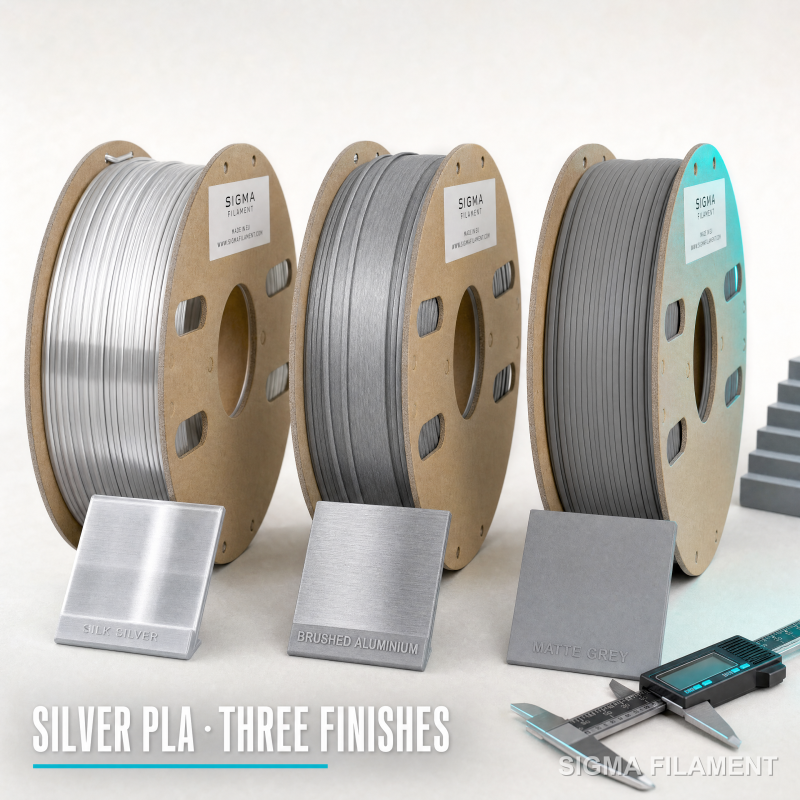
- Silk PLA: Contains elastomeric additives that give the surface a highly glossy, almost translucent sheen, making it popular for decorative items like vases and trophies.
- Matte PLA: Incorporates mineral-based fillers that create a non-reflective, textured surface, which, like PLA-CF, is excellent for hiding layer lines and giving parts a subtle, professional look.
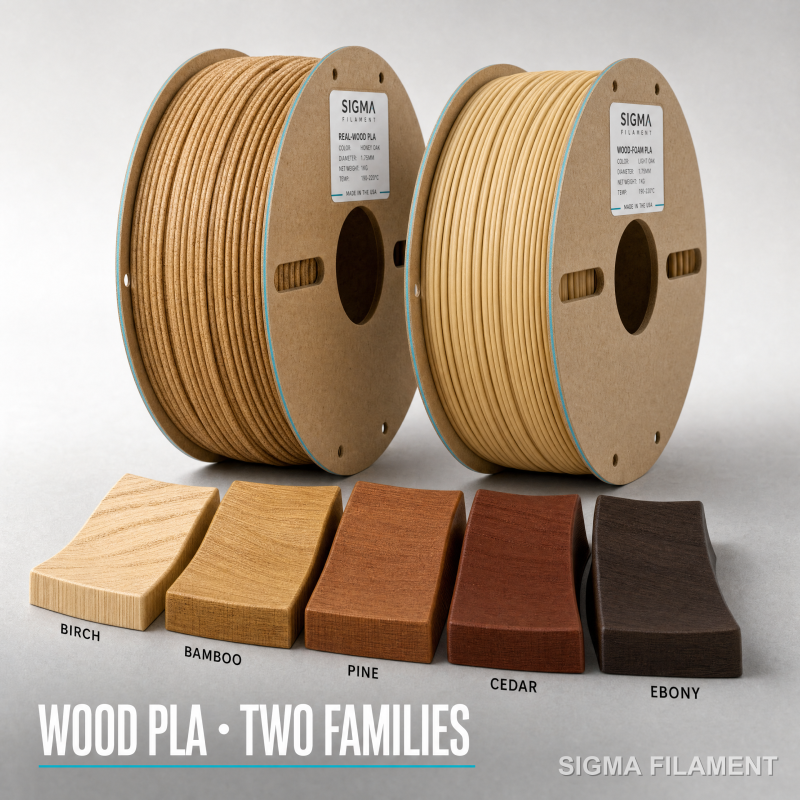
- Wood-Fill PLA: Contains fine wood particles (like bamboo, cork, or pine) that give the printed part the look, feel, and even smell of real wood. These parts can often be sanded and stained.
- Metal-Fill PLA: Infused with fine metallic powders like bronze, copper, or stainless steel. The raw prints are heavy, but they can be post-processed (tumbled, polished, or patinated) to achieve a real metallic luster.
This vast portfolio, evident from browsing filament makers’ catalogs, demonstrates that polylactic acid filament is not a single material but a platform for innovation, capable of delivering a wide range of mechanical and aesthetic properties.
Factor 3: The Unseen Variable: Quality Control and Manufacturing Consistency
You can select the perfect PLA formulation for your project, with ideal mechanical properties, but if the filament itself is manufactured poorly, your efforts will be for naught. Inconsistent filament is one of the most frustrating and difficult-to-diagnose sources of print failure. For professionals who need reliable, repeatable results, evaluating a manufacturer’s commitment to quality control is just as important as evaluating their material data sheets.
Diameter Tolerance: Why ±0.02mm Matters
A 3D printer’s slicer software calculates the precise volume of material that needs to be extruded for every single line of a print. This calculation is based on the assumption that the filament diameter is constant—typically 1.75mm or 2.85mm. If the filament’s actual diameter varies, this calculation becomes incorrect.
- If the filament is thicker than expected, the extruder will push too much material, leading to over-extrusion. This can cause nozzle jams, ugly blobs on the print surface, and a loss of dimensional accuracy.
- If the filament is thinner than expected, the extruder will not push enough material, leading to under-extrusion. This results in weak, porous parts with poor layer adhesion, gaps in walls, and a high likelihood of failure.
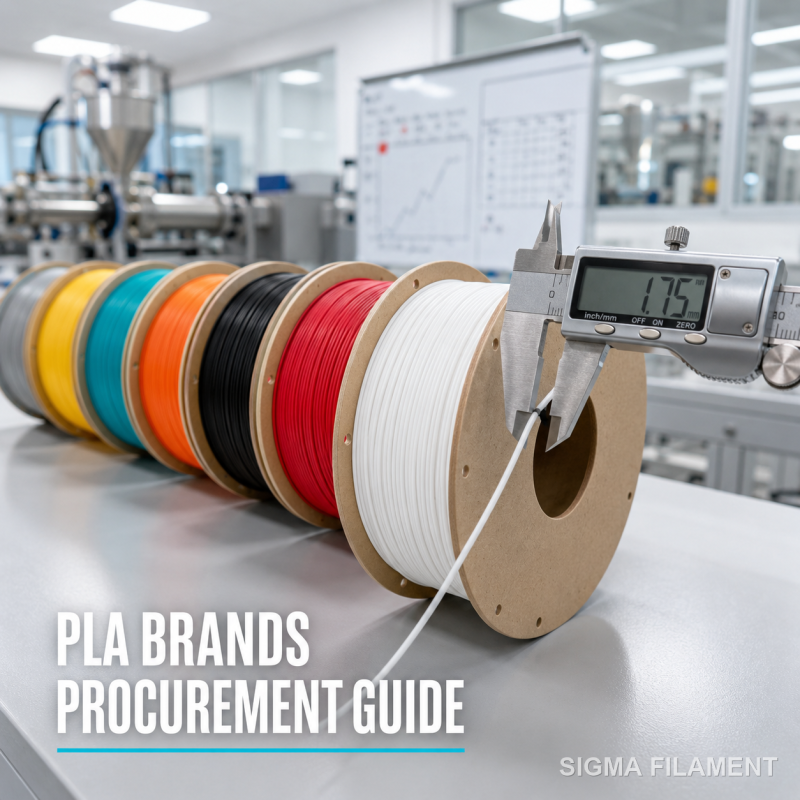
Imagine trying to draw a precise line with a pen whose tip is constantly changing in thickness. The result would be a mess. The same is true for 3D printing. This is why a tight diameter tolerance is a critical indicator of a quality polylactic acid filament. A premium filament supplier will advertise a tolerance of ±0.03mm or, even better, ±0.02mm. This means for a 1.75mm filament, the diameter is guaranteed to be between 1.73mm and 1.77mm. This level of precision is achieved by using dual-axis laser micrometers on the production line that continuously measure the filament as it is being extruded and provide real-time feedback to the machinery. A supplier who prominently displays this specification, like SigmaFilament does, is signaling a serious commitment to process control.
The Enemy of Polyester: Moisture and Drying Protocols
PLA, like its cousin PETG, is a polyester. One of the chemical characteristics of polyesters is that they are hygroscopic, meaning they readily absorb moisture from the surrounding atmosphere. A brand new, vacuum-sealed spool of filament is dry, but once opened, it immediately begins to absorb humidity.
When “wet” filament is fed into a hotend heated to ~200°C, the trapped water inside the plastic instantly boils into steam. This creates a tiny, violent explosion inside the nozzle. You can often hear this as a popping or crackling sound during printing. This has several disastrous effects on the print:
- Stringing and Oozing: The expanding steam pushes molten plastic out of the nozzle, creating fine hairs between separate parts of the print.
- Poor Surface Finish: The bubbles create a rough, uneven, and sometimes pockmarked surface.
- Weak and Brittle Parts: The steam introduces voids within the extruded plastic and degrades the polymer chains themselves (a process called hydrolysis), leading to dramatically reduced layer adhesion and overall part strength. A part printed with wet PLA can be so brittle that it crumbles in your hand.
Many users blame the filament or the printer for these issues when the root cause is simply moisture. Professional use of polylactic acid filament demands a strict drying protocol. A spool of PLA that has been open to the air for more than a few days, especially in a humid environment, should be dried before use. This can be done using:
- A Dedicated Filament Dryer: The best option, as it is designed to circulate warm, dry air at a controlled temperature.
- A Food Dehydrator: An excellent alternative that works on the same principle.
- A Convection Oven: Use with extreme caution. The temperature must be accurate and stable. Set it to the lowest possible temperature, typically 45-55°C (113-131°F), and dry for 4-6 hours. Never use an oven that cannot hold a low temperature accurately, as you risk melting the filament and fusing the spool.
Storing filament in a sealed container with desiccant packs can slow moisture absorption, but it will not reverse it. Only active drying with heat can restore a wet spool.
Certifications and Traceability: ISO 9001, RoHS, and Batch Numbers
How can you, as a buyer, verify a manufacturer’s claims about their quality control? One of the most reliable methods is to look for internationally recognized certifications.
- ISO 9001:2015: This is not a product certification but a process certification. It certifies that the manufacturer has a documented, audited, and robust quality management system. It means they have defined procedures for everything from raw material inspection to final product testing and handling customer complaints. An ISO 9001 certified company is one that is serious about consistency and continuous improvement.
- RoHS (Restriction of Hazardous Substances): This is a directive that originated in the European Union, and it restricts the use of specific hazardous materials found in electrical and electronic products. For filament, it provides assurance that the plastic and any colorants or additives are free from harmful substances like lead, mercury, and cadmium. This is particularly important for parts that may be handled frequently or used in educational settings.
Finally, look for a batch number on the spool or packaging. This simple number is a powerful tool. It allows the manufacturer to trace that specific spool back to the exact production line, date, time, and raw material lot it came from. If you ever encounter a problem, you can provide this number to the supplier, allowing them to investigate the root cause effectively. The absence of batch numbers can be a red flag, suggesting a less mature manufacturing operation.
Factor 4: Optimizing Printability for Flawless Execution
Possessing a high-quality, application-specific polylactic acid filament is only half the battle. To translate that material’s potential into a successful physical object, you must master the art and science of print settings. Each PLA formulation is a unique material with its own personality and requires a tailored approach. Using a generic “PLA” profile from your slicer is a recipe for mediocrity. True optimization requires a deeper understanding of how key parameters influence the printing process.
A Tale of Two Temperatures: Nozzle and Bed Settings
The most fundamental settings are the nozzle and heated bed temperatures. These are not arbitrary numbers; they are critical variables that control the polymer’s viscosity and adhesion.
Nozzle Temperature directly affects how easily the filament melts and flows.
- Too low: The filament will be too viscous, leading to under-extrusion, poor layer adhesion, and potential jams as the extruder motor struggles to push the stiff plastic through the nozzle.
- Too high: The filament becomes too fluid. This can lead to heat creep (where heat travels too far up the hotend, softening the filament prematurely), oozing, stringing, and a loss of fine detail as the molten plastic sags before it can cool. Overheating can also cause the polymer to degrade, changing its color and weakening it.
The ideal temperature is a “sweet spot” that provides excellent flow and strong layer bonding without the negative side effects of overheating. This sweet spot varies significantly between PLA types. A standard PLA might print beautifully at 205°C, but a High-Speed PLA may require 220°C to achieve the low viscosity needed for rapid extrusion. A Carbon Fiber PLA might also need a higher temperature to ensure the base polymer flows well enough to carry the solid fiber particles without clogging. Always start with the manufacturer’s recommended range and then print a “temperature tower” calibration model to find the optimal temperature for your specific machine and filament spool.
Heated Bed Temperature is all about first-layer adhesion. While PLA is known for its low warping and can sometimes be printed on a cold bed, using a heated bed set to 50-60°C is highly recommended. This keeps the first layer of the print just above its glass transition temperature, the point at which it starts to soften. This helps it stick firmly to the build plate and relieves internal stresses as the print cools, reducing the risk of a corner lifting and causing a print to fail.
The following table provides a starting point for calibrating different PLA formulations. These are general guidelines; always fine-tune based on your observations.
| Parameter | Standard PLA | PLA+ (Tough PLA) | Carbon Fiber PLA (PLA-CF) | High-Speed PLA |
|---|---|---|---|---|
| Nozzle Temp (°C) | 190 – 220 | 205 – 225 | 210 – 230 | 215 – 235 |
| Bed Temp (°C) | 50 – 60 | 50 – 60 | 55 – 65 | 55 – 65 |
| Print Speed (mm/s) | 40 – 80 | 40 – 80 | 40 – 70 | 100 – 300+ |
| Cooling Fan (%) | 100% (after 1st layer) | 80 – 100% | 50 – 80% | 100% |
| Retraction (Direct) | 0.5 – 2.0 mm | 0.5 – 2.0 mm | 1.0 – 2.5 mm | 0.5 – 1.5 mm |
| Nozzle Type | Brass | Brass | Hardened Steel | Brass / Hardened |
Notice how the recommendations change. PLA-CF requires a higher temperature and slightly reduced cooling to promote strong layer adhesion around the fibers. High-Speed PLA requires the highest temperatures to facilitate rapid melting.
The Art of Adhesion: Bed Surfaces and Brims
A perfect first layer is the foundation of a successful print. The choice of build surface plays a huge role in this.
- PEI (Polyetherimide): This is arguably the best all-around surface for PLA. When heated to 60°C, it has excellent adhesion. When it cools, parts often pop off with no effort. It comes in smooth sheets for a glass-like bottom finish or textured sheets that hide imperfections.
- Glass: A classic choice. It is perfectly flat, but PLA adhesion can be tricky. A thin layer of a washable glue stick or hairspray is often needed to ensure parts stick properly.
- G10/Garolite: A fiberglass-based composite sheet that offers incredible adhesion for PLA and PETG, often without any additional adhesives.
Even with a perfect surface and temperature, some parts are prone to warping due to their geometry (e.g., long, thin parts or parts with sharp corners). In these cases, slicer features like a brim or a raft are invaluable. A brim adds a single-layer-thick extension around the base of your model, increasing the surface area in contact with the bed and providing extra hold. A raft prints a small, disposable platform underneath your entire part, which is useful for very small parts or extremely warp-prone materials. For most polylactic acid filament prints, a brim is more than sufficient.
Taming the Beast: Retraction, Coasting, and Wiping
Stringing—those fine, web-like hairs left behind as the nozzle travels between different points of a print—is a common frustration. It is caused by plastic oozing from the nozzle due to residual pressure. The primary tool to combat this is retraction.
When the printer is about to make a travel move, it quickly pulls the filament backward a short distance. This relieves the pressure in the nozzle, “sucking” the molten plastic back up and preventing it from drooling. The two key settings are retraction distance and retraction speed.
- Distance: How far the filament is pulled back. Too little, and it won’t relieve the pressure. Too much, and you risk pulling molten plastic up into the cold zone of the hotend, causing a jam. For direct-drive extruders, this is typically a short distance (0.5-2.0mm). For Bowden extruders, where the extruder motor is further away, a longer distance is needed (3-7mm).
- Speed: How fast the filament is pulled back. Too slow, and the ooze will happen before the retraction is complete. Too fast, and the extruder gear can grind the filament.
Calibrating retraction is a delicate balancing act that is unique to every printer and material combination. Beyond retraction, advanced slicer settings can further refine print quality. Coasting tells the printer to stop extruding a tiny distance before the end of a perimeter, letting the residual pressure finish the line. Wiping moves the nozzle a short distance over the inside of the print after a perimeter is finished, effectively wiping the tip clean before it travels. Mastering these settings transforms good prints into great ones.
Factor 5: Sourcing and Supply Chain Strategy for Professionals
For hobbyists, buying filament is a simple transaction. For a business, a university, or a professional engineering firm, it is a strategic decision. Your choice of supplier impacts your costs, your product quality, your brand reputation, and the resilience of your entire operation. Moving from a retail mindset to a strategic sourcing mindset is the final critical factor in successfully leveraging polylactic acid filament.
The OEM/ODM Advantage: Private Labeling and Custom Formulations
As a business grows, relying on off-the-shelf filament brands can become limiting. You may want a specific Pantone color to match your company’s branding, or you might need a material with a unique combination of properties not available on the market. This is where partnering with a manufacturer that offers Original Equipment Manufacturer (OEM) and Original Design Manufacturer (ODM) services becomes a powerful advantage.
- OEM (Original Equipment Manufacturer): This is essentially a private-labeling service. A manufacturer like SigmaFilament produces their high-quality, tested filament, but they put your brand name, logo, and design on the spool and the box. This allows you to build your own brand of materials without investing in millions of dollars of manufacturing equipment. It ensures your customers or internal teams are always using a consistent, known-quality product that is associated with your company.
- ODM (Original Design Manufacturer): This is a much deeper partnership. It involves collaborating with the manufacturer’s R&D team to develop a completely new and proprietary filament formulation. Let’s say you need a polylactic acid filament that is not only tough like PLA+ but also ESD-safe (electrostatic dissipative) for printing electronics jigs. Through an ODM agreement, you can work with the supplier’s chemists and material scientists to create that exact material. The resulting formula is your intellectual property, protected by a non-disclosure agreement (NDA), giving you a unique competitive advantage in the market.
These services transform a filament supplier from a simple vendor into a production partner, an extension of your own R&D and manufacturing capabilities.
Evaluating a Supplier: Beyond Price Per Kilogram
When sourcing at scale, the price per kilogram is an important metric, but it is far from the only one. A cheap filament that fails 20% of the time is vastly more expensive in the long run than a premium filament that works every time, once you factor in wasted material, machine time, and labor. A holistic evaluation of a potential manufacturing partner should include:
- Production Capacity and Scalability: Can the supplier meet your demand today? More importantly, can they scale with you as your business grows? A manufacturer with a large stated capacity (e.g., 30 tons per day) provides confidence that they can handle large, time-sensitive orders without delays.
- Quality Control Systems: As discussed, look for evidence of robust process control. Do they advertise their diameter tolerance? Are they ISO 9001 certified? Do they use batch numbers for traceability? Ask for their quality control documentation.
- Material Portfolio and R&D Depth: Does the supplier offer a broad range of materials beyond just basic PLA? A wide portfolio (including PETG, ABS, ASA, Nylon, and high-performance polymers) indicates a deep expertise in polymer science. This is a good proxy for their ability to produce high-quality specialized PLA and to support ODM projects.
- Logistics and Global Shipping: A good partner should be an expert in logistics. Can they handle different shipping incoterms like EXW (Ex Works), FOB (Free On Board), CIF (Cost, Insurance, and Freight), or DDP (Delivered Duty Paid)? This flexibility can dramatically simplify your procurement process, especially for international shipments.
- Customer Support and Communication: How responsive are they? Can you speak directly with a technical expert to solve a problem or discuss a custom need? Strong communication is the bedrock of a successful long-term partnership.
Building a Resilient Supply Chain in 2026
The global events of the past several years have taught businesses a hard lesson about the fragility of supply chains. Having a single source for a critical component, or relying on a long chain of resellers, introduces significant risk. Building a resilient supply chain for 3D printing materials involves establishing direct relationships with manufacturers.
Partnering directly with a factory-direct source provides several advantages:
- Supply Stability: You are closer to the source of production, insulating you from disruptions among distributors or resellers.
- Cost Efficiency: By removing intermediaries, you can often achieve better pricing, especially at volume.
- Quality Consistency: You are receiving material directly from the production line that is governed by a single quality system, not a mix of products from various sources that a reseller might stock.
- Influence and Collaboration: As a direct customer, you have a stronger voice. You can collaborate on new products, request specific quality checks, and work together to solve challenges.
In 2026, the smart strategy is not just to buy polylactic acid filament, but to partner with the people who make it. This strategic alignment ensures you have the quality, consistency, and innovation required to turn your designs into reality, reliably and at scale.
Frequently Asked Questions (FAQ)
Is polylactic acid filament food safe?
This is a complex question. The base PLA polymer itself is generally considered food-safe as it is derived from natural sources. However, the final filament is a compound of this base polymer plus various additives and colorants, which may not be food-safe. Furthermore, the process of Fused Deposition Modeling creates microscopic layer lines on the surface of a print, which are ideal places for bacteria to grow and are very difficult to clean properly. For a part to be considered food-safe, you would need to use a filament specifically marketed as being made with FDA-compliant raw materials and then coat the final print with a food-safe epoxy or sealant to eliminate the layer lines. It is generally not recommended for direct, repeated contact with food.
How does PLA compare to PETG or ABS?
PLA is the easiest to print, offering great detail and stiffness with minimal warping, but it has low heat, UV, and impact resistance. PETG is a good middle ground; it is more durable, tougher, and more resistant to heat and chemicals than PLA, while still being relatively easy to print. ABS is a traditional engineering thermoplastic known for its high toughness, durability, and heat resistance, but it is much more difficult to print, requiring a heated enclosure to manage significant warping and emitting strong fumes.
Can you anneal PLA for better heat resistance?
Yes, annealing can significantly improve the heat resistance of PLA parts. The process involves heating the printed part in an oven to a temperature that is above its glass transition temperature but below its melting temperature (typically 80-120°C) for a period of time, then allowing it to cool slowly. This allows the polymer chains to form crystalline structures, which increases the material’s heat deflection temperature. The main drawback is that the process causes the part to shrink, sometimes by as much as 5% and not always uniformly, so the part must be designed with this shrinkage in mind.
Why is my polylactic acid filament so brittle, even before printing?
Extreme brittleness in a spool of PLA filament almost always points to one of two causes. The most common cause is moisture absorption. As PLA absorbs water from the air, the polymer chains undergo hydrolysis, which breaks them down and makes the material weak and fragile. Trying to bend the filament will cause it to snap instead of flex. The solution is to dry the filament thoroughly in a filament dryer or dehydrator. The second possible cause is poor material quality or age, where the polymer has degraded over time.
What is the real environmental impact of PLA?
PLA is often marketed as “biodegradable,” which is true, but with a major caveat. It will only biodegrade in the specific conditions of an industrial composting facility, which involves high temperatures and humidity. It will not biodegrade in a backyard compost bin, a landfill, or in the ocean in any meaningful timeframe. That said, its production from renewable plant resources is a significant advantage over petroleum-based plastics like ABS, as it has a lower carbon footprint. The best environmental practice is to reduce waste by printing successfully and, where possible, to recycle PLA waste through specialized services, although these are not yet widely available.
Do I really need a hardened nozzle for Carbon Fiber PLA?
Yes, absolutely. This is not an optional recommendation. The chopped carbon fibers in PLA-CF are extremely abrasive. A standard brass nozzle is a very soft metal and will be worn down by the fibers very quickly, often within a single 250g print. The nozzle’s orifice will widen and deform, leading to severe over-extrusion, a complete loss of dimensional accuracy, and poor print quality. You must use a nozzle made from a wear-resistant material like hardened steel, tungsten carbide, or one with a ruby tip to print abrasive filaments.
Conclusion
The journey through the modern world of polylactic acid filament reveals a material that has decisively shed its reputation as a mere entry-level option. It has matured into a sophisticated and versatile platform for innovation, capable of serving both the rapid prototyper and the demanding engineer. We have seen that the successful application of this material in 2026 is not a matter of chance but of deliberate, informed choice. It requires a commitment to looking beneath the surface, to moving past the color of the spool and the price per kilogram.
The path to mastery involves a new literacy: the ability to read a technical data sheet and translate its metrics of strength, stiffness, and toughness into the real-world behaviors of a functional part. It demands an appreciation for the expanding universe of PLA formulations—from the durable PLA+ to the swift High-Speed variants and the incredibly rigid carbon fiber composites—and the wisdom to match the right formulation to the right task. Success is underwritten by an unwavering focus on quality, a recognition that manufacturing consistency, diameter tolerance, and moisture management are not minor details but the very foundation of repeatable results. This foundation is built upon by optimizing the dialogue between the material and the machine through careful calibration of print settings.
Ultimately, for professionals, the strategy must extend to the supply chain itself. Building robust, direct partnerships with manufacturers who offer not just products but also expertise, customization through OEM/ODM services, and verifiable quality systems is the final, critical piece of the puzzle. By embracing this data-backed, systematic approach, we can fully exploit the remarkable potential of polylactic acid filament, transforming it from a simple thermoplastic into a reliable engineering tool capable of creating strong, precise, and functional components for the challenges of today and tomorrow.
References
- Farah, S., Anderson, D. G., & Langer, R. (2016). Physical and mechanical properties of PLA, and their functions in widespread applications — A comprehensive review. Advanced Drug Delivery Reviews, 107, 367–392.
- SigmaFilament. (2026, January 25). Actionable buyer’s guide: 7 factors for success with carbon fiber PETG in 2026. https://sigmafilament.com/carbon-fiber-petg-printing-guide/
- Simplify3D. (2023). Ultimate materials guide – Tips for 3D printing with PLA.
- Taubner, V., & Laske, S. (2020). Influence of water absorption on the mechanical properties of PLA and PETG 3D prints. Polymers, 12(8), 1735. https://doi.org/10.3390/polym12081735
- Hubs (Protolabs Network). (n.d.). What is PLA (polylactic acid) filament? Retrieved February 1, 2026, from
- JuggerBot 3D. (n.d.). Polylactic acid (PLA) 3D printing filament review. Retrieved February 1, 2026, from https://juggerbot3d.com/pla-filament-review/
Last reviewed and updated: February 2026. Author: SigmaFilament Engineering Team. For custom filament solutions and wholesale inquiries, contact our team.