

Engineering-Grade ABS & ASA
for Parts That Take Real Punishment
When PLA and PETG aren't enough — when parts need to survive heat, impact, chemicals, and outdoor UV — ABS and ASA are the proven engineering choice. Factory-direct wholesale from SigmaFilament's ISO 9001 facility, with the consistency your production demands.

Four Reasons Buyers Choose ABS / ASA Over PLA & PETG
ABS and ASA are styrene-based thermoplastics — the same polymer family used in LEGO bricks, car dashboards, and power tool housings. Here's why they matter for professional 3D printing.
High Heat Resistance — Parts That Survive Near Boiling Point
ABS withstands sustained temperatures up to ~100°C (HDT) — nearly double PLA's ~55°C. This means parts survive inside engine bays, beside electronics generating heat, in direct sunlight on a dashboard, or near sterilization equipment. ASA matches this at ~95–100°C with added UV stability. If your parts warp, soften, or deform in warm environments, ABS/ASA is the material upgrade your application needs.
UV & Weather Resistance — ASA Won't Yellow or Crack Outdoors
Standard ABS degrades with prolonged UV exposure — it yellows and becomes brittle. ASA replaces the butadiene rubber in ABS with acrylic rubber, making it inherently UV-stable. ASA parts maintain color, strength, and surface integrity after years of outdoor exposure. This is why ASA is the default for outdoor signage, garden fixtures, vehicle exterior components, and any part that sees direct sunlight.
Impact Strength & Mechanical Reliability
ABS has superior impact toughness compared to PLA and standard PETG — it absorbs energy on impact rather than shattering. This makes it the right choice for snap-fit enclosures, mechanical brackets, protective housings, and jigs/fixtures that experience repeated stress. ABS+ further enhances this with impact modifiers for even higher energy absorption in demanding production environments.
Acetone Smoothing — Injection-Mold Surface Finish from a Printer
ABS and ASA dissolve in acetone — a property unique among common FDM filaments. This enables acetone vapor smoothing, which melts layer lines into a glossy, injection-mold-like surface finish. No sanding, no painting, no post-processing labor. For consumer-facing products, display prototypes, or parts requiring a sealed surface, this is a capability PLA and PETG simply cannot replicate.
ABS vs ASA — Same Family, Different Strengths
Both are styrene-based engineering thermoplastics with similar print settings. The key difference is what happens after the part leaves the printer.
| Property | ABS / ABS+ | ASA |
|---|---|---|
| Base Chemistry | Acrylonitrile–Butadiene–Styrene | Acrylonitrile–Styrene–Acrylate |
| Heat Deflection (HDT) | ~98–105°C | ~95–100°C |
| UV / Weather Resistance | Poor — yellows & degrades | Excellent — years outdoor stable |
| Impact Strength | High (ABS+ = very high) | High |
| Warping Tendency | Moderate–High | Slightly less than ABS |
| Acetone Smoothable | Yes | Yes |
| Odor During Printing | Noticeable (styrene fumes) | Slightly less than ABS |
| Nozzle Temperature | 230–260°C | 235–265°C |
| Bed Temperature | 95–110°C | 95–110°C |
| Enclosure Required? | Strongly recommended | Strongly recommended |
| Price (Relative) | Lower cost | ~15–25% premium over ABS |
| Best For | Indoor mechanical parts | Outdoor & UV-exposed parts |
💡 Buyer's Decision Guide
Choose ABS / ABS+ when the part will be used indoors or in a controlled environment. ABS is lower cost, widely proven, and ideal for mechanical prototypes, enclosures, jigs/fixtures, and any part that needs heat resistance + impact strength but won't see UV.
Choose ASA when the part will be exposed to sunlight, rain, or outdoor weather for extended periods. The ~15–25% price premium over ABS is justified whenever UV degradation is a concern — replacing a cracked outdoor part costs far more than the material difference.
⚠️ Both ABS and ASA require an enclosed printer with a heated bed (95–110°C). Without an enclosure, uneven cooling causes warping and layer splitting. If your fleet includes open-frame printers, consider PETG as an alternative for those machines.
Wholesale ABS & ASA — Five SKUs for Every Engineering Need
From standard ABS for everyday production to ASA for outdoor deployment and High-Speed ABS for CoreXY printers. All factory-direct with ±0.02mm tolerance.
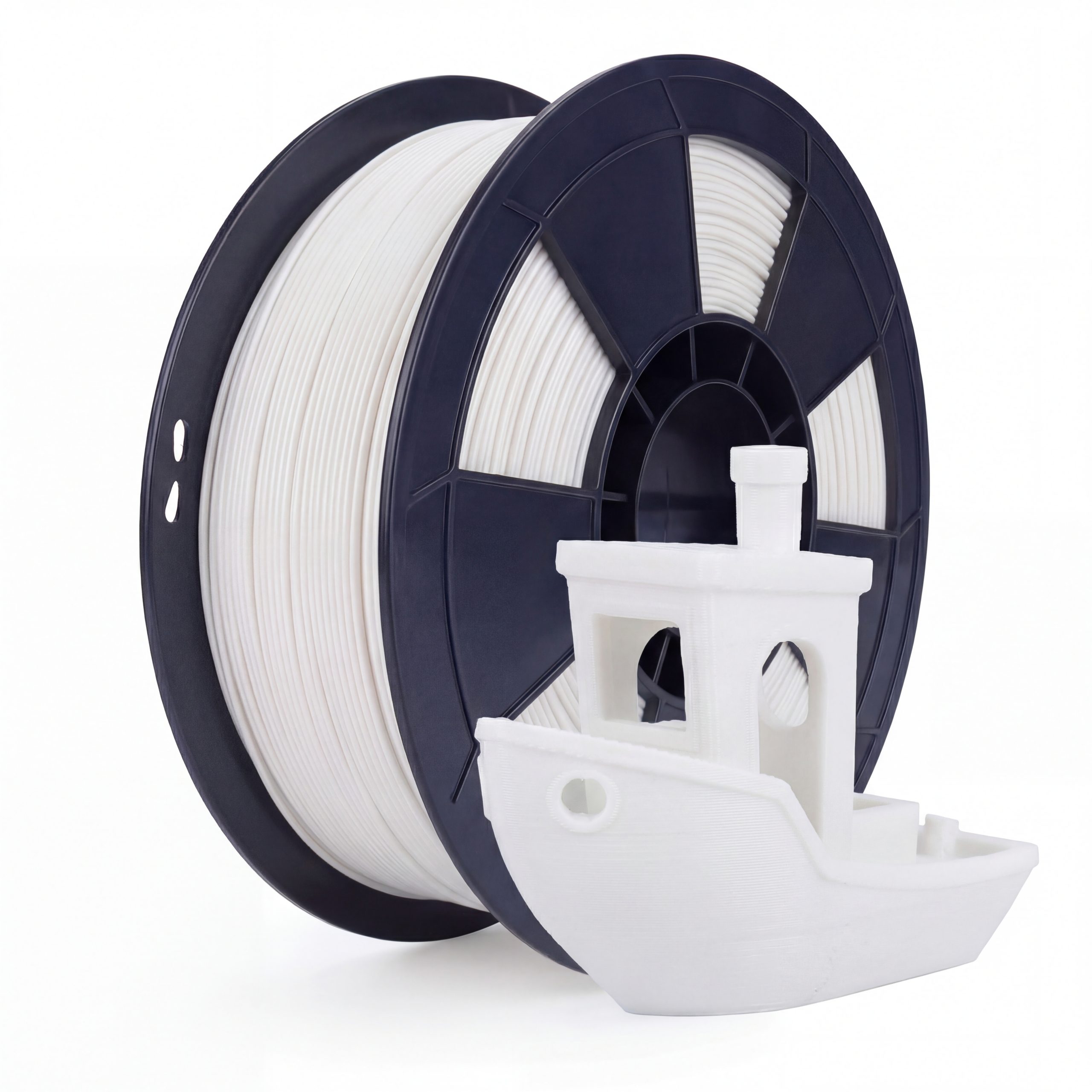
- Print temp: 230–260°C · Bed: 95–110°C
- HDT: ~98°C · Tolerance: ±0.02mm
- 100% virgin ABS resin

- Print temp: 230–260°C · Bed: 95–110°C
- Impact modifiers for higher toughness
- Reduced warping vs standard ABS
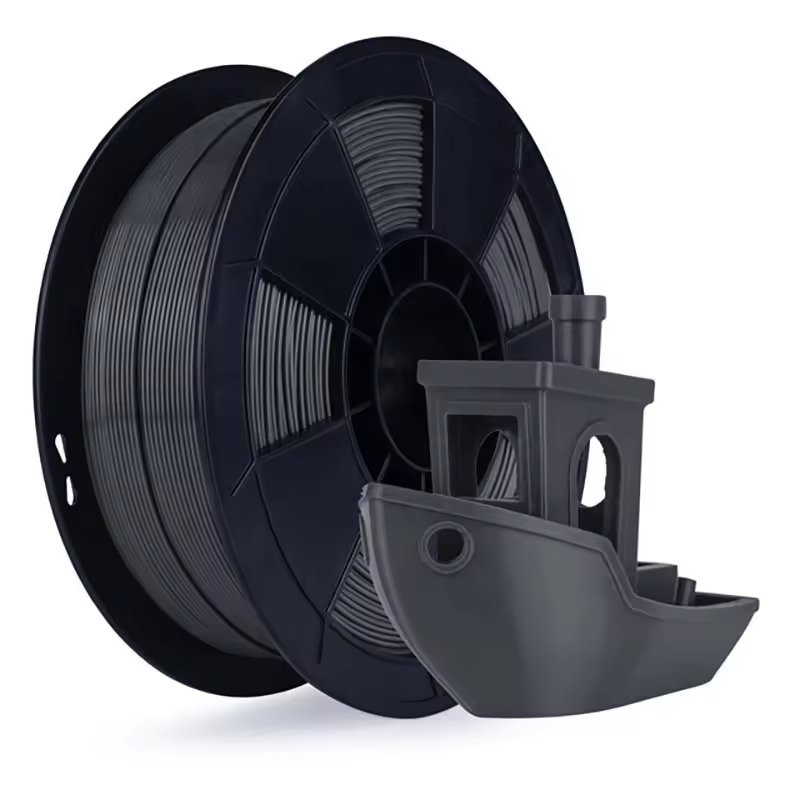
- Print speed: 200–500 mm/s
- Higher MFI for sustained fast extrusion
- Requires CoreXY / high-flow hotend
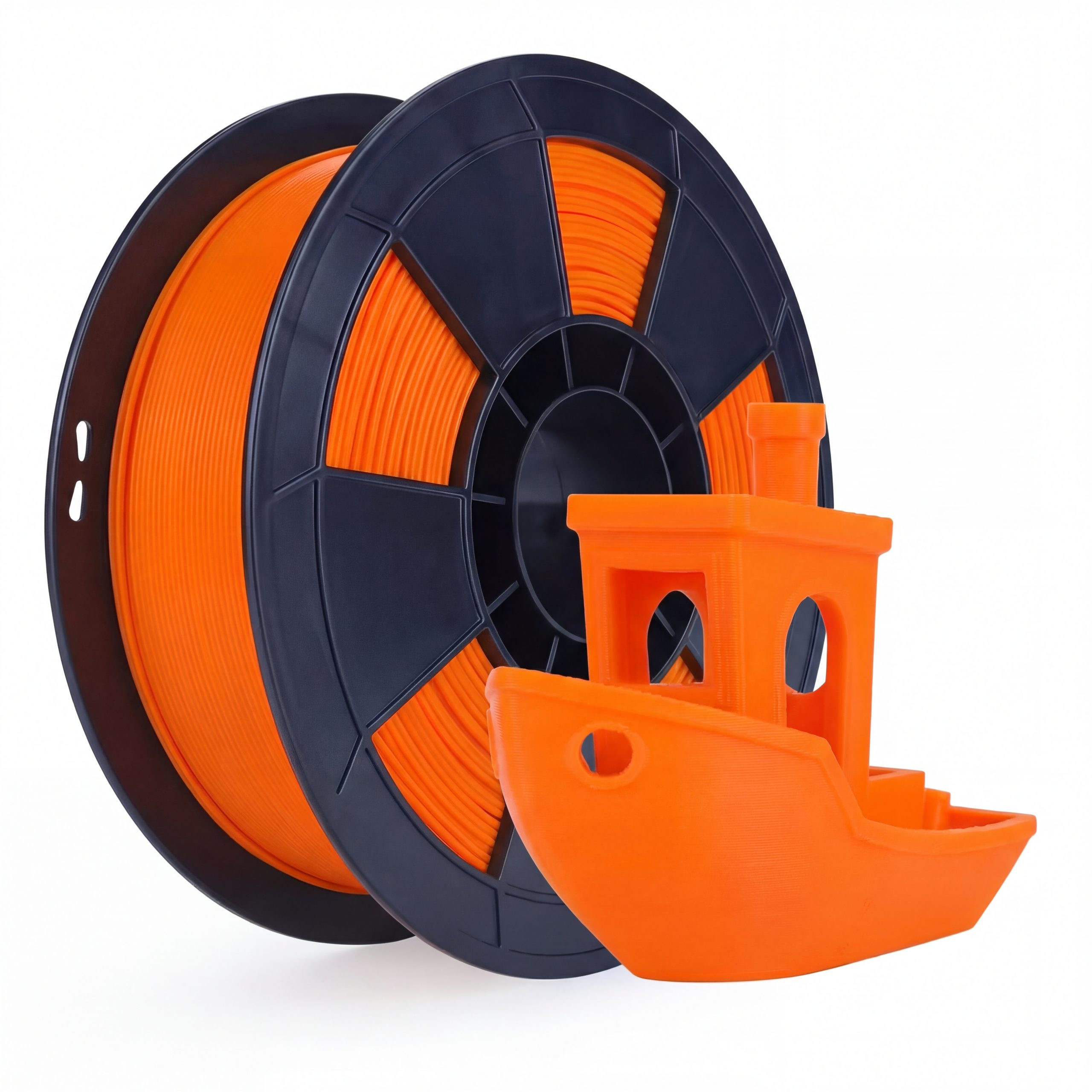
- Print temp: 235–265°C · Bed: 95–110°C
- UV & weather resistant (acrylic rubber)
- No yellowing, cracking, or loss of strength
Where ABS & ASA Deliver the Most Value
Each application card shows which material is the better fit. In many cases, both work — but one may have a clear advantage.
Mechanical Prototypes
Brackets, gears, snap-fits, threaded inserts. Real-world stress testing before injection molding.
ABS / ABS+Electronics Enclosures
Control boxes, sensor housings, cable management. ABS handles component heat; ASA for outdoor IoT.
ABS or ASAOutdoor Signage & Fixtures
Custom signs, wayfinding, landscape accessories. ASA won't yellow or crack after years of UV exposure.
ASAAutomotive Components
Interior brackets, dashboard mounts, under-hood components. ABS for interior; ASA for exterior trim.
ABS + ASAJigs, Fixtures & Tooling
Production line aids, assembly guides, positioning fixtures. ABS+ for repeated mechanical contact.
ABS+Print Farm Production
Batch manufacturing of functional parts. HS-ABS for CoreXY fleets; standard ABS for enclosed i3 setups.
ABS / HS-ABSSafety Guards & Covers
Machine guards, cable shields, protective covers for equipment. Impact absorption + heat resistance.
ABS+Architectural Models
Building models for outdoor display, scale mockups. ASA resists weather; acetone smoothing gives polished finish.
ASAHow to Print ABS & ASA Successfully — What You Need to Know
ABS and ASA are less forgiving than PLA. But with the right setup, they print reliably and produce parts PLA can never match. Here's what matters.
ASA: Nozzle 235–265°C, Bed 95–110°C, Speed 40–80 mm/s, Fan 0–30%.
Both: Layer height 0.15–0.3mm, retraction 0.5–1.0mm (direct drive) or 4–6mm (Bowden).
Not recommended: Open-frame printers without enclosure — Ender 3, Prusa Mini, most entry-level machines.
Diameter: 1.75mm (standard) and 2.85mm (for Ultimaker, BCN3D) both available.
Three Buyer Profiles We Serve
ABS and ASA wholesale buyers are typically engineering-driven operations where material properties directly impact part performance.
Print Farms & Contract Manufacturers
Running enclosed printer fleets producing functional ABS/ASA parts at scale. Consistency and batch-to-batch repeatability are critical for production SLA/SOP compliance.
- ±0.02mm tolerance for predictable extrusion
- HS-ABS for CoreXY speed production
- Bulk pricing on 200+ spool orders
- QC reports & material traceability per batch
Engineering Teams & Product Development
R&D and engineering departments needing ABS/ASA for functional prototypes, fit-check parts, and production-representative test pieces before committing to injection molding.
- ABS mechanical properties close to molded ABS
- Acetone smoothing for client presentations
- ASA for outdoor product validation
- Sample evaluation before bulk commitment
Resellers & OEM Brands
Filament brands and distributors stocking ABS/ASA for engineering-focused customers. Factory-direct pricing with full OEM and white-label manufacturing available.
- ABS + ABS+ + ASA full lineup from one supplier
- Custom branding, packaging, and spool design
- Pantone color matching & custom formulations
- NDA-protected OEM partnerships
MOQ, Lead Time & Shipping for ABS / ASA Orders

Mixing note: You can combine Standard ABS, ABS+, ASA, and HS-ABS in a single order as long as the combined total meets the 100-spool threshold. Volume discounts available for 500+ and 1,000+ spool orders. Payment: T/T (100% prepayment).
From Quote to Delivery — 4 Steps
Tell us which ABS / ASA variants, colors, and quantities you need — we handle production, QC, and global logistics.
Specify Your Requirements
Material (ABS / ABS+ / ASA / HS-ABS), diameter (1.75mm or 2.85mm), colors, quantity, and any OEM/custom packaging needs. Mention your printer fleet so we can recommend optimal formulations.
Sample & Validate
We ship 1–3 sample spools. Test in your enclosed printers at your production settings. Validate warping behavior, layer adhesion, heat resistance, and surface finish. Try acetone smoothing if relevant to your application.
Confirm PI & Production
Approve the Proforma Invoice and arrange 100% prepayment. We schedule your production run with lot-specific QC including diameter verification, impact testing, and heat deflection spot-checks for ABS/ASA batches.
QC, Package & Ship
Final QC with batch-specific documentation. Vacuum-sealed with desiccant. Logistics coordination with customs documentation for door-to-door delivery worldwide via FOB, CIF, DDP, or DAP terms.
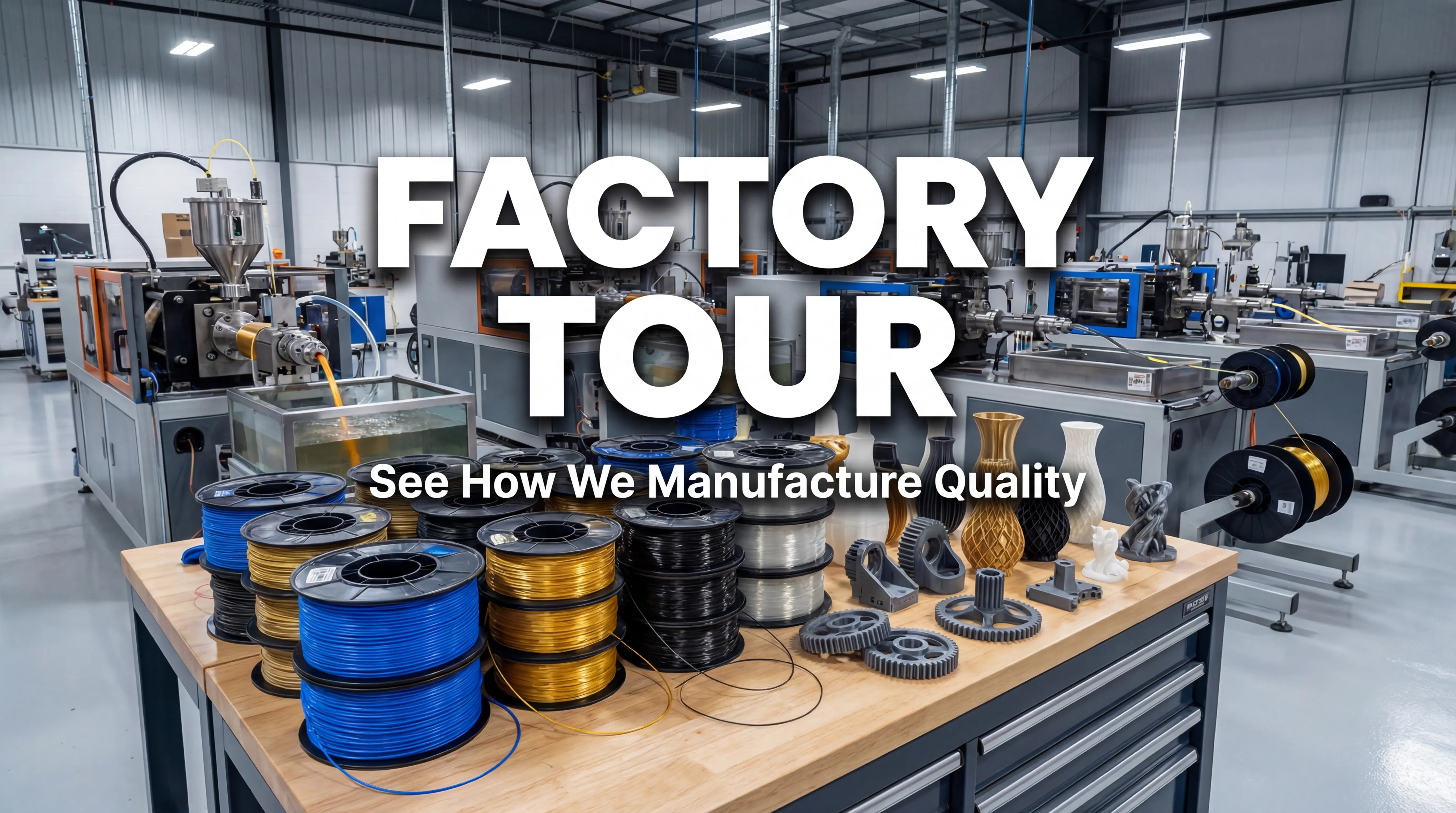
Wholesale ABS & ASA Filament — Frequently Asked Questions
Common questions from engineering teams, print farms, and resellers evaluating wholesale ABS / ABS+ / ASA sourcing — from manufacturer identity and material selection to enclosure requirements, MOQ, and international delivery.