A Practical Buyer’s Guide to Cheap PLA Filament in 2026: 5 Quality Checks

Abstract
The pursuit of affordable materials within the additive manufacturing landscape often leads makers and businesses to seek out cheap PLA filament. This inquiry, however, is fraught with a perceived tension between cost-effectiveness and print quality. This article provides a comprehensive examination of this relationship, arguing that low price does not necessitate poor performance. An analytical framework is proposed for evaluating budget-friendly Polylactic Acid (PLA), centering on five critical quality checks: dimensional accuracy, material purity, color consistency, spool integrity, and manufacturer reputation. The discourse moves beyond a superficial consideration of price to a deeper understanding of value, which incorporates the hidden costs of failed prints, material waste, and user frustration. By systematically investigating the technical specifications, manufacturing processes, and supply chain dynamics behind filament production, this guide equips the reader with the critical capacity to discern high-value, reliable filament from superficially inexpensive but ultimately costly alternatives. It posits that an informed consumer can indeed secure consistent, high-quality printing outcomes without incurring premium costs.
Key Takeaways
- Verify dimensional accuracy (±0.03mm or better) for consistent extrusion.
- Assess material purity to avoid nozzle clogs and weak prints.
- Demand consistent color across spools for professional, multi-part projects.
- Inspect spool winding to prevent tangles that cause print failures.
- Source your cheap PLA filament from a reputable manufacturer for reliability.
- Read recent, detailed user reviews for authentic performance feedback.
- Consider the total cost, including failures, not just the spool price.
Table of Contents
- Check 1: A Deep Examination of Dimensional Accuracy and Consistency
- Check 2: Assessing Material Purity and Polymer Composition
- Check 3: The Critical Importance of Color Consistency and Vibrancy
- Check 4: The Unseen Quality Killer: Spool Winding and Packaging Integrity
- Check 5: Verifying Manufacturer and Supplier Reputation
- The True Economics of “Cheap”: Calculating the Total Cost of Ownership
- Frequently Asked Questions About Budget PLA Filament
- Conclusion
- References
Check 1: A Deep Examination of Dimensional Accuracy and Consistency
The journey toward mastering 3D printing often begins with a simple reel of PLA. Its forgiving nature and ease of use make it the default choice for novices and a reliable workhorse for seasoned professionals. Yet, within this seemingly uniform category of material lies a vast spectrum of quality, the most fundamental dimension of which is, quite literally, its dimension. The diameter of your filament is not a mere suggestion; it is a foundational parameter upon which the entire logic of fused deposition modeling (FDM) rests. When we seek out cheap PLA filament, our primary vigilance must be directed toward its physical consistency, for this is where the first, and often most catastrophic, failures originate.
Why Diameter Is the Bedrock of Extrusion Physics
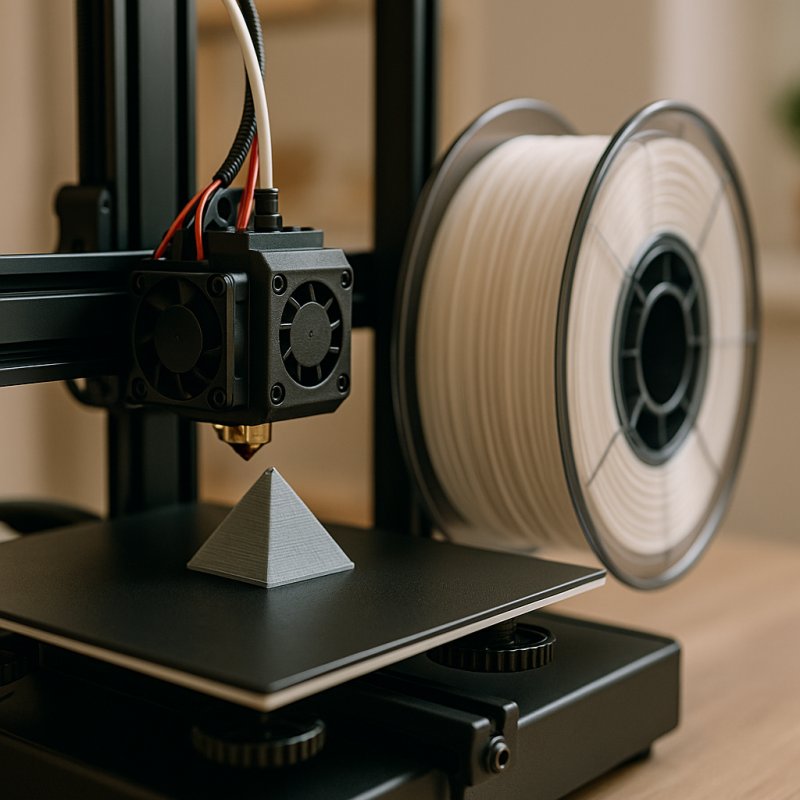
To appreciate the gravity of filament diameter, one must first visualize the heart of an FDM 3D printer: the extruder and hotend assembly. Think of it as a precision-controlled hot glue gun. The extruder’s gears grip the filament and push it at a calculated rate into the heated nozzle, where it melts and is deposited layer by layer. Your printer’s slicer software performs a complex series of calculations to determine exactly how much plastic is needed for every single line it draws. This calculation is based on a crucial assumption: that the filament entering the system has a constant, known diameter—typically 1.75mm or 2.85mm.
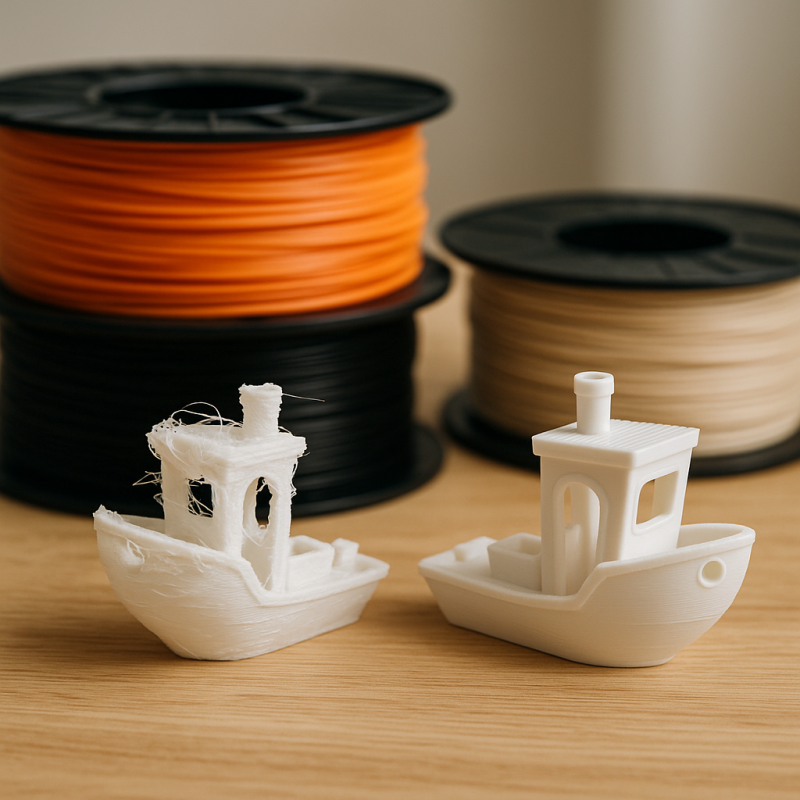
Now, let us consider what happens when this assumption is violated. Imagine the filament’s diameter unexpectedly swells to 1.80mm. The volume of plastic being pushed through the nozzle for a given length of filament increases by the square of the radius change. A seemingly small 0.05mm increase in diameter results in approximately a 6% increase in volume. Your printer, unaware of this change, continues to extrude as planned, leading to a condition known as over-extrusion. This excess material has to go somewhere, manifesting as unsightly blobs, zits on the surface of your print, and a loss of fine detail.
Conversely, if the filament narrows to 1.70mm, the volume decreases by about 6%. The printer, still expecting more material, now deposits a starved line of plastic. This is under-extrusion. It appears as gaps between layers, weak and brittle walls, and a fragile infill structure. A print suffering from severe under-extrusion may look wispy and can often be crushed by hand. When these fluctuations occur rapidly and repeatedly along the length of a single spool, the result is a print with an inconsistent, banded appearance, possessing neither aesthetic appeal nor structural integrity. The quest for affordable filament is therefore a quest for consistency, as a spool that varies wildly in diameter is not a bargain but a liability.
Reading the Numbers: What Does ±0.02mm Tolerance Really Mean?
Manufacturers communicate the consistency of their filament through a tolerance specification, such as “1.75mm ±0.02mm.” This is a promise. It is a declaration that the manufacturer has implemented processes to ensure the filament’s diameter will not deviate beyond a specific range. In this example, the diameter should always measure between 1.73mm and 1.77mm. This level of precision is typically achieved through automated, in-line quality control systems. During production, as the molten plastic is extruded and pulled into its final filament form, it passes through a dual-axis laser micrometer. This device measures the diameter thousands of times per second, providing real-time feedback to the pulling mechanism to adjust its speed, ensuring a consistent thickness.
A lower tolerance number is a direct indicator of a more sophisticated and well-calibrated manufacturing process. A cheap PLA filament advertised with a ±0.02mm tolerance suggests a far greater commitment to quality than one with a ±0.05mm tolerance or, worse, one with no stated tolerance at all. The latter is a significant red flag, suggesting a lack of process control that will almost certainly manifest as printing problems. For a business relying on 3D printing for production parts or for an enthusiast who values their time, paying a slight premium for a filament with a certified tight tolerance is an investment that pays for itself through reliability and reduced waste. Manufacturers who are serious about their role as a production partner will often hold certifications like ISO 9001:2015, which formalizes their commitment to a repeatable, quality-managed process (International Organization for Standardization, 2015). This certification is not just a badge; it is an assurance that the dimensional accuracy you see advertised is the result of a deliberate and documented system.
A Practical Test: Using Calipers to Verify Your Spool
Trust, but verify. While a manufacturer’s stated tolerance is a good starting point, the ultimate test is the filament that arrives at your door. A simple pair of digital calipers, an inexpensive and indispensable tool for any 3D printing practitioner, allows you to become your own quality control inspector.
Before you even load a new spool, it is wise to perform a quick audit. Unspool about two meters of filament. Begin by measuring the diameter at one end. Then, rotate the calipers 90 degrees and measure again at the same spot. This checks for ovality—a condition where the filament is not perfectly round. A significant difference between the two measurements can cause intermittent extrusion issues as the filament’s orientation shifts within the extruder.
Next, take measurements every 15-20 centimeters along the length of the unwound filament. Record your findings. Are they all within the manufacturer’s specified tolerance? Are they trending in one direction, perhaps getting thinner as you move along the filament? Or are they fluctuating randomly? A good quality filament, even a budget-friendly one, will show very little variation. If you find measurements that are wildly out of spec (e.g., 1.68mm or 1.82mm on a 1.75mm spool), you have identified a product that is likely to cause problems. This simple, five-minute check can save you from the hours of frustration that come from a failed print. It empowers you to hold suppliers accountable and to make more informed decisions about which brands of cheap PLA filament truly offer the best value.
Check 2: Assessing Material Purity and Polymer Composition
Once we are satisfied with the physical dimensions of the filament, our inquiry must turn inward, to the very substance of the material itself. The term “PLA” suggests a singular, homogenous material, but the reality is far more complex. The spool you hold is a carefully formulated compound, and the nature of its composition directly influences its behavior in your printer and the final properties of your printed object. When evaluating a cheap PLA filament, we are not just buying Polylactic Acid; we are buying a recipe. Understanding the ingredients in that recipe is paramount to achieving predictable and desirable results.
The “Pure” PLA Ideal vs. The Reality of Formulation
In its purest form, Polylactic Acid is a biodegradable thermoplastic polymer derived from renewable resources (Zhao et al., 2020). It is synthesized into small pellets or “nurdles” of raw resin, which are typically a translucent, slightly yellowish color. These pellets are the base material for filament production. They are dried to remove any residual moisture, mixed with various additives, and then melted and extruded through a die to form the continuous strand of filament.
The ideal of a “pure” PLA filament is somewhat of a misnomer, as even the most basic filament contains at least one additive: a colorant. Beyond that, manufacturers often introduce other polymers and fine powders to modify the material’s properties. In high-quality filaments, these additions are purposeful and well-documented. They might be designed to increase toughness, alter the surface finish, or improve printability. In the lowest tiers of the cheap PLA filament market, however, additives can be a different story. Unscrupulous manufacturers may use inexpensive “fillers,” such as chalk (calcium carbonate) or other bulk powders, simply to reduce the amount of the more expensive PLA resin in the final product. This practice lowers their cost but can have a devastating impact on print quality, leading to a host of problems that are often difficult to diagnose.
Identifying Red Flags: Symptoms of Contamination and Fillers
A poorly formulated or contaminated filament will announce its presence through a series of tell-tale signs. One of the most common is the dreaded nozzle clog. While clogs can have many causes, a frequent culprit is impure material. Foreign particles, unmelted clumps of filler, or inconsistencies in the polymer blend can easily jam the narrow orifice of the nozzle.
Pay attention to your printer’s senses. Does the filament emit a strange or acrid chemical smell during printing, distinct from the typical semi-sweet aroma of PLA? This can indicate the presence of other, less stable polymers. Do you hear a popping, crackling, or sizzling sound from the nozzle as it extrudes? While often a sign of moisture, it can also be caused by volatile compounds within a low-quality blend burning off.
Examine the filament itself. A good PLA should be relatively strong and flexible, able to withstand being bent into a tight curve without snapping. If the filament is excessively brittle and breaks with even a gentle bend, it may be a sign of poor-quality base resin, improper processing, or the inclusion of fillers that disrupt the polymer’s structure. Finally, inspect your prints. Poor layer adhesion, where the layers of a print do not bond strongly and can be easily separated, is a classic symptom of a problematic material formulation. The print may look complete, but it will have no functional strength.
The Role of Additives: When “Impurity” Is a Feature
It is crucial to differentiate between undisclosed, cost-cutting fillers and deliberate, performance-enhancing additives. The 3D printing market is rich with innovative materials that start with a PLA base and add other components to achieve remarkable results. These are not “impure” in a negative sense; they are advanced composites.
A prime example is “PLA+” or “Tough PLA.” These filaments incorporate toughening agents, often a type of thermoplastic elastomer like TPU, into the PLA matrix. This interrupts the crystalline structure that makes standard PLA rigid and brittle, resulting in a filament with significantly higher impact resistance and better layer adhesion. For printing functional parts that need to withstand some stress, a quality PLA+ is often a superior choice to standard PLA.
Similarly, the vast world of Aesthetic PLA Filaments relies on additives. “Silk” filaments achieve their incredible sheen from reflective polymers that align during extrusion. “Matte” filaments use microscopic particles to diffuse light, creating a non-reflective surface. “Glitter” and “Sparkle” filaments contain fine metallic or polymer flakes. These are all examples of how additives, when used with skill and intention, can elevate a simple material into something special. A reputable manufacturer will be transparent about these additions and provide guidance on any special printing considerations, such as the need for a hardened nozzle for abrasive materials like carbon-fiber-filled PLA.
| Filament Type | Primary Additive(s) | Key Characteristics | Common Use Cases | Potential Downsides |
|---|---|---|---|---|
| Standard PLA | Colorants | Easy to print, rigid, low warp | Prototyping, models, decorative items | Brittle, low temperature resistance |
| PLA+ / Tough PLA | Toughening agents (e.g., TPU) | Less brittle, better layer adhesion | Functional parts, mechanical prototypes | Slightly higher print temp, may be less rigid |
| Silk PLA | Elastomers/Reflective polymers | High gloss, shiny finish | Vases, decorative objects, trophies | Can be weaker, may hide layer lines |
| Matte PLA | Fine powders (e.g., chalk) | Non-reflective, textured surface | Architectural models, artistic prints | Can be more abrasive, may require hardened nozzle |
| Carbon Fiber PLA | Chopped carbon fibers | High stiffness, lightweight, matte finish | Drones, jigs, fixtures, functional parts | Abrasive (requires hardened nozzle), brittle |
| Wood-Fill PLA | Fine wood powder/fibers | Wood-like appearance and texture | Models, decorative items, signage | Can be abrasive, prone to clogging, brittle |
Check 3: The Critical Importance of Color Consistency and Vibrancy
Aesthetics are not a trivial concern in 3D printing. For many applications, from product prototyping to architectural models and consumer goods, the visual quality of a print is as important as its structural integrity. Color is a primary component of that visual quality. When we select a spool of “Red” or “Blue” filament, we have a certain expectation of that color’s appearance. The challenge, particularly in the market for cheap PLA filament, is that this expectation is not always met, and even when it is, it may not be repeatable. The consistency and quality of a filament’s color are direct reflections of the manufacturer’s attention to detail and process control.
The Manufacturing Challenge of Batch-to-Batch Consistency
The color in your filament comes from a “masterbatch,” which is a concentrated mixture of pigments or dyes encapsulated in a carrier resin. During filament production, a precise amount of this color masterbatch is mixed with the natural PLA base resin before it enters the extruder. Achieving a consistent color from one end of a spool to the other is the first challenge. The second, and far more difficult challenge, is ensuring that a spool of “Royal Blue” purchased in January is the exact same shade as a spool of “Royal Blue” purchased in June.
This batch-to-batch consistency is where many budget filament brands falter. It requires a rigorous and disciplined manufacturing process. The base PLA resin must be consistent in its natural color, the masterbatch must be sourced from a reliable supplier with its own tight quality control, and the mixing ratio must be controlled with extreme precision. Any deviation in these variables will result in a color shift. For a hobbyist printing single, standalone objects, a slight variation may be unnoticeable. But for a business printing a multi-part assembly, or for an entrepreneur selling a line of printed products, receiving two spools of supposedly the same color that do not match can be a disaster. It undermines the professionalism of the final product and can lead to costly reprints and delays.
More Than Just Hue: Saturation and Opacity in Filament
Our perception of color is more complex than just its hue (e.g., red, green, blue). The saturation (the intensity or vividness of the color) and the opacity (the degree to which it blocks light) are equally important. Two filaments can both be “red,” but one might be a rich, vibrant, fully opaque crimson, while the other is a pale, washed-out, slightly translucent cherry. This difference is a direct result of the quality and concentration of the pigment in the masterbatch.
High-quality pigments are expensive. A common cost-cutting measure for producers of cheap PLA filament is to use a lower concentration of a lower-quality pigment. The resulting filament may be technically the correct color, but it will lack depth and vibrancy. When printed, objects may look pale and lifeless. Furthermore, low opacity can be a significant issue. If a filament is too translucent, the internal infill structure of a print can become visible through the outer walls, creating an undesirable grid-like pattern on the surface. To compensate, a user might have to print with more walls or thicker shells, which increases both print time and material consumption, thereby eroding the initial cost savings of the cheaper spool. The richness and opacity of a filament’s color are not just aesthetic fluff; they are indicators of the quality of the raw materials used in its production.
The Value of Standardized Color Systems for Professional Use
For professional users, color is often a non-negotiable aspect of brand identity. A company like Coca-Cola cannot have its promotional items printed in just any red; it must be “Coke Red.” This is where standardized color matching systems like Pantone and RAL become invaluable. These systems provide a universal language for color, ensuring that a specific shade can be accurately reproduced anywhere in the world.
The ability of a filament manufacturer to produce colors matched to a Pantone or RAL standard is a hallmark of a sophisticated and capable operation. It demonstrates a high level of control over their materials and processes. While this service is typically associated with premium or custom orders, it is a capability to look for in a potential long-term supplier. A manufacturer that offers custom color matching as part of an OEM/ODM (Original Equipment Manufacturer/Original Design Manufacturer) service is signaling that they are not just a reseller, but a true production partner. They possess the technical expertise to move beyond generic colors and create a product that is precisely tailored to a client’s needs. This level of service separates the commodity sellers from the serious manufacturing partners, providing a path for businesses to scale their production with a consistent and branded material supply.
Check 4: The Unseen Quality Killer: Spool Winding and Packaging Integrity
Of all the potential defects in a spool of filament, a tangle is perhaps the most insidious. It lies in wait, an unseen flaw that can transform a 20-hour print into a pile of plastic spaghetti in a matter of seconds. Poor spool winding is a problem that plagues the lower end of the filament market, and it represents a classic case of a hidden cost that can far outweigh any upfront savings. Beyond the winding itself, the packaging of the filament plays a vital role in preserving its quality from the factory floor to your printer, particularly by protecting it from its arch-nemesis: moisture.
The Anatomy of a Print-Killing Tangle
It is a common misconception among new 3D printer users that they themselves cause filament tangles by mishandling the spool. While it is true that letting the end of the filament go free can cause it to loop under itself, the vast majority of true tangles are manufacturing defects. They are created during the winding process.
Imagine the filament being wound onto the spool at high speed. If the traversing guide that lays the filament back and forth across the spool is not perfectly synchronized with the spool’s rotation, a loop of filament can be laid down, and then subsequent strands can be wound on top of it, trapping it. The spool may look fine on the surface. The problem only reveals itself hours later. As your printer steadily pulls filament from the spool, it eventually reaches the point where the strand passes under another trapped strand. The path is blocked. The extruder’s gears continue to turn, but they cannot pull any more material. They begin to grind away at the stuck filament, a sound often described as “clicking.” With the flow of plastic halted, the hotend now moves through the air, “printing” nothing. The print has failed. A single, poorly wound loop on a spool of cheap PLA filament can waste hours of time, a significant amount of electricity, and the material used up to that point.
What “Neatly Wound” Actually Looks Like
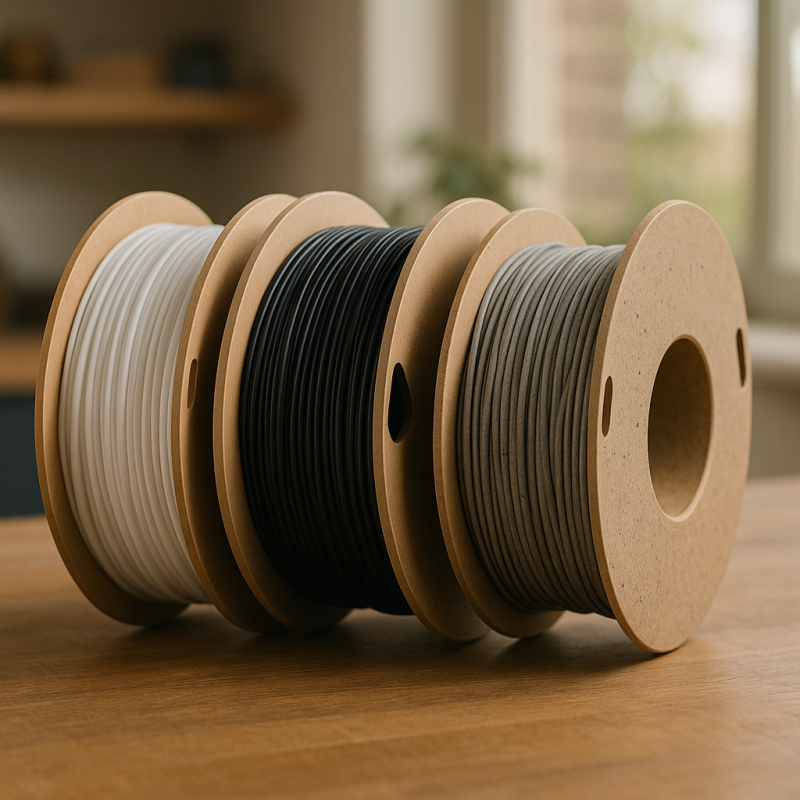
In response to the pervasive problem of tangles, reputable filament manufacturers began to heavily promote their “tangle-free” or “neatly wound” spools. This is more than just a marketing buzzword; it describes a specific and visible characteristic of a high-quality product. A neatly wound spool, often produced by advanced automated winding machines, will have its strands lying perfectly parallel to each other, with no crossovers. Each layer is laid down with geometric precision, resembling a perfectly wound spool of thread.
When you are comparing options, even online, look closely at the product photos. Many sellers of cheap PLA filament use generic stock photos, but brands that are proud of their winding quality will often feature close-up shots of their spools. You can see the difference. A messy spool will have a chaotic, crisscrossed appearance. Strands will dive under and over each other randomly. While a messy wind does not guarantee a tangle, it dramatically increases the probability. A perfectly neat wind, by contrast, makes a tangle a physical impossibility, as the filament can only ever be pulled from the top. This visual cue is one of the most reliable and easily identifiable signs of a manufacturer that has invested in quality production machinery .
Beyond the Wind: The Importance of Vacuum Sealing and Desiccant
PLA is a hygroscopic polymer, which means it has a natural affinity for absorbing moisture from the ambient air (Farah, et al., 2016). When PLA filament becomes “wet,” the absorbed water molecules have a dramatic effect during printing. As the filament enters the hotend and is heated past the boiling point of water, the trapped H2O turns to steam and rapidly expands. This causes a number of problems. You may hear a distinct popping or sizzling sound at the nozzle. The rapid expansion of steam creates voids in the extruded plastic, resulting in a print with a rough, uneven surface finish. This moisture also interferes with the polymer chemistry, leading to significantly weaker layer adhesion and a final part that is extremely brittle and fragile.
Therefore, proper packaging is not a luxury; it is a necessity. Any filament you purchase, regardless of price, must arrive in a heavy-duty, airtight plastic bag that has been vacuum-sealed. The vacuum sealing serves two purposes: it removes the moist air from the package and it provides a quick visual check that the bag’s integrity has not been compromised during shipping. If a bag arrives loose and full of air, its seal has been broken, and the filament inside has likely been exposed to humidity.
Inside the bag, there must be a small packet of desiccant. This is a material, typically silica gel, that aggressively absorbs any residual moisture that was in the bag or that might permeate through the plastic over time. The combination of a vacuum-sealed bag and a desiccant packet ensures that the filament arrives in a “factory-dry” condition, ready for optimal printing. A supplier that cuts corners on packaging—using thin bags, weak seals, or omitting the desiccant—is delivering a product that is already compromised before it even reaches your printer.
Check 5: Verifying Manufacturer and Supplier Reputation
In the sprawling digital marketplace of 2026, the options for purchasing 3D printing filament are nearly endless. From massive online retailers to specialized distributors and direct-from-factory suppliers, the choices can be overwhelming. When the goal is to find a reliable source of cheap PLA filament, simply sorting by price is a perilous strategy. The reputation, transparency, and business model of the supplier are critically important factors that speak volumes about the likely quality and consistency of their product. A thoughtful evaluation of the seller is as important as an evaluation of the filament itself.
Moving Beyond Price: From Reseller to Production Partner
The filament market is populated by a wide range of business types. At one end of the spectrum are the anonymous resellers. These are often transient brands on platforms like Amazon or eBay who simply import generic, unbranded filament from the lowest-cost producer they can find, put it in their own box, and sell it. There is no quality control, no consistency, and no technical support. A spool purchased today might come from a completely different factory than a spool purchased next month. This is the riskiest way to buy filament.
A step up from this are the reputable budget brands. These are companies like Sunlu or Elegoo, which have established a name for themselves by providing a reasonably consistent product at a competitive price point . They may not manufacture the filament themselves, but they typically have long-term relationships with specific factories and implement their own quality assurance checks. They offer a good balance of affordability and reliability for hobbyists and many prosumers.
At the highest level of the supply chain are the manufacturers themselves—the factories that actually produce the filament. Sourcing directly from a manufacturer, or a distributor that represents one exclusively, offers significant advantages. A true manufacturer has end-to-end control over the entire process, from sourcing raw polymer resin to extruding, winding, and packaging the final product. They have engineers on staff, operate under established quality management systems like ISO 9001, and can provide detailed technical data for their products. When you work with a manufacturer, you are not just a customer; you are a partner. They can offer services like custom material formulations and private labeling (OEM/ODM), and they are the ultimate source for ensuring batch-to-batch consistency. For any business that relies on 3D printing, establishing a relationship with a reliable manufacturing partner is the most effective strategy for securing a long-term supply of high-quality, affordable filament.
The Power of Community: Reading Reviews and Forum Discussions
In the absence of a personal history with a brand, the collective experience of the 3D printing community is an invaluable resource. However, one must learn to read reviews with a critical eye. A simple five-star rating with the comment “Great filament!” is of little use. Look for detailed reviews that provide context. Does the reviewer mention what printer they used? What print settings (temperature, speed, retraction) worked well for them? Do they include clear photos of their successful prints? Or, in the case of a negative review, do they provide specifics about the failure mode (clogging, brittleness, poor layer adhesion)?
Beyond individual product pages, community forums are a treasure trove of candid information. Subreddits like r/3Dprinting, brand-specific forums like the Bambu Lab community , and Facebook groups are places where users share their unvarnished experiences with different materials. In these discussions, you will often find consensus forming around which brands of cheap PLA filament consistently deliver good results and which ones are best avoided. These platforms allow you to ask specific questions and receive advice from experienced users who have no commercial incentive, offering a layer of authenticity that is hard to find in curated product reviews.
Interpreting Certifications: What ISO 9001 and RoHS Really Mean
In the search for reputable suppliers, you will often encounter certifications like ISO 9001:2015 and RoHS. These are not just marketing jargon; they are meaningful indicators of a manufacturer’s commitment to quality and safety.
ISO 9001:2015 is an international standard for a Quality Management System (QMS). A company that is ISO 9001 certified has demonstrated to an independent auditor that they have a well-documented, systematic approach to ensuring quality and consistency in their products and services. This includes everything from how they select and vet their raw material suppliers to their production processes, quality control checks, and how they handle customer feedback. An ISO 9001 certification does not automatically guarantee that a filament is “good,” but it guarantees that the manufacturer has a robust system in place to produce a consistent product and to continually improve their processes. For anyone buying in bulk or relying on filament for a business, this assurance of consistency is immensely valuable.
RoHS (Restriction of Hazardous Substances) is a directive that originated in the European Union but has become a global standard. It restricts the use of specific hazardous materials found in electrical and electronic products. For filament, this is relevant because the pigments and additives used could potentially contain substances like lead, mercury, or cadmium. A RoHS compliance statement provides assurance that the filament is free from these harmful materials, making it safer to handle and use. Similarly, claims of using FDA-compliant raw materials indicate that the base resin is considered safe for food contact, although it is critical to remember that the FDM printing process itself can introduce microscopic voids that harbor bacteria, so printed parts are not inherently food-safe without post-processing.
| Factor | Anonymous Online Reseller | Reputable Budget Brand | Factory-Direct Partner (e.g., SigmaFilament) |
|---|---|---|---|
| Price | Often lowest | Competitive | Very competitive, especially in bulk |
| Quality Control | Unknown, inconsistent | Generally good, batch variance possible | Documented (e.g., ISO 9001, laser monitoring) |
| Consistency | Low; different batches can be from different factories | Medium to High | High; single source of production |
| Material Data | Minimal or none | Basic print settings provided | Comprehensive Technical Data Sheets (TDS) |
| Support | Limited to platform (e.g., Amazon) | Community forums, email support | Direct technical support, OEM/ODM services |
| Best For | Casual hobbyists on a tight budget | Enthusiasts, reliable prototyping | Businesses, high-volume users, OEM brands |
The True Economics of “Cheap”: Calculating the Total Cost of Ownership
The sticker price of a spool of filament is only one part of its total economic picture. A narrow focus on minimizing the upfront cost per kilogram can be a profoundly misleading approach, obscuring the much larger, hidden costs associated with low-quality material. A more holistic and rational perspective considers the Total Cost of Ownership (TCO), which accounts for not only the purchase price but also the costs incurred through waste, time, and machine depreciation. When viewed through this lens, a slightly more expensive but reliable filament often emerges as the more economical choice.
Calculating the True Price of a Failed Print
Let us engage in a simple thought experiment. You are about to start a large, 15-hour print that will consume 300 grams of filament. You have two choices. Spool A is a very cheap PLA filament, purchased for $13 per 1kg spool. Spool B is a trusted, high-quality budget filament that costs $20 per 1kg spool.
You choose Spool A to save money. Twelve hours into the print, an unseen tangle on the spool causes the extruder to jam. The print fails. What is the actual cost of this failure?
- Wasted Material: You have consumed roughly 240g of the filament (12/15 * 300g). The cost of this wasted material is (0.240 kg * $13/kg) = $3.12.
- Electricity: A typical FDM printer consumes about 0.1 kWh. Over 12 hours, that is 1.2 kWh. At an average US electricity rate of $0.17/kWh, that’s about $0.20. A small but real cost.
- Machine Wear: Every hour of operation contributes to the wear and tear on your printer’s mechanical components—belts, bearings, motors, and fans. This is harder to quantify but is a real long-term cost.
- Time and Frustration: This is the largest and most often ignored cost. Twelve hours of your printer’s productive capacity have been lost. If this is for a business, that is a direct loss of revenue. If it is for a hobby, it is a significant source of frustration and a loss of personal time. What is the value of your evening?
The total tangible cost of this single failure is at least $3.32, plus the intangible but significant costs of time and frustration. Now, you must restart the print. If you use Spool A again, you are gambling. If you switch to the reliable Spool B, the total cost for this one successful print will be the cost of the failed attempt ($3.32+) plus the cost of the material for the successful print (0.300 kg * $20/kg = $6.00), totaling over $9.32. The initial $7 savings on the spool has been completely erased by a single failure. A filament that works reliably every time is an insurance policy against this kind of loss.
Bulk Purchasing and Direct Sourcing: The Path to Affordable Quality
The analysis above demonstrates that reliability is a primary driver of economic value. The question then becomes: how does one secure reliable filament at an affordable price? The answer often lies in changing how you buy. The retail price of a single spool of filament includes markups from the manufacturer, the distributor, and the retailer. By moving up the supply chain, you can eliminate some of these layers and reduce your cost.
Buying in larger quantities is the most straightforward way to save. Many suppliers offer discounts for purchases of 5, 10, or more spools at a time. For a small business, print farm, or even a group of dedicated hobbyists, pooling an order to buy a case of Bulk PLA Filament can lead to substantial savings per kilogram without compromising on the quality of a trusted brand.
The most effective strategy for high-volume users is to establish a direct relationship with a manufacturer. By sourcing directly from the factory, you gain access to wholesale pricing and a level of service unavailable in the retail market. A factory-direct partner can provide assurances of quality (like ISO 9001 certification and laser-monitored dimensional accuracy), unparalleled consistency, and the ability to customize orders. This approach transforms the purchasing process from a series of speculative retail transactions into a stable, predictable supply chain partnership. It is the ultimate resolution to the false dilemma of price versus quality, allowing users to achieve both affordability and reliability at scale.
Frequently Asked Questions About Budget PLA Filament
Q1: Is cheap PLA filament bad for my 3D printer?
Not necessarily, but it can be. The primary risk comes from two factors: poor dimensional accuracy and impurities. A filament with a widely fluctuating diameter can cause jams in the extruder mechanism or the hotend. Impurities or contaminants in the plastic can lead to nozzle clogs, which require disassembly and cleaning. Overly abrasive additives in some low-quality filaments can also cause premature wear on the brass nozzle. Using a reputable, well-reviewed budget filament is generally safe.
Q2: Why is my cheap PLA filament so brittle?
Brittleness in PLA filament can stem from a few causes. First, the filament may have absorbed moisture from the air. PLA is hygroscopic, and “wet” filament becomes very brittle. Drying it in a filament dryer or a modified food dehydrator can restore its flexibility. Second, it could be a result of a poor-quality base resin or an improper cooling process during manufacturing. Third, some colorants and additives can inherently increase brittleness. If the filament is brittle straight out of a properly sealed package, it is likely a material quality issue.
Q3: Can I get good print quality with budget PLA?
Absolutely. Many affordable filament brands in 2026 offer excellent quality that is more than sufficient for a wide range of applications, from hobbyist models to professional prototypes. The key is to apply the quality checks discussed in this guide: look for a tight dimensional accuracy tolerance (±0.03mm or better), good reviews confirming color consistency and neat winding, and proper vacuum-sealed packaging. A good cheap PLA filament can produce prints that are visually and mechanically indistinguishable from those made with premium brands.
Q4: What’s the best temperature to print cheap PLA?
There is no single “best” temperature, as it depends on the specific formulation of the PLA. Always start with the manufacturer’s recommended temperature range, which is usually printed on the spool or the box. A good practice is to print a “temperature tower” calibration model. This model is printed in sections, with the nozzle temperature changing at different heights. This allows you to visually identify the temperature that produces the best combination of layer adhesion, surface finish, and overhang performance for that specific spool.
Q5: How can I tell if my PLA filament has absorbed moisture?
There are several tell-tale signs. The most obvious is an audible crackling or popping sound coming from the nozzle as it extrudes—this is the water boiling off. The printed part will likely have a rough, fuzzy, or “pock-marked” surface finish. The filament itself may become very brittle and snap easily. Finally, prints made with wet filament will have very poor layer adhesion and be significantly weaker than prints from dry filament.
Q6: Where is the best place to buy affordable filament in 2026?
The “best” place depends on your needs. For single-spool convenience, major online retailers like Amazon offer a wide selection of reputable budget brands with fast shipping . For those looking to buy in slightly larger quantities, specialized 3D printing suppliers often have better multi-spool deals. For businesses, schools, or high-volume users, the most cost-effective solution is to source directly from a manufacturer or a master distributor to access wholesale pricing and ensure maximum consistency.
Q7: Does the color of PLA affect its print settings?
Yes, it can. The pigments and additives used to create different colors can slightly alter the thermal properties of the filament. Darker colors, particularly black, often contain carbon black, which can absorb heat more effectively and may print well at a slightly lower temperature. Conversely, some light colors or special effect filaments (like “silk” or “matte”) may require a slightly higher temperature to achieve proper flow and layer adhesion. It is always a good idea to print a small calibration test when switching to a new color, even if it is from the same brand.
Conclusion
The exploration of cheap PLA filament reveals a terrain that is far more nuanced than a simple price tag would suggest. The initial allure of a low-cost spool can easily dissolve into the costly realities of failed prints, wasted time, and profound frustration. Our investigation has sought to replace this gamble with a structured method of inquiry, transforming the act of purchasing from a hopeful guess into an informed decision. The five pillars of this method—a rigorous check of dimensional accuracy, a critical assessment of material purity, an evaluation of color consistency, an inspection of spool winding and packaging, and a verification of supplier reputation—provide a robust framework for discerning true value.
This perspective encourages a shift in mindset: from seeking the “cheapest” material to identifying the most “economical” one. The latter calculation, which honestly appraises the total cost of ownership, recognizes that reliability is itself a feature of immense worth. It understands that a filament that performs predictably, spool after spool, is an asset that enables creativity and productivity. In contrast, an inconsistent material becomes an adversary in the printing process, a source of constant troubleshooting and uncertainty.
Ultimately, the path to affordable, high-quality 3D printing is paved not by chance, but by choice. It involves choosing to look beyond the surface, to question specifications, to leverage community knowledge, and to build relationships with suppliers who demonstrate a transparent commitment to quality. By embracing this more deliberate and empathetic approach to material selection, makers, educators, and businesses can confidently harness the power of additive manufacturing, turning their digital designs into tangible realities without being undermined by the very material that is meant to give them form.
References
- Farah, S., Anderson, D. G., & Langer, R. (2016). Physical and mechanical properties of PLA, and their functions in widespread applications — A comprehensive review. Advanced Drug Delivery Reviews, 107, 367–392. https://doi.org/10.1016/j.addr.2016.06.012
- International Organization for Standardization. (2015). ISO 9001:2015(en) Quality management systems — Requirements. https://www.iso.org/standard/62085.html
- Zhao, X., Hu, H., Wang, X., Yu, X., Zhou, W., & Peng, S. (2020). Super tough poly(lactic acid) blends: A comprehensive review. RSC Advances, 10(22), 13316–13368. https://doi.org/10.1039/d0ra01801e
Last reviewed and updated: January 2026. Author: SigmaFilament Engineering Team. For custom filament solutions and wholesale inquiries, contact our team.