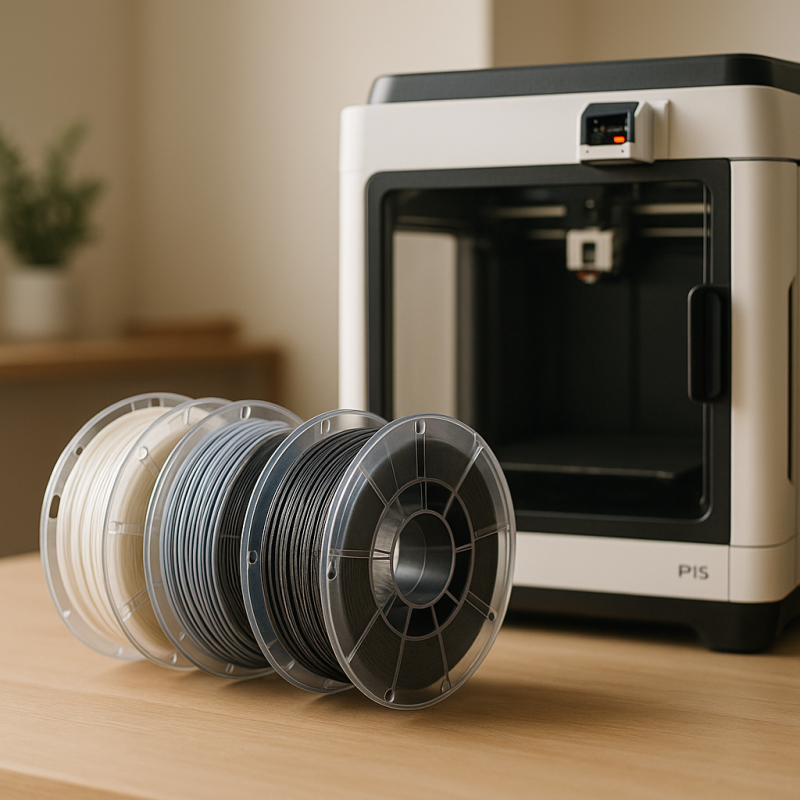
A Data-Backed Guide: 5 Best Filaments for Bambu P1S in 2026


Abstract
This comprehensive analysis, situated in the year 2026, examines the optimal material choices for the Bambu Lab P1S, a high-speed Fused Deposition Modeling (FDM) printer that has become a benchmark in prosumer and small-scale manufacturing contexts. The investigation moves beyond generic recommendations to provide a data-backed, application-driven framework for filament selection. It explores the symbiotic relationship between the printer’s advanced mechanical systems—such as its CoreXY kinematics and direct-drive extruder—and the rheological, thermal, and mechanical properties of specific polymer families. Five key material categories are evaluated: High-Speed Polylactic Acid (HS-PLA), Polyethylene Terephthalate Glycol (PETG) and its carbon fiber variant (PETG-CF), Acrylonitrile Styrene Acrylate (ASA), Thermoplastic Polyurethane (TPU), and aesthetic filaments like Silk and Multi-Color PLA. The study elucidates the specific printing parameters, potential challenges, and ideal use-cases for each material, providing a nuanced guide for operators seeking to maximize the P1S’s capabilities for applications ranging from rapid prototyping to the production of durable, end-use parts.
Key Takeaways
- Match filament properties to the P1S’s high acceleration; not all materials can keep up.
- High-Speed PLA (HS-PLA) is ideal for rapid, dimensionally accurate prototyping.
- Use PETG-CF for functional parts requiring stiffness superior to standard PETG.
- ASA is the premier choice for parts needing long-term UV and weather resistance.
- Finding the best filament for Bambu P1S depends entirely on the part’s final application.
- Always perform a calibration print after switching filament types, even within the same polymer family.
- A hardened steel nozzle is non-negotiable for printing abrasive composite filaments like PETG-CF.
Table of Contents
- Understanding the Bambu P1S Ecosystem: More Than Just Speed
- A Foundational Choice: High-Speed PLA for Prototyping and General Use
- The Resilient Workhorse: PETG and Carbon Fiber PETG (PETG-CF)
- The Outdoor Champion: ASA for Unyielding Durability
- The Flexible Specialist: Mastering TPU for Dynamic Applications
- The Aesthetic Virtuoso: Silk, Matte, and Multi-Color Filaments
- A Comparative Framework for Material Selection
- Frequently Asked Questions (FAQ)
- A Concluding Thought on Material Mastery
- References
Understanding the Bambu P1S Ecosystem: More Than Just Speed
Before we can have a meaningful discussion about the best filament for the Bambu P1S, we must first cultivate a deeper appreciation for the machine itself. To treat the P1S as just another 3D printer, albeit a faster one, is to miss the very essence of its design philosophy. Its capabilities fundamentally reshape the conversation around material selection. The questions we ask are no longer just “What can I print?” but rather, “How does this material behave under extreme acceleration?” and “What are the physical limits of polymer flow when time is compressed?”
The P1S, much like its sibling the X1-Carbon, is built upon a CoreXY motion system. Imagine two stationary motors working in concert, using a sophisticated arrangement of belts to move the printhead in the X and Y axes. Unlike a bedslinger design where the entire print bed moves back and forth, the P1S keeps its bed movement confined to the Z-axis, lowering it layer by layer. This design choice dramatically reduces moving mass, which is the secret to its astonishing acceleration capabilities—up to 20,000 mm/s². High top speed is impressive, but it is the acceleration that truly defines high-speed printing. It is the printer’s ability to reach those speeds almost instantaneously that slashes print times.
This mechanical prowess places unique demands on the filament. The direct-drive extruder, positioned right above the hotend, provides precise control over filament retraction and extrusion. However, it must push the polymer through the melt zone at a volumetric flow rate that would have seemed impossible just a few years ago. A standard printer might leisurely melt plastic at 5-10 mm³/s; the P1S routinely operates in the 20-32 mm³/s range. This means the filament has only milliseconds to transition from a solid state to a liquid with the perfect viscosity for good layer adhesion. Materials that are not specifically formulated for such rapid thermal transfer will fail, resulting in under-extrusion, poor layer bonding, and a catastrophic loss of part strength.
The Role of Material Properties in a High-Flow System
When we consider a filament for the P1S, we are not just choosing a plastic; we are selecting a complex set of properties that must harmonize with the printer’s physics.
- Melt Flow Index (MFI): A higher MFI generally indicates that a polymer will flow more easily when molten. For high-speed printing, a material needs an MFI that is high enough to accommodate rapid extrusion but not so high that it becomes uncontrollable, leading to stringing or loss of detail. Manufacturers of high-speed filaments, like the designed for modern machines, carefully tune these properties.
- Thermal Conductivity: How quickly can the filament absorb heat from the hotend block? A material with poor thermal conductivity will have a solid core even as its outer surface melts, leading to inconsistent flow and potential clogs. High-speed formulations often include additives to improve this energy transfer.
- Dimensional Accuracy and Consistency: In a system moving with such precision, the filament itself must be a constant, not a variable. A filament with a diameter tolerance of ±0.05mm might be acceptable for a slower machine, where the system has time to compensate. On the P1S, such a variance can cause instantaneous changes in extrusion volume, leading to visible artifacts on the print surface. A tolerance of ±0.02mm, as specified by industrial manufacturers (SigmaFilament, 2026), becomes a practical necessity for achieving consistent, high-quality results.
The table below contrasts the demands of a traditional “bedslinger” printer with those of a high-speed CoreXY system like the P1S, illustrating why material choice becomes so much more consequential.
| Feature | Traditional Bedslinger (e.g., Ender 3) | High-Speed CoreXY (e.g., Bambu P1S) | Implication for Filament Choice |
|---|---|---|---|
| Max Print Speed | ~50-80 mm/s | ~300-500 mm/s | Filament must have a high Melt Flow Index (MFI) and excellent thermal conductivity. |
| Acceleration | ~500 mm/s² | ~20,000 mm/s² | Material must withstand rapid pressure changes in the nozzle without causing inconsistent extrusion. |
| Max Volumetric Flow | ~8-12 mm³/s | ~20-32 mm³/s | Requires formulations specifically designed for rapid melting, often labeled as “High-Speed” or “HF”. |
| Motion System | Moving Y-axis bed | Stationary bed (Z-axis only) | Reduced vibration allows for finer details, but only if the filament’s viscosity is correct. |
| Filament Diameter | ±0.05mm often tolerated | ±0.02mm highly recommended | Consistency is paramount; variations cause visible print quality defects at high speed. |
A Foundational Choice: High-Speed PLA for Prototyping and General Use
When embarking on a journey with the P1S, your first and most frequent companion will likely be Polylactic Acid, or PLA. Yet, it is crucial to understand that not all PLA is created equal, especially in the context of high-speed printing. The standard PLA that served you well on older machines will likely struggle to keep up with the P1S’s voracious appetite for material. This is where High-Speed PLA (HS-PLA) enters the conversation, representing a necessary evolution of the world’s most popular 3D printing polymer.
HS-PLA is not merely a marketing term. It represents a specific formulation engineered to address the challenges of high volumetric flow. Polymer scientists achieve this by modifying the base PLA resin in several ways. They might use a polymer chain of a different length or distribution to alter its melt viscosity. They often incorporate flow-enhancing additives—proprietary ingredients that act like lubricants on a molecular level, allowing the polymer chains to slide past one another more freely. These modifications work together to lower the energy required to melt and extrude the filament, enabling it to flow smoothly even at the blistering speeds the P1S commands (Upadhyaya et al., 2021).
When to Choose High-Speed PLA
Think of HS-PLA as the default, the reliable baseline for a vast array of projects. Its primary virtues are its ease of use, low cost, and exceptional dimensional accuracy.
- Rapid Prototyping: This is HS-PLA’s home turf. When you need to quickly iterate through design changes—testing form, fit, and assembly—nothing beats the speed and reliability of this material on the P1S. A part that once took eight hours to print can now be in your hands in under two, dramatically accelerating the development cycle.
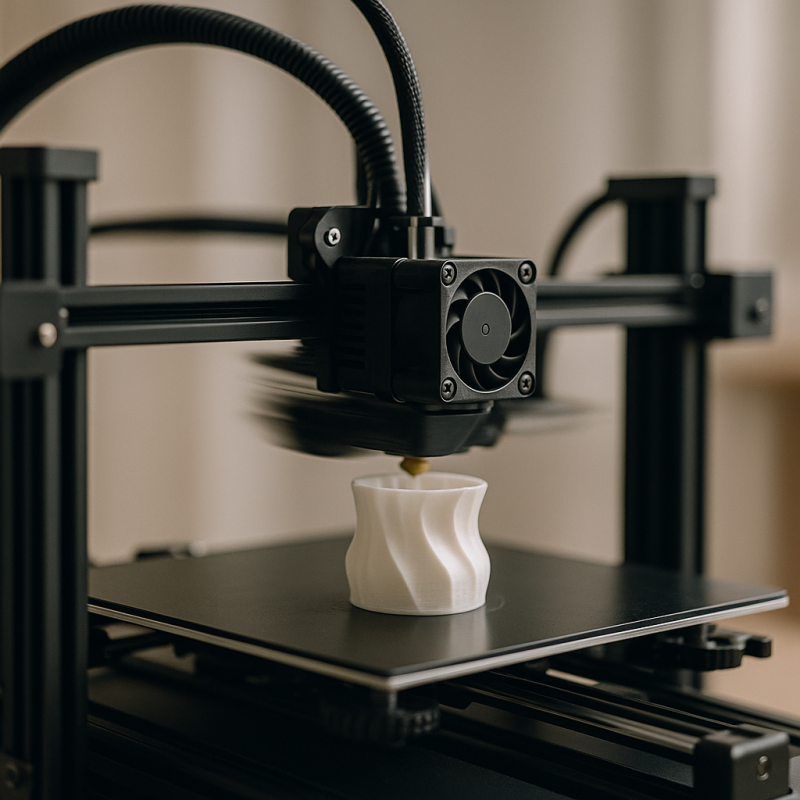
- Detailed Models and Figurines: PLA has always been celebrated for its ability to capture fine details, a result of its low shrinkage and relatively low printing temperature, which allows it to “freeze” in place quickly. HS-PLA retains this quality, making it the best filament for bambu p1s users who create intricate miniatures, architectural models, or display pieces where sharp edges and smooth surfaces are paramount.
- General Household Items and Organizers: For non-structural items like desk organizers, custom drawer inserts, or decorative vases, HS-PLA provides more than adequate strength and a beautiful finish, especially in matte or silk varieties.
Printing with HS-PLA on the P1S: A Practical Guide
The beauty of using a well-formulated HS-PLA on the P1S is that it often “just works,” especially when using the manufacturer’s default profiles. However, to truly master the material and push the boundaries of quality, consider the following nuances.
- Temperature: While standard PLA prints around 190-210°C, HS-PLA often requires a slightly higher temperature, typically in the 210-230°C range. This extra thermal energy is necessary to achieve the rapid melt required for high flow rates. Think of it like trying to boil water: you need to supply energy faster to boil a large pot quickly than a small one. Always start with the filament manufacturer’s recommendation and perform a temperature tower calibration to fine-tune for optimal layer adhesion and surface finish.
- Cooling: The P1S is equipped with a powerful part cooling fan, which is essential for printing PLA at speed. The fan rapidly solidifies the extruded material, preventing drooping on overhangs and preserving sharp details. For most HS-PLA prints, running the part cooling fan at 100% after the first few layers is standard practice.
- Build Surface: PLA adheres wonderfully to the standard PEI build plates (both textured and smooth) that often come with the P1S. A clean, grease-free surface is usually all that is needed for perfect first-layer adhesion. Wiping the plate with isopropyl alcohol (IPA) before each print is a simple habit that prevents many failures.
A common misconception is that all “PLA+” or “Tough PLA” filaments are inherently high-speed. While they offer improved mechanical properties, their formulations may not be optimized for high flow. Always look for the “High-Speed” or “HF” (High Flow) designation when your primary goal is reducing print time without sacrificing quality.
The Resilient Workhorse: PETG and Carbon Fiber PETG (PETG-CF)
While HS-PLA is the sprinter, Polyethylene Terephthalate Glycol, or PETG, is the marathon runner. It is the material you turn to when your parts need to endure more—more heat, more impact, a bit more chemical exposure. PETG occupies a valuable middle ground, offering a significant step up in durability from PLA without the printing complexities of materials like ABS or ASA. For many P1S users, it becomes the go-to filament for functional parts, brackets, enclosures, and mechanical components.
The “G” in PETG stands for glycol, which is added during polymerization to the same base polymer used to make water bottles (PET). This small chemical modification is transformative; it prevents the material from crystallizing as it cools, which is what makes standard PET brittle and opaque. The resulting amorphous structure of PETG gives it its signature toughness, slight flexibility, and optical clarity in its natural form (La-Hoz-Reyes et al., 2022).
PETG: The Functional Default
Choose PETG when your printed part needs to do a job, not just look good on a shelf.
- Mechanical Parts: Jigs, fixtures, and mounting brackets printed in PETG can withstand repeated stress and impact far better than their PLA counterparts. Its slight flex allows it to absorb energy rather than cracking.
- Enclosures for Electronics: PETG has a higher glass transition temperature (around 80°C) than PLA (~60°C). This means it will not deform or soften in environments that might get warm, such as inside a PC case or near a small motor.
- Parts Requiring Chemical Resistance: PETG holds up well against water, weak acids, and many common solvents, making it suitable for containers or components that may come into contact with various substances.
The Next Level of Performance: Carbon Fiber PETG (PETG-CF)
If PETG is the workhorse, then PETG-CF is the same animal after a rigorous training program. By infusing the base PETG resin with small, chopped carbon fibers (typically 15-20% by weight), the material’s properties are dramatically enhanced. The fibers act as a reinforcement, much like rebar in concrete.
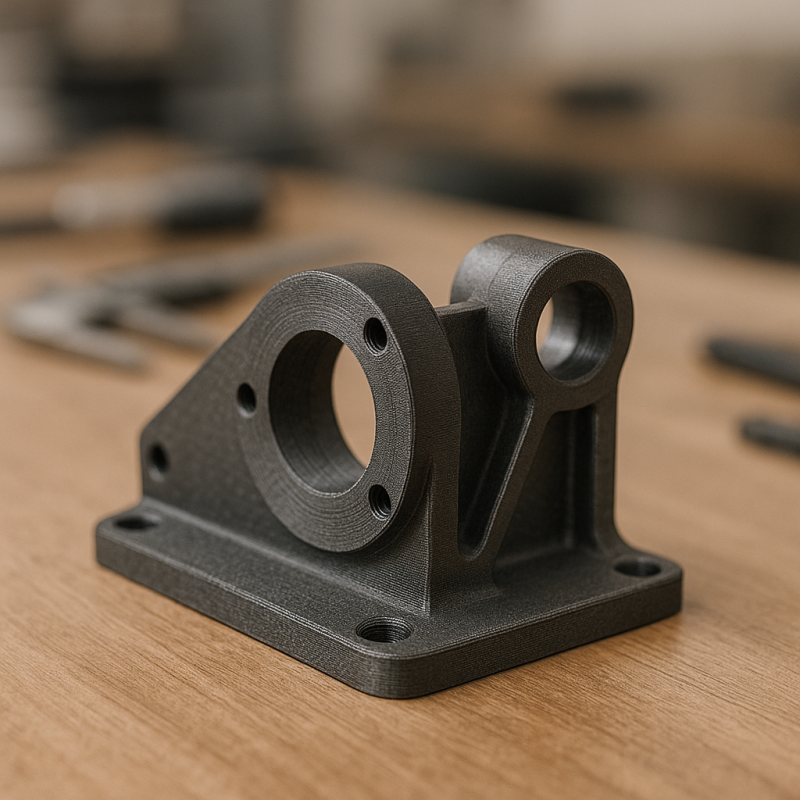
The primary benefit of adding carbon fiber is a massive increase in stiffness (or flexural modulus). A part printed in PETG-CF will deflect far less under load than the same part printed in standard PETG. This makes it an exceptional choice for structural components like drone frames, robotic arms, or support brackets that must hold their shape with absolute precision. The fibers also improve dimensional stability, reducing shrinkage and warping during printing, which can be a significant advantage for large, flat parts.
| Property | Standard PETG | Carbon Fiber PETG (PETG-CF) | Significance |
|---|---|---|---|
| Stiffness | Moderate | Very High | PETG-CF parts bend much less under load, ideal for structural applications. |
| Strength | Good | Excellent | The fibers help distribute stress, increasing the load a part can bear before failure. |
| Temperature Resistance | ~80°C | ~85-90°C | The fibers help the part retain its shape at slightly higher temperatures. |
| Printability | Moderate (can be stringy) | Excellent (less stringing) | The fibers control the melt flow, often resulting in cleaner prints than standard PETG. |
| Appearance | Glossy, can show layer lines | Matte, hides layer lines | The matte black finish of PETG-CF is often preferred for a professional, “engineered” look. |
| Nozzle Requirement | Standard Brass Nozzle | Hardened Steel Nozzle (Required) | Carbon fibers are highly abrasive and will quickly destroy a standard brass nozzle. |
Navigating PETG and PETG-CF on the P1S
Printing PETG on the P1S can be a dream, but it requires a slightly different mindset than PLA.
- Moisture is the Enemy: PETG is hygroscopic, meaning it readily absorbs moisture from the air. Wet PETG is the source of 90% of printing problems. It will hiss and pop as it exits the nozzle, leaving a weak, stringy, and rough-surfaced print. Always dry your PETG filament before use (typically 4-6 hours at 65°C) and store it in a dry box. The Bambu Lab AMS with its desiccant packs is an excellent solution for keeping filament dry during printing.
- Temperature and Stringing: PETG prints hotter than PLA, usually in the 230-250°C range. It also has a tendency to be “stringy” due to its viscosity. While the P1S’s direct-drive extruder and pressure advance tuning do an excellent job of mitigating this, you may still need to fine-tune retraction settings and ensure your filament is perfectly dry to achieve flawless prints.
- The Hardened Nozzle Imperative: This cannot be overstated. If you plan to print any composite material, including PETG-CF, you must install a hardened steel nozzle and extruder gear set. The abrasive carbon fibers will literally sand away a brass nozzle in a matter of hours, leading to a ruined nozzle, failed prints, and potential hotend damage. This is not an optional upgrade; it is a mandatory requirement.
For those producing functional parts at scale, the consistency and enhanced properties of a well-made PETG-CF, such as those available from specialized private label 3D filament manufacturers (OEM/ODM), make it one of the most valuable materials in the P1S arsenal.
The Outdoor Champion: ASA for Unyielding Durability
When your printed creations must leave the controlled comfort of the indoors and face the relentless assault of the elements, PLA and PETG will eventually falter. Sunlight, with its invisible yet powerful ultraviolet (UV) radiation, will break down their polymer chains, leaving them brittle and faded. This is where Acrylonitrile Styrene Acrylate, or ASA, asserts its dominance. ASA was developed as a more weather-resistant alternative to the common industrial plastic ABS, and for 3D printing, it is the undisputed champion for outdoor applications.
Think of ASA as ABS’s more sophisticated sibling. It shares the same core components of Styrene (for rigidity and processability) and Acrylonitrile (for chemical resistance and strength). However, it replaces the Butadiene component of ABS, which is notoriously susceptible to UV degradation, with an Acrylate elastomer. This one chemical substitution gives ASA its superpower: exceptional resistance to weathering and long-term UV exposure (Panchal et al., 2022). A part printed in ASA can sit in direct sunlight for years and retain both its color and its mechanical integrity, making it the best filament for bambu p1s users creating parts for cars, gardens, boats, or any project exposed to the sky.
Applications Demanding ASA
The use cases for ASA are clear and compelling. Choose it when the primary failure mode for your part would be environmental degradation.
- Automotive Parts: Custom exterior trim pieces, replacement mirror housings, grille inserts, and brackets that live in the engine bay (thanks to its high temperature resistance) are perfect applications.
- Garden and Outdoor Equipment: Sprinkler heads, custom hose fittings, planter boxes, bird feeders, and housings for outdoor sensors will last season after season when printed in ASA.
- Marine Components: On a boat, where parts are exposed to sun, salt, and water, ASA is an ideal choice for non-critical components like custom cleats, fishing rod holders, and instrument covers.
- Scientific and Industrial Enclosures: Housings for weather stations, security cameras, or any electronic device that must be mounted outdoors need the protection that only ASA can provide.
Taming ASA with the Bambu P1S
Historically, printing ABS and ASA has been a challenging affair, infamous for warping and cracking due to high thermal shrinkage. The fumes produced during printing also pose a health concern. However, the Bambu P1S, with its fully enclosed chamber, is uniquely equipped to make printing ASA a much more reliable and pleasant experience.
- The Enclosure is Key: The P1S’s enclosure is not just for show; it is a critical tool for printing high-temperature materials. It traps heat, raising the ambient temperature inside the chamber. A warm, stable environment (~40-50°C) is essential to reduce the temperature gradient between the extruded plastic and the surrounding air. This minimizes thermal stress, which is the root cause of warping and layer splitting. Before starting an ASA print, it is good practice to heat the bed to its target temperature (90-110°C) and let it sit for 10-15 minutes to “heat soak” the chamber.
- Ventilation is Not Optional: ASA, like ABS, releases Styrene fumes during printing, which have a characteristic odor and are not healthy to breathe long-term. The P1S comes with a carbon filter, but it has a limited lifespan and capacity. It is highly recommended to either place the printer in a well-ventilated room or to use an external ventilation system, such as the “BentoBox” community project or a dedicated exhaust fan that vents fumes directly outside. Your health is more important than any print.
- Adhesion and Bed Surface: ASA requires a high bed temperature (90-110°C) to stick properly. It adheres well to a textured PEI sheet, which provides a good mechanical grip. For smooth surfaces, using a glue stick or a specialized polymer adhesive (like Magigoo PC) can provide a reliable, releasable bond and help prevent the part from welding itself to the build plate.
- Print Settings: ASA prints at high temperatures, typically with a nozzle temperature of 240-270°C. Due to the enclosed, heated environment, you will likely need to turn the part cooling fan completely off or use it only sparingly (e.g., 10-20%) for extreme overhangs or bridges. Too much cooling is the enemy of layer adhesion with ASA.
Printing ASA successfully on the P1S is a rite of passage. It signals a transition from printing simple objects to engineering durable, functional parts that can solve real-world problems. It requires more care and attention than PLA, but the reward is a print that can truly withstand the test of time and weather.
The Flexible Specialist: Mastering TPU for Dynamic Applications
In a world of rigid plastics, Thermoplastic Polyurethane, or TPU, introduces the element of flexibility. It allows us to print objects that can bend, stretch, compress, and absorb impacts in ways that PLA, PETG, and ASA simply cannot. Printing with TPU transforms the 3D printer from a tool for making static objects into a device for creating dynamic, interactive parts. From soft phone cases to vibration dampeners and flexible hinges, TPU opens up a whole new design space.
TPU belongs to a class of polymers called thermoplastic elastomers. It is a block copolymer, meaning its molecular structure consists of alternating rigid and soft segments. By varying the ratio and composition of these segments, manufacturers can produce TPU with a wide range of hardness levels, measured on the Shore hardness scale. The most common TPUs for 3D printing fall between Shore 85A (firm, like a skateboard wheel) and 95A (harder, like a shopping cart wheel). Softer TPUs exist but become progressively more difficult to print.
The Power of Flexibility: Where to Use TPU
The decision to use TPU is almost always driven by a need for compliance, shock absorption, or a soft-touch surface.
- Protective Gear: Custom-fit phone cases, drone landing gear, corner bumpers for equipment, and protective sleeves for tools are classic TPU applications. The material’s ability to absorb and dissipate impact energy is its key strength here.
- Seals, Gaskets, and Plugs: The rubber-like nature of TPU makes it perfect for creating custom gaskets and seals that provide a snug, water-resistant fit.
- Vibration Dampening: Placing TPU feet under a noisy machine (including another 3D printer) can significantly reduce the transmission of vibrations, making for a quieter environment.
- Wearables and Ergonomics: Flexible watch bands, soft-touch grips for tools or game controllers, and even the soles of custom footwear can be printed with TPU, offering a personalized and comfortable user experience.
Printing TPU on the Bambu P1S: A Balancing Act
Printing flexible filaments has traditionally been a nightmare on many printers, especially those with Bowden tubes. The soft, noodle-like filament has a tendency to buckle and jam wherever it finds an unconstrained path. However, the Bambu P1S’s direct-drive extruder, which places the drive gears directly on top of the hotend, provides a very short and well-constrained filament path. This makes it an exceptionally capable machine for printing TPU, but success still requires attention to a few key details.
- The AMS Question: This is the most critical point for P1S users. Do not print TPU from the Bambu Lab Automatic Material System (AMS). The AMS involves a long series of tubes and rollers that create too much friction and too many opportunities for the soft filament to stretch or jam. Attempting to do so is a common cause of failure and potential damage to the AMS unit. Instead, you must bypass the AMS by mounting the TPU spool on the external spool holder at the back of the machine and feeding it directly to the printhead.
- Speed is the Enemy: While the P1S is a high-speed machine, you must resist the urge to print TPU quickly. Flexibility comes at the cost of speed. The key is to print slowly and steadily, typically in the range of 30-50 mm/s. The printer needs to gently guide the soft filament into the melt zone, not shove it. Trying to print TPU at PLA speeds will cause the filament to compress and buckle between the drive gear and the hotend, leading to an immediate jam.
- Moisture Management: Like PETG, TPU is extremely hygroscopic. Wet TPU will be stringy, bubbly, and will have terrible layer adhesion. A few hours of exposure to humid air can ruin a spool. It is absolutely essential to dry TPU filament thoroughly before printing (typically 4-6 hours at 50-55°C) and to print directly from a dry box if possible.
- Retraction Settings: Because of its elasticity, TPU does not respond to retractions in the same way as rigid filaments. Pulling it back quickly can cause it to stretch rather than retract cleanly from the nozzle. It is often better to use minimal retraction distance and speed, or even to disable retraction entirely and accept a small amount of stringing, which can be easily cleaned up post-print with a heat gun or a sharp blade.
Mastering TPU on the P1S requires a shift in mindset. You must slow down, respect the material’s properties, and work with its nature, not against it. The reward for your patience is the ability to create parts that are not just static forms but are instead dynamic, functional, and feel alive in your hands.
The Aesthetic Virtuoso: Silk, Matte, and Multi-Color Filaments
While engineering-grade materials like PETG-CF and ASA are celebrated for their functional performance, there is a whole other class of filaments designed to appeal to a different human sensibility: the appreciation of beauty. Aesthetic filaments, which are almost always based on a modified PLA or PETG formula, prioritize visual appeal over raw mechanical strength. For projects where the final look is the most important characteristic—from artistic sculptures to eye-catching consumer products—these materials allow the Bambu P1S to function not just as a manufacturing tool, but as an artist’s brush.
Silk PLA: The Illusion of Metal
Silk PLA is perhaps the most popular aesthetic filament. It contains elastomeric additives that create a highly reflective, lustrous surface finish that minimizes the appearance of layer lines. The way light plays across the surface of a Silk PLA print can be breathtaking, giving the plastic object the apparent depth and sheen of polished metal or fine silk fabric.
This unique finish is achieved by the way the polymer additives align during extrusion and cooling. To maximize the “silk” effect, it is often recommended to print at a slightly higher temperature than standard PLA. This allows the material to flow more smoothly and gives the additives time to orient themselves for maximum light reflection. The downside of these additives is that they can sometimes slightly reduce the interlayer adhesion compared to standard PLA (Yin et al., 2021). While still strong enough for most decorative purposes, Silk PLA is generally not recommended for parts that will be under significant mechanical stress. It is the perfect material for vases, trophies, decorative statues, and cosplay props that need to look spectacular.
Matte PLA: The Power of Understatement
On the opposite end of the visual spectrum from glossy silk is Matte PLA. These filaments incorporate microscopic particles that diffuse light, creating a non-reflective, textured surface. The effect is one of quiet sophistication and can make printed objects look less like plastic and more like a molded or cast part.
The primary benefit of a matte finish is its ability to hide imperfections. Because it does not reflect light directly, it makes layer lines almost invisible, even on prints with thicker layer heights. This can be a huge time-saver, as you can print faster with larger layers without sacrificing the perceived quality of the surface. Matte filaments are ideal for architectural models, product prototypes where you want to focus on form without the distraction of a glossy finish, and any object that benefits from a subtle, modern aesthetic.
Multi-Color Filaments: Dynamic Color in a Single Strand
The advent of co-extrusion technology in filament manufacturing has given rise to an exciting subcategory of aesthetic materials: dual-color and tri-color filaments. During production, two or three separate streams of colored plastic are combined into a single strand of filament.
The result is a print that changes color depending on the viewing angle. As the printer lays down the filament, one side of the extrusion will be one color, and the other side will be another. When you look at the object from the left, it might appear red; from the right, it might appear blue. The effect is mesmerizing and adds a dynamic quality to the print that is impossible to achieve with a single-color filament. These filaments are purely for visual impact and are perfect for creating unique toys, “magic” prints, and decorative items that are meant to be handled and observed from all sides.
Printing Aesthetic Filaments on the P1S
For the most part, these PLA-based aesthetic filaments print using profiles very similar to standard or High-Speed PLA. The P1S handles them with ease.
- Temperature Tuning: Silk filaments, as mentioned, often benefit from the higher end of the PLA temperature range (215-230°C) to maximize their sheen. Always print a small temperature tower to find the sweet spot for any new brand of silk filament.
- Handling Multi-Color: When using dual- or tri-color filaments, the orientation of the part on the build plate becomes an artistic choice. Rotating the model can dramatically change how the colors appear on the final print.
- AMS Compatibility: Since most aesthetic filaments are PLA-based and have similar rigidity, they generally work very well with the Bambu Lab AMS, allowing for easy multi-material prints combining standard colors with these special-effect filaments.
Using these materials effectively is a form of artistry. It requires thinking not just about the shape of an object but also about how its surface will interact with light and how its color will shift as it moves through the world. The P1S, with its speed and precision, provides a remarkable canvas for this kind of material-driven creativity.
A Comparative Framework for Material Selection
Choosing the best filament for a project on your Bambu P1S is an exercise in balancing competing virtues. There is rarely a single “perfect” material, but there is almost always a “best-fit” material for a specific application. To make an informed decision, one must weigh factors like required strength, environmental exposure, flexibility, and desired aesthetic against practical considerations like print time and cost. The following table provides a comparative framework, summarizing the key characteristics of the five material families we have explored. Use it as a mental checklist when planning your next print.
| Characteristic | High-Speed PLA | Standard PETG | PETG-Carbon Fiber | ASA | TPU (95A) |
|---|---|---|---|---|---|
| Primary Use Case | Rapid Prototyping, Models | Functional Parts, Enclosures | Stiff Structural Parts | Outdoor/UV-Exposed Parts | Flexible, Impact-Absorbing Parts |
| Ease of Printing | Very Easy | Moderate (Needs Drying) | Moderate (Needs Hard Nozzle) | Difficult (Needs Enclosure) | Difficult (Needs Slow Speed) |
| Max Print Speed | Very High (300+ mm/s) | Moderate (~100-150 mm/s) | Moderate (~100-150 mm/s) | Low (~60-100 mm/s) | Very Low (30-50 mm/s) |
| Impact Strength | Low (Brittle) | High | Moderate (Stiff) | Very High | Extremely High |
| Stiffness | High | Moderate | Very High | High | Very Low |
| Temp. Resistance | Low (~60°C) | Moderate (~80°C) | Moderate (~85°C) | High (~100°C) | Moderate (~80°C) |
| UV Resistance | Poor | Poor | Poor | Excellent | Good |
| AMS Compatible? | Yes | Yes | Yes | Yes | NO |
| Fumes/Ventilation | Low (Sweet Odor) | Very Low | Very Low | High (Styrene – Must Vent) | Very Low |
| Relative Cost | $ | $$ | $$$$ | $$$ | $$$ |
This table serves as a starting point for your decision-making process. Let’s imagine a few scenarios to see how it works in practice.
- Scenario 1: You need a custom mounting bracket for a security camera on the side of your house.
- Analysis: The part will be outdoors, exposed to sun and rain. This immediately points to ASA as the leading candidate due to its excellent UV resistance. PETG and PLA would become brittle and fail within a year. The part needs to be strong and rigid, which ASA provides. The higher printing difficulty is justified by the application’s demands.
- Scenario 2: You are designing a new board game and need to print a set of detailed player miniatures.
- Analysis: The primary concern is visual quality and fine detail. The parts will not be under stress. This is a perfect job for High-Speed PLA or, for a more premium look, Silk PLA. The P1S can produce the entire set quickly, and the material’s ability to hold sharp edges will make the miniatures look great.
- Scenario 3: You want to create a highly rigid frame for a custom FPV drone.
- Analysis: The frame must be as stiff as possible to prevent vibrations and ensure responsive flight characteristics. It also needs good impact strength to survive crashes. While standard PETG is an option, the “Very High” stiffness of PETG-Carbon Fiber makes it the superior choice. The extra cost and the need for a hardened nozzle are acceptable trade-offs for the significant performance gain.
- Scenario 4: Your washing machine is vibrating excessively, and you want to print feet to dampen the noise.
- Analysis: The goal is to absorb energy and reduce vibration. A rigid material would simply transfer the vibration. This is a job that only a flexible material can do. TPU is the clear winner. You will need to print it slowly and bypass the AMS, but the resulting flexible feet will solve the problem effectively.
By thinking through the life and function of the object you wish to create, you can navigate the complex world of polymers and select the material that will bring your idea to life most effectively.
Frequently Asked Questions (FAQ)
Can I use any brand of filament with the Bambu P1S?
Yes, you are not locked into using only Bambu Lab’s official filament. The P1S uses standard 1.75mm filament, and you can use spools from any manufacturer. However, for optimal performance with the AMS, it is best to use spools that have similar dimensions to the Bambu Lab spools (typically 200mm diameter, 65mm width). Some larger or cardboard spools may not fit or rotate smoothly inside the AMS. For those, you can use the external spool holder or print a spool adapter.
Do I really need a hardened steel nozzle for carbon fiber filaments?
Absolutely, yes. This is non-negotiable. Standard brass nozzles are very soft. The chopped carbon or glass fibers in composite filaments are extremely abrasive. They will act like sandpaper, widening the nozzle orifice of a brass nozzle within a few hundred grams of printing. This leads to severe under-extrusion, poor dimensional accuracy, and ultimately, a completely ruined nozzle. A hardened steel nozzle is designed to resist this abrasion and will last for hundreds of hours of printing with these materials.
What is the actual difference between PLA, PLA+, and High-Speed PLA?
- Standard PLA is the basic formula, known for its ease of printing and stiffness, but it can be brittle.
- PLA+ (or Tough PLA) is a modified version of PLA that includes additives to improve its toughness and impact resistance, making it less brittle. It is a good general-purpose upgrade from standard PLA.
- High-Speed PLA is specifically formulated for high flow rates. It is modified to melt faster and flow more easily under pressure, which is essential for keeping up with printers like the P1S. While it may also have “Plus” properties, its primary feature is its performance at high speeds. For the P1S, using a High-Speed variant is highly recommended to unlock the machine’s full potential.
My PETG prints are always stringy and fuzzy. What am I doing wrong?
The most common cause of stringing and poor surface quality with PETG is moisture. PETG is very hygroscopic and absorbs water from the air. When wet filament is heated in the nozzle, the water turns to steam and violently expands, causing bubbles, pops, and a fuzzy, stringy surface. The first step in troubleshooting PETG is to thoroughly dry the spool in a filament dryer or oven (at ~65°C for 4-6 hours). Using a dry, well-calibrated filament will solve the vast majority of PETG printing issues.
Why can’t I use TPU in the AMS?
The Automatic Material System (AMS) uses a series of motors and long PTFE tubes to feed filament from the spool to the print head. This system is designed for rigid filaments. TPU is soft and flexible, like a wet noodle. When the AMS tries to push it through this long path, the filament can easily compress, stretch, or buckle, leading to a jam. The friction in the tubes is too high for the soft material to overcome reliably. It is a mechanical limitation that requires you to bypass the AMS and feed TPU directly to the extruder via the external spool holder.
How important is ventilation when printing with ASA?
Extremely important. ASA, like its cousin ABS, releases styrene gas when printed. While the amounts may be small, chronic exposure to styrene is a health concern. The built-in carbon filter in the P1S helps reduce the odor but is not a complete solution for removing volatile organic compounds (VOCs). It is strongly recommended to operate the printer in a well-ventilated area or to use an auxiliary ventilation system that exhausts the fumes to the outside. Your long-term health is more valuable than any 3D print.
What causes warping and how can I prevent it with materials like ASA?
Warping is caused by thermal stress. As the plastic cools, it shrinks. If the bottom of the print cools at a different rate than the top, the differential shrinkage causes the corners of the print to curl up and lift off the build plate. Materials with high shrinkage rates, like ASA and ABS, are particularly prone to this. The best way to prevent warping is to minimize this temperature difference by using a fully enclosed and heated chamber (which the P1S has), using a high bed temperature (100-110°C for ASA), and turning off the part cooling fan. This keeps the entire print warm and allows it to cool down slowly and uniformly.
A Concluding Thought on Material Mastery
The discourse surrounding the best filament for the Bambu P1S ultimately transcends a simple list of products. It resolves into a deeper understanding of the interplay between a machine’s capabilities and a material’s soul. The P1S, with its remarkable speed, does not just make objects faster; it challenges our assumptions about the very polymers we use. It demands materials that can keep pace, that can transform from solid to liquid and back to solid with grace under pressure.
We have seen that HS-PLA provides the foundation for rapid iteration, that PETG and its carbon fiber variant offer functional resilience, that ASA grants our creations the endurance to face the elements, and that TPU imbues them with life-giving flexibility. Each material represents a different set of possibilities, a different answer to the question, “What do I want this object to do in the world?”
True mastery of this machine, therefore, is not found in discovering a single, mythical “best” filament. It is cultivated in the thoughtful, deliberate process of selection. It is the ability to look at a design, to imagine its function and its environment, and to choose the polymer that will allow it to fulfill its purpose most completely. The Bambu P1S provides the speed; your wisdom in material selection provides the substance.
References
- La-Hoz-Reyes, G. S., Guedes, L. B. M., Bilesky, P., & da Silva, L. F. (2022). A review on the mechanical, thermal and chemical recycling of polyethylene terephthalate (PET). Journal of Polymers and the Environment, 30(12), 4811–4829.
- Panchal, P., Shah, M., & Shimpi, N. (2022). A review on acrylonitrile styrene acrylate (ASA) and its composites for advanced applications. Polymers and Polymer Composites, 30.
- SigmaFilament. (2026). Wholesale 3D Printer Filament Manufacturer. SigmaFilament. Retrieved from https://sigmafilament.com/
- Upadhyaya, M., Gnanavel, M., & Parthasarathy, H. (2021). Effect of process parameters on the mechanical properties of high-speed FDM printed PLA. The International Journal of Advanced Manufacturing Technology, 116(7-8), 2269–2280.
- Yin, J., Li, Y., & Li, B. (2021). The effect of additives on the surface finish and mechanical properties of PLA-based filaments for FDM 3D printing. Journal of Materials Research and Technology, 15, 2478-2489.
Last reviewed and updated: May 2026. Author: SigmaFilament Engineering Team. For custom filament solutions and wholesale inquiries, contact our team.