A Practical 2026 Buyer’s Guide: PLA vs PETG vs ABS


Abstract
The selection of an appropriate filament is a foundational decision in Fused Deposition Modeling (FDM) 3D printing, profoundly influencing the functional and aesthetic outcomes of a project. This analysis provides a comprehensive examination of the three most prevalent thermoplastic filaments: Polylactic Acid (PLA), Polyethylene Terephthalate Glycol (PETG), and Acrylonitrile Butadiene Styrene (ABS). It investigates the distinct chemical compositions, mechanical properties, and thermal characteristics of each material. The discussion navigates the practicalities of printing, including requisite hardware modifications like heated beds and enclosures, alongside the emission of volatile organic compounds. Furthermore, the post-processing potential, environmental considerations, and typical applications for each filament are evaluated. The aim is to equip both novice and experienced practitioners with a nuanced understanding, enabling an informed material choice that aligns with specific design intents, whether for rapid prototyping, functional end-use parts, or high-strength mechanical components. This comparative study illuminates the trade-offs inherent in the PLA vs PETG vs ABS decision, framing it not as a question of universal superiority but of situational appropriateness.
Key Takeaways
- Choose PLA for its ease of printing, fine detail, and rigidity in non-functional prototypes.
- Select PETG for its balance of toughness, temperature resistance, and food-safe potential.
- Use ABS for durable, high-temperature parts that require post-processing like vapor smoothing.
- Printing ABS safely and effectively requires an enclosure and proper ventilation.
- The PLA vs PETG vs ABS choice depends entirely on the part’s intended use and environment.
- Always dry PETG filament before printing to prevent stringing and ensure print quality.
- Consider composite filaments like carbon-fiber reinforced versions for superior strength.
Table of Contents
- A Head-to-Head Comparison: Material Properties at a Glance
- The People’s Champion: A Deep Dive into PLA (Polylactic Acid)
- The Resilient All-Rounder: Exploring PETG (Polyethylene Terephthalate Glycol-modified)
- The Industrial Workhorse: Unpacking ABS (Acrylonitrile Butadiene Styrene)
- Practical Considerations: Beyond Material Properties
- The Evolving Landscape: Specialty Filaments and Composites
- Frequently Asked Questions (FAQ)
- Navigating the Filament Maze
- References
A Head-to-Head Comparison: Material Properties at a Glance
Navigating the world of 3D printing filaments can feel like learning a new language. You encounter a sea of acronyms, each promising a unique set of capabilities. At the heart of desktop 3D printing, however, lies a foundational trio: PLA, PETG, and ABS. These three materials represent the vast majority of prints produced worldwide, and understanding their individual characters is the first step toward mastering the craft. Think of them not as competitors in a race for a single “best” title, but as specialized tools in a workshop. You would not use a sledgehammer for a task requiring a finishing nail, and similarly, you would not print a car dashboard component out of a material that melts in the summer sun.
The core of the PLA vs PETG vs ABS debate rests on a series of trade-offs between ease of use, strength, and durability. To make an informed choice, we must first establish a common ground for comparison, looking at their properties through the lens of empirical data. The table below offers a simplified yet powerful overview of how these materials stack up against one another in key performance areas. It serves as our map for the deeper exploration that follows, providing a quick reference for the fundamental differences that will guide your selection process.
| Property | PLA (Polylactic Acid) | PETG (Polyethylene Terephthalate Glycol) | ABS (Acrylonitrile Butadiene Styrene) |
|---|---|---|---|
| Ease of Printing | Very Easy | Moderate | Difficult |
| Tensile Strength | High (Stiff, Rigid) | Medium | Medium |
| Impact Strength | Low (Brittle) | High (Tough) | Very High (Durable) |
| Temperature Resistance | Low (~60°C) | Medium (~80°C) | High (~100°C) |
| UV Resistance | Poor | Good | Poor (ASA is the alternative) |
| Warping Tendency | Very Low | Low to Medium | High |
| Fumes/Odor | Minimal, sweet smell | None | Strong, potentially hazardous |
| Post-Processing | Easy (Sanding, Painting) | Difficult | Easy (Sanding, Acetone Smoothing) |
This table provides a bird’s-eye view, but the numbers and ratings only tell part of the story. The distinction between “tensile strength” and “impact strength,” for instance, is a subtle yet profound one that we will dissect. PLA has the higher tensile strength and stiffness, but its low durability means it can snap under sudden force, whereas PETG trades some rigidity for a much higher durability rating (Simplify3D, 2019a). Each material possesses a personality, a set of behaviors that you learn to anticipate and work with. Let us now move beyond the chart and get to know each of these materials on a more intimate level.
The People’s Champion: A Deep Dive into PLA (Polylactic Acid)
If 3D printing has a gateway material, it is undoubtedly PLA. Its forgiving nature and reliability have made it the default choice for beginners, educators, and professionals alike. When you unbox a new 3D printer, the sample spool of filament included is almost always PLA. There is a good reason for this. It allows a new user to achieve a successful print with minimal frustration, building the confidence needed to continue exploring this technology. But its popularity is not merely a consequence of its simplicity; PLA possesses a set of characteristics that make it uniquely suited for a wide range of applications.
The Origins and Nature of PLA
Unlike its petroleum-based counterparts, PLA is a bioplastic derived from renewable resources. The process typically begins with fermenting a carbohydrate source like corn starch, sugarcane, or tapioca root. This process produces lactic acid, which is then converted into a polymer called polylactic acid. This organic origin story is a significant part of its appeal. When printing with PLA, you will often notice a faint, slightly sweet smell, reminiscent of waffles or heated sugar, a stark contrast to the acrid chemical odor of other plastics.
This “green” reputation, however, comes with an important clarification. While PLA is commercially compostable, meaning it will break down under the specific high-temperature and microbial conditions of an industrial composting facility, it will not simply biodegrade in your backyard compost bin or in a landfill. Its environmental benefit lies more in its renewable origin than its end-of-life disposal, a nuance often lost in marketing materials.
Strengths: Why PLA Reigns in Popularity
The primary reason for PLA’s dominance is its exceptional ease of use. It has a relatively low printing temperature (typically 190-220°C) and, most significantly, does not require a heated print bed. While a heated bed (around 50-60°C) can improve adhesion for the first layer, it is not a strict necessity. This lowers the barrier to entry, making it compatible with even the most basic 3D printers.
Another major advantage is its dimensional stability. PLA exhibits very minimal thermal contraction as it cools, which means it is far less prone to warping and lifting off the build plate compared to ABS. This reliability allows for the printing of large, flat objects with a much higher success rate. For a beginner, fighting a print that constantly peels up at the corners is a deeply frustrating experience that PLA largely avoids.
Furthermore, PLA is capable of reproducing incredibly fine details. Its low melting point and fluid characteristics allow it to settle into the minute crevices of a model, resulting in sharp corners and highly detailed surfaces. This makes it the go-to material for aesthetic objects, miniatures, and architectural models where visual fidelity is paramount. Its inherent stiffness and high tensile strength also mean that it holds its shape well under static load, making it excellent for rigid, non-functional prototypes.
Weaknesses: Understanding PLA’s Limitations
The very properties that make PLA easy to print also define its limitations. Its greatest weakness is its low heat deflection temperature (HDT), which is typically around 55-60°C. This means a PLA object can deform and soften under conditions it might easily encounter in daily life. A phone mount printed in PLA might sag on a car dashboard on a sunny day, and a part left in a hot vehicle could be rendered completely useless. This single factor disqualifies PLA from many functional applications where exposure to even moderate heat is a possibility.
Another significant drawback is its brittleness. While PLA is very rigid, it has poor impact resistance. When subjected to a sudden shock or bending force, it tends to snap rather than flex. If you were to print a clip or a bracket that needs to bend slightly to function, PLA would likely fail after only a few uses. This brittle failure mode makes it unsuitable for parts that need to be tough and resilient.
Finally, PLA is susceptible to degradation from moisture and UV radiation over time. While it is not as hygroscopic (water-absorbing) as other materials, prolonged exposure to a humid environment can make the filament brittle and cause printing issues. An object printed in PLA and left outdoors will become weak and discolored from sun exposure over a matter of months.
Ideal Applications for PLA
Considering its profile of strengths and weaknesses, the ideal use cases for PLA become clear. It excels in applications where form is more important than function, and where the part will not be subjected to heat, impact, or outdoor conditions.
- Rapid Prototyping: Quickly and cheaply producing visual models to check for size, shape, and ergonomics.
- Aesthetic and Decorative Objects: Figurines, vases, sculptures, and other items where fine detail and surface finish are key.
- Architectural Models: Creating detailed scale models of buildings and landscapes.
- Toys and Games: Board game pieces, non-functional props, and toys for use in a controlled indoor environment.
- Educational Models: Anatomical hearts, molecular structures, and other visual aids for the classroom.
For these purposes, PLA is not just a good choice; it is often the perfect choice. Its reliability and quality of finish allow creators to bring their digital designs into the physical world with unmatched ease.
The Resilient All-Rounder: Exploring PETG (Polyethylene Terephthalate Glycol-modified)
If PLA is the friendly beginner’s material and ABS is the demanding industrial expert, then PETG is the pragmatic and versatile middle ground. It offers a compelling blend of properties, borrowing some of the ease of printing from PLA while delivering a significant upgrade in strength and temperature resistance, approaching the durability of ABS. For many makers, PETG represents the “next step” after mastering PLA, opening the door to creating truly functional, long-lasting parts.
What is PETG? From Water Bottles to Filaments
The “PET” in PETG stands for Polyethylene Terephthalate, a polymer you interact with daily. It is the most common plastic in the world, used to make water bottles, food containers, and polyester fibers for clothing. In its raw form, however, PET is not ideal for 3D printing. When heated and cooled, it tends to become crystalline, making it hazy and brittle.
This is where the “G” comes in. It stands for Glycol, which is added to the polymer chain during synthesis. This modification inhibits the crystallization process, allowing the material to retain its clarity and, most importantly, its amorphous structure as it cools. The result is PETG, a filament that is stronger, more temperature resistant, and more durable than its base PET form, all while being significantly easier to print. It strikes a remarkable balance, making it a favorite for practical, everyday objects.
The PETG Advantage: A Blend of Strength and Usability
The single most celebrated characteristic of PETG is its toughness, which stems from its excellent layer adhesion and inherent flexibility. While PLA is stiff and will snap under pressure, PETG has more give. It is a semi-rigid material with good impact resistance (Simplify3D, 2019b). This makes it an ideal choice for mechanical parts, protective casings, and anything that might be dropped or subjected to sudden stress. Think of it as the difference between a glass plate (PLA) and a polycarbonate plate (PETG); one shatters, the other absorbs the impact.
PETG also offers a notable improvement in thermal and chemical resistance over PLA. With a heat deflection temperature of around 70-80°C, it can withstand warmer environments without deforming, making it suitable for parts that might be used in a garage, a workshop, or even some under-hood automotive applications where temperatures are not extreme. It also stands up well against acids, bases, and solvents, a property it inherits from its PET lineage. Many grades of PETG are also certified as food-safe, making it a popular choice for cookie cutters, custom kitchen tools, and food-related containers, although one must consider the microscopic layer lines in a 3D print which can harbor bacteria.
The Challenges of Printing with PETG
While PETG is often positioned as an easy-to-use material, it does present a few challenges that can frustrate the unprepared. Its primary quirk is its hygroscopic nature. PETG readily absorbs moisture from the ambient air. When wet filament is heated in the nozzle, the trapped water turns to steam, causing pops, crackles, and bubbles that ruin the surface finish and severely compromise layer adhesion and part strength. For this reason, storing PETG in a sealed bag with desiccant or actively drying it in a filament dryer before printing is not just a recommendation; it is a prerequisite for quality results.
PETG also has a reputation for being “stringy” or “gooey.” It has a tendency to ooze from the nozzle during travel moves, leaving fine, cobweb-like strands all over the print. This can be mitigated by carefully tuning retraction settings (the speed and distance the filament is pulled back into the nozzle) and optimizing travel speeds, but it often requires more fine-tuning than PLA. It can also stick a little too well to certain build surfaces like glass or PEI, sometimes taking chunks of the surface with it upon removal. Using a release agent like a glue stick or hairspray is often a wise precaution.
When to Choose PETG
PETG shines in applications where the brittleness of PLA is a liability and the printing difficulties of ABS are an unnecessary hassle. It is the workhorse for functional prints that need to be durable and reliable in everyday use.
- Functional Mechanical Parts: Brackets, mounts, gears, and machine components that require a balance of strength and some flexibility.
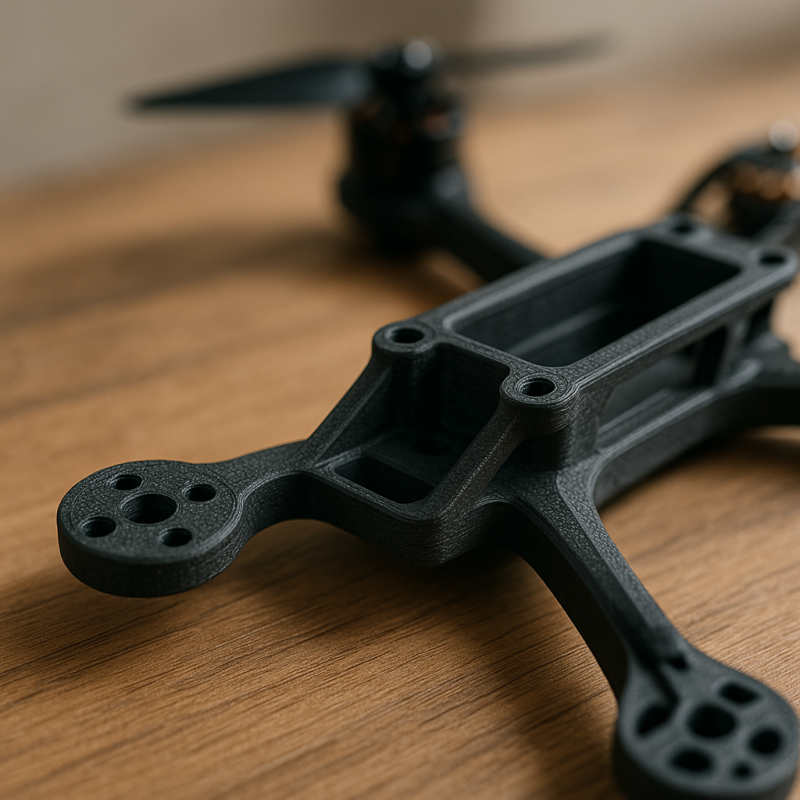
- Protective Components: Casings for electronics, drone frames, and covers for machinery that need to withstand impacts.
- Outdoor Items: With its good UV resistance, PETG is a solid choice for things like garden fixtures, bird feeders, and custom parts for outdoor equipment.
- Food-Contact Items: Custom cookie cutters, food molds, and other kitchen gadgets (using a food-safe certified filament and considering post-processing to seal the surface). You can find excellent options like Performance PETG that are engineered for consistency and strength in these demanding roles.
In the PLA vs PETG vs ABS spectrum, PETG carves out a substantial and incredibly useful middle ground. It is the reliable all-rounder, the filament you turn to when you need a part that simply works.
The Industrial Workhorse: Unpacking ABS (Acrylonitrile Butadiene Styrene)
Long before desktop 3D printing became a household phenomenon, ABS was a cornerstone of industrial manufacturing. It is an engineering-grade thermoplastic prized for its durability, heat resistance, and post-processing capabilities. You have almost certainly interacted with ABS today; it is the material used to make LEGO bricks, computer keyboard keycaps, automotive interior trim, and power tool housings. Its transition into the world of FDM 3D printing brought industrial-strength properties to the hands of hobbyists and small businesses, but it also brought a new level of printing complexity.
The Chemistry of Durability: Acrylonitrile, Butadiene, and Styrene
ABS is a terpolymer, meaning it is composed of three distinct monomers, each contributing a specific set of properties to the final material. Understanding this composition is key to appreciating why it behaves the way it does.
- Acrylonitrile: This component provides chemical resistance and thermal stability. It is the reason ABS can withstand higher temperatures than PLA or PETG and is not easily damaged by many common oils and chemicals.
- Butadiene: This is a rubbery substance that imparts toughness and impact resistance. The butadiene component is what allows an ABS part to absorb significant energy and deform under stress rather than shattering. It gives ABS its robust, durable feel.
- Styrene: This component provides the material with its rigidity and a glossy, smooth surface finish. It also makes the material easy to process.
Together, these three ingredients create a material that is strong, tough, temperature-resistant, and has a professional-looking finish. It is a material designed for performance under stress.
Unmatched Performance: The Case for ABS
The primary reason to choose ABS is its superior performance in demanding environments. Its most significant advantage is its high heat deflection temperature, which is generally around 95-100°C. This means an ABS part can function in a hot car, in the engine bay of a vehicle (away from the hottest components), or as a housing for heat-generating electronics without losing its shape or strength (unionfab.com). This thermal stability is a game-changer for creating truly functional, real-world parts.
Beyond heat, ABS offers exceptional mechanical durability. It combines good tensile strength with excellent impact resistance, resulting in a material that is both stiff and tough. This is why it is used for interlocking parts like LEGO bricks; it is strong enough to hold its shape but has enough give to be snapped together and pulled apart thousands of times without breaking.
Perhaps the most unique feature of ABS is its reaction to acetone. Acetone solvent can be used to chemically weld ABS parts together, creating bonds that are as strong as the material itself. More famously, exposing an ABS print to acetone vapor (in a controlled, safe environment) melts the outer surface of the print, eliminating layer lines and creating a perfectly smooth, glossy finish that looks like an injection-molded part. This post-processing capability is unique among the three major filaments and allows for a level of surface finish that is otherwise unattainable.
The Demanding Nature of ABS Printing
The high-performance nature of ABS comes at a cost: it is by far the most challenging of the three materials to print successfully. The main culprit is its high degree of thermal contraction. As ABS cools from its printing temperature (around 230-260°C), it shrinks significantly. If this cooling happens too quickly or unevenly, it creates internal stresses that cause the print to warp, curl up at the edges, and even crack apart mid-print.
To combat this, two pieces of hardware become essential. First, a heated print bed, set to a high temperature (95-110°C), is non-negotiable. This keeps the base of the model warm and adhered to the surface. Second, an enclosure for the printer is highly recommended, if not required. An enclosure traps heat from the print bed, creating a stable, warm ambient temperature around the model. This slows the cooling process, reduces thermal stress, and dramatically increases the success rate of ABS prints.
Another serious consideration is the emission of fumes. When heated, ABS releases styrene gas, which has a strong, unpleasant plastic odor and is a known volatile organic compound (VOC). Printing with ABS requires excellent ventilation. Printing in a poorly ventilated room can lead to headaches and is a potential long-term health concern. An enclosure can help contain the fumes, but they must be vented outside or filtered through a high-quality activated carbon filter.
Prime Use Cases for ABS
Despite its printing challenges, ABS remains an indispensable material for parts that need to perform under pressure. Its use is warranted when the properties of PLA and PETG are simply not sufficient for the task.
- Automotive Parts: Interior trim, brackets, ducting, and components that need to withstand the high temperatures inside a car.
- Functional Prototypes: Creating prototypes that will be subjected to real-world stress testing, thermal cycling, or impact tests.
- Housings for Electronics: Cases for Raspberry Pi, Arduinos, or other projects that generate heat and require a durable enclosure.
- Interlocking Parts: Snap-fit components, clips, and anything that requires the toughness to be repeatedly assembled and disassembled. For these high-stress applications, using a consistent, high-quality ABS filament is paramount to achieving reliable results.
Choosing to print with ABS is a deliberate decision. It is an investment of time and setup in exchange for a level of performance that opens up a new class of functional 3D printing.
Practical Considerations: Beyond Material Properties
Choosing a filament involves more than just comparing data sheets. The practical realities of your printing setup, your willingness to engage in post-processing, and your priorities regarding safety and cost all play a significant role in the PLA vs PETG vs ABS decision. A material might look perfect on paper, but if you lack the necessary equipment or environment to print it successfully, its theoretical advantages are moot. Let’s examine the tangible, real-world factors that bridge the gap between material science and the act of creation.
The Printing Environment: Temperature, Beds, and Enclosures
Your 3D printer’s capabilities are the first gatekeeper in filament selection. The temperature requirements for the nozzle (hot end) and print bed dictate which materials you can even attempt to use. The table below summarizes the typical environmental needs for each filament, highlighting the progressive increase in hardware demands.
| Parameter | PLA | PETG | ABS |
|---|---|---|---|
| Nozzle Temperature | 190°C – 220°C | 230°C – 250°C | 230°C – 260°C |
| Bed Temperature | 0°C – 60°C (Optional) | 70°C – 85°C (Required) | 95°C – 110°C (Required) |
| Enclosure | Not Required | Not Required (but helpful) | Highly Recommended/Required |
| Cooling Fan | 100% On | 30% – 50% On (or Off) | Off |
As the table illustrates, any modern 3D printer can handle PLA. Its low temperature needs are forgiving. Moving to PETG requires a printer capable of reaching higher nozzle temperatures and, crucially, a heated bed that can reliably hold a temperature around 80°C. Most entry-level printers today meet this requirement. The jump to ABS, however, is the most significant. It not only requires a bed that can reach and maintain a high temperature of 110°C but also benefits immensely from an enclosure to maintain a hot ambient environment. Without an enclosure, large ABS prints are almost guaranteed to fail due to warping.
Post-Processing Techniques: Sanding, Gluing, and Smoothing
The life of a 3D print does not always end when it comes off the build plate. Often, parts need to be assembled, finished, or smoothed. Each material responds differently to these post-processing techniques.
- PLA: Is relatively easy to work with. It can be sanded to a smooth finish, though its low melting point means you must be careful not to use high-speed power tools that can melt the surface. It can be glued effectively with cyanoacrylate (super glue) or two-part epoxies. It is also the easiest to paint, with acrylic paints adhering well after a layer of primer.
- PETG: Is more challenging. Its toughness and chemical resistance make it difficult to sand effectively, as it tends to gum up sandpaper. Its slick surface can also make it difficult for glues and paints to adhere properly. Scuffing the surfaces to be joined is essential for getting a good bond with adhesives.
- ABS: Shines in post-processing. Like PLA, it can be easily sanded and glued. Its true advantage, as mentioned earlier, is its solubility in acetone. This allows for powerful solvent welding of multi-part assemblies and the unique process of acetone vapor smoothing, which can produce a finish rivaling that of injection molding.
Health, Safety, and Environmental Impact
The printing process itself has implications for your immediate environment. PLA is generally considered the safest material, emitting very few particles and producing a non-offensive, slightly sweet odor. PETG is also very stable, with negligible emissions and no odor during printing.
ABS is the outlier. The heating of ABS releases styrene, a VOC that can be irritating and is a potential health concern with long-term exposure. Printing ABS absolutely requires good ventilation, such as an open window with a fan, or a dedicated fume extraction system. An enclosure helps contain these fumes, but they must be managed, either by venting them outside or by using an internal air filtration unit like a HEPA and activated carbon filter.
From a lifecycle perspective, PLA’s plant-based origin gives it an edge. ABS and PETG are both derived from fossil fuels. While PLA’s biodegradability is limited to industrial facilities, its renewable feedstock represents a step toward a more sustainable material cycle.
Cost Analysis: Initial Spool Price vs. Total Project Cost
On a per-kilogram basis, standard PLA is generally the most affordable filament, with PETG and ABS being slightly more expensive but often priced similarly to each other (4D Filtration, 2023). A basic 1kg spool of any of the three can typically be found for around $20-$30 USD.
However, the true cost of a project is not just the price of the spool. It includes the cost of failed prints. A beginner attempting to print a large object in ABS without an enclosure might waste half a spool on warped, unusable parts. In that scenario, printing the part successfully on the first try with the slightly more expensive but far more reliable PETG would have been more economical. The “total project cost” must account for the time, electricity, and material consumed by failures. For functional parts, using a more durable material from the outset, even at a higher initial cost, can prevent the need for reprints down the line, ultimately saving money.
The Evolving Landscape: Specialty Filaments and Composites
The world of 3D printing materials is not static. The foundational PLA vs PETG vs ABS comparison provides a crucial starting point, but innovation in polymer science is constantly pushing the boundaries of what is possible with a desktop FDM printer. Manufacturers are now blending, modifying, and reinforcing these base materials to create a dizzying array of specialty filaments, each tailored for a specific performance goal. Understanding this broader landscape provides context for where the “big three” fit and what lies beyond them.
Enhancing the Basics: PLA+, Tough PLA, and High-Speed Variants
Recognizing the primary weakness of standard PLA—its brittleness—manufacturers developed modified versions often marketed as “PLA+” or “Tough PLA.” These are not standardized terms, but they generally refer to PLA that has been blended with impact-modifying additives. The result is a filament that retains the ease of printing of PLA but with significantly improved impact resistance and layer adhesion, behaving more like PETG in terms of durability. These materials are an excellent choice for functional parts when you want more toughness without the printing challenges of PETG. Similarly, with the advent of high-speed “bed-slinger” printers, specialized “High-Speed PLA” formulations have emerged, designed to flow more easily and cool more quickly to maintain quality at high print velocities.
The Rise of Fiber Reinforcement: Carbon Fiber and Glass Fiber
One of the most exciting developments in recent years is the infusion of chopped fibers into base polymers. Filaments like PLA-CF (Carbon Fiber), PETG-CF, and ABS-CF are becoming increasingly common. These composite materials contain small, chopped strands of carbon or glass fibers mixed into the plastic.
The effect of this reinforcement is dramatic. The fibers act like rebar in concrete, massively increasing the stiffness (flexural modulus) and strength of the material. A part printed in PETG-CF will be significantly more rigid and less prone to bending under load than the same part printed in standard PETG. This allows for the creation of lightweight yet incredibly strong functional parts, suitable for applications like drone frames, robotics, and custom jigs or fixtures in a workshop. It is important to note that these abrasive filaments will quickly wear out a standard brass nozzle, requiring the use of a hardened steel or ruby-tipped nozzle. Companies like Polymaker with their Fiberon™ line and Spectrum Filaments are pushing the boundaries of what these can achieve.
Moving Beyond the Big Three: ASA, PC, and Nylon
As you venture further into engineering applications, you will encounter another tier of materials, each offering a unique set of extreme properties.
- ASA (Acrylonitrile Styrene Acrylate): Think of ASA as a superior version of ABS for outdoor applications. It shares the same strength and temperature resistance as ABS but has one key advantage: it is highly resistant to UV radiation and weathering. While an ABS part will become brittle and discolored after a few months in the sun, an ASA part will maintain its color and mechanical properties for years, making it the ideal choice for garden tools, custom car parts, and anything intended for permanent outdoor installation.
- PC (Polycarbonate): When you need extreme toughness and very high temperature resistance, you turn to PC. It is the material used to make bulletproof glass and riot shields. It is incredibly strong, with exceptional impact resistance and a heat deflection temperature that can exceed 130°C. However, it is one of the most difficult materials to print, requiring very high nozzle temperatures (280-310°C) and a heated chamber to prevent warping.
- Nylon (Polyamide): Nylon is synonymous with durability and low friction. It is exceptionally tough and resistant to wear and abrasion, making it perfect for printing functional gears, living hinges, and other parts that slide or rub against each other. Its main challenge is that it is extremely hygroscopic, absorbing moisture from the air even more readily than PETG. It must be kept bone-dry to print successfully.
These advanced materials show that PLA, PETG, and ABS are not the end of the journey but rather foundational pillars in a much larger and more capable world of materials.
Frequently Asked Questions (FAQ)
Which filament is the strongest: PLA, PETG, or ABS?
This question is more complex than it seems because “strength” can mean different things. In terms of tensile strength (resistance to being pulled apart), PLA is the most rigid and often has the highest value. However, it is very brittle. For toughness and impact strength (resistance to sudden shock), PETG and ABS are far superior, as they will bend and deform before breaking. For overall durability in a functional part, ABS is generally considered the strongest.
Can I print PETG or ABS without a heated print bed?
Printing PETG without a heated bed is extremely difficult and not recommended. You will likely experience poor first-layer adhesion and warping. Printing ABS without a heated bed is practically impossible. The material’s high thermal shrinkage requires a hot bed (95°C+) to keep the model anchored and prevent it from peeling off the build plate.
Is PLA filament really biodegradable and eco-friendly?
PLA is a bioplastic made from renewable resources like corn starch, which makes its production more sustainable than petroleum-based plastics. It is “commercially compostable,” meaning it will biodegrade, but only under the specific high-temperature, high-humidity conditions of an industrial composting facility. It will not break down in a home compost bin or landfill in a meaningful timeframe.
Why are my PETG prints so stringy and how can I fix it?
Stringing with PETG is most often caused by two factors: moisture in the filament and incorrect retraction settings. First, dry your PETG filament in a filament dryer or oven at a low temperature before printing. Second, experiment with your printer’s retraction settings in your slicer software. Increasing the retraction distance and speed can help, as can enabling features like “coasting” or “wipe.”
Are the fumes from printing with ABS dangerous?
When heated, ABS releases fumes containing styrene, a Volatile Organic Compound (VOC). Inhaling these fumes in a poorly ventilated space can cause headaches and irritation, and long-term exposure is a potential health concern. It is essential to print ABS in a well-ventilated area, preferably with an enclosure that either vents the fumes outside or filters them through an activated carbon and HEPA filter.
As a beginner, which filament should I start with?
Without a doubt, you should start with PLA. Its ease of printing, low warping, and lack of a need for a heated bed (though it helps) will allow you to get successful prints quickly and learn the fundamentals of 3D printing without the frustration of more demanding materials.
Can I print food-safe items with these filaments?
Many manufacturers offer PETG filaments that are made from FDA-certified food-grade resins. However, the 3D printing process itself creates microscopic layer lines that can trap food particles and harbor bacteria. To create a truly food-safe object, the print should be coated with a food-safe epoxy or sealant to create a smooth, non-porous surface.
Navigating the Filament Maze
The journey through the world of 3D printing filaments is a process of matching the tool to the task. The PLA vs PETG vs ABS debate is not about finding a single winner but about understanding the unique character of each material and recognizing the context in which it excels. PLA offers a path of least resistance, a gateway to creation defined by its simplicity and fidelity for visual models. It allows ideas to take physical form with unmatched ease, making it the undisputed champion of prototyping and aesthetic prints.
PETG emerges as the pragmatic workhorse, a bridge between form and function. It demands a bit more attention, asking for a dry environment and dialed-in settings, but rewards that effort with a resilience and temperature resistance that PLA cannot match. It is the material for parts that have a job to do, for objects that need to withstand the rigors of daily life.
ABS represents a commitment to performance. It is the demanding professional, requiring a controlled environment and a mindful approach to safety. The challenges it presents—warping, fumes, high temperatures—are the price of admission for creating parts with industrial-grade durability and thermal stability. It is the choice when failure is not an option and the part must perform under heat and stress.
Ultimately, your choice of filament is a reflection of your project’s intent. Are you creating a sculpture for your desk? Reach for PLA. Are you designing a replacement bracket for an appliance? PETG is your reliable partner. Are you fabricating a component for your car? ABS is the material that can handle the heat. By understanding their fundamental differences, you move from being a user of a 3D printer to a true craftsperson, capable of selecting the perfect material to bring your vision to life, durable and functional.
References
- all3dp.com. (n.d.). PLA vs ABS vs PETG: The main differences. All3DP.
- 4D Filtration. (2023, January 30). FDM 3D filament: Brands, prices & properties. https://4dfiltration.com/resources/fdm-properties
- reddit.com. (2022). Why use PLA if PETG/ABS is better in almost every way?. Reddit.
- Simplify3D. (2019a). Filament properties table. Simplify3D. https://www.simplify3d.com/resources/materials-guide/properties-table/
- Simplify3D. (2019b). Ultimate materials guide: Tips for 3D printing with PETG. Simplify3D. https://www.simplify3d.com/resources/materials-guide/petg/
- Unionfab. (2024, May). PLA vs. ABS vs. PETG: A comprehensive comparison. https://www.unionfab.com/blog/2024/05/pla-vs-abs-vs-petg
Last reviewed and updated: January 2026. Author: SigmaFilament Engineering Team. For custom filament solutions and wholesale inquiries, contact our team.