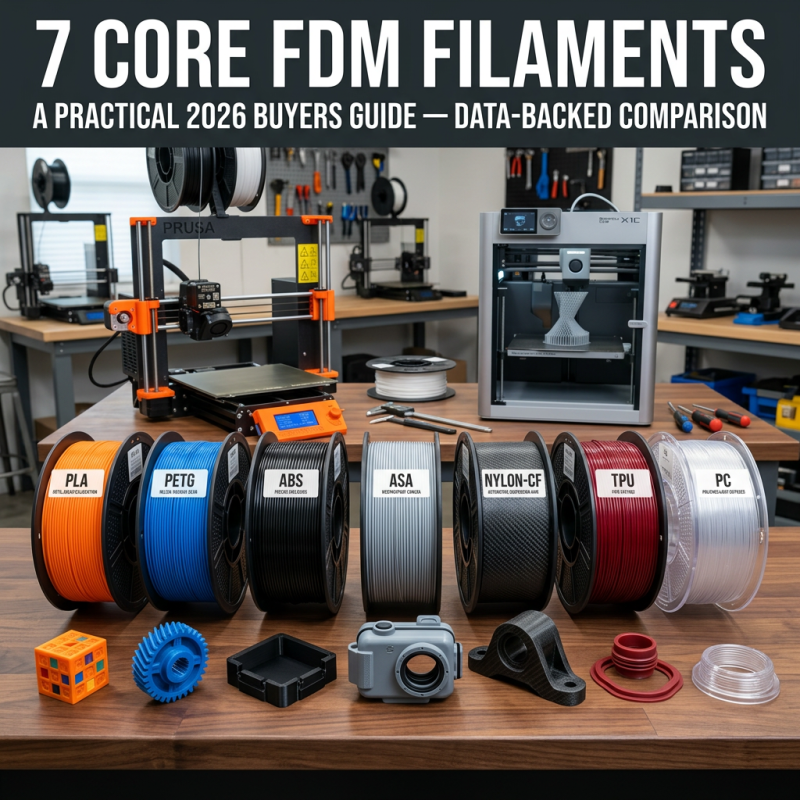
An Expert 2026 Buyer’s Guide: 7 Factors for Your Next Spool of 3D Printer Plastic


Abstract
The selection of an appropriate spool of 3d printer plastic is a foundational decision in Fused Deposition Modeling (FDM) that profoundly shapes the functional capabilities and aesthetic qualities of a printed object. This analysis offers a comprehensive examination of the material science, mechanical engineering, and practical considerations that govern this choice in 2026. It moves beyond a superficial comparison of common polymers like PLA, PETG, and ABS to deconstruct the very concept of “strength” into its constituent parts: tensile strength, impact resistance, and stiffness. The investigation evaluates the physical spool, considering how its dimensions, weight, and material composition affect printer compatibility and user workflow. It further illuminates the often-overlooked yet vital roles of dimensional accuracy, filament storage, and post-processing potential. By addressing the practical realities of printability, including thermal requirements and hygroscopicity, alongside the environmental and safety implications of material off-gassing, this guide equips makers, engineers, and production managers with a nuanced framework for making a deliberate, application-specific choice.
Key Takeaways
- Match material properties like strength and heat resistance to the part’s final use.
- Consider the spool’s size and design for printer compatibility and large-print capacity.
- Prioritize filaments with tight dimensional accuracy (e.g., ±0.02mm) for consistent results.
- Properly store your spool of 3d printer plastic in a dry environment to prevent degradation.
- Select PLA for ease of use, PETG for toughness, and ABS for high-temperature applications.
- Always use a hardened nozzle for abrasive composite filaments like carbon fiber.
- Drying hygroscopic filaments like PETG and Nylon before printing is non-negotiable for quality.
Table of Contents
- Factor 1: Deconstructing “Strength” – Matching Material Properties to Your Application
- Factor 2: Printability and User Experience – Beyond the Spec Sheet
- Factor 3: The Spool Itself – Size, Design, and Material Considerations
- Factor 4: Dimensional Accuracy and Consistency – The Unsung Hero of Print Quality
- Factor 5: Environmental and Safety Considerations – The Hidden Costs of Printing
- Factor 6: Post-Processing Potential – Finishing Your Printed Part
- Factor 7: Storage and Handling – Preserving Filament Integrity
- Frequently Asked Questions (FAQ)
- Conclusion
- References
Factor 1: Deconstructing “Strength” – Matching Material Properties to Your Application
When one begins the journey of selecting a spool of 3d printer plastic, the term “strength” often emerges as a primary, yet profoundly ambiguous, criterion. To approach this with the necessary rigor, we must first dismantle the monolithic concept of strength into a more granular set of mechanical properties. A material is not simply “strong” or “weak”; its performance is a complex interplay of characteristics that must be thoughtfully aligned with the specific demands of the intended application. A failure to appreciate these distinctions is a common path to project failure, where a part that seemed robust in theory shatters or deforms under real-world stress. The question is not “Which filament is strongest?” but rather, “Which properties define strength for my specific need?”
Tensile Strength vs. Toughness (Impact Resistance)
To begin our inquiry, let us consider two fundamental yet frequently confused properties: tensile strength and toughness. Imagine holding a dry spaghetti noodle. It can resist a surprising amount of pulling force along its length before it snaps. This resistance to being pulled apart is its tensile strength. Now, imagine trying to bend that same noodle; it breaks with very little deflection. It is brittle. This brittleness represents low toughness.
Tensile strength, measured in megapascals (MPa), quantifies a material’s ability to withstand a stretching or pulling load before it fractures. A material with high tensile strength is rigid and resistant to elongation. In contrast, toughness, often evaluated through impact resistance tests like Izod or Charpy, measures a material’s ability to absorb energy and deform plastically before fracturing. Think of a car bumper. You do not want it to be maximally rigid; you want it to absorb the energy of an impact by deforming, thereby protecting the car’s frame. It requires toughness, not just tensile strength. These two properties often exist in a trade-off. Materials that are exceptionally stiff and have high tensile strength tend to be brittle, while tougher materials are often more flexible and possess lower tensile strength.
A Comparative Analysis of Common Polymers
With this framework, we can now assess the most common materials available on a spool of 3d printer plastic with greater clarity.
| Property | PLA (Polylactic Acid) | PETG (Polyethylene Terephthalate Glycol) | ABS (Acrylonitrile Butadiene Styrene) | Carbon Fiber PETG (CF-PETG) |
|---|---|---|---|---|
| Tensile Strength | High (~60 MPa) | Medium (~50 MPa) | Medium (~40 MPa) | Very High (~75 MPa) |
| Toughness (Impact Resistance) | Very Low (Brittle) | High | Very High | Low (Stiff but Brittle) |
| Stiffness (Flexural Modulus) | Very High | Medium | High | Extremely High |
| Heat Deflection Temperature | Low (~55°C) | Medium (~70°C) | High (~98°C) | High (~80°C) |
| Printability | Easy | Moderate | Difficult | Moderate |
| Primary Advantage | Ease of use, surface finish | Balanced toughness, chemical resistance | Durability, temperature resistance | Extreme stiffness, strength-to-weight |
| Primary Disadvantage | Brittle, low temp resistance | Prone to stringing, hygroscopic | Warping, VOC emissions | Abrasive, requires hardened nozzle |
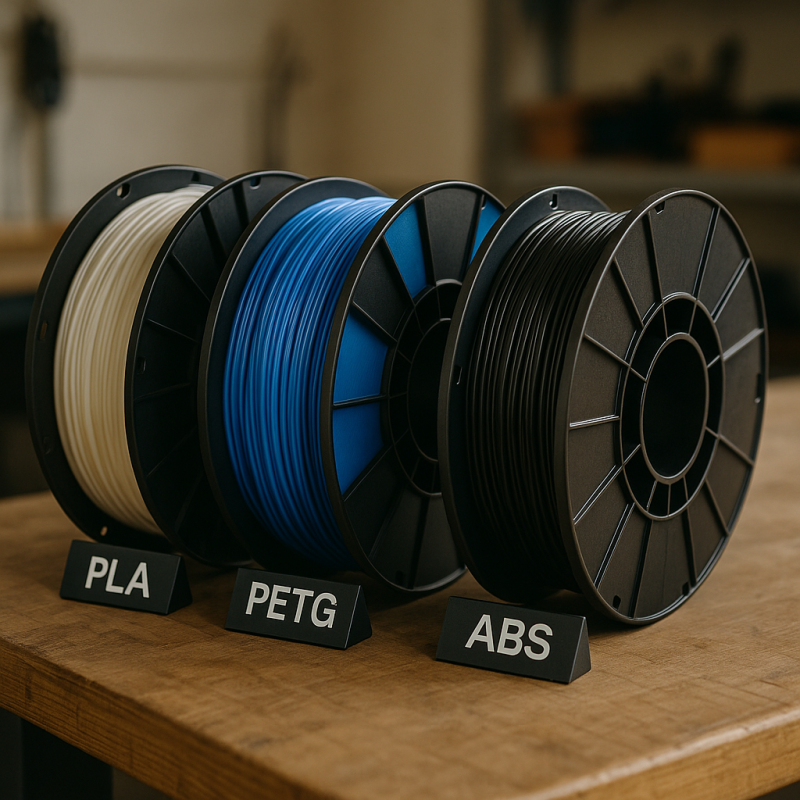
Polylactic Acid (PLA): As a material, PLA is the entry point for many makers. Derived from renewable resources like corn starch, it is distinguished by its remarkable ease of use. It prints at low temperatures, requires no heated bed, and exhibits minimal warping due to its low thermal expansion (Sigmafilamet, 2026). Its high stiffness and good tensile strength allow it to produce dimensionally accurate parts with sharp details. However, its molecular structure leads to a very low impact resistance. It is brittle. A part printed in PLA will often fail catastrophically under sudden load, shattering rather than bending. Its low glass transition temperature (around 60°C) also means it will soften and deform in a warm environment, such as the inside of a car on a sunny day. PLA is therefore best suited for aesthetic objects, detailed miniatures, and non-functional prototypes where form is more important than resilience.
Polyethylene Terephthalate Glycol (PETG): PETG offers a compelling compromise, embodying a more balanced profile. It is a modified version of the same plastic used in water bottles (PET), with glycol added to prevent crystallization and brittleness during heating. The result is a filament with lower tensile strength and stiffness than PLA but vastly superior toughness and ductility. A PETG part will tend to bend and deform under stress before it breaks. It also boasts better chemical resistance and a higher heat deflection temperature than PLA, making it suitable for some functional components. This combination of properties makes it a versatile workhorse for mechanical parts that require a degree of durability and impact absorption, such as printer parts, protective cases, or drone frames. A detailed comparison of PLA vs PETG reveals these trade-offs clearly.
Acrylonitrile Butadiene Styrene (ABS): Before the rise of PLA, ABS was the dominant plastic in the hobbyist 3D printing space, and it remains an industrial staple. Think of LEGO bricks; they are made of ABS. The reason is its exceptional toughness and high-temperature resistance. It is a material designed for creating durable, long-lasting end-use parts. However, these desirable properties come at the cost of printability. ABS has a high rate of thermal contraction, which causes it to shrink as it cools, leading to significant warping and layer separation if printing conditions are not carefully controlled. It demands a heated bed and, for consistent success, a heated enclosure to maintain a stable ambient temperature.
Engineering and High-Performance Filaments
For applications that push beyond the limits of these standard materials, a class of engineering and composite filaments provides enhanced capabilities.
Composites (Carbon Fiber Reinforced): One of the most effective ways to enhance a polymer is by reinforcing it with chopped fibers. When short carbon fibers are mixed into a base polymer like PETG or Nylon, they act like rebar in concrete, dramatically increasing the material’s stiffness (flexural modulus) and tensile strength. The resulting Carbon Fiber PETG parts are incredibly rigid and have an excellent strength-to-weight ratio, making them ideal for applications like drone arms, automotive brackets, or manufacturing jigs where stiffness is paramount. What is given in stiffness, however, is often taken from toughness. The fibers can make the material more prone to brittle fracture under impact. A critical consideration for these materials is their abrasive nature; the hard carbon fibers will rapidly wear down a standard brass nozzle, necessitating the use of a hardened steel, ruby, or other wear-resistant nozzle (Sigmafilamet, 2026).
Polycarbonate (PC): If the single most important property for your application is impact resistance, then Polycarbonate is the undisputed champion. It is the material used for bulletproof glass and riot shields. It is exceptionally tough, strong, and has a very high glass transition temperature. Printing with PC is challenging, requiring very high nozzle and bed temperatures, but for creating parts that must withstand extreme abuse, there is no substitute.
Nylon (Polyamide): Nylon’s defining characteristic is its combination of durability, flexibility, and a low coefficient of friction. It is incredibly resistant to wear and abrasion. This makes it the ideal material for printing functional gears, living hinges, and other parts that slide or rub against each other. Like PETG, Nylon is highly hygroscopic, meaning it readily absorbs moisture from the air, which can ruin prints if the spool is not kept meticulously dry.
Factor 2: Printability and User Experience – Beyond the Spec Sheet
A material’s data sheet, with its neat columns of MPa and temperature ratings, tells only half the story. The lived experience of transforming that spool of 3d printer plastic into a physical object—the process of printing—introduces a host of practical challenges and nuances. A filament with stellar mechanical properties is of little use if one cannot reliably produce quality parts with it. Printability is not a single metric but an umbrella term for how forgivingly and consistently a material behaves within the 3D printer.
The Role of Temperature – Bed, Nozzle, and Enclosure
At the heart of Fused Deposition Modeling is the precise control of temperature. Each polymer has a distinct thermal profile that dictates the settings required for success.
Nozzle Temperature: This is the temperature at which the solid filament is melted into a viscous liquid for extrusion. If the temperature is too low, the filament will not melt properly, leading to under-extrusion and poor layer adhesion, creating a weak, fragile part. If it is too high, the material can degrade, ooze uncontrollably from the nozzle (causing stringing and blobs), and lose its intended properties. PLA prints at relatively low temperatures (190-220°C), while PETG requires a hotter nozzle (230-250°C), and engineering materials like ABS (240-260°C) or PC (260-310°C) demand significantly more thermal energy.
Bed Temperature: The heated print bed serves two primary functions: promoting adhesion for the first layer and combating warping. As the extruded plastic cools, it contracts. If the first layer cools too quickly, it can detach from the build plate, causing the print to fail. A heated bed keeps the base of the print warm, improving adhesion. For materials with high thermal contraction like ABS, a heated bed (90-110°C) is not merely recommended; it is mandatory. For PETG, a bed temperature of 70-85°C is typical. PLA is the most forgiving; while a heated bed (50-60°C) helps, it can often be printed successfully on a cold plate with an adhesive like painter’s tape or a glue stick.
Enclosure: An enclosure is a chamber that surrounds the printer, trapping waste heat and creating a stable, elevated ambient temperature. For materials like ABS or ASA, an enclosure is a game-changer. By keeping the entire part warm throughout the printing process, it minimizes the temperature gradients that cause internal stresses, which are the root cause of warping and layer splitting. For PLA, an enclosure is generally unnecessary and can even be detrimental, as it may prevent the plastic from cooling quickly enough to hold fine details.
Hygroscopicity – The Silent Print Killer
Perhaps the most insidious and frequently misdiagnosed cause of print failure is filament moisture. Many thermoplastic polymers are hygroscopic, meaning they have a chemical affinity for water and will actively absorb moisture from the surrounding atmosphere. PETG, Nylon, TPU, and Polycarbonate are particularly susceptible.
When a wet spool of 3d printer plastic is heated in the nozzle, the trapped water instantly flashes to steam, creating a tiny, violent explosion. This manifests as audible popping or crackling sounds during printing. On the printed part, it results in a fuzzy, stringy surface finish, voids, and inconsistent extrusion. More damagingly, the water participates in a chemical reaction called hydrolysis at high temperatures, which breaks down the long polymer chains that give the plastic its strength. A part printed with wet filament is not just ugly; it is mechanically compromised and significantly weaker than a part printed with dry filament.
The solution is twofold: proper storage and active drying. Filament should be stored in airtight containers or bags with desiccant packets to keep it dry. If a spool does become saturated with moisture, it can be rescued by using a dedicated filament dryer—an appliance that heats the spool to a specific temperature for several hours to gently bake out the moisture without melting the plastic itself (Singh, 2025).
Adhesion, Warping, and Stringing
These three issues represent the most common day-to-day frustrations in 3D printing, and material choice is a primary factor.
Adhesion: As discussed, getting the first layer to stick securely to the build plate is paramount. PLA generally excels here. ABS can be difficult, often requiring a “brim” or “raft” in the slicer settings or a special adhesive slurry on the bed. PETG adheres so well to some surfaces, like bare glass or PEI, that it can sometimes fuse to them, tearing chunks out of the build plate upon removal. Using a release agent like a glue stick or hairspray is often recommended as a barrier.
Warping: This is the direct result of thermal contraction. As the upper layers of a large print cool and shrink, they pull on the lower, anchored layers, causing the corners of the print to lift off the bed. ABS is the most notorious offender. Choosing a low-warp material like PLA or managing the thermal environment with a heated bed and enclosure are the primary strategies for mitigation.
Stringing: This occurs when thin threads of plastic are left behind as the nozzle travels between two points on the print. It is caused by filament oozing from the nozzle due to residual pressure. PETG is particularly infamous for stringing. Combating it requires careful tuning of “retraction” settings in the slicer, which tell the printer to pull the filament back slightly before a travel move to relieve pressure.
Factor 3: The Spool Itself – Size, Design, and Material Considerations
The filament is the star of the show, but the spool it is wound on is a critical piece of supporting equipment. The physical characteristics of the spool—its size, weight, and material—have direct implications for printer compatibility, storage logistics, and even print reliability. Ignoring the spool is like buying expensive fuel but putting it in a leaky, ill-fitting can; it compromises the entire system. A thoughtful examination of the spool of 3d printer plastic is an integral part of the purchasing decision.
Standard Spool Sizes and Weights
Filament is most commonly sold by weight, with the 1-kilogram (kg) spool being the de facto standard for hobbyists and small businesses. This size offers a good balance between material quantity and cost, allowing a user to complete numerous prints without a massive upfront investment or long-term storage commitment. For smaller projects or for trying out a new color or material, 0.5kg (500g) or even 0.25kg (250g) spools are also available.
For production environments, print farms, or those undertaking very large-scale projects, standard 1kg spools become inefficient, requiring frequent changes that interrupt workflow and introduce potential points of failure. In response, manufacturers offer large-format spools. These “big spools” can range from 2.5kg to 5kg all the way up to massive 10lb (approximately 4.5kg) or even larger production reels . Using a larger spool of 3d printer plastic allows for continuous, uninterrupted printing of enormous objects or long production runs of smaller parts, maximizing machine uptime. The primary consideration when purchasing these is physical compatibility; the printer must have a spool holder robust enough and with enough clearance to accommodate the larger diameter and weight.
Spool Materials and Sustainability
The material of the spool itself has become a point of discussion, primarily centered on sustainability and functionality.
| Spool Type | Pros | Cons | Best Use Case |
|---|---|---|---|
| 1kg Plastic Spool | Durable, reusable, consistent dimensions, moisture resistant. | Contributes to plastic waste, bulky for disposal. | General purpose printing, reliable feeding in all systems. |
| 1kg Cardboard Spool | Biodegradable, reduces plastic waste, often lighter. | Can create paper dust, may deform if wet, incompatible with some AMS. | Environmentally conscious users with standard spool holders. |
| Masterspool / Refill | Minimally wasteful, lower shipping cost, less storage space needed. | Requires a reusable masterspool, can be tricky to wind correctly. | High-volume users committed to reducing waste. |
| Large-Format Spool (>2kg) | Enables very long/large prints, reduces spool changes in print farms. | Requires a robust, compatible spool holder, higher upfront cost. | Production environments, printing massive single-piece objects. |
Plastic Spools: The traditional choice has been injection-molded plastic spools, typically made from polystyrene (PS) or ABS. They are durable, waterproof, have highly consistent dimensions, and can be reused . Their rigidity ensures they do not deform, and their smooth edges provide low-friction feeding. Their main drawback is environmental; they contribute to plastic waste, as most are discarded after use.
Cardboard Spools: In a push for sustainability, many manufacturers have transitioned to spools made from recycled cardboard. These significantly reduce the plastic footprint of the product. However, they are not without functional trade-offs. The edges of cardboard spools can sometimes create fine paper dust from friction, which can accumulate in the extruder mechanism. They are also susceptible to moisture; a damp cardboard spool can soften and deform. A notable issue has arisen with automated material systems (AMS), such as those used by Bambu Lab printers, where the cardboard edges can slip on the feed rollers, causing loading errors. This has led to a community-driven effort to design and print plastic rings that adapt cardboard spools for AMS use.
Refills and Masterspools: An even more sustainable approach is the “masterspool” concept. Here, users purchase a “refill” coil of filament that comes without a spool. This coil is then loaded onto a reusable, 3D-printable masterspool . This system drastically reduces waste and shipping volume, as only the filament itself is consumed.
Arbor Hole Diameter and Spool Width
Beyond the material, the physical dimensions of the spool are paramount for compatibility. There is, unfortunately, no single universal standard.
Arbor Hole Diameter: This is the diameter of the central hole that mounts onto the printer’s spool holder. The most common standard is around 52-58mm, but it can vary. A spool with an arbor hole that is too small simply will not fit. A hole that is too large can cause the spool to sit loosely and rattle, potentially affecting feeding consistency.
Spool Width: The overall width of the spool determines whether it will fit within the confines of the printer’s frame or enclosure. Some compact printers have limited clearance, and an overly wide spool may not fit at all. It is always wise to measure your printer’s spool holder capacity before purchasing an unfamiliar brand or a large-format spool of 3d printer plastic. Reputable filament suppliers often provide detailed mechanical drawings of their spools to avoid such compatibility issues.
Factor 4: Dimensional Accuracy and Consistency – The Unsung Hero of Print Quality
In the intricate dance of 3D printing, where a machine deposits hundreds of thousands of tiny lines of molten plastic with microscopic precision, consistency is king. Of all the variables that contribute to a successful print, the dimensional accuracy of the filament itself is one of the most fundamental yet frequently overlooked. It is the silent partner in every extrusion, and its quality, or lack thereof, has a direct and profound impact on the final object.
Understanding Tolerance (e.g., ±0.05mm vs. ±0.02mm)
When you purchase a spool of 3d printer plastic, it is specified as having a certain diameter, most commonly 1.75mm or 2.85mm. However, no manufacturing process is perfect. The filament’s actual diameter will vary slightly along its length. Dimensional accuracy, or tolerance, is the specification that quantifies this variation. A tolerance of ±0.05mm on a 1.75mm filament means the diameter is guaranteed to be between 1.70mm and 1.80mm. A tighter tolerance of ±0.02mm guarantees a diameter between 1.73mm and 1.77mm.
Why does this seemingly tiny difference matter so much? The 3D printer’s slicer software calculates the precise volume of plastic to extrude based on the assumption that the filament has a constant, known diameter (e.g., 1.75mm). The printer’s extruder gears then push a specific length of this filament into the hotend to achieve that volume.
If the filament diameter is inconsistent, the actual volume of extruded plastic will fluctuate. Where the filament is thicker than expected, the printer will extrude too much plastic, leading to over-extrusion. This can cause blobs, zits on the surface, dimensional inaccuracy in the part, and even nozzle jams. Where the filament is thinner than expected, the printer will extrude too little plastic, leading to under-extrusion. This results in gaps between layers, poor layer adhesion, weak parts, and a fragile, porous structure. A high-quality filament with tight dimensional tolerance is a prerequisite for achieving consistent extrusion, which in turn is the foundation of a strong, accurate, and aesthetically pleasing print.
The Role of Manufacturing and Quality Control
Achieving a tight dimensional tolerance is not accidental; it is the result of a sophisticated and rigorously controlled manufacturing process. During production, raw polymer pellets are dried, melted, and extruded through a die to form the filament strand. The filament is then pulled through a series of water baths to cool it at a controlled rate before being wound onto a spool.
The key to dimensional accuracy lies in real-time measurement and feedback. State-of-the-art production lines, such as those used by ISO 9001 certified manufacturers, employ dual-axis laser micrometers. These devices continuously measure the filament’s diameter on two axes (X and Y) as it is being produced. This data is fed back into the system in real-time, allowing for automatic adjustments to the puller speed to maintain a consistent diameter. A faster pull speed will stretch the filament, making it thinner, while a slower speed will allow it to be thicker. This closed-loop control system is what makes tolerances of ±0.02mm possible and repeatable. Choosing a filament from a manufacturer who is transparent about their quality control processes and can guarantee a specific tolerance provides a significant measure of confidence in the consistency of the final prints.
Ovality and its Impact
Dimensional accuracy is not just about the average diameter; it is also about the roundness of the filament, a property known as ovality. A filament can have an average diameter of 1.75mm but be shaped like an oval (e.g., 1.70mm on its minor axis and 1.80mm on its major axis). As this oval filament rotates while being fed into the extruder, the effective diameter being presented to the gears changes constantly.
This introduces another source of extrusion inconsistency that can be difficult to diagnose. Even with a dual-axis laser micrometer, which measures both axes, some degree of ovality might exist. A high-quality manufacturing process aims to minimize not just the variation in average diameter but also the difference between the major and minor axes. While most brands do not explicitly specify an ovality tolerance, it is an inherent part of the quality that comes with a premium spool of 3d printer plastic. This is another reason why prints can mysteriously fail with a cheap, unverified filament, even if the stated average diameter tolerance seems acceptable. The hidden variable of ovality can be the culprit, undermining the entire printing process from the very start.
Factor 5: Environmental and Safety Considerations – The Hidden Costs of Printing
The act of 3D printing, of melting plastic to create new forms, is not without its externalities. As our awareness of environmental impact and personal health grows, a responsible maker must engage with the less visible consequences of their material choices. The journey of a spool of 3d printer plastic does not begin at the printer nor end with the finished part. It involves a lifecycle with potential health and environmental costs that merit careful consideration.
Volatile Organic Compounds (VOCs) and Ultrafine Particles (UFPs)
When thermoplastic filaments are heated to their melting point, they do not just melt; they also release a complex mixture of gaseous compounds and microscopic particles into the air. The two primary emissions of concern are Volatile Organic Compounds (VOCs) and Ultrafine Particles (UFPs).
VOCs are carbon-based chemicals that are volatile, meaning they easily become vapors or gases at room temperature. Some VOCs can have short-term or long-term adverse health effects, ranging from eye and throat irritation to more serious conditions with prolonged exposure (Azimi et al., 2016). The type and quantity of VOCs emitted depend heavily on the polymer being printed. ABS is well-known for releasing significant amounts of styrene, a compound with a distinct “hot plastic” smell that is classified as a possible human carcinogen. Other materials like ASA also release styrene. PLA, being plant-based, primarily releases lactide, a far less noxious compound, though it is not entirely emission-free. PETG falls somewhere in the middle, generally considered to have a safer emission profile than ABS.
UFPs are microscopic solid particles with diameters of less than 100 nanometers. Because of their tiny size, they can be inhaled deeply into the lungs and may enter the bloodstream, posing potential health risks. Studies have shown that desktop 3D printers are a significant source of UFP emissions, with emission rates comparable to activities like grilling food indoors. The rate of UFP emission is also material-dependent, with ABS generally producing more UFPs than PLA.
The Need for Ventilation and Filtration
Given these emissions, the common practice of running a 3D printer on a desk in a poorly ventilated office or bedroom warrants critical re-evaluation. The guiding principle for safe printing is air quality management.
The most effective strategy is ventilation. Operating a 3D printer in a room with an open window and good air circulation, or better yet, with a dedicated exhaust fan that vents directly to the outdoors, is the best way to reduce the concentration of VOCs and UFPs in your breathing space.
For those printing with high-emission materials like ABS, or for anyone printing frequently in a confined area, an enclosure with active filtration is a highly recommended safety measure. Many modern printers and third-party enclosures come equipped with activated carbon filters and/or HEPA (High-Efficiency Particulate Air) filters. The activated carbon filter uses adsorption to trap a wide range of VOCs, effectively removing odors and chemical vapors. The HEPA filter is designed to capture tiny physical particles, and is very effective at removing the UFPs generated during printing.
Material Lifecycle – From Production to Disposal
The environmental consideration extends beyond immediate air quality to the entire lifecycle of the material.
Production: The origin of the polymer is a key differentiator. PLA is notable for being a bioplastic, typically derived from the fermentation of plant starches from corn or sugarcane. This gives it a renewable resource base, which contrasts sharply with the majority of other filaments. PETG, ABS, PC, and Nylon are all traditional thermoplastics derived from petroleum, a non-renewable fossil fuel.
Disposal: The end-of-life scenario for 3D printed parts is complex. PLA is often marketed as “biodegradable.” This term requires careful qualification. While PLA will break down, it does so only under the specific high-temperature and high-humidity conditions of an industrial composting facility. It will not biodegrade in a backyard compost pile, in a landfill, or if left in nature within a human timescale. Unfortunately, access to industrial composting that accepts PLA is not widespread.
ABS and PETG are, in theory, recyclable. They belong to recycling codes #7 (Other) and #1 (PET/PETE), respectively. However, in practice, it is extremely rare for municipal recycling programs to accept 3D printed objects. The small, unlabelled, and often oddly shaped nature of prints, combined with the potential for unknown additives and colorants, makes them contaminants in the standard recycling stream. Therefore, the most likely end-of-life for most 3D prints, regardless of material, is the landfill. This reality underscores the importance of printing with intention, minimizing waste, and exploring options like reusable masterspools to reduce the associated plastic waste from the spools themselves.
Factor 6: Post-Processing Potential – Finishing Your Printed Part
A 3D print rarely emerges from the printer in its final, perfect form. The layered nature of the FDM process inherently leaves visible lines on the surface, and support structures can leave marks where they are removed. Post-processing refers to any number of techniques used to improve the aesthetic appearance, surface finish, or even the mechanical properties of a printed part. The choice of which spool of 3d printer plastic to use can dramatically expand or limit the post-processing options available to you.
Sanding and Painting
The most universal post-processing technique is sanding. Nearly all rigid 3D printing materials can be sanded to smooth out layer lines and create a uniform surface. The process typically involves starting with a coarse grit sandpaper (e.g., 120 or 220 grit) to remove the most prominent lines and then progressively moving to finer grits (400, 800, 2000, etc.) to achieve a polished finish. Wet sanding, where the sandpaper is kept moist, can help prevent friction-induced heat buildup (which can melt the plastic) and reduce dust.
Once sanded, a part can be painted. Applying a layer of filler primer is a common intermediate step. Filler primer is a thick paint that fills in microscopic scratches and any remaining layer lines, creating an ideal, ultra-smooth surface for the final color coats. Acrylic paints are widely used and adhere well to most primed plastics. The ability to sand and paint is a great equalizer, allowing materials like PLA or PETG to achieve a visually flawless, injection-molded look, albeit with significant manual effort.
Chemical Smoothing
Chemical smoothing is a transformative technique that offers a shortcut to a glossy, smooth surface, but its availability is highly material-specific. This process uses a solvent vapor to slightly melt and reflow the outer surface of the print, completely eliminating layer lines.
The classic pairing for this technique is ABS and acetone. When an ABS part is exposed to acetone vapor in a controlled environment (such as a sealed glass container with acetone-soaked paper towels at the bottom), the vapor dissolves the surface of the plastic. As the acetone evaporates, the surface re-hardens into a perfectly smooth, glossy finish. This not only dramatically improves the aesthetics but also enhances the part’s strength, particularly its water/air tightness, by fusing the layers together at a molecular level.
This powerful technique is largely exclusive to ABS and the similar material ASA. PLA and PETG do not have a commonly available, relatively safe solvent that works in the same way. While some harsh industrial chemicals can smooth them, they are not suitable for hobbyist use. This unique ability to be vapor-smoothed is a primary reason why ABS remains a popular choice for producing professional-looking enclosures and consumer-facing parts despite its printing difficulty.
Annealing for Increased Strength
Annealing is a heat treatment process that can be used to improve the mechanical and thermal properties of certain semi-crystalline plastics, most notably PLA. The process involves heating a printed part in an oven to a temperature that is above its glass transition temperature but well below its melting temperature. For PLA, this is typically in the range of 80-120°C.
The part is held at this temperature for a period (e.g., 30-60 minutes) and then allowed to cool very slowly. This controlled heating allows the polymer chains within the plastic, which were frozen in a disordered (amorphous) state during the rapid cooling of the printing process, to reorganize themselves into more orderly crystalline structures. This increase in crystallinity can lead to a significant improvement in the part’s heat deflection temperature, stiffness, and tensile strength. A standard PLA part that would deform at 60°C might withstand temperatures over 80°C after annealing.
However, annealing is not without its challenges. The process also causes the part to shrink and potentially warp. The shrinkage is often non-uniform, occurring differently along the X, Y, and Z axes. This distortion must be anticipated and compensated for in the original design, often by scaling the part up by a few percent before printing. While it requires experimentation, annealing is a powerful tool for turning a standard, easy-to-print material like PLA into a higher-performance functional component. It is a testament to how the properties of a spool of 3d printer plastic are not fixed, but can be manipulated even after the print is complete.
Factor 7: Storage and Handling – Preserving Filament Integrity
The investment in a high-quality spool of 3d printer plastic does not end at the checkout. The material is not inert; it is a sensitive chemical product that can degrade over time if not stored and handled with care. The primary adversary in preserving filament integrity is the ambient humidity present in the air all around us. Failing to protect your filament from this invisible threat is one of the quickest ways to turn a premium material into a source of endless printing frustration and failure.
The Enemy: Humidity
As we touched upon earlier, the property of hygroscopicity is central to this challenge. Polymers like PETG, Nylon, TPU, and Polycarbonate are highly hygroscopic; they act like sponges for water vapor. When filament is left exposed to open air, its polymer chains become saturated with water molecules. This has two devastating effects.
First, as previously explained, the trapped water turns to steam in the hotend, causing printing defects and a poor surface finish. Second, and more fundamentally, the moisture enables hydrolysis. At the high temperatures inside the nozzle, water molecules chemically attack and break the long polymer chains that give the plastic its strength and durability. Each break shortens the chains, reducing the material’s molecular weight and severely compromising its mechanical properties. A part printed from “wet” Nylon may feel brittle and weak, completely negating the material’s signature toughness. The filament itself can become so brittle that it snaps simply on the path from the spool to the extruder.
Even PLA, which is far less hygroscopic than PETG or Nylon, will absorb some moisture over time, leading to increased stringing and brittleness. Proper storage is not an optional step; it is a mandatory practice for anyone serious about achieving consistent, high-quality 3D prints.
Effective Storage Solutions
The goal of any storage solution is to isolate the filament from ambient humidity. The effectiveness of these solutions can range from simple and cheap to sophisticated and automated.
Airtight Bags with Desiccant: The most basic method is to store the spool in a large, resealable plastic bag (like a large Ziploc or a dedicated vacuum-seal bag) along with one or more packets of desiccant. Desiccant is a drying agent, with silica gel being the most common type. The silica gel beads absorb any moisture trapped inside the bag, creating a miniature dry environment for the spool. Many filaments ship from the factory in a vacuum-sealed bag with a desiccant packet; it is good practice to save these bags and desiccants for reuse. The indicating silica gels that change color (e.g., from orange to dark green) when saturated are particularly useful, as they let you know when they need to be “recharged” by baking them in an oven.
Airtight Plastic Bins: For those with a larger collection of filaments, a large, gasket-sealed plastic tote or container can serve as a “dry box.” By placing all the spools inside the bin along with a generous amount of desiccant (either in packets or loose in a tray), you can create a bulk storage solution. Adding a cheap digital hygrometer inside the box allows you to monitor the relative humidity and ensure it stays low (ideally below 20%).
Dedicated Dry Boxes / Polyboxes: For the ultimate in storage and convenience, one can use a dedicated filament dry box. These are commercially available containers designed to hold one or two spools. They are airtight, contain desiccant, and often have a built-in hygrometer. Crucially, they also have sealed ports that allow the filament to be fed directly from the dry box to the printer. This means the spool of 3d printer plastic remains in a protected environment even during the printing process, which is especially beneficial for long prints with highly hygroscopic materials like Nylon.
Rescuing Wet Filament – The Role of Filament Dryers
What happens if a spool is accidentally left out and becomes saturated with moisture? It is not necessarily a lost cause. The moisture can be driven out using a filament dryer. These are specialized appliances that look similar to a food dehydrator. They are designed to hold a spool of filament and heat it to a precise temperature for an extended period.
The drying temperature is critical; it must be hot enough to encourage the water to evaporate but remain safely below the material’s glass transition temperature to prevent the filament from softening and fusing together on the spool. Typical drying settings might be 55°C for 4-6 hours for PLA, or 65-70°C for 6-8 hours for PETG and Nylon. Using a dedicated filament dryer is far safer and more effective than attempting to dry filament in a conventional kitchen oven, where temperature regulation is often too imprecise and can easily ruin the spool. A filament dryer is an invaluable tool for any serious maker, serving both to rescue wet filament and to pre-dry even brand-new spools to ensure they are in optimal condition before a critical print.
Frequently Asked Questions (FAQ)
What is the real difference between a cheap and an expensive spool of 3d printer plastic?
The difference lies in consistency and purity. An expensive spool from a reputable manufacturer like SigmaFilament typically guarantees a much tighter dimensional tolerance (e.g., ±0.02mm), ensuring consistent extrusion. It also uses high-purity raw polymer pellets with consistent colorants, resulting in predictable printing performance and color from spool to spool. Cheaper filaments often have wider tolerances, use lower-grade or recycled plastics with unknown additives, and can have inconsistent diameters, leading to jams, poor surface quality, and weak parts.
Why is my filament so brittle and breaking before it even reaches the extruder?
This is a classic symptom of “wet” filament, especially with materials like PLA and PETG. The filament has absorbed too much moisture from the air, which has chemically broken down the polymer chains via hydrolysis, making it brittle. The solution is to dry the spool in a dedicated filament dryer for several hours at the appropriate temperature for that material.
Can I use one type of filament, like PLA, for everything?
While PLA is versatile and easy to print, it is not suitable for every application. Its low heat resistance means it will deform in warm environments (like a car), and its brittle nature makes it a poor choice for mechanical parts that need to withstand impact or flexing. Choosing the right material for the job—such as PETG for toughness or ABS for high temperatures—is essential for creating functional, durable parts.
How long does a 1kg spool of filament last?
This depends entirely on what you print. A 1kg (1000g) spool of 1.75mm PLA contains approximately 330 meters of filament. Printing a small, 20g miniature might use only a tiny fraction of the spool, while printing a large, dense object like a full-size helmet could consume the entire 1kg spool or even more. Most slicer software provides a very accurate estimate of the grams of filament a specific print will require.
Is it safe to 3D print indoors?
It is safe provided you take precautions. All FDM printing releases some level of Ultrafine Particles (UFPs) and Volatile Organic Compounds (VOCs). Printing in a well-ventilated room is the minimum safety measure. For materials known for higher emissions, like ABS and ASA, using an enclosure with activated carbon and HEPA filtration is strongly recommended to capture these emissions at the source.
Do I really need a hardened nozzle for carbon fiber filament?
Yes, absolutely. Composite filaments like carbon fiber or glass fiber-reinforced materials are highly abrasive. The hard fibers will act like sandpaper on a standard brass nozzle, wearing it out and widening its orifice in as little as a few hundred grams of printing. This leads to severe over-extrusion and loss of detail. A wear-resistant nozzle made of hardened steel, tungsten carbide, or one with a ruby tip is mandatory for printing these materials.
Conclusion
The journey to selecting the perfect spool of 3d printer plastic is one of deliberate inquiry and thoughtful trade-offs. It requires moving beyond simple labels and engaging with the material science that governs performance. We have seen that “strength” is not a single virtue but a constellation of properties—tensile strength, toughness, stiffness—that must be aligned with the functional demands of the part. The physical spool itself, with its varied dimensions and materials, presents practical considerations of compatibility and workflow that cannot be ignored. The unseen qualities of dimensional accuracy and purity are the very foundation upon which print quality is built, separating reliable, professional-grade filament from its frustratingly inconsistent counterparts.
Furthermore, a responsible approach to making in 2026 demands an awareness of the entire process, from managing the health implications of VOCs with proper ventilation to understanding the post-processing potential that can elevate a rough print to a finished product. The constant battle against humidity, won through diligent storage and drying, is a testament to the fact that filament is a sensitive material requiring care. There is no single “best” spool of 3d printer plastic. Instead, the goal is to cultivate the wisdom to choose the right spool for the specific task at hand, transforming a simple reel of plastic into a conduit for innovation and creation.
References
- Azimi, P., Zhao, D., Pouzet, C., Crain, N. E., & Stephens, B. (2016). Emissions of ultrafine particles and volatile organic compounds from commercially available desktop three-dimensional printers with multiple filaments. Environmental Science & Technology, 50(3), 1260–1268. https://doi.org/10.1021/acs.est.5b04983
- Filabot. (n.d.). 3D filament spools – 10-pack plastic or metal. Retrieved February 8, 2026, from
- SigmaFilament. (2026, January 25). Actionable buyer’s guide: 7 factors for success with carbon fiber PETG in 2026. https://sigmafilament.com/carbon-fiber-petg-printing-guide/
- SigmaFilament. (2026, January 24). PLA vs PETG: 7 data-backed differences for a practical choice in 2026. https://sigmafilament.com/pla-vs-petg-data-backed-comparison/
- Singh, S. (2026, January 12). The complete 3D printer filament guide: Technical data, brand analysis & scientific research (2025). 3D Printed Decor.
- Slant3D. (2018, March 18). SlantSpool reusable filament spool. Thingiverse. :2850604
- Toner Plastics. (n.d.). 3D filament spools. Retrieved February 8, 2026, from
- Wittbrodt, B., & Pearce, J. M. (2015). The effects of PLA color on material properties of 3-D printed components. Additive Manufacturing, 8, 110–116.
Last reviewed and updated: February 2026. Author: SigmaFilament Engineering Team. For custom filament solutions and wholesale inquiries, contact our team.