Actionable Buyer’s Guide: 7 Factors for Profitable PLA Bulk Deals in 2026


Abstract
An examination of the procurement process for Polylactic Acid (PLA) filament in large quantities reveals a complex decision-making matrix extending far beyond simple unit cost. For businesses scaling 3D printing operations in 2026, from small farms to large-scale manufacturing, securing profitable PLA bulk deals requires a holistic evaluation of the total cost of ownership. Such an evaluation incorporates direct expenditures like shipping and tariffs alongside indirect costs stemming from material inconsistency, such as failed prints, machine downtime, and wasted labor. The investigation scrutinizes the foundational importance of material quality, underscored by factors like dimensional accuracy (e.g., ±0.02mm), chemical purity, and color uniformity. Supplier vetting emerges as a pivotal activity, focusing on manufacturing capacity, quality management certifications like ISO 9001:2015, and adherence to material safety standards. The strategic utility of Original Equipment Manufacturer (OEM) or Original Design Manufacturer (ODM) services is also considered, offering pathways for brand differentiation and the creation of proprietary materials. A comprehensive understanding of logistics, including Incoterms, is necessary for managing a resilient global supply chain.
Key Takeaways
- Calculate total cost of ownership, not just the per-spool price.
- Prioritize suppliers with certified ±0.02mm dimensional accuracy for reliability.
- Verify supplier ISO 9001:2015 certification to ensure consistent quality control.
- Leverage OEM/ODM services to build your brand and create unique products.
- Understand Incoterms (EXW, FOB, DDP) to manage shipping costs and risks.
- Secure favorable PLA bulk deals by building a long-term supplier partnership.
- Always test filament samples before committing to a large volume order.
Table of Contents
- Factor 1: Beyond Price Per Spool: Calculating the True Total Cost of Ownership (TCO)
- Factor 2: The Bedrock of Scalability: Ensuring Material Consistency and Quality
- Factor 3: The Supplier as Partner: Vetting Manufacturing Capabilities and Certifications
- Factor 4: Tailoring Your Supply: Leveraging OEM/ODM for Competitive Advantage
- Factor 5: Navigating Global Waters: Mastering Logistics and Incoterms
- Factor 6: Material Specification: Choosing the Right PLA for the Job
- Factor 7: Risk Mitigation and Building Long-Term Relationships
- Frequently Asked Questions About PLA Bulk Deals
- A Final Contemplation on Strategic Sourcing
- References
Factor 1: Beyond Price Per Spool: Calculating the True Total Cost of Ownership (TCO)
A procurement strategy centered solely on the advertised price per kilogram of filament represents a profound miscalculation of value. It is a siren song that lures businesses toward seemingly attractive PLA bulk deals, only to reveal a host of submerged costs that erode profitability. A more rigorous, intellectually honest approach requires the application of a Total Cost of Ownership (TCO) framework. TCO provides a comprehensive accounting of all costs associated with the filament’s lifecycle, from the initial purchase order to the final, successful print. It compels the decision-maker to look past the sticker price to a more complete, truthful economic picture. Adopting a TCO mindset is the first, most consequential step in transforming your filament procurement from a simple expense line into a strategic investment. It is the difference between buying cheap material and investing in profitable production.
Direct Costs: Purchase Price, Shipping, Tariffs
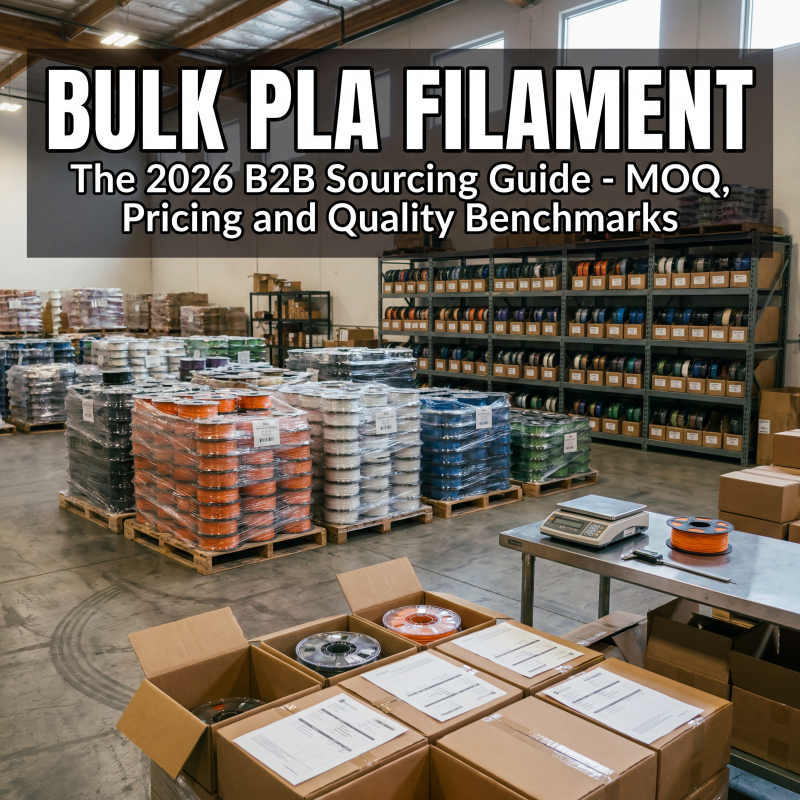
The most visible components of TCO are the direct costs. These are the figures that appear plainly on invoices and shipping documents, forming the initial layer of any cost analysis. The purchase price itself is the starting point. Many suppliers offer tiered pricing for PLA bulk deals, where the cost per unit decreases as the order volume increases. For example, a manufacturer might offer one price for a 100kg order and a significantly lower price for a 1000kg order. Some vendors structure their discounts around a Minimum Order Quantity (MOQ), so ask each supplier for its MOQ and price tiers in writing before comparing offers. These volume discounts are a primary incentive for pursuing PLA bulk deals.
Shipping costs, however, can dramatically alter the financial equation. The physical distance between your facility and the manufacturer’s warehouse is a major determinant of expense. A supplier in a neighboring state will present a different logistical cost profile than a production partner in China. The mode of transport—air freight versus sea freight—creates a trade-off between speed and expense. Air freight is substantially faster but carries a much higher price tag, suitable for urgent, smaller-volume needs. Sea freight is far more economical for large, heavy shipments, making it the standard for most significant PLA bulk deals, yet it requires longer lead times and more sophisticated planning.
Finally, international sourcing introduces the complexities of customs, duties, and tariffs. These are taxes imposed by the destination country’s government on imported goods. Tariff rates can vary widely based on the material’s classification (in the case of PLA, its specific polymer code) and the country of origin. Political or economic shifts can cause these rates to change with little notice, introducing an element of financial risk. A competent supplier should be able to provide the correct Harmonized System (HS) code for their filament, allowing you to accurately calculate potential duties. Failing to account for these import taxes can lead to an unpleasant surprise, where your seemingly low-cost filament is held at port pending a substantial, unplanned payment. A comprehensive TCO analysis requires diligent research into all these direct costs to form a baseline for your PLA bulk deals.
Indirect Costs: Failed Prints, Downtime, Labor
The true genius of the TCO model lies in its capacity to illuminate the often-invisible indirect costs. These are the consequential expenses that do not appear on an invoice but directly impact your bottom line. They are almost always linked to the quality, or lack thereof, of the filament itself. Pursuing PLA bulk deals from an unvetted supplier based on a low price is a direct invitation for these hidden costs to manifest.
Consider the cost of a single failed print. The most obvious loss is the filament consumed in the failed object. For a large part, a material loss of several hundred grams or even a kilogram is not trivial. The greater loss, however, is the squandered machine time. A 3D printer that is occupied for 20 hours on a print that ultimately fails has produced no value during that time. Its operational costs—electricity, wear on components, depreciation—were incurred without any return. For a print farm with dozens or hundreds of machines, the cumulative effect of a high failure rate due to poor filament is catastrophic to productivity and profitability. If a 10% failure rate is introduced by a bad batch of filament, you have effectively lost 10% of your farm’s total production capacity.
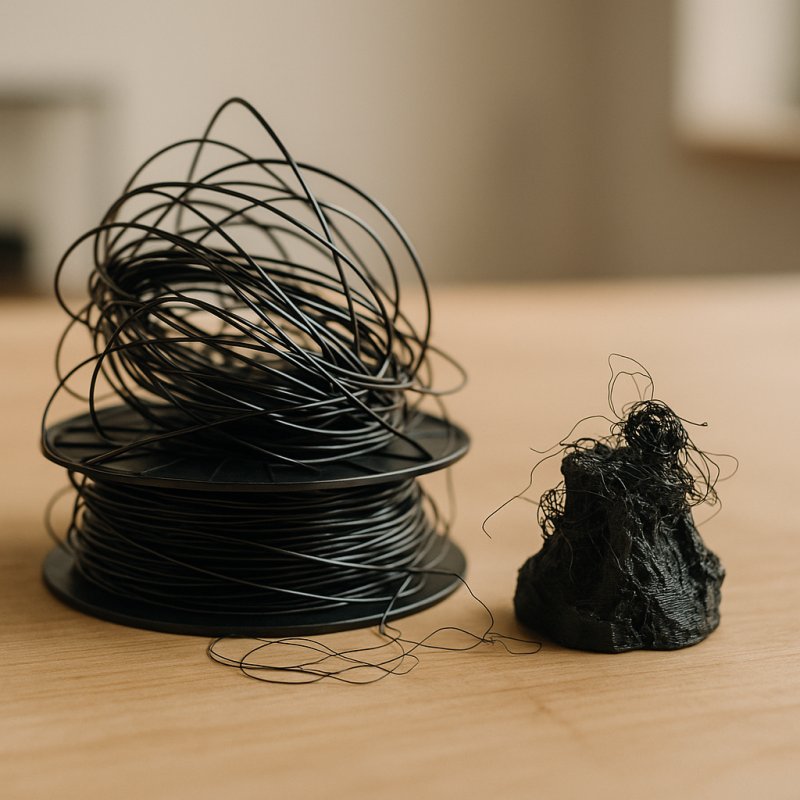
Machine downtime is another critical indirect cost. Inconsistent filament diameter can cause jams in the hotend. Contaminants within the material can lead to clogs that require partial or full disassembly of the extruder assembly to clear. A clogged nozzle doesn’t just stop one print; it takes a machine out of service entirely. The time a technician spends diagnosing the problem, clearing the clog, and recalibrating the machine is labor time that is not being spent on value-adding activities like preparing new print jobs or performing scheduled maintenance. If the clog is severe or the filament’s abrasive nature was not disclosed (as with some composite materials), it might even require the replacement of parts like nozzles or PTFE tubes, adding a direct hardware cost to the indirect labor cost.
The labor cost component extends beyond simple repairs. Poor quality filament often requires more “babysitting.” An operator may need to constantly monitor a print, ready to intervene if stringing, poor layer adhesion, or warping becomes apparent. Inconsistent color from one spool to the next in a bulk order can necessitate re-printing entire batches of parts to ensure visual uniformity, doubling the material, machine time, and labor for that job. When you sum these indirect costs—wasted material, lost machine hours, repair labor, operator intervention, rework—the initial savings from a cheap PLA bulk deal can be completely erased, leaving you with a net loss.
A Framework for TCO Analysis in PLA Bulk Deals
To practically apply a TCO framework, a structured approach is necessary. One can begin by creating a simple spreadsheet to compare potential suppliers. The table below offers a basic model for a comparative analysis between a hypothetical low-cost local supplier and a high-volume overseas production partner.
| Cost Factor | Supplier A (Low-Cost, Domestic) | Supplier B (Production Partner, Overseas) | Notes |
|---|---|---|---|
| Direct Costs (per 100kg) | |||
| Purchase Price | $15/kg ($1,500) | $10/kg ($1,000) | Supplier B offers a significant volume discount. |
| Shipping & Freight | $200 (Ground) | $500 (Sea Freight) | Overseas shipping is more expensive. |
| Tariffs & Duties | $0 | $150 (Estimated 15%) | Tariffs apply only to the international option. |
| Subtotal Direct Cost | $1,700 | $1,650 | Initial direct costs are surprisingly close. |
| Indirect Costs (Estimated) | |||
| Est. Failure Rate | 5% | 1% (ISO 9001 Certified) | Higher quality control leads to fewer failures. |
| Cost of Wasted Material | $75 (5kg @ $15/kg) | $10 (1kg @ $10/kg) | Based on estimated failure rate. |
| Cost of Lost Machine Time | $500 (50 hours @ $10/hr) | $100 (10 hours @ $10/hr) | Assumes a machine operating cost of $10/hour. |
| Cost of Labor (Rework/Repair) | $250 (10 hours @ $25/hr) | $50 (2 hours @ $25/hr) | Higher failure rates require more technician time. |
| Subtotal Indirect Cost | $825 | $160 | The quality difference creates a large indirect cost gap. |
| Total Cost of Ownership | $2,525 | $1,810 | Supplier B is the clear winner on TCO. |
| TCO per kg | $25.25/kg | $18.10/kg | The true cost per kg is much higher for the “cheaper” option. |
As the table demonstrates, a disciplined TCO analysis can completely reframe the procurement decision. The supplier with the higher initial price and shipping costs can emerge as the far more economical choice once the downstream consequences of material quality are factored in. The estimated failure rate is the most critical variable in this model. You can arrive at a reasonable estimate by requesting quality control data from the supplier, reading independent reviews, or running a small pilot order to test the material yourself. A supplier who is transparent about their manufacturing processes and quality metrics, such as a manufacturer with ISO 9001:2015 certification, provides a higher degree of confidence that the failure rate will be low. Investing in quality through a well-vetted PLA bulk deal is an investment in operational efficiency and overall profitability.
Factor 2: The Bedrock of Scalability: Ensuring Material Consistency and Quality
The capacity to scale a 3D printing operation, whether it is a small business with ten printers or an industrial facility with a hundred, rests upon a foundation of predictability. The entire system—from slicer profiles to production schedules—is predicated on the assumption that the material input will behave in a consistent manner, spool after spool, batch after batch. When material quality is variable, predictability collapses, taking efficiency and profitability with it. For those sourcing PLA bulk deals, an intense focus on material consistency is not a luxury; it is the absolute bedrock of a scalable, reliable production environment. Any perceived savings from inconsistent, low-cost filament are an illusion, paid for with the currency of failed prints, frustrated operators, and broken timelines. True value in PLA bulk deals is found not in the lowest price, but in the highest degree of reliability.
The Significance of Dimensional Accuracy (±0.02mm)
At the heart of filament quality lies a single, critical metric: dimensional accuracy. It refers to how consistent the diameter of the filament is along its entire length. The industry standard for high-quality filament is a tolerance of ±0.03mm, with premium manufacturers like SigmaFilament achieving an even tighter tolerance of ±0.02mm through advanced monitoring techniques (SIGMAFILAMENT, 2026). To a newcomer, a variation of a few hundredths of a millimeter might seem insignificant. To a 3D printer’s extrusion system, it is the difference between a perfect print and a complete failure.
To understand why, one must visualize the filament’s journey through the hotend. The printer’s firmware commands the extruder motor to push a specific length of filament into the melt zone, based on the diameter value set in the slicer (e.g., 1.75mm). The firmware calculates the volume of plastic that length represents and expects a corresponding volume of molten material to be extruded from the nozzle. If the filament diameter is consistent, a predictable, steady flow is established.
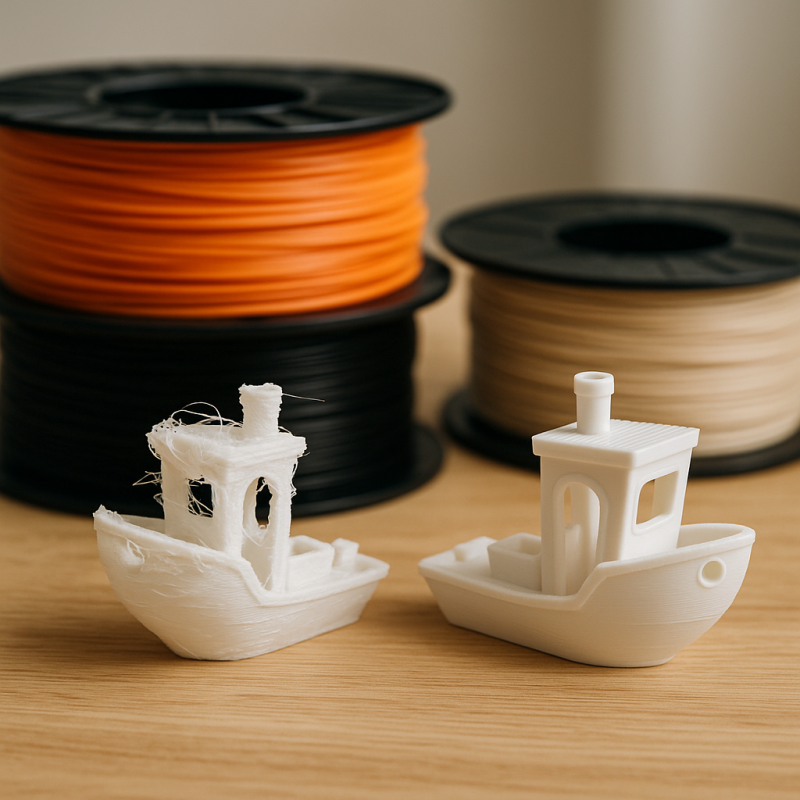
Now, introduce a variation. If a section of filament is thicker than expected (e.g., 1.80mm), the extruder pushes in a greater volume of plastic than the firmware accounted for. The pressure inside the melt zone spikes, forcing too much material out of the nozzle. The result is over-extrusion, which manifests as blobs, zits, and poor surface finish on the print. Conversely, if a section is too thin (e.g., 1.70mm), the extruder pushes in less volume than expected. The pressure drops, not enough material is extruded, and the result is under-extrusion. You see gaps between lines, weak layer adhesion, and a fragile, structurally compromised part.
In the most extreme cases, a sudden increase in diameter can cause the filament to become physically wedged in the heat break or the entry to the nozzle, resulting in a jam that stops the print entirely. A manufacturer’s ability to hold a tight tolerance like ±0.02mm is a direct indicator of their investment in process control. It typically involves dual-axis laser micrometers that continuously measure the filament as it is extruded and provide real-time feedback to the extrusion line’s puller speed, ensuring a remarkably consistent diameter. When evaluating PLA bulk deals, demanding to see the supplier’s stated dimensional accuracy and the methods they use to guarantee it is a non-negotiable step.
Chemical Purity: Contaminants, Additives, and Color Consistency
Beyond physical dimensions, the chemical composition of the filament is equally vital. High-quality PLA begins with a high-purity polymer resin. The use of recycled or off-spec resin to cut costs can introduce a host of problems. Contaminants, such as particles of a different polymer type (e.g., ABS mixed with PLA), can fail to melt at PLA’s lower printing temperatures, causing nozzle clogs. These contaminants can also create weak points within the extruded plastic, compromising the mechanical strength of the final part. Moisture is another common “contaminant.” PLA is hygroscopic, meaning it readily absorbs moisture from the air. Printing with “wet” filament causes the water to flash into steam in the hotend, creating bubbles in the extruded plastic. The result is a print with a fuzzy, stringy surface finish and very poor layer adhesion, as the steam pockets prevent the layers from properly fusing. A reputable supplier mitigates the problem by drying the resin before extrusion and immediately vacuum-sealing each spool with a desiccant packet.
The additives mixed with the base resin also play a significant role. Colorants, for instance, must be of high quality and dispersed evenly. A poor dispersion of pigment can lead to color variation not just between spools, but within a single spool. Imagine printing a large, multi-part product only to find that the shade of “red” changes halfway through the project. For businesses that produce consumer goods, such inconsistency is unacceptable. Additives used to modify properties, such as impact modifiers in PLA+, must be precisely metered to achieve the desired performance. Too much or too little can negate the benefits or even harm the filament’s printability.
When sourcing PLA bulk deals, you are not just buying a polymer; you are buying a complex chemical formulation. Inquiry into the supplier’s sourcing of base resin, their quality control on additives, their pigment dispersion process, and their pre-extrusion drying protocol is essential due diligence. A supplier who can speak intelligently about these aspects of their process is more likely to deliver a consistent product. For example, a manufacturer offering custom color matching using Pantone or RAL standards, a service provided by ODM-focused suppliers, demonstrates a high level of control over their chemical formulation process (SIGMAFILAMENT, 2026).
Reading the Signs: How to Vet a Supplier’s Quality Control (ISO 9001)
How can a buyer, often located thousands of miles away, gain confidence in a supplier’s quality claims? The answer lies in looking for objective, third-party validation of their processes. The single most powerful indicator of a commitment to quality is certification to the ISO 9001:2015 standard.
ISO 9001 is not a product standard; it is a process standard. It does not certify that a spool of filament is good. It certifies that the manufacturer has a robust, documented, and audited Quality Management System (QMS) in place. A company with ISO 9001 certification has demonstrated to an external auditor that they:
- Have clearly defined procedures for all key processes in the business, from raw material inspection to final product packaging.
- Monitor these processes to ensure they are effective.
- Maintain adequate records of quality checks, such as the logs from their laser micrometers.
- Have a system for identifying and correcting defects (e.g., what happens when a batch of filament is found to be out of spec).
- Regularly review the effectiveness of the QMS and are committed to continuous improvement.
For a buyer considering PLA bulk deals, a supplier’s ISO 9001 certification is a powerful de-risking tool. It provides a high degree of assurance that the first spool you test will be representative of the 100th or 1000th spool you receive. It signals that the supplier is a serious, professional organization dedicated to consistency, not a fly-by-night operation competing only on price. When a manufacturer like SigmaFilament states that they are an “ISO 9001:2015 certified 3D printing filament manufacturer,” it is a verifiable claim that speaks volumes about their operational discipline (SIGMAFILAMENT, 2026). Always ask for a copy of a potential supplier’s ISO certificate and verify its authenticity. The absence of such a certification should be considered a significant red flag in any evaluation of PLA bulk deals.
Factor 3: The Supplier as Partner: Vetting Manufacturing Capabilities and Certifications
Choosing a supplier for PLA bulk deals is an act of trust. You are entrusting a critical component of your production process to an external entity. A low price from an unreliable source is a false economy that can jeopardize your business’s reputation and operational stability. The correct mental model is not to view the transaction as a simple purchase, but as the formation of a partnership. A true production partner has the capacity to meet your volume demands, the process discipline to guarantee quality, and the verifiable credentials to prove it. Vetting these aspects of a supplier’s operation is a fundamental exercise in risk management and strategic sourcing.
Production Capacity: From Tons Per Day to Your Order Fulfillment
A supplier’s manufacturing capacity is a measure of their ability to produce a certain volume of filament within a given timeframe. It is often expressed in kilograms or metric tons per day or per month. For a small business ordering 50kg of filament, a supplier’s total capacity may seem like an abstract, irrelevant number. For a business planning to scale, it is a critical indicator of the supplier’s ability to grow with you.
Imagine your print farm doubles in size over the next year. Your filament consumption will also double. Will your current supplier be able to handle your increased order volume without significant lead time extensions? A supplier operating at the edge of their capacity may struggle to fulfill a sudden large order, forcing you to either halt production or scramble to find an alternative source at an unfavorable price. A manufacturer with a substantial declared capacity, such as the 30 tons per day cited by SigmaFilament, signals that they have the infrastructure—the extrusion lines, the raw material handling systems, the workforce—to accommodate large fluctuations in demand from their customers (SIGMAFILAMENT, 2026).
When evaluating PLA bulk deals, it is prudent to inquire not just about the total capacity, but about their current utilization rate. A supplier running at 95% capacity has little room for flexibility, while one running at 60% has ample buffer to absorb new or larger orders. You should also ask about their typical lead times for orders of various sizes. How long does it take from the moment you place a 100kg order until it is ready to ship? What about a 1000kg order? A professional supplier will have clear, predictable answers to these questions. Their ability to reliably meet your volume needs, both now and in the future, is a cornerstone of a successful long-term supply relationship. It ensures that your growth is not constrained by your partner’s limitations.
The Value of ISO 9001:2015 Certification
We have already touched upon the importance of ISO 9001:2015 as an indicator of quality control. It is worth examining its value from the perspective of a partnership. The standard’s emphasis on a process-oriented approach, documentation, and continuous improvement has profound implications for the buyer-supplier relationship.
A supplier with a certified QMS is inherently more transparent. Their processes are documented, so when you ask how they ensure color consistency or handle non-conforming material, they can provide a systematic answer, not just a vague assurance. They have records, so if you encounter an issue with a specific batch, they have a traceability system that allows them to investigate the production data for that batch—the resin lot used, the machine it ran on, the operator on shift, the quality control measurements taken. A problem can be diagnosed based on data, not guesswork.
The principle of continuous improvement, a core tenet of ISO 9001, means that the supplier is structurally committed to getting better over time. They are required to conduct internal audits and management reviews to identify weaknesses in their system and implement corrective actions. A good supplier will not be perfect, but an ISO 9001 certified supplier has a formal mechanism for learning from its mistakes. Choosing such a supplier for your PLA bulk deals means you are partnering with an organization that is institutionally designed to improve its own performance, which in turn benefits you as the customer. It transforms the relationship from a static, transactional one to a dynamic partnership where quality and reliability are expected to strengthen over time.
Material Safety: RoHS, REACH, and FDA-Compliance Explained
In an increasingly regulated global market, the safety and environmental compliance of your materials cannot be an afterthought. Sourcing filament that does not meet the standards of your target market can result in your products being barred from sale, or worse, legal liability. When vetting suppliers for PLA bulk deals, it is vital to understand and verify their compliance with key material safety regulations.
The RoHS (Restriction of Hazardous Substances) directive, originating in the European Union, restricts the use of specific hazardous materials found in electrical and electronic products. The restricted substances include lead, mercury, cadmium, and others. While a spool of filament itself is not an electronic product, if you are printing parts that will be incorporated into one—such as enclosures, brackets, or casings—the filament used must be RoHS compliant for the final product to be legally sold in the EU and many other regions that have adopted similar standards.
REACH (Registration, Evaluation, Authorisation and Restriction of Chemicals) is another EU regulation, broader in scope than RoHS. It aims to protect human health and the environment from risks posed by chemicals. Manufacturers or importers of substances into the EU above a certain volume must register them and provide data on their properties. For a filament buyer, a supplier’s statement of REACH compliance provides assurance that the chemical constituents of their PLA—the base polymer, the colorants, the additives—do not contain substances of very high concern (SVHCs) that are restricted by the regulation.
FDA (U.S. Food and Drug Administration) compliance is relevant for applications involving contact with food. While 3D printed parts are generally not recommended for food contact due to the microscopic crevices between layers that can harbor bacteria, certain applications may require it (e.g., custom cookie cutters, short-term use items). In these cases, the filament itself must be made from materials that are considered food-safe by the FDA. PLA, in its pure, unpigmented form, is derived from natural sources like corn starch and is generally recognized as safe. However, the additives and colorants used can alter its status. A supplier claiming to offer “FDA-compliant” materials should be able to provide documentation specifying which of their products meet the standard and under what conditions.
A supplier like SigmaFilament that explicitly states they use “FDA-compliant materials and RoHS verification” is communicating that they understand and operate within these regulatory frameworks (SIGMAFILAMENT, 2026). When evaluating PLA bulk deals, do not hesitate to ask for the certificates of compliance for these standards. A professional manufacturer will have them readily available. Choosing a compliant partner protects your business, your customers, and your access to global markets.
Factor 4: Tailoring Your Supply: Leveraging OEM/ODM for Competitive Advantage
In a crowded marketplace, differentiation is key to survival and growth. Merely reselling a generic product under its original branding places you in direct competition with every other reseller, a battle often won only on price, leading to razor-thin margins. A more sophisticated strategy involves transforming your filament supply from a simple commodity into a unique product that reflects your brand’s identity and meets your customers’ specific needs. Original Equipment Manufacturer (OEM) and Original Design Manufacturer (ODM) services, offered by forward-thinking production partners, provide a powerful toolkit for achieving such differentiation. Engaging with these services when structuring your PLA bulk deals can create a durable competitive advantage that transcends price alone.
OEM Services: Building Your Brand on a Proven Product
OEM represents a partnership where a manufacturer produces a product that is then marketed and sold under another company’s brand name. In the context of 3D printing filament, OEM services allow you to take a supplier’s existing, proven PLA formulation and package it as your own. A comprehensive OEM partner can offer a suite of customization options.
The most basic level is private labeling. The manufacturer agrees to put your brand’s logo and design on the spool’s label and the product box. A customer purchasing from you receives a product that is professionally branded, building your brand equity, not the manufacturer’s. This is a significant step up from simply placing a sticker on a generic box. High-quality OEM providers, like SigmaFilament, can offer branding on spools, boxes, and even instruction manuals, ensuring a consistent brand experience for the end-user (SIGMAFILAMENT, 2026).
Beyond aesthetics, OEM services can extend to the physical packaging itself. You might be able to choose between plastic or cardboard spools, select different box sizes or styles, or specify the type of vacuum-sealing bag used. These choices can support your brand’s positioning. For example, a company focused on sustainability might opt for recycled cardboard spools and packaging, a choice that reinforces its brand message.
The fundamental appeal of the OEM model is that it allows you to launch your own brand of filament without investing in the massive capital expenditure required for manufacturing equipment, quality control labs, and production staff. You are leveraging the expertise and infrastructure of an established manufacturer. You get a product with a known quality baseline—assuming you have vetted the supplier properly—while focusing your resources on what you do best: marketing, sales, and customer support. For businesses looking to establish a presence in the filament market, pursuing OEM options within their PLA bulk deals is a highly effective, capital-efficient strategy.
ODM Services: Creating a Unique, Proprietary Filament
While OEM is about branding an existing product, ODM takes the partnership a step further. An ODM, or Original Design Manufacturer, collaborates with you to design and produce a new, unique product based on your specifications. This is where true innovation can happen. ODM services allow you to create a filament that does not yet exist on the market, giving you an exclusive product that competitors cannot easily replicate.
The possibilities with ODM are vast. A common request is custom color matching. If your brand has a specific color palette, an ODM partner with advanced capabilities can match your Pantone or RAL color codes, creating a line of filaments that is uniquely yours. This is particularly valuable for businesses that serve clients in industrial design, architecture, or corporate branding, where color accuracy is paramount.
ODM extends into the realm of material science. You can work with the manufacturer’s R&D team to develop a custom filament formulation. Perhaps you need a PLA with higher temperature resistance for an automotive application, or one with improved impact strength for producing functional jigs and fixtures. A capable ODM partner can experiment with different polymer blends, additives, and reinforcements to achieve your desired mechanical properties. For example, you could commission a PLA reinforced with a specific percentage of carbon fiber for added stiffness, or one with electrostatic dissipative (ESD) properties for printing electronics enclosures. The resulting product is a high-performance engineering filament that you own exclusively.
To protect your investment in this custom development, the relationship is typically governed by a Non-Disclosure Agreement (NDA). The NDA ensures that the unique formula your partner develops for you remains your proprietary intellectual property; they cannot sell the same formulation to your competitors. This exclusivity is the ultimate competitive advantage. While the upfront investment in R&D and higher MOQs for ODM projects may be greater, the long-term benefit of having a truly unique, high-performing product can be immense. It allows you to compete on value and innovation, not just price.
The Strategic Value of Low MOQs in Customization
One of the traditional barriers to entry for OEM and ODM services has been the high Minimum Order Quantity (MOQ). A manufacturer might require a commitment of thousands of kilograms to justify a custom production run, a volume that is out of reach for many small or medium-sized businesses. However, the landscape is changing. More agile and customer-focused manufacturers are beginning to offer OEM/ODM services with much more accessible MOQs.
A supplier advertising “low MOQ” for private-label services is a signal that they are willing to partner with businesses of all sizes, not just large distributors (SIGMAFILAMENT, 2026). A low MOQ for an OEM order allows you to test the market with your own branded product without taking on a huge inventory risk. You can launch a few core colors of your branded PLA and gauge customer response before committing to a larger volume. It lowers the barrier to entry for building a brand.
For ODM projects, a flexible MOQ is even more valuable. Developing a custom filament often involves an iterative process of testing and refinement. A willingness to produce smaller batches for pilot testing allows you to validate the material’s performance in real-world applications before scaling up to a full production run. It makes the R&D process more manageable and less financially risky.
When negotiating PLA bulk deals that include a customization component, the MOQ is as important a variable as the price per kilogram. A supplier who is flexible on this point demonstrates a genuine interest in fostering a long-term partnership with growing businesses. It shows they understand that today’s 100kg custom order could become tomorrow’s 10,000kg repeating order. A low MOQ is an enabler of innovation, allowing more businesses to access the powerful tools of branding and custom formulation.
Factor 5: Navigating Global Waters: Mastering Logistics and Incoterms
Sourcing PLA bulk deals, particularly from international production partners, thrusts a business into the world of global logistics. It is a domain with its own language, rules, and hidden complexities. A failure to understand the fundamentals of shipping, customs, and risk allocation can quickly transform a profitable deal into a logistical nightmare. Mastering this domain means understanding Incoterms—the universal language of international shipping—and building a supply chain that is not only cost-effective but also resilient. It is about ensuring your filament does not just get produced, but that it arrives at your facility on time, on budget, and with minimal friction.
Understanding Incoterms: EXW, FOB, CIF, DDP
Incoterms, an acronym for International Commercial Terms, are a set of pre-defined commercial terms published by the International Chamber of Commerce (ICC). They are a series of three-letter trade terms that define the responsibilities of sellers and buyers for the delivery of goods under sales contracts. They clarify who is responsible for what task, who pays for what cost, and when the risk for the goods transfers from the seller to the buyer. When you receive a quote for a PLA bulk deal from an overseas supplier, it will almost certainly include one of these terms (e.g., “$10/kg FOB Shanghai”). Understanding what they mean is absolutely essential.
While there are eleven Incoterms in the 2020 revision, buyers sourcing filament will most commonly encounter four of them:
- EXW (Ex Works): With EXW, the seller’s responsibility is at its absolute minimum. They simply need to make the goods available at their own premises (e.g., their factory or warehouse). The buyer is responsible for everything else: loading the goods onto a truck, arranging transportation to the port, clearing the goods for export, the main sea or air freight, customs clearance in the destination country, and all transportation to the final destination. Risk transfers to the buyer the moment the goods are made available at the seller’s location. EXW often appears to be the cheapest product price, but it places the maximum logistical burden and risk on the buyer. It is generally not recommended for inexperienced importers.
- FOB (Free On Board): FOB is one of the most common terms for sea freight. Under FOB, the seller is responsible for all costs and risks until the goods are loaded “on board” the vessel nominated by the buyer at the named port of shipment (e.g., FOB Shanghai). The seller handles export documentation and pays for transport to the port. Once the filament is loaded onto the ship, the risk and responsibility for all subsequent costs (sea freight, insurance, import customs, final delivery) transfer to the buyer. The buyer has control over the main freight, allowing them to shop around for a good rate with a freight forwarder.
- CIF (Cost, Insurance, and Freight): With CIF, the seller’s responsibility extends further. The seller arranges and pays for the cost of the main carriage (the sea freight) to the named port of destination, and they also arrange and pay for a minimum level of insurance coverage for the goods during transit. However, it is critical to understand that the risk of loss or damage transfers from the seller to the buyer much earlier, at the same point as FOB—once the goods are loaded on board the vessel at the origin port. If the container of filament falls off the ship mid-ocean, it is the buyer’s problem to file an insurance claim. The seller’s only obligation was to pay for the freight and insurance.
- DDP (Delivered Duty Paid): DDP represents the maximum obligation for the seller. The seller is responsible for delivering the goods to the buyer’s named destination (e.g., your warehouse), cleared for import, with all duties and taxes paid. The seller bears all risks and costs associated with the entire journey. For the buyer, DDP is the simplest, most “hands-off” option. It provides a single, all-inclusive price. The convenience comes at a premium, as the seller will factor all their costs plus a risk margin into the price. A manufacturer offering DDP shipping terms for PLA bulk deals, like SigmaFilament, provides a significant service by removing the logistical burden from the customer (SIGMAFILAMENT, 2026).
The following table provides a simplified comparison of these key terms:
| Incoterm | Seller’s Main Responsibilities | Buyer’s Main Responsibilities | Point of Risk Transfer | Best For |
|---|---|---|---|---|
| EXW | Make goods available at their factory. | All transport, export/import clearance, duties. | At seller’s premises. | Experienced buyers with own logistics in origin country. |
| FOB | Deliver goods, cleared for export, onto the ship. | Main freight, insurance, import clearance, duties. | When goods are on board the vessel. | Buyers who want control over the main freight shipment. |
| CIF | Pay for main freight & minimum insurance to destination port. | Import clearance, duties, transport from destination port. | When goods are on board the vessel at origin. | Buyers who want the seller to handle freight but accept transit risk. |
| DDP | Deliver goods to buyer’s door, all costs & duties paid. | Unloading at their premises. | When goods are delivered to the final destination. | Buyers who want maximum convenience and a single landed cost. |
Choosing the right Incoterm is a strategic decision. FOB offers a good balance of control and cost for many buyers, while DDP offers the ultimate convenience. Your choice will have a direct impact on the final landed cost of your PLA bulk deals.
The Hidden Costs of Logistics: Warehousing, Insurance, Last-Mile Delivery
The price quoted by a freight forwarder is rarely the final price. Logistics is a field rife with ancillary charges and potential hidden costs that can inflate your budget if you are not prepared. When planning the shipment for your PLA bulk deals, you must account for these possibilities.
Warehousing or storage fees can accrue at multiple points. If your shipment arrives at the destination port but your customs paperwork is not in order, the container will be moved to a bonded warehouse. You will be charged daily storage fees (demurrage or detention) until the issue is resolved. These fees can be exorbitant and can quickly add up.
Insurance is another critical consideration. While CIF includes a minimum level of insurance, it is often inadequate, covering only major disasters (like the ship sinking). It typically does not cover damage from mishandling or moisture. It is highly advisable to purchase separate, comprehensive cargo insurance for your shipment. The cost is relatively low compared to the value of a bulk filament order, plus it provides peace of mind.
“Last-mile delivery” refers to the final step of the journey: moving the goods from the destination port or warehouse to your facility’s front door. The cost for this leg can be significant, especially if your facility is far from the port or does not have a loading dock to receive a full container or palletized shipment. You may need to pay for a truck with a liftgate or for inside delivery services. All these potential costs must be investigated and included in your TCO calculation to get a true picture of the cost of your PLA bulk deals.
Building a Resilient Supply Chain for Your PLA Bulk Deals
The past few years have taught the world a harsh lesson about the fragility of global supply chains. A single ship stuck in a canal, a pandemic-related port shutdown, or a geopolitical conflict can send shockwaves through the system, causing massive delays and skyrocketing costs. For a business dependent on a steady supply of filament, building a resilient supply chain is not just good practice; it is a matter of survival.
Resilience begins with diversification. Relying on a single supplier in a single geographic region, no matter how good they are, creates a single point of failure. A more robust strategy involves having a primary production partner for the bulk of your needs, supplemented by a qualified secondary supplier, perhaps in a different country or even domestically. The secondary supplier may have a higher unit cost, but they provide a crucial backup that can keep your printers running during a disruption to your primary supply line.
Resilience also involves strategic inventory management. The “just-in-time” model, which aims to minimize inventory, is highly efficient in a stable world but very fragile in a volatile one. Maintaining a strategic buffer of safety stock for your most-used filaments provides a cushion against unexpected shipping delays. The cost of warehousing a few extra pallets of PLA is a small price to pay for the ability to continue production uninterrupted.
Finally, resilience is about relationships. A strong, communicative partnership with your supplier and your freight forwarder is invaluable. When disruptions occur, partners are more likely to work together to find creative solutions—rerouting shipments, expediting partial orders via air freight, or providing early warnings about potential delays. Investing time in building these relationships is as important as negotiating the price of your PLA bulk deals. A resilient supply chain is your insurance policy against an unpredictable world.
Factor 6: Material Specification: Choosing the Right PLA for the Job
Polylactic Acid is not a monolith. The simple three-letter acronym “PLA” encompasses a rapidly expanding family of materials, each formulated with specific properties to meet different application needs. Selecting the correct type of PLA is a critical decision that directly influences print success, part performance, and production efficiency. A myopic focus on sourcing the cheapest “standard” PLA for all purposes is a common but costly mistake. A discerning buyer, when evaluating PLA bulk deals, will first analyze their application requirements and then select a material whose specifications are precisely aligned with those needs. It is about using the right tool for the right job, a principle that is as true for polymers as it is for anything else. A manufacturer with a broad portfolio, offering everything from standard PLA to specialty blends, provides the palette from which you can choose the perfect shade of performance.
Standard PLA vs. PLA+ (Plus)
The most fundamental choice in the PLA family is between standard PLA and its enhanced cousin, often marketed as PLA+, PLA Pro, or Tough PLA. While the specific formulations vary between manufacturers, the general distinction holds true across the industry.
Standard PLA is the workhorse of the 3D printing world. It is prized for its ease of printing, low warping, and ability to produce fine details. It prints at relatively low temperatures (typically 190-220°C) and does not require a heated bed, although one is recommended. Its primary virtues are its rigidity and its low cost, making it an excellent choice for a wide range of applications, including decorative objects, architectural models, rapid prototypes where form is more important than function, and general hobbyist use. Its primary drawback is its brittleness. Standard PLA parts, when subjected to impact or sudden stress, tend to fracture rather than deform. For a business that needs to produce a consistent and reliable bulk PLA for non-mechanical parts, standard PLA offers an unbeatable combination of price and printability.
PLA+ (PLA Plus) is a category of PLA filaments that have been blended with other polymers or additives to improve their mechanical properties, most notably their toughness or impact resistance. The goal is to overcome the inherent brittleness of standard PLA while retaining its ease of printing. A part printed in PLA+ is significantly less likely to shatter when dropped or struck. It will exhibit more “give” or flex before failure, behaving in a manner that is closer to a material like ABS or PETG. This increased durability makes PLA+ a far better choice for functional parts, such as mechanical prototypes, simple jigs and fixtures, enclosures, or any part that will be handled frequently or subjected to moderate stress. The trade-off for this enhanced performance is typically a slightly higher cost per kilogram and sometimes a need for slightly higher printing temperatures to achieve optimal layer adhesion. For many professional applications, the marginal increase in cost is more than justified by the dramatic improvement in part durability, reducing the risk of field failures and enhancing the perceived quality of the final product. When evaluating PLA bulk deals, segmenting your needs and sourcing both standard PLA for aesthetic parts and PLA+ for functional parts can be a highly effective cost-optimization strategy.
High-Speed PLA: A Necessity for Modern Print Farms
The latest generation of 3D printers, particularly CoreXY models, has pushed printing speeds to levels that were unimaginable just a few years ago. Speeds of 300mm/s, 500mm/s, or even higher are now commonplace. At these velocities, standard PLA filaments simply cannot keep up. The issue lies in the rheology of the polymer—its flow characteristics.
When a filament is pushed through a hotend, it needs a certain amount of time, known as the residence time, to absorb enough heat to melt completely and flow easily through the nozzle. At very high printing speeds, the filament is moving through the hotend so quickly that the residence time becomes incredibly short. A standard PLA formulation may not be able to melt fast enough, resulting in a dramatic increase in viscosity. The extruder motor has to work much harder to push the semi-molten plastic through the nozzle. The result is often severe under-extrusion, weak parts, and a high likelihood of jamming the extruder.
High-Speed PLA is specifically engineered to solve this problem. These formulations are designed with a higher melt flow index. They are formulated to absorb heat more quickly and achieve a lower viscosity at a given temperature. This allows them to flow smoothly and evenly through the nozzle even at very high volumetric flow rates (measured in mm³/s). A printer running at 500mm/s can maintain excellent print quality with a high-speed PLA, whereas it would fail catastrophically with a standard PLA.
For any business operating modern, high-speed printers, sourcing high-speed PLA is not an option; it is a necessity. Attempting to save money by running standard PLA in these machines forces you to artificially limit their speed, negating the entire productivity advantage you invested in when you bought the printers. The throughput of a print farm is a direct driver of its revenue. By enabling your machines to run at their full potential, high-speed PLA directly increases your production capacity. Therefore, any analysis of PLA bulk deals for a modern printing operation must include a significant allocation for high-speed formulations.
Aesthetic and Specialty PLA: Matte, Silk, Wood, Luminous
Beyond mechanical performance, a significant portion of the 3D printing market is driven by aesthetics. Offering products with unique visual appeal can be a powerful differentiator. Manufacturers have responded by creating a vast array of specialty PLA filaments designed to achieve specific finishes or effects.
Matte PLA has become incredibly popular for product design and architectural models. It contains additives that create a non-reflective, textured surface finish. The primary benefit of a matte finish is its ability to hide layer lines. The microscopic texture diffuses light, making the layered nature of the FDM process much less apparent. The result is a part that looks less like a 3D print and more like a finished, injection-molded object. This can dramatically increase the perceived value of a product.
Silk PLA contains elastomeric additives that give it a highly glossy, silky-smooth surface finish. Light reflects off the curved surfaces of a print in a way that highlights its geometry, creating a beautiful, almost metallic sheen. Silk PLA is a favorite for printing vases, sculptures, cosplay items, and other decorative objects where a vibrant, eye-catching appearance is desired. Many suppliers offer multi-color silk filaments that shift between two, three, or even four colors along the length of the spool, creating automatic rainbow or gradient effects in a single print.
Wood-filled PLA contains actual fine wood particles (e.g., pine, bamboo, cork) mixed into the PLA base. Prints made with this material have the look, feel, and even the smell of real wood. The surface finish is typically a textured matte, and the parts can often be sanded, stained, or painted just like real wood to achieve different effects. It is ideal for creating models, decorative items, and prototypes where a natural, organic aesthetic is desired.
Luminous or Glow-in-the-Dark PLA contains phosphorescent pigments. These pigments absorb energy from ambient light and then slowly release it as a visible glow in the dark. It is a popular choice for novelty items, toys, Halloween decorations, and safety markings.
These are just a few examples from a rapidly growing category that also includes glitter-filled, carbon-fiber-look, marble-effect, and temperature-changing filaments. For a business, offering products printed in these specialty materials can open up new markets and command premium prices. When structuring your PLA bulk deals, dedicating a portion of your budget to a curated selection of these aesthetic filaments can be a wise investment in product diversification and visual appeal.
Factor 7: Risk Mitigation and Building Long-Term Relationships
The process of sourcing high-volume PLA bulk deals is an exercise in navigating uncertainty. You are making a significant financial commitment, often to a supplier you have never met, who may be on the other side of the world. Mitigating the risks inherent in this process is paramount. A sound risk mitigation strategy involves practical steps to validate quality before commitment, combined with a focus on building a transparent, communicative relationship that can endure challenges. A successful long-term partnership is not one devoid of problems, but one that has the structure and goodwill to solve problems collaboratively when they arise.
The Role of Samples and Pilot Orders
No amount of data sheets, certificates, or marketing materials can replace the value of testing the filament yourself, on your own machines, in your own environment. Before you commit to a 1,000kg order, you must have empirical evidence of the filament’s quality and performance. The first step in this validation process is requesting samples.
A reputable manufacturer should be more than willing to provide samples of their materials, often for just the cost of shipping. These may be small coils of 50-100g or full 1kg spools. When you receive the samples, you should conduct a methodical evaluation. First, perform a visual inspection. Is the spool wound neatly or is it tangled? A messy spool is often a sign of a sloppy overall process. Is the filament’s color consistent? Does it feel brittle? Use digital calipers to measure the diameter at several points over a few meters. Is it within the supplier’s stated tolerance?
Next, run a series of test prints. Do not just print a small cube. Print a variety of models that will test different aspects of the filament’s performance: a temperature tower to dial in the optimal printing temperature, a retraction test to check for stringing, an overhang test, a bridging test, and a detailed model to assess its ability to reproduce fine features. Finally, print a functional part that is representative of your actual products and test its strength. How does it compare to your current filament? Document all your findings.
If the sample performs well, the next logical step is a pilot order. A pilot order is a small-scale bulk order, perhaps 20-50kg. It serves two purposes. First, it allows you to test for inter-spool consistency. Does the 10th spool print just as well as the first? Is the color identical across all the spools? Second, it serves as a test of the supplier’s logistics and fulfillment process. How was the communication during the ordering process? Was the order packed securely? Did it ship on time? Did the commercial invoice and packing list contain all the necessary information for customs clearance? The pilot order is a dress rehearsal for a full-scale partnership. The performance of the supplier and the product during this phase will give you the confidence—or the warning signs—you need before committing to truly large PLA bulk deals.
Communication, Support, and After-Sales Service
The quality of your communication with a potential supplier is often a leading indicator of the quality of the partnership you can expect. During your initial inquiries, pay close attention to their responsiveness. Do they answer your questions promptly and thoroughly? Do they provide clear, detailed information, or are their answers vague and evasive? Is there a language barrier, and if so, do they have competent English-speaking sales and support staff to bridge it? A supplier who is difficult to communicate with during the sales process will likely be impossible to deal with when you have a problem.
After-sales support is where a true partner distinguishes themselves from a mere vendor. What happens if you receive a batch of filament that is out of spec? A good supplier will have a clear, fair process for handling returns, replacements, or credits. They will work with you to diagnose the problem, perhaps asking for photos of the print defects or the batch numbers from the spools. They will take ownership of the issue and work toward a satisfactory resolution. Before signing a large contract, you should explicitly ask about their policy for handling quality issues. A supplier who is confident in their product will not hesitate to stand behind it. This commitment to support is a critical component of risk mitigation for any business investing in PLA bulk deals.
Contractual Protections: NDAs, Quality Agreements, and Payment Terms
While a relationship built on trust and communication is ideal, formal agreements are necessary to protect both parties. A well-drafted contract provides a clear framework for the partnership and a legal recourse if things go wrong.
For any ODM project involving the development of a custom filament, a Non-Disclosure Agreement (NDA) is the first document you should sign. As discussed earlier, the NDA legally prevents the supplier from sharing your proprietary formula or design with any third party, ensuring your competitive advantage remains intact.
A Quality Agreement is another powerful tool, particularly for large, ongoing supply relationships. This document goes beyond the standard terms of sale to specify the technical requirements of the filament in detail. It can codify things like the exact dimensional accuracy tolerance (e.g., 1.75mm ±0.02mm), the acceptable range of color variation (often defined using CIELAB color space values), the maximum allowable moisture content, and the packaging requirements (e.g., vacuum seal integrity, desiccant type). It also outlines the inspection and testing procedures both the supplier and the buyer will use, and the process for resolving disputes over quality. A Quality Agreement transforms subjective assurances into objective, contractually binding commitments.
Finally, the payment terms themselves can be structured to mitigate risk. A common arrangement for large international orders is a partial payment upfront (e.g., 30%) to begin production, with the remaining balance (70%) due upon completion, often against a copy of the bill of lading, which proves the goods have shipped. For new relationships, using a letter of credit (L/C) through a bank can provide security for both sides. The buyer’s bank guarantees payment to the seller, but only once the seller has provided documentary proof that they have fulfilled their end of the bargain (e.g., shipped the correct goods on time). While more complex, an L/C can be a valuable tool for de-risking the first few large PLA bulk deals with a new international partner. These contractual mechanisms are not signs of mistrust; they are hallmarks of a professional, well-managed sourcing strategy.
Frequently Asked Questions About PLA Bulk Deals
1. What is considered a “bulk” order for PLA filament?
The definition of “bulk” can vary, but generally, it refers to any purchase significantly larger than a few individual spools. Where online retailers offer bulk discounts, the starting quantity varies by store, so check the current listing. For direct-from-manufacturer deals, bulk orders typically start in the range of 50-100kg and can scale up to thousands of kilograms for large-scale operations. Some suppliers also offer larger-format spools, which are themselves a form of bulk purchasing aimed at reducing spool changes on long prints; check each listing for the spool sizes it carries.
2. How much can I realistically save with PLA bulk deals?
The savings can be substantial. Compared to buying single 1kg spools at retail prices (which might be $20-$25), a moderate bulk purchase could lower the price to $15-$18 per kg. For very large volume PLA bulk deals directly from a manufacturer, prices can drop to the low teens or even below $10 per kg, depending on the supplier and total volume. However, always analyze the Total Cost of Ownership, as shipping and import duties can significantly impact the final landed cost.
3. Is it safe to buy cheap PLA from unknown brands in bulk?
It is extremely risky. While the price may be tempting, filament from unknown or unvetted sources often suffers from poor quality control. Problems like inconsistent diameter, contaminants, high moisture content, and poor spool winding are common. These issues lead to a high rate of print failures, which wastes material, machine time, and labor. The hidden costs of these failures almost always outweigh the initial savings. It is far more prudent to partner with a reputable, ISO 9001-certified manufacturer, even if their price per kilogram is slightly higher.
4. Do I need a special setup to use large bulk spools (e.g., 5kg or 10kg)?
Yes, most desktop 3D printers are designed to hold a standard 1kg spool. To use larger, heavier spools, you will need an external, free-standing spool holder. These holders are typically placed next to the printer and allow the large spool to rotate freely on a set of bearings, ensuring a smooth, low-friction feed of filament to the printer’s extruder. Many designs for 3D printable spool holders are available, or you can purchase robust pre-made versions.
5. How should I store a large quantity of PLA filament?
Proper storage is critical to preserving filament quality. PLA is hygroscopic, meaning it absorbs moisture from the air, which ruins print quality. Your bulk filament supply should be stored in a dry, cool environment. The best practice is to keep the spools in their original vacuum-sealed bags with the desiccant packet until you are ready to use them. For spools that are in use, or if you must open the bags, storing them in airtight containers or large dry boxes with a generous amount of renewable desiccant is highly recommended. Monitoring the humidity level in your storage area with a simple hygrometer is a wise, low-cost investment.
6. Can I mix and match colors and material types in a single bulk order?
This depends entirely on the supplier. Most manufacturers offering PLA bulk deals are quite flexible. They typically have a minimum total order quantity (e.g., 100kg), but will allow you to assort that total quantity across different colors of the same material type (e.g., 20kg of black PLA, 30kg of white PLA, etc.). Some may even allow you to mix different material types (e.g., PLA and PETG) to meet the MOQ, although this is less common. Always clarify the supplier’s policy on assortment before placing an order.
7. What is the typical lead time for an international bulk PLA order?
Lead time has two main components: production time and shipping time. For a large order from an overseas manufacturer, production might take anywhere from 1 to 4 weeks, depending on the order size and their current backlog. Shipping via sea freight, the most common method for bulk goods, can take an additional 4 to 6 weeks to transit from a port in Asia to a port in the USA or UK, plus another week for customs clearance and final delivery. Therefore, you should plan for a total lead time of 6 to 11 weeks from order placement to final delivery. Air freight can reduce the shipping time to about a week, but at a vastly higher cost.
A Final Contemplation on Strategic Sourcing
The pursuit of advantageous PLA bulk deals is a microcosm of the broader challenge of scaling a business in a globalized, competitive environment. It demands a shift in perspective—from the tactical mindset of a simple buyer to the strategic vision of a supply chain architect. A superficial analysis, fixated on the visible cost per unit, leads to fragile operations plagued by inconsistency and hidden expenses. A deeper, more thoughtful examination, grounded in the principles of Total Cost of Ownership, quality assurance, and risk management, builds a foundation for resilient, profitable growth.
The seven factors explored—TCO, material consistency, supplier capabilities, customization, logistics, material specification, and risk mitigation—are not independent variables. They are interconnected facets of a single, unified sourcing strategy. A supplier with a certified ISO 9001 process is more likely to deliver the dimensional accuracy that lowers your TCO. A partner with robust ODM capabilities can create a unique, high-performance material that justifies a premium price, moving you out of the commodity trap. An understanding of DDP logistics simplifies your TCO calculation and reduces your administrative burden.
Ultimately, the most successful sourcing strategies are rooted in the cultivation of partnerships, not the execution of transactions. A good supplier is a vendor who delivers a product on time. A great supplier is a partner who invests in their own processes, communicates transparently, collaborates to solve problems, and provides the consistent, high-quality material that enables your business to thrive. The search for favorable PLA bulk deals is, in its most profound sense, a search for these great partners.
References
- SIGMAFILAMENT. (2026, January 25). Actionable Buyer’s Guide: 7 Factors for Success with Carbon Fiber PETG in 2026. SigmaFilament. https://sigmafilament.com/carbon-fiber-petg-printing-guide/
- Turner, B. N., Strong, R., & Gold, S. A. (2014). A review of polylactic acid (PLA) as a 3D printing material. Rapid Prototyping Journal, 20(2), 192-204. https://doi.org/10.1108/RPJ-01-2013-0012
- International Organization for Standardization. (2015). ISO 9001:2015 Quality management systems — Requirements. ISO.
- International Chamber of Commerce. (n.d.). Incoterms® 2020. ICC.
- Farah, S., Anderson, D. G., & Langer, R. (2016). Physical and mechanical properties of PLA, and their functions in widespread applications — A comprehensive review. Advanced Drug Delivery Reviews, 107, 367-392.
- Valerga, A. P., Batista, M., Salguero, J., & Fernandez-Vidal, S. R. (2018). Influence of PLA filament conditions on characteristics of FDM printed parts. Materials, 11(8), 1322. https://doi.org/10.3390/ma11081322
Last reviewed and updated: January 2026. Author: SigmaFilament Engineering Team. For custom filament solutions and wholesale inquiries, contact our team.