A Professional’s 2026 Guide: 7 Key Factors for Mastering PolyTerra PLA

Abstract
PolyTerra PLA, now marketed as Panchroma Matte PLA, represents a significant development in bioplastic-based 3D printing filaments. This material was engineered to provide a superior user experience by combining the inherent ease of printing associated with Polylactic Acid (PLA) with enhanced mechanical properties and a unique, desirable matte surface finish. An analysis of its composition reveals a composite nature, where organic and mineral additives are incorporated into the PLA matrix. These additives are responsible for both its signature non-reflective texture, which effectively conceals layer lines, and its improved impact resistance compared to standard PLA formulations. However, this composite structure also increases the material’s hygroscopicity, necessitating specific storage and handling protocols to prevent moisture absorption, which can compromise print quality. The filament’s environmental proposition, centered on its plant-based origins and industrially compostable nature, positions it as a compelling choice for users prioritizing sustainability. This comprehensive examination explores the material’s properties, optimal printing parameters, practical applications, and necessary handling procedures to enable users to fully leverage its unique combination of aesthetic appeal and functional performance.
Key Takeaways
- Dry PolyTerra PLA before printing, as its matte additives make it absorb moisture.
- The unique matte finish excels at hiding layer lines for cleaner-looking models.
- It offers surprisingly good impact resistance, making it tougher than standard PLA.
- Mastering PolyTerra PLA requires slightly higher nozzle temperatures for optimal flow.
- Ideal for aesthetic prints like miniatures, architectural models, and visual prototypes.
- The material is now sold under the name Panchroma Matte PLA by Polymaker.
- Its cardboard spool and plant-based origins contribute to a reduced environmental footprint.
Table of Contents
- 1. Deconstructing the Material: What Truly Sets PolyTerra PLA Apart?
- 2. Aesthetic Excellence: Mastering the Signature Matte Finish
- 3. Printability and Parameter Tuning: Your Path to Flawless Prints
- 4. Mechanical Properties Re-examined: Tougher Than You Think
- 5. The Environmental Proposition: A Deeper Look at Sustainability
- 6. The Achilles’ Heel: Managing Moisture for Optimal Performance
- 7. Applications and Use Cases: Where Does PolyTerra PLA Shine?
- Frequently Asked Questions (FAQ)
- Conclusion
- References
1. Deconstructing the Material: What Truly Sets PolyTerra PLA Apart?
To truly grasp the capabilities and nuances of a 3D printing filament, one must look beyond the surface and understand its fundamental composition. What is the chemistry that gives rise to its behavior? What choices did its creators make to distinguish it from a sea of alternatives? In the case of PolyTerra PLA, the story is one of thoughtful formulation, aiming to solve some of the persistent challenges and desires within the 3D printing community. It is not merely another PLA variant; it is a composite material designed from the ground up with specific aesthetic and mechanical goals in mind.
From PolyTerra to Panchroma: Understanding the Name Change
Before we proceed, it is necessary to address a point of potential confusion for those familiar with the filament landscape. The material widely known and celebrated as PolyTerra PLA has undergone a rebranding. Polymaker, the manufacturer, has since moved the line to the Panchroma Matte PLA name, so search retail listings under both names.
Why the change? While official statements often frame such moves in terms of brand alignment or market positioning, we can infer a desire to create a more descriptive and cohesive product family. “Panchroma” suggests a broad spectrum of color, while “Matte” directly communicates its primary aesthetic feature. For our purposes throughout this guide, we will use the name “PolyTerra PLA” to connect with the vast body of existing community knowledge, tutorials, and reviews, while acknowledging that new spools will bear the “Panchroma Matte PLA” label. The formulation remains the same; only the name has changed. Think of it as an author publishing a beloved book under a new title—the words inside have not been altered.
The Bioplastic Foundation: More Than Just Corn Starch
At its core, PolyTerra PLA is, as the name implies, built upon Polylactic Acid (PLA). PLA is a thermoplastic polyester, and its popularity in 3D printing stems from a confluence of favorable properties. It is derived from renewable resources like corn starch or sugarcane, making it a “bioplastic.” This contrasts sharply with materials like ABS (Acrylonitrile Butadiene Styrene), which are derived from petroleum.
The journey from a field of corn to a spool of filament is a marvel of industrial chemistry. The starch is extracted and converted into dextrose (a sugar). Microorganisms ferment this dextrose into lactic acid. Through a process of polymerization, these lactic acid molecules are linked together into long chains, forming polylactide, or PLA.
This organic origin story is central to PLA’s identity. It results in a material with a relatively low glass transition temperature (the point at which it begins to soften), typically around 60°C. This characteristic is a double-edged sword. It means PLA is exceptionally easy to print, requiring lower nozzle and bed temperatures and making it compatible with nearly every FDM 3D printer on the market, even those without heated beds. It also exhibits minimal warping as it cools, a common frustration with high-temperature materials like ABS (SigmaFilament, 2026). However, this low thermal resistance also means a PLA part can deform if left in a hot car on a summer day.
The Secret to the Matte Finish: A Look at the Composite Structure
Here is where PolyTerra PLA truly diverges from its standard counterparts. A spool of generic PLA is typically 99%+ pure polylactic acid, with small amounts of pigment and other minor additives. PolyTerra PLA, on the other hand, is a composite material. Polymaker has blended the PLA base resin with finely powdered organic and mineral-based particles.
Imagine making a smoothie. Standard PLA is like a simple fruit smoothie—just the fruit and some liquid. PolyTerra PLA is like adding a scoop of protein powder or finely ground oats. These added particles fundamentally change the texture and properties of the final product.
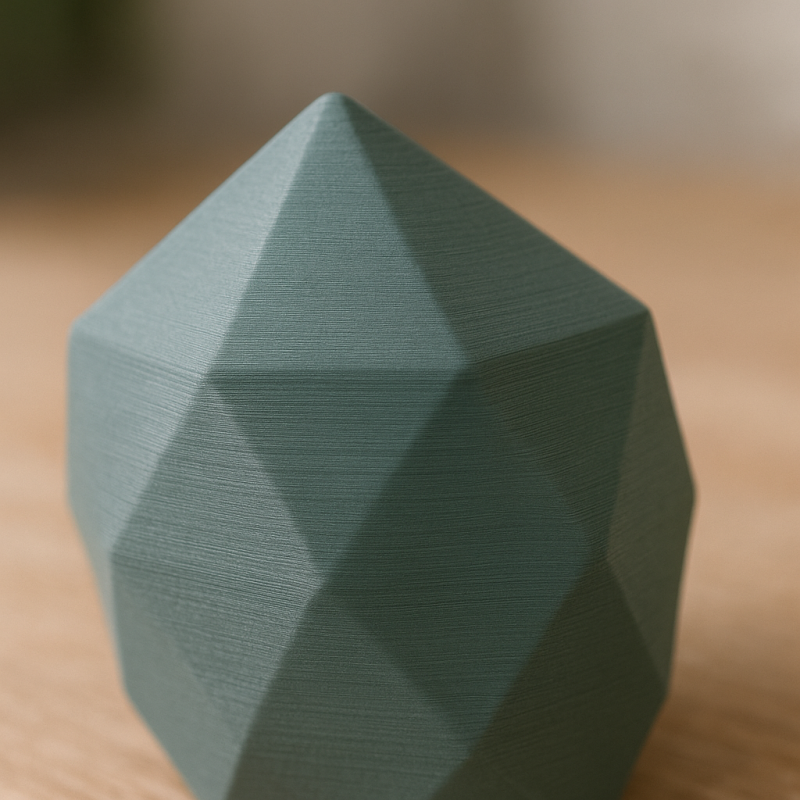
These microscopic particles serve two primary functions. First, they disrupt the way light reflects off the surface of the printed object. A smooth, pure polymer surface tends to be glossy, reflecting light in a specular, mirror-like fashion. This glossiness has the unfortunate side effect of highlighting every tiny imperfection and, most notably, the layer lines that are an inherent artifact of the FDM printing process. The particles in PolyTerra PLA create a micro-textured surface that scatters light diffusely. The result is a soft, non-reflective matte finish. This finish is incredibly forgiving, effectively masking layer lines and giving the part a more uniform, “finished” appearance straight off the build plate.
Second, these additives act as impact modifiers. In pure PLA, which has a somewhat crystalline structure, cracks can propagate easily through the material, making it brittle. The embedded particles in PolyTerra PLA disrupt these crack pathways. When the material is subjected to a sudden force, the energy has to travel around these particles, dissipating it and making the material less likely to shatter. This is why PolyTerra PLA is noticeably tougher and less brittle than many standard PLAs. It has more “give” and can absorb more energy before failing.
2. Aesthetic Excellence: Mastering the Signature Matte Finish
The visual and tactile qualities of a 3D printed object are often as important as its mechanical strength. For designers, artists, and engineers creating visual prototypes, the look and feel of a part can determine its success. It is in this domain of aesthetics that PolyTerra PLA truly distinguishes itself, offering a surface finish that elevates prints from mere plastic objects to artifacts with a sense of intention and quality.
Why Matte Matters: Hiding Layers and Enhancing Form
The quest to minimize or hide layer lines is as old as FDM 3D printing itself. These microscopic ridges, a testament to the additive manufacturing process, can distract the eye and detract from the intended form of a model. Glossy filaments, by their very nature, exacerbate this issue. Each layer line catches the light, creating a series of horizontal highlights that can make a print look ribbed or unfinished.
PolyTerra PLA’s matte surface is the solution. As we’ve discussed, the diffuse reflection of light from its micro-textured surface softens the appearance of these lines to the point where they become almost unnoticeable from a normal viewing distance. What does this mean in practice?
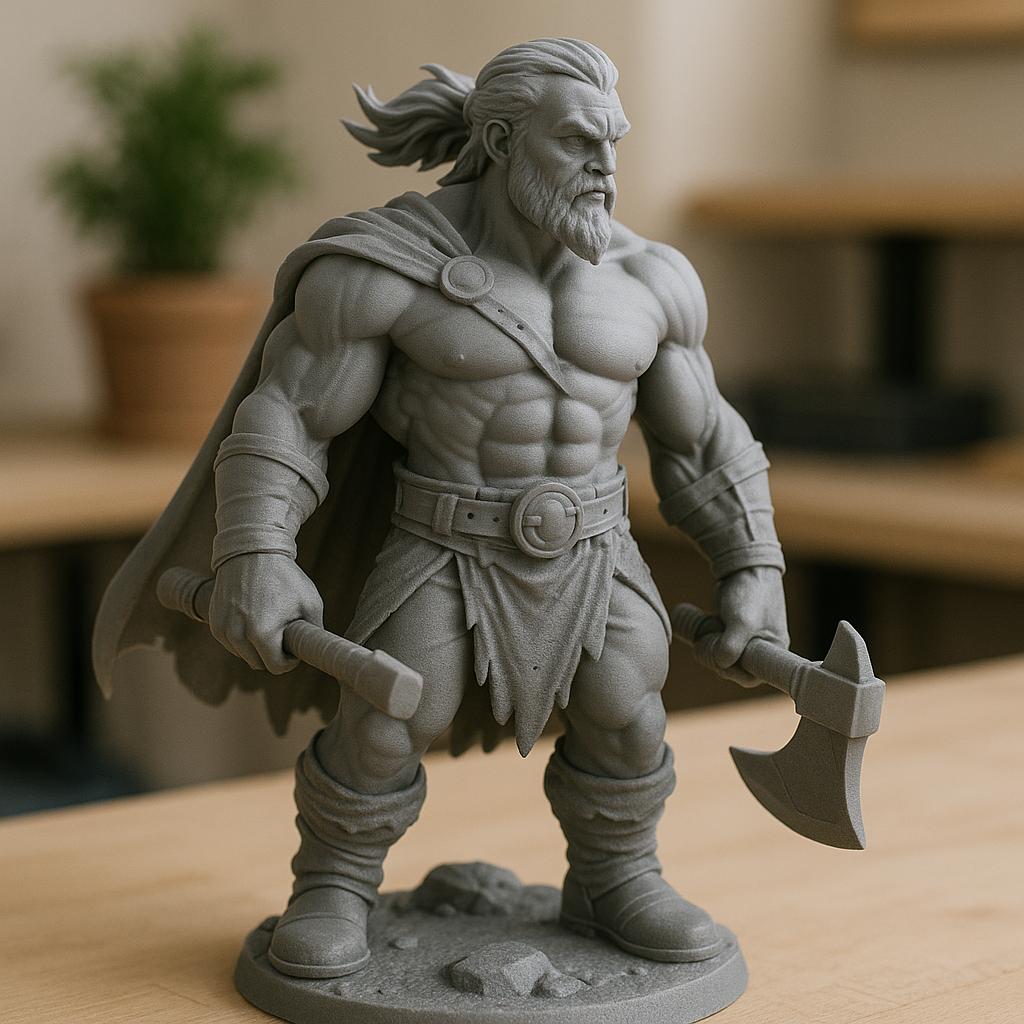
- For character models and miniatures, it means the focus remains on the sculpted details—the curve of a cheekbone, the fold of a cloak—rather than on the manufacturing process.
- For architectural models, it provides a clean, professional appearance that mimics the look of finished building materials.
- For product prototypes, it allows stakeholders to evaluate the form and ergonomics of a design without being distracted by the tell-tale signs of a 3D print.
The matte finish lends a certain gravitas and sophistication to printed objects. They feel less like plastic toys and more like cast or molded parts. This tactile and visual improvement cannot be overstated; it is the primary reason many makers choose PolyTerra PLA for their most important projects.
Color Science: How Pigmentation Affects the Final Appearance
The interaction between the matte formulation and the color pigments in PolyTerra PLA is a fascinating subject. Unlike glossy filaments where the color can appear deep and saturated, the matte finish imparts a softer, more muted, and often more “earthy” tone to the colors. A vibrant red in a standard PLA might appear as a rich terracotta in PolyTerra PLA. A deep blue might become a sophisticated navy or slate.
This is not a defect but a feature. The color palette offered by Polymaker for this line is carefully curated to complement the matte texture. The colors feel organic and natural, which makes the filament particularly well-suited for models of natural objects, historical artifacts, or designs that call for an understated elegance.
It is also worth noting that the composite nature of the filament can lead to very subtle variations in color, almost like a heathered fabric. This is due to the microscopic particles within the polymer. This effect is usually negligible but adds to the overall organic feel of the material. When choosing a color, it is wise to look at photos of actual prints rather than just the digital swatch, as the matte effect can significantly alter the perceived shade. The influence of color on filament properties is a documented phenomenon, affecting everything from tensile strength to printability, so a consistent formulation across a color range is a mark of a quality manufacturer (Singh, 2025).
A Comparative Look: PolyTerra PLA vs. Silk PLA vs. Standard PLA
To fully appreciate the unique position of PolyTerra PLA, it helps to compare it directly with other popular aesthetic choices. Let’s consider a spectrum of finishes, from the high gloss of Silk PLA to the semi-gloss of Standard PLA, and finally to the flat matte of PolyTerra.
| Feature | PolyTerra PLA (Panchroma Matte) | Standard PLA | Silk PLA |
|---|---|---|---|
| Surface Finish | True matte, non-reflective | Semi-gloss | High gloss, metallic sheen |
| Layer Line Visibility | Very low, effectively hidden | Moderate | High, often highlighted |
| Primary Use Case | Aesthetic models, prototypes, miniatures | General purpose printing, functional parts | Decorative items, vases, cosplay props |
| Perceived Toughness | Good, less brittle than standard PLA | Moderate, can be brittle | Often brittle, poor layer adhesion |
| Printability | Excellent, but requires drying | Excellent, very forgiving | Can be tricky, requires tuning |
| Visual Effect | Soft, organic, professional | Standard plastic look | Shiny, pearlescent, luxurious |
As the table illustrates, the choice is not about which filament is “best,” but which is most appropriate for the task at hand. If you are printing a trophy that needs to gleam under the lights, Silk PLA is the obvious choice. If you are printing a simple bracket where function trumps form, a reliable standard PLA filament is perfect. But if you are printing a detailed sculpture, an architectural study model, or a product enclosure that needs to look and feel like a premium finished good, PolyTerra PLA offers an aesthetic that is difficult to achieve otherwise without extensive post-processing.
3. Printability and Parameter Tuning: Your Path to Flawless Prints
A filament’s true worth is measured not just by its final properties but by the journey to achieve them. A material that produces beautiful results but is fraught with printing failures and requires endless tinkering is of little practical use. Fortunately, PolyTerra PLA inherits the user-friendliness of its base material, making it one of the more straightforward filaments to work with. However, its composite nature introduces a few key differences that, once understood, unlock its full potential for reliability and quality. Think of it like cooking with a new spice—you still use the same basic techniques, but a small adjustment can elevate the entire dish.
Dialing in the Temperature: Nozzle and Bed Settings
Temperature is the single most important variable in FDM 3D printing. It governs how the plastic melts, flows, and bonds to the layer beneath it. For PolyTerra PLA, the embedded particles slightly alter the thermal and flow characteristics compared to standard PLA.
Generally, PolyTerra PLA prefers to be printed slightly hotter than many standard PLAs. While a typical PLA might print well in the 190-210°C range, PolyTerra PLA often finds its sweet spot between 200-230°C. Check the nozzle range on the spool label or the maker’s data sheet before tuning, since the community consensus leans toward the upper end of the published range.
Why the higher temperature? The mineral and organic additives increase the viscosity of the molten plastic. A higher temperature reduces this viscosity, allowing the filament to flow more easily through the nozzle and lay down smoothly. Printing too cold can lead to under-extrusion, where the printer cannot push out enough plastic, resulting in weak, stringy, and incomplete layers. A good starting point for a new spool is 215°C. From there, you can print a temperature tower—a special calibration model that varies the nozzle temperature at different heights—to find the perfect setting for your specific printer and filament roll.
For the heated bed, the standard PLA settings work perfectly. A temperature between 50°C and 60°C is ideal. While PolyTerra PLA can be printed on a non-heated bed with an adhesion aid like a glue stick or painter’s tape, a heated bed provides a much more reliable foundation, preventing warping on larger prints and ensuring a perfect first layer.
Speed and Flow: Finding the Sweet Spot for Quality and Time
Print speed is a trade-off between how quickly you can produce a part and the quality of that part. While PolyTerra PLA can be printed at standard PLA speeds (typically 40-60 mm/s), its matte finish benefits from a slightly more conservative approach. The matte texture is most uniform and effective when the filament is extruded consistently. Slower speeds give the material more time to lay down properly and bond with the previous layer, resulting in better layer adhesion and a more flawless surface.
For highly detailed aesthetic prints, consider reducing your print speed to 30-50 mm/s. This small time investment can pay significant dividends in the final quality.
Flow rate, or extrusion multiplier, is another setting worth checking. Because of the additives, the filament’s density might be slightly different from standard PLA. It is good practice to calibrate your flow rate when trying any new filament. This usually involves printing a hollow cube with a specific wall thickness and measuring it with calipers to ensure your printer is extruding the correct amount of material. Most users find that a standard flow rate of 100% (or 1.0) works well, but if you notice signs of over- or under-extrusion, a small adjustment of ±5% can make a difference.
Cooling and Retraction: The Keys to Eliminating Stringing and Blobs
Proper cooling is essential for achieving sharp details and clean overhangs with PLA, and PolyTerra PLA is no exception. The part cooling fan should be set to 100% for most of the print, usually after the first few layers to ensure good bed adhesion. The goal is to solidify the plastic as soon as it leaves the nozzle, locking it in place.
Retraction settings are your primary weapon against “stringing” or “oozing,” where thin wisps of plastic are dragged between different parts of a model. When the print head has to travel across an open space, the filament is quickly pulled back, or retracted, into the nozzle to relieve pressure. PolyTerra PLA’s composition can sometimes make it slightly more prone to stringing than standard PLA. Dialing in your retraction settings is key.
This process is highly printer-dependent, as direct-drive extruders require much shorter and faster retractions than Bowden-style extruders. However, a good starting point is to use your printer’s default PLA profile and then print a retraction test model. If you see stringing, you can incrementally increase the retraction distance (e.g., by 0.5mm at a time for a Bowden setup) or the retraction speed (e.g., by 5 mm/s at a time). Be careful not to use excessive retraction, as this can cause clogs, especially with composite materials.
Here is a table of typical starting parameters to guide your initial setup.
| Slicer Setting | Recommended Starting Value | Notes |
|---|---|---|
| Nozzle Temperature | 215 °C | Print a temp tower to fine-tune. Range: 200-230°C. |
| Heated Bed Temperature | 60 °C | Use a clean PEI or glass surface. Range: 50-65°C. |
| Print Speed | 50 mm/s | Reduce for higher detail, increase for drafts. Range: 30-70 mm/s. |
| Part Cooling Fan | 100% (after first layer) | Essential for sharp details and clean overhangs. |
| Retraction Distance | 1-2mm (Direct Drive), 4-6mm (Bowden) | Highly printer-dependent. Tune with a retraction test. |
| Retraction Speed | 40 mm/s | Tune in conjunction with retraction distance. |
By approaching the tuning process systematically—starting with temperature, then speed, then retraction—you can quickly develop a reliable printing profile for PolyTerra PLA that delivers consistent, high-quality results.
4. Mechanical Properties Re-examined: Tougher Than You Think
In the world of 3D printing filaments, materials are often placed into neat categories: PLA is for prototypes, PETG is for functional parts, and ABS is for durable goods. This mental shortcut is useful, but it can also obscure the nuances that exist within a material family. PolyTerra PLA is a case in point. While its primary selling point is its aesthetic finish, a deeper examination of its mechanical properties reveals a material that defies the stereotype of PLA as a brittle, fragile polymer. It occupies an interesting middle ground, offering a surprising degree of toughness that expands its range of useful applications.
Beyond Brittleness: A Nuanced Look at Impact Resistance
The most common criticism leveled against standard PLA is its brittleness. It has high tensile strength and stiffness, meaning it can resist being pulled apart and does not bend easily. However, it often has poor impact resistance. If you drop a thin part printed in standard PLA, it is more likely to shatter than to bend or deform. This is a characteristic of its semi-crystalline polymer structure.
As mentioned earlier, the composite nature of PolyTerra PLA fundamentally alters this behavior. The mineral and organic particles dispersed throughout the PLA matrix act as stress diffusers. When an impact occurs, the energy is forced to navigate a more complex path around these particles instead of propagating cleanly through the polymer. This mechanism, known as crack deflection, absorbs energy and makes the material significantly tougher.
What does “tougher” mean in a practical sense? It means a part printed in PolyTerra PLA can withstand more sudden shocks and drops without catastrophic failure. While it may not be as durable as PETG or ABS, it is a noticeable improvement over many standard PLAs. A phone case, a drone component, or a snap-fit enclosure printed in PolyTerra PLA is much more likely to survive the rigors of daily use. This enhanced impact resistance moves it from a purely “look at” material to a “use and handle” material.
Strength vs. Stiffness: Where Does PolyTerra PLA Fit?
To understand PolyTerra PLA’s mechanical profile, it is helpful to distinguish between a few key engineering terms that are often used interchangeably.
- Tensile Strength: This is the maximum stress a material can withstand while being stretched or pulled before breaking. Standard PLA actually has very good tensile strength, often comparable to or even exceeding that of PETG (SigmaFilament, 2026). The additives in PolyTerra PLA may slightly reduce its ultimate tensile strength compared to a pure PLA, but it remains more than sufficient for a vast range of applications.
- Stiffness (Flexural Modulus): This measures a material’s resistance to bending. PLA is a very stiff material. This is why it is excellent for printing rigid objects that need to hold their shape precisely. PolyTerra PLA retains this high stiffness, making it ideal for parts that require dimensional stability.
- Toughness (Impact Resistance): This is the ability of a material to absorb energy and deform without fracturing. As we have discussed, this is where PolyTerra PLA makes its most significant leap beyond standard PLA.
Imagine three rods, one made of standard PLA, one of PolyTerra PLA, and one of PETG. If you pull on them, the standard PLA might be the strongest. If you try to bend them, both PLAs will be very stiff, while the PETG will have more flex. But if you hit them with a hammer, the standard PLA is most likely to shatter, the PETG is most likely to dent, and the PolyTerra PLA will fall somewhere in between, resisting the impact far better than its standard cousin. This balance of properties makes it a uniquely versatile material. For parts that need to be rigid and dimensionally accurate but also need to survive occasional bumps and drops, PolyTerra PLA presents a compelling option over both standard PLA and the more flexible, harder-to-print PETG.
Comparing PolyTerra to Other Filaments
The choice of a filament is always a matter of balancing competing priorities. There is no single “best” material, only the most appropriate material for a specific application (SigmaFilament, 2026). Let’s place PolyTerra PLA in context with its common alternatives.
- vs. Standard PLA: PolyTerra is superior in aesthetics (matte finish, hidden layers) and toughness (impact resistance). Standard PLA might have a slight edge in ultimate tensile strength and is less hygroscopic, requiring less careful storage. The choice comes down to aesthetics and durability versus simplicity.
- vs. PLA+ / Tough PLA: These are other formulations of PLA designed to improve toughness. Mechanically, they are often quite similar to PolyTerra PLA. The primary differentiator is the surface finish. PLA+ filaments are typically semi-gloss, while PolyTerra’s identity is tied to its unique matte texture.
- vs. PETG: PETG is the clear winner for applications requiring higher temperature resistance (its glass transition temperature is around 80°C), greater ductility (flexibility), and chemical resistance. However, PETG is notoriously difficult to print well, suffering from stringing and bed adhesion issues. It also does not bridge as well as PLA. PolyTerra PLA offers a significant portion of PETG’s toughness with the printability and rigidity of PLA. For many functional gadgets and enclosures that do not face high temperatures, PolyTerra PLA provides a much smoother printing experience for a comparable real-world result.
Ultimately, PolyTerra PLA carves out a valuable niche. It bridges the gap between the easy-to-print but brittle standard PLAs and the tough but fussy PETGs. It is the ideal material for when you need a print to look beautiful and survive being handled, without the headaches of more advanced engineering filaments. For those looking to create robust parts, exploring options like specialty engineering filaments can provide even greater performance for demanding applications.
5. The Environmental Proposition: A Deeper Look at Sustainability
The conversation around 3D printing is increasingly, and rightly, turning towards its environmental impact. As the technology becomes more accessible, the volume of plastic waste generated from failed prints, prototypes, and discarded objects grows. In this context, the marketing of a filament as “eco-friendly” deserves careful and critical examination. PolyTerra PLA’s environmental claims are a core part of its identity, but to be responsible makers, we must understand what these claims truly mean in practice. The narrative is one of positive steps, but it is also one of nuance and complexity.
Biodegradability Claims: What Does “Industrially Compostable” Mean?
The most prominent environmental claim associated with PLA in general is that it is “biodegradable.” This term can be misleading. While PLA will eventually break down, leaving it in your backyard compost pile or burying it in a landfill will not result in rapid decomposition. It can persist in the environment for hundreds of years under those conditions, not unlike traditional plastics.
The correct term for PLA is “industrially compostable.” This means that under the specific conditions found in an industrial or municipal composting facility—high temperatures (above 55°C), high humidity, and the presence of specific microorganisms—PLA will break down into water, carbon dioxide, and biomass within a period of about 90 to 180 days.
This is a significant advantage over petroleum-based plastics like ABS or PETG, which are not compostable. However, it comes with a major caveat: access to such facilities is still limited in many regions. If you place a PLA print in your standard recycling bin, it can act as a contaminant to the PET recycling stream, as the two plastics are difficult to distinguish visually. Therefore, the “compostable” benefit of PolyTerra PLA is only realized if the end-user has access to and utilizes a proper industrial composting service. It is a potential benefit, not an automatic one.
The Cardboard Spool Revolution: Reducing Plastic Waste
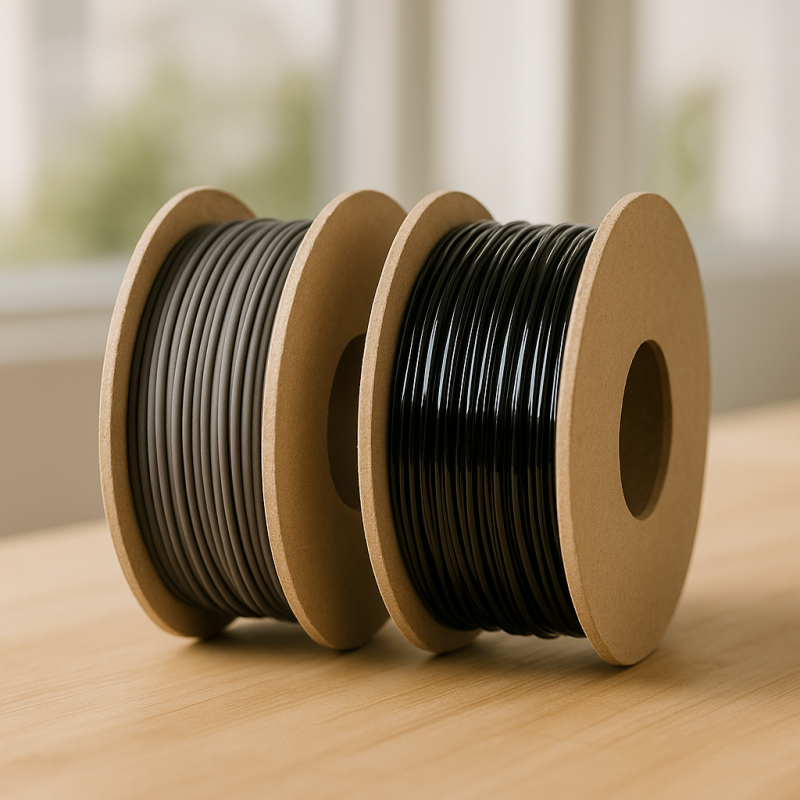
Perhaps the most immediate and tangible environmental benefit of using PolyTerra PLA is its packaging. Traditionally, 3D printing filament has been sold on hard plastic spools, typically made of polystyrene or ABS. These spools are bulky, and once the filament is used, they often end up in landfills, as they are not always easily recyclable. A single maker can accumulate dozens of these empty spools in a year.
Polymaker was a pioneer in transitioning to spools made from recycled cardboard. The PolyTerra PLA spool consists of a recycled cardboard core and sides, held together with a minimal amount of adhesive. Once the filament is consumed, the spool can be easily disassembled and placed in standard paper/cardboard recycling streams. This simple change has a massive impact, eliminating a significant source of single-use plastic from the 3D printing workflow. It is a direct, unambiguous reduction in plastic waste that requires no special facilities or user behavior to be effective. This thoughtful approach to packaging demonstrates a commitment to sustainability that goes beyond mere material science.
A Holistic View: Raw Materials and Carbon Footprint
A comprehensive assessment of a material’s environmental impact requires looking at its entire lifecycle, from cradle to grave.
- Raw Materials: As we have established, PolyTerra PLA is derived from renewable plant sources like corn. This is a clear advantage over petroleum, which is a finite resource with a geopolitically complex and environmentally damaging extraction process. Using plants as a feedstock also means the carbon that makes up the polymer’s backbone was recently pulled from the atmosphere via photosynthesis, making it part of the current carbon cycle.
- Manufacturing: The process of converting corn into PLA is energy-intensive. However, several lifecycle analyses have shown that producing PLA requires significantly less energy and generates fewer greenhouse gas emissions than producing petroleum-based polymers like ABS.
- Use Phase: During printing, PLA is known for releasing very few volatile organic compounds (VOCs) and having a faint, sweet smell, unlike the noxious fumes produced by printing ABS, which require robust ventilation (SigmaFilament, 2026). This makes it a safer choice for use in homes, offices, and schools.
- End of Life: This brings us back to the compostability issue. While the potential is there, the infrastructure is lagging.
In an effort to be more transparent and proactive, Polymaker has partnered with organizations to plant a tree for every spool of PolyTerra PLA sold, helping to offset the carbon footprint of the product’s manufacturing and transportation. While such programs can be complex to evaluate, the intent to take responsibility for the product’s impact is commendable.
So, is PolyTerra PLA an “eco-friendly” filament? The answer is a qualified yes. It represents a significant step in the right direction compared to traditional plastics. Its renewable origins, lower-energy manufacturing, safer printing process, and recyclable packaging are all substantial wins. Its end-of-life potential is promising but currently unrealized for many users. It is not a perfect solution, but it is a demonstrably better choice for the environmentally conscious maker.
6. The Achilles’ Heel: Managing Moisture for Optimal Performance
Every material, no matter how advanced, has its weaknesses. For steel, it is rust. For wood, it is rot. For many 3D printing filaments, and for PolyTerra PLA in particular, the great adversary is water. Not in its liquid form, but as invisible humidity in the air all around us. The tendency of a material to absorb moisture from the atmosphere is called hygroscopicity, and understanding how to manage it is the single most important skill for achieving consistent, high-quality prints with this filament. Ignoring this one factor can lead to endless frustration, with prints that are weak, stringy, and covered in blemishes.
Understanding Hygroscopicity: Why This Filament is Thirsty
At a chemical level, PLA is a polyester. The “ester” linkages in its long polymer chains are susceptible to a process called hydrolysis. In this reaction, a water molecule breaks the ester bond, effectively snipping the long polymer chain into two shorter ones. When this happens on a massive scale throughout the filament, it degrades the material, reducing its molecular weight and compromising its mechanical properties.
Standard PLA is only mildly hygroscopic. You can often leave a spool out for a few weeks or even months in a moderate climate with few ill effects. PolyTerra PLA, however, is significantly more hygroscopic. The reason lies in its composite nature. The organic and mineral additives that give the filament its wonderful matte finish and toughness are also thirsty. These particles, especially the organic components, can attract and hold onto water molecules from the air, pulling moisture deep into the filament. Think of it like a sponge. While a solid piece of plastic has a limited surface area to absorb moisture, a sponge is full of surfaces and voids that can trap water. The additives in PolyTerra PLA act like microscopic sponges embedded within the plastic.
The Telltale Signs of Wet Filament
When you attempt to print with filament that has absorbed too much moisture, the results are immediate and unmistakable. As the wet filament enters the hot end of your printer, which is heated to over 200°C, the trapped water instantly flashes into steam. This tiny, violent explosion inside the nozzle has several disastrous effects on the print.
- Popping and Sizzling Sounds: One of the most obvious signs is audible. You will hear a distinct crackling, popping, or hissing sound coming from the nozzle as the filament is extruded. This is the sound of water boiling into steam.
- Stringing and Oozing: The steam creates excess pressure inside the nozzle, pushing out molten plastic when it should not. This leads to severe stringing and blobs on the surface of your print.
- Poor Surface Finish: The steam bubbles create voids in the extruded plastic. This results in a rough, uneven, and sometimes porous-looking surface finish, completely negating the beautiful matte texture you were hoping to achieve.
- Weak Layer Adhesion and Brittleness: The hydrolysis reaction we discussed earlier weakens the polymer itself. The resulting prints will be incredibly brittle and have poor layer-to-layer adhesion. You might be able to easily snap the part in your hands, even if it is a thick, solid object.
If you are experiencing these issues, especially with a spool that used to print perfectly, the culprit is almost certainly moisture. It is not a bad batch of filament; it is a perfectly good batch that needs to be dried.
Best Practices for Drying and Storage
The good news is that wet filament is not ruined filament. The moisture can be driven out, restoring the material to its original, pristine condition. The process is simple: you just need to heat the filament to a temperature below its glass transition point but high enough to encourage the water to evaporate.
- Using a Filament Dryer: The best and most reliable method is to use a dedicated filament dryer. These are purpose-built appliances that circulate warm, dry air around the spool. They maintain a consistent temperature and are designed for this exact task. For PolyTerra PLA, a typical drying cycle would be 4-6 hours at 50-55°C.
- Using a Convection Oven or Food Dehydrator: If you do not have a dedicated dryer, a food dehydrator is an excellent alternative. A convection oven can also be used, but with extreme caution. You must be certain that your oven’s temperature is accurate and stable, as overheating the filament past its glass transition temperature (around 60°C for PLA) will cause the spool to deform and the filament to fuse together, ruining it. Always use a separate thermometer to verify the temperature and start on the lowest possible setting.
Once your filament is dry, you need to keep it that way. The best storage solution is an airtight container, such as a large plastic bin with a rubber gasket, or a large resealable vacuum bag. Inside the container, you should place a desiccant to absorb any residual moisture. The most common type is silica gel, which often comes in small packets with new spools of filament. You can buy rechargeable silica gel beads that change color when they are saturated, indicating they need to be “recharged” by baking them in an oven.
By adopting a simple workflow—drying every new spool before its first use and storing all filament in airtight, desiccated containers—you can completely eliminate moisture as a variable. This discipline is the key to unlocking the true potential of PolyTerra PLA and achieving flawless, beautiful, and strong prints every single time.
7. Applications and Use Cases: Where Does PolyTerra PLA Shine?
A deep understanding of a material’s properties—its aesthetics, its strength, its printability, its weaknesses—is only useful insofar as it informs our decisions about how to apply it. The final question for any filament is, “What should I make with it?” For PolyTerra PLA, its unique blend of characteristics makes it an exceptionally versatile material, but it truly excels in applications where visual quality and a professional appearance are paramount. It is the filament you reach for when you want your print to transcend the hobbyist look and feel like a finished product.
Prototyping and Conceptual Models
In the world of product design and engineering, prototyping is a critical stage. Early models are often used to evaluate the ergonomics, form, and visual appeal of a design. They are meant to be seen, handled, and discussed by stakeholders, clients, and test users. This is a perfect application for PolyTerra PLA.
Imagine a team designing a new computer mouse. A prototype printed in glossy PLA would be covered in distracting layer lines, making it hard to judge the subtle curvature of its surface. A prototype in PolyTerra PLA, however, would have a smooth, uniform, and non-reflective finish. It would look and feel more like the final injection-molded product, allowing the team to get a much more accurate sense of the design’s intent. The enhanced toughness also means the prototype can be handled, passed around a meeting room, and subjected to basic fit tests without fear of it easily breaking. It allows the conversation to be about the design, not about the limitations of the 3D printing process.
Architectural and Figurative Models
Artists, sculptors, and architects have embraced 3D printing as a powerful tool for bringing their visions to life. For these users, the final appearance of the print is everything. Layer lines can disrupt the flow of a carefully sculpted curve or the clean lines of a building facade.
PolyTerra PLA’s ability to hide layer lines is a game-changer in this space.
- Figurines and Miniatures: For character artists and tabletop gamers, the filament provides a perfect canvas. The matte finish takes primer and paint exceptionally well, and the underlying surface is so smooth that less sanding and filling is required before painting. The details of the sculpt are preserved and presented cleanly.
- Architectural Models: Architects can print study models and final presentation pieces that have a clean, professional look. The muted, earthy color palette of the filament line is also well-suited to representing common building materials like concrete, stone, and wood. The rigidity of the material ensures that walls are straight and details are crisp.
- Art and Sculpture: For artists creating abstract or representational sculptures, the filament offers a finish that looks more like a cast material than a printed plastic. It allows the focus to remain entirely on the form and texture of the piece itself.
Functional Parts with Low Mechanical Stress
While not an engineering-grade material like Nylon or Polycarbonate (SigmaFilament, 2026), the improved toughness of PolyTerra PLA makes it suitable for a wide range of functional parts that are not subjected to high heat, extreme mechanical stress, or chemical exposure.
- Enclosures for Electronics: Project boxes, Raspberry Pi cases, and enclosures for custom circuits are excellent use cases. The parts are rigid, the matte finish looks professional and hides fingerprints, and the toughness is more than sufficient to protect the components inside.
- Jigs, Fixtures, and Organizational Tools: Custom jigs for woodworking, holders for tools, and drawer organizers are all perfect applications. These parts need to be dimensionally accurate and reasonably durable, and PolyTerra PLA delivers on both fronts with the added benefit of looking clean and tidy.
- Cosplay Components: While parts that need to be flexible or withstand high impact might require other materials, many cosplay props, armor pieces, and accessories can be printed beautifully in PolyTerra PLA. The matte finish provides an excellent base for painting and weathering, and its ability to hide layer lines can save dozens of hours in post-processing.
In essence, PolyTerra PLA is the ideal choice for any object whose primary role is to be seen and handled. It closes the gap between a rough prototype and a finished good, empowering makers to create objects that are not just functional, but also beautiful.
Frequently Asked Questions (FAQ)
1. Why was PolyTerra PLA renamed to Panchroma Matte PLA?
Polymaker, the manufacturer, rebranded the filament line to better align with their product families. “Panchroma” highlights the wide color range, and “Matte” directly describes its signature finish. The chemical formulation of the filament itself has not changed.
2. Do I need a hardened steel nozzle to print PolyTerra PLA?
No, a standard brass nozzle is perfectly fine for printing PolyTerra PLA. While it does contain additives, they are not abrasive like the carbon fiber or glass fiber found in some other composite filaments. A brass nozzle will not experience accelerated wear.
3. How does PolyTerra PLA handle supports and bridging?
It handles both very well, inheriting the excellent bridging performance of its PLA base. Supports, especially when using an interface layer in your slicer, break away cleanly, often leaving a much cleaner surface than with PETG. The matte finish also helps to hide any minor blemishes left behind by support structures.
4. Is PolyTerra PLA food safe?
No. While the base PLA resin is generally considered food-safe, the proprietary additives and colorants used in PolyTerra PLA are not rated for food contact. Additionally, the layer lines inherent in FDM printing can trap bacteria. For food-contact applications, you should use a filament specifically certified as food-safe and post-process it to create a smooth, non-porous surface.
5. Can I sand and paint prints made with PolyTerra PLA?
Yes, absolutely. The material sands very easily, and its matte surface provides an excellent base for primers and paints to adhere to. Many users find it requires less sanding and filling than standard glossy PLA to achieve a smooth surface ready for painting.
6. Is PolyTerra PLA stronger or weaker than regular PLA?
It is a trade-off. It may have slightly lower ultimate tensile strength (resistance to being pulled apart) than some pure PLAs. However, it has significantly better impact resistance, meaning it is tougher and much less brittle. For most applications, it is considered more durable in a practical sense.
7. Why is my PolyTerra PLA print so stringy and weak?
The most likely cause is moisture. This filament is very hygroscopic (absorbs moisture from the air) due to its additives. Wet filament will steam in the nozzle, causing stringing, poor surface quality, and extremely weak layer adhesion. Drying the spool in a filament dryer or oven at 55°C for 4-6 hours will almost certainly solve the problem.
Conclusion
PolyTerra PLA, now known as Panchroma Matte PLA, represents a thoughtful and mature step in the evolution of 3D printing materials. It moves beyond the purely functional considerations of early filaments to address a deep-seated desire among makers for aesthetic quality and a more sustainable workflow. Its formulation is a masterful balancing act, enhancing the toughness of PLA while simultaneously delivering a superb matte finish that elevates the perceived quality of any print. The material challenges the simplistic categorization of PLA as a brittle material fit only for non-functional trinkets, opening up a wider range of applications for parts that must be both beautiful and durable enough for everyday handling.
However, mastery of this filament requires an understanding of its composite nature. Its increased hygroscopicity is not a flaw but a characteristic that must be managed through disciplined drying and storage practices. By embracing this requirement, users can unlock a level of consistency and quality that is truly remarkable. From the recycled cardboard spool that reduces plastic waste to the plant-based origins of its polymer, PolyTerra PLA invites a more conscious approach to making. It is a material that rewards care and attention to detail, not just in the slicer settings, but in the entire process from storage to final print, empowering creators to produce objects that are as impressive in form as they are in function.
References
- SigmaFilament. (2026a, January 24). PLA vs PETG: 7 Data-Backed Differences for a Practical Choice in 2026. https://sigmafilament.com/pla-vs-petg-data-backed-comparison/
- SigmaFilament. (2026b, January 27). A Practical 2026 Buyer’s Guide: PLA vs PETG vs ABS. https://sigmafilament.com/pla-vs-petg-vs-abs-filament-guide/
- SigmaFilament. (2026c, January 26). An Expert’s Guide to the Strongest 3D Printer Filament: 5 Data-Backed Materials for 2026. https://sigmafilament.com/strongest-3d-printer-filament/
- Singh, S. (2026, January 12). The Complete 3D Printer Filament Guide: Technical Data, Brand Analysis & Scientific Research (2025). 3D Printed Decor.
Last reviewed and updated: February 2026. Author: SigmaFilament Engineering Team. For custom filament solutions and wholesale inquiries, contact our team.