An Actionable 7-Point Checklist for Sourcing Good PLA Filament — The 2026 Buyer’s Guide


Abstract
The proliferation of fused deposition modeling (FDM) technology in professional and industrial contexts has elevated the procurement of materials from a simple purchase to a strategic decision. This analysis focuses on Polylactic Acid (PLA), the most prevalent thermoplastic in FDM, examining the multifaceted criteria that constitute a high-quality filament supply for the year 2026. Sourcing consistently good PLA filament is not merely a matter of finding a low-cost supplier; it involves a rigorous evaluation of manufacturing processes, material science, and supply chain logistics. This discourse dissects the critical attributes of superior PLA, including the non-negotiable standard of dimensional accuracy, the implications of raw material purity, and the necessity of process controls like ISO 9001 certification. It further explores the evolution of PLA formulations, such as high-speed and composite variants, which are becoming indispensable for modern, high-throughput printing applications. The objective is to provide a comprehensive framework for businesses and large-scale users to vet and establish robust partnerships with a reliable PLA filament manufacturer, thereby mitigating production risks and ensuring consistent, high-fidelity printed outcomes.
Key Takeaways
- Verify ISO 9001:2015 certification for proven quality management systems.
- Demand a dimensional accuracy of ±0.02mm to prevent print failures.
- Prioritize virgin PLA resin for predictable and consistent material properties.
- Evaluate a manufacturer’s capacity for high-speed and custom formulations.
- Ensure your supplier offers robust OEM/ODM services for brand scaling.
- A good PLA filament source provides reliable, tangle-free winding and dry packaging.
- Analyze logistics and supply chain resilience for uninterrupted production.
Table of Contents
- 1. Scrutinize Manufacturing Certifications: The Foundation of Quality Control
- 2. Demand Unwavering Dimensional Accuracy: The Secret to Flawless Prints
- 3. Evaluate the Purity and Composition of the PLA Resin
- 4. Assess the Capabilities for High-Speed and Specialized Formulations
- 5. Investigate Filament Winding and Spooling Quality
- 6. Vet OEM/ODM Capabilities for Brand Scalability
- 7. Analyze Logistics, Packaging, and Supply Chain Reliability
- Frequently Asked Questions (FAQ)
- Conclusion
- References
1. Scrutinize Manufacturing Certifications: The Foundation of Quality Control
The journey toward securing a supply of good PLA filament begins not with the filament itself, but with the procedural and ethical framework of the PLA filament manufacturer. In a globalized market, certifications serve as a universal language of quality and trust. They are not mere logos on a box; they are attestations of a commitment to systematic processes, safety, and accountability. For any business that relies on 3D printing for prototyping, production, or product development, aligning with a certified manufacturer is the first and most fundamental step in risk mitigation. It separates casual suppliers from professional production partners. A manufacturer without recognized certifications is a black box; you have no verifiable insight into their quality control, material sourcing, or process stability. This uncertainty introduces a level of risk that is untenable for any serious enterprise. When a print fails, you need to know if the fault lies with the machine, the file, or the material. A certified manufacturing process helps to systematically eliminate the material as the variable, allowing for more effective troubleshooting and process improvement.
Understanding ISO 9001:2015 Beyond the Badge
The ISO 9001:2015 certification is arguably the most significant hallmark of a mature manufacturing operation. It is an international standard that specifies requirements for a quality management system (QMS). A common misconception is that ISO 9001 certifies the product itself. Instead, it certifies the processes that create the product. Think of it as a blueprint for excellence in operation. A PLA filament manufacturer holding this certification has demonstrated to an external auditor that they have robust systems in place for everything from customer requirement analysis and material procurement to process monitoring, corrective actions, and continuous improvement (International Organization for Standardization, 2015).
What does this mean for you, the buyer of PLA filament? It means the manufacturer is not operating on guesswork or tribal knowledge. They have documented procedures for each step of filament production. They have systems to track raw materials from the supplier to the finished spool. They are required to monitor key process variables—such as extruder temperature, line speed, and filament diameter—and keep records of these measurements. Most importantly, they have a formal process for handling non-conformities. If a batch of filament is produced outside of specification, an ISO 9001 certified company has a defined protocol to quarantine that batch, investigate the root cause of the deviation, and implement corrective actions to prevent it from happening again. This systematic approach to problem-solving is what builds long-term consistency. When you partner with an ISO 9001 certified PLA filament manufacturer, you are buying into a culture of quality and a system designed to deliver a predictable product, spool after spool. It is the bedrock upon which a reliable supply of good PLA filament is built.
The Significance of RoHS and REACH Compliance
While ISO 9001 speaks to the quality of the process, other certifications speak to the safety and chemical composition of the product. The Restriction of Hazardous Substances (RoHS) directive, originating in the European Union, restricts the use of specific hazardous materials found in electrical and electronic products. For 3D printing filament, this is particularly relevant for the pigments and additives used to create different colors and enhance properties. RoHS compliance ensures that the filament is free from harmful substances like lead, mercury, cadmium, and certain flame retardants above specified levels. This is not just an environmental concern; it is a human health concern, especially for users operating 3D printers in enclosed spaces like offices, schools, or homes where off-gassing can be an issue.
Similarly, REACH (Registration, Evaluation, Authorisation and Restriction of Chemicals) is another European Union regulation that addresses the production and use of chemical substances and their potential impacts on both human health and the environment. A PLA filament manufacturer that is REACH compliant demonstrates a deep understanding of the chemical makeup of their products. They are responsible for communicating information on chemicals up and down the supply chain. For a business, particularly one that is creating end-use products that may come into contact with skin or be used by children, sourcing REACH-compliant filament is a matter of due diligence. It ensures that your final product is not inadvertently introducing harmful chemicals to your customers. Choosing a supplier that adheres to both RoHS and REACH is a powerful statement about your brand’s commitment to safety and environmental stewardship. It is a key differentiator in the quest for truly good PLA filament.
Material Traceability and FDA-Compliant Sourcing
The concept of traceability is central to any professional manufacturing environment. It is the ability to trace the history and application of a product by means of documented identification. In the context of PLA filament, this means a manufacturer should be able to identify which specific batch of raw PLA resin was used to produce any given spool of filament. This capability is a direct outcome of a well-implemented QMS like ISO 9001. Why is this important? Imagine you discover a printing issue that seems to be isolated to a few spools of filament from a recent order. With a traceable system, the manufacturer can identify the exact production date, the machine used, the operator on shift, and, most importantly, the source batch of raw material. They can then check their records for any anomalies during that specific production run and also quarantine any other spools made from the same raw material batch for further inspection. This level of granular control is impossible without a robust traceability system.
Furthermore, for applications in food packaging prototypes, culinary tools, or medical device prototyping, the sourcing of the raw material itself becomes paramount. While standard PLA is generally considered food-safe in its pure form, the final filament is a compound of the base polymer plus various additives and colorants. A manufacturer committed to providing good PLA filament for sensitive applications will be able to provide documentation that their raw PLA pellets are sourced from suppliers who comply with Food and Drug Administration (FDA) regulations for food contact substances. They should be transparent about the compliance of their colorants as well. This does not automatically make the final printed part “FDA-approved”—that requires a separate certification of the final part and process—but it ensures the foundational material is appropriate for such applications, providing a critical starting point for businesses operating in these regulated industries.
2. Demand Unwavering Dimensional Accuracy: The Secret to Flawless Prints
After verifying the procedural integrity of the manufacturer, the focus shifts to the physical characteristics of the filament itself. Of all the measurable attributes of a 3D printing filament, none is more directly correlated with print quality and reliability than its dimensional accuracy. Filament is, in essence, the ink for your 3D printer. The printer’s software, the slicer, calculates the precise volume of material that needs to be extruded for every single movement. It translates this volume into a specific length of filament to be pushed through the extruder, based on the assumption that the filament has a perfectly consistent diameter (e.g., 1.75mm or 2.85mm). When this assumption is violated, even by a small margin, the entire volumetric calculation becomes incorrect, leading to a cascade of printing problems. The pursuit of good PLA filament is, in many ways, a pursuit of dimensional perfection.
Why ±0.02mm is the Gold Standard
In the world of filament manufacturing, you will see various tolerance specifications, such as ±0.05mm, ±0.03mm, and ±0.02mm. While these numbers may seem trivially small, their impact on the printing process is exponential. Let’s consider a standard 1.75mm filament. The cross-sectional area of a perfect 1.75mm filament is approximately 2.405 mm². If the filament diameter swells to 1.80mm (an increase of 0.05mm), the area becomes 2.545 mm², an increase of nearly 6%. If it shrinks to 1.70mm, the area becomes 2.270 mm², a decrease of over 5.6%. When your printer extrudes what it thinks is the correct volume of plastic, it is actually over-extruding or under-extruding by a significant margin.
A tolerance of ±0.02mm, however, represents a much tighter control. A diameter of 1.77mm results in an area of 2.460 mm² (a 2.3% increase), and a diameter of 1.73mm results in an area of 2.351 mm² (a 2.2% decrease). This much smaller variation is far more manageable for the printer and results in visibly superior prints. It is the difference between a smooth, uniform surface and one plagued by banding, gaps, or blobs. Achieving a ±0.02mm tolerance is not easy. It requires a significant investment in high-quality extrusion machinery, precise cooling systems, and, most importantly, advanced real-time monitoring equipment. A PLA filament manufacturer that can consistently deliver to this standard is demonstrating a mastery of their craft. It is a clear and measurable indicator of a premium product and a primary characteristic of any good PLA filament.
The Role of Laser Micrometers in Real-Time Monitoring
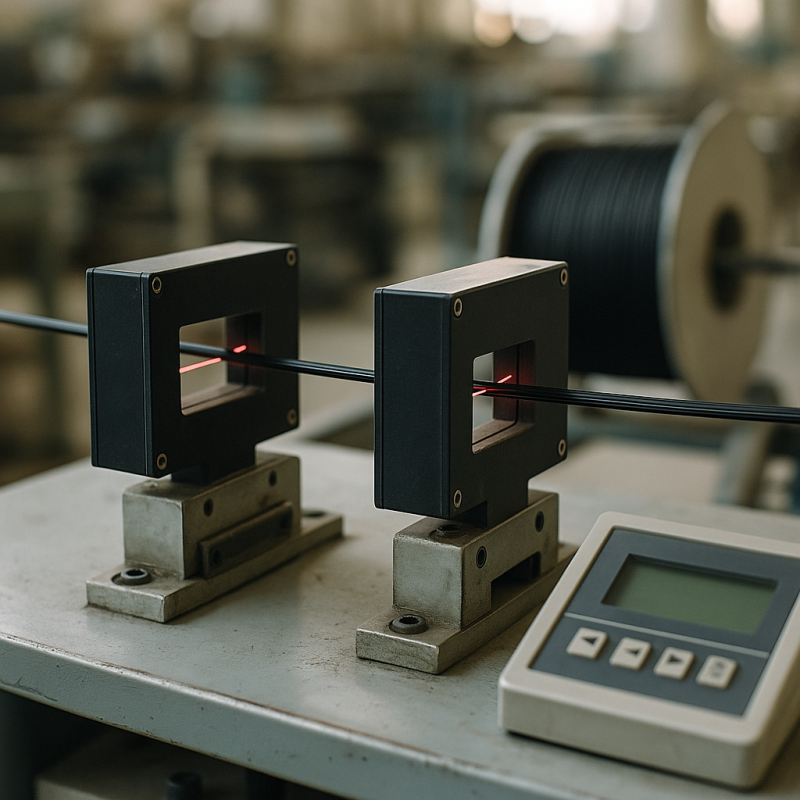
How does a manufacturer achieve and verify such a tight tolerance? The answer lies in technology. The state-of-the-art method is the use of a dual-axis laser micrometer system integrated directly into the extrusion line. This device sits on the line after the filament has been extruded and cooled but before it is spooled. It continuously shoots laser beams across the filament from two perpendicular axes (X and Y) thousands of times per second. The shadow cast by the filament is measured by a sensor, which calculates the precise diameter in real-time.
This is not just a passive quality check at the end of the process. The data from the laser micrometer is fed back into a control loop that can automatically adjust the extrusion process. For example, if the diameter begins to trend slightly larger, the system can subtly increase the speed of the puller wheels, stretching the filament a tiny bit more to bring it back to the target diameter. If the diameter trends smaller, it can slow the puller speed. This closed-loop feedback system is what allows a manufacturer to move from a respectable ±0.05mm tolerance, which can often be achieved with good machinery alone, to the gold standard of ±0.02mm. When you are vetting a potential PLA filament manufacturer, you should specifically ask about their quality control methodology. Do they use laser micrometers? Is it a dual-axis system? Is it part of a closed-loop feedback control system? A manufacturer proud of their investment in this technology will be happy to confirm it. This technology is the engine that drives the consistency of any truly good PLA filament.
The Ripple Effect of Inconsistency: Clogs, Gaps, and Failures
The consequences of poor dimensional accuracy are not just aesthetic; they are mechanical and can lead to catastrophic print failures. Let’s trace the journey of a filament with high diameter variation. When a section of filament that is significantly thicker than the nominal diameter enters the extruder, it can create immense pressure between the drive gear and the entrance to the heat break. The motor has to work harder to push it through. If it is too thick, it can physically jam in the Bowden tube or in the tight tolerance path of the heat break, leading to a complete stoppage of extrusion—the dreaded nozzle clog. The print continues, but no plastic comes out, resulting in a complete failure.
Conversely, when a section of filament that is too thin passes through the extruder, the drive gear may not be able to grip it properly, or even if it does, the volume of plastic being pushed into the melt zone is less than what the slicer called for. This results in under-extrusion. On the printed part, this manifests as small gaps in the walls, weak and porous infill, and poor layer adhesion because there simply isn’t enough molten material to properly bond with the layer below. A part printed with such filament may look acceptable from a distance, but it will be structurally weak and may delaminate or break under even minimal stress. The search for good PLA filament is a direct effort to avoid these frustrating and costly outcomes. Consistent dimensional accuracy ensures that the flow of material is smooth, predictable, and precisely matched to the digital model, which is the very essence of successful 3D printing.
| Feature | Standard PLA | Toughened PLA (PLA+) | High-Speed PLA |
|---|---|---|---|
| Primary Use Case | General prototyping, aesthetic models | Functional parts, mechanical components | High-throughput production, rapid iteration |
| Impact Strength | Low to Moderate | High (Often 2-3x standard PLA) | Moderate to High |
| Flexibility | Brittle | Less brittle, more ductile | Optimized for rapid melting/cooling |
| Print Speed | Standard (e.g., 40-80 mm/s) | Standard to Moderate | Very High (e.g., 200-600 mm/s) |
| Typical Additives | Colorants | Impact modifiers (e.g., TPU, PHA) | Flow enhancers, crystallization modifiers |
| Ideal User | Hobbyists, designers, educators | Engineers, makers needing durable parts | Print farms, businesses needing speed |
3. Evaluate the Purity and Composition of the PLA Resin
The polymer itself, Polylactic Acid, forms the soul of the filament. While factors like dimensional accuracy and winding are critical to the delivery of the material, the intrinsic properties of the plastic determine how it will behave when melted and how the final part will perform. The quality of the raw PLA resin used by a manufacturer is a decisive factor that separates premium filament from budget alternatives. A manufacturer can have the best extrusion equipment in the world, but if they feed it with inconsistent or contaminated raw materials, the output will inevitably be a substandard product. Evaluating the source and nature of the base resin is a sophisticated but necessary step in identifying a source for good PLA filament. This involves understanding the difference between virgin and recycled materials, the role of additives, and key material science metrics.
Virgin vs. Recycled Pellets: A Cost-Benefit Analysis
PLA resin is typically produced in the form of small pellets, which are then dried and fed into the filament extruder. These pellets can be “virgin” material, meaning they are produced directly from the polymerization of raw ingredients like corn starch or sugarcane, or they can be “recycled” material. Recycled PLA can come from various sources, including post-industrial waste (e.g., scraps from plastic manufacturing) or even post-consumer waste (e.g., discarded 3D prints).
Using recycled pellets can be a way for a manufacturer to lower costs and can also be marketed as an eco-friendly option. However, from a purely technical and quality-centric perspective, virgin resin is unequivocally superior. Every time a polymer like PLA is melted, extruded, and re-processed, its molecular chains shorten, a process known as thermal degradation. This degradation can reduce mechanical properties such as tensile strength (Anderson, 2017). Furthermore, recycled material streams carry a high risk of contamination. A stray pellet of a different polymer, like ABS or PETG, can be enough to cause persistent nozzle clogs. Even dirt, dust, or moisture from the recycling process can introduce inconsistencies.
A manufacturer of good PLA filament will almost always use 100% virgin resin. This ensures that the material has its full, specified molecular weight and is free from contaminants. It provides a clean, predictable baseline, which is essential for achieving consistent color, flow characteristics, and mechanical performance. While there is a place for recycled filaments (Anderson, 2017), particularly for non-critical applications, any brand or business that requires reliability and repeatability should insist on suppliers who use only virgin PLA pellets. When inquiring with a potential PLA filament manufacturer, asking about the percentage of virgin resin in their standard PLA is a telling question.
The Impact of Additives and Colorants on Performance
Pure, natural PLA is a translucent, somewhat brittle material. The vast array of colors and enhanced properties we see in the market are achieved through the use of additives. These are mixed with the virgin PLA pellets before extrusion. Colorants are the most common additive, and their quality matters immensely. Low-quality pigments can contain large, agglomerated particles that fail to disperse evenly in the plastic. These particles can act as stress concentrators in the final print, creating weak points. In a worst-case scenario, an oversized particle can be large enough to clog the printer’s nozzle. High-quality pigments, on the other hand, are finely ground and use a carrier resin that is compatible with PLA, ensuring a homogenous melt and vibrant, consistent color.
Beyond color, other additives are used to modify the properties of the PLA. For example, “PLA+” or “Toughened PLA” filaments often include a small percentage of an impact modifier, such as a thermoplastic urethane (TPU) or polyhydroxyalkanoate (PHA). These additives disrupt the brittle fracture mechanism of PLA, allowing the material to flex slightly and absorb more energy before breaking. Other additives might be used to enhance heat resistance, improve UV stability, or create special effects like a matte or silk-like finish. A knowledgeable PLA filament manufacturer will have a deep understanding of polymer chemistry and will be able to explain what additives they use and why. Their ability to intelligently formulate these compounds is a key part of producing a diverse range of good PLA filament options that go beyond the basics.
Identifying Heat Stability and Melt Flow Index (MFI)
Two important technical specifications of a polymer resin are its heat stability and its Melt Flow Index (MFI). Heat stability refers to the material’s ability to withstand the high temperatures of the extrusion process without significant degradation. A PLA resin with poor thermal stability will break down more rapidly in the printer’s hotend, which can lead to off-gassing, discoloration (especially in lighter colors), and a reduction in the final part’s strength. This is often the cause of the “browning” or “scorching” seen with some low-quality filaments.
The Melt Flow Index is a measure of how easily a molten polymer flows under a specific pressure and temperature. It is measured in grams per 10 minutes (g/10 min). A very high MFI means the material is very fluid when melted, while a very low MFI means it is very viscous. For 3D printing, you generally want a PLA with a relatively low to medium MFI. A material that is too fluid (high MFI) can be difficult to control; it may ooze excessively from the nozzle, leading to stringing and blobs. It can also be difficult to bridge gaps with, as it will tend to sag. A material with a more controlled, higher viscosity (lower MFI) is more predictable. It extrudes cleanly and holds its shape better after leaving the nozzle, resulting in sharper details and cleaner prints. While most filament resellers do not publish the MFI of their products, a direct PLA filament manufacturer should have this data for their raw materials and be able to speak to why they have selected a resin with a particular MFI for their good PLA filament formulations.
4. Assess the Capabilities for High-Speed and Specialized Formulations
The 3D printing landscape of 2026 is defined by speed. The advent of CoreXY printers and input shaping firmware has pushed printing speeds from a leisurely 60 mm/s to an astonishing 300-600 mm/s. This leap in hardware capability has placed immense strain on the material science of filament. Standard PLA, which was formulated for slower, steadier extrusion, simply cannot keep up. It does not have enough time in the short melt zone of a modern hotend to transition from a solid to a homogenous, low-viscosity liquid. Attempting to print standard PLA at high speeds often results in severe under-extrusion, poor layer adhesion, and a dull, matte finish as the polymer doesn’t fully melt. Consequently, the ability of a PLA filament manufacturer to produce specialized, high-flow formulations is no longer a niche capability; it is a core requirement for serving the modern market. Assessing this capability is a forward-looking step in securing a supply of good PLA filament that won’t become obsolete as your hardware evolves.
The Rise of High-Speed Printers and the Need for Optimized Filament
To understand the need for high-speed PLA, one must visualize the physics inside the hotend. At a traditional speed of 60 mm/s with a 0.2mm layer height and 0.4mm extrusion width, the printer needs to melt and extrude about 4.8 mm³ of plastic per second. At a high speed of 300 mm/s, that requirement jumps to 24 mm³/s. That is five times the volume of plastic that needs to be melted in the same, or even shorter, amount of time. Standard PLA struggles with this because it has a relatively high heat capacity and a specific melt flow behavior. It needs a certain residence time in the melt zone to absorb enough thermal energy.
High-speed PLA formulations are engineered specifically to overcome this challenge. They often incorporate special additives that act as flow enhancers, effectively lowering the viscosity of the molten plastic without compromising its structural integrity once cooled. They may also have modifications to their polymer structure to allow for faster heat absorption. This allows the filament to melt quickly and flow smoothly even at very high volumetric flow rates. A manufacturer that offers a dedicated line of high-performance PLA materials demonstrates that they are not just extruding a commodity product; they are actively engaged in research and development to meet the evolving demands of the industry. This R&D capability is a strong indicator of a technologically advanced partner.
Understanding PLA+ and Toughened Variants
Long before the high-speed revolution, manufacturers were working to overcome one of PLA’s primary weaknesses: its brittleness. Standard PLA has high stiffness and strength, but it tends to fail suddenly and shatter under impact, much like glass. This makes it unsuitable for many functional parts that might be dropped or subjected to stress. The solution was the development of “PLA+” (also known as PLA Pro, Tough PLA, etc.). These are not standardized terms, and their properties can vary wildly between manufacturers, but they generally refer to a PLA base resin that has been blended with impact-modifying additives.
These additives are typically softer, more rubber-like polymers that are compatible with PLA. When blended in small quantities, they create a composite material where the microscopic domains of the softer polymer can absorb and dissipate impact energy, preventing cracks from propagating through the rigid PLA matrix. The result is a filament that retains the ease-of-printing of standard PLA but has significantly improved impact resistance and is less prone to brittle failure. A good PLA filament portfolio should include a well-characterized toughened variant. A professional PLA filament manufacturer should be able to provide technical data sheets (TDS) that quantify the improvement, showing metrics like Izod impact strength or tensile elongation at break, comparing their PLA+ to their standard PLA. This data-driven approach separates genuine engineering from mere marketing.
| Parameter | OEM (Original Equipment Manufacturer) | ODM (Original Design Manufacturer) |
|---|---|---|
| Concept Origin | Provided by the client (you) | Developed by the manufacturer, or co-developed |
| Core Service | Manufacturing your existing product/formula | Designing and manufacturing a new product for you |
| Intellectual Property | Client retains IP for their design/formula | Manufacturer often retains IP for the base design |
| Customization Level | Branding, packaging, spool color on existing filament | New filament formula, unique colors, specific properties |
| Typical Usecase | A brand wanting to sell a proven filament under its own name | A brand wanting an exclusive, high-performance filament |
| Example | Rebranding a manufacturer’s standard PLA+ with your logo | Developing a custom ESD-safe or high-temp PLA |
Exploring Composite Filaments: Carbon Fiber and Glass Fiber PLA
Another exciting frontier in PLA development is the creation of composite materials. This involves adding short, chopped fibers of a much stronger material directly into the PLA resin. The two most common reinforcing fibers are carbon fiber and glass fiber.
PLA-CF (Carbon Fiber) filaments typically contain 10-20% chopped carbon fibers. These fibers add significant stiffness and rigidity to the final printed part. A part printed in PLA-CF will be much harder to bend or flex than one printed in standard PLA. This makes it ideal for applications like drone frames, jigs, fixtures, and automotive brackets where high stiffness is the primary requirement. The carbon fibers also improve dimensional stability during printing, leading to less warping and very sharp details. The trade-off is that carbon fiber is highly abrasive and will quickly wear out a standard brass nozzle, requiring the use of a hardened steel or ruby-tipped nozzle.
PLA-GF (Glass Fiber) filaments offer a different set of benefits. Glass fibers also increase stiffness, though typically not as much as carbon fiber. However, they excel at improving impact strength and heat resistance. The fibers act to distribute stress and prevent crack propagation. A manufacturer that has mastered the production of these specialty carbon fiber filaments and other composites has overcome significant technical hurdles. They need to ensure the fibers are evenly dispersed within the PLA matrix and that the filament itself is not overly brittle. Offering these advanced materials shows a high level of technical competence and provides customers with powerful tools for demanding engineering applications, making them a source for more than just a basic, good PLA filament.
5. Investigate Filament Winding and Spooling Quality
A perfectly manufactured filament with flawless dimensional accuracy and ideal material properties can be rendered completely useless by poor winding. This aspect of filament quality is often overlooked by novice buyers but is a constant source of frustration for experienced users. A tangled spool can cause a print to fail hours into the job, wasting time, material, and money. The quality of the spooling, the spool itself, and the final packaging are not minor details; they are integral components of a professional-grade product. A top-tier PLA filament manufacturer understands that their responsibility does not end when the filament is extruded; it ends when the user has successfully printed the last meter of material from the spool without issue.
The Hidden Menace of Tangles and Poor Winding
A filament “tangle” is almost always a misnomer. In a continuous extrusion process, it is physically impossible for the filament to be wound with a knot in it. What users perceive as a tangle is actually an overlap. This happens when, during the spooling process, a loop of filament slips off the side of the spool and falls underneath other strands. As the filament continues to unwind during printing, it will eventually pull tight against this trapped-under loop, creating a knot that jams the entire system. The extruder motor will grind against the stuck filament, and extrusion will stop, leading to a failed print.
Preventing this requires a meticulously controlled winding process. The filament must be guided onto the spool with a traversing mechanism that moves back and forth, laying down each new layer of filament neatly next to the previous one, without any gaps or crisscrossing. The tension of the winding must be perfectly controlled—too loose, and the coils can easily slip and overlap; too tight, and the filament can be stretched, altering its diameter, or the spool itself can be deformed. A manufacturer of good PLA filament will use automated, precision winding machines that ensure every spool is “scatter-wound” or “level-wound” to perfection. When you receive a spool, the filament should look neat and orderly, with no visible crossovers or loops falling off the side. This visual inspection is one of the quickest ways to judge the professionalism of the supplier.
The Importance of Spool Design and Material
The spool itself plays a functional role. A poorly designed spool can contribute to printing problems. Spools made from cheap, brittle plastic can crack or break in transit, rendering the filament difficult to use. Spools with very thin flanges can flex under the pressure of the wound filament, which can cause the outer layers to slip off and create overlaps. The design of the hub and the mounting holes should be standardized to fit the vast majority of spool holders on the market.
In recent years, there has also been a welcome trend toward more sustainable spooling options. Many manufacturers are now using spools made from recycled cardboard. This reduces plastic waste and is often lighter, which can save on shipping costs. A well-designed cardboard spool is perfectly robust for its purpose. Some suppliers also offer “master spool” or “refill” systems, where the user purchases a reusable plastic spool hub and then buys coils of filament without any spool. This is the most environmentally friendly option, but it requires the filament to be wound with extreme precision to avoid uncoiling into a tangled mess when the zip ties are cut. A PLA filament manufacturer that offers these modern, sustainable options is demonstrating that they are in tune with the market and are thinking critically about their product’s entire lifecycle.
Vacuum Sealing and Desiccant: Protecting Filament from Moisture
PLA is a hygroscopic polymer, which means it readily absorbs moisture from the surrounding air. This is one of its most significant drawbacks. When PLA filament becomes saturated with moisture, it causes major problems during printing (Valerga et al., 2018). The absorbed water inside the filament instantly turns to steam when it hits the 200°C+ hotend. This explosive expansion of steam creates bubbles in the extruded plastic, which manifests as a rough, pockmarked surface finish on the print. You can often hear a sizzling or popping sound at the nozzle when printing with “wet” filament. This moisture also degrades the polymer itself through hydrolysis, resulting in significantly weaker parts with poor layer adhesion.
Therefore, a crucial final step in the production of good PLA filament is proper drying and packaging. After the filament is wound onto the spool, it should be dried in an industrial oven to reduce its moisture content to a minimum level. Immediately after drying, it should be placed in a thick, moisture-barrier bag along with a packet of desiccant (a substance like silica gel that absorbs moisture). The bag should then be vacuum-sealed to remove as much air (and the moisture it contains) as possible. This ensures that the filament arrives to the customer as dry as it was when it left the factory. When you receive a spool, the vacuum seal should be tight. A loose bag indicates a potential leak, and the filament may have absorbed moisture during shipping and storage. This attention to detail in packaging is a clear sign of a manufacturer who understands the science of their materials.
6. Vet OEM/ODM Capabilities for Brand Scalability
For many businesses, the goal is not just to buy good PLA filament but to sell it. Whether you are a 3D printer reseller looking to offer a house brand of consumables, an established brand in a different market wanting to enter the 3D printing space, or a large enterprise needing custom materials for a specific application, the ability of a manufacturer to act as a partner is paramount. This is where the concepts of OEM and ODM become central. Finding a PLA filament manufacturer with robust OEM/ODM services provides a direct path to market, allowing you to leverage their manufacturing expertise and scale while you focus on building your brand and serving your customers. Vetting these capabilities is about assessing their flexibility, confidentiality, and capacity for true partnership.
Distinguishing Between OEM and ODM Services
The terms OEM (Original Equipment Manufacturer) and ODM (Original Design Manufacturer) are often used interchangeably, but they represent two distinct levels of partnership.
An OEM service is essentially a private label arrangement. In this model, you, the client, select a product from the manufacturer’s existing catalog—for instance, their high-quality PLA+ filament. The manufacturer then produces that exact filament for you but packages it with your branding. This includes custom-printed boxes, labels on the spools, and even branded instruction manuals or marketing inserts. You are leveraging their proven formula and production line, but the final product is presented to the market as your own. This is an excellent, low-risk way for a brand to quickly launch a line of high-quality consumables without investing in R&D or manufacturing infrastructure. The core of this relationship is the manufacturer’s ability to consistently produce their good PLA filament and apply your branding accurately.
An ODM service is a much deeper collaboration. In this model, the manufacturer not only produces the filament but also plays a key role in designing and developing it. Perhaps you need a PLA filament that matches a specific Pantone color for your corporate branding, or you require a filament with specific electrostatic discharge (ESD) properties for printing electronics jigs. You would work with the manufacturer’s R&D team to develop a custom formulation. They would leverage their expertise in polymer science and additives to create a new product that meets your unique specifications. The manufacturer does the “Original Design” work, and then manufactures it exclusively for you. This ODM path is for businesses that need a unique, proprietary material to gain a competitive advantage.
Customization Options: From Spools and Boxes to Pantone Colors
A truly capable OEM/ODM partner offers a wide menu of customization options. The goal is to make the final product indistinguishable from one you would have manufactured yourself. At the basic OEM level, this should include:
- Box Customization: The ability to print your custom box design, allowing your product to have a distinct shelf presence.
- Spool Labeling: High-quality, professionally applied labels on the spool hub with your logo, filament specifications, and branding.
- Spool Color: Some manufacturers can produce spools in custom colors to match your brand identity.
- Packaging Details: Options for different bag materials, custom-printed bags, or specific types of desiccant.
For ODM projects, the customization goes to the core of the product itself:
- Color Matching: The ability to match colors based on Pantone or RAL color codes, ensuring perfect brand consistency.
- Custom Formulations: Developing new filament properties, such as increased heat resistance, specific flexibility (Shore hardness), or enhanced strength.
- Special Additives: Incorporating materials like carbon fiber, glass fiber, flame retardants, or conductive additives to create a truly unique and functional filament.
- Diameter and Spool Size: Producing filament in non-standard diameters or on specific spool sizes or weights for a particular machine or application.
The breadth and flexibility of these options are a good measure of a manufacturer’s commitment to their partnership programs.
The Importance of Low MOQs and Scalable Production
When starting a new product line, managing cash flow and inventory risk is paramount. A manufacturer that demands a very high Minimum Order Quantity (MOQ) for a custom order can be a significant barrier to entry. An ideal OEM/ODM partner will offer reasonably low MOQs, especially for initial test runs. This allows a brand to launch a product, gauge market response, and gather customer feedback without tying up a massive amount of capital in inventory. For example, an MOQ of 50 or 100 spools for a custom-labeled product is far more accessible than a requirement for 1000 spools.
At the same time, the manufacturer must have the capacity to scale with your success. You need a partner who can seamlessly transition from producing your initial order of 100 spools to fulfilling an order for 10,000 spools as your brand grows. This requires significant production capacity, robust supply chain management for their own raw materials, and a well-organized production scheduling system. When vetting a potential PLA filament manufacturer, ask them directly about their production capacity (often measured in tons per month), their typical lead times for both small and large orders, and their experience in handling rapid scaling for other clients. A partner who can support your entire business lifecycle, from startup to market leader, is the ultimate goal in the search for more than just good PLA filament; it’s the search for a growth engine.
7. Analyze Logistics, Packaging, and Supply Chain Reliability
You can source the best filament in the world, but it is of no value if it cannot get to your warehouse on time and in good condition. The final piece of the puzzle in establishing a robust supply chain for good PLA filament is logistics. This is especially true when sourcing from an international, factory-direct PLA filament manufacturer. Understanding shipping terms, evaluating the quality of their export packaging, and assessing the overall resilience of their supply chain are not just operational details; they are strategic considerations that directly impact your inventory levels, costs, and ability to serve your customers. A breakdown in logistics can bring your entire operation to a halt.
Navigating International Shipping Terms (EXW, FOB, DDP)
When you receive a price quote from an overseas manufacturer, it will be accompanied by a three-letter code known as an Incoterm. These terms define exactly where the seller’s responsibility ends and the buyer’s responsibility begins in the shipping process. Understanding the most common ones is vital:
- EXW (Ex Works): This term places the maximum responsibility on you, the buyer. The manufacturer’s only job is to make the goods available at their factory. You are responsible for arranging and paying for everything else: picking up the goods, trucking them to the port, export customs clearance, ocean or air freight, import customs clearance, duties and taxes, and final delivery to your warehouse. This offers the most control but is also the most complex.
- FOB (Free On Board): This is one of the most common terms. The manufacturer is responsible for all costs and processes to get the goods loaded “on board” the vessel at the designated port of origin. From that point forward, you are responsible for the ocean freight, insurance, and all subsequent costs and processes. This is a good balance of responsibility for many importers.
- DDP (Delivered Duty Paid): This term places the maximum responsibility on the seller. The manufacturer is responsible for delivering the goods all the way to your final destination, including paying for all transportation, customs clearance, and import duties/taxes. This is the simplest option for the buyer, offering a clear, all-in price. However, it typically gives you the least control over the shipping process and may be more expensive than managing the freight yourself.
A flexible PLA filament manufacturer will be able to quote you prices using various Incoterms, allowing you to choose the option that best fits your company’s logistical capabilities and cost structure.
Protective Packaging for Bulk Shipments
Filament spools, especially when shipped in large quantities on a pallet, are vulnerable to damage. A single dropped pallet or a crushed box can result in cracked spools and unusable filament. A professional manufacturer pays close attention to their export packaging. Individual filament boxes should be packed snugly into a larger, double-walled master carton. These master cartons should then be stacked neatly on a sturdy, heat-treated (ISPM 15 compliant) pallet. The stack should be protected with corner guards to prevent crushing and then be tightly wrapped with stretch film to create a stable, unified block. For ocean freight, which can expose cargo to moisture, a waterproof pallet cover is often a wise addition. When you receive a trial order from a potential supplier, pay close attention to how it was packed. The care they take in packaging their product for a long journey is a direct reflection of their overall professionalism and commitment to delivering a good PLA filament experience from start to finish.
Building a Resilient Supply Chain with a Factory-Direct Partner
In the volatile global landscape of 2026, supply chain resilience is a major competitive advantage. Relying on a long chain of distributors, resellers, and middlemen introduces multiple points of failure. Every link in the chain adds cost, lead time, and potential for disruption. By partnering directly with a PLA filament manufacturer, you are shortening that chain and gaining several advantages.
You have direct communication with the source of production, giving you better visibility into production schedules and potential delays. You can collaborate directly on forecasting to ensure they have the raw materials and production capacity allocated for your future needs. Furthermore, a large, established manufacturer is likely to have a more robust supply chain for their own raw materials, with multiple suppliers and safety stock to weather disruptions. They are less likely to be impacted by a shortage from a single chemical company. Building a long-term, direct relationship with a factory transforms the transaction from a simple purchase of good PLA filament into a strategic partnership. It creates a more resilient, efficient, and transparent supply chain that can better withstand the inevitable challenges of the global market.
Frequently Asked Questions (FAQ)
What is the main difference between standard PLA and PLA+?
The primary difference lies in their mechanical properties, specifically toughness. Standard PLA is quite rigid and strong but is also brittle, meaning it can shatter on impact. PLA+ is a modified formula that includes additives to increase its impact resistance. This makes PLA+ less brittle and better suited for functional parts that may experience stress or need to be more durable.
Why is filament diameter consistency so important?
Your 3D printer’s slicer software calculates the volume of plastic to extrude based on a fixed filament diameter (e.g., 1.75mm). If the actual diameter varies, the printer will either extrude too much plastic (over-extrusion) where the filament is thick, or too little (under-extrusion) where it is thin. This leads to print quality issues like blobs, gaps, poor layer adhesion, and can even cause nozzle clogs.
Can I use high-speed PLA on a regular, slower printer?
Yes, you can absolutely use high-speed PLA on a slower printer. High-speed formulations are optimized for fast melting and flow, but they work perfectly well at standard speeds. You might even find they produce a slightly shinier finish or have better layer adhesion due to their enhanced flow characteristics. However, you will not see the speed benefits without a printer capable of high-speed movement.
What does it mean if my PLA filament is “wet” and how do I fix it?
“Wet” filament has absorbed moisture from the air. When printing, this moisture turns to steam in the hotend, causing popping sounds, rough surfaces, and weak parts. To fix this, you need to dry the filament. The best method is using a dedicated filament dryer, which circulates warm, dry air. You can also dry it in a convection oven, but you must be very careful to keep the temperature low (typically 40-45°C for PLA) to avoid melting the filament or the spool.
Why should I choose a manufacturer with ISO 9001 certification?
ISO 9001 is a certification for a company’s quality management system. It doesn’t certify the product itself, but rather the processes that create it. A manufacturer with ISO 9001 has proven they have documented, repeatable systems for everything from raw material inspection to process control and handling defects. This ensures a much higher level of consistency and reliability in the final product.
Conclusion
The process of identifying and securing a source for good PLA filament in the contemporary market is an exercise in diligence and technical discernment. It extends far beyond a simple comparison of price per kilogram. As we have explored, the true measure of a filament’s quality is a composite of verifiable manufacturing processes, unwavering physical consistency, and the intrinsic purity of its constituent materials. From the formal assurances provided by an ISO 9001 certification to the micron-level precision of ±0.02mm dimensional accuracy, each attribute contributes to a predictable and successful printing outcome. The capacity of a manufacturer to innovate with high-speed and composite formulations speaks to their relevance in an evolving technological landscape, while their proficiency in OEM/ODM services offers a pathway for brands to scale and innovate. Ultimately, a reliable supply of superior filament is the result of a strategic partnership with a manufacturer who demonstrates mastery over the entire value chain—from the sourcing of virgin resin to the final, secure packaging of a perfectly wound spool. By applying this rigorous, multi-faceted evaluation, businesses can move beyond the frustrations of inconsistency and build a foundation for reliable, high-quality 3D printing production.
References
- Anderson, I. (2017). Mechanical properties of specimens 3D printed with virgin and recycled polylactic acid. 3D Printing and Additive Manufacturing, 4(2), 110–115. https://doi.org/10.1089/3dp.2016.0054
- International Organization for Standardization. (2015). ISO 9001:2015(en) Quality management systems — Requirements. ISO. https://www.iso.org/standard/62085.html
- Valerga, A. P., Batista, M., Salguero, J., & Girot, F. (2018). Influence of PLA filament conditions on characteristics of FDM parts. Materials, 11(8), 1322. https://doi.org/10.3390/ma11081322
Last reviewed and updated: January 2026. Author: SigmaFilament Engineering Team. For custom filament solutions and wholesale inquiries, contact our team.