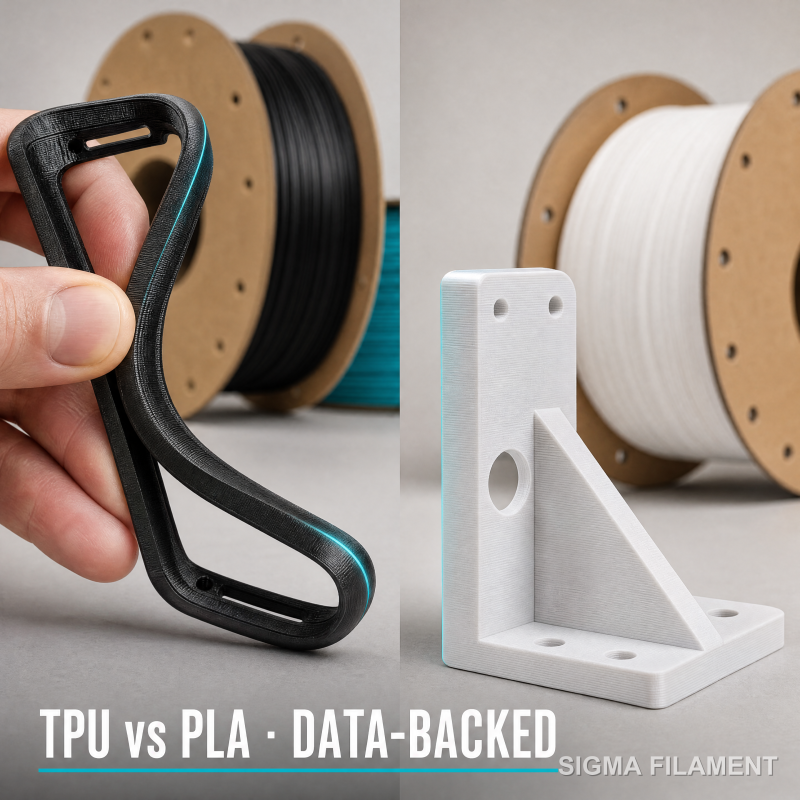
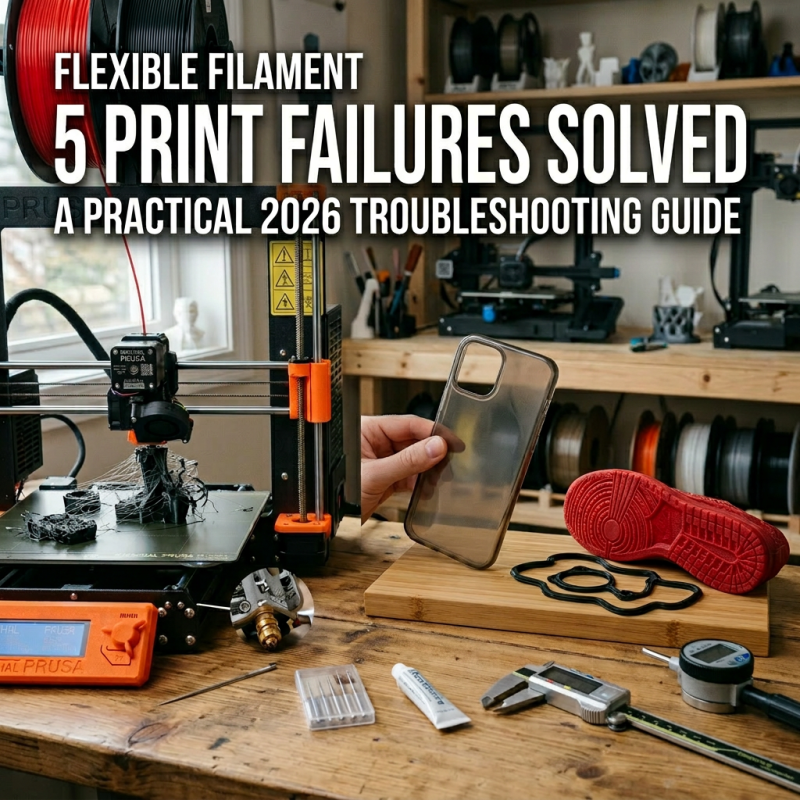
A Data-Backed Guide to TPU Materialeigenschaften: 5 Critical Specs for High-Performance Flexible Parts in 2026


Abstract
An inquiry into the functional application of flexible polymers in additive manufacturing reveals the necessity of a granular understanding of Thermoplastic Polyurethane (TPU) properties. This analysis examines the critical material specifications, or TPU Materialeigenschaften, that dictate the performance, durability, and printability of components intended for engineering and end-use applications. Moving beyond a simplistic view of flexibility, this work investigates five pivotal metrics: Shore hardness, tensile and tear strength, compression set, environmental resistance, and thermal processing characteristics. It explores the intricate relationship between a material’s durometer rating and its behavior within an extrusion system, the distinction between a material’s capacity to stretch versus its ability to resist propagation of a tear, and its long-term dimensional stability under compressive loads. The discussion further encompasses the polymer’s resilience to chemical agents, abrasion, and ultraviolet radiation, connecting these attributes to suitability for specific operational environments. By providing a structured framework for evaluating these properties, this guide furnishes engineers and designers with the requisite knowledge to select the optimal TPU variant, thereby transforming conceptual designs into robust, functional parts that perform reliably under specified service conditions.
Key Takeaways
- Match the TPU Shore hardness directly to the part’s required flexibility and impact resistance.
- Low compression set is vital for parts that must function as seals or dampers.
- Always dry TPU filament thoroughly before printing to prevent defects and ensure layer adhesion.
- A nuanced understanding of TPU Materialeigenschaften is key to successful functional prints.
- Evaluate a material’s chemical and UV resistance for parts intended for outdoor or industrial use.
- Tensile strength and elongation at break define a part’s ability to withstand pulling forces.
Table of Contents
- Understanding the Core of Flexibility: Shore Hardness and its Implications
- Beyond the Stretch: Tensile Strength, Elongation, and Tear Resistance
- The Rebound Effect: Compression Set as a Measure of Durability
- Surviving the Real World: Chemical, UV, and Abrasion Resistance
- Navigating the Print Process: Thermal Properties and Processing Nuances
- Frequently Asked Questions (FAQ) About TPU Materialeigenschaften
- A Final Contemplation on Material Selection
- References
Understanding the Core of Flexibility: Shore Hardness and its Implications
When we approach the subject of flexible materials in 3D printing, our initial thoughts often gravitate towards a simple, binary concept of “softness” or “bendiness.” Yet, to truly harness the potential of a material like Thermoplastic Polyurethane (TPU), we must cultivate a more refined and quantitative perspective. The journey begins with a foundational concept known as Shore hardness. This is perhaps the most frequently cited of all TPU Materialeigenschaften, serving as the primary metric by which we classify and differentiate the vast spectrum of flexible filaments. To neglect a deep understanding of Shore hardness is to navigate the complex world of elastomers with an incomplete map, risking a profound mismatch between design intent and physical reality.
What Exactly is Shore Hardness? A Tale of Two Scales
Imagine pressing your thumb into various objects: a rubber eraser, a car tire, a plastic cutting board. Your tactile sense provides a rough, qualitative assessment of their hardness. The Shore durometer test, developed by Albert Ferdinand Shore in the 1920s, is the scientific formalization of this very action. It quantifies the resistance of a material to indentation under a specific spring load. The instrument, a durometer, has a pointed indenter that is pressed into the material’s surface, and the depth of the indentation determines the hardness value. A deeper indentation results in a lower Shore hardness number.
However, the world of polymers is incredibly diverse, spanning from gel-like substances to rigid plastics. A single measurement scale would be insufficient. Consequently, there are several Shore scales, but for the purposes of 3D printing, we are almost exclusively concerned with two: Shore A and Shore D.
The Shore A scale is our guide for softer, more rubber-like materials. It covers the range from very soft and flexible TPUs, resembling the consistency of a pencil eraser (around 50A-60A), to the more common semi-flexible filaments used for phone cases or durable grips, which typically fall in the 85A to 98A range.
Once materials become too hard for the Shore A scale’s indenter to make a meaningful impression, we transition to the Shore D scale. This scale is used for semi-rigid to rigid plastics. A TPU with a Shore D rating, such as 60D or 75D, is a very stiff, tough material that offers excellent impact resistance while retaining a small degree of flex, making it suitable for applications like industrial rollers or protective gear. It’s helpful to visualize the scales as overlapping. A material rated at 95A is approximately equivalent to 45D. This overlap ensures a continuous spectrum of measurement from soft elastomers to hard plastics.
Practical Applications: Matching Hardness to Function
The abstract numbers of a Shore rating come to life only when we connect them to tangible applications. The choice of a specific hardness is not arbitrary; it is a deliberate engineering decision that directly impacts the final part’s performance. Let us consider a few scenarios to illuminate this principle.
Suppose you are designing a custom gasket for a waterproof enclosure. The primary function of this gasket is to compress and create a perfect seal. For this, you would select a very soft TPU, perhaps in the 60A to 70A range. This low hardness allows the material to deform easily and conform to the minute imperfections of the mating surfaces, ensuring a watertight barrier. Using a harder 95A TPU in this context would require immense force to achieve the same level of compression, potentially damaging the enclosure itself.
Conversely, think about designing a protective boot for a piece of industrial equipment that is frequently dropped or bumped. Here, the goal is impact absorption and durability. A harder TPU, such as 95A or even 60D, would be the superior choice. Its greater stiffness allows it to absorb and distribute the energy of an impact over a larger area, protecting the device within. A 60A TPU would be too soft, offering little more protection than a thin layer of rubber.
For an application like the sole of a custom orthopedic shoe, a material in the 85A to 95A range might be ideal. It provides a balance—soft enough to cushion the foot and absorb the shock of walking, yet firm enough to provide support and withstand the repeated abrasion of contact with the ground. This “in-between” hardness is where TPU truly excels, offering a combination of properties that rigid plastics like PLA or PETG simply cannot.
How Hardness Affects Printability
The mechanical properties that make TPU so useful in its final form also present unique challenges during the 3D printing process. The very flexibility we desire is the primary source of printing difficulty, and this difficulty is directly proportional to the material’s softness (or inversely proportional to its Shore hardness).
The path of the filament from the extruder gears to the nozzle is a critical zone. For rigid filaments, this path is straightforward. For soft, flexible filaments, it is a gauntlet. Imagine trying to push a wet noodle through a small tube—it is likely to bend, kink, and buckle. This is precisely what can happen to very soft TPU (below 90A) in a 3D printer’s extruder, especially in a Bowden setup where the distance between the drive gear and the hotend is significant. The filament compresses and bends within the Bowden tube, leading to inconsistent extrusion or a complete jam.
Direct drive extruders, where the drive gears are mounted directly on top of the hotend, are far better suited for printing soft TPUs because they offer a much shorter, more constrained filament path. This minimizes the opportunity for the filament to buckle.
As the Shore hardness increases, so does the filament’s columnar strength. A 95A or 98A TPU is significantly stiffer and behaves more like a traditional filament like PETG. It can often be printed successfully on both direct drive and many modern Bowden systems with minimal adjustments. This makes harder TPUs an excellent entry point for those new to printing flexible materials. Printing speed is another critical factor tied to hardness. Softer TPUs require much slower print speeds (typically 15-30 mm/s) to allow the material to melt and extrude evenly without building up back-pressure that could cause a buckle. Harder TPUs can often be printed at speeds closer to those used for PLA or PETG (40-60 mm/s).
To provide a clearer picture, consider the following comparison:
| Shore Hardness | Typical Applications | Extruder Recommendation | Print Speed (Typical) | Key Characteristics |
|---|---|---|---|---|
| 60A – 75A | Gaskets, seals, soft grips, wearable prototypes | Direct Drive (Required) | 15 – 25 mm/s | Extremely flexible, high grip, challenging to print |
| 82A – 87A | Watch bands, vibration dampeners, flexible hinges | Direct Drive (Strongly Recommended) | 20 – 35 mm/s | Very flexible, good vibration absorption |
| 92A – 98A | Phone cases, bushings, drive belts, caster wheels | Direct Drive or Bowden | 30 – 50 mm/s | Semi-flexible, durable, easier to print |
| 55D – 75D | Impact-resistant parts, industrial rollers, gears | Direct Drive or Bowden | 40 – 60 mm/s | Semi-rigid, very tough, high abrasion resistance |
Understanding this relationship between the tpu materialeigenschaften of hardness and printability is the first and most vital step toward mastering flexible filament printing. It allows you to select not only the right material for your application but also to anticipate the necessary hardware and slicer adjustments for a successful outcome.
Beyond the Stretch: Tensile Strength, Elongation, and Tear Resistance
While Shore hardness gives us a sense of a material’s “feel” and resistance to indentation, it tells us little about how the material behaves when it is pulled, stretched, or torn. To design truly functional and resilient parts, we must look deeper into a set of mechanical properties that define the material’s structural integrity under load. These properties—tensile strength, elongation at break, and tear strength—form a triad that governs the durability and performance of a TPU part in dynamic applications. They are distinct yet interconnected facets of the material’s character.
Tensile Strength: The Measure of Resistance to Pulling
Imagine you are pulling on a thick rubber band. As you apply force, the band resists. The maximum amount of pulling stress the band can withstand before it begins to permanently deform or break is its tensile strength. In material science, this is measured more formally and is typically expressed in megapascals (MPa). A higher tensile strength indicates that the material can endure greater pulling forces before failing.
Why is this important for 3D printed parts? Consider a drive belt for a piece of machinery. Its entire purpose is to exist under constant tension, transmitting power from one pulley to another. If the material’s tensile strength is too low, the belt will either stretch out of shape over time (a phenomenon known as creep) or snap under a sudden load. A TPU with a high tensile strength (often in the range of 30-50 MPa) is essential for such an application. Other examples include custom straps for securing equipment, load-bearing brackets that might experience pulling forces, or even the layer-to-layer adhesion of the print itself, which must resist being pulled apart. A part with poor layer adhesion has, in effect, a very low tensile strength in the Z-axis direction.
Elongation at Break: The Ultimate Stretchiness
Now, let’s return to our rubber band analogy. As you pull on it, it doesn’t just resist; it also stretches. The total amount it can stretch as a percentage of its original length just before it snaps is its elongation at break. If a 10-centimeter strip of TPU can be stretched to 60 centimeters before it fails, its elongation at break is 500%. This is a common and impressive value for many TPU filaments.
This property is what we often colloquially mistake for “flexibility.” While related, it is distinct from Shore hardness. A material can be relatively hard (like 98A) yet still possess a very high elongation at break. This combination results in an incredibly tough and durable material.
The value of high elongation is most apparent in applications that require extreme deformation without failure. Think of a living hinge on a container lid, which must be bent back and forth thousands of times. Or consider a custom-designed bellows or flexible coupling that needs to compress and extend repeatedly to accommodate movement between two components. In these cases, a material that can stretch significantly without breaking is paramount. PLA, with its elongation at break of less than 10%, would shatter on the first use. TPU, with its 400-600% elongation, can perform these tasks reliably for countless cycles.
Tear Strength: Resisting Rips and Tears
Tensile strength and elongation at break describe how a material behaves under a uniform, distributed load. Tear strength, however, describes its resistance to the propagation of a cut or nick. This is a critically different and often overlooked property. A material can have very high tensile strength but poor tear strength. Imagine a sheet of plastic wrap: it’s quite difficult to pull apart with your bare hands (decent tensile strength), but if you make a tiny nick in the edge, it tears with almost no effort.
Tear strength is measured in force per unit of thickness, such as kilonewtons per meter (kN/m). It quantifies the energy required to propagate a tear through the material. For many TPU applications, this is the most important property for long-term durability. Consider the sole of a shoe. It is constantly flexing, but it also encounters sharp stones and abrasive surfaces. A small cut from a piece of glass should not lead to the entire sole splitting in two. The high tear strength of TPU ensures that such localized damage does not spread.
Another prime example is a protective cover for a sharp tool or a flexible cable grommet that protects wires passing through a metal plate. These parts are constantly in contact with sharp edges. Their ability to resist being cut or torn is their primary safety function. The impressive tear strength of TPU is a key reason it is chosen for such demanding industrial and consumer applications. Understanding this specific aspect of the tpu materialeigenschaften allows a designer to create parts that are not just strong but also resilient to the kinds of localized damage that occur in real-world use.
The Rebound Effect: Compression Set as a Measure of Durability
We have explored how TPU behaves when indented and when pulled. Now, we must turn our attention to its response to being squeezed. The ability of a material to return to its original shape after being subjected to a prolonged compressive force is a property known as compression set. This is a less glamorous, yet fundamentally important, characteristic for any part that is intended to function as a spring, seal, or damper. A low compression set is the hallmark of a high-performance elastomer, signifying its resilience and “memory.” It is a measure of a material’s ability to resist permanent deformation.
Defining Compression Set: A Material’s Memory
Imagine two small cylindrical parts, one made from a high-quality TPU and the other from a lower-grade flexible material. You place both under a heavy weight, compressing them to 75% of their original height, and leave them in a warm room for 24 hours. When you remove the weight, the high-quality TPU part springs back almost perfectly to its original height. The other part, however, remains partially squashed, having taken on a permanent “set.” The percentage of the original compression that was not recovered is the compression set value. A value of 0% would be a perfectly elastic material that recovers completely, while a value of 100% would mean the material did not bounce back at all.
For TPU, typical compression set values are excellent, often falling in the 25-50% range when tested under standard conditions (e.g., 22 hours at 70°C). This means that even after being compressed in a warm environment for nearly a day, it will recover 50-75% of the compressed distance, demonstrating its excellent elastic memory. This is a crucial differentiator from many other flexible polymers.
Why Compression Set Matters for Functional Parts
The practical implications of compression set are profound for a wide range of applications. Let’s revisit the example of a gasket for a waterproof enclosure. When the enclosure is assembled, the gasket is compressed. It might remain in this compressed state for years. If the material has a high compression set, it will slowly but surely lose its “push back” force against the mating surfaces. A gap could eventually form, compromising the seal and allowing moisture to enter. A TPU with a low compression set will continue to exert a consistent sealing pressure over a long period, ensuring the integrity of the enclosure.
Another clear example is in vibration damping. Suppose you print custom feet for a noisy piece of machinery, like a workshop air compressor. The purpose of these feet is to absorb vibrations and prevent them from transferring to the floor. The feet are under the constant compressive load of the machine’s weight. A material with a high compression set will quickly flatten out, losing its damping properties and becoming little more than a hard spacer. A TPU with low compression set will maintain its shape and elasticity, continuing to absorb vibrations effectively for the life of the machine.
Think also of custom springs, bumpers, or end-stops in mechanical assemblies. Their entire function relies on their ability to be compressed and then return to their original dimensions to absorb energy or reset a mechanism. In all these cases, a low compression set is not just a desirable feature; it is the core performance requirement. It is the property that ensures the part will continue to perform its function reliably over thousands or millions of cycles.
The Influence of Temperature and Time
It is important to recognize that compression set is not a single, immutable value. It is highly dependent on three factors: time, temperature, and the percentage of compression. A material will exhibit a higher compression set (i.e., it will be less resilient) if it is compressed for a longer duration, at a higher temperature, or to a greater degree.
This is why technical datasheets for polymers always specify the conditions under which the compression set was tested. This information is vital for an engineer designing a part for a specific operating environment. If a seal is intended for use in the engine bay of a car, where temperatures are high, selecting a TPU grade specifically formulated for low compression set at elevated temperatures is absolutely critical. For a part used at room temperature, a standard TPU might suffice. This level of detail in evaluating the tpu materialeigenschaften is what separates amateur prototyping from professional engineering and is a key service that high-quality filament manufacturers provide through detailed technical data.
Surviving the Real World: Chemical, UV, and Abrasion Resistance
A 3D printed part does not exist in a vacuum. It must function within an environment that may expose it to a wide array of potentially damaging elements, from industrial chemicals and oils to the unrelenting radiation of the sun. The ability of a material to withstand these environmental challenges determines its long-term viability and reliability. Thermoplastic Polyurethane, fortunately, exhibits a robust profile of resistance properties that make it exceptionally well-suited for real-world applications. Its resilience against chemicals, abrasion, and, with certain considerations, UV light, is a primary reason for its widespread adoption in demanding fields.
Chemical Resistance: Holding Up Against Oils, Greases, and Solvents
One of the standout features of TPU is its excellent resistance to oils, greases, and many aliphatic solvents. This makes it a go-to material for automotive and industrial applications. Gaskets, seals, and protective boots printed in TPU can function reliably in environments where they are constantly splashed with hydraulic fluid, motor oil, or cleaning agents that would cause many other plastics to swell, soften, or dissolve.
It is helpful to understand that there are two main families of TPU: polyester-based and polyether-based. Polyester-based TPUs, which are more common in the 3D printing market, offer superior resistance to oils and fuels. Polyether-based TPUs, on the other hand, provide better resistance to hydrolysis (breakdown from exposure to water, especially at elevated temperatures) and microbial attack.
However, TPU is not invincible. It shows limited resistance to strong acids, strong bases, and certain aromatic or chlorinated solvents like acetone, MEK, or toluene. Exposure to these aggressive chemicals will cause the material to degrade rapidly. Therefore, a careful assessment of the chemical environment is a necessary step in the material selection process. For clarity, the following table provides a general comparison of TPU’s chemical resistance against other common 3D printing materials.
| Chemical Agent | PLA (Polylactic Acid) | PETG (Polyethylene Terephthalate Glycol) | ABS (Acrylonitrile Butadiene Styrene) | TPU (Thermoplastic Polyurethane) |
|---|---|---|---|---|
| Water (Room Temp) | Good | Excellent | Excellent | Excellent (Polyether) / Good (Polyester) |
| Oils & Greases | Poor | Good | Fair | Excellent |
| Weak Acids (e.g., Vinegar) | Poor | Good | Poor | Good |
| Weak Bases (e.g., Ammonia) | Poor | Good | Fair | Good |
| Alcohols (Ethanol, IPA) | Fair | Good | Poor | Good |
| Acetone | Poor (Soluble) | Poor | Very Poor (Soluble) | Poor |
Abrasion Resistance: The Power to Withstand Wear and Tear
Perhaps the most remarkable of TPU’s properties is its outstanding abrasion resistance. It is exceptionally tough and resistant to being worn away by friction. This is why it is used for applications like skateboard wheels, industrial caster wheels, and the protective coatings on wires and cables. In a 3D printing context, this opens up a vast range of possibilities for creating parts that are meant to slide, rub, or roll against other surfaces.
Consider printing custom, non-marring feet for a heavy piece of furniture or equipment that needs to be moved frequently across a workshop floor. PLA or PETG would quickly wear down, leaving marks and debris. TPU, by contrast, would slide easily without damaging the floor and would show minimal wear even after extensive use. Other applications that leverage this property include protective liners for chutes or bins where material is constantly sliding, custom drive rollers for conveyor systems, or even wear pads for robotic arms. Its ability to withstand scraping and rubbing is far superior to almost any other common 3D printing material, including famously tough materials like Nylon.
UV Resistance: A Note on Outdoor Applications
The performance of plastics when exposed to prolonged sunlight is a critical consideration for any outdoor application. The ultraviolet (UV) radiation in sunlight is a form of high-energy radiation that can break down the polymer chains in plastic, leading to discoloration (often yellowing), embrittlement, and a loss of mechanical properties.
Here again, the distinction between different types of TPU is important. The vast majority of TPU filament available to consumers is based on an aromatic chemical structure. Aromatic TPUs have excellent mechanical properties but are susceptible to degradation from UV radiation. Over months of exposure, they will tend to yellow and may lose some of their flexibility. For many applications where aesthetics are not critical or where the part is intermittently exposed, this may be acceptable.
However, for applications requiring long-term color stability and performance in direct sunlight, aliphatic TPUs are the superior choice. Aliphatic TPUs are formulated differently at a molecular level to be inherently UV stable. They do not yellow and retain their mechanical properties exceptionally well over years of outdoor exposure. While less common and typically more expensive in the filament market, seeking out an aliphatic TPU is the correct engineering choice for a part that will live its life outdoors. Alternatively, aromatic TPU parts can be painted or clear-coated with a UV-blocking finish to provide a high degree of protection.
Navigating the Print Process: Thermal Properties and Processing Nuances
A deep appreciation for the TPU Materialeigenschaften is incomplete without considering how these properties dictate the material’s behavior during the additive manufacturing process itself. The thermal characteristics of TPU, combined with its physical flexibility, demand a more thoughtful and deliberate approach to printing than is required for rigid materials. Mastering the nuances of temperature, adhesion, and filament handling is the final step in translating a material’s impressive datasheet properties into a tangible, high-quality printed part.
Glass Transition Temperature (Tg) and its Practical Meaning
Every amorphous polymer, including TPU, has a glass transition temperature, abbreviated as Tg. This is not a sharp melting point like that of ice turning to water. Instead, it is a temperature range over which the material transitions from a rigid, glassy state to a soft, rubbery state. For most 3D printing TPUs, the Tg is quite low, typically in the range of -40°C to -20°C.
What does this mean in practical terms? It means that at any normal room temperature, the material is already well above its Tg. This is precisely why it is flexible and rubbery at room temperature. The more important thermal property for a printed part’s use is its maximum service temperature or heat deflection temperature. This is the temperature at which the printed part will begin to soften and lose its structural integrity. For most TPUs, this is typically around 80°C to 100°C, though some high-performance grades can go higher. A TPU part left in a hot car on a summer day, where interior temperatures can exceed 70°C, will become significantly softer and more pliable. It is crucial to match the material’s service temperature to the intended operating environment of the part.
Optimizing Print Settings: Nozzle Temperature, Bed Adhesion, and Retraction
Successful TPU printing hinges on a well-tuned slicer profile. Let’s break down the three most critical parameters.
First, nozzle temperature. TPU generally requires a higher printing temperature than PLA, typically falling in the 220°C to 250°C range. The optimal temperature will vary between brands and even colors of filament, so printing a temperature tower is always a wise first step. Printing too cold will result in poor layer adhesion and a weak part. Printing too hot can lead to excessive stringing and oozing.
Second, bed adhesion. While TPU can sometimes stick to a clean build plate, its flexibility can make it prone to warping or peeling on the first layer, especially on larger prints. A heated bed is highly recommended, set to a temperature of 40°C to 60°C. This helps to keep the base of the print warm and relaxed, reducing thermal stresses. For the build surface itself, TPU adheres exceptionally well to PEI sheets, and sometimes too well. Using a release agent like a glue stick or hairspray can make part removal easier. Blue painter’s tape is another excellent and reliable surface for TPU adhesion. A perfectly leveled bed and a slow, well-calibrated first layer are absolutely essential for success.
Third, and perhaps most importantly, is retraction. Retraction is the process of the extruder pulling the filament backward slightly when moving between different parts of a print to prevent stringing. Because TPU is soft and stretchy, it does not respond well to the rapid push-pull movements of retraction. The filament can compress and stretch in the extruder, leading to jams or inconsistent extrusion. The general rule for TPU is to use as little retraction as possible. For direct drive extruders, a small and slow retraction (e.g., 1mm at 20 mm/s) might work well. For Bowden extruders, retraction is much more difficult to tune and is a common source of failure. For very soft TPUs, it is often best to disable retraction entirely and accept that some post-processing will be needed to clean up strings.
The Importance of Filament Drying
The final, non-negotiable rule of printing with TPU is a consequence of its chemical nature: it is hygroscopic. This means it readily absorbs moisture from the surrounding atmosphere. Printing with “wet” TPU is a recipe for failure. The absorbed water turns to steam in the hotend, creating bubbles in the extruded filament. This leads to a host of problems: popping or crackling sounds from the nozzle, a fuzzy or rough surface finish, excessive stringing, and, most critically, very poor layer adhesion, resulting in a fragile part.
Even a brand-new spool of filament, sealed in a vacuum bag with desiccant, can absorb enough moisture to cause problems within a few hours of being opened in a humid environment. Therefore, it is best practice to dry TPU filament in a dedicated filament dryer or a modified food dehydrator (at 45-55°C for 4-6 hours) immediately before printing. For long prints, printing directly from a dry box is the ideal solution. Observing this single step will solve the majority of print quality issues that users encounter with TPU and is essential for achieving the full mechanical performance specified in the tpu materialeigenschaften of the material. Reputable suppliers, like those offering bulk 3D printer filament, emphasize these handling requirements because they are foundational to achieving industrial-quality results.
Frequently Asked Questions (FAQ) About TPU Materialeigenschaften
What is the main difference between polyester and polyether TPU?
The primary difference lies in their chemical backbone, which imparts distinct properties. Polyester-based TPU (more common in 3D printing) offers superior resistance to oils, fuels, and abrasion, making it ideal for many mechanical and automotive parts. Polyether-based TPU provides better hydrolysis resistance (resistance to breakdown by water/humidity, especially at high temperatures) and superior performance at low temperatures, making it suitable for wet environments or applications requiring flexibility in the cold.
Can I print TPU with a Bowden extruder?
Yes, but with caveats. Printing harder TPUs, typically 95A and above, is often achievable on modern Bowden printers that have a well-constrained filament path (e.g., Capricorn tubing). However, printing softer TPUs (below 90A) on a Bowden setup is extremely challenging and often leads to jams, as the soft filament can easily buckle in the long tube. For soft, flexible filaments, a direct drive extruder is strongly recommended for reliability and print quality.
Why is my TPU print stringy and how do I fix it?
Stringing with TPU is common and is usually caused by a combination of factors. First, ensure your filament is completely dry, as moisture is a major cause of stringing. Second, try lowering your print temperature in 5-degree increments, as excessively high heat increases oozing. Third, optimize retraction settings. Use a slow retraction speed (e.g., 20-25 mm/s) and a short distance (e.g., 1-2mm for direct drive). For very soft TPUs, you may need to disable retraction altogether and focus on optimizing travel moves (like enabling “combing mode” in your slicer) to minimize strings.
How do I improve bed adhesion for TPU prints?
A heated bed set to 40-60°C is highly recommended. For the build surface, a PEI sheet often works very well, though sometimes TPU can stick too aggressively. Applying a thin layer of glue stick can act as both an adhesion promoter and a release agent. Blue painter’s tape is another excellent, reliable surface. The most critical factor is a perfect first layer: print it slowly (15-20 mm/s) and ensure your nozzle height is calibrated for good “squish” without being too close.
Is TPU food-safe?
This is a complex question. While many raw TPU resins may be certified as food-safe by their manufacturers, the 3D printing process itself can introduce contaminants. The brass nozzle, extruder gears, and the microscopic layer lines in a printed part can all harbor bacteria. Unless you are using a specific food-grade certified filament and a stainless steel nozzle in a meticulously clean printer, it is not recommended to consider 3D printed TPU parts as food-safe for long-term contact, especially with wet foods.
How does TPU hardness (e.g., 95A vs 85A) affect the final part?
The hardness has a direct impact on the part’s feel and function. An 85A TPU part will be noticeably softer, more “rubbery,” and easier to bend and compress than a 95A part. 85A is better for applications needing high flexibility or vibration damping, like watch bands or soft grips. A 95A part will be semi-flexible but much tougher and more resistant to deformation. It’s an excellent choice for parts that need to be durable and withstand impacts while still offering some give, such as phone cases or protective bumpers.
What’s the best way to store TPU filament?
Because TPU is highly hygroscopic (absorbs moisture), proper storage is critical. Always store it in a resealable bag or an airtight container with several packets of desiccant. Do not leave it sitting out in the open air for more than a few hours, especially in a humid climate. For best results, use a dedicated filament dry box that allows you to store the spool and print directly from it, keeping the material protected from ambient humidity.
A Final Contemplation on Material Selection
The exploration of a material’s properties is, in essence, an exercise in understanding its potential and its limitations. With Thermoplastic Polyurethane, we are presented with a polymer of remarkable versatility, a substance that bridges the gap between rigid plastics and soft rubbers. Yet, to simply label it as “flexible” is to overlook the rich and complex tapestry of its character. A thoughtful consideration of its Shore hardness, its response to tensile and compressive forces, its resilience in the face of environmental challenges, and the specific demands it places on the printing process is what elevates our practice from mere fabrication to intentional engineering. By engaging deeply with the TPU Materialeigenschaften, we empower ourselves to create not just objects, but solutions—durable, resilient, and precisely suited to the function for which they were conceived.
References
- BASF. (2022). Elastollan® (TPU) – product brochure. BASF Performance Materials. https://plastics-rubber.basf.com/global/en/performance_polymers/products/elastollan.html
- Covestro AG. (2023). Desmopan® Thermoplastic Polyurethane (TPU) – Product information. https://solutions.covestro.com/en/brands/desmopan
- Gebler, M., Schoot Uiterkamp, A. J. M., & Visser, C. (2014). A global sustainability perspective on 3D printing technologies. Energy Policy, 74, 158–167.
- Ligon, S. C., Liska, R., Stampfl, J., Gurr, M., & Mülhaupt, R. (2017). Polymers for 3D printing and customized additive manufacturing. Chemical Reviews, 117(15), 10212–10290. https://doi.org/10.1021/acs.chemrev.7b00074
- Lubrizol Corporation. (2021). A comparison of ESTANE® TPU polymer types: Polyester vs. polyether.
- SigmaFilament. (2026, February 11). The 2026 data-backed 3D printer filament comparison chart: 7 materials tested for strength & printability. sigmafilament.com
- Vallet, J. M., Muros, V., & Chougan, K. (2020). Hygroscopic behavior of 3D printing thermoplastic filaments. 3D Printing and Additive Manufacturing, 7(6), 281–290.
- Weng, Z., Wang, J., Senthil, T., & Wu, L. (2021). Mechanical and thermal properties of ABS/TPU blends for 3D printing. Materials, 14(7), 1584. https://doi.org/10.3390/ma14071584
Last reviewed and updated: February 2026. Author: SigmaFilament Engineering Team. For custom filament solutions and wholesale inquiries, contact our team.