A Data-Backed Guide to What is “Consistency” in filament?: 5 Metrics That Matter in 2026


Abstract
Filament consistency is a multifaceted concept extending far beyond the commonly cited metric of diameter tolerance. A thorough examination reveals that true consistency is an emergent property arising from the stringent control of several interconnected variables throughout the manufacturing process. These include dimensional accuracy (both diameter and ovality), the chemical purity and compositional integrity of the base polymer and its additives, the homogeneity of colorant dispersion, the precision of spool winding, and the management of moisture content from production to packaging. Fluctuations in any of these areas can cascade into significant printing defects, such as under- or over-extrusion, nozzle clogs, poor layer adhesion, and surface artifacts. For professionals and enterprises relying on fused deposition modeling (FDM) for functional parts and repeatable production, understanding this holistic definition of consistency is paramount. It shifts the evaluation of a filament from a simple commodity to a piece of precision-engineered material, where process control, like that certified by ISO 9001, is the primary determinant of reliability and print success.
Key Takeaways
- True filament consistency involves more than just diameter; it includes purity, color, winding, and dryness.
- Dimensional variations of even ±0.05mm can cause visible print defects and potential failures.
- Always use a hardened nozzle for abrasive materials like carbon fiber to prevent rapid wear.
- Dry hygroscopic filaments like PETG and Nylon before every print, regardless of brand.
- Poor spool winding can cause tangles that will completely ruin an otherwise perfect print.
- Look for manufacturers with transparent quality control data and ISO 9001 certification.
- Evaluate filament consistency as a key factor to ensure repeatable, high-quality results.
Table of Contents
- The Anatomy of a Flawless Print: Why Consistency is the Cornerstone
- Metric 1: Dimensional Accuracy – The Foundation of Predictable Extrusion
- Metric 2: Material Purity and Compositional Integrity
- Metric 3: Color Dispersion and Pigment Uniformity
- Metric 4: Winding and Spooling – The Unsung Hero of Reliability
- Metric 5: Moisture Content and Protective Packaging
- Choosing Your Production Partner: Identifying Truly Consistent Filament
- Frequently Asked Questions (FAQ)
- Conclusion
- References
The Anatomy of a Flawless Print: Why Consistency is the Cornerstone
It is a scenario familiar to anyone who has spent significant time with a 3D printer. You have a twelve-hour print running overnight. The model is complex, the settings are meticulously tuned, and the first few hundred layers look immaculate. You go to bed with a sense of optimism, only to wake up to a stringy, distorted mess or, worse, the extruder grinding away in mid-air, the print having detached from the bed hours ago. The immediate impulse is often to blame the printer, the slicer settings, or the ambient temperature. Yet, in a great many of these cases, the true culprit is far more fundamental: the filament itself. The problem lies not in the material type, but in its lack of consistency.
But what is “consistency” in filament? For many years, the conversation has been dominated by a single number: diameter tolerance. While undeniably important, this narrow focus obscures a more complex and holistic reality. True consistency is a property of the entire system of filament production. It is the unwavering uniformity of the material’s physical and chemical properties from the first meter on the spool to the last. It is a measure of predictability. When a filament is truly consistent, the printer can perform its task with metronomic regularity, laying down each layer exactly as the slicer intended. When it is inconsistent, the printer is constantly forced to contend with a moving target, and the resulting print is a physical record of those struggles.
From Digital Model to Physical Object: The Extrusion Process
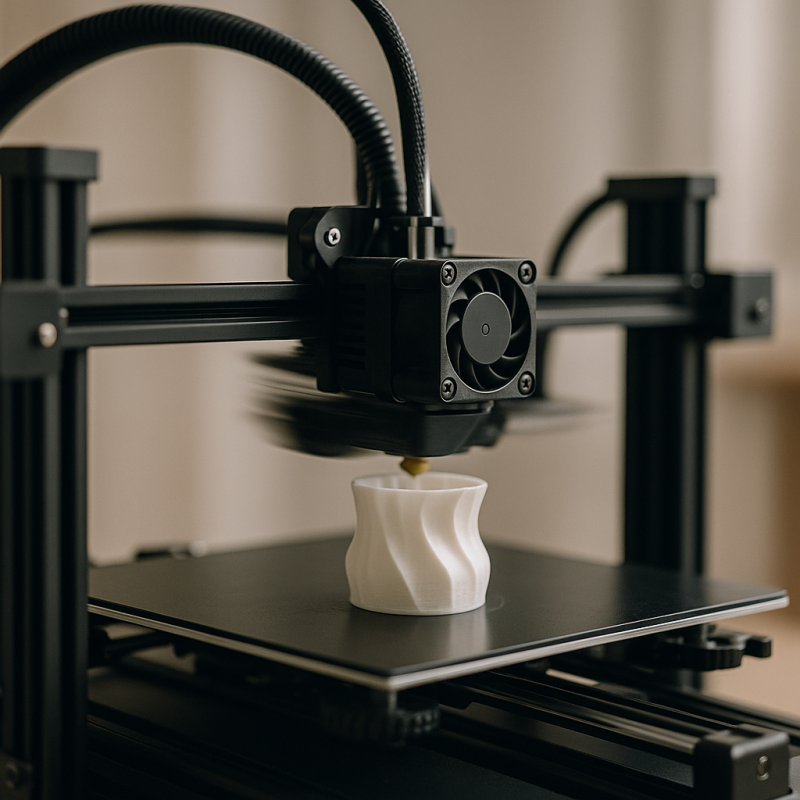
To grasp the profound impact of consistency, we must first revisit the fundamental mechanics of Fused Deposition Modeling (FDM). At its heart, an FDM printer is a sophisticated volumetric deposition system. The slicer software takes a 3D model and calculates the precise volume of material needed for every single line segment, infill pattern, and support structure. It then translates this volumetric data into instructions for the printer’s motion system and its extruder.
The critical assumption underpinning this entire process is that the filament being fed into the extruder is a perfect cylinder with a known, unchanging diameter. The printer calculates the length of filament to feed into the hotend to produce a specific volume of molten plastic. For a filament of diameter d and length L, the volume V is given by the formula for a cylinder: *V = π * (d/2)² * L*. Your slicer uses this very equation. If you tell it you are using 1.75mm filament, it assumes *every single millimeter* of that filament is 1.75mm in diameter. The printer then pushes a specific length, L, of this filament through the nozzle, expecting a predictable volume, V, to be extruded.
The Domino Effect: How Small Inconsistencies Cascade into Major Failures
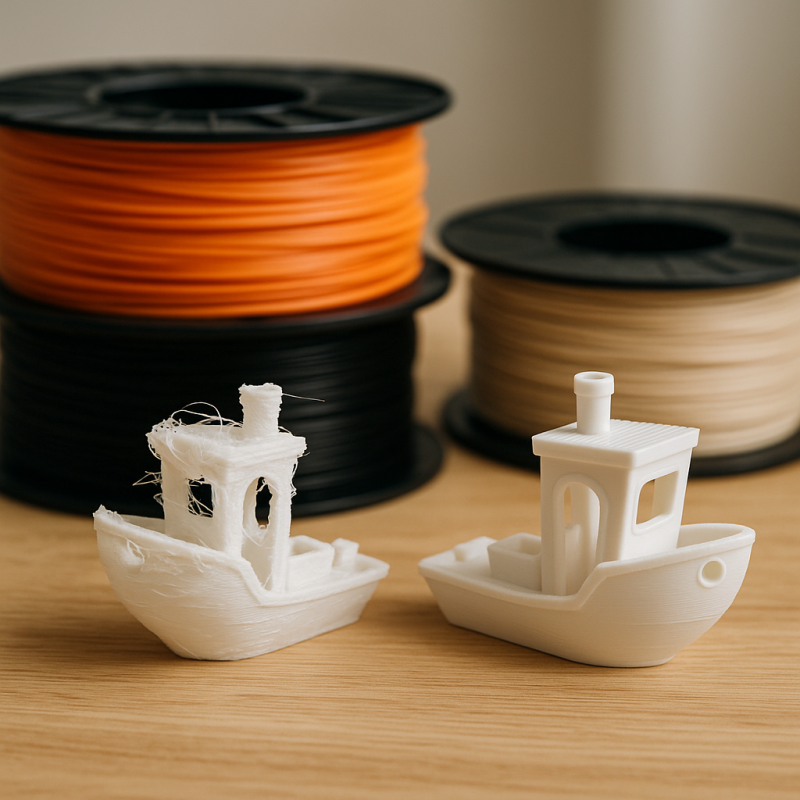
Herein lies the problem. What happens if the filament diameter changes? If the diameter suddenly shrinks to 1.70mm, but the printer, still assuming 1.75mm, pushes the same length L of filament, the actual extruded volume will be about 6% less than intended. This results in under-extrusion: weak layer adhesion, gaps in walls, and a fragile, unfinished appearance. Conversely, if the diameter swells to 1.80mm, the extruded volume will be 6% more than intended, leading to over-extrusion: loss of detail, dimensional inaccuracy, nozzle buildup, and stringing.
This is just one dimension of consistency. If the material contains impurities, they can cause a partial or full clog in the nozzle, starving the print of material. If the color pigment is poorly mixed, it can create zones with slightly different melting temperatures, affecting flow and surface finish. If the filament is wound improperly, it can snag and stop feeding altogether. Each inconsistency, no matter how small, disrupts the delicate equilibrium of the extrusion process, with consequences that range from minor cosmetic blemishes to catastrophic print failure. Understanding these metrics is the first step toward mastering the art and science of 3D printing.
| Feature | Consistent Filament (e.g., ±0.02mm Tolerance) | Inconsistent Filament (e.g., >±0.05mm Tolerance) |
|---|---|---|
| Extrusion Quality | Smooth, uniform lines with predictable flow. | Visible cycles of under-extrusion and over-extrusion. |
| Surface Finish | Even and clean, with well-defined layer lines. | Z-banding, blobs, zits, and rough or uneven surfaces. |
| Dimensional Accuracy | Parts match the intended CAD dimensions closely. | Parts are oversized or undersized; holes may be too small. |
| Mechanical Strength | Excellent layer adhesion, resulting in strong, durable parts. | Poor layer bonding, leading to weak, brittle, and delaminated parts. |
| Reliability | High success rate on long and complex prints. | Prone to random failures, nozzle clogs, and air printing. |
| Printer Wear | Predictable wear on extruder gears and nozzles. | Increased strain on extruder components; clogs can damage hotend. |
Metric 1: Dimensional Accuracy – The Foundation of Predictable Extrusion
When we discuss dimensional accuracy, we are examining the physical geometry of the filament strand itself. This is the most commonly understood aspect of filament consistency, yet its nuances are often underappreciated. It is not merely about a single diameter measurement but about the uniformity of that diameter over the entire length of the spool, as well as the roundness of the filament’s cross-section.
Beyond the Numbers: What Diameter Tolerance (e.g., ±0.02mm) Truly Means
Filament is typically sold with a nominal diameter, most commonly 1.75mm or 2.85mm. The tolerance figure, such as ±0.03mm or ±0.02mm, specifies the maximum allowable deviation from this nominal diameter. A spool of 1.75mm filament with a ±0.03mm tolerance means that any point measured along its length should fall between 1.72mm and 1.78mm. A tighter tolerance of ±0.02mm, a hallmark of premium and professional-grade filaments, narrows this range to between 1.73mm and 1.77mm.
While the difference between ±0.03mm and ±0.02mm may seem trivial—a mere 10 microns—its effect on volumetric flow is significant. As we saw earlier, the volume of extruded plastic is proportional to the square of the diameter. This means that small changes in diameter have a magnified effect on extrusion.
Let’s imagine a mental exercise. Picture your printer creating a thin wall. With a ±0.02mm filament, the variation in extruded volume is minimal, resulting in a wall that is smooth and structurally sound. Now, picture the same process with a cheaper, ±0.05mm filament. As the diameter fluctuates between 1.70mm and 1.80mm, the extruder deposits a variable amount of material. This creates visible bands on the print’s surface, a phenomenon known as “Z-banding.” In these bands, the layers are either slightly too thick or slightly too thin, creating a corrugated texture and, more critically, points of mechanical weakness where layers have not properly fused. A high-quality filament with tight tolerances is the first line of defense against such issues.
The Silent Killer: Understanding Ovality and Its Impact on Flow Rate
Diameter is only half of the geometric story. The other half is ovality, or how close the filament’s cross-section is to a perfect circle. A filament can have a consistent average diameter but still be highly oval, for instance, measuring 1.70mm in one direction and 1.80mm in the perpendicular direction.
Why does this matter? The extruder drive gear grips the filament on one axis, and the filament enters the hotend in a specific orientation. If the filament is oval, as it twists and turns on its path from the spool, the effective diameter being fed into the system changes. This introduces another unpredictable variable into the volumetric calculation, leading to the same over- and under-extrusion problems caused by diameter variance. High-quality manufacturing processes not only control for diameter but also minimize ovality, ensuring a consistently round filament profile. This is one of the subtle distinctions between budget filaments and true production-grade materials.
How Manufacturers Achieve Precision: The Role of Laser Micrometers
Achieving tolerances of ±0.02mm is not a matter of chance; it is the result of sophisticated process control. During production, the extruded filament strand, while still warm and malleable, is passed through a dual-axis laser micrometer. This device uses lasers to measure the filament’s diameter thousands of times per second on two perpendicular axes (X and Y).
This real-time data is fed into a closed-loop control system. If the laser detects that the diameter is starting to drift, the system automatically adjusts the speed of the puller—the wheels that pull the filament away from the extruder die. Speeding up the puller thins the filament, while slowing it down allows it to thicken. This constant, minute adjustment is what keeps the filament within the specified tight tolerance. The X and Y axis data also provides a measure of ovality, which can be corrected by adjusting conditions at the extrusion die. Manufacturers committed to consistency, like those with ISO 9001:2015 certification, maintain meticulous records from these systems, often linking a spool’s batch number to its specific diameter chart.
| Pillar of Consistency | Primary Impact on Printing | Ideal Industry Standard (2026) | How It’s Controlled by Manufacturer |
|---|---|---|---|
| 1. Dimensional Accuracy | Extrusion volume, surface finish, dimensional accuracy | Diameter: ±0.02mm, Ovality: <0.02mm | Dual-axis laser micrometers with closed-loop feedback control. |
| 2. Material Purity | Nozzle clogs, print strength, flow characteristics | <0.01% contaminants, 100% virgin resin (for most types) | Raw material screening, controlled environment, inline filtration. |
| 3. Color Dispersion | Consistent surface appearance, thermal uniformity | Homogeneous, no streaks or color shifts | High-shear twin-screw extruders, quality pigment masterbatch. |
| 4. Spool Winding | Print reliability, prevention of tangles and snags | Neat, parallel, tangle-free winding with proper tension | Automated traversing winders with tension feedback systems. |
| 5. Moisture Content | Layer adhesion, surface quality, material strength | <0.02% by weight (material dependent), vacuum-sealed | Inline drying of raw resin, controlled humidity, quality packaging. |
Metric 2: Material Purity and Compositional Integrity
If dimensional accuracy is the skeleton of a good filament, material purity is its lifeblood. The chemical composition of the filament dictates its fundamental properties: its melting point, its viscosity when molten, its strength upon cooling, and its durability over time. Any deviation from a pure, consistent polymer formulation introduces a host of problems that no amount of slicer tuning can fully resolve.
Virgin Resin vs. Recycled Content: A Nuanced Discussion
The conversation about material purity often begins with the source of the base polymer. “Virgin” resin refers to polymer pellets produced directly from petrochemical feedstocks, with no prior processing history. This material has predictable and uniform molecular characteristics. Recycled content, on the other hand, is derived from post-industrial or post-consumer plastic waste.
While the use of recycled materials is commendable from an environmental perspective, it presents significant challenges for filament consistency. The recycling process can shorten the polymer chains within the plastic, reducing its strength and altering its melting behavior. Furthermore, recycled feedstocks can contain trace contaminants from their previous life or from the collection process itself. For non-critical applications like decorative models, filaments with recycled content can be a viable, eco-friendly choice. However, for producing functional parts, jigs, fixtures, or any application where mechanical performance and repeatability are paramount, filaments made from 100% virgin resin are the professional standard. They provide a clean, reliable baseline upon which the rest of the manufacturing process can build.
Unseen Saboteurs: The Impact of Voids, Contaminants, and Moisture
Beyond the source of the resin, consistency is threatened by things that can be introduced during manufacturing.
- Voids and Bubbles: If the raw polymer pellets are not properly dried before extrusion, trapped moisture will turn to steam inside the hot extruder barrel. This creates bubbles within the filament strand and can increase its diameter (Singamneni et al., 2018). When this section of filament reaches your printer’s hotend, the bubble can cause a sudden “pop” and a momentary interruption in flow, leaving a small pit or blob on your print.
- Dust and Debris: A professional manufacturing facility is a clean environment for a reason. Any dust, dirt, or foreign particles that find their way into the raw material hopper can become embedded in the filament. These particles may not melt at the same temperature as the base polymer. A speck of dust can be enough to cause a partial or full jam in the delicate geometry of a 0.4mm nozzle, leading to print failure. Quality manufacturers use filtered air handling and sealed material conveying systems to prevent this.
- Compositional Drift: Even with virgin resin, the composition must remain consistent. If a manufacturer sources polymer from different suppliers for the same product line, there can be subtle batch-to-batch variations in the polymer’s Melt Flow Index (MFI). This can mean that a spool of PETG bought in January prints optimally at 240°C, while a spool of the “same” PETG bought in March requires 250°C for similar results. A commitment to consistency involves rigorous incoming quality control on raw materials to ensure this drift does not occur.
The Science of Additives: How Reinforcements and Colorants Affect Consistency
Very few filaments are just pure polymer. Most contain additives to achieve specific colors or properties. The consistency of these additives is just as important as the consistency of the base resin.
Consider a composite material like carbon fiber PETG. This filament combines a PETG base with short, chopped carbon fibers to increase stiffness and dimensional stability (SigmaFilament, 2026). The challenge is to ensure that these fibers are evenly and consistently dispersed throughout the polymer matrix. If the mixing process is inadequate, you can get sections of filament with a high concentration of fibers, followed by sections with almost none. The fiber-rich sections will have a different flow rate and may be more prone to clogging, especially with smaller nozzles. The fiber-poor sections will not exhibit the desired mechanical properties. Achieving this uniform dispersion requires specialized equipment, such as twin-screw extruders, which provide the high shear force needed to properly mix the components. This is why a high-quality high-performance carbon fiber PETG often performs so much more reliably than a budget alternative. The same principle applies to other additives, from glass fibers and flame retardants to simple color pigments, which we will explore next.
Metric 3: Color Dispersion and Pigment Uniformity
At first glance, color might seem like a purely aesthetic concern. As long as the print is the right shade of blue, what more is there to it? In reality, the way color is introduced into a filament has a direct impact on its printability and consistency. The pursuit of a rich, uniform color is intertwined with the pursuit of a reliable, high-performance material.
More Than Skin Deep: Achieving Homogeneous Color
Filament color is not a coating; it is achieved by mixing a concentrated colorant, known as a masterbatch, with the natural, uncolored base resin just before extrusion. This masterbatch consists of tiny pigment particles suspended in a carrier polymer. The goal is to distribute these pigment particles perfectly evenly throughout the base resin, a state known as a homogeneous mixture.
Achieving this is a significant chemical and mechanical challenge. Pigment particles have a natural tendency to clump together (agglomerate). If the mixing process is not thorough enough, the resulting filament will contain microscopic, pigment-rich clusters. These clusters can act like contaminants. They may have a different melting temperature or flow characteristic than the surrounding polymer. This can lead to subtle variations in extrusion, manifesting as minor surface imperfections or inconsistent surface finish (e.g., alternating patches of matte and glossy texture). In high-precision applications, these tiny flaws can be unacceptable.
The “Streaky Print” Phenomenon: Causes and Consequences
The most obvious sign of poor color dispersion is a “streaky” or “marbled” appearance in the finished print. This indicates that the color masterbatch was not fully incorporated into the base resin. You are seeing distinct streams of concentrated pigment and base polymer that were not properly mixed.
This is more than just a cosmetic issue. The sections with higher pigment concentration will behave differently in the hotend than the sections with lower concentration. Pigments are essentially fine mineral or chemical powders; they do not melt in the same way plastic does. A high concentration of pigment can increase the material’s viscosity, requiring more force from the extruder to push it through the nozzle. As the filament passes through these streaks, the flow rate can subtly fluctuate, contributing to the same kind of surface banding caused by diameter inconsistency. For a truly consistent filament, the color should be so perfectly uniform that the material behaves as a single, predictable substance from start to finish.
Pantone Matching and Brand Identity: Consistency for Professional Applications
For businesses that use 3D printing to produce end-use parts, product enclosures, or marketing models, color consistency takes on a new level of importance. It becomes a matter of brand identity. A company that uses a specific Pantone shade of blue in its logo needs to know that every part printed with that “brand blue” filament will be an exact match, spool after spool, year after year.
This requires an exceptional degree of process control from the filament manufacturer. They must use high-quality pigments that do not fade or shift in hue under processing heat. They must have a precise, repeatable recipe for the ratio of masterbatch to base resin. And they must have the mixing technology to ensure that the recipe is executed perfectly every time. This is a level of consistency that goes far beyond the hobbyist realm. It is a key reason why businesses partner with OEM/ODM manufacturers who can guarantee color fidelity across massive production runs, ensuring that every product that reaches a customer is a perfect representation of the brand.
Metric 4: Winding and Spooling – The Unsung Hero of Reliability
Of all the metrics of filament consistency, the quality of the spool winding is perhaps the most overlooked by users and the most underappreciated. A filament could be perfectly dimensionally accurate, chemically pure, and beautifully colored, but if it is poorly wound onto its spool, it is a ticking time bomb for print failure. A tangled filament is one of the most frustrating problems in 3D printing because it almost always results in a total loss of the print, often many hours into the process.
The Physics of a Tangle: How Poor Winding Leads to Print-Stopping Knots
It is a common misconception that spools arrive from the factory with knots already tied in them. This is physically impossible, as the filament is wound as a single continuous strand. The problem is not a knot, but a crossover.
Imagine the winding process. A robotic arm moves back and forth (traverses) across the width of the spool, laying down the filament in neat rows. If at any point the tension on the filament slackens, even for a moment, a loop can form. The traversing arm might then wind subsequent layers on top of this loose loop. The filament is not yet tangled, but a trap has been set.
Later, during your print, the printer steadily pulls filament from the spool. Everything works perfectly until it reaches the point where the filament strand dives underneath that trapped crossover. The strand is now trying to pull itself out from under another wind. The friction increases dramatically, and the filament snags. The extruder’s drive gear, unable to pull the filament, begins to grind a divot into it. The flow of plastic stops, and your printer begins “air printing,” its nozzle moving through the motions with nothing coming out. The print is ruined.
Tension and Traverse: The Engineering Behind a Perfect Spool
Preventing this scenario requires sophisticated, automated winding machinery. The two key variables are tension and traverse speed.
- Tension Control: The winder must maintain a constant, precise tension on the filament strand as it is spooled. Too little tension leads to the loose loops that cause tangles. Too much tension can actually stretch the warm filament, altering its diameter and introducing a new inconsistency. Advanced winders use feedback systems, such as dancer arms or load cells, to continuously monitor and adjust tension.
- Traverse Speed: The speed at which the winding head moves back and forth must be perfectly synchronized with the spool’s rotation speed and the filament’s diameter. This ensures that each new wrap of filament is laid down perfectly beside the previous one, with no gaps and no overlapping. The result is what is often called “neat winding” or “parallel winding.” Every strand is perfectly aligned, looking like a pristine coil of rope.
This neat winding is not just for aesthetics. It is a functional guarantee that the filament will unspool smoothly and without resistance from the first layer to the very last. When you see a perfectly wound spool, you are seeing a visible indicator of a manufacturer’s attention to detail and investment in quality process control.
The User Experience: From Smooth Unspooling to Frustrating Failures
The difference in user experience between a poorly wound spool and a perfectly wound one is night and day. A poorly wound spool requires constant vigilance. It might work for hours, but the risk of a snag is always present. Some users resort to printing complex filament guides or building “de-tangling” systems, adding complexity and another point of failure to their setup.
A neatly wound spool, by contrast, is a “set it and forget it” component. You can load it into the printer (or an automated material system like the Bambu Lab AMS, which is particularly sensitive to winding quality) and have confidence that it will feed reliably for a 20-hour print without intervention. For businesses running print farms or for individuals who value their time, this reliability is not a luxury; it is a core requirement. It transforms the filament from a potential source of failure into a dependable part of the printing workflow.
Metric 5: Moisture Content and Protective Packaging
The final pillar of filament consistency is one that operates on a microscopic level but has macroscopic consequences: moisture. Many of the polymers used in 3D printing are hygroscopic, which means they have a natural affinity for absorbing moisture from the surrounding air. A filament that is “wet” will not print properly, and managing this moisture is a critical responsibility that starts at the factory and extends to the end-user.
Hygroscopicity Explained: Why Polymers and Water Don’t Mix
Polymers are made of long chains of repeating molecules. In hygroscopic materials like PETG, Nylon, Polycarbonate (PC), and many flexible TPUs, water molecules from the ambient humidity can work their way into the plastic and bond with these polymer chains. PLA is also mildly hygroscopic, though less so than the others.
When this moisture-laden filament enters the printer’s hotend, which is heated to well over 200°C, the trapped water instantly boils and turns into steam. This tiny, violent explosion has several devastating effects on the printing process. This is a chemical issue that cannot be understated. As noted by polymer science researchers, the process of hydrolysis at high temperatures can break the polymer chains, permanently reducing the material’s strength (Pecora & Spadaro, 2021).
The Telltale Signs of Wet Filament: Sizzling, Popping, and Poor Layer Adhesion
You can often diagnose wet filament just by listening. As the filament feeds into the hotend, you may hear audible sizzling, popping, or crackling sounds. This is the sound of those tiny steam explosions. You can also see the effects on the print itself:
- Stringing and Oozing: The steam explosions push molten plastic out of the nozzle uncontrollably, leading to excessive stringing and blobs on the print surface.
- Rough, Foamy Surface: The extruded plastic will have a rough, almost foamy or bubbly texture instead of a smooth, glossy finish.
- Poor Layer Adhesion: This is the most critical issue. The steam bubbles create voids between the layers, preventing them from fusing properly. The resulting part will be incredibly brittle and may delaminate or break apart with very little force. A part printed with wet Nylon can sometimes be crumbled by hand.
These issues are often mistaken for incorrect temperature or retraction settings. Many hours can be wasted trying to tune slicer profiles when the root cause is simply a wet spool of filament.
The First Line of Defense: Vacuum Sealing, Desiccants, and Quality Control
True filament consistency means the material arrives at your door as dry as it was the moment it came off the production line. This requires a multi-stage approach to packaging.
- Drying: Before being spooled, the raw polymer resin must be dried for several hours at a specific temperature to remove any absorbed moisture. Reputable manufacturers perform this step religiously.
- Immediate Spooling and Sealing: After extrusion, the finished filament is immediately wound onto a spool and sealed. The best practice is to place the spool in a high-barrier plastic bag along with a desiccant packet (the small pouch that absorbs moisture), then use a vacuum sealer to remove all the air before sealing the bag.
- Quality Packaging: The vacuum-sealed bag should then be placed in a sturdy cardboard box to protect it from punctures during shipping, which would compromise the vacuum seal and allow moisture to enter.
This process ensures that when you open a new spool, it is in a print-ready state. However, the responsibility does not end there. Once the seal is broken, the filament will immediately begin absorbing ambient moisture. For highly hygroscopic materials like Nylon or PC, it is best practice to store them in a dedicated filament dry box, even while printing, and to actively dry them in a filament dryer before each use. Even for materials like PETG and PLA, if you live in a humid environment, storing open spools in an airtight container with desiccants is a crucial step to maintain their consistency and performance. For businesses that require large quantities of material, sourcing from a supplier that provides robust packaging, like a wholesale PLA filament provider, ensures that the inventory remains in optimal condition.
Choosing Your Production Partner: Identifying Truly Consistent Filament
Understanding the five metrics of consistency is the first half of the battle. The second half is using that knowledge to select a filament supplier who prioritizes and delivers on these principles. In a market flooded with options, distinguishing a true manufacturing partner from a simple reseller requires looking beyond the marketing claims and examining the evidence of their commitment to quality.
Reading the Spec Sheet: What to Look for and What to Question
A manufacturer’s product data sheet is a window into their production philosophy. A supplier committed to consistency will provide more than just the material type and color.
- Look for Tight Tolerances: A stated diameter tolerance of ±0.03mm is good; ±0.02mm is a sign of a premium, professional-grade process. Be wary of brands that do not state a tolerance at all.
- Seek Out Purity Information: Does the manufacturer specify the use of 100% virgin resin? Do they mention anything about their raw material sourcing or quality control? For composite materials, they should specify the percentage of reinforcement, such as “15% carbon fiber,” a quantity defined by standardized constituent-content test methods (ASTM International, 2022).
- Check for Recommended Print Settings: A detailed table of recommended nozzle temperatures, bed temperatures, and print speeds suggests that the manufacturer has thoroughly tested their own product and understands its behavior, since parameters such as nozzle temperature and speed must be empirically optimized for each material (Valvez et al., 2022).
- Question Vague Claims: Be skeptical of generic terms like “high quality” or “jam-free” without supporting data. The best suppliers back up their claims with numbers. Some may even provide a link to the online diameter graph for the specific spool you purchased, offering the ultimate transparency.
The Value of Process Control: Why ISO 9001 Certification Matters
Perhaps the single most powerful indicator of a manufacturer’s commitment to consistency is an ISO 9001:2015 certification. This is not a product award; it is an internationally recognized standard for a company’s entire Quality Management System (QMS).
An ISO 9001 certified company has demonstrated to an independent auditor that they have robust, documented processes for everything from raw material inspection to production line calibration, final product testing, and handling customer feedback. It means they are committed to:
- Process Repeatability: Ensuring that the 1000th spool of filament is produced under the exact same conditions as the first.
- Continuous Improvement: Actively monitoring their processes, identifying sources of variation, and implementing corrective actions.
- Traceability: Being able to trace a specific spool of filament back to its production date, the machine it was made on, and the batch of raw material it came from.
Choosing a supplier with this certification provides a powerful assurance that their claims of consistency are not just marketing, but are built into the very fabric of their operations.
Beyond the Spool: Evaluating a Manufacturer’s Commitment to Quality
Finally, look at the manufacturer’s broader role in the industry. Are they simply a brand name on a box, or are they a production partner? A true partner, especially for OEM/ODM customers, will offer services that demonstrate a deep understanding of material consistency. This includes custom material development, precise color matching to Pantone or RAL standards, and the ability to produce exclusive formulations under non-disclosure agreements.
They should be able to discuss the nuances of how additives affect printability or advise on the best material for a high-temperature application. Their expertise becomes an extension of your own R&D department. This partnership approach, which combines high-volume output with meticulous, laser-monitored precision, is the ultimate expression of a commitment to consistency. It is about delivering not just a product, but a reliable and scalable supply chain for your most critical printing needs.
Frequently Asked Questions (FAQ)
1. What is the most important metric for filament consistency? While all five metrics are interconnected, dimensional accuracy (diameter and ovality) has the most immediate and visible impact on print quality. Incorrect dimensions directly affect the volume of extruded material, leading to over- or under-extrusion, which is the root cause of many common print failures and cosmetic defects.
2. Can I fix a spool of inconsistent filament? You can mitigate some issues, but you cannot truly “fix” an inconsistent filament. You can dry a wet filament using a dedicated filament dryer. You can sometimes compensate for minor diameter variations by calibrating flow rate, but this is a reactive fix. You cannot fix poor color dispersion, material impurities, or bad winding. The most effective strategy is to invest in consistently high-quality filament from the start.
3. Does brand matter for filament consistency? Yes, brand matters significantly. A reputable brand represents a promise of quality control and process management. Established manufacturers with transparent data sheets, tight stated tolerances (e.g., ±0.02mm), and certifications like ISO 9001 have invested in the machinery and systems required to produce consistently reliable filament, which is less common among generic or white-label brands .
4. How can I test a filament’s diameter consistency myself? You can get a rough idea by using a pair of digital calipers with a precision of at least 0.01mm. Measure the filament at several points over a few meters, rotating the filament at each point to check for ovality. However, this manual check is not a substitute for the continuous, multi-axis laser measurement performed during manufacturing.
5. Why do my prints fail even with expensive, high-quality filament? Even the most consistent filament cannot compensate for a poorly calibrated printer or incorrect slicer settings. If you are using a high-quality filament and still having issues, the problem likely lies elsewhere. Check your printer’s mechanical condition (e.g., loose belts, worn nozzle), calibrate your E-steps and flow rate, and ensure your print settings (temperature, speed, cooling) are appropriate for the specific material you are using. Consistency in the material provides a stable baseline, making it easier to diagnose and fix these other variables.
6. Is filament from recycled materials always inconsistent? Not necessarily, but it is much more challenging to make recycled filament consistent. The quality depends heavily on the source of the recycled plastic and the sophistication of the sorting and reprocessing. Filaments made from well-controlled, clean, post-industrial scrap can be quite consistent. However, filaments made from mixed post-consumer waste are more likely to have variations in polymer properties and potential contaminants. For applications requiring maximum reliability and strength, virgin resin is the safer choice.
7. How does filament consistency affect printing speed? Highly consistent filament is a prerequisite for reliable high-speed printing. At high speeds, the extruder is processing material very quickly, and any inconsistency is magnified. A slight dip in diameter that might be unnoticeable at 50 mm/s can cause significant under-extrusion and layer delamination at 250 mm/s. Similarly, impurities are more likely to cause clogs when the material has less time to melt in the hotend.
Conclusion
The inquiry into “what is ‘consistency’ in filament?” leads us away from a simplistic focus on a single specification and toward a more comprehensive, systemic understanding. It is not a feature that can be added to a filament but rather the outcome of a disciplined and technologically advanced manufacturing philosophy. Consistency is the product of precise dimensional control, unwavering material purity, homogeneous additive dispersion, meticulous spool winding, and rigorous moisture management. These five pillars are not independent; they are deeply interconnected, and a failure in one can undermine the success of all others.
For the 3D printing professional, the engineer, or the dedicated enthusiast, embracing this holistic view is transformative. It changes the act of purchasing filament from a search for the cheapest option to an investment in predictability and reliability. It reframes print failures not as random acts of misfortune, but as data points that often lead back to the quality of the raw material. By learning to identify and demand true, multi-faceted consistency—by looking for the tight tolerances, the clean resins, the neat windings, and the quality certifications—we elevate the potential of our machines and empower ourselves to move from creating mere objects to manufacturing reliable, repeatable, and functional parts. The most flawless print begins long before the G-code is run; it begins with a spool of truly consistent filament.
References
- Pecora, C., & Spadaro, G. (2021). The effect of recycling on the mechanical properties of 3D-printed polymers. Polymers, 13(16), 2636. https://doi.org/10.3390/polym13162636
- SigmaFilament. (2026, January 25). Actionable buyer’s guide: 7 factors for success with carbon fiber PETG in 2026. https://sigmafilament.com/carbon-fiber-petg-printing-guide/
- ASTM International. (2022). ASTM D3171-22: Standard test methods for constituent content of composite materials. https://www.astm.org/d3171-22.html
- Valvez, S., Silva, A. P., & Reis, P. N. B. (2022). Optimization of printing parameters to maximize the mechanical properties of 3D-printed PETG-based parts. Polymers, 14(13), 2564. https://doi.org/10.3390/polym14132564
- Singamneni, S., Smith, D., LeGuen, M.-J., & Truong, D. (2018). Extrusion 3D printing of polybutyrate-adipate-terephthalate-polymer composites in the pellet form. Polymers, 10(8), 922. https://doi.org/10.3390/polym10080922
Last reviewed and updated: January 2026. Author: SigmaFilament Engineering Team. For custom filament solutions and wholesale inquiries, contact our team.