The full polymer palette feeding FDM — commodity PLA and PETG through engineering nylon, polycarbonate, and high-temperature composites. Selection logic matching mechanical, thermal, and chemical requirements to the right resin.
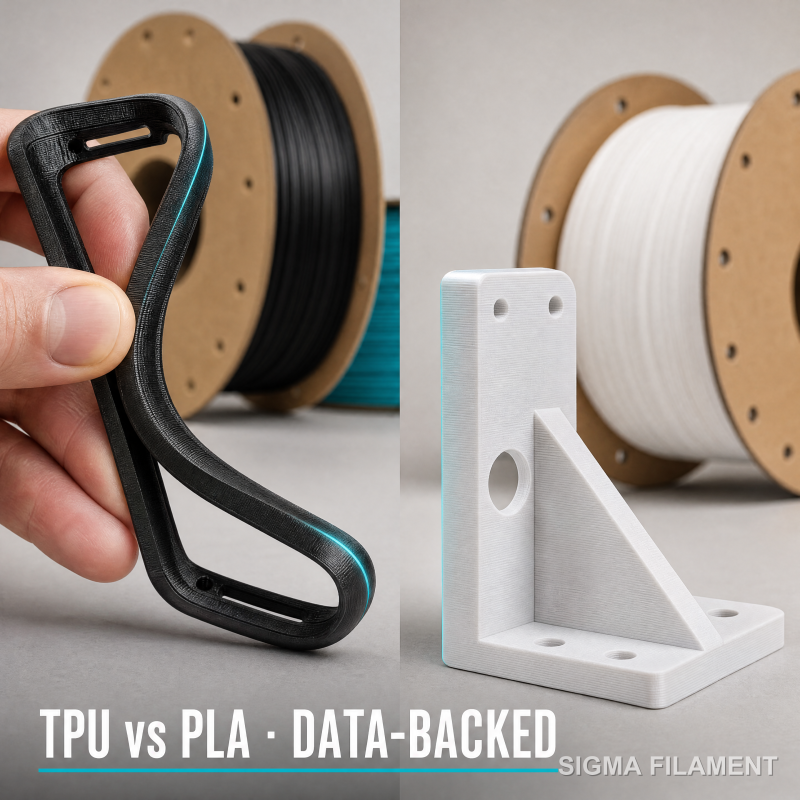
TPU vs PLA compared with ASTM-referenced data: flexibility, strength, print settings, heat resistance, and cost-per-part, plus a clear decision matrix for makers and B2B buyers.
Catalogs list different filament types; production buyers need a selection framework. Four decision axes, six material families with quantified 2026 property data, certification mapping, and three worked scenarios that end in a stocking decision.
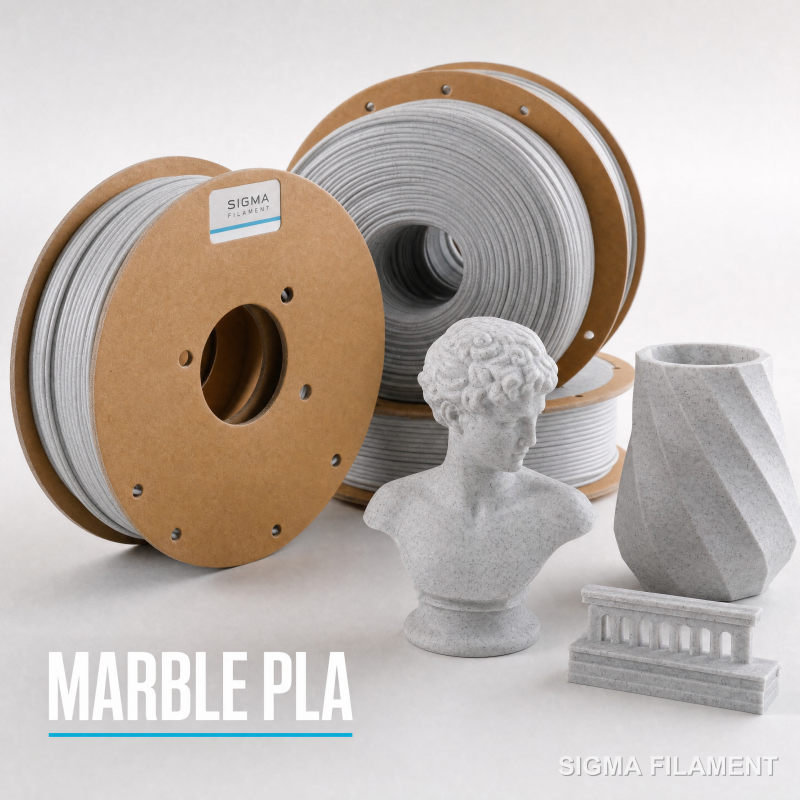
Marble PLA is two materials under one label: calcium-carbonate-filled stone-effect PLA and pigment-only marble-look PLA. A manufacturer-grade guide to telling them apart, print settings, nozzle wear, the stiffer-not-stronger truth, post-processing, density and cost, and OEM sourcing.
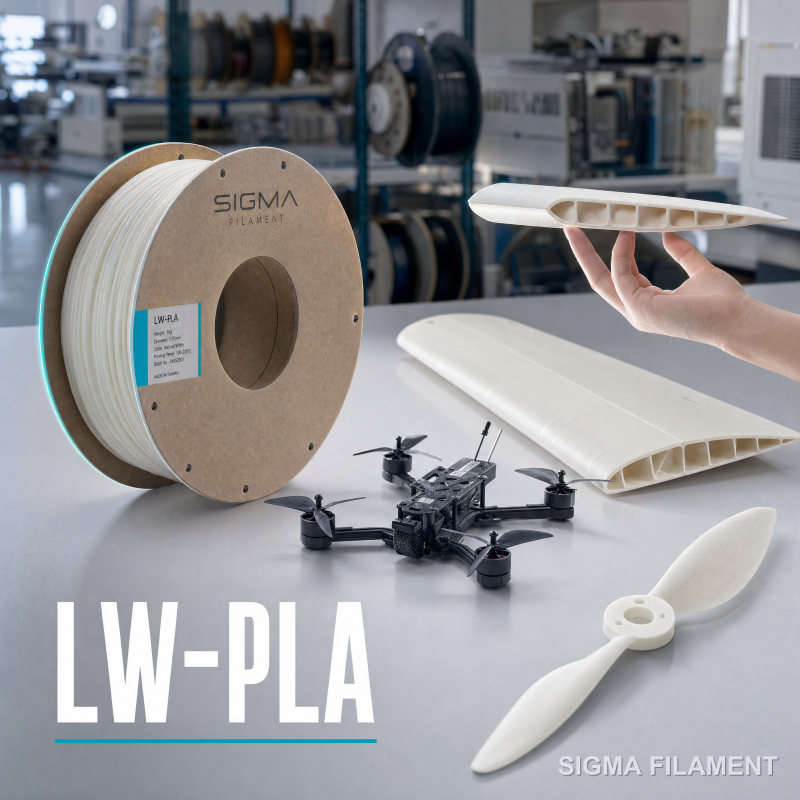
LW-PLA is active-foaming lightweight PLA that cuts printed density from 1.24 to about 0.5-0.8 g/cm3, a 35-60% weight saving. A manufacturer-grade guide to the foaming chemistry, active vs pre-foamed grades, density by temperature, print settings, the strength tradeoff, RC and cosplay uses, and OEM sourcing.
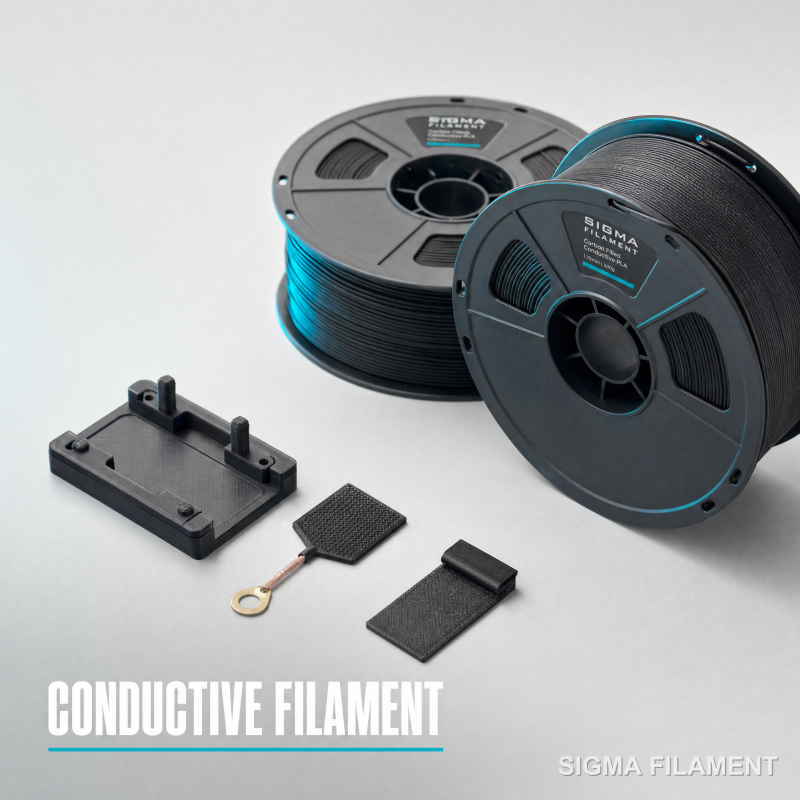
Conductive filament spans four orders of resistivity. A manufacturer's guide to the three bands, percolation, FFF anisotropy, the strength tradeoff, print settings, and OEM sourcing.
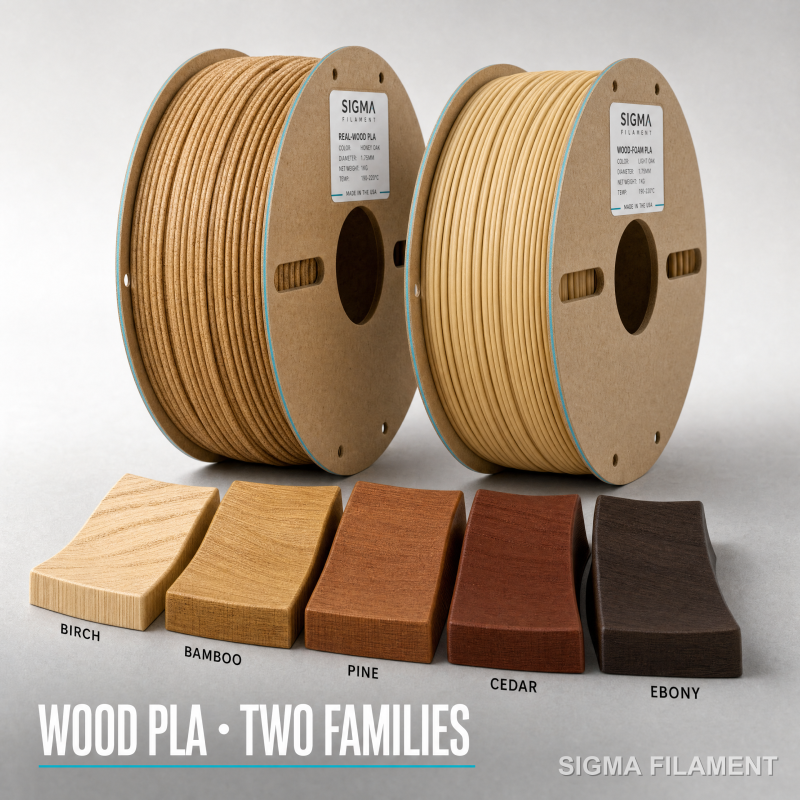
Wood PLA is two filaments under one label: particle-filled real-wood and foam-blown wood-look. A manufacturer-grade guide to telling the families apart, print settings by wood content, nozzle wear, post-processing to a timber finish, and OEM and wholesale sourcing.
The density of PLA is about 1.24 g/cm3, but the answer buyers need spans grade-level variation, variant densities from foaming LW-PLA to metal-fill, the ASTM D792 and ISO 1183 measurement standards, and the math that turns density into spool length, part weight, and per-part cost.
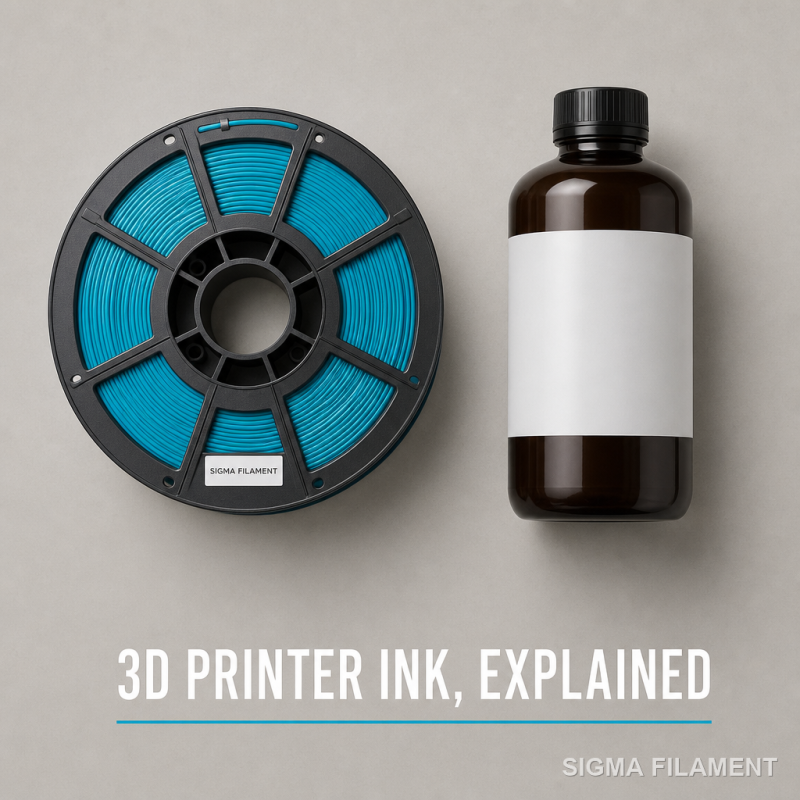
"3D printer ink" is a misnomer. Most desktop 3D printers use thermoplastic filament, resin printers use photopolymer resin, and only industrial material-jetting machines use real inks. Here is what your printer actually needs.
Metal filament spans two categories: composite aesthetic (5-60% metal, $25-45/kg) and sinterable functional (80-95% metal, $120-565/kg). This guide covers formulation science, print settings, post-processing, cost analysis vs DMLS/CNC, and B2B sourcing for OEM and wholesale buyers.