

A Data-Backed 2026 Guide: Is PETG Safe to Print Indoors? 5 Critical Factors

Abstract
An inquiry into the safety of fused deposition modeling (FDM) with Polyethylene Terephthalate Glycol (PETG) in indoor environments reveals a complex landscape of material science and environmental health. This analysis investigates the thermal decomposition of PETG during the printing process, focusing on the emission of ultrafine particles (UFPs) and volatile organic compounds (VOCs). While PETG is frequently positioned as a safer alternative to materials like Acrylonitrile Butadiene Styrene (ABS), it is not without emissions. The investigation synthesizes data from scientific studies examining the composition and concentration of these emissions, considering variables such as print temperature, filament brand, and color additives. It evaluates the potential health implications associated with inhalation exposure to these substances, contextualizing the risks within the spectrum of common 3D printing materials. The discourse culminates in a systematic framework of mitigation strategies, including ventilation, enclosure, and filtration, designed to provide practitioners with a rational, evidence-based approach to establishing a safer indoor printing practice. This examination aims to move the conversation beyond simple dichotomies of “safe” versus “unsafe,” fostering a more nuanced understanding of risk management in additive manufacturing.
Key Takeaways
- Use an enclosure and proper ventilation to significantly reduce particle and VOC exposure.
- Printing PETG at the lowest effective temperature minimizes potentially harmful emissions.
- The question of if PETG is safe to print indoors depends heavily on your mitigation setup.
- High-quality PETG filament from a reputable source may produce more consistent and predictable emissions.
- HEPA and activated carbon filters are effective tools for capturing UFPs and VOCs, respectively.
- Even low-emission materials warrant a cautious approach to air quality management.
Table of Contents
- Unpacking the Chemistry: What Exactly is PETG?
- The Core Question: What Is Released When Printing PETG?
- A Comparative Risk Analysis: PETG vs. Other Common Filaments
- The Human Element: Health Implications of 3D Printer Emissions
- Building a Safer Print Space: 5 Critical Mitigation Strategies
- Frequently Asked Questions (FAQ)
- A Final Reflection on Responsible Printing
- References
Unpacking the Chemistry: What Exactly is PETG?
To properly engage with the question of indoor printing safety, we must first develop an intimate understanding of the material itself. What is this substance we call PETG? It is a thermoplastic polymer, a member of the vast polyester family. The name itself, Polyethylene Terephthalate Glycol-modified, provides the first clue to its identity. It is a variation of a far more common plastic, PET, which constitutes the vast majority of single-use water and soda bottles around the globe. The journey from a simple water bottle to a complex 3D-printed part is one of subtle but profound chemical modification.
From Water Bottles to Filaments: The PETG Origin Story
Imagine the fundamental structure of a polymer as a long chain, composed of repeating molecular units called monomers. For PET (Polyethylene Terephthalate), these chains are quite orderly and, when heated and cooled, have a strong tendency to crystallize. Think of it like a neatly stacked pile of logs; the structure is rigid, strong, and somewhat brittle. This crystallization is what can make standard PET tricky to 3D print. As it cools from its molten state, it can become hazy and brittle, and the rapid, uncontrolled crystallization can cause significant warping and stress in a printed part.
This is where the need for a modification arises. For 3D printing, we desire a material that flows smoothly, cools predictably, and remains strong and clear without becoming excessively brittle. We need to disrupt that orderly stacking of molecular chains.
The “G” in PETG: How Glycol Changes Everything
The solution is elegant: introduce a new, slightly different monomer into the polymer chain. In the case of PETG, that interloper is cyclohexanedimethanol (CHDM), which is added during polymerization alongside the standard ethylene glycol. The “G” in PETG stands for “glycol-modified,” signifying this crucial substitution.
What does this new molecule do? It acts as a sort of “bulky” link in the chain. Imagine our neatly stacked logs again. Now, imagine that every tenth log is replaced with one that is awkwardly shaped or has a large branch sticking out. The logs can no longer stack tightly together. The entire pile becomes less ordered, less crystalline.
This is precisely what happens on a molecular level. The addition of glycol disrupts the crystallization process. The resulting PETG is an amorphous polymer, meaning its molecular chains are arranged in a more random, tangled fashion. This change has several direct consequences for its properties as a 3D printing filament:
- Lower Melting Point: It requires less energy to get the tangled chains moving, so it prints at a lower temperature than PET.
- Increased Durability: The amorphous structure prevents the formation of brittle crystalline regions, making PETG significantly tougher and more impact-resistant than its parent, PET.
- Clarity: The lack of crystallization allows light to pass through more easily, giving natural PETG its characteristic transparency.
- Reduced Warping: The transition from molten to solid is more gradual and less prone to the sudden shrinkage associated with crystallization, making it much more stable to print.
This simple addition of a second glycol transforms a common packaging plastic into one of the most versatile and popular materials for desktop 3D printing. It balances the ease of printing often associated with PLA with the strength and temperature resistance that PLA lacks.
Comparing PETG to Its Chemical Cousins: PET and PLA
Understanding PETG is best achieved by placing it in context with its peers.
| Feature | Polylactic Acid (PLA) | Polyethylene Terephthalate Glycol (PETG) | Acrylonitrile Butadiene Styrene (ABS) |
|---|---|---|---|
| Origin | Bio-based (corn starch, sugarcane) | Petroleum-based | Petroleum-based |
| Strength & Durability | Rigid, but brittle | Strong, durable, impact-resistant | Very strong, durable, high impact-resistance |
| Temp. Resistance | Low (~60°C) | Moderate (~80°C) | High (~100°C) |
| UV Resistance | Poor | Good | Poor (ASA is the UV-resistant alternative) |
| Printability | Very easy, low temps, no enclosure needed | Easy, moderate temps, no enclosure needed | Difficult, high temps, heated bed & enclosure required |
| Emissions Profile | Low UFP, primarily Lactide (low toxicity) | Low-to-moderate UFP, various VOCs (low conc.) | High UFP, high VOCs (incl. Styrene) |
Polylactic Acid (PLA) is the other titan of the hobbyist 3D printing world. Derived from renewable resources like corn starch, it is lauded for its ease of use and low printing temperatures. Chemically, it is also a polyester, but its backbone is fundamentally different from PETG’s. It is more rigid and brittle, and it has a very low glass transition temperature, meaning parts can deform in a hot car or direct sunlight.
Acrylonitrile Butadiene Styrene (ABS), a petroleum-based plastic, represents the next step up in performance. It is incredibly tough and temperature-resistant. However, its chemical nature makes it difficult to print, requiring high temperatures and a heated enclosure to prevent severe warping and cracking. More importantly for our discussion, the “S” in ABS stands for Styrene, a VOC that is released in significant quantities during printing, producing a strong, unpleasant odor and carrying known health concerns.
PETG occupies a valuable middle ground. It offers a substantial improvement in strength, durability, and temperature resistance over PLA, without introducing the printing difficulties and significant emission concerns of ABS. This balance is what makes it so appealing, but it also complicates the safety question. It is not as benign as PLA, nor is it as problematic as ABS. Therefore, a more detailed look at its specific emissions is necessary to determine if PETG is safe to print indoors.
The Core Question: What Is Released When Printing PETG?
When you heat a thermoplastic filament to over 200°C, you are not simply melting it. You are providing a significant amount of energy to complex polymer chains. While the primary process is a physical change from solid to a viscous liquid, a secondary process of thermal decomposition inevitably occurs. This decomposition breaks down some of the polymer chains, releasing a cocktail of microscopic particles and gaseous chemicals into the air. The central concern for indoor safety revolves around two primary categories of these emissions: Ultrafine Particles (UFPs) and Volatile Organic Compounds (VOCs). An honest appraisal of whether PETG is safe to print indoors depends entirely on understanding these emissions.
Understanding the Invisible World: Ultrafine Particles (UFPs)
Imagine dust motes dancing in a sunbeam. Now imagine particles that are thousands of times smaller. UFPs are particles with a diameter of less than 100 nanometers (0.1 micrometers). To put that into perspective, a human hair is about 70,000 nanometers wide. Because of their incredibly small size, these particles behave more like a gas than a solid. They do not quickly settle out of the air due to gravity; instead, they can remain suspended for hours, easily carried by air currents throughout a room or an entire house.
Studies have consistently shown that all FDM 3D printers, regardless of the material being used, are significant sources of UFP emissions (Azimi et al., 2016). The process of heating and extruding molten plastic creates ideal conditions for their formation through nucleation and condensation of semi-volatile compounds. The concern with UFPs is their ability to bypass the body’s natural defenses. Larger particles (like PM2.5 or PM10) are often trapped in the nose and upper airways, but UFPs are so small they can travel deep into the lungs, reach the alveoli (the tiny air sacs where gas exchange occurs), and even pass into the bloodstream, potentially reaching other organs (Oberdörster et al., 2005).
When printing PETG, the UFP emission rate is generally found to be lower than that of ABS but significantly higher than that of PLA. This places PETG in a middle-tier of particle emitters. The question is not if PETG printing produces UFPs—it does—but rather what concentration is produced and what steps can be taken to avoid inhaling them.
The Alphabet Soup of Emissions: Volatile Organic Compounds (VOCs)
VOCs are carbon-based chemicals that have a low boiling point, causing them to easily evaporate or “off-gas” into the air at room temperature. When you smell the characteristic scent of new paint, fresh-cut pine, or a gasoline station, you are smelling VOCs. In the context of 3D printing, the heat of the extruder nozzle dramatically accelerates this off-gassing from the filament.
Different plastics release different types of VOCs. ABS is notorious for releasing large amounts of Styrene, a VOC with a well-documented profile of health concerns and a strong, unpleasant odor. PLA, by contrast, primarily releases a compound called Lactide, which is the monomer unit of PLA and is generally considered to have very low toxicity.
PETG’s VOC profile is more complex and less concentrated than that of ABS. Studies have identified a range of compounds emitted from PETG, though typically at much lower levels than the Styrene from ABS. These can include aldehydes (like formaldehyde and acetaldehyde), ketones, and other organic molecules (Davis, 2019). While the individual concentrations of these VOCs are often low, their presence is not zero. The term “no toxic fumes” often used in marketing is a simplification. A more accurate statement would be that PETG does not release high concentrations of acutely toxic VOCs like Styrene. The potential effects of long-term, low-level exposure to a mixture of these other VOCs are less well understood and are an active area of research.
Scientific Studies: What the Data from 2026 Reveals
Research into 3D printer emissions has matured significantly in recent years. A comprehensive 2021 study in the Journal of Hazardous Materials provided a detailed characterization of emissions from various filaments, including PETG. The researchers found that PETG’s UFP emission rate was approximately 1.9 x 10^10 particles per minute, placing it between PLA (around 2.0 x 10^9 p/min) and ABS (around 1.8 x 10^11 p/min) (Pelegrina et al., 2021). This confirms that PETG is a substantial source of UFPs, producing nearly ten times more than PLA under similar conditions.
Regarding VOCs, the same study identified several compounds from PETG, but the total VOC (TVOC) emission rate was considerably lower than for ABS. While ABS released Styrene at rates that could approach occupational exposure limits in an unventilated room, the VOCs from PETG were more varied and present in much smaller quantities. This data supports the general consensus: the primary emission risk from PETG is particle-related, while the VOC risk is secondary but not nonexistent. Examining the data reinforces that the question of is PETG safe to print indoors cannot be answered with a simple yes or no; it is a matter of managing a quantifiable, moderate risk.
Factors Influencing Emissions: Temperature, Brand, and Color
The emission profile is not static. It is a dynamic process influenced by several key variables that the user can often control.
- Print Temperature: This is perhaps the most significant factor. Thermal decomposition is highly dependent on temperature. As you increase the nozzle temperature, you provide more energy to break down the polymer chains, leading to a dramatic increase in both UFP and VOC emissions. Printing PETG at the lower end of its recommended temperature range (e.g., 230-235°C) will produce substantially fewer emissions than printing at the upper end (e.g., 250-255°C). A study by Stefaniak et al. (2019) for the National Institute for Occupational Safety and Health (NIOSH) demonstrated a clear positive correlation between extrusion temperature and emission rates for multiple materials.
- Filament Brand and Purity: Not all PETG filaments are created equal. Filaments are not just pure polymer; they contain various additives, including colorants, flow enhancers, and impact modifiers. Some manufacturers might use recycled material or have less stringent quality control, leading to impurities. These additives and impurities can have their own, often uncharacterized, emission profiles. Choosing a high-quality filament from a manufacturer that uses 100% virgin resin and provides detailed technical data, like those found in a 3d printer filament comparison chart, can lead to more predictable and potentially lower emissions.
- Colorants: The pigments used to color filament can also affect emissions. Some pigments, particularly in dark colors like black (which often use a carbon black masterbatch), have been shown to increase UFP emissions compared to natural or unpigmented filament of the same polymer type.
The implication is clear: the user has a degree of agency. By choosing to print at lower temperatures and selecting high-purity filaments, one can actively reduce the emission load in their indoor environment. This proactive stance is fundamental to making indoor PETG printing a safer practice.
A Comparative Risk Analysis: PETG vs. Other Common Filaments
To truly grasp the safety profile of PETG, we must place it on a spectrum. No material is “perfectly safe,” and no material is “universally dangerous” in this context. The risk is relative, and understanding that relativity is key to making informed decisions for your workshop or home office. The debate over whether PETG is safe to print indoors becomes much clearer when viewed through a comparative lens.
PETG vs. PLA: The “Safer” Sibling?
PLA is often held up as the gold standard for low-emission 3D printing. Its bio-based origins and sweet, slightly sugary smell during printing contribute to a perception of it being almost entirely benign. The data largely supports this, but with important caveats.
- Particle Emissions (UFPs): As noted previously, studies consistently show that PLA produces the lowest number of UFPs among common filaments. However, “lowest” does not mean “zero.” Printing PLA still releases billions of particles per minute into the air. For a healthy individual in a well-ventilated space, this may pose a negligible risk. For an individual with asthma, other respiratory sensitivities, or for anyone printing for long hours in a small, sealed room, even these lower emissions could become a concern over time.
- Chemical Emissions (VOCs): PLA primarily off-gasses Lactide, a non-toxic monomer. The smell is not indicative of a hazard in the same way the acrid smell of ABS is.
When we compare PETG to PLA, PETG is a clear step up in emissions. It can release up to ten times more UFPs and a more complex, though low-concentration, bouquet of VOCs. So, is PLA “safer” than PETG? From a purely emissions-based perspective, yes. However, this does not make PETG “unsafe.” It simply means that the level of mitigation required for PETG is higher than for PLA. While you might feel comfortable printing PLA occasionally on an open-air printer in a large room, the same cannot be said for PETG. The higher particle output from PETG demands a more conscious approach to ventilation or filtration.
PETG vs. ABS/ASA: A Clearer Distinction in Risk
This is where the benefits of PETG’s safety profile become much more apparent. ABS (and its UV-resistant cousin, ASA) sits on the other end of the emission spectrum.
- Particle Emissions (UFPs): ABS is a notoriously high emitter of UFPs, often generating 10 to 100 times more particles than PETG. The concentration of airborne particles during an ABS print in an unventilated room can quickly reach levels comparable to a heavily polluted urban environment.
- Chemical Emissions (VOCs): The defining characteristic of printing with ABS is the release of Styrene. Styrene is a hazardous air pollutant, and the U.S. Environmental Protection Agency (EPA) notes that acute exposure can cause irritation of the respiratory system, while chronic exposure is linked to effects on the central nervous system and is listed as “reasonably anticipated to be a human carcinogen” (National Toxicology Program, 2021). The strong chemical smell of an ABS print is a direct warning signal of Styrene in the air.
Compared to ABS, PETG is a dramatic improvement. It produces far fewer particles and does not release high concentrations of a specifically identified hazardous VOC like Styrene. This is the primary reason PETG has become so popular as an “ABS alternative.” It provides much of the functional strength and temperature resistance of ABS without the most significant emission hazards and printing difficulties. For anyone considering printing functional, durable parts indoors, choosing PETG over ABS is a significant step toward a healthier environment. The answer to “is PETG safe to print indoors” looks very favorable when the alternative being considered is ABS.
A Nuanced View: Specialty and Composite Filaments
The world of filaments extends far beyond the main three. We now have materials like TPU (flexible), Nylon, Polycarbonate, and various composites like carbon-fiber-filled PETG. Each of these introduces new variables.
- TPU (Thermoplastic Polyurethane): Generally considered a low-emission material, with UFP and VOC profiles often comparable to or slightly higher than PLA.
- Nylon and Polycarbonate (PC): These are high-temperature engineering materials. They require very high nozzle temperatures, which can lead to significant thermal decomposition and high UFP emissions. They are also extremely hygroscopic (they absorb moisture from the air), and printing “wet” filament can cause hydrolysis, releasing additional, different VOCs. Printing these materials safely absolutely requires a dedicated ventilation system.
- Composite Filaments (e.g., Carbon Fiber PETG): Adding abrasive materials like carbon fiber or glass fiber to a base polymer like PETG can change its emission profile. The fibers themselves are not being vaporized, but their presence can alter how the base polymer heats and decomposes. Furthermore, the risk of nozzle abrasion from these materials is high, which can introduce microscopic metal particles into the print environment if a standard brass nozzle is used. A hardened steel nozzle is a necessity.
This table provides a simplified overview for comparison:
| Filament | Relative UFP Emission Rate | Primary VOCs of Concern | Required Mitigation Level |
|---|---|---|---|
| PLA | Low (1x) | Lactide (Low Toxicity) | Low (Good general ventilation) |
| PETG | Moderate (5-10x PLA) | Various aldehydes/ketones (Low Conc.) | Medium (Active ventilation or filtration) |
| TPU | Low-to-Moderate | Isocyanates (potential, brand dependent) | Low-to-Medium |
| ABS/ASA | High (20-100x PLA) | Styrene (High Conc., Known Hazard) | High (Mandatory enclosure + exhaust) |
| Nylon/PC | Very High | Caprolactam, Phenols | Very High (Mandatory enclosure + exhaust) |
This comparative analysis reveals that PETG occupies a critical middle ground. It is not as low-emitting as PLA, making a casual approach to safety unwise. It is, however, substantially less hazardous than ABS or other high-temperature engineering materials, making it a viable and much safer choice for printing strong, functional parts in a home or small business setting, provided that appropriate mitigation measures are taken.
The Human Element: Health Implications of 3D Printer Emissions
Understanding that particles and chemicals are released is the first step. The second, and more personal step, is to understand what they might do when they enter the human body. The field of toxicology as it relates to 3D printing is still developing, but we can draw upon decades of research in occupational health and air pollution to form a clear picture of the potential risks. This is not meant to be alarmist, but to provide the motivation for taking mitigation seriously.
How UFPs Interact with the Respiratory System
The primary danger of ultrafine particles stems from their size. Our respiratory system has evolved effective defenses against larger particles. Hairs in the nose and mucus in the trachea and bronchi (the larger airways) trap dust, pollen, and other debris, which is then expelled by coughing, sneezing, or swallowing.
UFPs are different. They are so small and have so little mass that they bypass these defenses, flowing like a gas deep into the lungs. Their journey ends in the alveoli, the delicate, grape-like clusters of air sacs where oxygen enters the blood and carbon dioxide leaves it. Here, two things can happen:
- Local Inflammation: The presence of foreign particles on the surface of the alveoli can trigger an inflammatory response from the body’s immune system. For a person with a healthy respiratory system, occasional, low-level exposure might be handled without noticeable symptoms. However, for individuals with pre-existing conditions like asthma or COPD, this inflammation can trigger an attack or worsen their condition. Chronic, long-term exposure, even in healthy individuals, could lead to sustained inflammation, which is a known risk factor for a variety of lung diseases.
- Translocation into the Bloodstream: Because the barrier between the air in the alveoli and the blood in the capillaries is incredibly thin (less than a micron), UFPs can cross this barrier and enter the circulatory system (Oberdörster et al., 2005). Once in the blood, they can travel to virtually any organ in the body, including the heart, liver, and brain. The long-term consequences of these translocated particles are a major area of ongoing medical research, with potential links to cardiovascular issues and neurological effects.
When we consider that printing PETG produces a moderate level of these particles, the justification for preventing their inhalation becomes compelling. The core of answering “is PETG safe to print indoors” lies in preventing these microscopic particles from ever reaching your lungs.
The Spectrum of VOCs and Their Potential Effects
While PETG’s VOC emissions are low in concentration compared to ABS, they are not zero. The specific compounds identified in studies, such as formaldehyde, acetaldehyde, and various ketones, are known irritants.
- Formaldehyde and Acetaldehyde: Both are classified as carcinogens by the International Agency for Research on Cancer (IARC). It is crucial to contextualize this: the concentration of these chemicals emitted from a single 3D printer is extremely low, far below the levels found in many industrial settings or even in environments with heavy cigarette smoke. However, the principle of minimizing exposure to any known carcinogen, no matter how small the dose, is a cornerstone of public health.
- Other Organic Compounds: Many of the other VOCs detected fall into the category of general irritants. At low concentrations, they might cause mild, temporary symptoms like eye, nose, or throat irritation, headaches, or dizziness. These symptoms usually resolve once the person moves to fresh air.
The primary risk from PETG-related VOCs is not one of acute toxicity, as it might be with the Styrene from ABS. Instead, it is a risk of irritation and the largely unknown consequences of chronic, low-level exposure to a mixture of these chemicals. For someone spending forty hours a week in a small room with a constantly running printer, these low-level emissions could add up over time. This reinforces the need for ventilation, which addresses not only particles but also these gaseous chemical compounds.
Long-Term Exposure vs. Acute Effects: A Realistic Perspective
It is vital to maintain a balanced perspective. The vast majority of hobbyists printing PETG occasionally in a reasonably ventilated space are unlikely to experience any acute health effects. The human body is resilient and capable of handling minor environmental insults. The real concern is for those with heightened sensitivity or those who operate in high-exposure scenarios:
- Individuals with Respiratory Conditions: People with asthma, allergies, or other sensitivities are the most likely to experience immediate symptoms from UFP and VOC exposure.
- Print Farm Operators: Someone running multiple printers for many hours a day in a commercial setting is in a classic occupational exposure scenario. For them, rigorous safety measures are not just advisable; they are essential.
- Home Office Users: A person running a single printer on their desk in a small, sealed home office for 8 hours a day represents a significant long-term exposure risk.
For these groups, the question “is PETG safe to print indoors” must be met with a robust plan of action. The risk is not hypothetical; it is a direct function of concentration and exposure time. The good news is that this risk is almost entirely manageable through intelligent engineering controls and good practice.
Building a Safer Print Space: 5 Critical Mitigation Strategies
We have established that printing PETG releases particles and chemicals that are best avoided. The conversation now shifts from identifying the problem to implementing the solution. A responsible approach to 3D printing involves creating a system of controls to minimize your exposure. These strategies work best when layered together, creating multiple lines of defense.
Strategy 1: The Power of Ventilation (Active and Passive)
The simplest and most effective principle of air quality management is this: dilute and remove. You want to replace the contaminated indoor air with fresh outdoor air.
- Passive Ventilation: This is the most basic form of ventilation. It involves opening a window and a door to create a cross-breeze. While this is far better than nothing, it is unreliable. It depends on wind and weather, and its effectiveness is difficult to quantify. In a cold climate, it may be impractical for long prints. For very occasional, short prints with a low-emission material like PLA, it might suffice. For regular PETG printing, it should be considered the bare minimum, not the ideal solution.
- Active Ventilation (Exhaust): This is the gold standard. An active ventilation system uses a fan to physically pull the contaminated air from the print area and exhaust it directly outside. This is not simply blowing a fan at the printer; that only serves to spread the emissions around the room more quickly. A proper exhaust setup creates negative pressure around the printer, ensuring that emissions are captured before they can escape into your breathing zone.
- Implementation: A common DIY solution involves placing the printer near a window and using an inline duct fan (rated in Cubic Feet per Minute, or CFM) to pull air from an enclosure or a flexible hood placed over the printer and vent it through a window insert, similar to a portable air conditioner hose.
- Calculating CFM: A good rule of thumb is to aim for at least 6-10 Air Changes per Hour (ACH) in the room where you are printing. You can calculate the required CFM with the formula:
CFM = (Room Volume in cubic feet * ACH) / 60. For a 10ft x 10ft room with an 8ft ceiling (800 cubic feet), aiming for 10 ACH would require(800 * 10) / 60 ≈ 133 CFM. An inline duct fan with a 150-200 CFM rating would be an excellent choice.
Active exhaust ventilation solves both the particle and VOC problem simultaneously by removing them from the building entirely.
Strategy 2: Contained Environments – The Role of Enclosures
A 3D printer enclosure is a box built around the printer. While often used for high-temperature materials like ABS to maintain a stable ambient temperature and prevent warping, enclosures are also a powerful tool for emission control for any material, including PETG.
An enclosure works by containing the emissions in a small, defined volume. This makes them much easier to manage.
- Passive Enclosure: A simple, sealed box around the printer will trap a large portion of the emissions. This prevents them from immediately circulating throughout the room. When the print is finished, the particles and gases are highly concentrated inside the enclosure. It’s critical to allow the enclosure to cool and then to vent it carefully, ideally near an open window or an exhaust fan, to avoid releasing a concentrated plume of contaminants into your face when you open the door.
- Active (Vented) Enclosure: This is the most effective setup and combines Strategy 1 and 2. By cutting a hole in the enclosure and attaching a duct fan that vents to the outside, you create a negative pressure environment. Any particles or VOCs released by the printer are immediately captured and exhausted outdoors before they can ever enter the room’s air. This is the setup used in professional and industrial settings and is the most definitive way to ensure indoor printing is safe.
Strategy 3: Air Purification and Filtration Systems
What if venting directly outside is not an option, for instance, in an apartment or an interior room? In this case, you can turn to air filtration. The goal here is not to remove the emissions from the building, but to capture them from the air. This requires a two-stage approach, as you are dealing with two different types of pollutants.
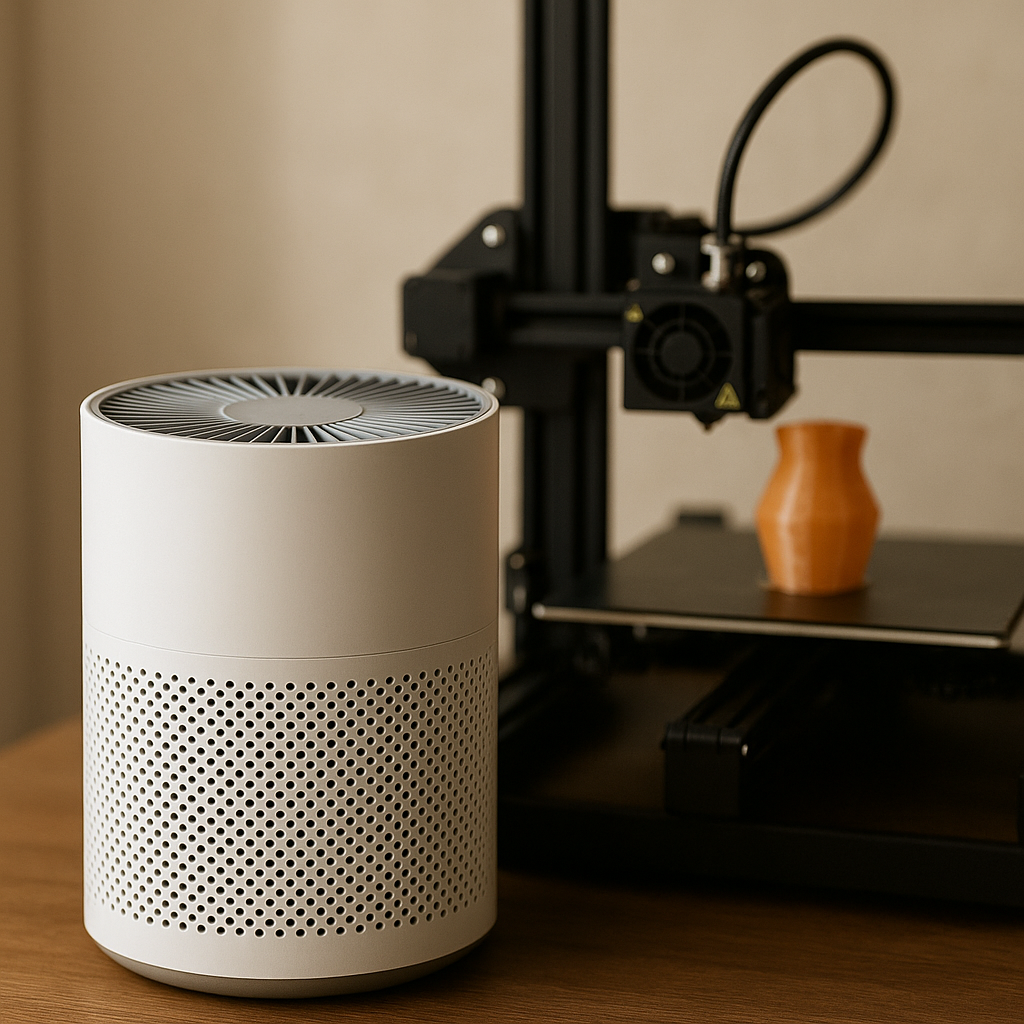
- HEPA Filtration for Particles (UFPs): High-Efficiency Particulate Air (HEPA) filters are designed to capture airborne particles. A true HEPA filter is rated to capture at least 99.97% of particles that are 0.3 micrometers in size. While UFPs are smaller than this, HEPA filters are surprisingly effective at capturing them due to physical principles like diffusion. A standalone HEPA air purifier placed next to the printer will significantly reduce the concentration of UFPs in the room. Some printer enclosures also have built-in HEPA filters.
- Activated Carbon Filtration for VOCs: HEPA filters do nothing to stop gaseous VOCs. For that, you need a different type of filter medium: activated carbon (or charcoal). Activated carbon has an incredibly porous structure, giving it a massive surface area. VOC molecules are adsorbed onto this surface, effectively trapping them. Most high-quality air purifiers designed for smoke or chemical removal will include a substantial activated carbon filter in addition to a HEPA filter.
A combined HEPA/carbon air purifier is a viable alternative when external venting is impossible. It is important to choose a purifier with a high Clean Air Delivery Rate (CADR) appropriate for your room size and to run it on a high setting during and for several hours after printing. Remember that filters have a limited lifespan; the HEPA filter will clog with particles, and the carbon filter will become saturated with VOCs. They must be replaced regularly according to the manufacturer’s recommendations to remain effective.
Strategy 4: Printer Settings and Material Choice Optimization
You can also reduce the source of the emissions in the first place.
- Lower Your Temperature: As discussed, temperature is a key driver of emissions. Experiment to find the lowest possible nozzle temperature that still provides good layer adhesion and print quality for your specific brand of PETG. Printing at 235°C instead of 250°C can make a measurable difference.
- Choose High-Quality Filament: Opt for reputable brands that use 100% virgin resin and provide safety data sheets (SDS). Cheaper, off-brand filaments may contain unknown additives or contaminants that could increase emissions. Sourcing from a reliable supplier is a form of risk management.
- Consider Material Alternatives: If a part does not require the specific properties of PETG, consider using PLA instead to take advantage of its lower emission profile. Match the material to the functional needs of the part, not just by default.
Strategy 5: Personal Protective Equipment (PPE) – When Is It Necessary?
Engineering controls like ventilation and filtration are always superior to PPE because they remove the hazard from the environment. PPE should be considered the last line of defense. However, in some situations, it can be a valuable tool.
A simple dust mask or surgical mask is ineffective against UFPs and VOCs. To protect yourself, you would need a respirator.
- What kind of respirator? A reusable elastomeric half-mask respirator fitted with the correct cartridges is the appropriate choice. You would need:
- P100 (or N95) particulate filters: These will capture the UFPs. The “P100” rating is oil-proof and filters at least 99.97% of airborne particles.
- Organic Vapor (OV) cartridges: These contain activated carbon to adsorb the VOCs.
- When to use it? A respirator might be warranted if you are working in a poorly ventilated space, if you are particularly sensitive to air pollutants, or when you are cleaning or interacting with a print farm environment where concentrations are high. For a hobbyist with a good ventilation or filtration system, a respirator is likely unnecessary for routine printing.
By layering these five strategies, you can construct a robust safety system that allows you to confidently answer the question “is PETG safe to print indoors?” with a “yes, with these precautions.”
Frequently Asked Questions (FAQ)
1. Does printing PETG produce a noticeable smell?
PETG is often described as “odorless,” especially when compared to the strong, acrid smell of ABS. However, some users may notice a very faint, slightly sweet chemical scent when printing, particularly at higher temperatures. The absence of a strong odor does not mean an absence of emissions. Both UFPs and many VOCs are odorless, so you should not rely on your sense of smell to judge air safety.
2. Is an air purifier with a HEPA filter enough to make printing PETG safe?
A good quality air purifier with both a HEPA filter and a substantial activated carbon filter can be a very effective mitigation strategy, especially when outdoor ventilation is not possible. It will significantly reduce both UFP and VOC concentrations in the room. For maximum effectiveness, place the purifier close to the printer and ensure its CADR (Clean Air Delivery Rate) is adequate for your room size. It is a strong component of a safe setup.
3. Is PETG filament that is labeled “food-safe” safe to print with indoors?
The “food-safe” designation refers to the chemical composition of the solid, finished plastic, indicating it is made from resins that comply with FDA standards for food contact surfaces. This rating has no bearing on the emissions produced when the filament is melted and extruded. Furthermore, the layer lines in an FDM print create microscopic crevices that can trap bacteria, making most 3D printed objects unsuitable for direct, repeated food contact regardless of the material. The emissions from “food-safe” PETG are the same as standard PETG and should be managed with the same precautions.
4. I have asthma. Should I avoid printing with PETG altogether?
If you have asthma or another respiratory sensitivity, you should exercise a higher degree of caution. The UFPs produced during printing are known respiratory irritants that can trigger asthma symptoms. This does not necessarily mean you must avoid PETG, but it does mean that robust mitigation is non-negotiable. An actively vented enclosure that exhausts all emissions directly outdoors would be the ideal setup. If that is not possible, a high-quality HEPA/carbon air purifier is essential. Consult with your doctor about the potential risks.
5. How does PETG compare to ASA in terms of indoor printing safety?
ASA (Acrylonitrile Styrene Acrylate) was developed as a UV-resistant alternative to ABS. Chemically, it is very similar to ABS and shares a similar emission profile. It releases high levels of UFPs and Styrene gas. Therefore, PETG is significantly safer to print indoors than ASA, just as it is with ABS. All the safety advantages PETG has over ABS also apply to ASA.
A Final Reflection on Responsible Printing
The journey into the world of 3D printing is one of empowerment, creativity, and technical discovery. It grants us the ability to turn digital ideas into physical reality. With this power comes a responsibility—a responsibility to ourselves and to those who share our indoor spaces.
The question of whether PETG is safe to print indoors does not have a binary answer. It is a question of context, of degree, and of action. The evidence is clear: printing PETG is not an emission-free process. It generates a moderate level of ultrafine particles and a low level of various volatile organic compounds. To ignore these emissions, to operate a printer for long hours in a sealed bedroom or office with a belief that “it doesn’t smell so it must be fine,” is to accept an unnecessary and poorly understood risk.
But the evidence is also empowering. It shows us that these risks are overwhelmingly manageable. Through a thoughtful application of engineering controls—ventilation to exhaust the pollutants, enclosures to contain them, and filtration to capture them—we can reduce our exposure to near-negligible levels. By making intelligent choices about our materials and our print settings, we can minimize the generation of these emissions at their source.
A responsible maker in 2026 is one who approaches safety with the same rigor and curiosity they apply to a complex print. They treat their lungs with the same respect they treat their printer’s finely calibrated extruder. They understand that a safe printing environment is not a limitation on their creativity, but the very foundation that ensures they can continue to create, invent, and explore for years to come.
References
- Azimi, P., Zhao, D., Pouzet, C., Crain, N. E., & Stephens, B. (2016). Emissions of ultrafine particles and volatile organic compounds from commercially available desktop 3D printers with multiple filaments. Environmental Science & Technology, 50(3), 1260–1268. https://doi.org/10.1021/acs.est.5b04983
- Davis, A. (2019). Characterizing 3D printer emissions and their potential health effects. Chemical Insights Research Institute.
- National Toxicology Program. (2021). 15th Report on Carcinogens. U.S. Department of Health and Human Services, Public Health Service.
- Oberdörster, G., Oberdörster, E., & Oberdörster, J. (2005). Nanotoxicology: An emerging discipline evolving from studies of ultrafine particles. Environmental Health Perspectives, 113(7), 823–839. https://doi.org/10.1289/ehp.7339
- Pelegrina, D., de la Fuente, G., & Fombella, M. Á. (2021). Characterization and mitigation of nanoparticle and volatile organic compound emissions from a desktop 3D printer. Journal of Hazardous Materials, 401, 123348.
- SigmaFilament. (2026, February 11). The 2026 data-backed 3D printer filament comparison chart. https://sigmafilament.com/3d-printer-filament-comparison-chart/
- Stefaniak, A. B., LeBouf, R. F., Duling, M. G., Ranpara, A., Leonard, S. S., & Afshari, A. (2019). Physicochemical characterization of airborne particles and vapors emitted by a desktop 3D printer. Journal of Toxicology and Environmental Health, Part A, 82(1), 17-38.
Last reviewed and updated: February 2026. Author: SigmaFilament Engineering Team. For custom filament solutions and wholesale inquiries, contact our team.