

A Practical Buyer’s Guide: 5 Data-Backed Reasons to Switch to Filament Refill in 2026

Abstract
The proliferation of fused deposition modeling (FDM) 3D printing has precipitated a significant environmental and economic challenge: the accumulation of single-use plastic filament spools. This analysis examines the emergence of the filament refill system as a rational and compelling alternative to the traditional spooled filament paradigm. It investigates the objective merits of this approach, focusing on quantifiable reductions in material cost, a substantial decrease in plastic waste, and the operational efficiencies gained in high-volume printing environments. The discussion navigates the practical considerations of adoption, including the mechanics of transferring filament to reusable spools, the evolving landscape of cross-brand compatibility, particularly with automated material systems (AMS), and the potential for improved print outcomes through better filament management protocols. By deconstructing the components of the filament refill ecosystem, this examination provides a principled framework for makers, professionals, and manufacturers to evaluate the system’s viability. The argument advanced is that transitioning to a filament refill model represents not a compromise but a mature evolution in material consumption, aligning economic prudence with ecological responsibility.
Key Takeaways
- Reduce overall plastic waste by adopting a reusable spool system.
- Lower material expenses by approximately 15-20% per kilogram of filament.
- Verify your printer’s spool holder or AMS is compatible with refill systems.
- Select a quality filament refill from an expanding market of materials.
- Master the straightforward process of loading refills to avoid tangles.
- Always store filament refills in a dry, sealed environment for peak performance.
- Consider printing your own reusable master spools for full customization.
Table of Contents
- The Economic Imperative: Analyzing Cost Savings and Long-Term Value
- The Ecological Argument: Radically Reducing Plastic Waste
- The Compatibility Question: Universal Standards and Material Choice
- The Pursuit of Quality: How Refills Can Improve Print Outcomes
- The Workflow Advantage: Efficiency for Professionals and Print Farms
- A Practical Guide to Adopting a Filament Refill System
- Frequently Asked Questions (FAQ)
- Conclusion
- References
The Economic Imperative: Analyzing Cost Savings and Long-Term Value
The decision to adopt a new technology or methodology within any craft often hinges on a careful weighing of costs against benefits. Within the domain of 3D printing, the choice between traditional spooled filament and a filament refill system presents a classic case for such an evaluation. At first glance, the upfront, single-purchase price of a spooled filament might seem straightforward. Yet, a deeper economic analysis reveals a more complex picture, one where the seemingly innocuous plastic spool carries hidden costs that accumulate over time. The filament refill model directly confronts these costs, proposing a system where the user purchases only the consumable material, thereby disaggregating the cost of the filament from its carrier. This separation is the foundational source of the system’s economic efficiency.
A Direct Comparison: Spooled Filament vs. Filament Refill Costs
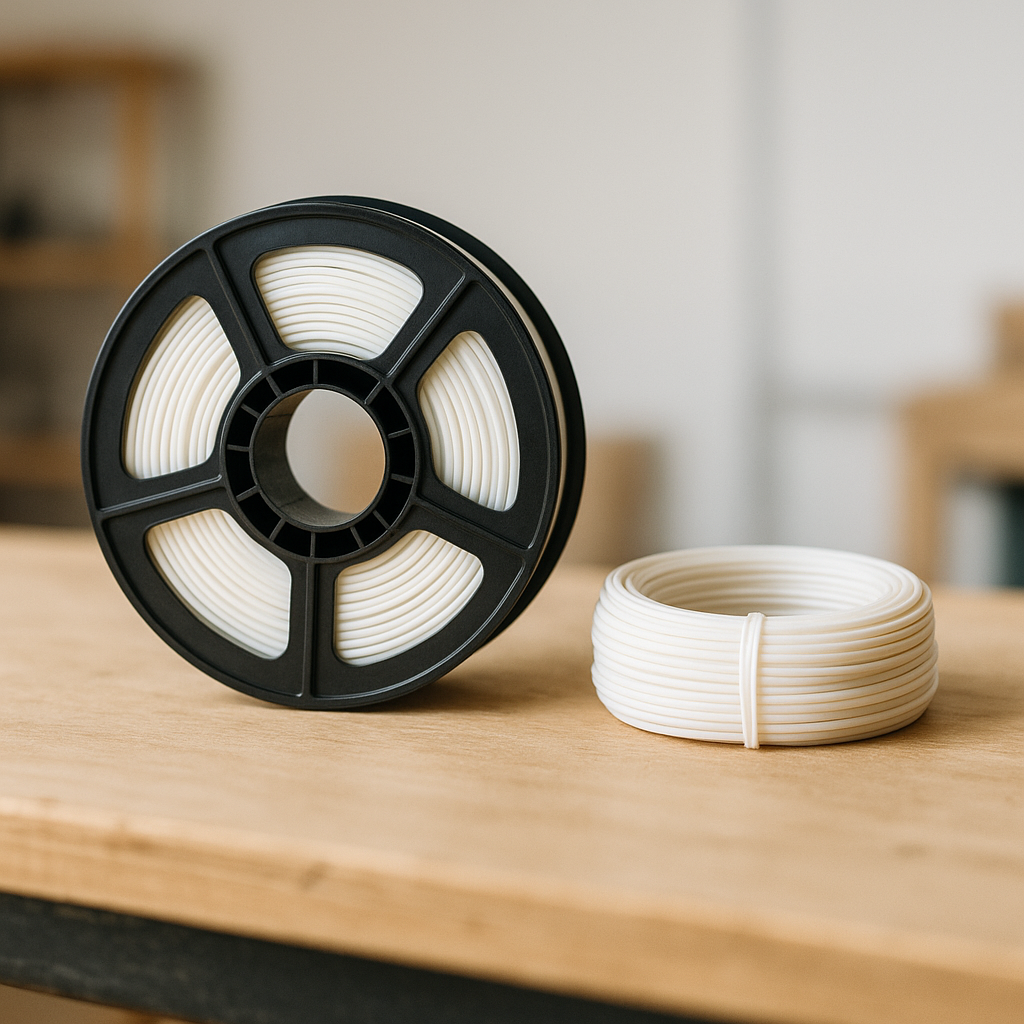
To understand the financial implications, let us consider the composition of what one purchases. When you buy a standard 1 kg spool of filament, you are not just buying 1000 grams of polymer. You are also buying the plastic spool itself, which can weigh anywhere from 200 to 300 grams. This piece of injection-molded plastic has a manufacturing cost, a material cost, and a shipping cost, all of which are embedded within the final price you pay. The filament refill, by contrast, eliminates this component. The filament is wound onto a minimal, often cardboard, core and secured for transit. The user then transfers this filament onto a permanent, reusable spool.
The savings become immediately apparent when comparing prices for the same material from the same manufacturer. A filament refill is consistently less expensive than its spooled counterpart. The discount typically falls within the range of 15% to 20%, a figure that directly reflects the cost of the disposable spool that has been removed from the equation. While a few dollars per kilogram might seem modest, the cumulative effect for any maker who prints with regularity is substantial.
To illustrate this, let’s construct a simple comparative table. The prices used here are representative of the market in 2026 for a standard material like PLA.
| Feature | Standard 1kg Spooled Filament | 1kg Filament Refill |
|---|---|---|
| Average Retail Price | $25.00 | $20.00 |
| Filament Weight | 1000g | 1000g |
| Spool Weight (Approx.) | 250g | N/A (minimal cardboard core) |
| Cost per Kilogram of Filament | $25.00 | $20.00 |
| Immediate Savings per Unit | N/A | $5.00 (20%) |
| Waste Generated per Unit | ~250g Plastic Spool | Negligible Cardboard |
Imagine a small design studio that consumes 10 kilograms of prototyping material per month. By opting for a filament refill system, the studio would save approximately $50 per month, or $600 per year. For a larger print farm consuming hundreds of kilograms, these savings scale into the thousands of dollars, transforming from a minor optimization into a significant line item on a budget. This direct, recurring saving is the most powerful economic argument for making the switch.
Calculating Your Return on Investment (ROI) for Reusable Spools
Of course, the filament refill system requires an initial investment in reusable spools. These spools, often called “master spools,” are typically robustly designed, sometimes with two interlocking halves that screw or snap together around the filament coil. A high-quality reusable spool might cost between $5 and $10. Alternatively, many manufacturers provide the design files for their reusable spools, allowing users to print their own for the cost of the filament, which is typically only a few dollars.
Let’s perform a simple Return on Investment (ROI) calculation. Assume you purchase a reusable spool for $8. As established, you save approximately $5 on your first filament refill purchase. After your second refill purchase, you have saved $10, completely covering the cost of the reusable spool and yielding a net saving of $2. Every subsequent refill purchased for that spool generates pure savings.
The ROI period is remarkably short, often just one or two purchases. If you print your own spool for, say, $3 worth of PETG, you achieve a positive ROI on your very first refill. This is not a long-term strategic investment with a payoff years down the line; it is an immediate tactical shift with a financial benefit that is realized within weeks or months, depending on printing frequency. For anyone who views 3D printing as more than an occasional hobby, the economic logic is difficult to contest.
The Hidden Costs of ‘Free’ Spools: Shipping Weight and Storage Space
The economic analysis extends beyond the direct purchase price. Consider the logistics of filament. A case of ten 1kg spools does not weigh 10kg; it weighs closer to 12.5kg or 13kg due to the weight of the spools and packaging. This extra mass translates directly into higher shipping costs, whether for a single consumer ordering online or for a business receiving a bulk freight shipment. By eliminating the disposable spool, a filament refill system reduces the shipping weight of the product by roughly 20-25%. This reduction can lead to lower shipping fees, especially for international or expedited orders.
Furthermore, storage presents another hidden cost. Standard plastic spools are bulky and spatially inefficient. Their wide flanges create significant empty space when stored side-by-side on a shelf. Filament refills, on the other hand, are compact coils. They can be stacked tightly in a dry box, occupying significantly less volume than their spooled equivalents. For a print farm or a workshop where space is at a premium, this improved storage density is a tangible operational benefit. It means more material can be kept on hand in the same amount of space, improving inventory management and reducing the frequency of reordering. The empty spools themselves become a storage problem, piling up in a corner until they are discarded. The filament refill system elegantly removes this entire category of logistical friction.
The Ecological Argument: Radically Reducing Plastic Waste
The discourse surrounding 3D printing often celebrates its capacity for innovation and on-demand manufacturing, positioning it as a potentially more sustainable mode of production compared to traditional subtractive methods. This narrative, however, frequently overlooks the considerable waste stream generated by the process itself, most notably the mountain of empty plastic spools discarded by the community. Each completed print leaves behind not just support material but also a non-trivial piece of injection-molded plastic. The filament refill system offers a direct and powerful response to this challenge, reframing the spool not as a disposable container but as a durable tool.
Quantifying the Spool Problem: A Look at the Numbers
To grasp the scale of the issue, one must consider the sheer volume of filament consumed. The global 3D printing materials market is a multi-billion dollar industry, with thermoplastic filament representing a substantial portion. If a standard 1kg spool is made of approximately 250 grams of plastic (typically polystyrene or ABS), then for every four kilograms of filament printed, one kilogram of plastic spool waste is generated.
Let’s put that in concrete terms. A dedicated hobbyist might easily go through 20kg of filament in a year. This equates to 20 empty spools, representing about 5kg (11 lbs) of plastic waste. A small business or a university makerspace could consume 200kg of filament annually, generating 50kg (110 lbs) of spool waste. For large-scale print farms, the numbers become staggering, reaching into the tons of plastic waste each year, solely from empty spools.
This plastic is often difficult to recycle. Spools are typically made from High Impact Polystyrene (HIPS) or Acrylonitrile Butadiene Styrene (ABS), which are not as commonly accepted in municipal recycling programs as PET or HDPE. They are rarely marked with a clear resin identification code, and the presence of labels, adhesive residue, or even metal eyelets can contaminate the recycling stream. Consequently, the vast majority of these spools end up in landfills, where they will persist for centuries (Sadler & Erasmus, 2022). The filament refill directly interrupts this cycle of consumption and disposal.
From Plastic Spool to Cardboard Core: A Lifecycle Analysis
The filament refill system replaces the durable, over-engineered plastic spool with a minimalist core, most often made of simple cardboard. This substitution is profound from a lifecycle perspective. The production of a 250g plastic spool requires petroleum extraction, refining, polymerization, and high-pressure injection molding—an energy-intensive process. The cardboard core, by contrast, is derived from renewable wood pulp and requires significantly less energy to produce.
At the end of its short life, the cardboard core’s journey is far more benign. It is readily recyclable in virtually all municipal paper recycling programs. If it is not recycled, it is biodegradable, breaking down in a landfill or compost environment in a matter of months, not millennia. Some manufacturers are even moving toward cores made from 100% recycled paper, further closing the loop.
The reusable master spool, the other half of the system, is designed for permanence. It is a tool, not trash. A well-made reusable spool made from a tough material like PETG or ABS can be used hundreds, if not thousands, of times. Its environmental impact, while non-zero, is amortized over a very long lifespan. The paradigm shifts from a linear model (produce -> use -> discard) to a circular one (produce -> use -> reuse -> reuse…). This is a fundamental move toward a more sustainable practice, reducing the constant demand for virgin plastic and lessening the burden on our planet’s waste management systems.
Beyond Waste Reduction: The Role of Recycled and Recyclable Materials
The philosophy of waste reduction inherent in the filament refill model often extends to the filament itself. Many manufacturers leading the charge on refills are also pioneers in using recycled materials. It is becoming more common to find high-quality recycled PLA filament or PETG offered as a filament refill option. These materials are produced from post-industrial or, in some cases, post-consumer waste, giving a second life to plastics that would otherwise be discarded.
By choosing a recycled filament on a cardboard core, the user engages in two levels of waste reduction simultaneously. They prevent a spool from entering the landfill, and they utilize a material that diverts waste from another source. This creates a powerful synergy for the environmentally conscious maker.
Moreover, the reusable spools themselves can be part of this circular economy. Many designs are available as open-source files, allowing users to print their own. What better material to print a reusable spool with than a durable, recycled PETG? It creates a self-reinforcing cycle of sustainability within the workshop. The act of printing your own tool to reduce future waste is an empowering one, connecting the user more deeply to the principles of responsible making. The conversation shifts from “What can I make?” to “How can I make it better?”.
The Compatibility Question: Universal Standards and Material Choice
A significant point of hesitation for many users considering a switch to a filament refill system is the fear of being locked into a proprietary ecosystem. The history of technology is rife with examples of formats designed to limit consumer choice, from printer ink cartridges to mobile phone chargers. The concern that a reusable spool from one brand might not work with a filament refill from another is a valid one. However, the 3D printing market in 2026 is showing a strong and encouraging trend toward open standards and cross-compatibility, making the filament refill a more universal and less risky proposition than ever before.
Deconstructing the Ecosystem: How Refills Promote Openness
The traditional spooled filament model, while seemingly open, has its own subtle compatibility issues. Spools come in various widths and hub diameters, and some printers or multi-material systems are notoriously picky about what fits. The filament refill, paradoxically, helps to solve this. Because the user is standardizing on a single reusable spool design of their choosing, they ensure that every kilogram of filament they purchase will fit perfectly in their setup. They select or print a master spool that is ideally suited to their printer and then adapt any brand of filament refill to it.
This turns the lock-in fear on its head. Instead of being locked in, the user is liberated from the physical constraints of an arbitrary spool design. The filament refill itself—the coil of plastic—is a universal commodity. As long as it is wound to a standard internal diameter, it can be mounted on any compatible reusable spool. This market pressure has led most manufacturers to converge on a few common coil sizes, making interoperability the norm, not the exception. Companies like Polymaker and Spectrum Filaments explicitly market their refills as compatible with systems from other major players, including Bambu Lab, Prusa, and Creality.
A Look at the Market: Major Brands and Their Refill Systems
The adoption of refill systems by key industry players is a strong indicator of the model’s viability and future. What started as a niche offering has become a mainstream feature for many of the most respected filament brands. A brief survey of the landscape reveals a healthy and competitive ecosystem.
| Manufacturer | Reusable Spool System | Key Features | Compatibility Notes |
|---|---|---|---|
| Bambu Lab | Reusable Spool | Two-piece, snap-fit design. Often includes RFID tag slot for material identification with AMS. | Refills from other brands fit the spool. The Bambu spool is a de facto standard that many others design for. |
| Polymaker | PolyTerra™ Cardboard Spool / Refill System | Focus on recycled cardboard spools and refills. Offers a printable master spool design. | Refills are designed to be compatible with Bambu Lab and other common reusable spools. |
| Prusa Research | Prusament Refill | Offers refills for its Prusament line. Provides files for printing master spools. | Focuses on their own ecosystem but refills generally follow standard coil dimensions. |
| Spectrum Filaments | ReFill System | Two-piece, screw-together master spool. Emphasizes eco-friendly cardboard coil holders. | Explicitly states compatibility with Bambu Lab’s AMS and other reusable spools. |
| eSUN | eSpool / Refill | Offers a transparent, reusable spool and a wide range of refill materials. | One of the early adopters; their system is widely compatible due to market tenure. |
This table is not exhaustive, but it illustrates a crucial point: the market is not fragmenting into dozens of incompatible, proprietary standards. Instead, it is converging around the popular and effective design pioneered by Bambu Lab, creating a shared standard that benefits the consumer. You can confidently purchase a master spool from one company and know that a filament refill from a variety of other high-quality manufacturers will fit it. This competition ensures a wide selection of materials, colors, and price points, completely mitigating the risk of being tied to a single supplier.
AMS and Multi-Material Systems: Are Refills a Viable Option?
The rise of sophisticated, automated material systems (AMS) like the one from Bambu Lab adds another layer to the compatibility question. These systems are designed to automatically switch between multiple filaments during a print, but they can be sensitive to spool dimensions and weight. Can a filament refill system work reliably in this context?
The answer is a resounding yes. In fact, many reusable spool systems are designed with AMS compatibility as a primary feature. The Bambu Lab reusable spool, for example, is the native format for their AMS. Because other brands have designed their refills to fit the Bambu spool, a user can load their AMS with four different refills (e.g., a PLA from Polymaker, a PETG from eSUN, a durable carbon fiber composite from SigmaFilament, and a TPU from another vendor), all mounted on identical reusable spools, and expect seamless performance.
Some reusable spools even incorporate features to enhance the AMS experience, such as dedicated slots for the RFID tags that Bambu Lab uses to automatically identify filament type and color. The key is to standardize your collection of spools. By using the same type of reusable spool for all your refills, you present a consistent, predictable physical object to the AMS, which greatly improves reliability. Far from being an obstacle, the AMS has been a major driver for the standardization of filament refills, as the benefits of cost and waste reduction are magnified for users who keep multiple materials loaded at all times.
The Pursuit of Quality: How Refills Can Improve Print Outcomes
A common apprehension among those new to the concept of a filament refill is the fear of compromising quality. The image of manually transferring a coil of filament from a core to a spool can evoke anxieties about tangles, inconsistent winding, and other issues that might lead to a failed print. These concerns, while understandable, are largely unfounded. When handled correctly, a filament refill system not only matches the quality of pre-spooled filament but can, in some ways, contribute to better print outcomes by fostering superior filament management habits.
The Myth of the Inferior Refill: Understanding Filament Winding
The quality of a filament’s winding is indeed paramount for successful, unattended printing. A tangle or a crossover on the spool can cause the extruder to jam, ruining a print hours into the process. It is a misconception, however, to assume that a factory-wound disposable spool is inherently superior to a user-loaded reusable spool.
Filament manufacturers use the same industrial winding machines to produce both their spooled products and their filament refills. The filament is drawn from the extruder, through a laser micrometer to check for dimensional accuracy, and then wound onto a core. For a spooled product, that core is a plastic spool. For a refill, that core is a temporary cardboard hub. The precision and neatness of the winding are identical up to that point. The filament on a brand-new refill is just as perfectly wound as the filament on a brand-new spool.
The critical step is the transfer process. A filament refill is held together by several zip ties or paper straps. As long as these straps are not removed all at once, the filament cannot lose its coil shape and tangle. The correct procedure involves mounting the refill inside the reusable spool, securing the free end of the filament, and then cutting the straps one by one as the filament is smoothly transferred. The coil never has a chance to spring loose. There is no “re-winding” involved; it is simply a transfer of a perfectly wound coil from one hub to another. With a minute of practice, the process becomes trivial and tangle-free.
Encouraging Best Practices: The Ritual of Filament Care
Adopting a filament refill system subtly encourages a more disciplined and attentive approach to material handling, which pays dividends in print quality. The most significant of these is moisture management. Most 3D printing filaments are hygroscopic, meaning they readily absorb moisture from the ambient air. Wet filament leads to a host of problems, including stringing, oozing, poor layer adhesion, and a brittle final part (Singh, 2025). This is particularly true for materials like PETG, Nylon, and TPU.
When using traditional spools, it is easy to become complacent. A spool might be left on the printer for days or weeks, slowly absorbing humidity. The user of a filament refill system, however, is already engaged in a hands-on process. The act of loading a new refill is a natural point in the workflow to also consider filament conditioning. It becomes a ritual: take a new refill from its vacuum-sealed bag, transfer it to the master spool, and then place the loaded spool directly into a filament dryer for a few hours before printing.
This habit of drying filament before every use is one of the single most effective things a user can do to improve print consistency and quality. Because the refill system already involves a handling step, integrating this drying step feels like a natural part of the process rather than an additional chore. The result is better prints, not because the refill itself is magic, but because the system it belongs to promotes the disciplined practices that have always been essential for high-quality FDM printing.
Master Spools: Designed for Performance, Not Disposability
Finally, it is worth considering the design of the spools themselves. Disposable spools are built to a price point. They are designed to be just strong enough to survive shipping and one-time use. Their primary goal is to be cheap to manufacture.
Reusable master spools, on the other hand, are designed for performance and longevity. They are often more robustly constructed, with smoother edges and better overall balance, which can lead to smoother rotation on a spool holder and more consistent feeding, especially at high speeds. Some designs incorporate clever features, like integrated filament clips that are more secure than the small holes on disposable spools, or a built-in window that allows for a quick visual estimation of the remaining filament.
Furthermore, because users can print their own master spools, they can customize them for their specific needs. They can print them in different colors to color-code their materials. They can modify the design to fit a non-standard spool holder. They can choose to print it from a high-temperature material like ABS or ASA for use inside a heated chamber. The master spool is not just a container; it is a piece of performance hardware that the user can control and optimize. This level of control, combined with the good habits the system encourages, makes a compelling case that a filament refill system is a pathway to higher-quality printing.
The Workflow Advantage: Efficiency for Professionals and Print Farms
For the hobbyist printing a few items a week, the benefits of a filament refill system are primarily economic and ecological. For the professional, the small business, or the print farm operator, these benefits remain, but they are joined by a third, equally compelling advantage: workflow efficiency. In a production environment, time is money, space is a fixed resource, and process reliability is non-negotiable. The filament refill system offers tangible improvements in all three of these areas, streamlining operations from inventory management to the print bed.
Optimizing Your Space: The Superior Storage Density of Refills
Physical space is a constant constraint in any workshop or production facility. Filament, in its traditional spooled form, is surprisingly inefficient to store. A standard 200mm diameter spool occupies a significant volume, much of which is empty air trapped by the wide flanges. When placed on a shelf, there is considerable wasted space between each spool.
Filament refills, being compact coils of filament without the bulky flanges, offer a dramatic improvement in storage density. A coil is essentially a thick, hollow cylinder. These can be stacked, nested, or filed like records in a crate, occupying a fraction of the volume of their spooled counterparts. In a dry box or on a storage shelf, one can typically store two to three times as many kilograms of filament refills as spools in the same amount of space.
This has profound implications for inventory management. A print farm can keep a much larger and more diverse stock of materials on hand without expanding its physical footprint. This reduces the risk of stockouts on critical materials, allows for more agile responses to client requests, and enables more cost-effective bulk purchasing. The space once occupied by towering stacks of bulky spools can be reclaimed for more printers, post-processing equipment, or simply a less cluttered and more organized workspace. The reduction in clutter also extends to waste management, as there is no longer a constantly growing pile of empty spools to deal with.
Streamlining Inventory and Reducing Changeover Times
In a professional setting, keeping track of materials is a serious task. A filament refill system can simplify this process. Because the refills themselves are compact and uniform, they are easier to count and organize. The master spools, meanwhile, can become part of a more intelligent system. Many users will dedicate a specific master spool to a specific material type or even color, perhaps by printing the spool itself in a matching or indicative color (e.g., a red spool for all red PLA, a blue spool for PETG).
This color-coding provides an immediate visual cue about the material loaded on a printer, reducing the chance of error. When combined with an AMS, where multiple materials are loaded simultaneously, having them all on identical, color-coded master spools makes the system state instantly readable.
The process of changing materials can also be expedited. With a well-designed master spool—particularly the two-piece, screw-together or snap-fit varieties—loading a new filament refill takes less than a minute. The operator brings the new coil to the printer, opens the empty master spool, drops the new coil in, secures the filament end, closes the spool, and feeds the filament. This can be faster and less clumsy than wrestling a new, vacuum-sealed spool out of its box and mounting it. The process is clean, repeatable, and efficient, minimizing printer downtime between jobs. For a farm with dozens of printers, shaving a few minutes off every material changeover adds up to a significant increase in productive uptime over the course of a year.
The Professional’s Choice: Reliability Meets Scalability
Ultimately, a professional environment demands reliability and scalability. The filament refill system delivers on both fronts. The reliability comes from the promotion of best practices, as discussed earlier. A workflow that normalizes filament drying and uses high-quality, performance-oriented master spools will inevitably produce more consistent results and suffer fewer print failures. Fewer failures mean less wasted material, less wasted time, and higher client satisfaction.
The scalability comes from the economic and logistical efficiencies of the system. The lower per-kilogram cost of refills means that scaling up production is less capital-intensive. The superior storage density means that a growing inventory does not require a proportional increase in facility space. The streamlined workflow means that a small team can manage a larger number of printers effectively.
The filament refill system is not just a product; it is a manufacturing philosophy. It treats filament as a raw material input and the spool as a piece of factory tooling. This is the mindset of industrial production, and it is why the filament refill system is rapidly becoming the standard for those who have moved beyond hobbyist printing and into the world of manufacturing and professional services. It is a system that grows with your business, offering compounding benefits as you scale.
A Practical Guide to Adopting a Filament Refill System
Transitioning to a filament refill system is a straightforward process. The elegance of the system lies in its simplicity. This guide will walk you through the essential steps, from selecting your hardware to mastering the transfer process, ensuring a smooth and successful adoption. Think of this not as a complex new skill to learn, but as a simple habit to form, much like using a reusable shopping bag or a travel coffee mug.
Selecting Your Reusable Spool: DIY vs. Commercial Options
Your first step is to acquire one or more reusable spools. You have two primary options: purchasing a commercially manufactured spool or 3D printing your own.
Commercial Spools: Many filament manufacturers, including Bambu Lab, Polymaker, and eSUN, sell their reusable spools directly. These are typically injection-molded from durable plastics like ABS or a PC blend.
- Pros: High-quality finish, guaranteed dimensional accuracy, and robust construction. They are ready to use out of the box.
- Cons: Higher initial cost (typically $5-$12 per spool). You are limited to the designs offered by the manufacturers.
DIY Printed Spools: Most companies that promote a refill system also provide the STL files for their spool designs free of charge. You can download these and print them on your own 3D printer.
- Pros: Very low cost (just the price of the filament used, usually 200-250g). You can customize the color and material. It feels empowering to print your own tools.
- Cons: Requires printing time and a well-calibrated printer to ensure the parts fit together correctly. The quality is dependent on your printing skill.
For your first spool, it may be wise to purchase a commercial one to have a reliable benchmark. For subsequent spools, printing your own is an excellent and cost-effective option. It is recommended to print them in a sturdy, temperature-resistant material like PETG or ABS rather than standard PLA, as this will ensure longevity, especially if you plan to use the spool inside a heated enclosure.
The Transfer Process: A Step-by-Step Guide to Loading a Refill
This is the part that causes the most apprehension, but the process is designed to be fool-proof. The key is to never allow the filament coil to lose its tension. The straps holding it together are your safeguard.
- Preparation: Open your two-piece reusable spool. Have a pair of flush cutters or scissors ready. Take your new filament refill out of its vacuum-sealed bag. Observe that it is held together by several straps (usually zip ties or paper bands). Do not cut them yet.
- Position the Coil: Place the filament coil onto one half of the reusable spool. Ensure the filament is oriented to unwind in the correct direction for your printer setup. Most spools have an arrow or indicator.
- Secure the Spool: Place the second half of the spool over the coil and fasten it securely. This may involve screwing the two halves together or snapping them into place. The filament coil is now captured inside the master spool.
- Locate and Secure the End: Find the free end of the filament, which is usually tucked into a slot on the coil. Carefully pull it free and thread it through the designated hole or slot on the outer rim of your reusable spool. Secure it by bending it or clipping it in place. The coil is now anchored at its end.
- Cut the Straps: This is the critical moment. With the coil safely contained within the closed spool and the end secured, you can now cut the straps. Use your flush cutters to snip the zip ties or paper bands. You may need to rotate the spool to access all of them. As you cut them, the coil will want to expand slightly, but it will be constrained by the inner walls of your reusable spool. It cannot tangle.
- Ready to Print: Your filament refill is now loaded and ready to be mounted on your printer. The entire process, once practiced, takes less than 60 seconds.
Common Pitfalls and How to Avoid Them
- Pitfall: Cutting all the straps before containing the coil. This is the only way to create a “spool-splosion” where the filament springs into a tangled mess. Avoidance: Always secure the coil inside the reusable spool before cutting any straps.
- Pitfall: Loading the coil backward. The filament will unwind from the bottom instead of the top, which can cause feeding issues. Avoidance: Pay attention to the unwind direction indicators on the spool or simply visualize how it will sit on your printer’s holder.
- Pitfall: Using a poorly printed master spool. If the two halves don’t fit together well or the surface is rough, it can snag the filament. Avoidance: Calibrate your printer before printing your own spools. Print with a reliable material and inspect the finished part for defects.
- Pitfall: Forgetting to dry. The refill system makes drying easy, but it’s still a step you have to remember to do. Avoidance: Make it a habit. As soon as you load a new refill of a hygroscopic material like PETG or Nylon, put it in the dryer.
By following these simple guidelines, you can make the filament refill system a seamless and beneficial part of your 3D printing workflow.
Frequently Asked Questions (FAQ)
Will using a filament refill cause my filament to tangle?
This is the most common concern, and the answer is no, provided you follow the correct procedure. A filament refill is wound with the same precision as a standard spool. The key is to transfer the coil to the reusable spool before cutting the straps that hold it together. This contains the coil and prevents it from springing loose and tangling.
Are filament refills compatible with my 3D printer and AMS?
Yes, in almost all cases. The market has largely standardized on refill coil sizes that fit popular reusable spool designs, like those from Bambu Lab or Polymaker. You choose a reusable spool that you know fits your printer or AMS, and then virtually any brand’s refill will fit that spool. This actually increases compatibility, as you are no longer at the mercy of varying disposable spool widths or hub sizes.
How much money do I really save with a filament refill?
You can expect to save between 15% and 20% on the cost of the filament itself. A standard 1kg filament refill is typically $4-$6 cheaper than its spooled equivalent. After purchasing or printing your first reusable spool (which costs between $3-$10), you will break even after one or two refills. Every purchase after that is pure savings.
Can I get specialty materials like carbon fiber or high-speed PLA as a refill?
Absolutely. The filament refill model is no longer limited to basic PLA and PETG. Manufacturers are now offering a wide range of materials in refill format, including high-speed filaments, composites like carbon-fiber reinforced PETG, flexible TPUs, and various aesthetic filaments. As the system grows in popularity, the material selection continues to expand.
What is the main environmental benefit of switching to a filament refill?
The primary benefit is a drastic reduction in plastic waste. A typical disposable plastic spool weighs around 250g. For every four spools you use, you generate 1kg of plastic waste that is difficult to recycle and ends up in a landfill. The refill system replaces this with a reusable tool and a small, easily recyclable or biodegradable cardboard core, cutting your spool-related plastic waste to nearly zero.
Where should I start if I want to try a filament refill?
A good starting point is to purchase one commercial reusable spool from a reputable brand and one 1kg filament refill of a material you use often, like PLA. This small investment (around $30 total) allows you to test the system and experience the workflow. Once you see how simple and effective it is, you can start printing your own spools and transitioning your filament supply over to refills.
Conclusion
The examination of the filament refill system reveals a compelling and multifaceted case for its adoption. The arguments are not rooted in abstract ideals but in practical, measurable benefits that touch upon the core concerns of the modern maker: economic efficiency, ecological responsibility, and the pursuit of quality. The evidence points toward a clear conclusion that this system represents a significant step forward in the maturation of desktop 3D printing.
Economically, the logic is unassailable. By decoupling the consumable filament from the durable tool that is the spool, the system offers direct and recurring cost savings that are meaningful for hobbyists and transformative for professionals. Environmentally, it provides a powerful and immediate solution to the growing problem of plastic spool waste, shifting the paradigm from a disposable, linear model to a sustainable, circular one. On the fronts of quality and workflow, the system encourages the disciplined habits of material care that lead to better prints, while offering logistical advantages in storage and handling. The initial anxieties regarding compatibility and complexity have been largely rendered moot by a market that is wisely converging on open, interoperable standards. The choice to switch to a filament refill is an assertion of control—over costs, over waste, and over the printing process itself. It is a rational, prudent, and conscientious evolution in how we engage with this remarkable technology.
References
- Sadler, J. P., & Erasmus, M. (2022). The environmental impact of 3D printing: A review of the literature. Journal of Cleaner Production, 375, 134093.
- SigmaFilament. (2026a, January 25). Actionable buyer’s guide: 7 factors for success with carbon fiber PETG in 2026. https://sigmafilament.com/carbon-fiber-petg-printing-guide/
- SigmaFilament. (2026b, January 27). A practical 2026 buyer’s guide: PLA vs PETG vs ABS. https://sigmafilament.com/pla-vs-petg-vs-abs-filament-guide/
- Singh, S. (2026, January 12). The complete 3D printer filament guide: Technical data, brand analysis & scientific research (2025). 3D Printed Decor.
- RepRap Ltd. (n.d.). MasterSpool: A universal open-source FFF filament spool standard [Computer software]. GitHub. Retrieved February 5, 2026, from https://github.com/RepRapLtd/MasterSpool
Last reviewed and updated: February 2026. Author: SigmaFilament Engineering Team. For custom filament solutions and wholesale inquiries, contact our team.