

A Practical 2026 Guide: 3 Key PolyLite PLA Filaments Compared

Abstract
The selection of a specific Polylactic Acid (PLA) filament variant represents a critical decision point in the additive manufacturing process, one that dictates the mechanical performance, aesthetic quality, and post-processing potential of the final printed object. This analysis examines the nuanced differences within Polymaker’s PolyLite PLA family, a line of materials engineered for reliability and high performance. A detailed investigation into three primary variants—standard PolyLite PLA, PolyLite PLA Pro, and PolyLite CosPLA—reveals distinct property profiles tailored to specific applications. Standard PolyLite PLA serves as a benchmark for ease of printing and high-detail reproduction, suitable for general-purpose prototyping. PolyLite PLA Pro introduces significantly enhanced impact strength, addressing the inherent brittleness of conventional PLA for functional, durable parts. PolyLite CosPLA is uniquely formulated for the needs of artisans and cosplayers, prioritizing exceptional sandability and paint adhesion. A comparative framework evaluating their mechanical data, printing parameters, and ideal use cases provides a rational basis for material selection, moving the user from a generic choice of “PLA” to a specific, application-driven decision.
Key Takeaways
- Standard PolyLite PLA is ideal for beginners and high-detail aesthetic models.
- Choose PolyLite PLA Pro for functional parts requiring superior toughness and impact resistance.
- Select PolyLite CosPLA when extensive sanding and painting are required for the final product.
- PLA Pro offers engineering-grade properties while maintaining the ease of printing PLA.
- The optimal PolyLite PLA variant depends entirely on the part’s final application.
- Always verify your printer’s capabilities before using specialized composite filaments.
- Proper filament storage is essential for maintaining the quality of all PLA types.
Table of Contents
- Introduction: Situating PolyLite PLA in the Material Landscape
- A Comparative Analysis: Key Technical Specifications at a Glance
- The Workhorse: A Deep Dive into Standard PolyLite PLA
- The Engineer’s Choice: Unpacking PolyLite PLA Pro
- The Artisan’s Material: Exploring PolyLite CosPLA
- Beyond the Core Trio: The Specialized Variant – PolyLite PLA-CF
- A Practical Guide to Printing Success with the PolyLite Family
- FAQ: Answering Your Questions About PolyLite PLA
- Final Considerations: Making an Informed Material Choice
- References
Introduction: Situating PolyLite PLA in the Material Landscape
In the world of Fused Deposition Modeling (FDM) 3D printing, Polylactic Acid, or PLA, often serves as the initial point of entry for many makers, educators, and professionals. Its reputation is built on a foundation of user-friendliness, low printing temperatures, and minimal warping, making it an exceptionally forgiving material. Yet, to categorize all PLA under a single, monolithic heading is to overlook the profound innovations that have given rise to a spectrum of specialized formulations. The journey of understanding advanced materials begins not by abandoning PLA, but by appreciating its evolution. The PolyLite PLA series from Polymaker exemplifies this evolution, offering a curated selection of filaments where each variant is not merely a different color, but a distinct material with a carefully engineered purpose.
To make an informed choice, one must move beyond the simple question of “Should I use PLA?” and begin to ask, “Which PLA is appropriate for my specific need?” This requires a deeper mode of inquiry, one that considers the eventual life of the printed object. Will it be a static display piece? Will it endure mechanical stress? Will it be transformed through sanding and painting into a work of art? The answers to these questions guide us toward the correct formulation.
The Ubiquity of PLA: Why It Remains a Cornerstone of FDM Printing
Polylactic Acid’s dominance in the desktop 3D printing market is no accident. Derived from renewable resources like corn starch or sugarcane, its plant-based origins offer a compelling ecological narrative when compared to petroleum-based plastics like ABS. This biodegradability, under specific industrial composting conditions, makes it a more conscientious choice for rapid prototyping and disposable items.
From a technical standpoint, its low coefficient of thermal expansion is its most significant virtue. Think of this property as a material’s tendency to shrink as it cools. Materials with high thermal expansion, like ABS, shrink considerably, causing the corners of a print to lift off the build plate in a phenomenon known as warping. PLA’s stability means it can be printed reliably on open-frame printers without a heated bed, drastically lowering the barrier to entry for new users sigmafilament.com. This inherent stability also allows it to render exceptionally fine details and sharp corners, making it the go-to material for aesthetic models, miniatures, and architectural mock-ups. Its rigidity, while often paired with brittleness, is advantageous for objects that need to hold their shape without flexing.
The Polymaker Philosophy: A Commitment to Quality and Consistency
In a market saturated with countless filament brands, consistency becomes the ultimate measure of quality. A printer calibrated for one spool of filament should, in an ideal world, perform identically with the next. Polymaker has built its reputation on this principle of reliability. Their approach is rooted in rigorous quality control, from the sourcing of raw polymer resins to the final spooling of the filament.
One of their signature technologies, featured across the PolyLite PLA line, is “Jam-Free™” technology. This is not merely a marketing term; it refers to a specific process where the polymer is treated to increase its heat resistance and soften at a much higher temperature. Standard raw PLA resins can begin to soften in the “cold end” of a printer’s extruder, causing them to swell and create a plug, leading to a jam. Polymaker’s process significantly raises this softening temperature, ensuring the filament remains solid until it reaches the melt zone, a simple yet profound improvement that enhances printing reliability. This commitment to solving common user frustrations is a hallmark of their design philosophy, elevating their materials from a simple commodity to a trusted tool.
What is “PolyLite”? Deconstructing the Brand within a Brand
The “PolyLite” name signifies Polymaker’s family of filaments designed to offer the best balance of performance, reliability, and value. It is their accessible line, intended to provide a superior printing experience without the higher cost or stringent printing requirements of their more industrial-grade “PolyMide” or “PolyMax” families. Within this PolyLite ecosystem, the PLA variants are not treated as a single product. Instead, they are a suite of solutions.
Think of it as a craftsman’s toolbox. You would not use a sledgehammer where a finishing hammer is required. Similarly, the choice between standard PolyLite PLA, PLA Pro, and CosPLA is a choice of the right tool for the job. Standard PLA is the versatile claw hammer, useful for a wide range of tasks. PLA Pro is the ball-peen hammer, designed for resilience and shaping metal—or in our case, for creating tough, functional parts. CosPLA is the soft-faced mallet, perfect for tasks that require a firm touch without marring a delicate surface, analogous to its sandable and paintable nature. Understanding these distinctions is the first step toward mastering material selection.
A Comparative Analysis: Key Technical Specifications at a Glance
Words like “tough,” “rigid,” and “strong” are subjective. To truly grasp the differences between the PolyLite PLA variants, we must turn to the objective language of material science data. The properties in the following table are not abstract labels; each one quantifies how a material will behave under specific forces, and the current technical data sheet (TDS) for each grade gives its values. Understanding them allows you to predict a part’s performance before you even begin printing.
| Property | Standard PolyLite PLA | PolyLite PLA Pro | PolyLite CosPLA | Unit | Significance for 3D Printing |
|---|---|---|---|---|---|
| Young’s Modulus | See current TDS | See current TDS | See current TDS | MPa | Stiffness. Higher values mean the part is more rigid and will deflect less under load. |
| Tensile Strength | See current TDS | See current TDS | See current TDS | MPa | Resistance to being pulled apart. The maximum pulling stress a material can withstand. |
| Bending Strength | See current TDS | See current TDS | See current TDS | MPa | Resistance to breaking when bent. Crucial for parts that experience flexural loads. |
| Charpy Impact Strength | See current TDS | See current TDS | See current TDS | kJ/m² | Toughness. The ability to absorb a sudden shock or impact without fracturing. |
| Glass Transition Temp. | 60 – 65 | 60 – 65 | 60 – 65 | °C | The temperature at which the material begins to soften and lose its rigidity. |
| Recommended Nozzle Temp. | 190 – 220 | 190 – 220 | 190 – 220 | °C | The target temperature for the printer’s hotend to ensure proper extrusion. |
Note: Mechanical values are grade-specific, so read them from the current TDS for the grade and lot you buy. The glass transition and nozzle temperature rows give typical values for PLA in general (“Polylactic Acid,” 2026; Simplify3D, n.d.). Values can vary based on printing conditions and specimen orientation.
Interpreting the Numbers: A Primer on Mechanical Properties
Let us demystify some of these terms.
- Young’s Modulus (Stiffness): Imagine bending a plastic ruler. A ruler with a high Young’s Modulus would be very difficult to bend; it is very stiff. When you compare grades, the one with the higher modulus on its TDS will deflect less, while a lower modulus can be desirable for wearable items that need to conform to the body.
- Tensile Strength: This is the classic “pull-apart” strength. Toughened grades often give some of it up, because the blending and copolymerization routes used to toughen PLA tend to lower its tensile strength and modulus (Shahdan et al., 2023). However, this single metric does not tell the whole story of a material’s strength.
- Charpy Impact Strength (Toughness): This is perhaps the most dramatic point of differentiation. Unmodified PLA is highly brittle (Shahdan et al., 2023), and impact-modified grades such as PLA Pro are formulated to raise this value, so compare the Charpy figures on the current TDS for each grade to see the size of the gap. In practice, while you can pull on a standard PLA part quite hard before it breaks, a sharp, sudden impact (like dropping it) is likely to shatter it. A part in a toughened grade is designed to absorb that energy and survive intact. This is the essence of toughness versus simple tensile strength. It is the difference between glass (high tensile strength, low toughness) and polycarbonate (high tensile strength, high toughness).
The Role of Jam-Free™ Technology and Diameter Consistency
Beyond the core mechanical properties, the printability of a filament is governed by its physical consistency. Check the diameter tolerance stated on the current TDS for the grade you buy. Why is this so important? Your 3D printer’s slicer software calculates the precise volume of material to extrude for every single line of the print. This calculation assumes a constant filament diameter (usually 1.75mm). If the filament is too thick, the extruder will push too much plastic, leading to over-extrusion, blobs, and potential jams. If it is too thin, it will cause under-extrusion, resulting in weak, gappy prints with poor layer adhesion. A tight tolerance ensures that the flow rate remains consistent, which is fundamental to achieving high-quality, dimensionally accurate prints. This, combined with the aforementioned Jam-Free™ technology, creates a foundation of reliability upon which all other properties are built.
The Workhorse: A Deep Dive into Standard PolyLite PLA
Standard PolyLite PLA represents the refinement of the most popular 3D printing material in the world. It is the baseline, the control group against which all other PLA variants are measured. Its formulation is optimized for one primary goal: to print beautifully and reliably with the least amount of effort. It is the filament you reach for when you need a part to simply exist in high fidelity, without the need for extreme mechanical performance.
The experience of printing with a high-quality standard PLA like PolyLite is one of predictability. The layers melt and bond with a satisfying consistency, the surfaces emerge smooth, and the support material breaks away cleanly. It empowers the user to focus on the design of the object rather than wrestling with the printing process itself. This reliability is not an accident; it is the result of careful polymer science and meticulous quality control .
The Ideal Use Case: Prototypes, Aesthetic Models, and Educational Projects
The strength of standard PolyLite PLA lies in its high stiffness and its ability to reproduce intricate details. This makes it the perfect candidate for applications where visual form is paramount.
- Rapid Prototyping: When an industrial designer needs a physical model to evaluate the ergonomics of a new product, standard PLA provides a fast and inexpensive way to bring the CAD model to life. The part doesn’t need to withstand impact; it needs to accurately represent the intended shape and size.
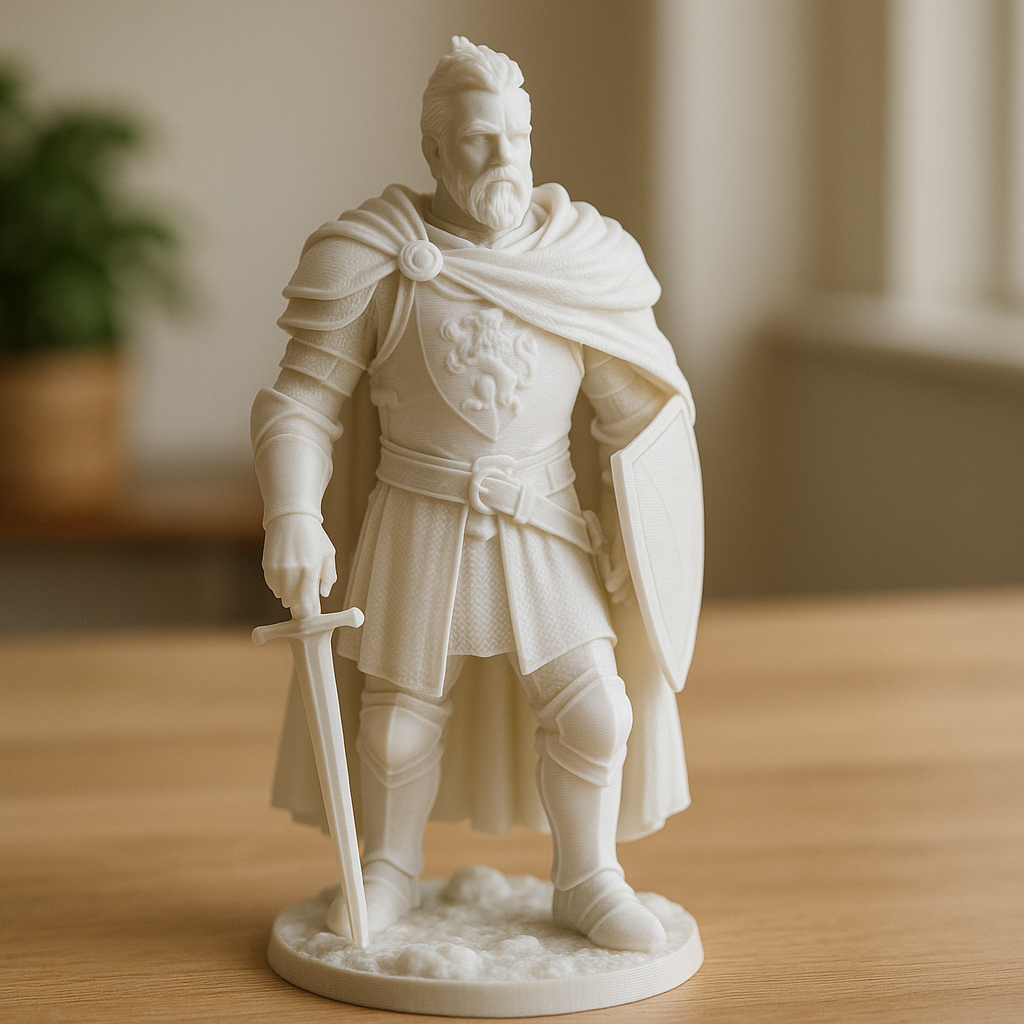
- Architectural and Character Models: The material’s ability to hold sharp edges and create smooth surfaces is ideal for architectural models that require clean lines and for tabletop miniatures where fine details define the character.
- Educational Settings: For a school or university, the ease of use and low cost of standard PLA make it an accessible entry point for students learning about 3D printing. The low printing temperature and lack of hazardous fumes (unlike ABS) make it safer for a classroom environment.
Think of standard PolyLite PLA as the sculptor’s clay. It is valued not for its final durability, but for its malleability and faithfulness in capturing the artist’s vision.
Printing Characteristics: Forgiveness and Reliability
For a beginner, the learning curve in 3D printing can be steep. Standard PolyLite PLA helps to flatten that curve. It requires no heated bed, though one is often recommended (set to 50-60°C) to ensure perfect first-layer adhesion. It prints at relatively low nozzle temperatures (190-220°C), reducing the energy consumption and thermal stress on the printer’s components.
Its low tendency to warp means you can tackle large, flat prints without worrying about them peeling up from the bed, a common source of frustration with other materials. This forgiving nature makes it an excellent material for calibrating a new printer. If you can achieve a perfect print with a reliable PLA, you have established a solid baseline for venturing into more demanding materials. It is the filament that builds confidence.
Limitations and Considerations: When to Look Beyond Standard PLA
The primary limitation of standard PLA is its inherent brittleness. Its molecular structure, which gives it such great stiffness, also means it cannot absorb much energy before it fails catastrophically. If you print a bracket with standard PolyLite PLA and it is subjected to a sudden shock or vibration, it is more likely to snap cleanly than to bend or deform.
The other major limitation is its low glass transition temperature (around 60°C or 140°F). This means any part printed in standard PLA will begin to soften and deform if left in a hot car, in direct sunlight on a summer day, or in any environment that approaches this temperature. A phone mount for your car’s dashboard, for example, is a very poor application for standard PLA.
Recognizing these limitations is not a critique of the material but an affirmation of the need for specialized variants. When an application demands toughness or a higher heat resistance, it is time to look beyond the standard formulation and explore its more robust siblings.
The Engineer’s Choice: Unpacking PolyLite PLA Pro
PolyLite PLA Pro is Polymaker’s answer to the fundamental weakness of standard PLA: its brittleness. It is a material born from a desire to create functional, durable parts with the ease and reliability of PLA. While other materials like PETG or ABS offer toughness, they come with their own printing challenges—stringing, warping, and the need for higher temperatures or enclosures. PLA Pro is designed to provide a significant boost in mechanical performance without straying far from the familiar territory of PLA printing.
The secret lies in its formulation. While the exact chemistry is proprietary, it involves the use of specific impact modifiers blended into the PLA resin. These additives work at a molecular level to disrupt the rigid polymer chains, allowing them to move and absorb energy upon impact rather than immediately breaking. The result is a grade built for the toughness that standard PLA lacks, since high brittleness is one of PLA’s notable limitations (Shahdan et al., 2023); compare the Charpy values on each grade’s current TDS to see how wide the gap is. That toughness transforms PLA from a material for static models into a material for dynamic, real-world applications.
Bridging the Gap: Toughness Meets Rigidity
The question to ask of any toughened PLA, PLA Pro included, is how much stiffness it gives up, because the blending and copolymerization strategies used to toughen PLA improve its toughness while sacrificing tensile strength and modulus (Shahdan et al., 2023). Compare the Young’s modulus on the PLA Pro TDS with the standard PLA value to see the cost. This is a critical engineering trade-off. Many “tough” materials are also very flexible, which is not always desirable. If you are printing a mounting bracket, you want it to resist bending under load while also being able to survive an accidental drop.
PolyLite PLA Pro is aimed at this sweet spot. It is meant to retain much of the rigidity that makes PLA a desirable material for structural components, while adding a layer of resilience that dramatically expands its application space. It is a material that challenges the old assumption that PLA is only for “looks.” You can find many engineering-grade materials in our store that serve similar functions, but PLA Pro offers a unique combination of properties.
Quantifying “Pro”: Impact Resistance and Durability in Practice
What does a high Charpy impact strength actually feel like? Imagine you 3D print two identical-looking hooks, one from standard PLA and one from PLA Pro. If you hang a static weight from them, both might perform similarly up to their breaking point.
Now, imagine you strike both hooks sharply with a hammer. The standard PLA hook will likely shatter, sending fragments across the room. The PLA Pro hook, in contrast, will likely deform, dent, or at worst, crack, but it is far less likely to fail in a brittle, catastrophic manner. It absorbs the energy. This is the practical meaning of toughness. It is the difference between a part that fails dangerously and a part that fails gracefully. This durability makes it suitable for parts that will be handled, used, and abused, not just admired on a shelf.
Applications in Jigs, Fixtures, and Functional End-Use Parts
The combination of ease-of-printing, rigidity, and toughness makes PolyLite PLA Pro an exceptional choice for manufacturing aids and some end-use parts.
- Jigs and Fixtures: In a workshop or on an assembly line, jigs (which guide a tool) and fixtures (which hold a workpiece) are constantly being handled, dropped, and subjected to clamping forces. PLA Pro provides the durability needed for these tools, with the added benefit of being cheap and fast to produce and iterate on.
- Drone Components: While high-stress parts like motor mounts might still call for carbon fiber composites, arms, landing gear, and camera mounts printed in PLA Pro can offer a great balance of low weight and the ability to survive rough landings.
- Protective Casings: For custom electronics projects, a case printed in PLA Pro can provide robust protection for the sensitive components inside, far superior to a brittle standard PLA enclosure.
- Functional Prototypes: When a prototype needs to be not just looked at, but tested—for example, a snap-fit enclosure that will be opened and closed repeatedly—PLA Pro provides the resilience to withstand that mechanical testing.
Printing Adjustments for Optimal Performance
One of the most attractive features of PolyLite PLA Pro is that it prints using a profile very similar to standard PLA. A user can usually switch from standard PLA to PLA Pro without extensive recalibration: start from the PLA settings in the printing table later in this guide, then confirm the nozzle and bed temperatures on the grade’s current TDS.
However, to maximize its toughness, a few small adjustments can be beneficial. Printing at the higher end of the recommended temperature range (around 210-220°C) can improve layer adhesion, which is critical for overall part strength. Because the material is designed for toughness, ensuring that the layers are strongly bonded allows the entire part to work together to absorb impact energy. Some users also report that slightly reducing cooling fan speed can have a similar positive effect on layer bonding, though this must be balanced against the need to cool overhangs and prevent drooping. The key is that these are minor tweaks, not the wholesale changes in process required for materials like ABS or Nylon.
The Artisan’s Material: Exploring PolyLite CosPLA
The world of cosplay and prop-making presents a unique set of material challenges. A piece of armor or a prop needs to be lightweight enough to be worn or carried for hours. It needs to be durable enough to survive the crowds of a convention. Most importantly, it must be a blank canvas, a surface that can be transformed through sanding, priming, and painting to look like metal, leather, or bone. Standard PLA, with its hard, slick surface and tendency to “gum up” when sanded, has always been a problematic choice for this application.
PolyLite CosPLA is a material engineered from the ground up to solve these problems. It is a PLA variant that prioritizes post-processing above all else. Its chemical formulation has been modified to create a material that is softer and more workable than standard PLA, behaving more like a soft wood or a rigid foam when sanded.
Engineered for Post-Processing: Sanding and Painting Made Simple
Anyone who has tried to sand a standard PLA print knows the frustration. The friction from the sandpaper generates heat, which quickly approaches PLA’s low glass transition temperature. The surface doesn’t abrade away into a fine dust; it melts and rolls into small, gummy balls, creating a messy, uneven finish.
PolyLite CosPLA completely changes this experience. When sanded, it produces a fine, powdery dust. It allows the user to easily remove layer lines and sculpt the surface of the print with sandpaper, files, and other finishing tools. This quality is transformative for prop-makers. It dramatically reduces the time and effort required to get from a raw print to a paint-ready surface.
Furthermore, its surface chemistry is optimized for paint adhesion. After sanding, a standard automotive filler primer will bond tenaciously to the surface, creating the perfect foundation for acrylics, enamels, or airbrushing. The material is designed not just to be printed, but to be finished.
Surface Finish and Layer Adhesion: The Aesthetics of Cosplay
While post-processing is its main feature, CosPLA also provides an exceptional raw print quality. It is formulated to produce a matte surface finish, which is highly desirable for two reasons. First, a matte finish helps to diffuse light and naturally hides the visibility of layer lines even before sanding. Second, matte surfaces provide more “tooth” for primers and paints to grip onto compared to a glossy surface.
The material also exhibits excellent layer adhesion. For a large, wearable piece like a helmet or a chestplate, strong bonding between layers is critical to the part’s structural integrity. The formulation of CosPLA ensures that prints are not just beautiful, but also robust enough to be handled and worn.
Balancing Strength and Workability for Wearable Items
Read CosPLA’s stiffness (Young’s Modulus) and bending strength on its current TDS next to the standard PLA values. A lower figure there might initially seem like a disadvantage, but in the context of cosplay, it can be a feature. Slightly lower stiffness means large, thin parts—like a piece of armor that needs to curve around an arm—will have a small amount of give. This can make them more comfortable to wear and less prone to snapping under the flexing and stresses of movement.
Compare CosPLA’s impact strength with standard PLA’s in the same way: any gain there means a bit more resilience against bumps and knocks. The design intent here is clear: it is not meant to be as tough as PLA Pro, which would make it harder to sand. Instead, it strikes a deliberate balance, offering just enough durability for its intended application while maximizing its workability. It is a material that understands its purpose lies in its transformation.
A Comparison with Other Cosplay-Friendly Materials
How does CosPLA stack up against other materials used in prop-making?
- vs. PETG: PETG is much tougher and has better heat resistance, but it is notoriously difficult to sand and paint. Its surface is slick and chemically resistant, causing paints to bead up or peel off easily. PETG is excellent for structural parts, but poor for aesthetic finishing.
- vs. ABS: ABS can be post-processed via vapor smoothing with acetone to achieve a perfectly smooth, glossy finish. However, it is difficult to print, requires an enclosure to manage warping and fumes, and the vapor smoothing process itself involves hazardous chemicals. CosPLA offers a safer, more accessible path to a smooth finish through simple mechanical sanding.
- vs. EVA Foam: EVA foam is the traditional material for many cosplayers. It is lightweight and easy to cut and shape with a heat gun. Its main drawback is the lack of fine detail. Complex greebles, emblems, and textures that can be effortlessly 3D printed are incredibly difficult to replicate in foam. CosPLA allows makers to print these high-detail components and integrate them into foam builds.
In essence, PolyLite CosPLA does not seek to replace all other materials, but to provide a powerful and specialized tool for the 3D printing cosplayer.
Beyond the Core Trio: The Specialized Variant – PolyLite PLA-CF
While the title of this guide focuses on the three primary PolyLite PLA variants, it would be incomplete without acknowledging a popular specialized option: PolyLite PLA-CF. This is a composite material, a PLA base that has been reinforced with milled carbon fibers. The introduction of these fibers fundamentally changes the material’s properties, pushing it into the realm of high-performance engineering materials.
The Impact of Carbon Fiber Reinforcement on Stiffness and Weight
The primary benefit of adding carbon fiber is a dramatic increase in stiffness, or modulus. While specific data for PLA-CF varies, carbon fiber reinforced filaments can exhibit a modulus that is 50-100% higher than their unfilled counterparts. This means that for a given geometry, a part printed in PLA-CF will bend significantly less under load. This exceptional rigidity makes it ideal for applications where dimensional stability and minimal flex are paramount.
Consider the arms of a racing drone. Flex in the arms can lead to oscillations and poor flight characteristics. Printing them in PLA-CF results in a much stiffer, more responsive frame. Similarly, for a scientific instrument that requires precise alignment, or a jig that must hold a part without any give, the stiffness of a carbon fiber composite is a massive advantage. The carbon fibers also contribute to a slight reduction in overall density, improving the strength-to-weight ratio, a critical metric in aerospace and motorsport applications sigmafilament.com.
Hardware Considerations: The Necessity of a Hardened Nozzle
This enhanced performance comes with a critical hardware requirement. Carbon fibers are extremely abrasive. Forcing a filament infused with these fibers through a standard brass nozzle will wear it out with astonishing speed. The nozzle’s orifice will widen and deform, leading to a rapid degradation in print quality, loss of detail, and poor dimensional accuracy.
To print with PolyLite PLA-CF or any other carbon fiber composite, it is absolutely mandatory to upgrade to a hardened nozzle. Common options include hardened steel, nozzles with ruby or sapphire tips, or tungsten carbide nozzles. These materials are significantly harder than brass and can withstand the abrasive nature of the filament for hundreds or thousands of printing hours. This is not an optional upgrade; it is a prerequisite for working with these advanced materials, a point often emphasized in guides for similar abrasive filaments (SigmaFilament, 2026a).
Applications for High-Stiffness, Lightweight Components
PolyLite PLA-CF is the material of choice when a part needs to be as stiff and lightweight as possible, without needing the extreme impact toughness of PLA Pro or the heat resistance of other engineering polymers.
- Robotics: End-effectors, grippers, and structural frame components.
- RC Vehicles: Chassis components, suspension arms, and shock towers.
- Tooling: Highly rigid inspection gauges and lightweight assembly jigs.
- Musical Instruments: The bodies of custom ukuleles or violins, where stiffness is critical for acoustic properties.
It is important to note that while the fibers add immense stiffness, they can reduce the filament’s toughness and layer adhesion compared to a material like PLA Pro. The short, milled fibers can act as stress concentration points between layers. Therefore, a part printed in PLA-CF will be incredibly stiff but might be more brittle on impact than a part printed in PLA Pro. Once again, the choice depends on the specific demands of the application: is maximum stiffness or maximum impact resistance the primary goal?
A Practical Guide to Printing Success with the PolyLite Family
Achieving high-quality prints with any of the PolyLite PLA filaments is straightforward, but a systematic approach will always yield the best results. Below is a table of starting parameters, followed by a deeper discussion of the workflow for turning a digital model into a successful physical object. For standard PLA, PLA Pro and CosPLA, the temperature and cooling rows give the typical window for PLA (Simplify3D, n.d.). Filled grades such as PLA-CF may need different settings, so check every value against the current TDS for the grade you buy.
| Parameter | Standard PolyLite PLA | PolyLite PLA Pro | PolyLite CosPLA | PolyLite PLA-CF |
|---|---|---|---|---|
| Nozzle Temperature | 190 – 220 °C | 190 – 220 °C | 190 – 220 °C | See current TDS |
| Bed Temperature | 45 – 60 °C | 45 – 60 °C | 45 – 60 °C | See current TDS |
| Printing Speed | See current TDS | See current TDS | See current TDS | See current TDS |
| Fan Speed | 100% | 100% | 100% | See current TDS |
| Nozzle Type | Brass (Standard) | Brass (Standard) | Brass (Standard) | Hardened Steel (Required) |
| Bed Surface | PEI, Glass, BuildTak | PEI, Glass, BuildTak | PEI, Glass, BuildTak | PEI, Glass, BuildTak |
| Drying Required? | Recommended | Recommended | Recommended | Highly Recommended |
The Foundational Step: Filament Storage and Drying
PLA is a hygroscopic polymer, meaning it will absorb moisture from the ambient air. While it is less aggressive in this regard than materials like Nylon or PETG, moisture absorption is still a primary cause of print quality issues. When “wet” filament is heated in the nozzle, the trapped water instantly turns to steam, creating bubbles in the extruded plastic. This results in a number of tell-tale signs:
- A popping or crackling sound from the nozzle during printing.
- A rough, inconsistent, or “fuzzy” surface finish.
- Excessive stringing and oozing.
- Poor layer adhesion, leading to weak, brittle parts.
To prevent this, all PolyLite PLA filaments should be stored in a dry environment, such as an airtight container with desiccant packets. If a spool has been left out in a humid environment, it is best practice to dry it in a dedicated filament dryer or a convection oven at a low temperature (around 45-50°C) for 4-6 hours before printing. This is especially critical for composite materials like PLA-CF, as the fibers can create pathways for moisture to penetrate the filament more easily.
Calibrating Your Printer: Extruder, Bed, and Temperature Settings
Before you attempt a large, complex print, it is always wise to run a few small calibration prints to dial in your settings for a new filament, even within the same family.
- Temperature Tower: Print a temperature tower to find the optimal nozzle temperature for your specific printer and filament roll. Look for the temperature that provides the best balance of good layer adhesion, minimal stringing, and good bridging performance. Even though the recommended range is 190-220°C, your machine might be happiest at 205°C or 215°C.
- First Layer Calibration: The first layer is the foundation of your print. It must be perfect. Adjust your Z-offset so that the first layer is nicely “squished” against the build plate, creating a smooth, solid surface with no gaps between the lines.
- Retraction Tuning: Print a retraction test model to dial in your retraction distance and speed. This is the most important setting for combating stringing. The goal is to find the lowest retraction distance that eliminates strings without causing clogs in the hotend.
Slicer Strategies for Optimizing Strength and Finish
Your slicer software is where you translate your design intent into machine instructions. The settings you choose here have a profound impact on the final part.
- For Strength (PLA Pro, PLA-CF):
- Increase Wall Count: The outer walls (perimeters) of a print contribute the most to its strength. Increasing the wall count from the default of 2 or 3 to 4 or 5 will dramatically improve the part’s durability and stiffness.
- Increase Infill Percentage: While wall count is more important, increasing infill (from 20% to 40-50%) will provide more internal support and improve compressive strength. Use a strong infill pattern like gyroid or cubic.
- Print Hotter: Printing at the higher end of the temperature range will promote better melting and fusion between layers, increasing the part’s isotropic strength (strength in all directions).
- For Surface Finish (Standard PLA, CosPLA):
- Use a Smaller Layer Height: A layer height of 0.12mm or 0.16mm will produce a much smoother surface with less visible layer lines than a standard 0.2mm layer height.
- Orient the Part Wisely: Position the model on the build plate to minimize the visibility of layer lines on critical cosmetic surfaces. For example, a curved surface printed vertically will look much smoother than one printed horizontally.
- Enable “Ironing”: Many modern slicers have an “ironing” feature where the hot nozzle passes over the top-most surface after it is printed, re-melting and smoothing it to a near-perfect finish.
Troubleshooting Common Issues: From Stringing to Warping
- Stringing/Oozing: This is caused by plastic leaking from the nozzle as it travels between different parts of the print. The primary solution is to tune retraction settings. Drying your filament is also a critical step, as wet filament drastically increases stringing.
- Warping/Poor Bed Adhesion: While uncommon with PolyLite PLA, this can still happen, especially on large prints or in a cold room. Ensure your build plate is perfectly clean (wash with soap and water, then wipe with isopropyl alcohol). Use a brim in your slicer settings to increase the surface area of the first layer.
- Clogging (especially with PLA-CF): If you experience clogs with PLA-CF, ensure you are using a hardened nozzle with a diameter of at least 0.4mm, and preferably 0.5mm or 0.6mm. The fibers can occasionally bunch up and clog smaller orifices. Printing slightly hotter can also improve flow and reduce the chance of a clog.
FAQ: Answering Your Questions About PolyLite PLA
Is PolyLite PLA food safe?
While the base PLA resin itself is often derived from food sources and can be considered non-toxic, the 3D printing process introduces variables that make it complicated. The pigments used for color may not be food-grade. More importantly, the layer lines inherent in FDM prints create microscopic crevices where bacteria can grow and are difficult to clean thoroughly. Therefore, it is not recommended to use parts printed from any PolyLite PLA variant for direct, long-term contact with food. For one-time use items like a cookie cutter, it is generally considered low-risk, but for anything else, applying a food-safe coating is necessary.
How does PolyLite PLA compare to PolyMax PLA?
PolyLite and PolyMax are two different product families from Polymaker. PolyLite PLA Pro is designed for high toughness, offering excellent impact resistance. PolyMax PLA, on the other hand, is engineered to have extreme overall mechanical properties, often exhibiting even higher impact strength and sometimes better tensile strength than PLA Pro. PolyMax is generally considered a more industrial-grade material and comes at a higher price point. For most functional applications, PolyLite PLA Pro offers an exceptional balance of performance and value. PolyMax is for when you need the absolute maximum performance possible from a PLA-based material.
Can I anneal PolyLite PLA parts to make them stronger?
Annealing is a process of heat-treating a printed part to increase its crystallinity, which can boost its stiffness and heat resistance. While this works well for standard PLA, the special formulations of PLA Pro and CosPLA may not respond as predictably. The impact modifiers in PLA Pro can be affected by the heat treatment, potentially reducing the toughness that is its main feature. For standard PLA, annealing can increase its heat deflection temperature, but it also causes the part to shrink and warp, which must be accounted for in the design. For PolyLite PLA, it is generally best to use the material as-is and choose the variant that has the properties you need out of the box.
Why can PLA Pro be tougher than standard PLA but lower in tensile strength?
This is a fantastic question that gets to the heart of material properties. Tensile strength measures a material’s resistance to a slow, steady pull. The long, rigid polymer chains in standard PLA are very good at resisting this. Toughness (impact strength) measures a material’s ability to absorb sudden energy. The impact modifiers in PLA Pro create a molecular structure that can flex and move to absorb that energy, preventing a fracture. This modification, however, tends to reduce the ultimate resistance to a slow pull, because the blending and copolymerization routes used to toughen PLA improve its toughness while sacrificing tensile strength and modulus (Shahdan et al., 2023). It is a deliberate engineering trade-off: giving up some of one property to gain more of another, more desirable property (toughness).
Do I need an enclosure to print with any of the PolyLite PLA filaments?
No, an enclosure is not required for printing with any of the PolyLite PLA variants, including PLA-CF. All of them have the low thermal expansion characteristic of PLA, meaning they are not prone to warping. An enclosure can be beneficial for maintaining a very stable ambient temperature, which can slightly improve layer adhesion and print quality, but it is by no means a necessity as it is for materials like ABS or ASA.
Is PolyLite PLA biodegradable?
Like other PLA filaments, PolyLite PLA is biodegradable, but only under specific industrial composting conditions of high temperature, humidity, and microbial activity. It will not biodegrade in a backyard compost bin, in a landfill, or if left in the ocean. It is more accurate to describe it as industrially compostable rather than simply biodegradable in any environment.
What causes the matte finish on PolyLite PLA-CF?
The matte finish is a natural result of the composite material’s structure. The small, milled carbon fibers are dispersed throughout the PLA matrix. When the filament is extruded, these fibers disrupt what would otherwise be a smooth, glossy surface of pure polymer. They scatter light in many directions rather than reflecting it uniformly, which our eyes perceive as a matte texture. This is often a desirable aesthetic, as it effectively hides layer lines and gives the part a very professional, high-tech appearance.
Final Considerations: Making an Informed Material Choice
The journey through the PolyLite PLA family reveals a fundamental principle of modern material science: there is no single “best” material. The notion of superiority is entirely context-dependent. The selection process, therefore, should not be a search for a universal winner but a thoughtful inquiry into the specific needs of the project at hand. The choice between these filaments is a practical exercise in aligning material properties with functional and aesthetic intent.
Begin by defining the life of the object you wish to create.
- If its primary purpose is to be seen, to communicate a shape with high fidelity—a detailed miniature, an architectural model, a non-functional prototype—then the high stiffness and exceptional print quality of standard PolyLite PLA make it the rational choice. Its value lies in its reliability and its faithful reproduction of form.
- If the object is destined for a life of action, to endure stress, impact, and use—a workshop jig, a functional bracket, a protective case, a drone part that must survive a rough landing—then the choice must be PolyLite PLA Pro. Its immense toughness is not a mere number on a data sheet; it is the property that grants the object resilience and a longer functional life, bridging the gap between a prototype and an end-use part.
- If the object’s destiny is to be transformed, to serve as a canvas for an artisan’s skill—a piece of cosplay armor, a movie prop, a display piece that requires a flawless, painted finish—then PolyLite CosPLA is the only logical selection. Its unique formulation, optimized for sanding and finishing, respects the maker’s time and elevates the potential for artistry.
And for those specialized tasks where absolute stiffness and low weight are the governing requirements, PolyLite PLA-CF stands ready, provided you are prepared to accommodate its hardware needs.
Thinking like an engineer or a designer means seeing these filaments not as interchangeable commodities, but as distinct tools, each with its own strengths and limitations. By understanding the “why” behind their properties—the impact modifiers in PLA Pro, the softening agents in CosPLA, the reinforcing fibers in PLA-CF—you can move beyond trial and error and begin to make deliberate, informed decisions. The perfect print begins not when the nozzle heats up, but with the conscious choice of the right material for the task. You can explore our full range of high-quality PLA filaments to find the perfect match for your next project.
References
- Polylactic acid. (2026, October 16). In Wikipedia. https://en.wikipedia.org/w/index.php?title=Polylactic_acid&oldid=1380574881
- Shahdan, D., Rosli, N. A., Chen, R. S., Ahmad, S., & Gan, S. (2023). Strategies for strengthening toughened poly(lactic acid) blend via natural reinforcement with enhanced biodegradability: A review. International Journal of Biological Macromolecules, 251, Article 126214. https://doi.org/10.1016/j.ijbiomac.2023.126214
- SIGMAFILAMENT. (2026a, January 25). Actionable buyer’s guide: 7 factors for success with carbon fiber PETG in 2026. https://sigmafilament.com/carbon-fiber-petg-printing-guide/
- SIGMAFILAMENT. (2026b, January 27). A practical 2026 buyer’s guide: PLA vs PETG vs ABS. https://sigmafilament.com/pla-vs-petg-vs-abs-filament-guide/
- Simplify3D. (n.d.). Ultimate materials guide: Tips for 3D printing with PLA. https://www.simplify3d.com/resources/materials-guide/pla/
Last reviewed and updated: February 2026. Author: SigmaFilament Engineering Team. For custom filament solutions and wholesale inquiries, contact our team.