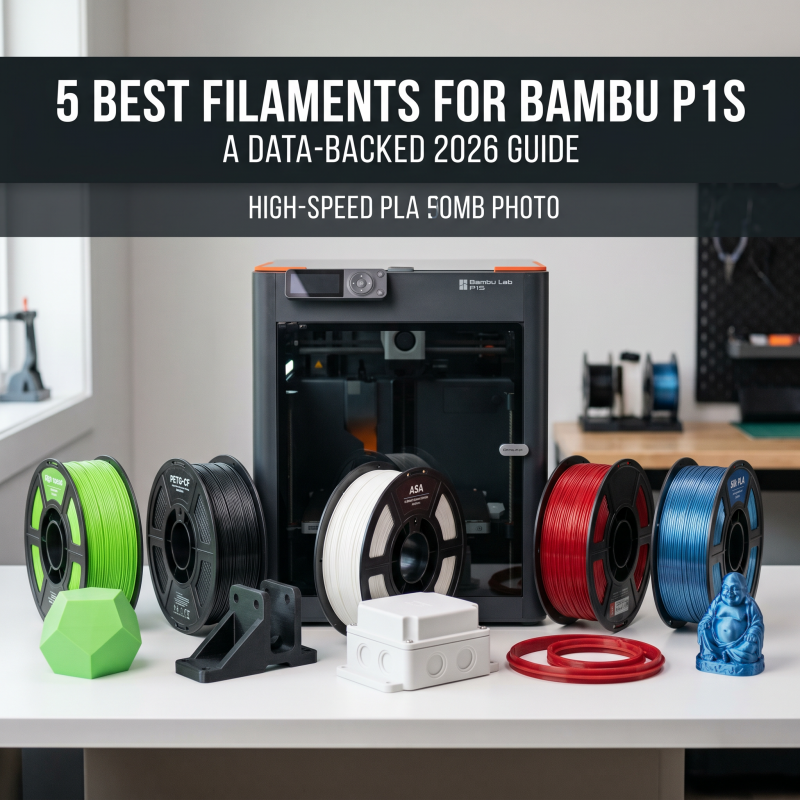
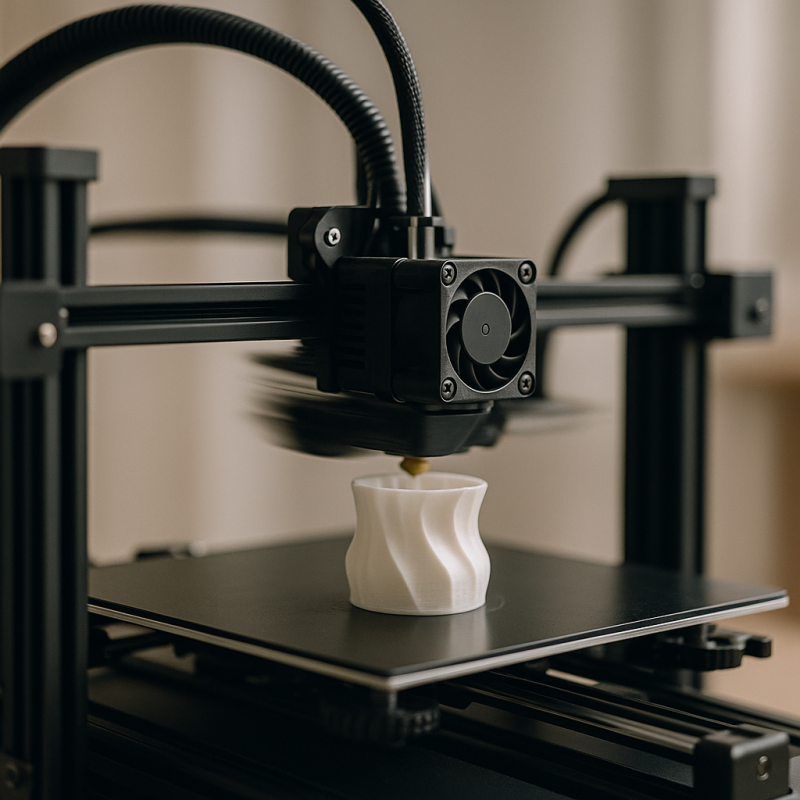
Actionable 2026 Buyer’s Guide: 7 Factors for Selecting Filament for Bambu A1

Abstract
The introduction of the Bambu Lab A1 has significantly altered the landscape of consumer-grade 3D printing, offering high-speed, multi-material capabilities at an accessible price point. This guide provides a comprehensive analysis of filament selection for the Bambu A1, examining the critical interplay between material properties, printer hardware, and software optimization. It explores the foundational materials—PLA, PETG, and TPU—assessing their suitability for the A1’s direct-drive extruder and high-speed performance. The investigation extends to advanced and abrasive composites, such as carbon fiber-reinforced filaments, detailing the necessary hardware modifications, like hardened nozzles, required to prevent premature wear. A central focus is placed on the practical challenges presented by the AMS Lite system, particularly spool compatibility, and offers systematic solutions. By dissecting factors from filament quality and dimensional accuracy to slicer calibration and economic considerations, this document serves as an exhaustive resource for users seeking to maximize print quality, reliability, and the full potential of their Bambu A1 printer in 2026.
Key Takeaways
- Prioritize plastic spools with specific dimensions for seamless use with the AMS Lite.
- Master high-quality PLA for its reliability before exploring more complex materials.
- Select PETG for functional parts that demand superior strength and heat tolerance.
- Upgrade to a hardened steel nozzle before attempting to print abrasive filaments.
- Drying your filament for Bambu A1 printing is essential to prevent print failures.
- Calibrate flow and pressure advance in Bambu Studio for all third-party filaments.
- Evaluate refill systems as a cost-effective and sustainable filament sourcing option.
Table of Contents
- Understanding the Bambu A1: A Foundation for Filament Choice
- Factor 1: Navigating the Nuances of Spool Compatibility and the AMS Lite
- Factor 2: Material Fundamentals – Mastering the “Big Three” for the A1
- Factor 3: Advancing to Abrasive and Engineering-Grade Filaments
- Factor 4: The Unseen Importance of Filament Quality and Consistency
- Factor 5: Optimizing Bambu Studio Slicer Settings for Flawless Prints
- Factor 6: The Economic Calculation – Balancing Cost, Convenience, and Performance
- Factor 7: Aligning Filament Choice with Application and Post-Processing
- Frequently Asked Questions (FAQ)
- Conclusion
- References
Understanding the Bambu A1: A Foundation for Filament Choice
The arrival of the Bambu Lab A1 represented a paradigm shift in the desktop 3D printing market. Before its release, features like high-speed printing, automatic calibration, and multi-material systems were largely the domain of more expensive, prosumer machines. The A1 democratized these capabilities, but to truly harness its power, one must develop a deep understanding of the machine itself. The printer is not merely a passive device that executes commands; it is an active mechanical system whose performance is intrinsically linked to the physical properties of the material it extrudes. Choosing the right filament for the Bambu A1 is less about finding a single “best” option and more about cultivating a nuanced appreciation for how different polymers interact with its specific hardware and software ecosystem. This understanding begins with an examination of the printer’s core design principles.
The Core Technology: A Synergy of Speed and Precision
At its heart, the Bambu A1 operates on a “bedslinger” design, where the print bed moves along the Y-axis while the toolhead moves along the X and Z axes. While this configuration is common in budget printers, Bambu Lab has infused it with technologies typically found in high-performance CoreXY machines. The use of all-metal rails, a powerful motion control board, and sophisticated firmware algorithms for input shaping and vibration compensation allows the A1 to achieve printing speeds that were previously unthinkable in this class.
What does this mean for filament selection? High-speed printing places immense stress on a filament. The material must melt quickly and consistently in the hotend, flow smoothly through the nozzle, and cool rapidly on the print bed to hold its shape. Filaments with inconsistent diameters or poor thermal properties will fail spectacularly under these conditions, leading to under-extrusion, layer shifting, or a complete loss of detail. Therefore, the A1’s speed necessitates a higher standard of filament quality than a slower, more forgiving printer might tolerate.
The Game Changer: The AMS Lite for Multicolor Printing
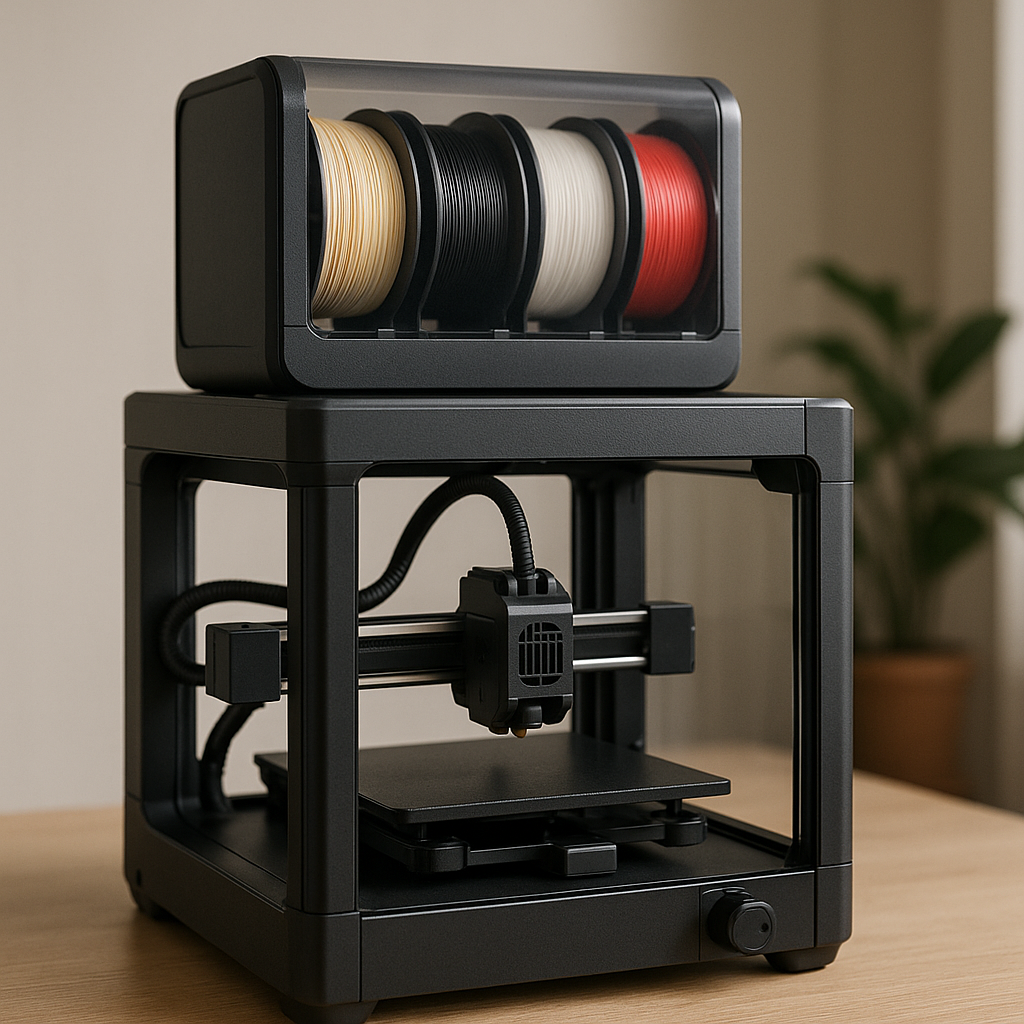
The optional AMS Lite (Automatic Material System) is arguably the A1’s most compelling feature. It enables the printer to automatically switch between four different filaments during a single print, opening the door to complex multicolor models. Unlike the enclosed AMS units for the X1 and P1 series, the AMS Lite is an external, open-air system. It uses a series of motorized rollers to push and pull filament through long PTFE tubes to the extruder.
This mechanical design imposes strict constraints on both the filament and its spool. The filament must be stiff enough to be pushed through the tubes without buckling, yet not so brittle that it snaps during retraction. The spool itself must be of a specific size and weight to fit on the spindles and rotate freely without causing tangles or excessive resistance. The open design also means the filament is constantly exposed to ambient humidity, a critical factor for hygroscopic materials. Understanding the mechanics of the AMS Lite is not just a technical exercise; it is fundamental to avoiding frustrating and wasteful print failures.
The Hotend and Extruder: Where Material Meets Machine
The A1 is equipped with a direct-drive extruder, meaning the gears that push the filament are located directly on the toolhead, immediately before the hotend. This arrangement provides precise control over filament flow, which is especially beneficial for flexible materials like TPU. It minimizes the distance the filament has to travel after being pushed by the gears, reducing the chances of it compressing or buckling.
The all-metal hotend is designed for rapid heating and can reach temperatures suitable for a wide range of consumer-grade polymers. However, the standard nozzle is made of stainless steel. While perfectly adequate for materials like PLA and PETG, it is soft and will be quickly eroded by abrasive filaments that contain hard, sharp particles like carbon fiber or glass. An attempt to print such materials without a hardware upgrade is a direct path to nozzle destruction and declining print quality. The quick-swap nature of the A1’s hotend assembly makes this upgrade relatively simple, but it is a non-negotiable step for anyone wishing to explore the world of engineering composites.
Factor 1: Navigating the Nuances of Spool Compatibility and the AMS Lite
The AMS Lite is a marvel of engineering, but its design prioritizes a specific operational window. Deviating from that window, particularly concerning the filament spool, is the most common source of user frustration. The system’s reliance on motorized rollers to feed and retract filament makes the geometry and material of the spool as important as the filament itself.
The Ideal Spool Dimensions and Material
The AMS Lite is optimized for plastic spools with a specific range of dimensions. The system is designed to handle spools that are between 50mm and 68mm in width and have an inner diameter (the central hole) of 53mm to 58mm. While some slight variations can work, straying too far outside these parameters invites problems. A spool that is too wide may not fit on the spindle at all, while one that is too narrow can wobble, leading to uneven unwinding. The outer diameter is less critical but generally should not exceed 200mm to ensure proper clearance.
The material of the spool is equally significant. The AMS Lite’s rollers are designed to grip the smooth, consistent surface of a plastic spool edge. This provides the reliable traction needed to precisely control filament feeding.
The Problem with Cardboard Spools
In recent years, many filament manufacturers have commendably shifted to cardboard spools to reduce plastic waste. While environmentally conscious, these spools are a primary antagonist to the AMS Lite. There are three core problems they introduce. First, the edge of a cardboard spool is often soft and can deform under the pressure of the AMS rollers, leading to slippage. Second, the rotation of the cardboard spool sheds microscopic paper fibers. This dust can accumulate on the rollers, reducing their grip over time, and can even be pulled into the PTFE tubes and extruder, contributing to clogs. Third, cardboard spools are notoriously inconsistent in their dimensions, with many falling outside the AMS Lite’s supported size range. Using them directly is a gamble that often results in failed filament changes and tangled messes.
Solutions: Spool Adapters, Respooling, and Refill Systems
Fortunately, the community has developed robust solutions to the cardboard spool problem.
- Spool Adapters: The most common solution is to print a plastic ring or adapter that fits over the edge of the cardboard spool. These adapters provide a smooth, durable surface for the AMS rollers to grip. Many designs are available on platforms like MakerWorld, tailored to specific filament brands. Printing these adapters is often one of the first tasks for a new A1 owner.
- Respooling: For spools that are dimensionally incompatible (too wide or too narrow), the only option is to respool the filament onto a standard, AMS-compatible plastic spool. This can be done manually or with a printed, motor-driven respooling tool. While effective, it is a time-consuming process that can introduce tangles if not done carefully.
- Refill Systems: A growing number of manufacturers, including Bambu Lab and others, offer “refill” coils of filament. These are coils of filament sold without a central spool. The user prints a reusable, two-part master spool and simply places the new refill coil inside it. This approach is both cost-effective and environmentally friendly, completely bypassing the cardboard spool issue and ensuring perfect compatibility with the AMS Lite.
Table 1: Spool Type Compatibility with Bambu A1 AMS Lite
| Spool Type | Compatibility | Common Issues | Recommended Solution |
|---|---|---|---|
| Standard Plastic Spool (Bambu) | Excellent | None | Use directly. |
| Third-Party Plastic Spool | Good to Fair | May have incompatible width or inner diameter. | Check dimensions before purchase; use if within 50-68mm width. |
| Cardboard Spool | Poor | Roller slippage, fiber dust, inconsistent dimensions. | Print a plastic adapter ring for the spool edge. |
| Dimensionally Incompatible Spool | None | Will not fit or will function unreliably. | Respool filament onto a compatible empty plastic spool. |
| Filament Refill Coils | Excellent | Requires a reusable master spool. | Print a master spool (e.g., Bambu or Polymaker design) and load the refill. |
Factor 2: Material Fundamentals – Mastering the “Big Three” for the A1
Before venturing into exotic composites, every 3D printing practitioner must develop a mastery of the foundational materials. For the Bambu A1, these are PLA, PETG, and TPU. Each possesses a unique character, a distinct set of strengths and weaknesses that dictates its ideal application. Learning their personalities—how they behave in the hotend, on the build plate, and under stress—is the most critical skill for achieving consistent, high-quality results.
PLA (Polylactic Acid): The Go-To for Beginners and Beyond
Polylactic Acid, or PLA, is the undisputed starting point for most journeys into 3D printing, and for good reason. Derived from renewable resources like corn starch or sugarcane, it is one of the most user-friendly polymers available. Its defining characteristic is its low printing temperature and minimal thermal shrinkage. This means it is exceptionally forgiving, exhibiting very little tendency to warp or lift off the print bed. For a new user, this translates to a much higher success rate and a less frustrating learning curve.
On the Bambu A1, PLA truly shines. The printer’s high-speed capabilities are well-matched to modern PLA formulations, including Bambu Lab’s own standard and “Lite” variants, which are engineered for rapid melting and cooling. The result is the ability to produce visually stunning, highly detailed models in a fraction of the time required by older machines. PLA is the ideal filament for Bambu A1 users creating aesthetic objects, decorative pieces, tabletop miniatures, and early-stage functional prototypes where mechanical strength is not the primary concern.
However, PLA is not without its limitations. Its primary drawback is a low glass transition temperature, typically around 60°C. This means a PLA part can deform or soften if left in a hot car or exposed to direct sunlight on a summer day. It is also relatively brittle compared to other plastics, meaning it is more likely to shatter upon sharp impact rather than bend.
The world of PLA is vast, encompassing many variations:
- PLA+ / Tough PLA: These are modified formulas that incorporate additives to improve layer adhesion and impact resistance, bridging the gap between standard PLA and PETG.
- Silk PLA: Contains elastomers that give the finished print a highly glossy, almost metallic sheen. It’s fantastic for vases and trophies but can be slightly weaker than standard PLA.
- Matte PLA: These filaments produce a non-reflective, textured surface that does an excellent job of hiding layer lines, lending a very professional look to prints.
- Wood/Metal/Stone-filled PLA: These contain fine particles of other materials to give the print the look and sometimes the feel of wood, bronze, or marble. They can be more abrasive than standard PLA, so monitoring nozzle wear is wise.
PETG (Polyethylene Terephthalate Glycol): The Step-Up in Durability
When a project demands more resilience than PLA can offer, PETG is the logical next step. PETG is a variation of the same polymer used to make water bottles (PET), with glycol added to improve its printability. It serves as a perfect intermediate material, offering a significant boost in strength, temperature resistance, and chemical resistance over PLA, without the printing difficulties of materials like ABS.
PETG is the workhorse filament for functional parts on the Bambu A1. It’s an excellent choice for printing workshop tools, custom brackets, electronics enclosures, or any component that needs to withstand moderate stress and temperatures up to around 80°C. Its layers bond together exceptionally well, resulting in parts that are very strong and less prone to delamination. A great example of a robust option for these applications is an engineering PETG.
Printing PETG, however, requires a bit more finesse than PLA. It is notoriously hygroscopic, meaning it readily absorbs moisture from the air. Wet PETG will produce prints that are stringy, weak, and covered in surface blemishes. Drying the filament in a dedicated filament dryer before printing is not just recommended; it is practically mandatory for achieving good results. PETG also has a tendency to be “stringy” or “goopy,” leaving fine webs of plastic between different parts of a model. On the Bambu A1, this can be mitigated by fine-tuning retraction settings and ensuring the filament is dry, but it’s a characteristic that users must learn to manage.
TPU (Thermoplastic Polyurethane): The Flexible Option
TPU introduces the dimension of flexibility. This rubber-like material is used for creating parts that need to bend, stretch, or absorb impacts. Common applications include custom phone cases, flexible hinges, vibration dampeners, and soft grips for tools. TPUs are categorized by their shore hardness (e.g., 95A, 90A), which indicates their relative stiffness. A lower number signifies a softer, more flexible material.
The Bambu A1’s direct-drive extruder is a significant advantage when printing TPU. The short, constrained path between the extruder gears and the hotend prevents the soft filament from kinking or buckling, a common failure point on printers with Bowden tube setups. This makes the A1 quite capable of handling TPU, especially stiffer variants like 95A.
Success with TPU on the A1 hinges on managing print speed. Even with a direct-drive extruder, TPU cannot be printed at the same blistering speeds as PLA. The filament needs more time to melt in the hotend and resists being pushed through the nozzle too quickly. Users must select slower print profiles in Bambu Studio and may need to perform calibration tests to find the optimal flow rate for their specific brand of TPU. Like PETG, TPU is also highly hygroscopic and demands thorough drying for clean, strong prints. Printing it through the AMS Lite can also be challenging, as softer TPUs may struggle with the long PTFE tube path, though stiffer 95A variants often work well.
Table 2: Comparison of PLA, PETG, and TPU for the Bambu A1
| Feature | PLA (Polylactic Acid) | PETG (Polyethylene Terephthalate Glycol) | TPU (Thermoplastic Polyurethane) |
|---|---|---|---|
| Ease of Use | Excellent | Good | Fair |
| Strength & Durability | Fair (Brittle) | Excellent (Tough) | Excellent (Impact Resistant) |
| Temperature Resistance | Poor (~60°C) | Good (~80°C) | Good (~100°C) |
| Flexibility | None (Rigid) | Minimal (Slight Flex) | High (Rubber-like) |
| Hygroscopicity | Low | High | Very High |
| AMS Lite Compatibility | Excellent | Excellent | Fair (Stiffer TPUs like 95A work best) |
| Common Applications | Aesthetic models, prototypes, miniatures | Functional parts, brackets, enclosures | Flexible parts, phone cases, grips |
| Key Printing Tip | Use a cooling fan at high speed. | Dry filament thoroughly to prevent stringing. | Print slowly to avoid extruder jams. |
Factor 3: Advancing to Abrasive and Engineering-Grade Filaments
Once a user has gained confidence with the primary materials, the allure of engineering-grade filaments becomes strong. These materials offer properties like extreme stiffness, high temperature resistance, and enhanced durability that open up new possibilities for creating truly functional, end-use parts. However, they also introduce new challenges and demands on the printer hardware, particularly the Bambu A1’s hotend.
The Challenge of Abrasives: Carbon Fiber and Glass Fiber
Composite filaments are created by mixing short, chopped fibers into a base polymer like PLA, PETG, or Nylon. The most common reinforcing agents are carbon fiber (CF) and glass fiber (GF). These fibers act like rebar in concrete, dramatically increasing the stiffness and dimensional stability of the printed part. A part printed in PETG-CF, for example, will be significantly more rigid and less prone to creep under load than one printed in standard PETG. These materials are ideal for applications like drone frames, robotic components, and automotive brackets where a high stiffness-to-weight ratio is desired. The resulting matte finish also does an excellent job of hiding layer lines, lending a very professional appearance to the parts.
The immense benefit of these fibers comes at a cost: they are highly abrasive. As the filament is forced through the nozzle, the hard carbon or glass particles act like sandpaper, wearing away the inner wall of the orifice. A standard brass or even stainless steel nozzle can be destroyed in a matter of hours when printing with these materials. The nozzle orifice will widen and deform, leading to a rapid decline in print quality, loss of detail, and poor dimensional accuracy.
For this reason, a hardened steel nozzle is not optional; it is a mandatory upgrade for printing any fiber-reinforced filament on the Bambu A1. Bambu Lab offers a 0.4mm hardened steel nozzle assembly that is part of their quick-swap system, making the upgrade straightforward. Some users also opt for even more durable nozzle materials like ruby or tungsten carbide for high-volume production. When considering these advanced materials, such as a high-quality PLA-CF, the cost of the hardened nozzle must be factored into the initial investment.
ASA and ABS: For High-Temperature Applications
ASA (Acrylonitrile Styrene Acrylate) and ABS (Acrylonitrile Butadiene Styrene) are engineering thermoplastics prized for their high temperature resistance and toughness. ABS is the same plastic used to make LEGO bricks, known for its durability and impact strength. ASA is a close relative of ABS but with one major advantage: superior UV resistance. This makes ASA an excellent choice for parts that will be used outdoors, as it will not become brittle or discolor when exposed to sunlight. Both materials have a glass transition temperature well above 100°C, making them suitable for parts in hot environments, like components inside a printer enclosure or parts for a car’s interior.
The primary challenge of printing ABS and ASA is their high coefficient of thermal expansion. They shrink significantly as they cool. On an open-frame printer like the Bambu A1, this shrinkage can be disastrous. The cooler ambient air causes the upper layers of the print to cool and shrink faster than the lower layers, which are kept warm by the heated bed. This differential shrinkage creates immense internal stress, causing the print to warp, lift off the bed at the corners, or even crack apart mid-print (delamination).
While the A1 can technically reach the temperatures needed for these materials, its open design makes it a poor choice for printing them reliably, especially for larger parts. To have a reasonable chance of success, users must:
- Use an Enclosure: Placing the A1 inside a simple, passively heated enclosure (even a large cardboard box or a photo tent) can help trap heat and raise the ambient temperature around the print. This reduces the thermal gradient and minimizes warping.
- Manage Fumes: Both ABS and ASA release potentially harmful volatile organic compounds (VOCs), including styrene, during printing. Printing in a well-ventilated area is crucial, and if using an enclosure, it should be vented to the outside or equipped with an activated carbon filter.
- Optimize Bed Adhesion: Using a strong adhesive aid on the build plate, like a glue stick or a specialized polymer slurry, is often necessary to keep the print from warping off the bed.
For these reasons, while the A1 can print ABS and ASA, it is not its strong suit. Users needing to print these materials frequently would be better served by an enclosed printer like the Bambu Lab P1S or X1-Carbon.
Factor 4: The Unseen Importance of Filament Quality and Consistency
In the era of high-speed 3D printing, the quality of the filament has become more important than ever. When a printer like the Bambu A1 is extruding material at high speeds, there is very little margin for error. Imperfections in the filament that might go unnoticed on a slower machine can cause catastrophic failures on the A1. Investing in high-quality filament from a reputable manufacturer is not a luxury; it is a prerequisite for reliability.
Diameter Tolerance: Why ±0.02mm Matters
Filament is specified by its diameter, most commonly 1.75mm. However, no manufacturing process is perfect, and there will always be slight variations. High-quality filament manufacturers use laser micrometers during production to continuously monitor the diameter and ensure it stays within a very tight tolerance, typically ±0.03mm or, even better, ±0.02mm.
Why is this so critical for the Bambu A1? The slicer software, Bambu Studio, calculates the precise volume of material to extrude based on a constant 1.75mm diameter. If the filament is suddenly wider (e.g., 1.80mm), the extruder will force too much material through the nozzle, leading to over-extrusion and potential jams. If the filament is suddenly narrower (e.g., 1.70mm), the printer will extrude too little material, resulting in weak, gappy prints and under-extrusion. At the high speeds the A1 operates at, the extruder has no time to compensate for these rapid changes. A consistent diameter ensures a consistent flow rate, which is the foundation of a good print. Choosing a supplier that guarantees a tight tolerance, like the ISO-certified precision offered by manufacturers such as SigmaFilament, is a key step in ensuring reliability.
Purity and Additives: The Hidden Ingredients
Beyond dimensional accuracy, the composition of the filament itself is vital. Low-cost filaments can sometimes be made with recycled or impure resins, which can contain contaminants. These microscopic foreign particles can easily clog the A1’s 0.4mm nozzle. Similarly, the quality and dispersion of colorants and other additives matter. Poorly mixed pigments can create clumps of concentrated color that don’t melt at the same rate as the base polymer, again leading to flow issues. High-quality filaments use pure, virgin resins and high-grade additives that are uniformly dispersed throughout the material, ensuring consistent thermal behavior from the beginning of the spool to the end.
The Importance of Drying: The Hygroscopic Nature of Filaments
Many 3D printing filaments are hygroscopic, a scientific term meaning they readily absorb moisture from the surrounding air. PETG, TPU, Nylon, and Polycarbonate are particularly susceptible, but even PLA can absorb enough moisture to affect print quality.
When wet filament enters the hotend, the absorbed water instantly flashes into steam. This creates tiny, violent explosions inside the nozzle. The effects are audible—you might hear popping or crackling sounds from the toolhead—and they are visually devastating to the print. The steam creates bubbles in the extruded plastic, resulting in a rough, porous surface texture. It disrupts the flow, causing excessive stringing and oozing. Most critically, it severely weakens the bond between layers, leading to parts that are brittle and can be easily pulled apart.
For a printer like the A1, with its open-air AMS Lite system, filament drying is non-negotiable for hygroscopic materials. A dedicated filament dryer, a device that heats the spool to a specific temperature for several hours to bake out the moisture, is an essential accessory. Storing filament in airtight containers with desiccant packs when not in use can help, but it will not reverse the effects of moisture that has already been absorbed. Drying the filament is the single most effective step a user can take to solve a wide range of print quality issues, especially with PETG and TPU.
Factor 5: Optimizing Bambu Studio Slicer Settings for Flawless Prints
The Bambu A1’s hardware is only one half of its performance equation. The other half is Bambu Studio, the powerful slicer software that translates a 3D model into the precise instructions the printer follows. While the printer is remarkably “plug-and-play” with Bambu Lab’s own filaments, achieving the same level of quality with third-party materials requires a willingness to dive into the slicer settings and perform some basic calibration. This process is not as daunting as it sounds and is a deeply rewarding part of mastering the craft of 3D printing.
Using Generic vs. Branded Profiles
When you load a Bambu Lab filament into the printer (or select it in the AMS Lite), the RFID tag on the spool tells Bambu Studio exactly what material it is. The software then automatically applies a highly optimized profile for that specific filament. These profiles have been meticulously tuned by Bambu Lab’s engineers for speed, temperature, cooling, and flow characteristics. This is why the out-of-the-box experience is so seamless.
When using a third-party filament, you lose this automatic integration. Instead, you must start with a “Generic” profile (e.g., “Generic PLA,” “Generic PETG”). These generic profiles are a good starting point, but they are conservative and not optimized for any specific brand. To unlock the full speed and quality potential of the A1 with a new filament, you must create a custom profile by calibrating a few key parameters.
Calibrating for Success: Flow Rate and Pressure Advance
Bambu Studio includes built-in calibration tools that make this process remarkably simple. The two most important calibrations to perform for any new filament are for Flow Rate and Pressure Advance (also known as K-factor).
- Flow Rate Calibration: This test determines the exact amount of plastic to extrude. The printer prints a series of small squares with varying flow modifiers. You then examine the top surfaces of these squares. The one with the smoothest, most uniform surface, without gaps or ridges, indicates the correct flow rate multiplier. This compensates for any slight variations in the filament’s properties or diameter, ensuring perfectly extruded lines.
- Pressure Advance (K-factor) Calibration: This is one of the keys to the A1’s high-speed, high-quality performance. Pressure Advance compensates for the elasticity and pressure dynamics of the molten plastic inside the nozzle. Without it, corners would be rounded, and sharp details would be lost at high speeds. The calibration test prints a series of lines at varying speeds. You then look for the line that is most consistent in width from its start to its end. The value associated with this line is your K-factor. Dialing in the correct K-factor is essential for achieving sharp corners and clean surfaces when printing fast.
After running these two calibrations, you can save the results as a new custom filament profile (e.g., “SigmaFilament Red PLA”). Now, whenever you use that specific filament, you can select this profile for optimal, repeatable results.
Speed and Temperature: Finding the Sweet Spot
The relationship between print speed and nozzle temperature is fundamental. To print faster, you must push more filament through the nozzle per second. To melt that larger volume of plastic in the same amount of time, you often need to increase the nozzle temperature. If the temperature is too low for the speed, you will experience under-extrusion as the hotend struggles to keep up.
When creating a profile for a new third-party filament for bambu a1, it’s often wise to print a “temperature tower.” This is a special model where the nozzle temperature changes at different height intervals. By examining the tower, you can visually identify the temperature that produces the best combination of layer adhesion, surface finish, and overhang performance for that specific material. You might find that a third-party PLA prints best at 225°C on the A1 to keep up with its speed, even if the manufacturer’s recommended range on a slower printer is 200-220°C. This empirical testing, combined with the built-in calibration tools, is the path to mastering any filament for the Bambu A1.
Factor 6: The Economic Calculation – Balancing Cost, Convenience, and Performance
The choice of filament for the Bambu A1 is not just a technical decision; it is also an economic one. Users must weigh the convenience and guaranteed performance of first-party filaments against the broader selection and potential cost savings of the third-party market. There is no single right answer, and many users find a hybrid approach works best.
Bambu Lab Filament: The Plug-and-Play Option
Using Bambu Lab’s own brand of filament offers the path of least resistance. The integration with the AMS and Bambu Studio is seamless. The RFID tag on the spool automates the selection of highly tuned profiles, eliminating the need for manual calibration. For users who value their time and want to minimize troubleshooting, the premium paid for Bambu filament can be a worthwhile investment. The quality is consistently high, and it’s guaranteed to work with the system. The main drawbacks are the higher cost per kilogram compared to many third-party options and a more limited selection of colors and special material types.
Third-Party Filaments: A World of Choice
The third-party filament market is a vast and competitive landscape, offering an incredible diversity of materials, colors, and price points. Brands range from premium European manufacturers to budget-friendly bulk suppliers. This is where users can find unique materials like exotic wood-fills, color-changing filaments, or specific engineering polymers not offered by Bambu Lab.
The primary advantage is cost. Savvy shoppers can often find high-quality PLA or PETG for significantly less than the first-party price, especially when buying in bulk. This cost savings can be substantial for users who print frequently. However, as discussed, this path requires more user involvement. One must be prepared to deal with potential spool incompatibilities, perform calibrations in Bambu Studio, and occasionally troubleshoot issues that arise from an unknown material. For the tinkerer and the budget-conscious maker, the rewards of exploring the third-party market are well worth the effort.
Refill Systems: The Sustainable and Cost-Effective Middle Ground
Filament refill systems represent an elegant compromise, offering both economic and environmental benefits. By selling just the coil of filament, manufacturers can reduce costs associated with spooling and shipping, savings that are passed on to the consumer. This approach also drastically reduces plastic waste, as the master spool can be reused indefinitely.
Bambu Lab offers refills for their own filaments, which work with their reusable spool design. Other major brands like Polymaker have also championed this model, offering a wide range of their materials in a refill format compatible with universal master spool designs. For a user who has identified a few favorite filaments they use regularly, switching to a refill system is one of the smartest economic and ecological decisions they can make. It combines the cost savings of third-party filament with the guaranteed spool compatibility needed for the AMS Lite, representing a mature and responsible approach to material consumption in 3D printing.
Factor 7: Aligning Filament Choice with Application and Post-Processing
The final and perhaps most important factor in selecting a filament is the intended purpose of the printed object. A filament is not just a raw material; it is a choice that dictates the final properties, appearance, and post-processing requirements of a part. A thoughtful maker does not ask, “What is the best filament?” but rather, “What is the best filament for this specific job?”
Aesthetics vs. Function: Choosing for the Final Product
The intended use of a part should be the primary driver of material selection.
- For Aesthetic Parts: If you are printing a sculpture, a decorative vase, or a detailed character model, visual appeal is paramount. Here, materials like Silk PLA excel, providing a glossy, vibrant finish that catches the light beautifully. Matte PLA is another excellent choice for a more subtle, professional look that hides layer lines effectively. Multicolor prints using the AMS Lite can turn a simple model into a stunning piece of art, and standard PLA is the most reliable material for these complex, multi-change prints.
- For Functional Parts: When printing a part that needs to perform a mechanical function—a bracket, a gear, a tool holder—strength, durability, and temperature resistance become the key metrics. This is the domain of PETG and engineering composites. A bracket designed to hold a heavy shelf will benefit from the toughness and layer adhesion of PETG. A part that will be used in a hot engine bay or outdoors requires the temperature and UV resistance of ASA. For a component that needs maximum stiffness with minimum weight, like a custom drone arm, a carbon fiber reinforced filament is the superior choice. Matching the material’s mechanical properties to the physical demands of the application is the essence of functional 3D printing.
Support Materials: When and How to Use Them
Complex models with significant overhangs or intricate geometries require support structures, temporary scaffolding that is removed after the print is complete. The Bambu A1, with its AMS Lite, unlocks the ability to use a dedicated support material. One of the most effective techniques is to use PLA as a support material for a PETG print. Because the two materials do not bond well to each other, the PLA supports can be broken away from the PETG part with remarkable ease, leaving behind a much cleaner surface than if PETG were used to support itself. Bambu Studio has built-in profiles for using PLA as a support interface, making this advanced technique accessible to A1 users.
Safety Considerations: Fumes and Ventilation
Finally, safety must always be a consideration. While PLA is generally considered safe to print with minimal odor and low emissions, other materials require more caution. As mentioned, ABS and ASA release styrene and other VOCs that necessitate printing in a well-ventilated space. Even PETG can release some particles, although it is generally considered much safer than ABS/ASA. It is good practice to operate any 3D printer in a room with adequate air exchange. When working with engineering materials known to produce fumes, a dedicated ventilation system or an enclosure with carbon filtration is strongly recommended to ensure a safe working environment for yourself and others.
Frequently Asked Questions (FAQ)
Can I use any brand of PLA with the Bambu A1?
Yes, you can use virtually any brand of 1.75mm PLA filament with the Bambu A1. However, for the best experience, especially with the AMS Lite, you will need to ensure the spool is compatible. For cardboard spools, you should print a plastic adapter ring. For optimal print quality with third-party PLA, it is highly recommended to perform the flow rate and pressure advance calibration routines in Bambu Studio and save a custom profile for that specific brand.
Do I need to upgrade my nozzle to print with certain filaments on the A1?
Yes. The standard stainless steel nozzle is perfect for non-abrasive materials like PLA, PETG, and TPU. If you plan to print any abrasive filament—which includes any material filled with carbon fiber, glass fiber, wood, or metal particles—you must upgrade to a hardened steel nozzle. Failure to do so will result in rapid nozzle wear and a severe degradation of print quality.
What is the best filament for beginners using the Bambu A1?
For a beginner, a high-quality PLA is the safest place to start. Its ease of use, low warping, and forgiveness make for a much smoother learning experience. Starting with a reliable PLA from a reputable brand, such as Bambu Lab’s own or another well-regarded manufacturer, allows a new user to learn the basics of the printer and software without having to troubleshoot material-specific issues.
How do I solve cardboard spool issues with the AMS Lite?
The most effective and common solution is to print a plastic adapter ring that snaps onto the rim of the cardboard spool. This provides a smooth, durable surface for the AMS Lite’s rollers to grip, preventing slippage and reducing the shedding of paper fibers. Numerous designs for these rings are available for free on platforms like MakerWorld, often customized for specific filament brands.
Can the Bambu A1 print ABS or ASA effectively?
The Bambu A1 can technically reach the temperatures required to print ABS and ASA, but its open-frame design makes it challenging. These materials shrink significantly as they cool, which often leads to severe warping and layer splitting in an open-air environment. For small parts, you might have success, but for larger prints, an enclosure is practically a necessity to maintain a stable, warm ambient temperature. Due to these challenges and the fumes produced, the A1 is not the ideal machine for printing these materials regularly.
Why is my filament snapping in the AMS Lite?
Filament snapping, especially PLA, is almost always a sign that the filament has absorbed too much moisture and has become brittle. When the AMS Lite retracts the filament, the brittle material cannot handle the bend in the PTFE tube path and snaps. The solution is to properly dry the filament in a dedicated filament dryer for several hours before use and to store it in a dry box with desiccant when not in use.
What’s the difference between Bambu Lab’s PLA and PLA Lite?
Bambu Lab PLA Lite is positioned as a more budget-friendly alternative to their standard PLA Basic. According to tests, PLA Lite offers very similar print quality and performance to the standard PLA, often being indistinguishable in blind tests. It is designed to be a cost-effective option for everyday printing, prototyping, and large projects where material cost is a significant factor, without a major compromise on the quality and speed expected from the Bambu ecosystem.
Conclusion
The Bambu A1 is a transformative machine that brings unprecedented speed and versatility to the desktop 3D printing market. However, the printer itself is only an instrument; the filament is the medium. Achieving mastery of the A1 requires a thoughtful and informed approach to material selection. It demands an understanding of the interplay between the AMS Lite’s mechanical needs, the thermal dynamics of high-speed extrusion, and the intrinsic properties of different polymers.
The journey begins with mastering the fundamentals—learning the distinct personalities of PLA, PETG, and TPU. It progresses to understanding the hardware requirements for advanced composites and the environmental controls needed for engineering thermoplastics. Success is not found in a single “perfect” filament but in the cultivated skill of choosing the right material for the right application and calibrating the system to bring out its best qualities. By embracing this process of learning, testing, and tuning, any user can move beyond simply printing and begin to truly create, unlocking the full, remarkable potential of the Bambu A1.
References
- Engstrom, L. (2025, April 4). [ONLY $7.5/KG?!] BEST PLA filament for Bambu Lab A1?! Bambu Lab PLA Lite revealed! [Video]. YouTube. https://www.youtube.com/watch?v=eNM3cRvE9GU
- r/BambuLab. (2023). A1 best filament. Reddit. Retrieved from
- SigmaFilament. (2026, January 25). Actionable buyer’s guide: 7 factors for success with carbon fiber PETG in 2026. Retrieved from https://sigmafilament.com/carbon-fiber-petg-printing-guide/
- Turner, B. N., Strong, R., & Gold, S. A. (2014). A review of melt extrusion additive manufacturing processes. Rapid Prototyping Journal, 20(3), 192–204. https://doi.org/10.1108/RPJ-01-2013-0012
Last reviewed and updated: February 2026. Author: SigmaFilament Engineering Team. For custom filament solutions and wholesale inquiries, contact our team.