A Professional’s Guide to PETG Filament in 2026: Properties, Applications, and Troubleshooting

Abstract
Polyethylene Terephthalate Glycol, commonly known as PETG filament, has established itself as a cornerstone material within the additive manufacturing landscape. It occupies a strategic position between the ease of use offered by Polylactic Acid (PLA) and the robust mechanical performance of Acrylonitrile Butadiene Styrene (ABS). The introduction of glycol to the base Polyethylene Terephthalate (PET) polymer chain inhibits crystallization, resulting in a filament with superior toughness, impact resistance, and a smooth surface finish. Its properties include notable chemical resilience against acids, bases, and water, making it suitable for functional prototypes, mechanical parts, and protective enclosures. Successful printing with PETG requires careful calibration of parameters such as nozzle temperature, print speed, cooling, and retraction to mitigate common issues like stringing. The material’s versatility is further expanded through composites, including carbon fiber (PETG-CF) and glass fiber (PETG-GF) variants, which offer enhanced stiffness and thermal stability for demanding engineering applications. This comprehensive examination explores the material’s fundamental chemistry, mechanical characteristics, optimal printing methodologies, and practical applications.
Key Takeaways
- Balance print temperature, speed, and cooling to minimize stringing.
- Use a heated bed (70-90°C) with a PEI sheet for reliable adhesion.
- Dry your petg filament before printing to ensure optimal quality.
- Select PETG for functional parts needing strength plus impact resistance.
- A hardened steel nozzle is necessary for abrasive PETG composites.
- PETG offers superior chemical and water resistance compared to PLA.
- Master retraction settings to achieve clean, professional prints.
Table of Contents
- The Fundamental Nature of PETG: A Chemical and Historical Perspective
- Mastering the Mechanical and Thermal Properties of PETG Filament
- The Art and Science of Printing with PETG Filament
- Expanding the PETG Universe: Variants and Composites
- Practical Applications: Where PETG Filament Excels
- The Future of PETG and Copolyesters in Additive Manufacturing
- Frequently Asked Questions (FAQ)
- Conclusion
- References
The Fundamental Nature of PETG: A Chemical and Historical Perspective
To truly understand a material, one must look beyond its immediate use and see the story written in its molecular structure and its journey into our workshops. PETG filament is not an isolated invention but an elegant modification of one of the most common plastics on Earth. Its identity is a tale of chemical ingenuity, solving problems that plagued its predecessors and making 3D printing more accessible and more powerful.
From PET Bottles to 3D Printing: The Glycol Modification
Most of us interact with Polyethylene Terephthalate, or PET, every day. It is the clear, lightweight plastic used to make water bottles, soda containers, and food jars. PET is a fantastic material for its purpose—strong, transparent, and an excellent barrier against moisture and gas. When you try to melt and repurpose it for 3D printing, however, challenges arise. As PET is heated and cooled, its polymer chains have a strong tendency to arrange themselves into orderly, crystalline structures. Think of it like water freezing into a rigid, opaque block of ice. In a polymer science context, crystallization makes the material hazy, brittle, and its melting point becomes very sharp and unpredictable, making it difficult to extrude smoothly.
Here is where the small but mighty “G” enters the picture. The G stands for Glycol. During the synthesis of the polymer, a portion of the ethylene glycol monomer is replaced with a larger monomer, typically cyclohexanedimethanol (CHDM). Imagine building a wall with perfectly uniform bricks. The wall would be very regular, very rigid. Now, imagine occasionally substituting a larger, oddly shaped stone for one of the bricks. The overall structure would become less regular, less able to pack tightly together.
In a similar way, the addition of glycol disrupts the polymer chains, making them unable to align neatly into crystalline structures. a process known as glycol modification, the material becomes amorphous, meaning its molecular structure is more random and disordered, like liquid water rather than solid ice. This transformation has profound benefits for 3D printing. The resulting Polyethylene Terephthalate Glycol, our PETG, has a lower melting point, a wider temperature range for processing, and it remains clear without the haziness of crystallized PET. Most importantly, it loses the brittleness of its parent material and gains remarkable toughness and impact resistance (Gu, 2021). The material that once shattered now flexes and absorbs energy, opening up a new world of functional applications.
Situating PETG in the Polymer Family: A Comparative Overview
In the world of desktop 3D printing, three materials have long formed the primary triad: PLA, ABS, and PETG. Each possesses a distinct personality, a set of strengths and weaknesses that defines its ideal role. Understanding how PETG filament fits within family is key to making informed decisions for your projects. PLA (Polylactic Acid) is the friendly beginner, lauded for its ease of printing, low warping, and pleasant smell. It is derived from renewable resources like corn starch, making it a popular choice for hobbyists and educators. Its primary drawbacks are its low temperature resistance and brittleness. A PLA part left in a hot car will deform, and one dropped on a hard floor might shatter.
ABS (Acrylonitrile Butadiene Styrene), conversely, is the industrial workhorse. It is the material used to make LEGO bricks, car dashboards, and power tool housings. It boasts excellent temperature resistance, durability, and impact strength. Its difficulty in printing is its main downside. ABS requires a heated enclosure to prevent warping and cracking, and it releases potentially irritating fumes during printing.
PETG filament carves out a valuable middle ground, often described as combining the best of both worlds. It offers much of the strength and temperature resistance of ABS while maintaining a printing ease that is closer to PLA. It does not require an enclosure, has minimal warping, and is odorless during printing. Its superior chemical resistance and toughness make it a step up from PLA for any part that needs to withstand mechanical stress or environmental exposure. The following table provides a structured comparison to illuminate these distinctions.
| Feature | Polylactic Acid (PLA) | Acrylonitrile Butadiene Styrene (ABS) | Polyethylene Terephthalate Glycol (PETG) |
|---|---|---|---|
| Strength & Durability | Low (Brittle) | High (Durable) | High (Tough & Impact-Resistant) |
| Temperature Resistance | Low (~60°C) | High (~100°C) | Medium (~80°C) |
| Ease of Printing | Very Easy | Difficult (Requires Enclosure) | Easy to Moderate |
| Warping | Minimal | High | Low |
| Fumes/Odor | Minimal, Sweet Smell | Strong, Potentially Irritating | Odorless |
| UV Resistance | Poor | Moderate | Moderate |
| Chemical Resistance | Poor | Good | Excellent |
| Food Contact Potential | Generally Good (with caveats) | Not Recommended | Generally Good (with caveats) |
Considering this comparison, the role of PETG becomes clear. It is the material of choice for functional objects. When a simple decorative model made from PLA is not sufficient, when a part needs to be a bracket, a gear, a protective case, PETG filament steps in. It provides the necessary mechanical performance without the significant hurdles associated with printing ABS.
Mastering the Mechanical and Thermal Properties of PETG Filament
A material’s utility is defined by its measurable properties. For an engineer, a designer, or a dedicated maker, these numbers are not abstract data points; they are the language that describes how a part will behave under stress, heat, or chemical exposure. The mechanical and thermal profile of PETG filament explains why it is so highly regarded for functional applications.
A Deep Dive into Strength and Durability
The term “strong” can be ambiguous. In materials science, we break it down into specific, quantifiable metrics that paint a much clearer picture of performance.
First, consider Tensile Strength. a measure of a material’s ability to resist being pulled apart. Imagine stretching a filament until it snaps; its tensile strength is the maximum force it could withstand before that break. PETG filament typically exhibits a tensile strength of around 50 MPa (megapascals). This value is significantly higher than many standard PLA formulations, which are often in the 35-40 MPa range, and it is comparable to or even slightly exceeds that of ABS. This means a hook, a bracket, or a carabiner printed in PETG can bear more load before failing.
Next, we have Impact Resistance. This is perhaps PETG’s most celebrated quality. It describes a material’s ability to absorb a sudden shock or impact without fracturing. Think of the difference between a ceramic plate and a rubber mallet. The plate is hard but brittle; a sharp impact will shatter it. The mallet is softer but tough; it absorbs the energy of the impact. PETG is much more like the mallet. Its chemical structure allows it to have a degree of flexibility, or “ductility,” that prevents catastrophic failure. While PLA is known to be brittle, PETG parts can often deform and absorb a blow and then return to their shape. This makes it an outstanding choice for drone frames, protective cases for electronics, or any part that might be dropped or subjected to rough handling.
Flexural Strength measures a material’s resistance to bending. PETG performs admirably here as well, possessing a slight give that prevents it from snapping under flexion. This is distinct from a truly flexible filament like TPU. PETG remains rigid, but it is not a brittle rigidity.
Finally, Hardness, often measured on the Shore D scale, indicates a material’s resistance to surface indentation and scratching. PETG has good surface hardness, contributing to its overall durability and wear resistance in mechanical assemblies.
Understanding Thermal Behavior: Glass Transition and Heat Deflection
For any 3D-printed part intended for real-world use, its response to heat is a paramount concern. The most important metric here is not the melting point but the Glass Transition Temperature (Tg). One can conceptualize Tg as the temperature at which a rigid, glassy polymer begins to soften and become rubbery. It is the point where the material loses its structural integrity.
PLA has a low Tg, typically around 60°C (140°F). This is why a PLA phone mount can sag and become unusable on a hot summer day inside a car. PETG filament boasts a significantly higher Tg, around 80°C (176°F). This 20-degree difference is substantial. It means PETG parts can maintain their shape in much warmer environments, making them suitable for use in cars, electronics enclosures, or for parts near motors that generate heat. While it does not match the ~100°C Tg of ABS, it represents a major functional improvement over PLA.
The Heat Deflection Temperature (HDT) is a related metric that measures the temperature at which a polymer sample deforms under a specified load. It provides a practical indication of a part’s ability to bear weight at elevated temperatures. As expected, PETG’s HDT is higher than PLA’s, reinforcing its status as a more heat-resistant material for functional components. This thermal resilience is a direct result of its underlying polymer chemistry, providing a tangible benefit for a vast range of applications.
Chemical Resistance: A Defining Characteristic
Another area where PETG filament truly shines is its chemical resistance. Its amorphous molecular structure makes it less susceptible to attack from a wide range of common chemicals. It stands up remarkably well to water, weak acids, bases, alcohols, salts, and oils. This is a significant advantage over PLA, which can be degraded by moisture over time.
This resilience makes PETG an excellent choice for creating parts that will be used in a workshop, a laboratory, or an outdoor setting. You could print containers for storing various solutions, jigs to be used with cutting fluids, or components for a hydroponics system without concern for the material breaking down (Simplify3D, n.d.). It is important to note, however, that PETG is not impervious to everything. It can be damaged by strong solvents like acetone, toluene, and other ketones, though its resistance is still greater than that of ABS, which dissolves readily in acetone. This robust chemical profile further solidifies PETG’s position as a go-to material for durable, real-world parts.
The Art and Science of Printing with PETG Filament
Successfully printing with PETG filament is less a matter of secret tricks and more a process of thoughtful calibration. The material has its own set of preferences, its own personality. By understanding why it behaves the way it does, you can tune your slicer settings to work in harmony with the polymer, transforming potential frustration into consistent, beautiful results. It is a dialogue between the printer, the software, and the material itself.
Calibrating Your Slicer: The Foundational Settings for Success
Your slicer software is the bridge between your digital model and your physical object. Getting the foundational settings right for PETG is the most important step toward a successful print.
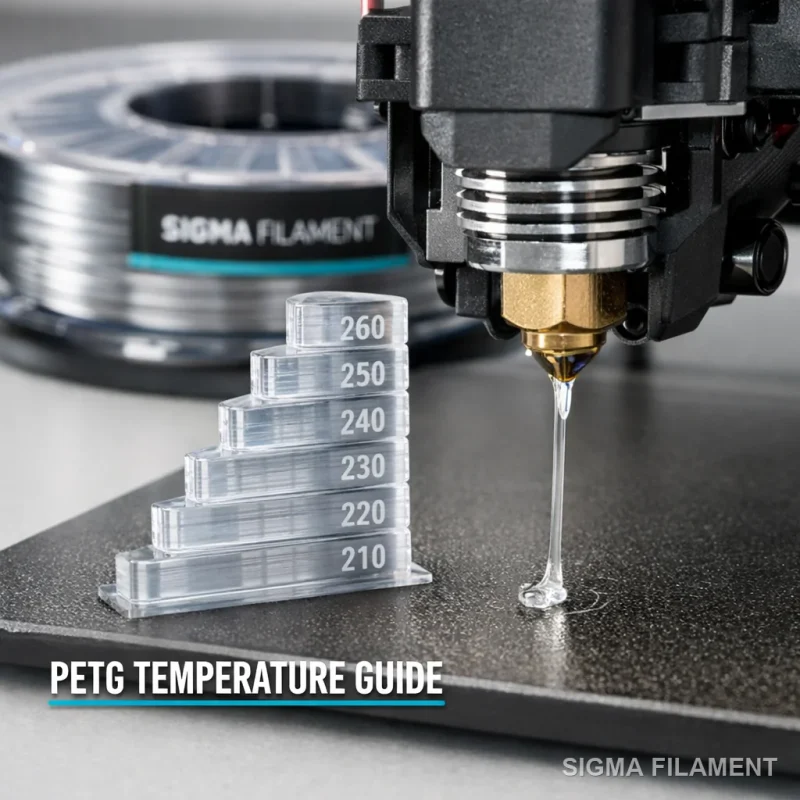
Nozzle Temperature: PETG requires higher temperatures than PLA. A typical range is 230°C to 250°C. The exact temperature depends on your specific printer, the brand of filament, and even the color (pigments can affect melt properties). Printing a “temperature tower” is an invaluable exercise. This is a special model with different sections designed to be printed at decreasing temperatures. By examining the tower, you can visually identify the ideal temperature for your setup. Too hot, and you will see excessive stringing, oozing, and a loss of fine detail. Too cold, and you will notice a dull surface finish and poor layer adhesion, potentially leading to weak, delaminating parts. The goal is to find the lowest temperature that still provides a glossy finish and strong layer bonding.
Heated Bed Temperature: A heated print bed is non-negotiable for PETG. The recommended range is typically 70°C to 90°C. This temperature keeps the base of the print warm, preventing it from cooling too quickly and contracting, which is the primary cause of warping parts lifting off the bed. For the build surface itself, a powder-coated PEI (Polyetherimide) sheet is an excellent choice. The slight texture provides just enough grip for the PETG to adhere during printing, but it releases the part easily once cooled. A smooth PEI sheet also works well. If you are using a glass bed, PETG can sometimes bond so aggressively that it can chip or tear chunks out of the glass upon removal. To prevent this, it is wise to use a release agent like a thin layer of glue stick or hairspray, which acts as a buffer between the print and the glass.
Print Speed: PETG generally prefers a more moderate pace than PLA. A good starting point is a speed of 40-60 mm/s. Printing too fast can lead to under-extrusion and poor layer adhesion because the filament does not have enough time to melt properly in the hotend. It is especially important to use a slower speed for the initial layer, perhaps 20-30 mm/s, to ensure a strong, reliable foundation for the rest of the print.
Retraction Settings: This is arguably the most critical setting for combating the infamous PETG “stringing.” Retraction is the mechanism where the extruder motor quickly pulls the filament backward before a travel move (when the nozzle moves across an open space) and then pushes it forward again to resume printing. This relieves pressure in the nozzle, preventing molten plastic from oozing out. For PETG, you will likely need more retraction distance and speed than you use for PLA. For a direct-drive extruder, a distance of 1-2 mm at a speed of 25-40 mm/s is a good starting point. For a Bowden extruder, where the motor is further from the hotend, you will need a much longer retraction distance, perhaps 4-7 mm. Calibrating this with dedicated retraction test models is time well spent and will pay dividends in cleaner prints.
Cooling Fan Speed: The part cooling fan requires a delicate touch with PETG. Unlike PLA, which benefits from 100% cooling for sharp details, PETG needs some time to bond properly with the layer below it. Too much cooling can rapidly solidify the extruded plastic, resulting in weak interlayer adhesion and brittle parts. Too little cooling, on the other hand, can lead to sloppy overhangs, poor bridging, and an increase in stringing. A good starting point is a fan speed between 20% and 50%. Many slicers also allow you to turn the fan off completely for the first few layers to maximize bed adhesion.
Taming the Beast: Advanced Troubleshooting for Common PETG Problems
Even with a well-calibrated profile, you may encounter issues. Understanding the root cause of these common problems is the key to solving them effectively.
Problem 1: Stringing and Oozing. Fine, hair-like strings or thicker “spider webs” between different parts of your model are the classic signature of un-tuned PETG.
- Causes: The primary culprits are wet filament, a printing temperature that is too high, or incorrect retraction settings. PETG is hygroscopic, meaning it readily absorbs moisture from the air. When wet filament is heated in the nozzle, the water turns to steam and expands violently, forcing molten plastic out and causing oozing.
- Solutions: First, always ensure your filament is dry. We will discuss this in more detail shortly. Second, print a temperature tower to confirm you are not printing too hot. Third, meticulously calibrate your retraction settings (distance and speed) using test prints. You might also explore advanced slicer settings like “coasting” (which turns off the extruder just before a travel move) and “wipe” (which moves the nozzle a short distance over the print before traveling).
Problem 2: Poor Bed Adhesion (or Over-Adhesion). Your print either refuses to stick to the bed or sticks so well it threatens to destroy your build surface.
- Causes: Poor adhesion is often caused by an incorrect Z-offset (the nozzle is too far from the bed), a bed temperature that is too low, or a dirty print surface (oils from your fingers can prevent adhesion). Over-adhesion is common on surfaces like clean glass or PEI when the Z-offset is too low, squishing the filament too aggressively onto the plate.
- Solutions: For poor adhesion, re-level your bed and set your Z-offset. Unlike PLA, PETG does not like to be “squished” onto the bed. Aim for a slightly larger gap. Clean your build plate thoroughly with isopropyl alcohol. For over-adhesion on glass, use a release agent like glue stick. On PEI, consider letting the bed cool completely; the part will often pop off on its own due to thermal contraction.
Problem 3: Blobs and Zits. Unsightly pimples or blobs appear on the outer surfaces of your print.
- Causes: This is often related to oozing. As the nozzle travels, a small amount of plastic leaks out; when it starts the next extrusion path, a blob is deposited. It can also be caused by wet filament or the slicer’s choice of where to start and stop each layer (the “Z-seam”).
- Solutions: The solutions are similar to those for stringing: dry the filament, tune retraction, enable coasting and wipe. You can also instruct your slicer to align the Z-seam on a sharp corner or a less visible part of the model to hide these imperfections.
Problem 4: Weak Layer Adhesion. The finished print feels brittle and can be easily broken apart along the layer lines.
- Causes: This is almost always a result of printing too cold or with too much part cooling. The layers are not melting together properly.
- Solutions: Increase your nozzle temperature in 5-degree increments. Reduce your part cooling fan speed, perhaps by 10-20%. Ensure there are no drafts around your printer, as sudden temperature changes can also weaken layer bonds.
The Importance of Filament Hydration and Storage
The hygroscopic nature of PETG filament cannot be overstated. It is a slow but relentless process. A spool of PETG left out in a humid environment will absorb moisture from the atmosphere. When a wet filament enters the hotend, the trapped water instantly boils into steam. This causes a host of problems:
- Audible Popping/Sizzling: You can hear a crackling sound from the nozzle as the steam escapes.
- Severe Stringing and Oozing: The expanding steam pushes filament out of the nozzle uncontrollably.
- Poor Surface Finish: The print surface may look rough, bubbly, or have a matte, inconsistent finish instead of the characteristic PETG gloss.
- Weak, Brittle Parts: The steam creates voids within the extruded plastic and disrupts the polymer chains, leading to terrible layer adhesion and dramatically reduced part strength through a process called hydrolysis (Zhou et al., 2020).
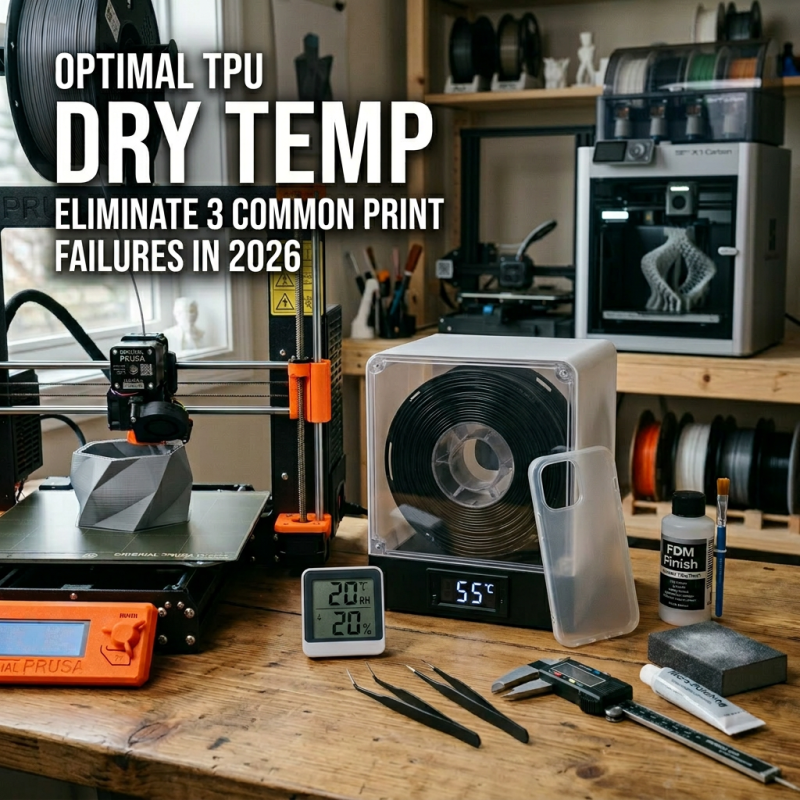
The solution is twofold: drying and storage. Drying: If you suspect your filament is wet, you must dry it. The most reliable method is to use a dedicated filament dryer, which is an appliance designed to circulate warm, dry air at a controlled temperature. A food dehydrator is also an excellent option. As a last resort, you can use a conventional oven, but this requires extreme caution. Ovens can have significant temperature swings, and it is very easy to overheat the filament, causing the spool to warp and the filament to fuse together. If using an oven, always use a separate, reliable thermometer to verify the temperature, and set it to around 65°C (150°F). Dry the spool for at least 4-6 hours. Storage: Once your filament is dry, keep it that way. Store your spools in airtight containers or resealable bags. Adding a desiccant pack, such as one containing silica gel, will help absorb any residual moisture. Proper storage is not just a best practice; it is a prerequisite for high-quality printing with PETG filament.
Expanding the PETG Universe: Variants and Composites
The story of PETG does not end with the standard formulation. As additive manufacturing has matured, so too has the demand for materials with specialized properties. The inherent strengths of PETG make it an excellent base polymer for creating a family of variants and composites, each tailored for specific performance characteristics, from enhanced mechanical strength to unique aesthetic finishes.
Glycol-Modified Copolyesters: Exploring PET, CPE, and PETT
PETG belongs to a broader class of materials known as copolyesters. By slightly altering the chemical recipe, manufacturers can fine-tune the properties of the final filament. For instance, some brands offer filaments simply labeled “PET,” which are often formulations with a much lower glycol content than PETG. These can be more rigid but also more brittle and prone to the crystallization issues of the parent polymer.
Other variants like CPE (copolyester) and PETT (Polyethylene co-trimethylene terephthalate) exist, each offering a unique balance of toughness, temperature resistance, and chemical resistance. While less common than PETG, their existence highlights the versatility of copolyester chemistry and the ongoing innovation in the field. They represent different points on the spectrum of properties, allowing engineers to select a material with a very specific performance profile.
Reinforcing PETG: The Rise of Carbon Fiber (PETG-CF) and Glass Fiber (PETG-GF)
One of the most exciting developments in the material space has been the introduction of fiber-reinforced composites. By infusing the PETG base resin with short, chopped fibers of carbon or glass, we can dramatically enhance its mechanical properties.
PETG with Carbon Fiber (PETG-CF): Carbon fiber is renowned for its exceptional stiffness-to-weight ratio. When added to PETG, it creates a composite material with several key advantages. The most noticeable is a massive increase in stiffness or rigidity. A part printed in PETG-CF will deflect far less under load than one printed in standard PETG. This makes it ideal for structural components, drone arms, jigs, and fixtures that demand high dimensional stability. The carbon fibers also improve thermal resistance, allowing the part to withstand higher temperatures before deforming. Aesthetically, PETG-CF produces a beautiful matte black finish that does an excellent job of hiding layer lines, resulting in a very professional-looking part straight off the printer . The primary trade-off is a reduction in toughness; the increased stiffness comes at the cost of some brittleness. The material is also highly abrasive. Printing PETG-CF with a standard brass nozzle will destroy it in a matter of hours. A hardened steel, ruby-tipped, or other wear-resistant nozzle is absolutely mandatory.
PETG with Glass Fiber (PETG-GF): Glass fiber reinforcement offers a different set of benefits. Like carbon fiber, it increases stiffness and strength compared to standard PETG. However, it typically provides better impact resistance than PETG-CF, making it a tougher, more durable composite. It is often a more cost-effective option than its carbon fiber counterpart. PETG-GF also requires a wear-resistant nozzle, as the glass fibers are abrasive. The surface finish is usually less uniform than PETG-CF, with the fibers sometimes being more visible.
The choice between these composites depends on the application’s primary requirement. If maximum stiffness and dimensional stability is the goal, PETG-CF is the superior choice. If a balance of stiffness, impact strength, and cost is needed, PETG-GF may be more appropriate. The following table clarifies these differences.
| Feature | Standard PETG | PETG-Carbon Fiber (PETG-CF) | PETG-Glass Fiber (PETG-GF) |
|---|---|---|---|
| Stiffness (Rigidity) | Moderate | Very High | High |
| Impact Strength | High | Low to Moderate | Moderate to High |
| Tensile Strength | High | Very High | Very High |
| Temperature Resistance | Medium (~80°C) | High | High |
| Nozzle Wear | None | Extremely High (Hardened Nozzle Required) | High (Hardened Nozzle Required) |
| Surface Finish | Glossy | Matte | Semi-Gloss, Fibrous |
| Cost | Low | High | Medium |
Aesthetic and Specialty PETG Filaments
Beyond high-performance composites, the market has also seen a bloom of PETG variants focused on aesthetics and sustainability.
Translucent/Transparent PETG: One of the inherent properties of the base PETG resin is its excellent clarity. This allows for the creation of translucent or even near-transparent filaments. Achieving the best optical clarity in a print is an art in itself, typically requiring slower print speeds, higher temperatures, and thicker layer heights to ensure the molten plastic flows together seamlessly with minimal voids. These filaments are perfect for projects where you want to see the internal workings of a device, for creating light diffusers, or for artistic “glass-like” models.
Matte PETG: Responding to a demand for more professional-looking finishes, several manufacturers now offer matte PETG filaments . These formulations contain additives that disrupt the normally glossy surface of PETG, creating a non-reflective, textured finish. This is highly effective at hiding the fine layer lines inherent in FDM printing, resulting in parts that look more like injection-molded objects.
Silk and Sparkly PETG: For more decorative applications, you can find PETG filaments with additives that create a silky, highly reflective sheen or that are infused with glitter particles for a sparkly effect . These expand the creative possibilities of the material, allowing it to be used for vases, ornaments, and other visually striking objects while retaining the underlying strength of PETG.
Recycled PETG: With a growing focus on sustainability within the industry, recycled PETG is becoming more common. These filaments are produced from post-industrial or post-consumer PETG waste. They offer a more environmentally friendly option, often at a lower cost, without a significant compromise in print quality or mechanical properties. Sourcing from a reputable manufacturer ensures that the recycled material has been properly cleaned and processed to provide a consistent, reliable filament .
Practical Applications: Where PETG Filament Excels
The true measure of a material lies in its application. The unique combination of strength, temperature resistance, and user-friendliness makes PETG filament an exceptionally versatile tool. It bridges the gap between purely aesthetic prints and functional, durable objects that solve real-world problems.
Functional Prototyping and Mechanical Parts
This is arguably the primary domain of PETG. When designing a new product or mechanism, prototypes need to be strong enough to be tested. PLA is often too brittle for a task; a snap-fit clip might break on the first use, a gear might lose a tooth under torque. PETG, with its superior impact resistance and ductility, allows for the creation of prototypes that can be handled, assembled, and even put into service for initial testing.
Think of the process of designing a custom mounting bracket for a security camera. A PLA version might crack when you tighten the screws. An ABS version would be strong enough, but you might struggle with warping during the print. A PETG version provides the ideal solution. It is strong enough to hold the camera securely, has enough give to not fracture under the stress of the mounting bolts, and can be printed reliably without an enclosure. For projects demanding reliable mechanical performance, sourcing a high-quality standard PETG filament is the first step.
Other examples abound in workshops and garages across the world:
- Jigs and Fixtures: Custom holders that position a piece of wood for drilling or a circuit board for soldering.
- Drone Components: Arms and frames that can survive a rough landing without shattering.
- Organizational Tools: Brackets for hanging heavy tools, custom-fit battery holders, and durable storage bins.
- Replacement Parts: Repairing household appliances with small plastic parts that are no longer available.
In all these cases, PETG provides a level of durability that gives the maker confidence in the final part.
Enclosures and Containers
The excellent chemical and water resistance of PETG filament makes it a natural choice for any application involving containment or protection. Its low moisture absorption ensures that parts will not degrade or change dimension in humid environments, a known issue with materials like Nylon or even PLA over long periods (Simplify3D, n.d.).
For electronics projects, PETG is perfect for creating custom enclosures for microcontrollers like an Arduino or Raspberry Pi. It protects the sensitive electronics from accidental bumps and short circuits, and its higher heat resistance compared to PLA means it can be used in cases where the components might generate a bit of warmth.
Its chemical profile also allows it to be used for containers holding various liquids. One could print custom trays for developing photographic film, parts for a small-scale hydroponics setup, or funnels and beakers for use in a garage or workshop. While one must always test for compatibility with specific aggressive chemicals, its general resilience to acids, bases, and oils is a significant advantage.
Applications Requiring Food Contact
The question of whether 3D printed parts are “food safe” is complex and nuanced. While many raw PETG resins are FDA-compliant for food contact, the 3D printing process itself introduces several variables that must be considered with care (Badhe et al., 2021).
The first consideration is the filament itself. Natural, unpigmented PETG from a reputable manufacturer is the safest starting point. The pigments used to color filaments are not always rated for food contact, and some may contain harmful substances.
The second, more significant issue is the nature of FDM 3D printing. The process creates objects layer by layer, leaving microscopic ridges and valleys on the surface. These tiny crevices are perfect breeding grounds for bacteria, and they are very difficult to clean and sterilize effectively.
The third variable is the printer’s hardware. Many 3D printer hotends use a brass nozzle. Brass is an alloy that can contain lead, which can leach into the print in trace amounts.
To create a part that is safer for food contact (for example, a custom cookie cutter or a coffee filter holder), one should follow these best practices:
- Use a natural, unpigmented PETG filament from a manufacturer that states its resin is FDA-compliant.
- Use a stainless steel nozzle instead of a brass one to eliminate the risk of lead contamination.
- After printing, apply a food-safe epoxy or sealant to the part. This will fill in the layer lines, creating a smooth, non-porous surface that is much easier to clean and can be considered food safe.
It is generally not recommended to use 3D printed parts for long-term food storage or for contact with hot liquids unless they have been properly sealed.
When to Choose an Alternative to PETG
As versatile as PETG is, it is not the right material for every job. Knowing when to switch to an alternative is just as important as knowing how to use PETG itself.
- For High-Temperature Applications: If a part will be consistently exposed to temperatures above 80°C (176°F), PETG will soften and lose its shape. In these scenarios, materials like ABS, ASA, or Polycarbonate, which have glass transition temperatures over 100°C, are more suitable choices.
- For Extreme Strength or Stiffness: For applications demanding the highest possible mechanical performance, such as highly loaded structural parts or gears under extreme torque, advanced engineering materials like Nylon, Polycarbonate, or their carbon-fiber-reinforced variants (Nylon-CF, PC-CF) will outperform PETG-CF.
- For Simple, Non-Functional Models: If you are printing a decorative sculpture, a miniature figure, or a prototype for purely visual assessment, PLA is often the better choice. It is cheaper, easier to print, and comes in a wider variety of aesthetic finishes.
- For Flexible or Wearable Parts: If your part needs to bend, stretch, or compress like rubber, a thermoplastic polyurethane (TPU) is the correct material. PETG is tough, but it is fundamentally a rigid material.
The Future of PETG and Copolyesters in Additive Manufacturing
The world of materials science is never static. As 3D printing technology continues its rapid evolution, the filaments we use are evolving alongside it. PETG and its copolyester relatives are at the forefront of several exciting trends, promising even greater performance, speed, and sustainability in the years to come.
High-Speed Printing Developments
The advent of high-speed CoreXY printers in 2024 and 2025 has shifted the entire landscape of FDM printing. These machines are capable of print speeds and acceleration rates that were unimaginable just a few years ago. This has created a new challenge for filament manufacturers: standard filaments cannot keep up. When you try to extrude a traditional PETG at very high speeds, it does not have sufficient time in the melt zone to reach a low enough viscosity. This leads to severe under-extrusion, poor layer adhesion, and failed prints.
In response, material scientists are developing new “high-speed” PETG formulations . These filaments are engineered with a modified polymer structure or additives that alter their melt flow index (MFI). They are designed to melt faster and flow more easily, enabling them to be extruded at the volumetric flow rates demanded by modern printers (up to 20-30 mm³/s or more). This development is vital, as it ensures that users of these new machines can still leverage the excellent mechanical properties of PETG without sacrificing speed.
Sustainability and Recyclability
As additive manufacturing grows from a niche hobby into a mainstream production method, questions of environmental impact become more pressing. PETG is well-positioned to be part of a more sustainable future. Chemically, it is the same type of plastic as soda bottles (PET, Resin Code #1), which is one of the most widely recycled plastics in the world.
While the infrastructure for recycling 3D prints is still in its infancy, the potential is enormous. The rise of recycled PETG filaments is a promising first step. These filaments, made from the waste streams of industrial manufacturing or from sorted post-consumer plastic, help to close the loop on plastic production. They reduce the demand for virgin petroleum-based resources and divert waste from landfills. As sorting and processing technologies improve, we can expect the quality and consistency of recycled filaments to become indistinguishable from their virgin counterparts, making sustainable choices easier for everyone.
Advanced Composites and Custom Formulations
The development of fiber-reinforced PETG is just the beginning. The future will likely bring an even wider array of advanced composites tailored for specific industrial needs. We are already seeing the emergence of:
- ESD-Safe PETG: Infused with conductive additives like carbon nanotubes, these filaments are designed for printing jigs and fixtures to be used in the electronics industry. They safely dissipate static electricity, protecting sensitive components from damage.
- Flame-Retardant PETG: For applications in aerospace, automotive, or electronics enclosures, filaments with additives that meet specific flammability standards (like UL94 V-0) are being developed.
- Custom Formulations: The true potential lies in the ability to create custom-tuned materials. For specialized needs, manufacturers offer custom PETG formulations, allowing businesses to develop a filament with an exclusive color matched to their brand, or with a specific combination of properties—like enhanced UV resistance, increased impact strength, or a particular surface texture—protected by a non-disclosure agreement. This ODM (Original Design Manufacturer) approach transforms filament from a commodity into a bespoke engineering solution.
The future of PETG is not just about a single material but about a versatile platform for innovation. Through chemical modification, reinforcement, and specialized additives, PETG will continue to adapt, meeting the ever-increasing demands of designers, engineers, and manufacturers in 2026 and beyond.
Frequently Asked Questions (FAQ)
Is PETG stronger than PLA? Yes, in almost every meaningful way. PETG has a higher tensile strength, meaning it can withstand more pulling force before breaking. More importantly, it has vastly superior impact resistance and ductility. While a PLA part might be rigid, it is also brittle and will shatter on impact. A PETG part is tougher, meaning it can absorb shock and deform slightly without failing. It also has a higher temperature resistance.
Do I need an enclosure to print PETG? No, a full enclosure is not generally required for printing PETG. Unlike ABS, PETG has very low thermal shrinkage, so it is not prone to severe warping or cracking. This makes it much more accessible for users with open-frame printers. However, protecting the printer from drafts or sudden temperature changes is always a good practice to ensure the best possible layer adhesion.
Why is my PETG filament so stringy? Stringing is the most common issue with PETG and is usually caused by one of three things or a combination thereof: 1) The filament has absorbed moisture from the air and needs to be dried. 2) The printing temperature is too high, causing the material to become overly fluid and ooze from the nozzle. 3) The retraction settings are not aggressive enough to relieve nozzle pressure during travel moves. Drying your filament, printing a temperature tower, and calibrating retraction are the key steps to eliminating stringing.
Can I print PETG on a Bowden extruder? Absolutely. You can successfully print PETG on both direct-drive and Bowden-style extruders. The main difference is that with a Bowden setup, you will need to use a much longer retraction distance (e.g., 4-7 mm) compared to a direct-drive setup (e.g., 1-2 mm) to compensate for the slack in the long Bowden tube. It may require more careful tuning to control stringing, but it is entirely achievable.
Is PETG filament food safe? This is a nuanced question. The raw PETG plastic resin is often FDA-compliant for food contact. However, the 3D printing process introduces two concerns: potential contaminants in colored pigments and the microscopic layer lines on the surface of a print, which can harbor bacteria and are difficult to clean. For creating food-safe items, it is best to use natural, unpigmented PETG, print with a stainless steel nozzle, and then apply a food-safe epoxy coating to seal the surface.
How do I stop PETG from ripping up my build surface? PETG is notorious for bonding extremely well, especially to surfaces like clean glass or PEI. If it is tearing up your build plate, it usually means your nozzle’s Z-offset is too low, squishing the first layer too aggressively onto the bed. Try raising the Z-offset slightly. Using a release agent, like a simple glue stick or a layer of Windex on a glass bed, can also provide a helpful barrier that allows the print to pop off easily after cooling.
What is the best build surface for PETG? A powder-coated, textured PEI sheet is widely considered the best all-around surface for PETG. It provides excellent adhesion when hot but releases the print almost effortlessly once the bed cools down. The texture also helps to hide any minor imperfections on the bottom layer of the print. Smooth PEI sheets also work very well, as does glass with a release agent like glue stick or hairspray.
How is PETG different from PET? PETG is a modified version of PET. The “G” stands for glycol, which is added during the polymerization process. This modification disrupts the polymer chains, preventing them from crystallizing when heated and cooled. This makes PETG less brittle, clearer, and easier to print with than standard PET, which tends to be hazy and prone to cracking.
Conclusion
The journey through the world of PETG filament reveals a material of profound capability and balance. It emerges not as a simple plastic but as a thoughtful work of chemical engineering, specifically designed to solve the practical challenges faced by creators and makers. Its identity is defined by its position as the versatile workhorse of the 3D printing world, a reliable bridge between the simplicity of PLA and the industrial might of ABS. The toughness to withstand a fall, the thermal resilience to survive in a hot car, the chemical stability to contain various substances—these are not just abstract data points; they are the tangible qualities that empower users to move beyond trinkets and create durable, functional objects that serve a real purpose.
Mastering PETG is an exercise in understanding its character. It asks for a bit more attention than PLA—a careful drying process, a well-tuned retraction setting, a thoughtful approach to cooling. Yet, the rewards for a small investment of time are immense: clean, strong, reliable prints that look professional and perform exceptionally. With the continued evolution of high-speed formulations, reinforced composites, and more sustainable recycled options, the role of PETG is only set to expand. It remains a testament to the idea that the right material can transform a creative vision into a physical reality you can hold, use, and trust.
References
- Badhe, Y. N., Vuppalapati, J., & Al-Khafaji, Z. (2021). Food-safe 3D printing: A study of the effects of 3D printing on the food-grade quality of plastics. Journal of Food Processing and Preservation, 45(9), e15725. https://doi.org/10.1111/jfpp.15725
- Gu, F. (2021). Materials for 3D printing: An overview. In J. Kumar (Ed.), 3D Printing in Biomedical Engineering. IntechOpen.
- Simplify3D. (n.d.). Ultimate materials guide – Tips for 3D printing with PETG. Retrieved January 24, 2026, from
- Zhou, L. Y., Dessenberger, P., & Hopmann, C. (2020). Hydrolytic degradation of polyethylene terephthalate and its copolyesters in fused filament fabrication. Polymer Engineering & Science, 60(10), 2533-2544.
Last reviewed and updated: January 2026. Author: SigmaFilament Engineering Team. For custom filament solutions and wholesale inquiries, contact our team.