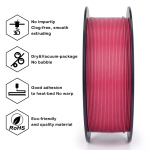
Pink PETG Filament — Tough, Water-Resistant and Built to Last
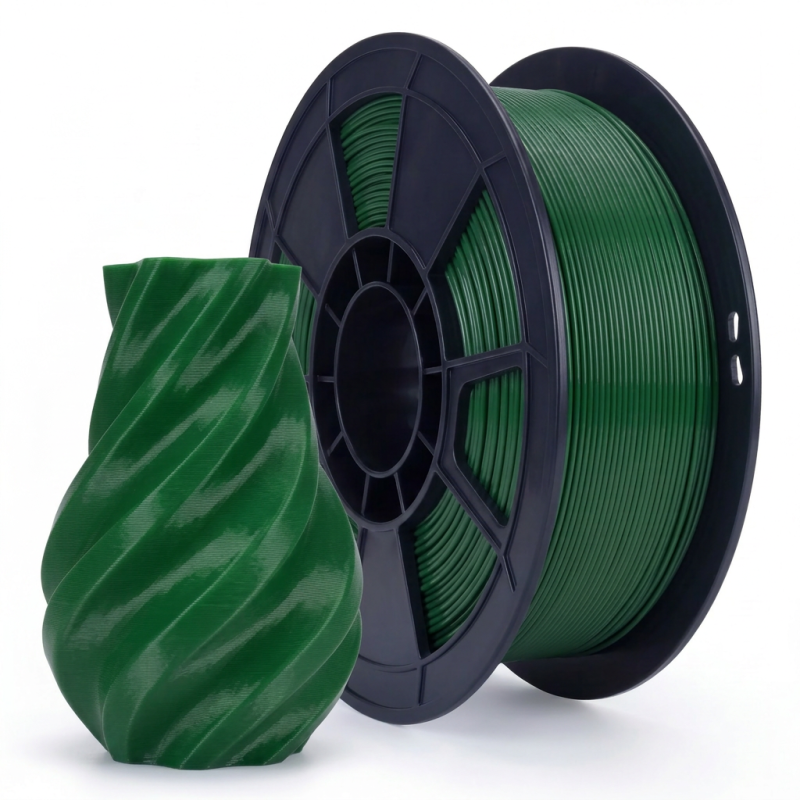
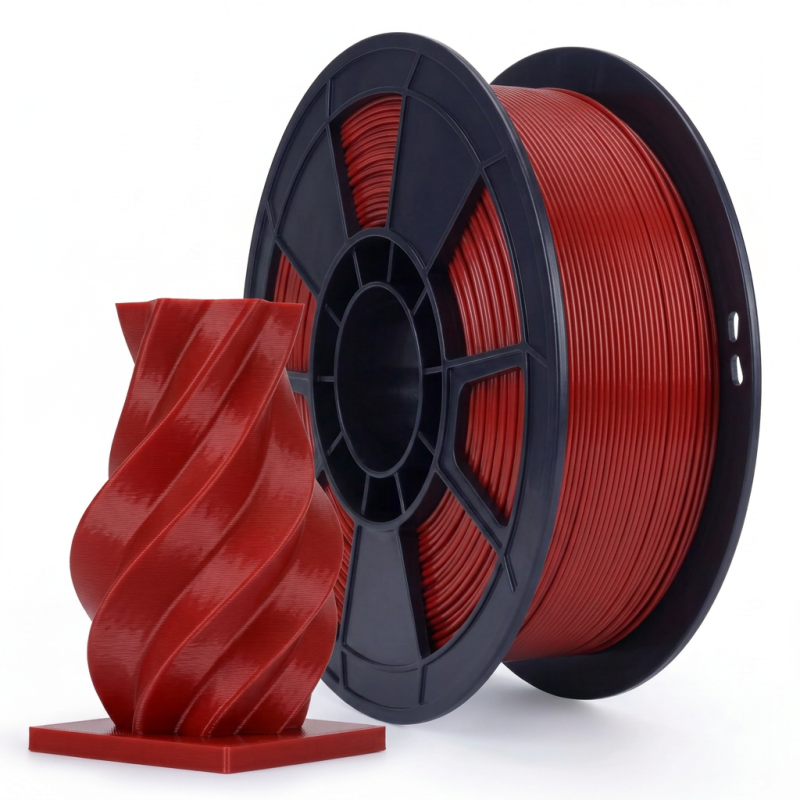
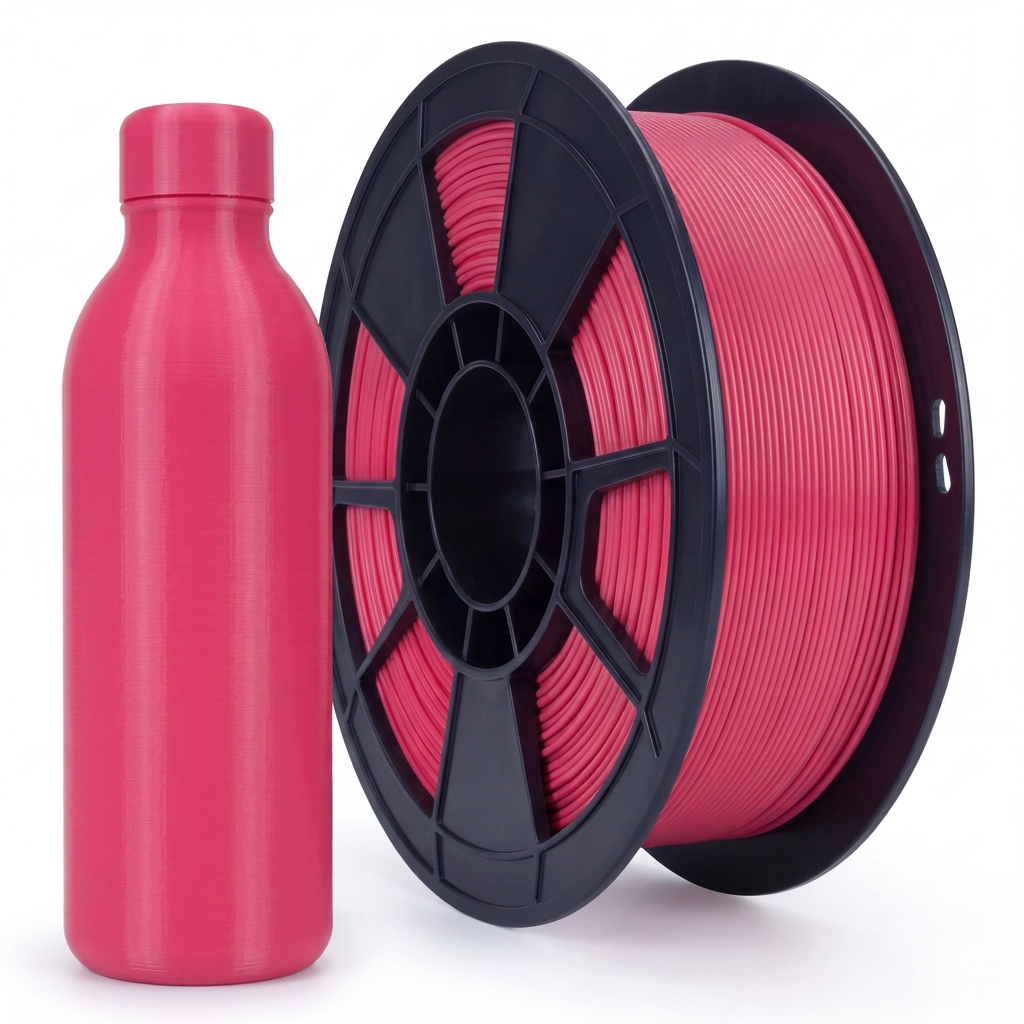
Pink PETG filament is the durable workhorse for parts that have to survive daily handling, water, sunlight and the occasional drop. Where PLA cracks and deforms in a warm car or a dishwasher, and where ABS fights you with warping and fumes, PETG sits in the practical middle: it is tough, slightly flexible, water-resistant and chemically stable, yet it still prints on an open, unheated-enclosure machine. This 1.75mm material is built on a glycol-modified PET base — the same polymer family used for commercial beverage bottles — so it carries a genuine food-contact-grade heritage rather than a marketing claim bolted onto a decorative plastic. In vivid pink, it turns that engineering durability into products people actually want to pick up: reusable water bottles, storage boxes, kids’ gear, retail goods and branded consumer parts.
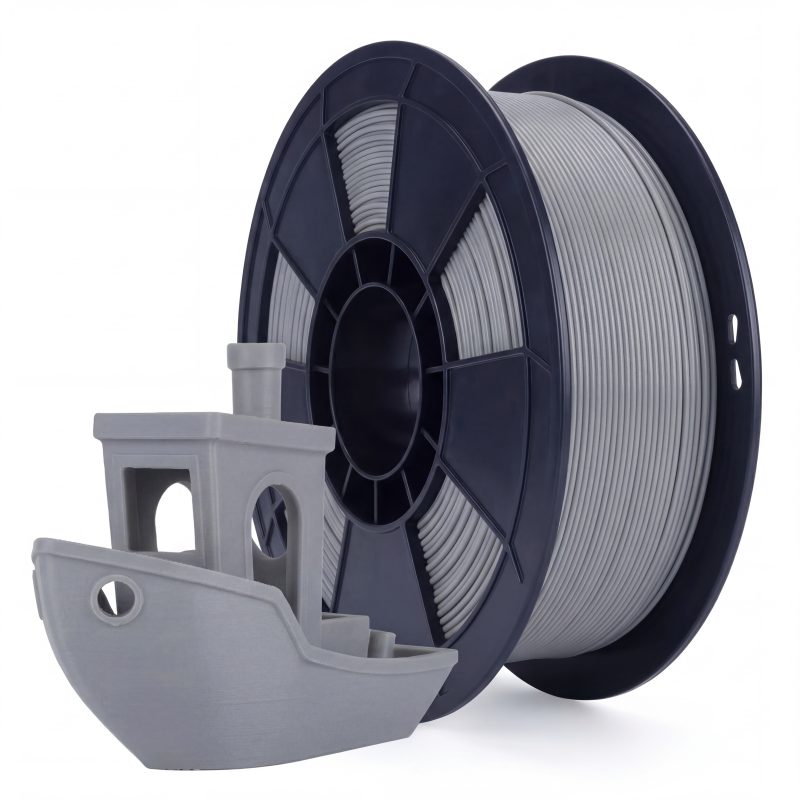
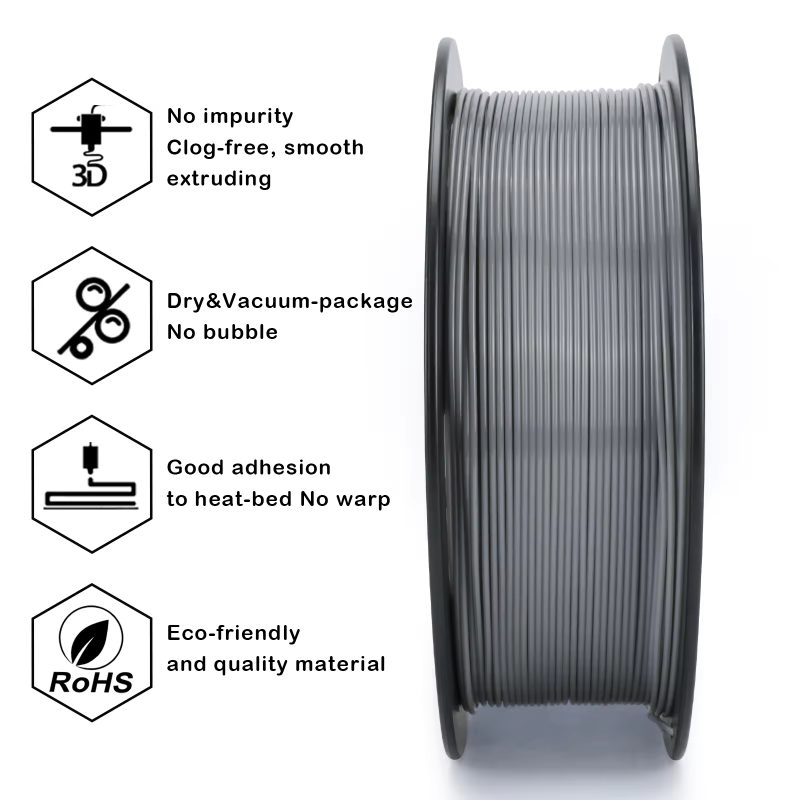
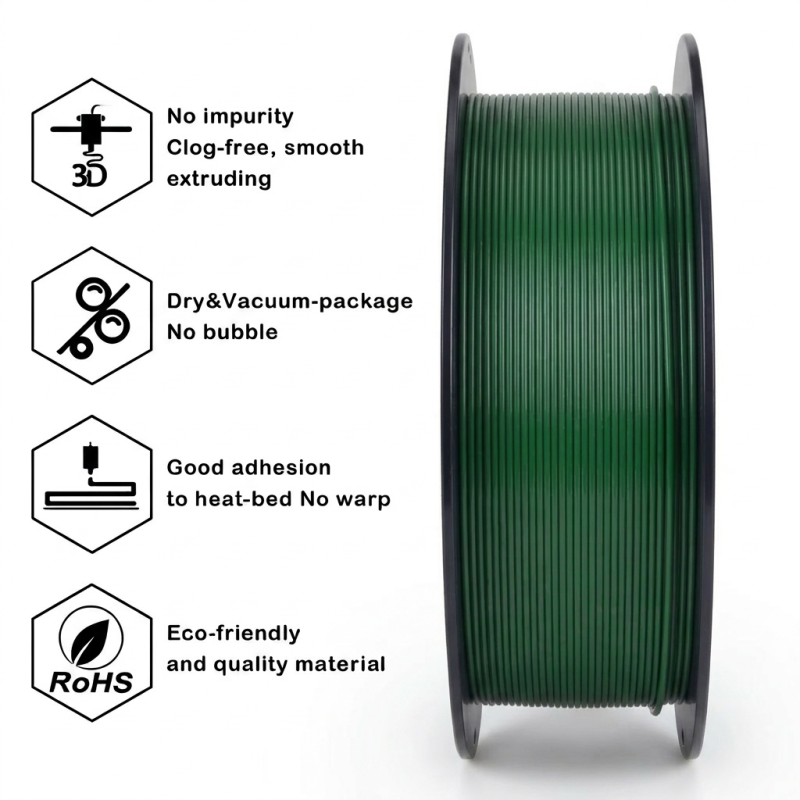
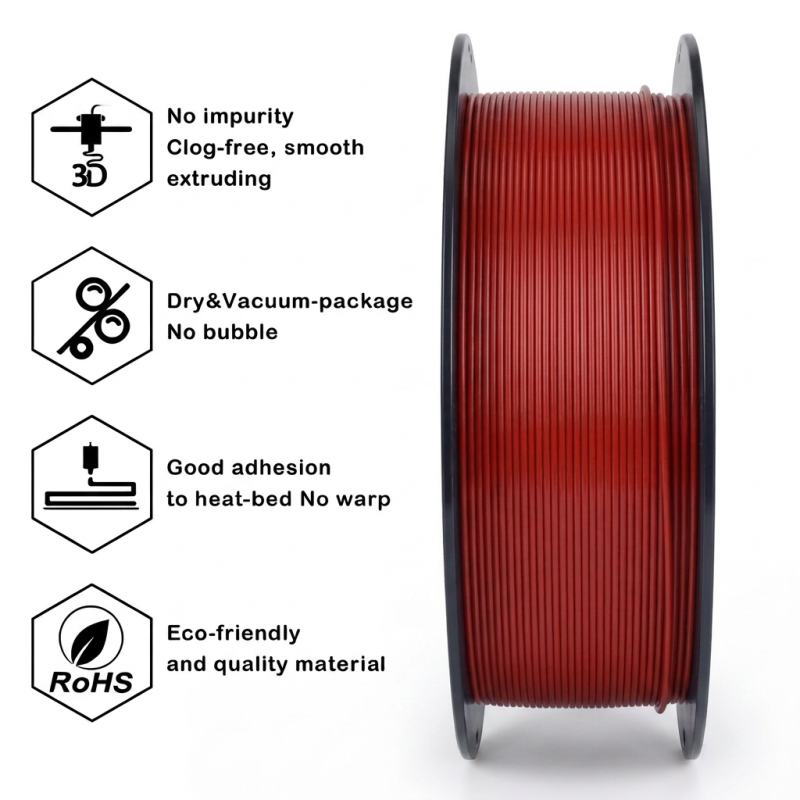
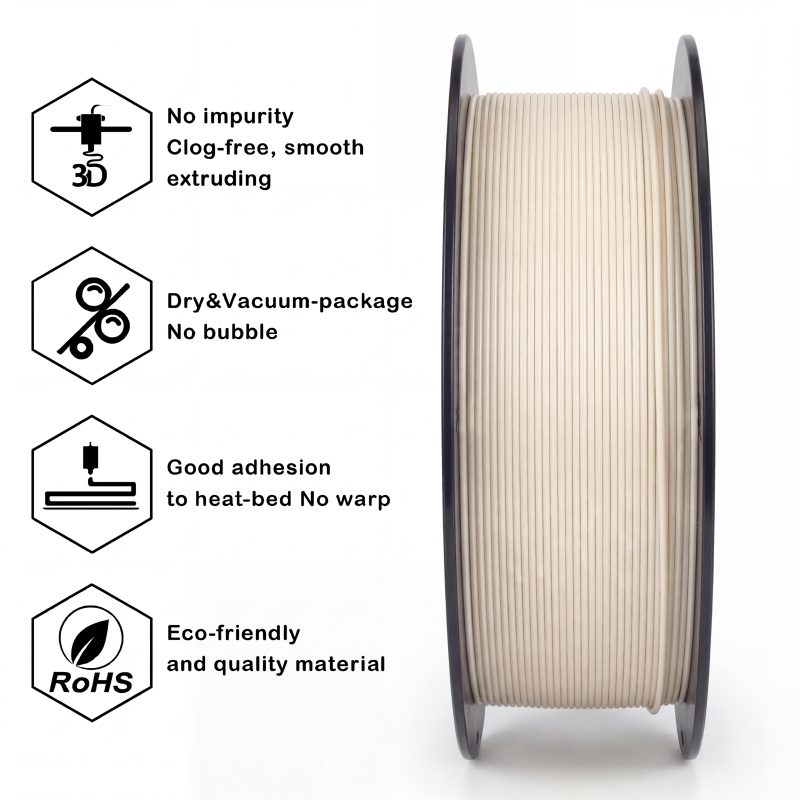
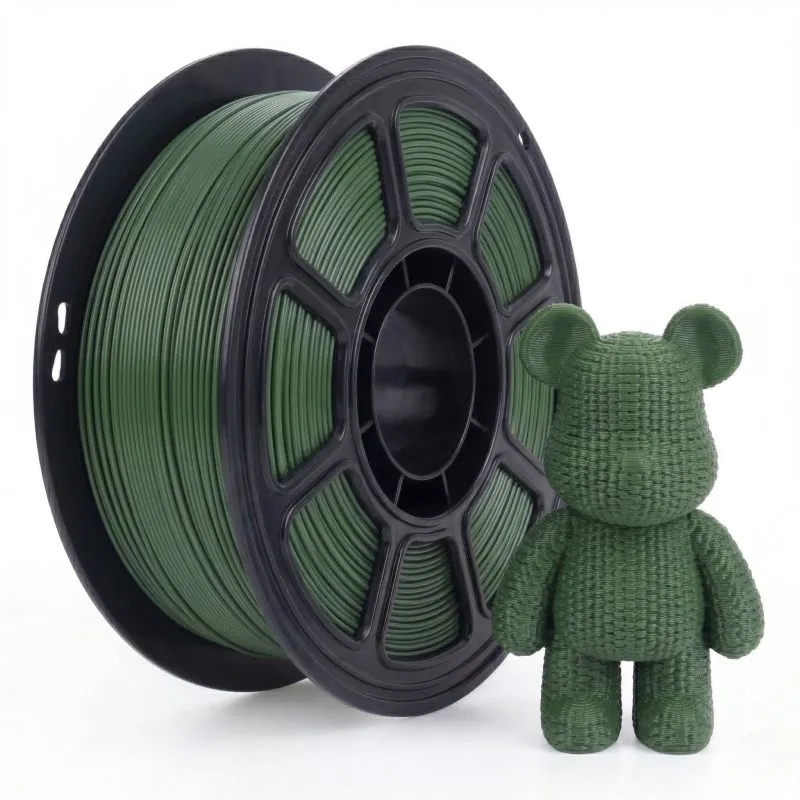
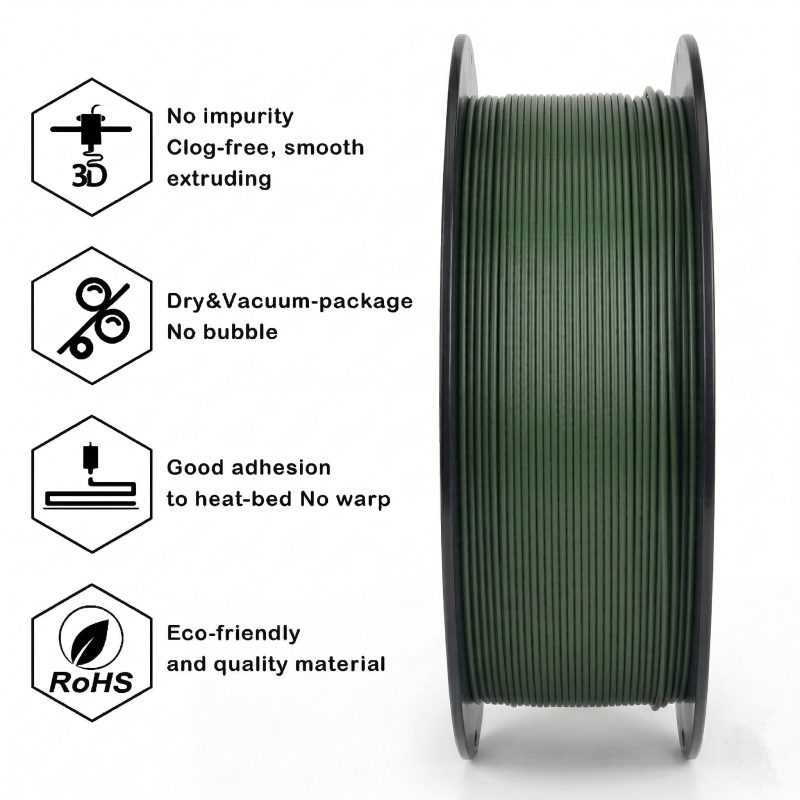
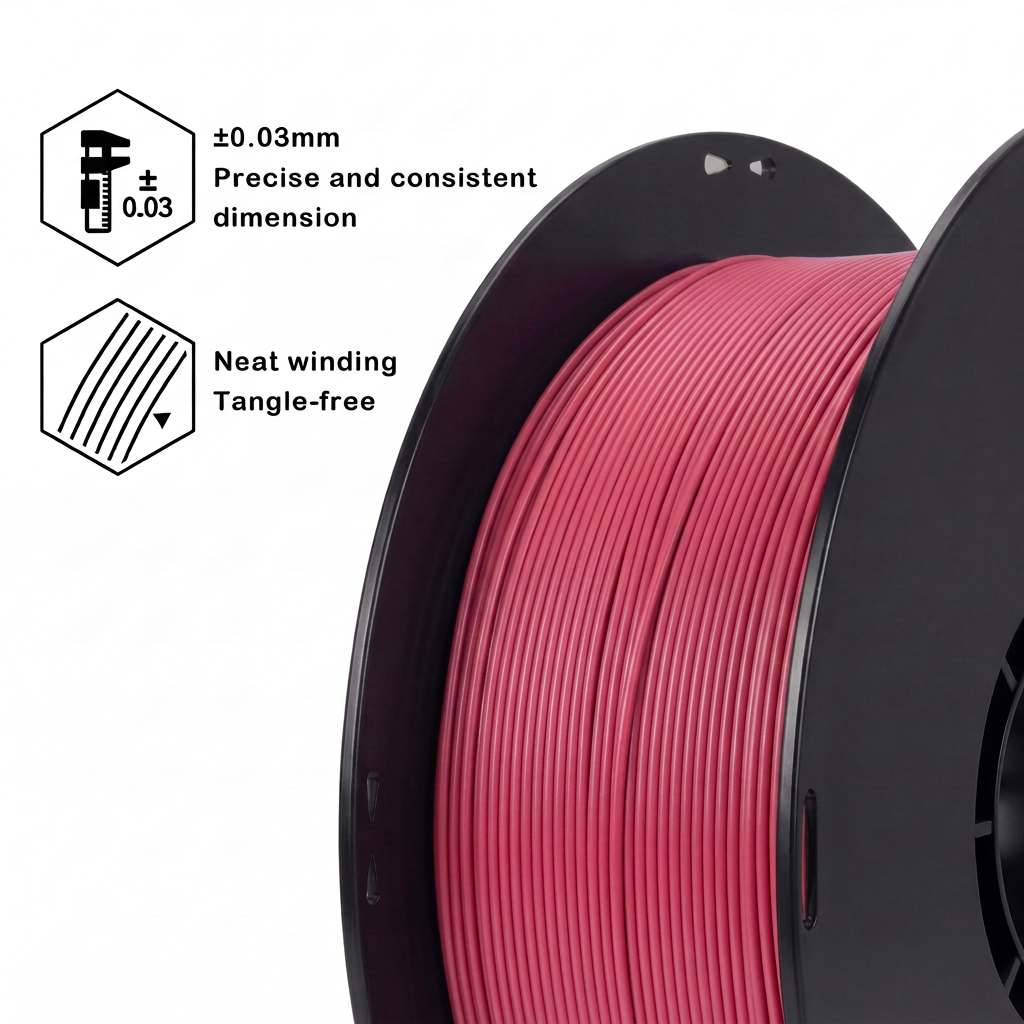
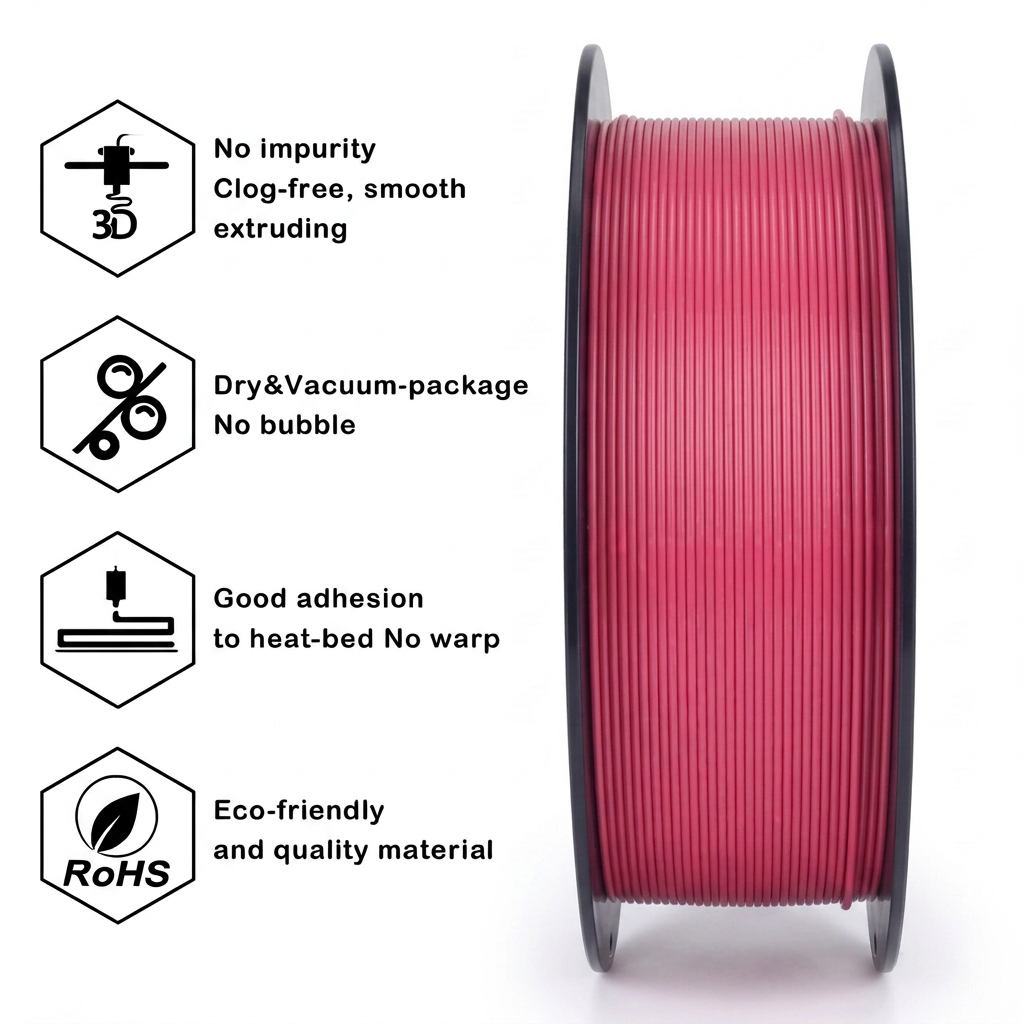
Consistent extrusion is what separates a clean PETG part from a stringy, blobbed one, so this pink PETG filament is held to a ±0.03mm diameter tolerance and wound tangle-free on a black open-lattice spool. PETG is only mildly hygroscopic compared with nylon or TPU, but it still drinks enough moisture from humid air to string and pop if it is left open, which is why every spool ships vacuum-sealed with desiccant. Out of a sealed bag and onto a tuned profile, PETG is one of the most rewarding materials to print — glossy, strong, layer-bonded and forgiving of the heat and moisture that destroy PLA.
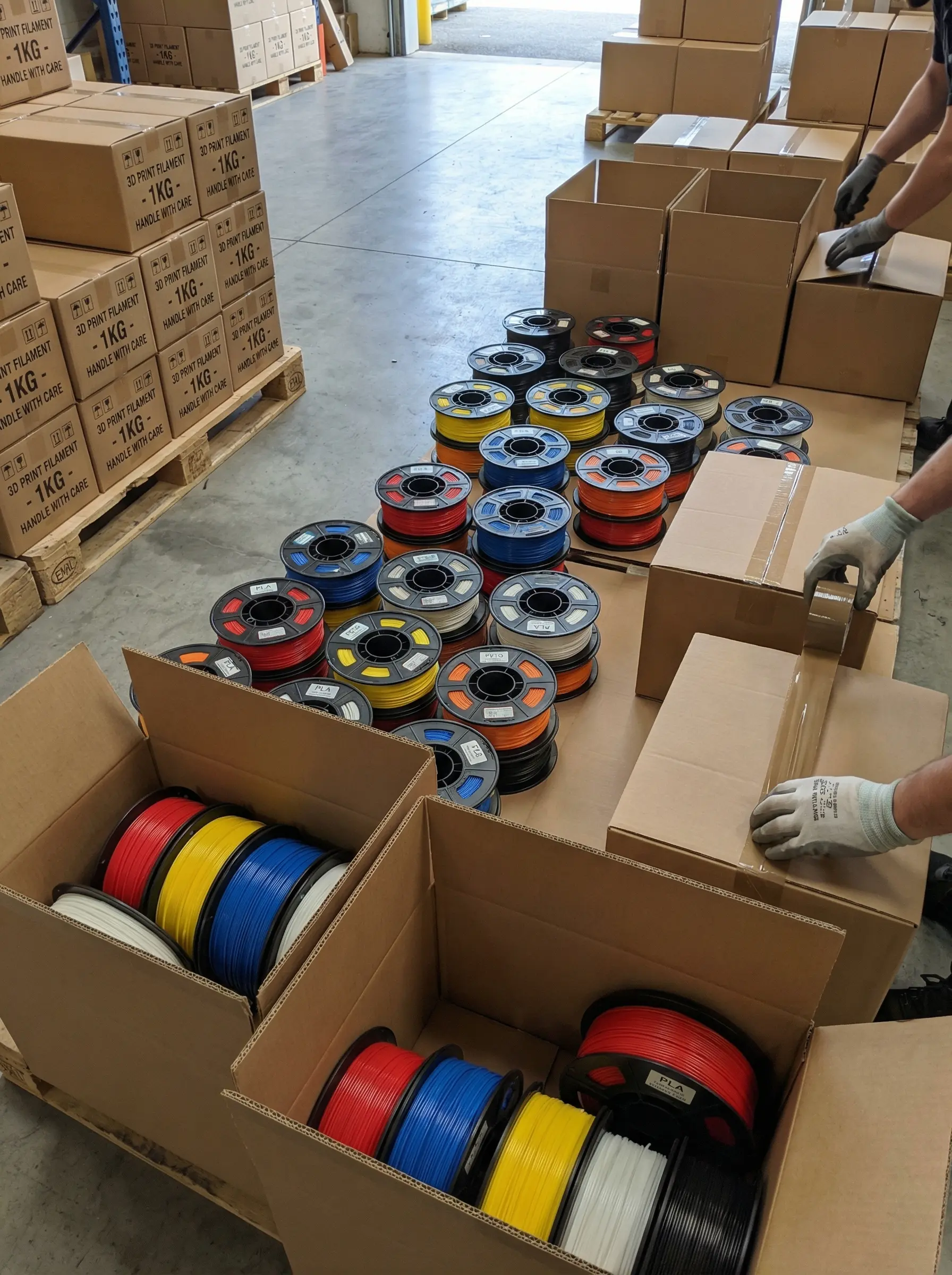
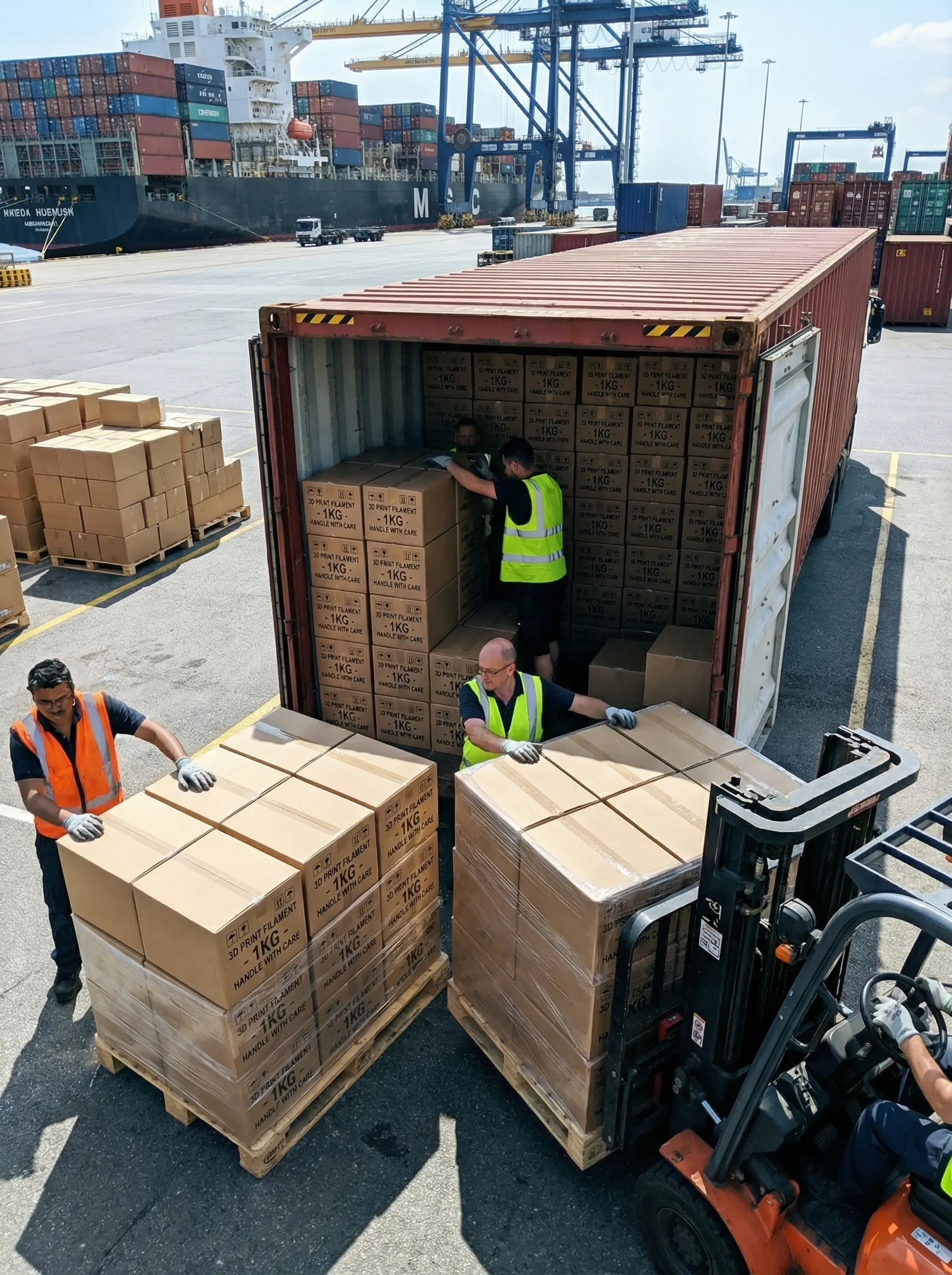
As a factory-direct product, pink PETG is stocked for both single-spool makers and volume production. If you are sourcing for a product line — drinkware, durable containers, outdoor fittings, protective housings — this pink PETG filament is available through our direct manufacturer wholesale program and through full OEM/ODM services with custom color-matching, spool sizes and private-label packaging.
Choosing PETG is usually a decision about the finished part’s life, not the print itself. The moment a design needs to hold water, take a knock, sit outdoors, or touch food or skin, PLA stops being the right answer and PETG becomes the obvious upgrade — without stepping all the way up to the enclosure, fume management and warp control that ABS demands. Below you will find the print settings, mechanical data, application guidance and design tips that make this pink PETG filament reliable in practice, not just on paper.
Why This Pink PETG Filament Stands Out
- Tough where PLA is brittle: PETG bends and absorbs impact instead of snapping. Dropped bottles, flexed clips and stressed brackets survive instead of cracking at the first shock.
- Water- and chemical-resistant: PETG shrugs off water, weak acids, detergents and many solvents — the reason it is the default for drinkware, containers and parts that get washed or live outdoors.
- Food-contact-grade base resin: the underlying glycol-modified PET is the same polymer family as commercial water bottles, giving pink PETG a credible foundation for food- and drink-adjacent products.
- Easier than ABS, no enclosure needed: low warp, low odor and strong bed adhesion mean PETG prints reliably on open machines that would struggle with ABS.
- Strong layer adhesion: PETG bonds hard between layers, so pink PETG parts resist splitting along the Z-axis under load — a key advantage for pressure-holding and structural pieces.
- ±0.03mm tolerance for steady flow: a consistent diameter keeps PETG’s slightly-oozy melt under control, reducing stringing and keeping dimensions repeatable across a batch.
Premium Pink PETG at Factory-Direct Pricing
| Quality You Get | How We Deliver It | What It Means For You |
|---|---|---|
| Consistent toughness | Controlled PETG resin, batch-verified | Parts perform the same, batch to batch |
| Steady extrusion | ±0.03mm diameter + tangle-free winding | Less stringing, fewer blobs, repeatable prints |
| Dry on arrival | Vacuum seal + desiccant, sealed at packing | Clean, glossy surface out of the box |
Why Choose Pink PETG for Your Projects
| Durable everyday parts | Survives drops, flex and daily handling without cracking. |
| Holds water | Water-tight walls for bottles, planters and containers. |
| Food-contact heritage | PET-based resin suited to drink- and food-adjacent goods. |
| Outdoor tolerance | Handles moisture and sun better than PLA for fixtures. |
| Eye-catching pink | Consumer-friendly color for retail and branded products. |
| Volume-ready supply | Consistent stock for production, wholesale and OEM. |
How Pink PETG Compares
| Property | Pink PETG | PLA | ABS |
|---|---|---|---|
| Toughness / impact | High — bends, absorbs shock | Low — brittle, cracks | High |
| Water & chemical resistance | Excellent | Poor (absorbs, softens) | Good |
| Heat tolerance (Tg) | ~80 °C | ~55–60 °C | ~100 °C |
| Ease of printing | Easy (no enclosure) | Easiest | Hard (warps, fumes) |
| Best use | Bottles, containers, durable/outdoor parts | Models, décor, indoor prototypes | Hot, high-stress mechanical parts |
Pink PETG for Consumer & Retail Products — A Sourcing Note
A durable material and an appealing color rarely come together in one filament, and that is precisely where pink PETG earns its place on the shelf. Most durable engineering plastics ship in black, grey or industrial white — fine for hidden brackets, useless for products meant to be seen and sold. Pink is a color people choose deliberately: drinkware, kids’ items, beauty and lifestyle accessories, gift goods and seasonal retail products lean heavily on warm, friendly tones. Printing those products in PETG rather than PLA means they can actually be used — washed, refilled, carried in a bag, left in a warm car — without cracking or clouding. For a maker selling finished goods, or a manufacturer producing a branded consumer line, a spool of tough pink PETG covers a category that a durable black filament simply cannot.
For buyers standardizing a production BOM, PETG’s water and chemical resistance also removes a whole class of returns. A pink water bottle or storage container printed in PLA fails predictably — it softens, crazes or leaks — and every one of those failures is a support ticket. PETG’s stability under water, heat and detergent means the product behaves the same on month twelve as on day one. Combined with the ±0.03mm diameter control and dry vacuum packaging, that makes this pink PETG filament a low-variance input you can design a repeatable, warranty-friendly process around.
Recommended Print Settings
| Parameter | Recommended |
|---|---|
| Nozzle temperature | 230–250 °C (240 °C typical) |
| Bed temperature | 70–85 °C |
| Print speed | 30–60 mm/s (45 mm/s recommended) |
| Retraction | 1–2mm (direct) / 3–5mm (Bowden) |
| Cooling fan | 30–50% (less than PLA — protects layer bond) |
| Enclosure | Not required |
| Bed release agent | Glue stick / spray on bare PEI or glass |
| Drying | 60–65 °C for 4–6h if exposed to air |
Troubleshooting PETG Prints
| Symptom | Likely Cause | Fix |
|---|---|---|
| Stringing / fine whiskers | Damp filament (most common) or low retraction | Dry at 60–65 °C for 4–6h; raise retraction, enable combing/wipe; drop nozzle 5 °C |
| Part fuses to the bed / chips PEI | First layer too low; no release agent | Raise Z-offset slightly; apply glue stick as a release layer on bare PEI/glass |
| Blobs / zits on surface | Oozing melt, pressure not managed | Tune retraction + coasting; enable pressure/linear advance; lower temp slightly |
| Weak, delaminating layers | Too much cooling or temp too low | Reduce fan to 30–40%; raise nozzle 5–10 °C for stronger bonding |
| Bubbling / popping in the melt | Moisture flashing to steam | Dry the spool and print from a dry box |
Technical Specifications
| Material | PETG (Glycol-modified Polyethylene Terephthalate) |
| Color | Pink (glossy) |
| Diameter | 1.75mm |
| Diameter tolerance | ±0.03mm |
| Net weight | 1kg (spool) |
| Approx. length | ~330m at 1.75mm |
| Recommended nozzle | ≥0.4mm (hardened not required) |
| Nozzle temperature | 230–250 °C |
| Bed temperature | 70–85 °C |
| Print speed | 30–60 mm/s |
| Part cooling | 30–50% (lower than PLA) |
| Enclosure | Not required |
| Heated bed | Required |
| Tensile strength | 45–53 MPa (typical) |
| Elongation at break | 120–180% (typical) |
| Glass transition (Tg) | ~80 °C |
| Water & chemical resistance | Excellent (water) / Good (chemicals) |
| Food-contact base resin | Yes — food-contact-grade PET base (see FAQ) |
| Odor | Low |
| Moisture sensitivity | Mild (hygroscopic) — keep sealed/dry |
| Compliance | RoHS / REACH |
Material Properties & Performance
PETG’s value shows up in how a part behaves after it leaves the printer. It is tough rather than brittle: under load it yields and stretches instead of fracturing at a stress point, which is why a PETG bottle or clip survives a drop that would shatter the same part in PLA. It resists water, weak acids, salts and many detergents, so it stays dimensionally stable in wet, washed or outdoor service where PLA absorbs moisture and softens. And with a glass transition near 80 °C, it holds its shape in a hot car or a warm dishwasher cycle that would slump PLA. This combination — impact tolerance, water resistance and modest heat resistance — is exactly the profile a “durable everyday product” needs.
The trade-off is a melt that oozes and strings more than PLA and bonds aggressively to smooth surfaces, so the process discipline for PETG is about managing pressure and adhesion rather than fighting warp. Strong layer adhesion is the upside of that stickiness: PETG welds hard between layers, giving parts real Z-axis strength for pressure-holding walls and structural pieces. Every quality control step on this pink PETG — diameter accuracy, tangle-free winding, dry vacuum packaging — exists to keep the melt predictable so that toughness and water resistance actually reach the finished part intact.
| Property | Typical Value | Test Standard |
|---|---|---|
| Tensile strength | 45–53 MPa | ASTM D638 |
| Elongation at break | 120–180% | ASTM D638 |
| Flexural strength | 60–70 MPa | ASTM D790 |
| Glass transition (Tg) | ~80 °C | DSC |
| Impact resistance | Good (notched Izod) | ASTM D256 |
| Chemical / water resistance | Good / Excellent | ISO 175 |
Printer-Specific Settings
| Bambu Lab X1/P1 | 240 °C / bed 80 °C / 50 mm/s, PETG profile |
| Prusa MK4 | 240 °C / bed 85 °C / 40 mm/s |
| Creality K1C | 245 °C / bed 80 °C / 50 mm/s |
| Creality Ender 3 (Bowden) | 235 °C / bed 75 °C / 35–40 mm/s, 4–5mm retract |
| Voron / direct drive | 245 °C / bed 80 °C / 60 mm/s tuned |
| Anycubic Kobra | 240 °C / bed 80 °C / 45 mm/s |
Applications
| Water bottles & drinkware | Water-tight, washable pink bottles, cups and tumblers. |
| Durable storage containers | Boxes, jars and organizers that take daily abuse. |
| Mechanical & functional parts | Brackets, clips and housings needing toughness. |
| Outdoor parts & fixtures | Fittings and mounts that tolerate moisture and sun. |
| Protective guards & covers | Impact-absorbing shields and equipment guards. |
| Consumer & retail products | Branded pink lifestyle, beauty and gift goods. |
Industry Use Cases
Across industries, PETG tends to appear wherever a part must stay tough, wet-tolerant and stable in the real world. In consumer goods and retail, pink PETG prints reusable water bottles, tumblers, storage boxes, cosmetic organizers and lifestyle accessories — products that are washed, refilled and handled daily, where the color is a selling point and the durability is a warranty argument. In food service and kitchenware, its food-contact-grade PET base makes it a sensible choice for scoops, funnels, container bodies and drink-adjacent parts. In machinery and equipment, PETG becomes brackets, guards, spool holders, cable organizers and enclosure panels that must survive coolant, oil mist and knocks without the warp risk of ABS. In outdoor and garden, it prints planters, irrigation fittings, hose guides and mounting hardware that shrug off rain and sun far better than PLA. And in education and prototyping, PETG is the go-to when a functional prototype has to actually be used and abused rather than just displayed. The common thread is a part that has to last — and a pink finish that lets consumer-facing versions of those parts look like products, not test prints.
Because a single durable material spans so many of these jobs, standardizing on one dependable pink PETG filament simplifies purchasing: one input, one dial-in profile, one inspection reference — reused across bottles, containers, guards and outdoor fittings instead of qualifying a different filament for each product line.
Designing Parts for PETG
Getting the most out of pink PETG is part slicer, part geometry. For water-tight parts like bottles and containers, use 3–4 perimeters and 3+ solid top/bottom layers so walls stay leak-free under pressure; PETG’s strong layer bond helps, but wall count is what actually holds water. Because PETG oozes, design with travel moves in mind — group features to minimize long travels across open space, and lean on combing/wipe to keep the surface clean. For snap-fits and living hinges, PETG’s toughness is a real advantage over PLA: it flexes repeatedly without fatiguing, so clips and lids survive many more cycles. Keep bridging spans modest and cooling moderate — too much fan weakens the layer bond that gives PETG its strength. And for outdoor or load-bearing parts, add fillets at internal corners to spread stress rather than concentrate it. These habits are what turn PETG’s material advantages into parts that genuinely outlast a PLA equivalent.
Environmental & Safety Standards
| ✅ RoHS Restricted substances compliant | ✅ REACH SVHC compliant | ✅ Low odor Comfortable workspace printing | ✅ Vacuum sealed Dry, desiccant-protected |
Packaging & Global Shipping
| Region | Method | Typical Time |
|---|---|---|
| North America | Air / express + sea for bulk | 7–20 days |
| Europe | Air / express + sea for bulk | 7–20 days |
| Asia-Pacific | Air / express | 5–12 days |
| Rest of world | Air + freight forwarding | 10–25 days |
Bulk Orders & OEM/ODM Services
| Custom color | Pantone-matched pinks and full palette from this base. |
| Custom spool & length | 0.5kg / 1kg / 3kg and masterspool options. |
| Private label | Your spool, label and packaging design. |
| Volume pricing | Contact us for 10+ spool and pallet quotes via our OEM/ODM services. |
Storage & Handling Guidelines
| Reseal in the vacuum bag with desiccant after each print session. |
| Store below 30% RH; PETG’s mild moisture uptake still causes stringing over time. |
| Dry at 60–65 °C for 4–6h if you see stringing or hear popping. |
| Keep away from direct sunlight and heat sources between prints. |
| Use a release agent on the bed — PETG can otherwise fuse to bare PEI/glass. |
| Handle spools by the hub to keep windings tight and tangle-free. |
Printer Compatibility
| Bambu Lab | Prusa | Creality | Anycubic | Voron | Elegoo |
|---|---|---|---|---|---|
| ✅ X1/P1/A1 | ✅ MK4/Mini | ✅ K1/Ender | ✅ Kobra | ✅ Tuned | ✅ Neptune |
Any 1.75mm printer with a heated bed can run this PETG — no enclosure and no hardened nozzle required. For a broader look at how PETG ranks against other materials by strength, see our strongest 3D printer filament guide.
Why Choose SigmaFilament for PETG
| Factory-direct | We manufacture the filament — no middle-man markup. |
| Batch consistency | Verified diameter and color spool to spool. |
| Dry packaging | Vacuum-sealed to keep PETG string-free in transit. |
| OEM/ODM ready | Custom color, spool and private-label programs. |
| Global logistics | Reliable worldwide shipping for samples and pallets. |
For print farms and production buyers, the value of a filament is measured in unattended reliability — how many spools run back-to-back without a stringy failure, a blob-ruined surface or a color mismatch. That is exactly where a manufacturer-controlled input pays off. Diameter is held to ±0.03mm so multi-machine PETG profiles stay valid across every spool; color is batch-verified so a pink bottle printed today matches one printed next quarter; and vacuum-sealed dry packaging means a fresh spool prints clean and string-free out of the box instead of needing a drying cycle first. When you are running dozens of durable parts a day, those three controls are the difference between a process you trust and one you babysit. If you are scaling PETG production, talk to us about a standing wholesale supply or an OEM program tuned to your exact product.
Buying Pink PETG With Confidence
Whether you are printing a handful of parts or specifying a production input, this pink PETG filament is built to remove the usual PETG friction. New to PETG? Start with the recommended profile above, dry the spool, tune retraction to control stringing, and use a release agent on the bed — do those four things and you will get glossy, tough parts on the first or second attempt. Already running PETG production? This pink PETG filament slots into an existing profile with minimal re-tuning, and its consistent diameter keeps your multi-machine farm predictable. Buyers who have been burned by inconsistent PETG — stringing on one spool, oozing blobs on the next — tend to appreciate that a pink PETG filament held to tight diameter and dryness tolerances behaves the same way every time.
Every spool of pink PETG filament is manufactured, wound and packed under the same controls, and we back the material with responsive technical support and sample availability for qualified buyers. If your application needs a different shade of pink, a color-matched variant for a product line, or private-label spools, our team can take this pink PETG filament and adapt it to your specification without you having to re-qualify a new supplier. That combination — a dependable off-the-shelf pink PETG filament plus a factory that can customize it — is what makes SigmaFilament a practical long-term source rather than a one-off purchase. Whether you are printing a single durable prototype today or standardizing a consumer product across a full line, the same spool, the same tolerances and the same support are behind every order, so the material you qualify once keeps behaving the same way as your volumes grow.
Frequently Asked Questions
Is PETG stronger than PLA?
Is pink PETG safe for water bottles or food contact?
Why is my PETG stringing?
Do I need an enclosure to print PETG?
Why does PETG stick too hard to my bed?
Do you offer pink PETG for wholesale or OEM/private-label?
Source Pink PETG Direct From the Factory
Tough, water-resistant, food-contact-grade and consistent — ready for bottles, containers and durable everyday parts. Order a spool to test, or request wholesale & OEM pricing for production volumes.
Free samples for qualified buyers · Wholesale & OEM/ODM available
| Material | PETG |
|---|---|
| Color | Pink |
| Filament Diameter | 1.75mm ,2.85mm (3.00mm) |
| Spool Weight | 1kg ,3kg ,5kg ,Sample (200g) |