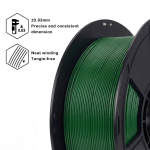
PETG Filament Green – Product Overview
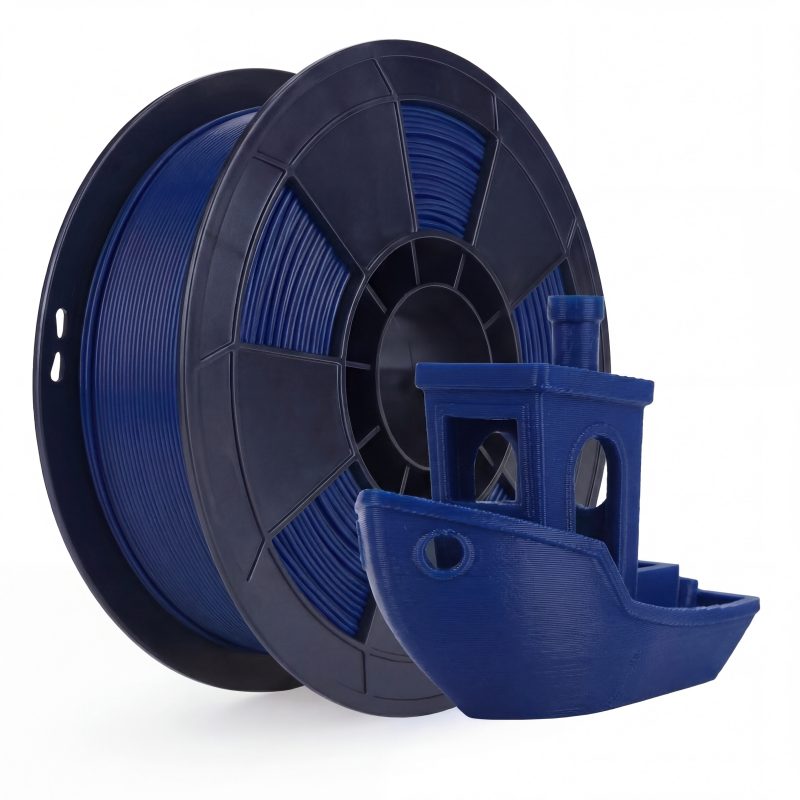
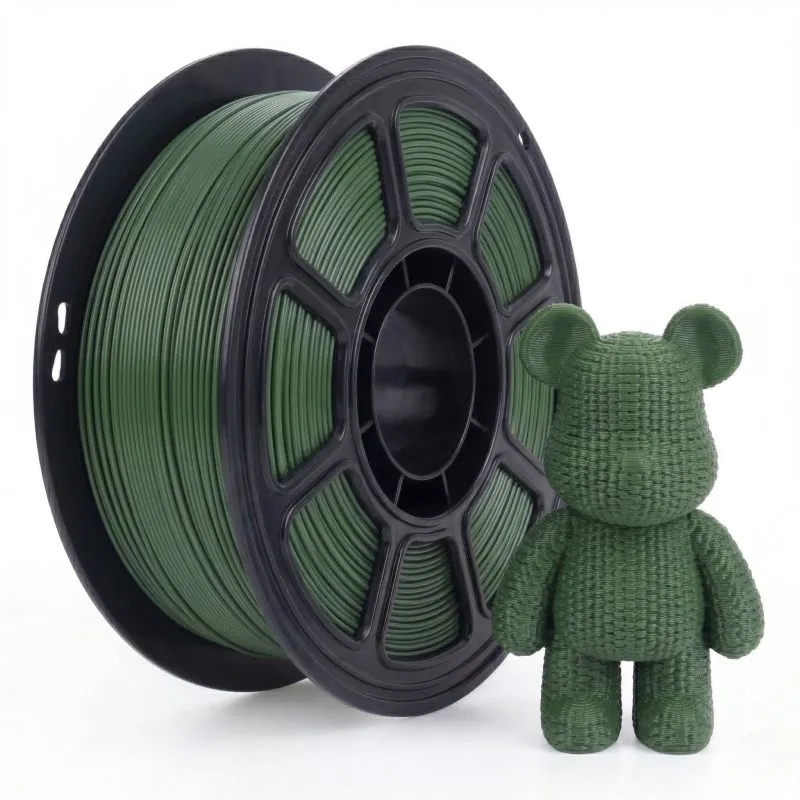
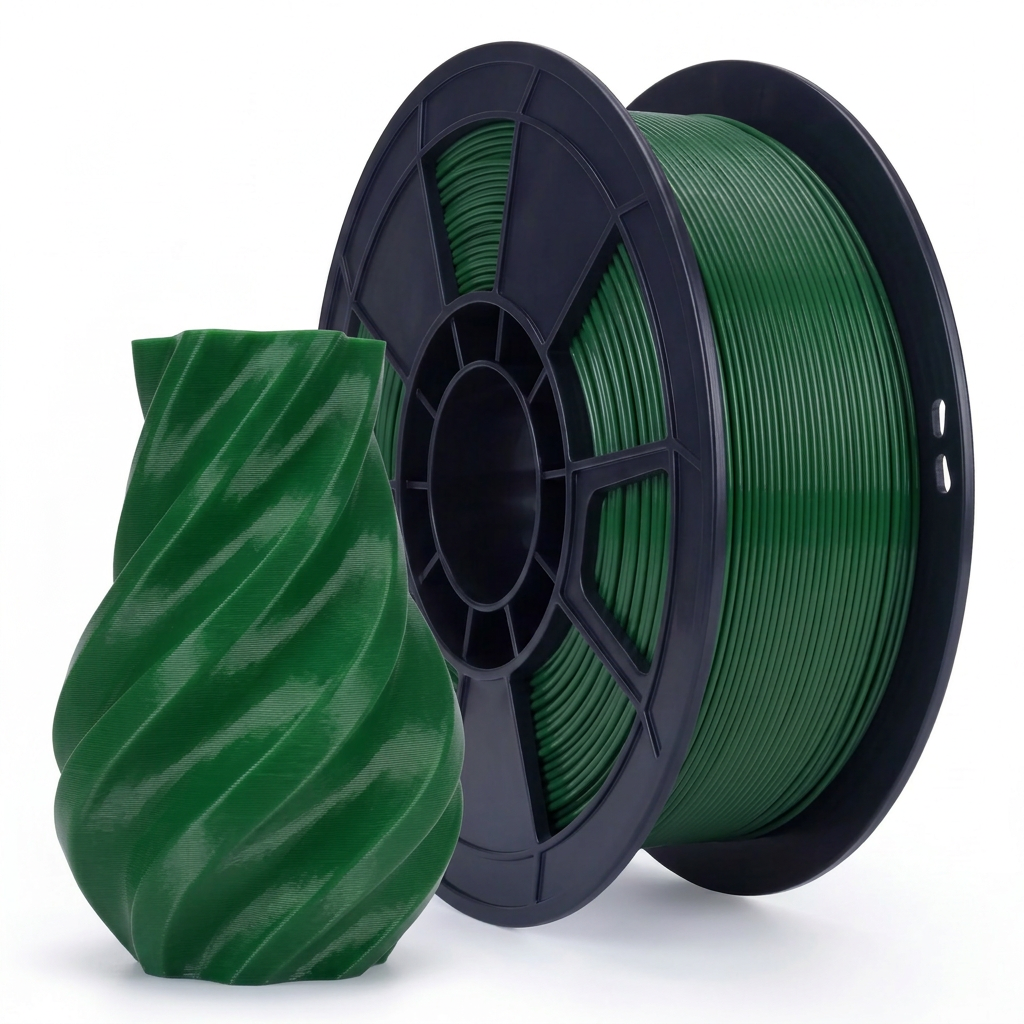
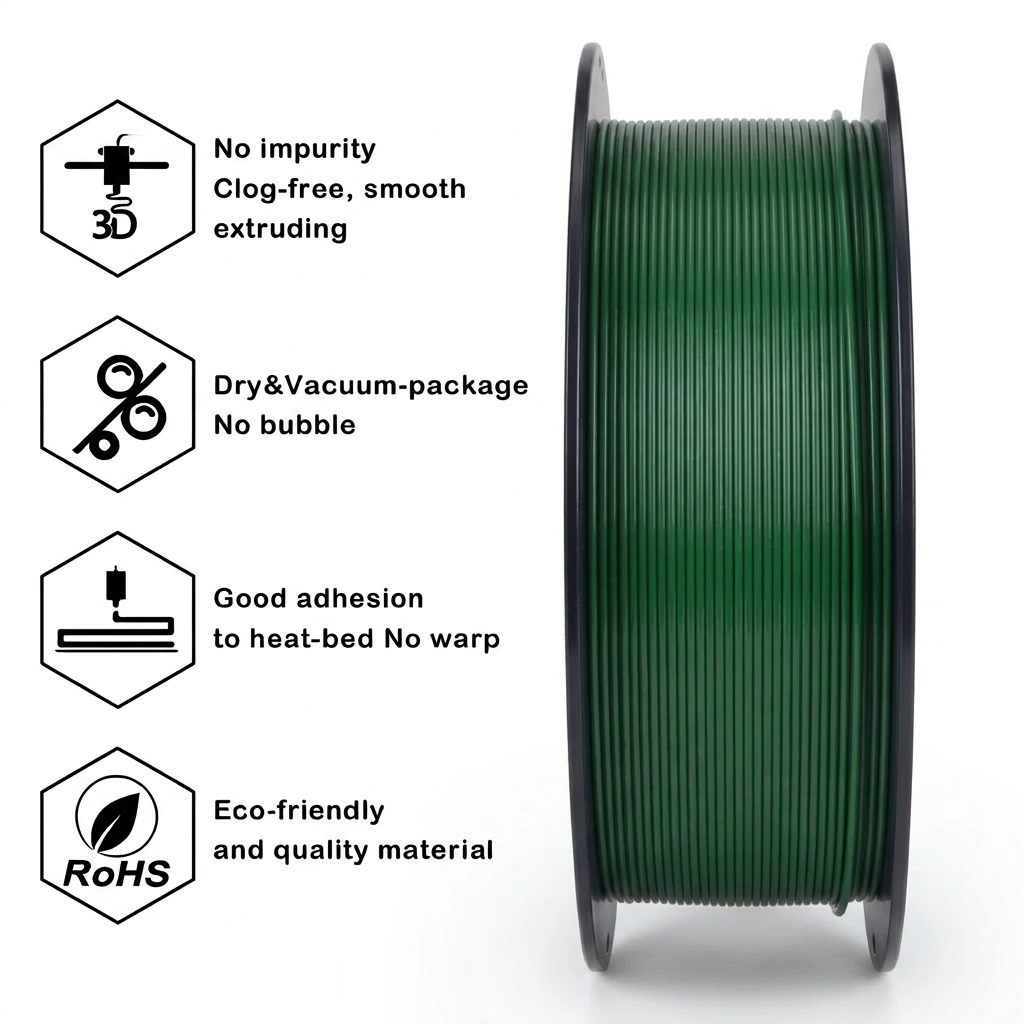
The SigmaFilament green PETG filament is a standard, true botanical green — an opaque, glossy colorway engineered for the prints that live outdoors and around plants. Where most colored filament is chosen to be looked at, garden green PETG is chosen to belong somewhere: in a row of planters on a balcony, wrapped around the handle of a trowel, clipped onto a drip-irrigation line, or bolted to a fence as a bracket that nobody should ever notice. The pigment is loaded for full opacity at 2 walls, and the natural PETG gloss gives finished parts a clean, injection-molded look straight off the build plate.
PETG is the material that makes the green colorway genuinely useful outdoors. Compared with PLA, PETG resists moisture instead of absorbing it, holds its shape in summer sun instead of sagging at 60°C, and stays tough instead of turning brittle after a season outside. Compared with ABS, it prints without an enclosure, without heavy warping, and without the styrene odor — while actually taking on less water outdoors. That combination is exactly what planters, self-watering pot inserts, greenhouse clips, hose guides, and garden tool replacement parts need: a material that tolerates wet soil, rain splash, and sunlight without special treatment.
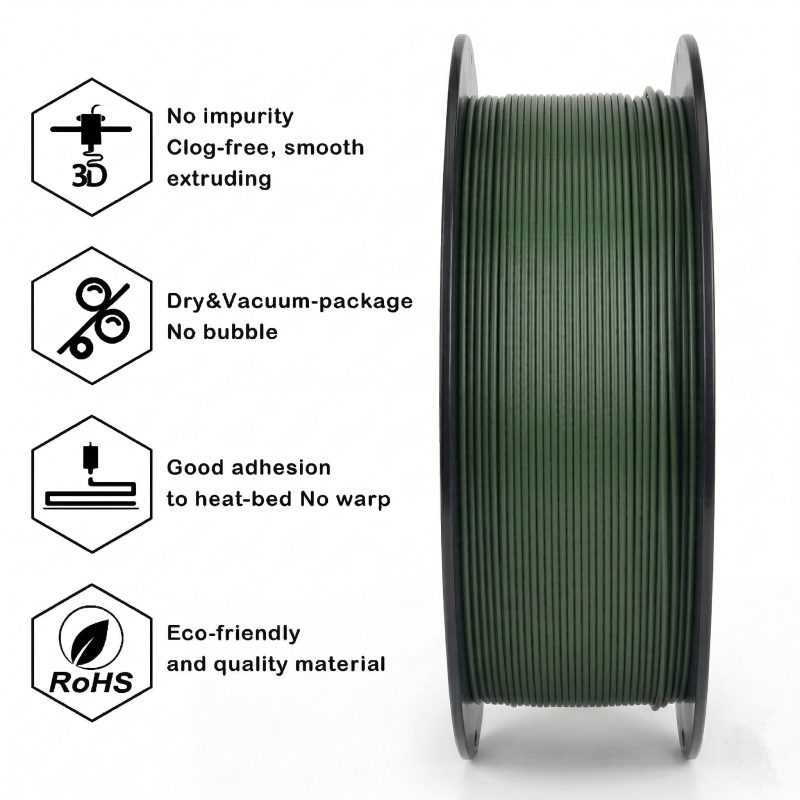
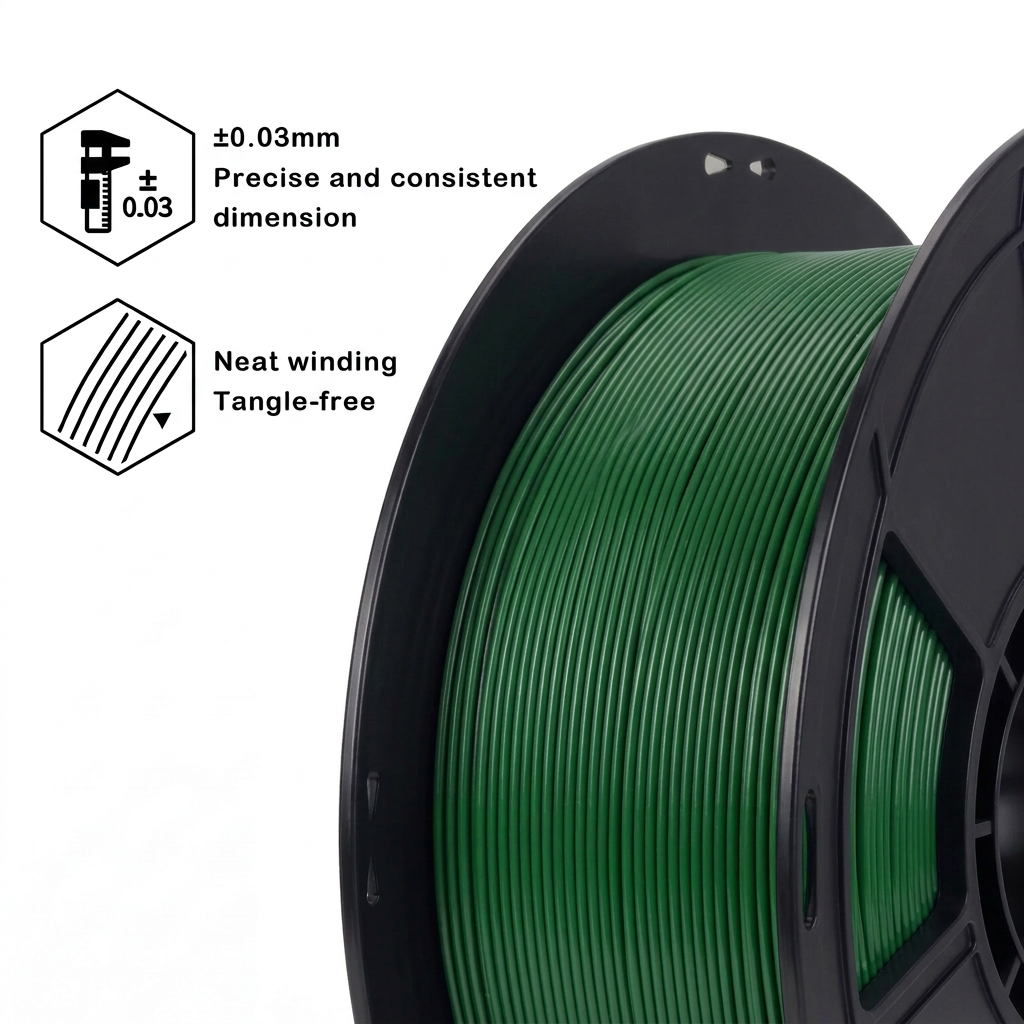
One positioning note for returning customers: this is our standard true green — a fresh, saturated garden tone. It is deliberately distinct from our Jungle Green colorway, which is a darker olive-drab tone aimed at tactical and engineering aesthetics. If you want prints that read as “plant, garden, nature,” this spool is the one. Manufactured factory-direct in Guangdong, China with ±0.03mm diameter tolerance, RoHS/REACH-compliant materials, and vacuum-sealed packaging with desiccant. Free samples, volume pricing, and full OEM/ODM services — including custom green shade matching — are available for business customers, and you can browse the rest of the range on our PETG filament category.
Why This Green PETG Filament Stands Out
🌿 The Green That’s Meant to Live Outside
Most green filament is PLA — fine for a desk ornament, wrong for a planter. This green PETG filament pairs the one color gardeners actually want with the one everyday material that tolerates soil moisture, rain, and sun without an enclosure or annealing step.
- Moisture-Proof by Chemistry — PETG is hydrophobic: wet soil, rain splash, and humid greenhouse air don’t swell the part, weaken layer bonds, or cloud the surface the way prolonged moisture degrades PLA
- Sun-Tolerant Structure — With a glass transition around 80°C, PETG parts don’t soften on a hot patio the way PLA (Tg ~60°C) visibly can; pigmented PETG also weathers UV exposure far more gracefully than PLA or ABS
- Opaque True Green — Full coverage at 2 walls with no candy-translucency; the saturated garden tone hides soil marks, water spots, and fingerprints better than white or pastel planters
- Tough Where It’s Gripped — PETG’s ductile layer bonding survives the drops, torque, and prying that garden tool handles, hooks, and clamp-style fittings actually experience
- Glossy, Even Finish — The ±0.03mm diameter tolerance keeps extrusion pressure steady, so the natural PETG gloss lands uniformly across large flat planter walls instead of banding
- No Special Hardware — Prints on any stock 1.75mm printer with a 0.4mm brass nozzle and a 60–80°C bed; no enclosure, no hardened nozzle, no ventilation concerns beyond normal practice
If the part will meet water, soil, or sunlight, start with PETG — and if it should disappear into the garden, start with this green.
Premium Green PETG Filament at Factory-Direct Pricing
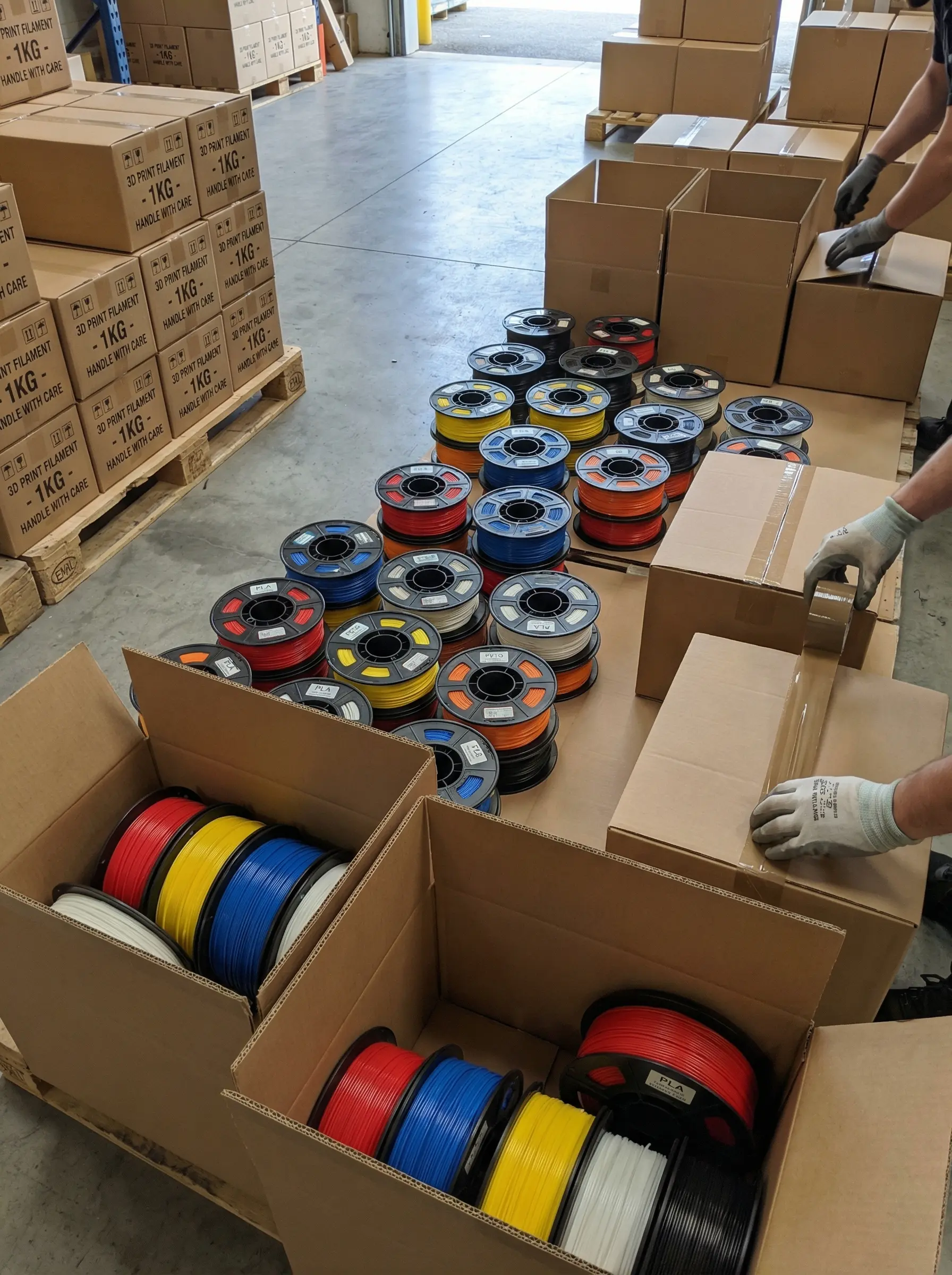
SigmaFilament is a direct manufacturer based in Guangdong, China. We compound, extrude, wind, and pack every spool of green PETG filament in-house — one production line from raw PETG resin and pigment masterbatch to the vacuum-sealed box, with no reseller markup in between.
| 🎨 Color Consistency | 💰 Factory-Direct Pricing | 🔁 Batch Repeatability |
| In-house pigment compounding keeps the garden-green tone identical spool to spool — critical when a 6-planter set is printed from 2 spools | No middlemen or licensing fees — volume discounts scale with order size for print farms, resellers, and distributors | Reorder the same green months later and it matches — batch color and diameter records are kept per production run |
Why Choose Garden Green PETG for Your Projects
| 🪴 Planters That Last | A planter is the worst-case print: permanently damp on the inside, sun-baked on the outside, and load-bearing at the rim. PETG handles all three, and the saturated green hides the soil staining and water marks that make white or pastel PLA pots look tired within weeks. |
| 🛠️ Garden Tool Parts | Replacement trowel handles, sprayer triggers, spool holders for trimmer line, ergonomic grips — parts that get squeezed, twisted, dropped on concrete, and left out overnight. PETG’s ductility means they flex and survive where PLA snaps along a layer line. |
| 🔩 Outdoor Fixtures | Fence brackets, hose guides, cable clips, downspout adapters, birdhouse mounts. These need to hold a load through temperature swings and rain — and in green, they visually disappear against hedges, lawns, and painted fences instead of announcing themselves. |
| 💧 Greenhouse & Irrigation | Drip-line holders, glazing clips, shade-net hooks, seed-tray labels and organizers. Constant humidity is exactly the environment PETG was made for — no swelling, no layer delamination, no white stress blooms after a season of condensation. |
| 🌱 Botanical Product Lines | For Etsy sellers and print farms running plant-themed catalogs — orchid mounts, propagation stations, macramé rings, plant markers — a single standard green in a durable material lets the whole line share one recognizable, reorder-stable color identity. |
| 🏠 Everyday Functional Prints | Indoors, the same toughness serves bins, brackets, hooks, and appliance parts — and the glossy green doubles as an accent color for organizers and kitchenware-adjacent prints where a matte gray would look unfinished. |
Green PETG vs. PLA vs. ABS vs. ASA — Outdoor & Functional Comparison
| Property | PETG (This) | PLA | ABS | ASA |
|---|---|---|---|---|
| Moisture / Water Resistance | ★★★★★ Hydrophobic | ★★☆☆☆ Absorbs, embrittles | ★★★☆☆ Takes on water | ★★★★★ |
| UV / Sun Exposure | ★★★★☆ Seasons of use | ★★☆☆☆ Degrades fast | ★★☆☆☆ Chalks & embrittles | ★★★★★ Best-in-class |
| Heat Tolerance | ★★★★☆ Tg ~80°C | ★★☆☆☆ Tg ~60°C | ★★★★★ ~100°C | ★★★★★ ~100°C |
| Impact Toughness | ★★★★☆ Ductile | ★★☆☆☆ Brittle | ★★★★☆ | ★★★★☆ |
| Ease of Printing (Open Frame) | ★★★★☆ No enclosure | ★★★★★ Easiest | ★★☆☆☆ Warps, needs enclosure | ★★☆☆☆ Needs enclosure |
| Printing Odor | ★★★★★ Very low | ★★★★★ Very low | ★★☆☆☆ Styrene odor | ★★☆☆☆ Styrene-class |
| Chemical Resistance | ★★★★☆ Fertilizer/cleaner safe | ★★☆☆☆ | ★★★☆☆ | ★★★★☆ |
| Price Point | ★★★★★ (Low–Mid) | ★★★★★ (Lowest) | ★★★★☆ | ★★★☆☆ (Higher) |
| Best For | Planters, garden & outdoor functional parts | Indoor décor, prototypes | Enclosed engineering parts | Multi-year direct-sun parts |
Recommended Print Settings for Green PETG Filament
PETG prints reliably on stock hardware, but it is not “PLA at higher temperature” — it wants a hotter nozzle, much less cooling, and a slightly relaxed first layer. If you’re coming from PLA, the notes below cover the three adjustments that prevent 90% of PETG frustration.
⚠️ Critical Notes Before Printing PETG:
- Turn the cooling fan down — Run the part-cooling fan off or minimal (0–30%). Full PLA-style cooling weakens PETG layer bonds noticeably; only bridges and steep overhangs justify briefly higher fan.
- Don’t crush the first layer — PETG sticks aggressively. Set the nozzle a touch higher than for PLA and avoid over-squishing; on smooth PEI or glass, use a glue stick or window cleaner as a release layer so parts don’t bond permanently to the surface.
- Keep it dry — PETG is mildly hygroscopic, and moisture is the #1 cause of stringing, popping, and hazy surfaces. Print from the vacuum-sealed state, and dry the spool after extended open-air exposure (see storage section below).
- Slow down for gloss — Within the 30–60mm/s recommended window, the lower half gives the wettest, glossiest surface finish on show faces like planter walls; the upper half is fine for internal fittings and brackets.
Optimal Print Settings for This Green PETG Filament
| Nozzle Temperature | 230–250°C (446–482°F) — start at 240°C; lower end reduces stringing, upper end maximizes layer bonding |
| Bed Temperature | 60–80°C (140–176°F) — 70°C is a reliable middle for PEI and glass |
| Print Speed | 30–60mm/s (recommended) — 30–45mm/s for glossy show surfaces, 45–60mm/s for functional fittings |
| Cooling Fan | Off or minimal (0–30%) — raise briefly only for bridges and overhangs beyond ~60° |
| Layer Height | 0.20–0.28mm for planters and fittings; 0.16mm for fine décor |
| Wall Count | 2 walls for full color opacity; 3–4 walls for load-bearing brackets and hooks |
| Retraction | 1–2mm at 30–40mm/s (direct drive); 4–6mm (Bowden) — tune with a dry spool before chasing settings |
| Infill | 15–25% (general); 30–40% for tool handles and load-bearing outdoor fixtures |
| Nozzle Type | Standard 0.4mm brass — no hardened nozzle required |
| Enclosure | Not required — PETG prints reliably on open-frame machines; avoid cold drafts |
| Bed Adhesion | Textured PEI works bare; on smooth PEI or glass, apply glue stick as a release layer to protect the surface |
| Drying (if needed) | 65°C for 4–6 hours after extended open-air storage. See our filament dryer settings guide |
💡 Pro Tip — Designing Planters in PETG: Three small design decisions make a printed planter last for years instead of months:
- Print drainage holes, don’t drill them — Drilling PETG after printing can wander and stress layer boundaries; modeled holes with a small chamfer print cleanly and drain better.
- Use 3+ bottom layers and a slight draft angle — A thicker base resists the constant water contact at the lowest point, and a 1–2° outward draft lets nested planters release when you print a set.
- Vase mode is for covers, not soil pots — Single-wall spiral prints look great as cachepots (outer sleeves over a nursery pot) but a soil-bearing planter should have 2–3 walls and 15%+ infill in the base for rim strength when you lift it fully loaded.
For flat-walled planters, orient the seam on a corner and keep speed near the lower half of the recommended range — the gloss stays even and the seam all but disappears against the saturated green.
Technical Specifications
| Parameter | Specification |
|---|---|
| Material | PETG (polyethylene terephthalate glycol) |
| Color | Green — opaque true garden green (reference tone ≈ #2E7D32), glossy finish |
| Finish | Natural PETG gloss — clean, injection-molded look off the plate |
| Filament Diameter | 1.75mm (0.069 in) |
| Diameter Tolerance | ± 0.03 mm |
| Net Weight | 1 kg (2.2 lbs) per spool |
| Approx. Length | ~325 m per 1 kg spool (1.75 mm) |
| Nozzle Temperature | 230–250 °C (446–482 °F) |
| Bed Temperature | 60–80 °C (140–176 °F) |
| Print Speed | 30–60 mm/s (recommended) |
| Cooling Fan | Off or minimal (0–30%) |
| Required Nozzle | Standard 0.4 mm brass (any FDM nozzle) |
| Enclosure | Not required — open-frame friendly |
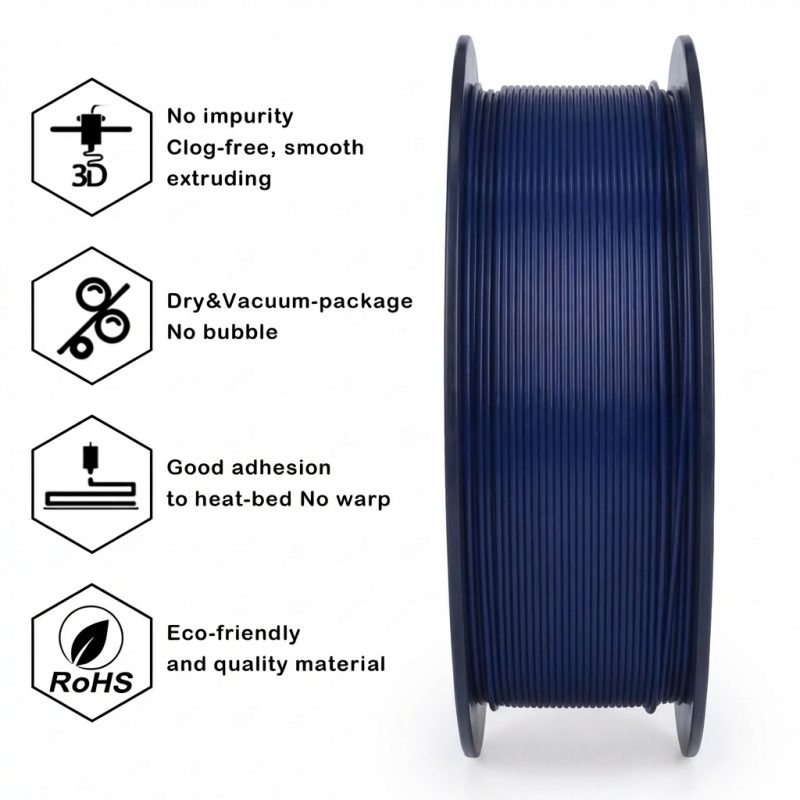
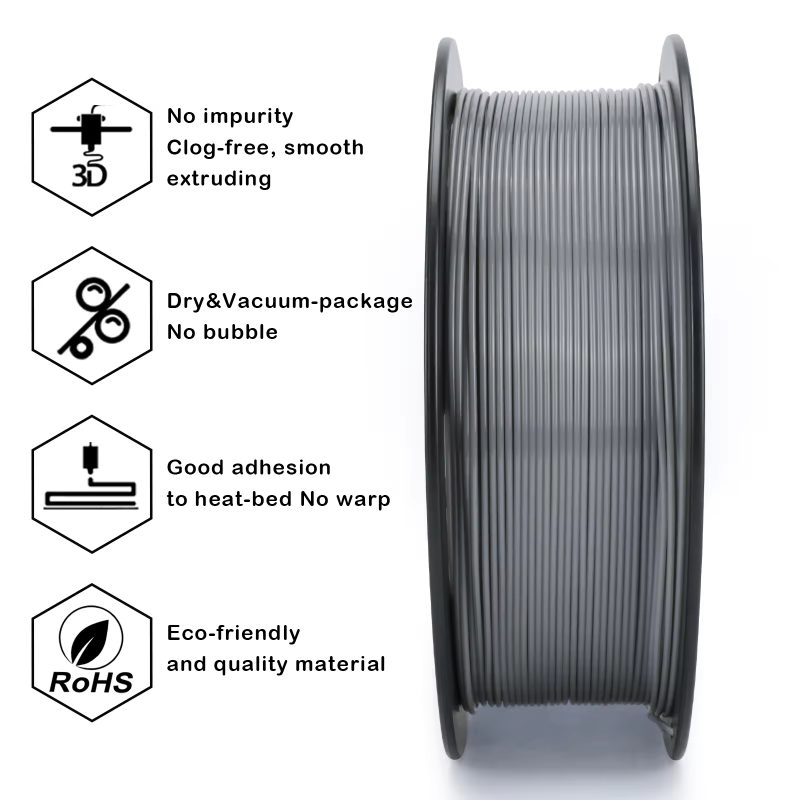
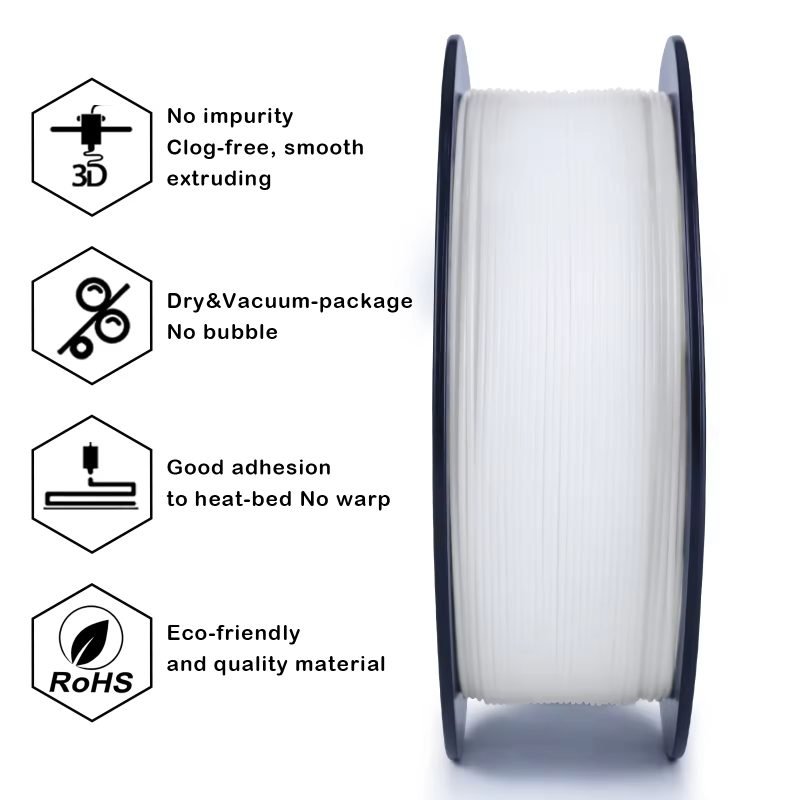
| Bubbles in Filament | 100% bubble-free (vacuum extrusion line) |
| Winding | Neat side-by-side winding, tangle-free feeding |
| Post-Processing | Sanding and painting possible; the natural gloss usually needs no finishing |
| Drying Temperature | 65 °C for 4–6 hours (only after extended open-air storage) |
| Compliance | RoHS / REACH compliant materials and pigments |
| Packaging | Vacuum-sealed bag with desiccant, individual carton box |
| Manufacturing Origin | Guangdong, China |
| Free Sample | Available for qualified business customers |
| OEM/ODM | Available — Learn about our OEM services |
Material Properties & Performance
PETG occupies the sweet spot between easy-printing PLA and engineering-grade materials: meaningfully tougher and more heat-tolerant than PLA, far easier to print than ABS, and naturally resistant to water and common garden chemicals like diluted fertilizer and household cleaners. The values below are typical ranges for unfilled PETG printed at recommended settings; as with all FDM materials, printed-part performance depends on orientation, wall count, and layer bonding. For a broader ranking of materials by mechanical performance, see our strongest 3D printer filament guide.
Mechanical & Thermal Properties (Typical PETG Values)
| Property | Typical Value | Test Standard |
|---|---|---|
| Tensile Strength | 45–53 MPa | ISO 527 / ASTM D638 |
| Flexural Strength | 65–75 MPa | ISO 178 / ASTM D790 |
| Flexural Modulus | 1,900–2,100 MPa | ISO 178 / ASTM D790 |
| Impact Strength (Izod, Notched) | 4–8 kJ/m² | ISO 180 / ASTM D256 |
| Elongation at Break | 20%+ (ductile failure mode) | ISO 527 / ASTM D638 |
| Glass Transition Temperature | ~80 °C (176 °F) | ISO 11357 |
| Heat Deflection Temperature | ~68–70 °C (0.45 MPa) | ISO 75 / ASTM D648 |
| Density | 1.27 g/cm³ | ISO 1183 |
| Shrinkage | 0.2–0.5% (low — dimensionally stable) | ISO 294-4 |
| Water Absorption (24 h) | ~0.1–0.2% (low) | ISO 62 / ASTM D570 |
Printer-Specific Settings for Green PETG Filament
| Printer | Nozzle | Bed | Speed | Notes |
|---|---|---|---|---|
| Bambu Lab X1C / P1S | 240 °C | 70 °C | 50–60 mm/s | Use Generic PETG profile but cap outer-wall speed; textured PEI plate needs no glue |
| Prusa MK4 / MK3S+ | 240 °C | 70 °C | 40–50 mm/s | Prusament PETG profile works well; use the textured sheet, or glue stick on smooth PEI to protect it |
| Creality K1 / K1 Max | 245 °C | 70 °C | 60 mm/s | Dial back from the machine’s high-speed defaults for PETG; keep aux fan off |
| Creality Ender 3 / S1 | 235 °C | 70 °C | 40–45 mm/s | Raise Z-offset slightly vs. PLA; Bowden versions need 4–6mm retraction, tuned dry |
| Anycubic Kobra 2 / 3 | 240 °C | 70 °C | 50 mm/s | Default PETG profile with fan capped at 30%; clean the PEI sheet — PETG shows fingerprints as adhesion gaps |
| Voron / Sovol Klipper | 245 °C | 75 °C | 60 mm/s | Tune pressure advance for PETG separately from PLA — it needs a noticeably lower value |
Applications for Green PETG Filament
This green PETG filament earns its keep wherever a print meets water, soil, sunlight, or repeated handling — and where the color should read as natural rather than technical.
| 🪴 Planters & Pots | Outdoor planters, balcony rail pots, self-watering inserts, cachepots, and propagation stations. PETG tolerates permanently damp soil contact and rim loads, and the saturated green flatters foliage while hiding water marks and soil stains that show instantly on pale PLA pots. |
| 🛠️ Garden Tool Parts | Replacement handles, sprayer triggers and nozzle caps, kneeler clips, twine dispensers, and ergonomic grip sleeves. PETG’s ductile toughness survives drops on paving and torque loads that fracture PLA along layer lines — and it doesn’t care about being left out in the rain. |
| 🔩 Outdoor Fixtures & Brackets | Fence-mounted hooks, hose guides, cable clips, solar-light stakes, downspout adapters, and birdhouse hardware. The green makes utility parts visually vanish against hedges and lawns, and PETG’s dimensional stability keeps snap-fits and screw bosses working through seasonal temperature swings. |
| 💧 Greenhouse & Irrigation | Drip-line holders, glazing and shade-net clips, seed-tray organizers, hydroponic channel fittings, and plant labels that survive watering. Constant humidity and fertilizer contact are non-events for PETG — the exact conditions that swell, cloud, and embrittle PLA within a season. |
| 🌱 Plant-Themed Product Lines | For print farms and Etsy sellers: orchid mounts, moss poles, macramé rings, watering spikes, and terrarium hardware in one consistent, reorder-stable green. A durable material plus a recognizable signature color turns scattered prints into a coherent product line customers come back for. |
| 🏠 Indoor Functional Prints | Storage bins, wall hooks, drawer organizers, vacuum hose adapters, and bathroom fittings — anywhere humidity or repeated handling rules out PLA. The glossy green doubles as a deliberate accent color for organization systems that would look unfinished in plain gray. |
Environmental & Safety Standards
| ✅ RoHS / REACH Compliant | Base resin and pigments free of lead, mercury, cadmium, hexavalent chromium, and other restricted substances — suitable for EU and global retail markets. |
| ♻️ Recyclable Material | PETG belongs to the PET family, one of the most widely recycled polymer groups; failed prints and supports can enter appropriate recycling streams where available. |
| 👃 Low-Odor Printing | PETG prints with very low odor and no styrene-class fumes — comfortable for home offices, studios, and shared workspaces with normal ventilation. |
| 📦 Vacuum Sealed + Desiccant | 100% bubble-free vacuum extrusion plus moisture-proof packaging — the spool arrives dry and prints cleanly straight out of the box. |
Packaging & Global Shipping
| Destination | Standard Delivery | Express Available |
|---|---|---|
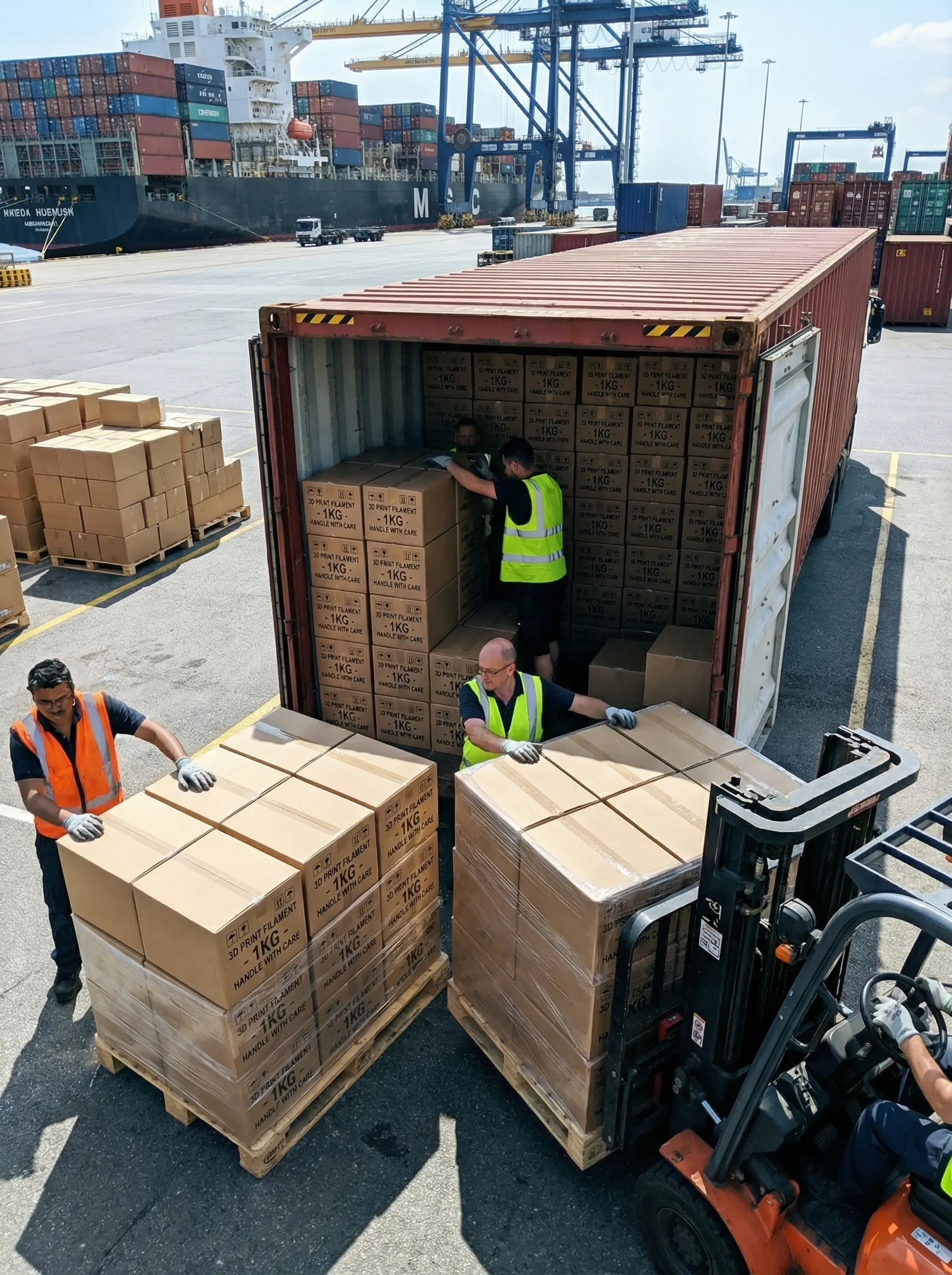
| European Union | 5–10 business days | ✓ 3–5 days |
| United States | 7–12 business days | ✓ 4–6 days |
| United Kingdom | 7–12 business days | ✓ 4–6 days |
| Canada | 8–14 business days | ✓ 5–7 days |
Packaging: Vacuum-sealed bag with desiccant, individual carton box. Customs: DDP and DAP terms available.
Bulk Orders & OEM/ODM Services
| 📊 Flexible MOQ | Trial orders through container-scale production runs. Free evaluation samples available for qualified business customers before committing to volume. |
| 💰 Volume Pricing | Progressive factory-direct discounts as volume grows — ideal for print farms standardizing on one PETG color set, resellers, and distributors. |
| 🎨 Custom Greens (OEM/ODM) | • Custom green shades — Pantone / RAL matching from sage to forest • Private label packaging and co-branded retail boxes • Custom spool sizes and refill (spool-less) formats • Matched color across PETG and PLA lines for brand consistency |
| 🎁 Free Sample Program | Test the color accuracy, diameter consistency, and packaging quality of this green PETG filament on your own machines before placing a volume order. |
Storage & Handling Guidelines
| Storage Guidelines | |
|---|---|
| Temperature | 15–25 °C (59–77 °F) |
| Humidity | Below 50% RH — PETG is mildly hygroscopic; wet filament strings and prints hazy |
| Shelf Life | 24 months (unopened, vacuum sealed) |
| Drying (if needed) | 65 °C for 4–6 hours after extended open-air exposure — dry first, then tune retraction |
| Between Prints | Reseal in a zip bag with the included desiccant, or keep in a dry box during long projects |
| Handling | Secure the filament end in the spool’s side holes when unloading — a loose end can cross-wind and jam mid-print |
Printer Compatibility
This green PETG filament works with any 1.75mm FDM/FFF 3D printer whose hotend reaches 250 °C and whose bed reaches 60 °C — which covers virtually every current machine. No enclosure, no hardened nozzle, no special hardware.
| Bambu Lab X1C, P1S, A1, A1 mini | Prusa MK4, MK3S+, MINI+, XL | Creality Ender 3 series, K1, K1 Max | Anycubic Kobra 2, Kobra 3 | Voron / Sovol 2.4, Trident, SV07 | Elegoo / QIDI Neptune 4, Q1 Pro |
Why Choose SigmaFilament for PETG Filament
| 🏭 Direct Manufacturer | Factory-direct from Guangdong, China with full control over resin selection, pigment compounding, extrusion, winding, and packaging — one accountable supplier, no reseller layers. |
| 🧪 PETG Done Properly | Dedicated PETG extrusion lines with in-line diameter measurement and vacuum degassing — the difference between PETG that strings uncontrollably and PETG that just prints. |
| ✅ Quality Assured | ±0.03 mm tolerance verified per batch, RoHS/REACH-compliant materials, 100% bubble-free strand, tangle-free winding, vacuum-sealed with desiccant. |
| 🌍 Global Service | English-speaking support covering EU/US business hours, worldwide shipping with DDP/DAP terms, and export documentation handled for you. |
| 🔧 Full OEM/ODM | Custom green shades with Pantone/RAL matching, private label packaging, custom spool formats, and matched colors across material lines for brand builders. |
Frequently Asked Questions About Green PETG Filament
Ready to Put Garden Green PETG to Work?
Contact SigmaFilament today for bulk pricing, free samples, or to discuss your OEM/ODM requirements — including custom green shade matching, private label packaging, and matched colors across material lines.
📧 Email us for a quick quote · 🌍 Worldwide shipping with DDP/DAP terms · 🎁 Free samples for qualified customers
| Filament Diameter | 1.75mm ,2.85mm (3.00mm) |
|---|---|
| Spool Weight | 1kg ,3kg ,5kg ,Sample (200g) |