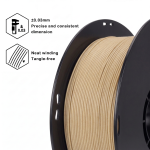
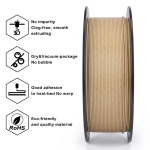
Birch Wood PLA Filament — Real Wood Fibre, Pale Blonde Grain, Ready to Sand and Finish
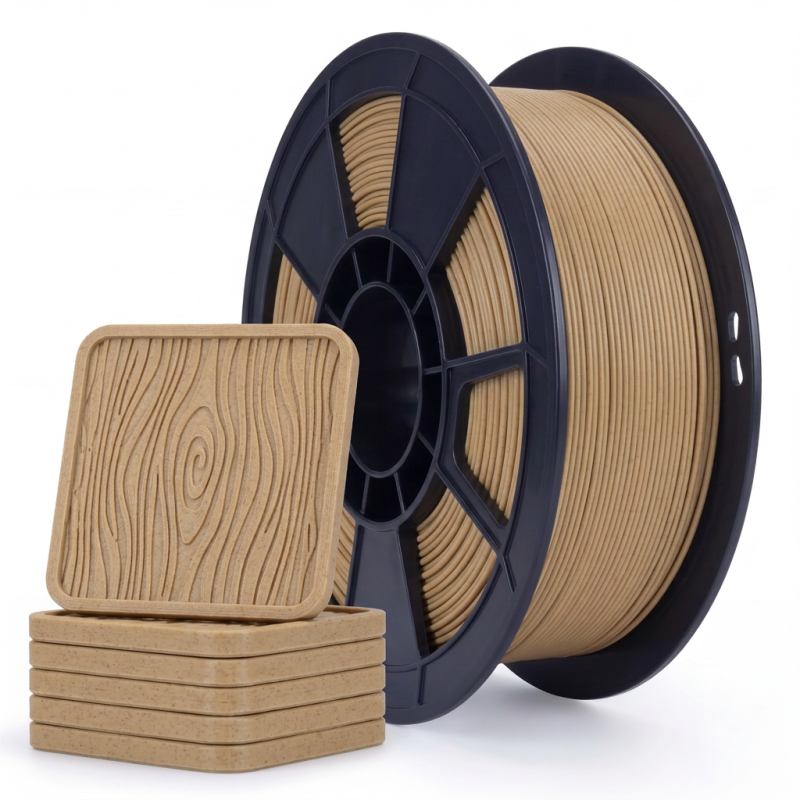
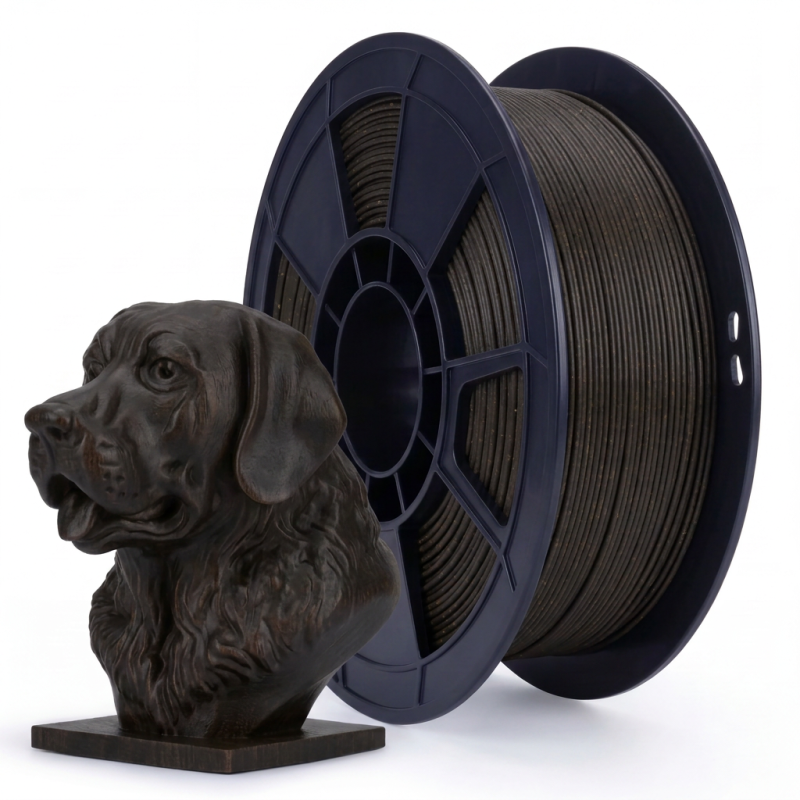
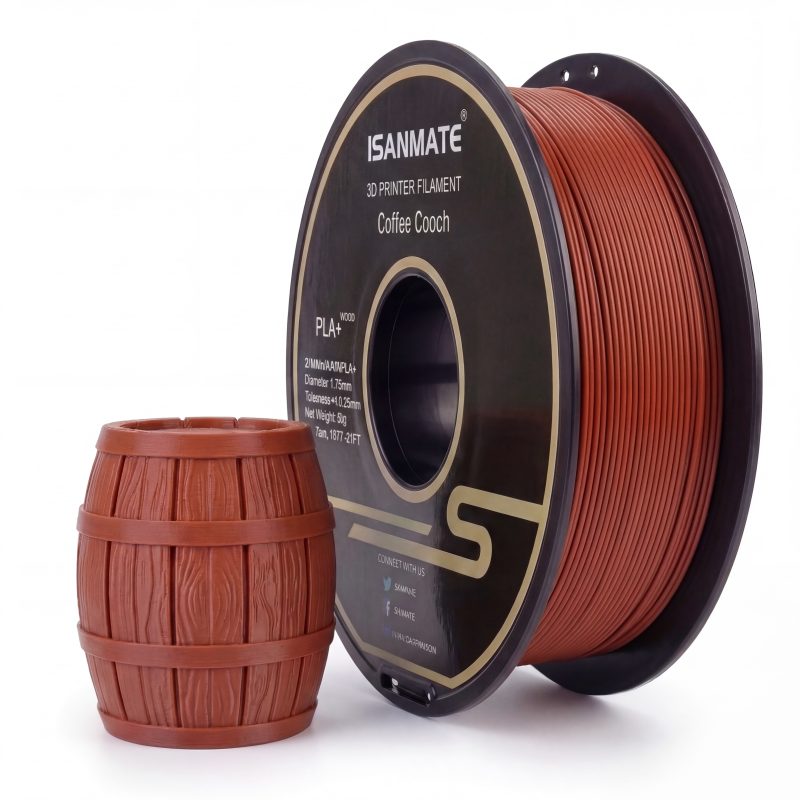
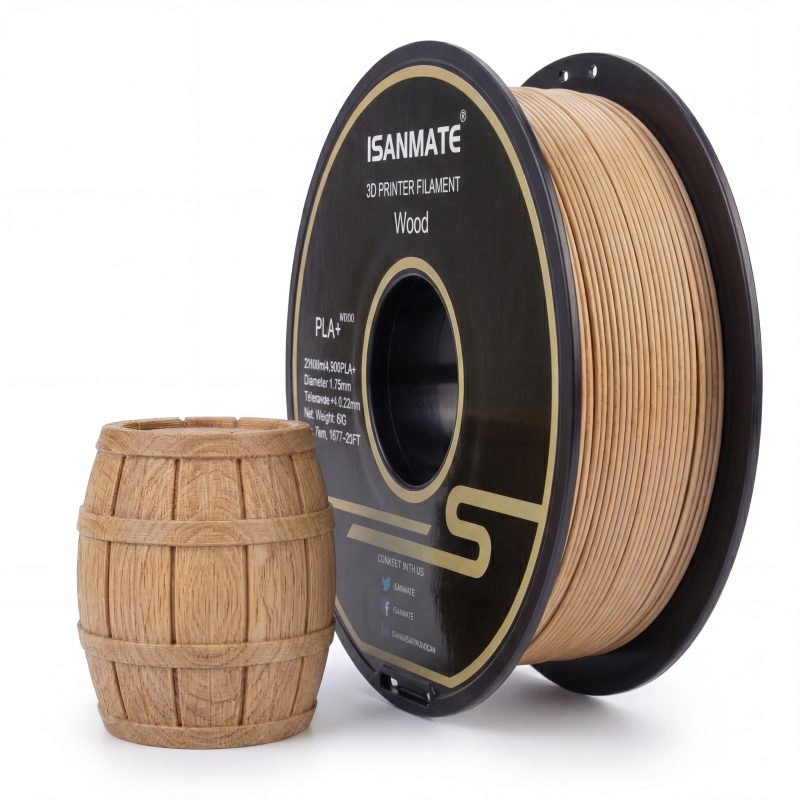
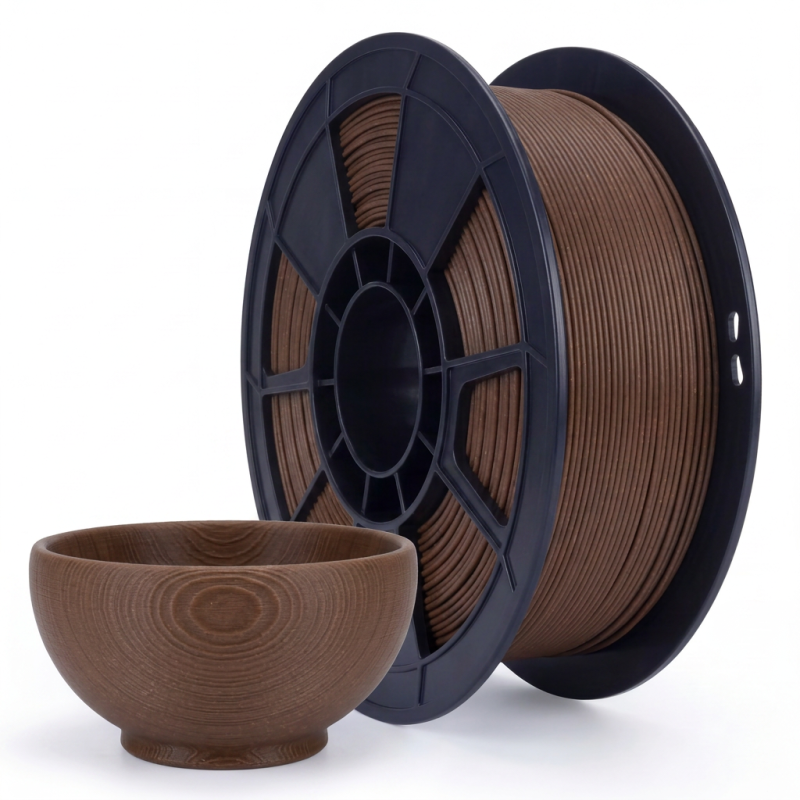
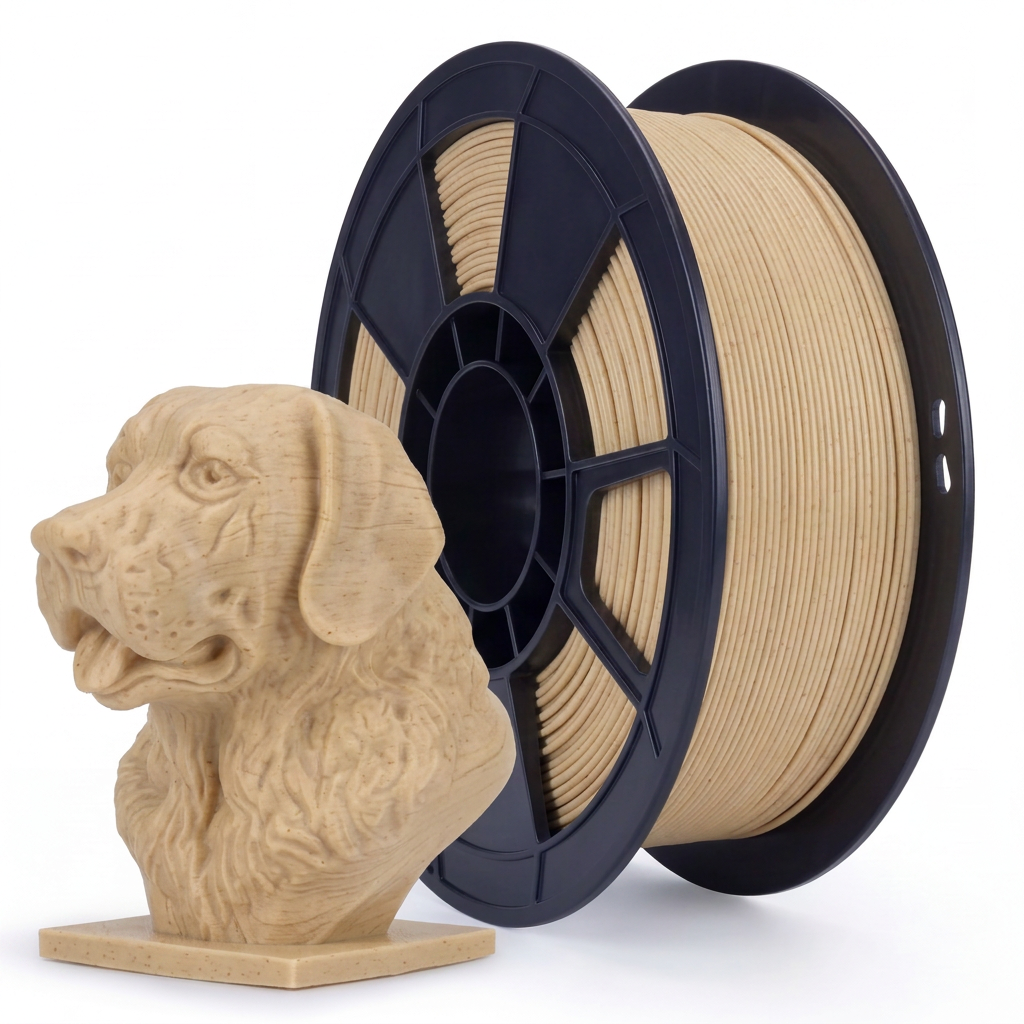
Birch wood PLA filament is a composite material: fine, genuine wood particles are milled into a PLA base so that every print comes off the bed looking, sanding and even smelling like real timber rather than plastic. Where a standard filament gives you a smooth, uniform plastic surface, this material lays down a warm, matte, pale-blonde woodgrain that scatters light the way a piece of Scandinavian birch plywood does. That is the whole point of choosing wood: the finished object reads as a hand-made wooden piece, not a 3D print. For figurines, coasters, sculpture, picture frames and Nordic-style home decor, that authentic surface is worth far more than the last few MPa of tensile strength a pure plastic would give you.
The birch shade specifically is the lightest wood tone in our range — a soft, creamy blonde that mimics birch, maple and light plywood rather than a dark walnut or ebony. It suits bright, minimalist decor and makes an excellent neutral base if you plan to wood-stain the print to a deeper colour afterwards. Because the wood fibre reacts to heat, you have a genuinely useful trick that no solid-colour filament offers: printing cooler keeps the tone light and blonde, while printing hotter “toasts” the same birch wood PLA filament toward caramel and light-brown — even letting you shift tone layer by layer to fake natural grain variation within a single part.
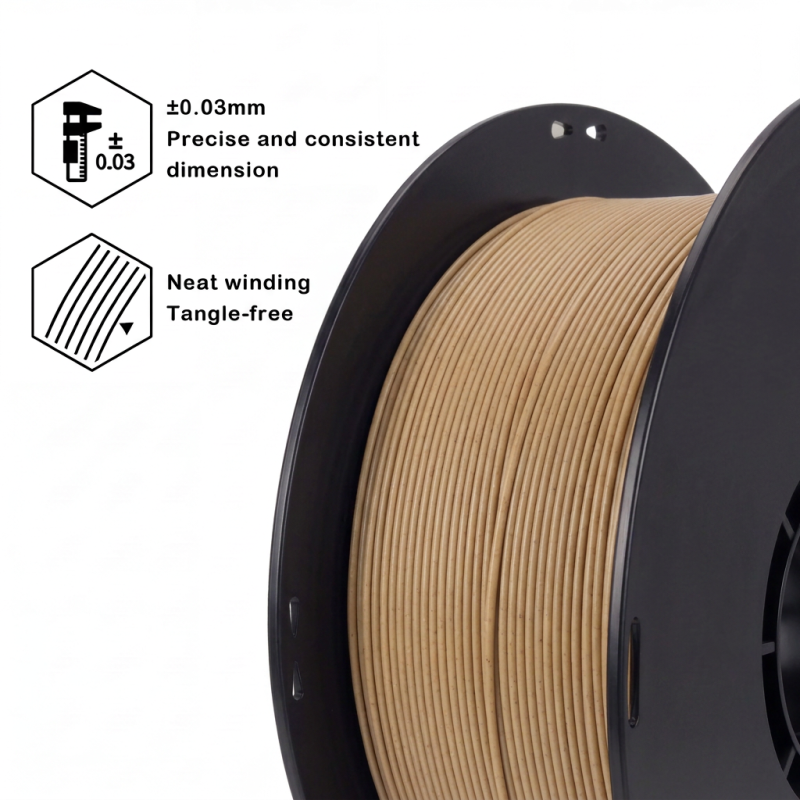
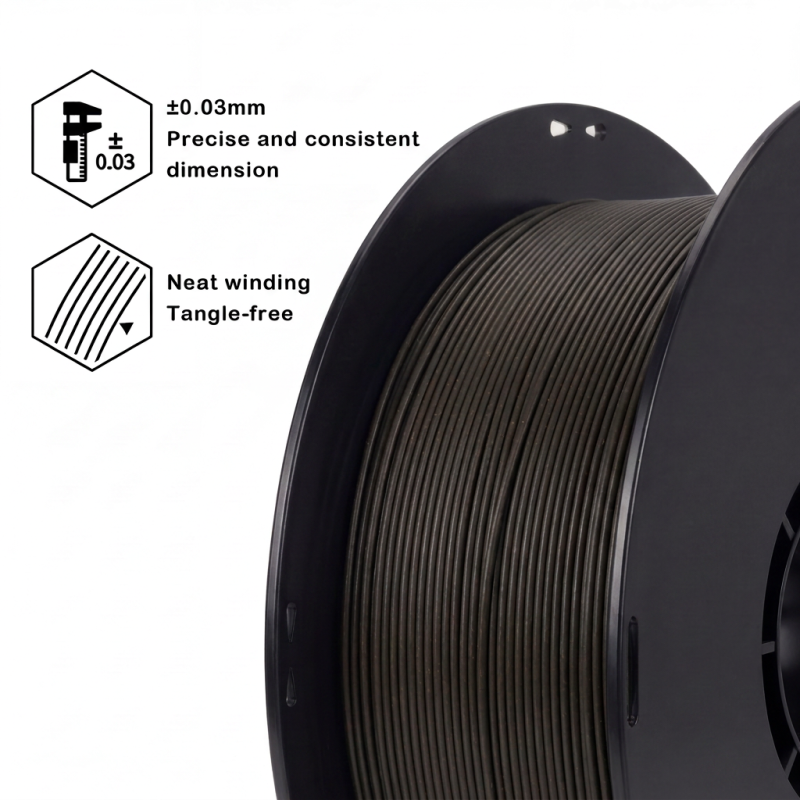
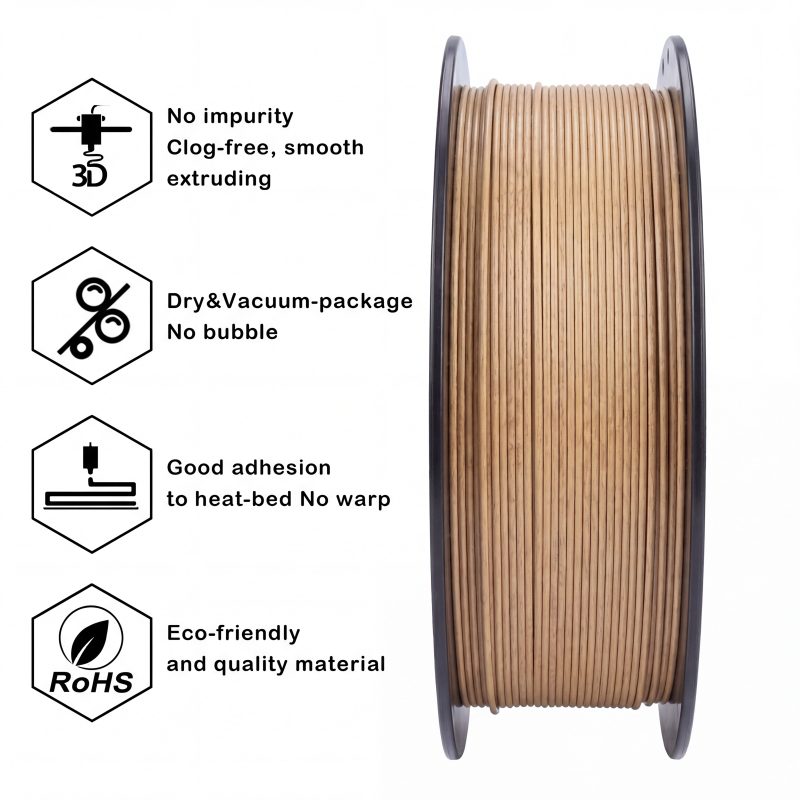
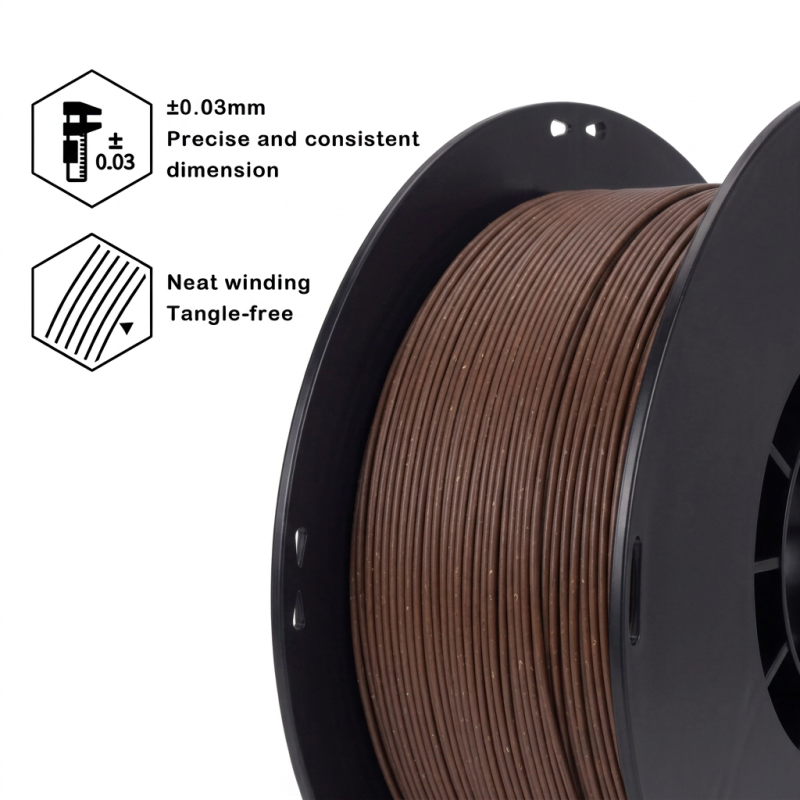
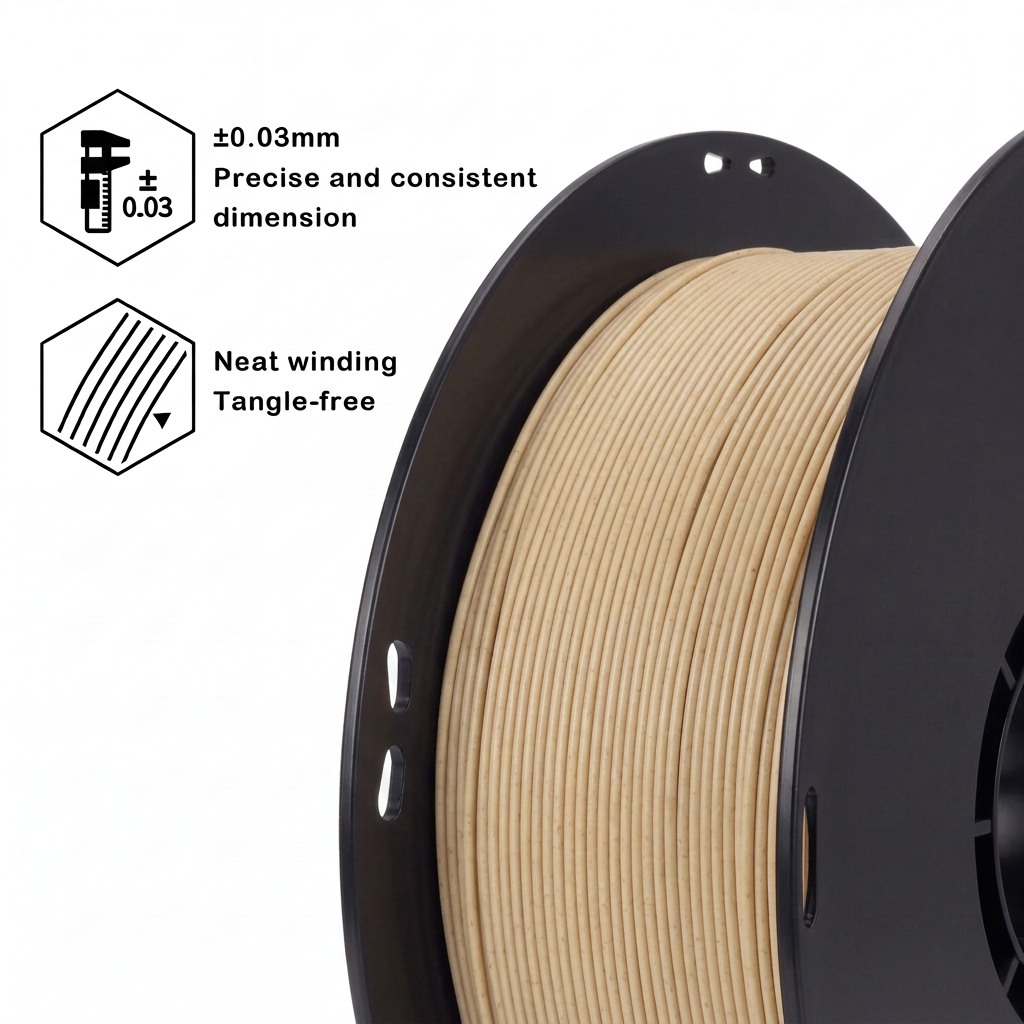
Wood-filled filament has a reputation for clogging cheap hotends, and that reputation is earned — but it is a solvable engineering problem, not an inherent flaw. It comes down to two things: particle consistency in the filament, and a nozzle wide enough to pass those particles. This birch wood PLA filament is milled and blended for an even particle size and held to a ±0.03mm diameter tolerance on tangle-free, open-lattice spools, so the feedstock itself does not fight you. Pair it with a 0.5–0.6mm nozzle and a modest print speed and it runs as reliably as ordinary PLA — with a surface no ordinary PLA can match.
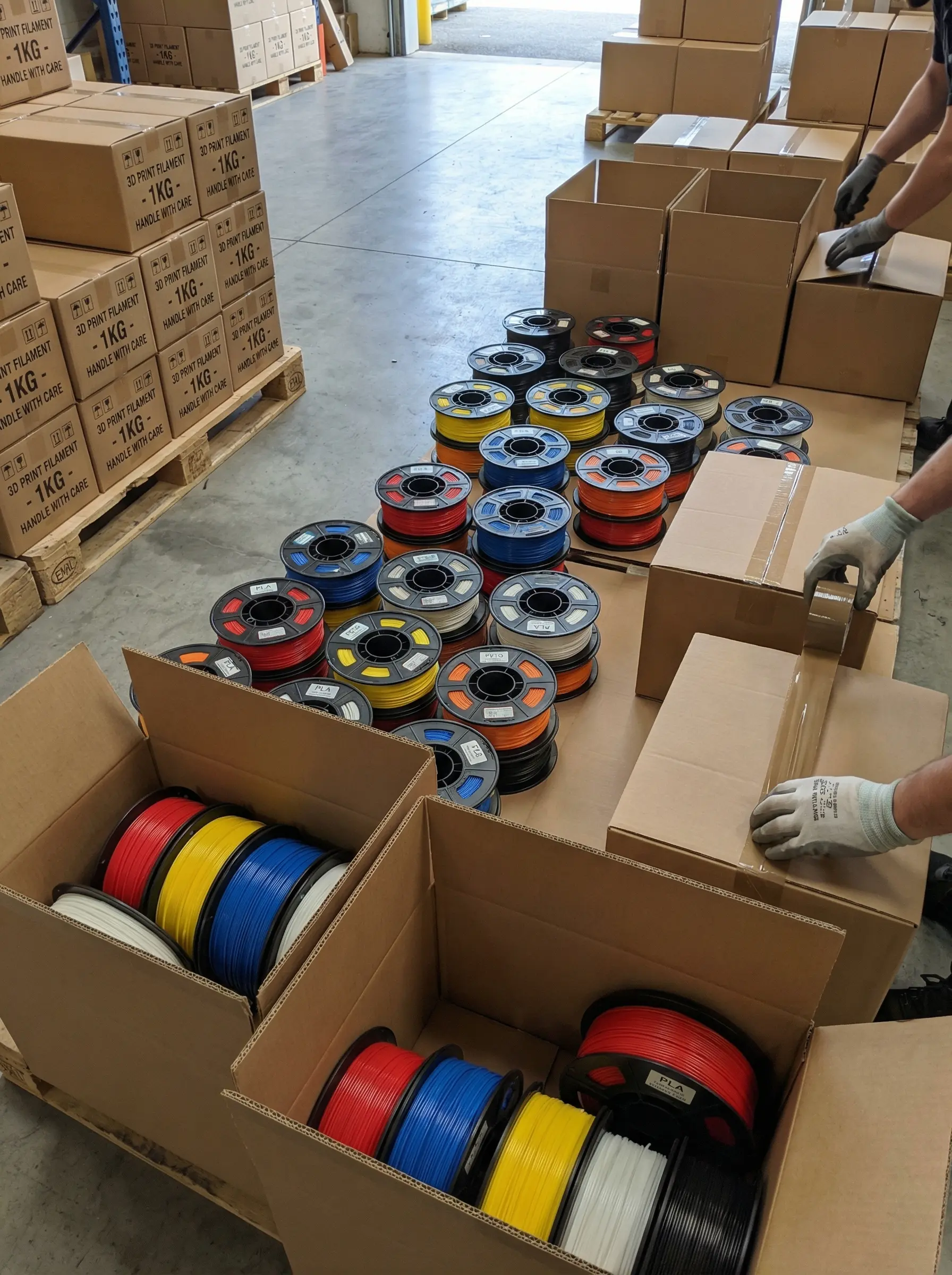
As a factory-direct product, birch wood PLA is stocked for both single-spool makers and volume programs. If you are sourcing for production — retail decor lines, gift and homeware ranges, model-making kits — it is available through our direct manufacturer wholesale program and through full OEM/ODM services with custom wood shade, spool, and private-label packaging. Below are the print settings, material data, finishing guidance and design tips that make this wood filament reliable in practice, not just attractive in a photo.
Why This Birch Wood PLA Filament Stands Out
- Genuine wood fibre, not a printed wood look: real milled wood particles give an authentic matte grain that hides layer lines and takes stain and wax like timber — a look you cannot fake with a pigmented plastic.
- Light, true birch tone: a soft blonde base that suits bright, minimalist decor and serves as a clean starting point for wood-staining to any deeper shade.
- Temperature-tunable colour: print cooler for pale birch, hotter for toasted caramel, or vary temperature by layer to build natural-looking grain variation into a single part.
- Fully finishable: sand it smooth, seal it, apply wood stain, oil, wax or matte varnish — the same finishing workflow a woodworker already knows.
- ±0.03mm tolerance + even particle blend: consistent diameter and controlled wood-particle size are what keep this composite feeding cleanly instead of jamming a fine nozzle.
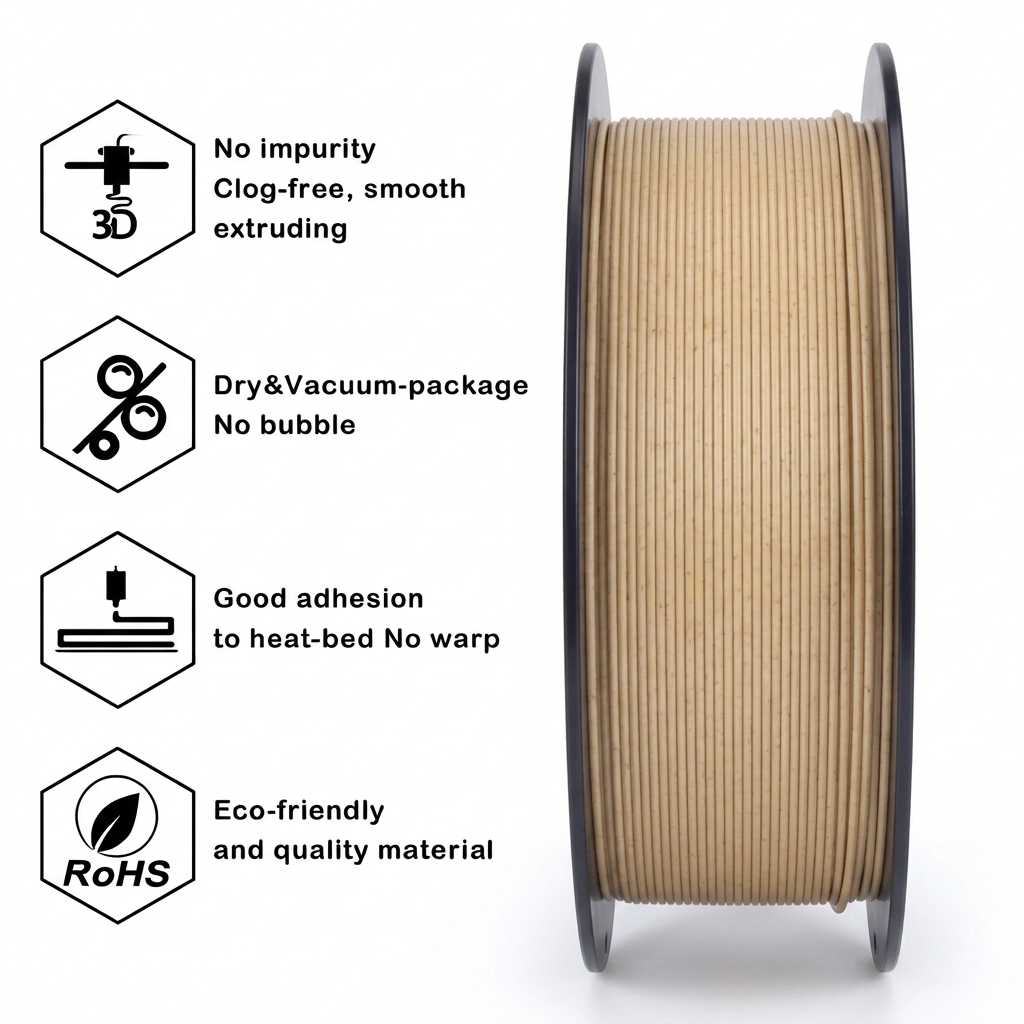
- Easy, low-warp PLA base (190–220 °C, no enclosure): it prints on any machine that runs PLA — just fit a wider nozzle and ease off the speed.
Premium Birch Wood PLA at Factory-Direct Pricing
| Quality You Get | How We Deliver It | What It Means For You |
|---|---|---|
| Authentic woodgrain | Real wood fibre, evenly milled and blended | Prints look and finish like genuine light timber |
| Clog-free feeding | Controlled particle size + ±0.03mm diameter | Fewer jams through a 0.5–0.6mm nozzle |
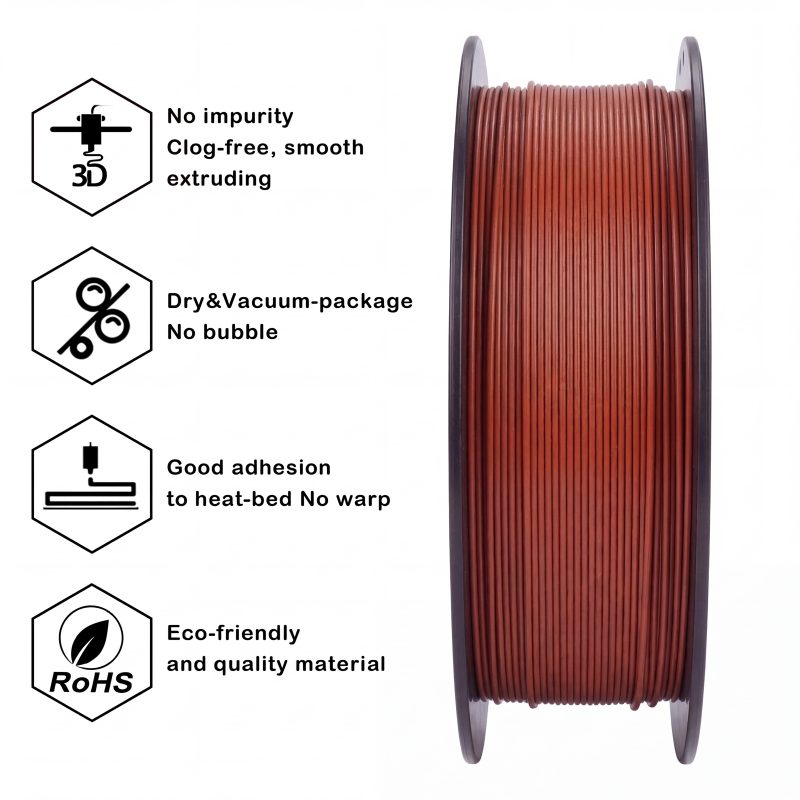
| Dry on arrival | Vacuum seal + desiccant, sealed at packing | Cleaner extrusion; no fuzzy, damp first prints |
Why Choose Birch Wood PLA for Your Projects
| Reads as real wood | Matte grain hides layer lines the way glossy plastic never can. |
| Light blonde base | Bright, neutral birch tone — perfect for staining to any shade. |
| Woodworker finishing | Sand, stain, oil and wax with tools you already own. |
| Tone control | Dial colour from pale birch to toasted caramel by temperature. |
| Prints like PLA | No enclosure, low warp; just a wider nozzle and slower speed. |
| Volume-ready supply | Consistent stock for decor production, wholesale and OEM. |
How Birch Wood PLA Compares
| Property | Birch Wood PLA | Standard PLA | Solid “Wood-Colour” PLA |
|---|---|---|---|
| Surface look | Real matte woodgrain, hides layers | Smooth plastic, layers visible | Flat brown plastic, no grain |
| Finishing | Sand, stain, oil, wax like timber | Paint only | Paint only |
| Colour control | Tunable by temperature | Fixed | Fixed |
| Nozzle needed | 0.5–0.6mm recommended | 0.4mm fine | 0.4mm fine |
| Best use | Decor, figurines, sculpture | General prototyping | Budget “wooden” look |
Birch vs Darker Wood Tones — A Sourcing Note
Buyers often ask which wood shade to stock first, and there is a practical answer: the light one. A pale birch tone is the most versatile wood filament to keep on the shelf because it works both ways. Left unstained, it delivers the bright, airy Scandinavian look that dominates contemporary homeware — the kind of light-wood aesthetic customers actively search for. But because it starts pale, the same spool of birch wood PLA filament can be wood-stained down to oak, walnut or a custom brand tone after printing, which a dark filament can never be reversed to do. You cannot lighten ebony; you can take birch in almost any direction. For a decor brand, a maker-space or a reseller serving mixed customers, a light birch base therefore covers a far wider set of finished products than a single dark spool. It is also the more honest choice for review prototypes and photography: a light tone shows surface finish, grain and geometry clearly under studio light, where a dark wood swallows detail. Stocking a light birch and one darker tone is a sensible pair; if you can only carry one wood colour for versatility, birch earns its shelf space.
For buyers standardizing a production catalogue, birch wood PLA also simplifies finishing consistency. Because the base tone is uniform and light, a stain or oil applied across a batch lands on the same starting colour every time, so finished pieces match instead of drifting between deliveries. Combined with the ±0.03mm diameter control and dry vacuum packaging, that makes this birch wood PLA filament a low-variance input you can design a repeatable decor line around rather than tune around every spool.
Recommended Print Settings
| Parameter | Recommended |
|---|---|
| Nozzle temperature | 190–220 °C (200 °C typical; lower = paler birch) |
| Bed temperature | 45–60 °C |
| Print speed | 30–50 mm/s (40 mm/s recommended) |
| Nozzle size | 0.5–0.6mm preferred (0.4mm minimum) |
| Retraction | Modest (1–2mm direct / 4–5mm Bowden) |
| Cooling fan | 50–100% (PLA base, cools well) |
| Enclosure | Not required (low warp) |
| Drying | 45 °C for 4–6h if exposed to air |
Troubleshooting Wood-Fibre Prints
| Symptom | Likely Cause | Fix |
|---|---|---|
| Nozzle clogs or under-extrudes over time | Wood particles too large for the nozzle; charred build-up | Move to a 0.5–0.6mm nozzle; lower temperature; do a cold pull to clear residue |
| Fuzzy, hairy or blotchy surface | Damp filament — wood fibre absorbs moisture | Dry at 45 °C for 4–6h; print from a dry box; reseal with desiccant |
| Colour too dark / uneven scorching | Temperature too high or filament dwelling in hot nozzle | Drop toward 190–200 °C; avoid long mid-print pauses; keep flow moving |
| Brittle or cracking thin walls | Wood filler reduces ductility vs pure PLA | Use 3+ perimeters, add fillets, avoid ultra-thin unsupported features |
| First layer won’t stick | Bed too cool or nozzle too high | Bed 55–60 °C, slow first layer to ~20 mm/s, lower Z-offset slightly |
Technical Specifications
| Material | Wood-fibre PLA composite (PLA + real wood particles) |
| Wood content | Real milled wood fibre (approx. 20–40%) |
| Color | Birch / pale blonde wood (tunable by temperature) |
| Finish | Natural matte woodgrain |
| Diameter | 1.75mm |
| Diameter tolerance | ±0.03mm |
| Net weight | 1kg (spool) |
| Approx. length | ~330m at 1.75mm |
| Recommended nozzle | ≥0.4mm; 0.5–0.6mm preferred |
| Nozzle temperature | 190–220 °C |
| Bed temperature | 45–60 °C |
| Print speed | 30–50 mm/s |
| Enclosure | Not required |
| Heated bed | Recommended |
| Post-processing | Sandable, stainable, oil/wax/varnish finishable |
| Odor | Pleasant toasted-wood scent while printing |
| Moisture sensitivity | Moderate — wood fibre absorbs water; keep sealed/dry |
| Compliance | RoHS / REACH |
Material Properties & Performance
A wood-filled composite behaves differently from a solid plastic, and understanding that difference is the key to using it well. Adding real wood fibre trades a little mechanical strength and ductility for something a pure filament cannot offer: an authentic timber surface, a warmer tactile feel, and the ability to finish the part with woodworking techniques. The PLA matrix still does the structural work, so prints are dimensionally stable and low-warp, but the embedded fibre makes walls slightly more brittle than pure PLA — a design consideration, not a defect. Treat birch wood PLA as a material for objects that are held, displayed and admired rather than load-bearing machine parts, and it excels.
The most rewarding property of this material is what happens after the print comes off the bed. Because the surface contains genuine wood, it responds to finishing exactly like timber: a light sanding removes the last of the layer texture and raises a soft, uniform grain; wood stain soaks into the fibre to deepen or shift the tone; and a coat of oil, wax or matte varnish seals the surface and brings out the grain with a subtle sheen. None of that is possible with a solid-colour plastic, which can only be painted over. Every quality control step on this birch wood PLA filament — even particle milling, ±0.03mm diameter, tangle-free winding, dry vacuum packaging — exists to make sure that authentic wood surface prints cleanly and consistently, so the material’s real strengths reach the finished object intact.
| Property | Typical Value | Note |
|---|---|---|
| Base polymer | PLA | Bio-based, low-warp |
| Wood fibre content | ~20–40% | Real milled wood particles |
| Tensile strength | ~35–45 MPa | Lower than pure PLA (fibre filler) |
| Density | ~1.2 g/cm³ | Feels lighter, wood-like |
| Ductility | Reduced vs pure PLA | Design for display, not load |
| Sandability | Excellent | Sands to a smooth wood surface |
Printer-Specific Settings
| Bambu Lab X1/P1 (0.6mm nozzle) | 205 °C / bed 55 °C / 40 mm/s, generic PLA profile |
| Prusa MK4 (0.6mm nozzle) | 200 °C / bed 55 °C / 35–40 mm/s |
| Creality K1 / Ender (0.5mm nozzle) | 205 °C / bed 55 °C / 40 mm/s, modest retract |
| Voron / direct drive (0.6mm) | 200 °C / bed 55 °C / 40–50 mm/s tuned |
| Anycubic Kobra (0.4–0.5mm) | 200 °C / bed 55 °C / 35 mm/s |
| Pale birch look (any printer) | 190–195 °C for the lightest blonde tone |
Applications
| Figurines & sculpture | Wooden-look figures and art pieces with a warm matte grain. |
| Coasters & tabletop | Coaster sets, trivets and trays that feel like real wood. |
| Bowls & vessels | Decorative bowls and planters (line for food/water contact). |
| Home decor & frames | Picture frames, wall pieces and Nordic-style accents. |
| Models & dioramas | Architectural models, terrain and scale wooden structures. |
| Gifts & keepsakes | Ornaments and personalized wooden-look giftware. |
Industry Use Cases
Across creative industries, wood-fibre filament shows up wherever a warm, natural surface matters more than raw strength. In home decor and giftware, birch wood PLA prints vases, coasters, ornaments, candle holders and picture frames that sit on a retail shelf looking like carved timber rather than plastic — and the light birch tone matches the pale-wood aesthetic that dominates contemporary interiors. In art and sculpture, makers use it for figurines and display pieces they then sand and oil to a fine wood finish. In architecture and model-making, its matte grain reads convincingly as timber structure in scale models, dioramas and terrain, and the light tone photographs cleanly. In education and hobby workshops, it is a favourite for teaching finishing techniques, because students can print a form and then sand, stain and wax it exactly as they would a piece of real wood. And in maker and craft retail, it feeds a whole category of personalized wooden-look products — engraved signs, keepsakes and seasonal ornaments. The common thread is an object meant to be seen and handled, where a genuine wood surface does the selling.
Because a single wood filament spans so many of these decor jobs, standardizing on one dependable birch wood PLA filament simplifies purchasing: one input, one dialled-in profile, one finishing workflow — reused across figurines, coasters, frames and sculpture instead of qualifying a different material for each product line.
Designing & Finishing Parts in Birch Wood PLA
Getting the most from birch wood PLA is as much about design and finishing as it is about slicer settings. A few habits pay off: use 3 or more perimeters and generous fillets, because the wood filler makes thin, sharp features more brittle than pure PLA; avoid tiny unsupported details that a real wood surface would not hold either; and orient the part so its most visible face lands where layer texture reads as grain rather than against it. For finishing, start with a light sand at 180–240 grit to knock back layer lines and open the grain, then choose your look: leave it raw for a soft matte birch, rub in a wood oil or wax for a warm low sheen, or apply a wood stain to shift the pale base toward oak, walnut or a custom brand tone. A final coat of matte varnish seals the surface and protects it from handling. Because the tone also responds to print temperature, you can build grain variation in before you ever pick up sandpaper — a slow temperature ramp through the print produces natural-looking light-and-dark banding that makes each piece feel individually grown rather than moulded.
Environmental & Safety Standards
| ✅ RoHS Restricted substances compliant | ✅ REACH SVHC compliant | ✅ Real wood fibre Natural, bio-based blend | ✅ Vacuum sealed Dry, desiccant-protected |
Packaging & Global Shipping
| Region | Method | Typical Time |
|---|---|---|
| North America | Air / express + sea for bulk | 7–20 days |
| Europe | Air / express + sea for bulk | 7–20 days |
| Asia-Pacific | Air / express | 5–12 days |
| Rest of world | Air + freight forwarding | 10–25 days |
Bulk Orders & OEM/ODM Services
| Custom wood shade | Birch, bamboo, walnut, ebony and custom tones to match your line. |
| Adjustable wood content | Fibre loading tuned for finish vs printability. |
| Private label | Your spool, label and packaging design. |
| Volume pricing | Contact us for 10+ spool and pallet quotes via our OEM/ODM services. |
Storage & Handling Guidelines
| Reseal in the vacuum bag with desiccant after each print session. |
| Store below 20% RH; wood fibre picks up moisture faster than plain PLA. |
| Dry at 45 °C for 4–6h if prints look fuzzy or hairy. |
| Keep away from direct sunlight and heat sources. |
| Do a cold pull between jobs to clear any wood residue from the nozzle. |
| Handle spools by the hub to keep windings tight and tangle-free. |
Printer Compatibility
| Bambu Lab | Prusa | Creality | Anycubic | Voron | Elegoo |
|---|---|---|---|---|---|
| ✅ 0.6mm nozzle | ✅ MK4/Mini | ✅ K1/Ender | ✅ Kobra | ✅ Tuned | ✅ Neptune |
Any 1.75mm printer that runs PLA can print this wood filament; a 0.5–0.6mm nozzle makes it reliable. Note that wood-fibre composites are for decorative parts — if you need maximum load-bearing strength instead, see our strongest 3D printer filament guide.
Why Choose SigmaFilament for Wood-Fibre PLA
| Factory-direct | We manufacture the filament — no middle-man markup. |
| Even particle milling | Consistent wood-fibre size for clog-free feeding. |
| Dry packaging | Vacuum-sealed to protect moisture-prone wood fibre. |
| OEM/ODM ready | Custom wood shade, fibre loading and private-label programs. |
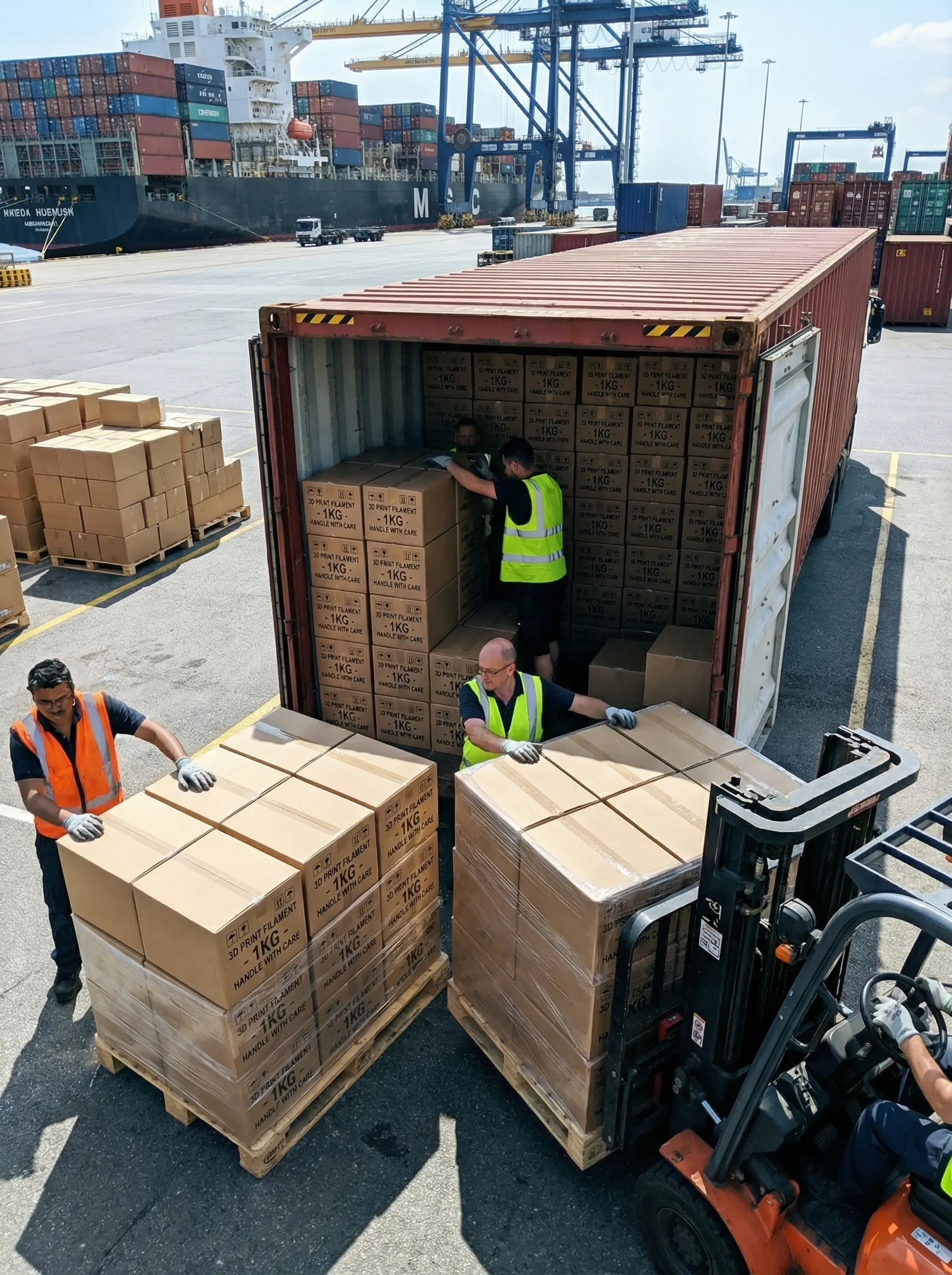
| Global logistics | Reliable worldwide shipping for samples and pallets. |
For decor makers and production buyers, the value of a wood filament is measured in unattended reliability and repeatable finish — how many spools run back-to-back without a clog, and whether every batch stains to the same colour. That is exactly where a manufacturer-controlled input pays off. Wood-particle size is milled for even flow so a 0.5–0.6mm nozzle keeps feeding; diameter is held to ±0.03mm so multi-machine profiles stay valid across every spool; and vacuum-sealed dry packaging means a fresh spool prints a clean, sharp grain out of the box instead of a fuzzy, damp first layer. When you are printing dozens of decor pieces a day, those controls are the difference between a process you trust and one you babysit. If you are scaling a wooden-look product line, talk to us about a standing wholesale supply or an OEM program tuned to your exact shade.
Buying Birch Wood PLA With Confidence
Whether you are printing a single ornament or specifying a production input, this wood filament is built to remove the usual wood-filament friction. New to wood filament? Fit a 0.5–0.6mm nozzle, start at the recommended profile above, keep the spool dry, and you will get a clean, sandable woodgrain on the first or second attempt. Already running wood-look production? This birch wood PLA filament slots into an existing PLA profile with a wider nozzle and minimal re-tuning, and its light, uniform base tone keeps your staining and branding options open. Makers who have been burned by clog-prone wood filament — a nozzle that jams halfway through a print, or a batch that fuzzed because it arrived damp — tend to appreciate that a birch wood PLA filament held to even particle size, tight diameter and dry packaging behaves the same way every time.
Every spool of birch wood PLA filament is milled, wound and packed under the same controls, and we back the material with responsive technical support and sample availability for qualified buyers. If your line needs a darker wood shade, a different fibre loading, or private-label spools, our team can take this material and adapt it to your specification without you having to re-qualify a new supplier. That combination — a dependable off-the-shelf birch wood PLA plus a factory that can customize it — is what makes SigmaFilament a practical long-term source rather than a one-off purchase. Whether you are printing a single figurine today or standardizing a wooden-look decor range across a full catalogue, the same spool, the same tolerances and the same warm birch grain are behind every order, so the material you qualify once keeps behaving the same way as your volumes grow.
Frequently Asked Questions
Does birch wood PLA filament really contain real wood?
Why do I need a bigger nozzle for wood PLA?
Can I sand, stain, oil or wax birch wood PLA prints?
How do I get a lighter or darker wood tone?
Is birch wood PLA filament hard to print?
Do you offer birch wood PLA filament for wholesale or OEM/private-label?
Source Birch Wood PLA Direct From the Factory
Real wood fibre, pale blonde grain, sandable and stainable — ready for figurines, coasters, sculpture and Nordic-style decor. Order a spool to test, or request wholesale & OEM pricing for production volumes.
Free samples for qualified buyers · Wholesale & OEM/ODM available
| Material | Wood PLA |
|---|---|
| Color | Birch |
| Filament Diameter | 1.75mm ,2.85mm (3.00mm) |
| Spool Weight | 1kg ,3kg ,5kg ,Sample (200g) |