Bamboo Wood PLA Filament — Real Wood Fibers, a Warm Matte Grain and the Easy Printing of PLA
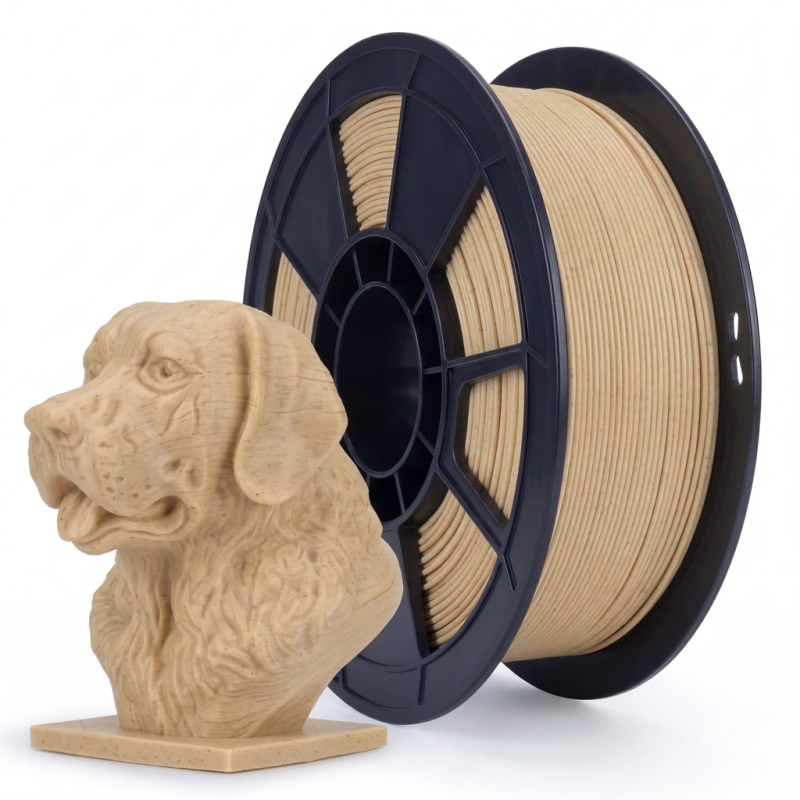
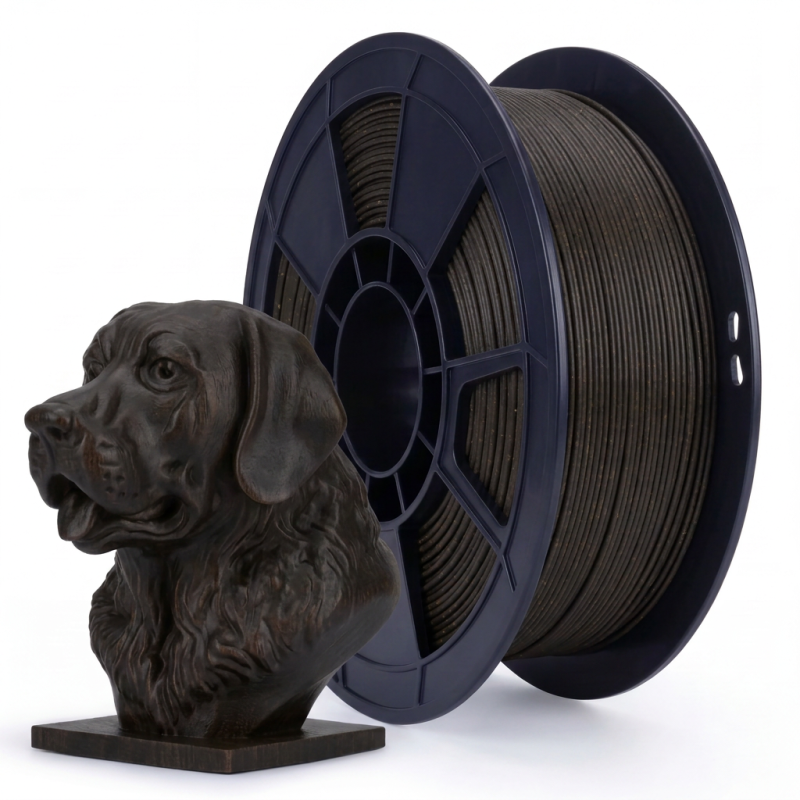
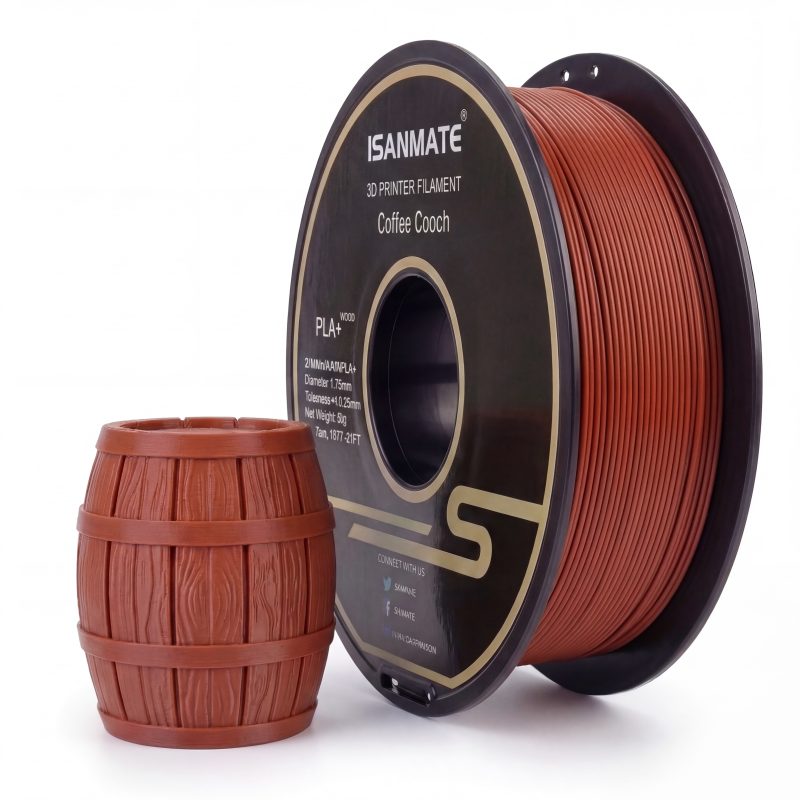
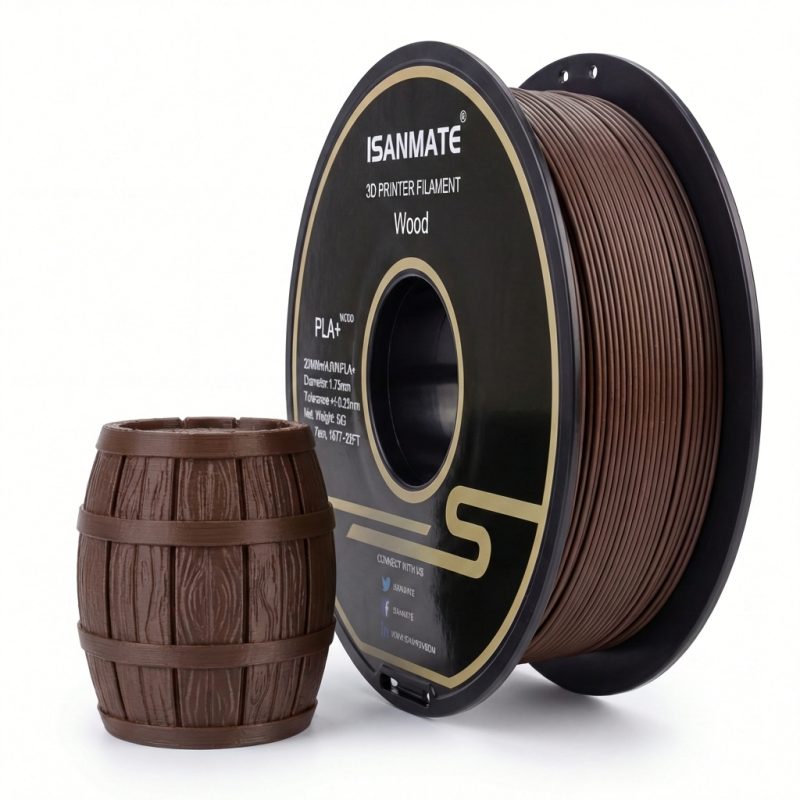
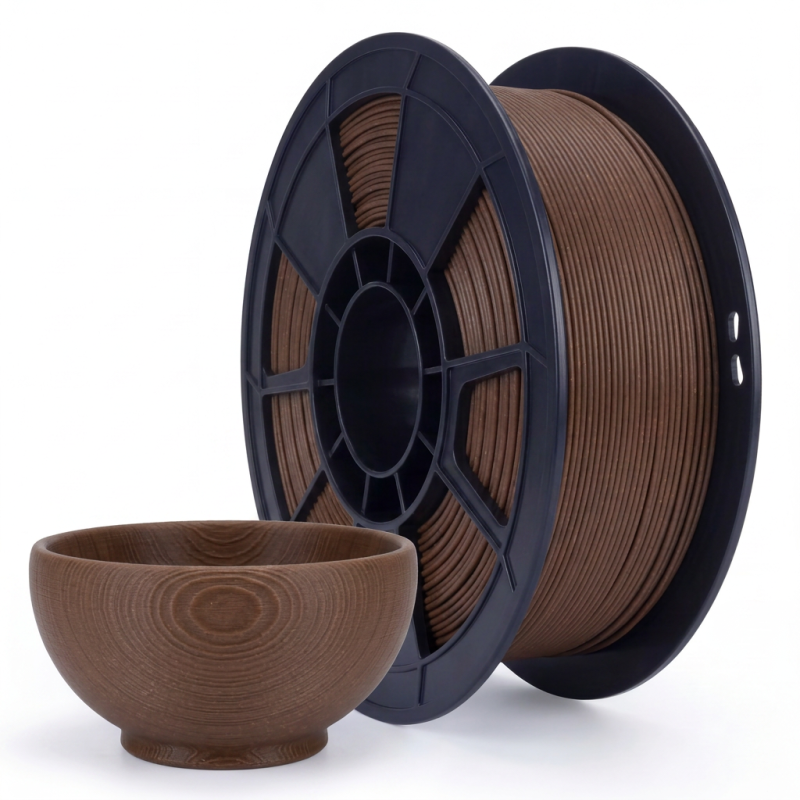
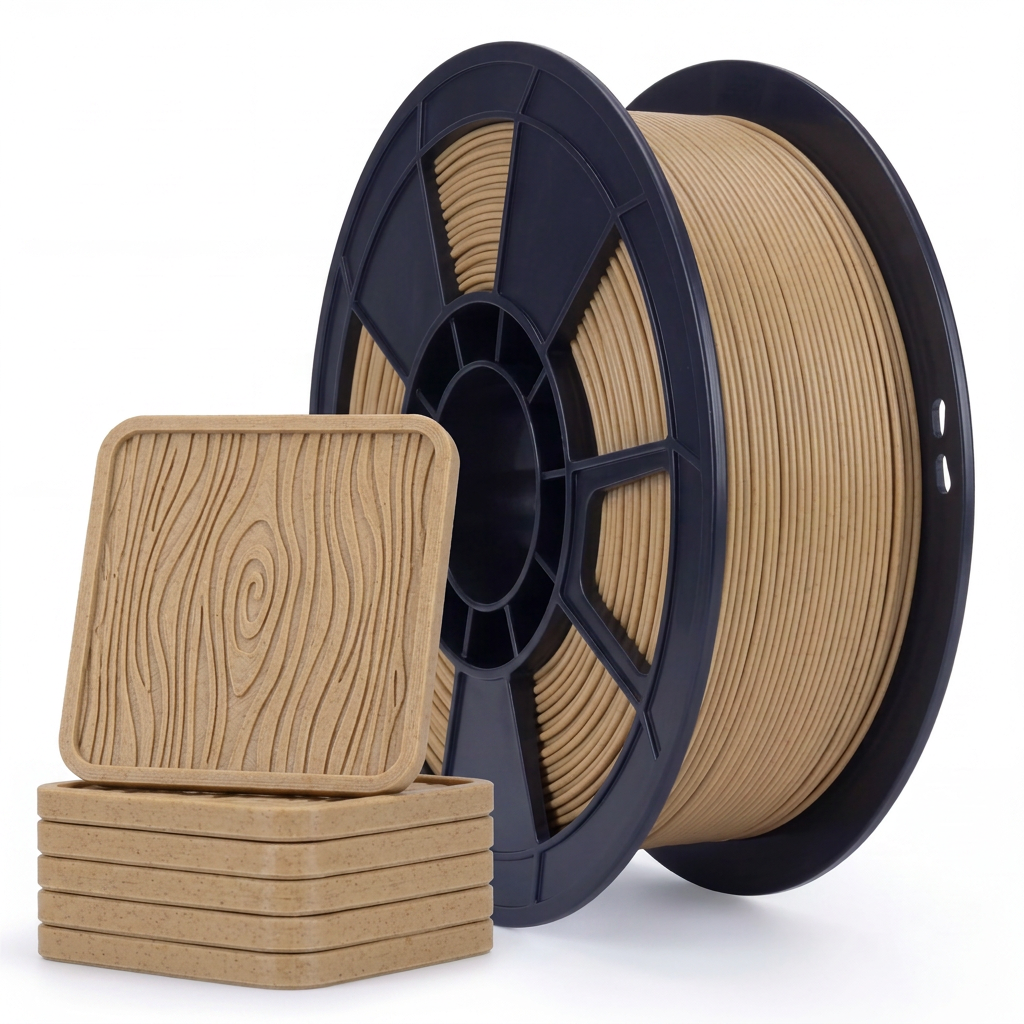
Bamboo wood PLA filament is what you reach for when a print needs to look and feel like real wood rather than painted plastic. It is a PLA composite loaded with genuine wood fibers, so every part comes off the bed with a warm, pale bamboo tone and a soft matte grain that catches the light the way finished timber does. There is no glossy plastic sheen and no hollow-sounding tap — parts read as light, natural bamboo, and the visible fiber texture gently hides layer lines instead of showing them off. For anyone printing coasters, bowls, ornaments, planters or décor that has to sit on a shelf and pass as a crafted wooden object, this is the material that gets you there in a single print.
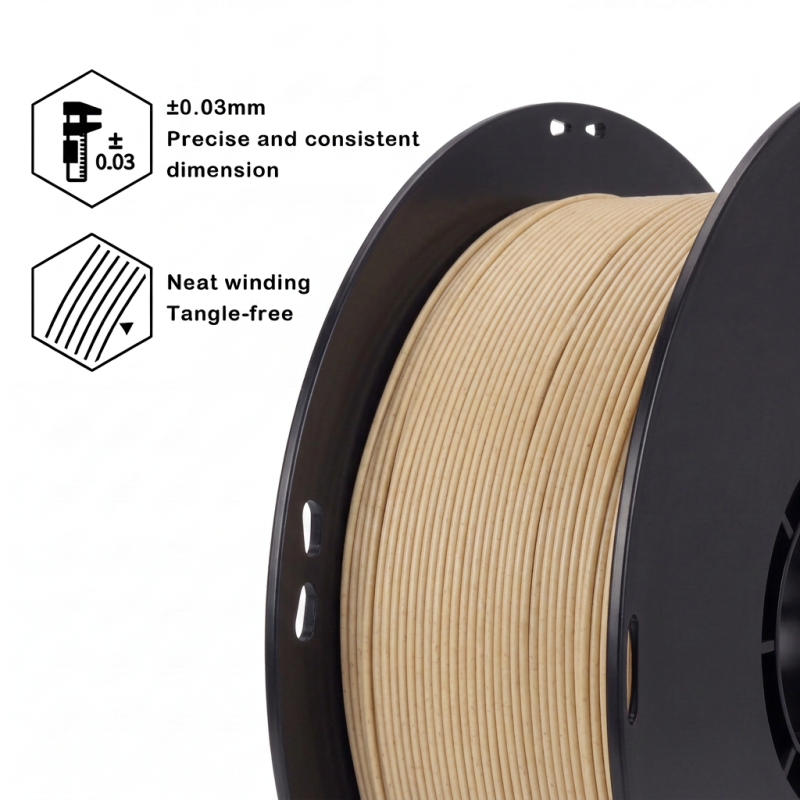
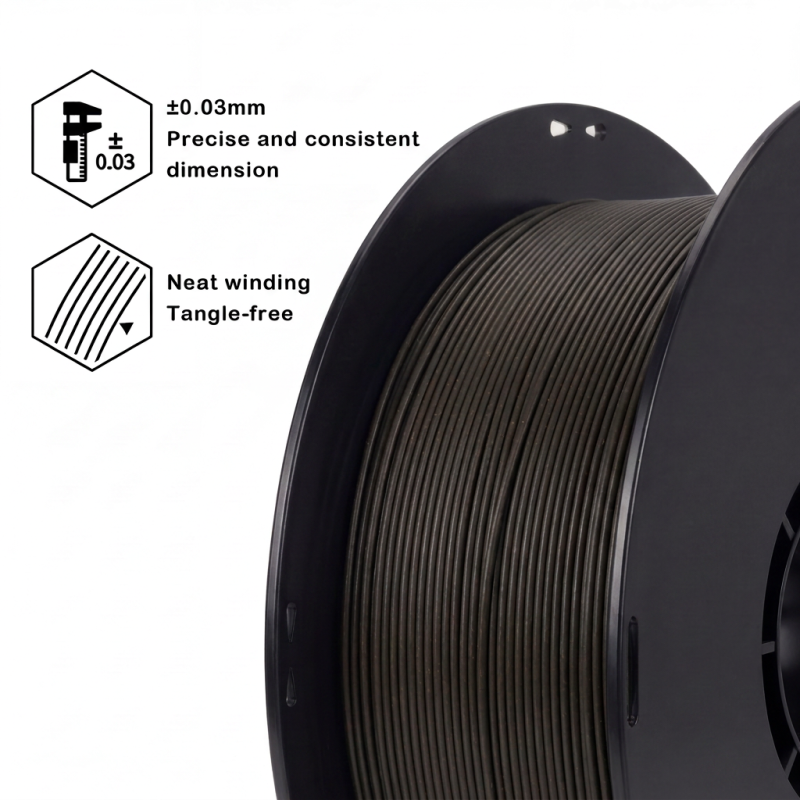
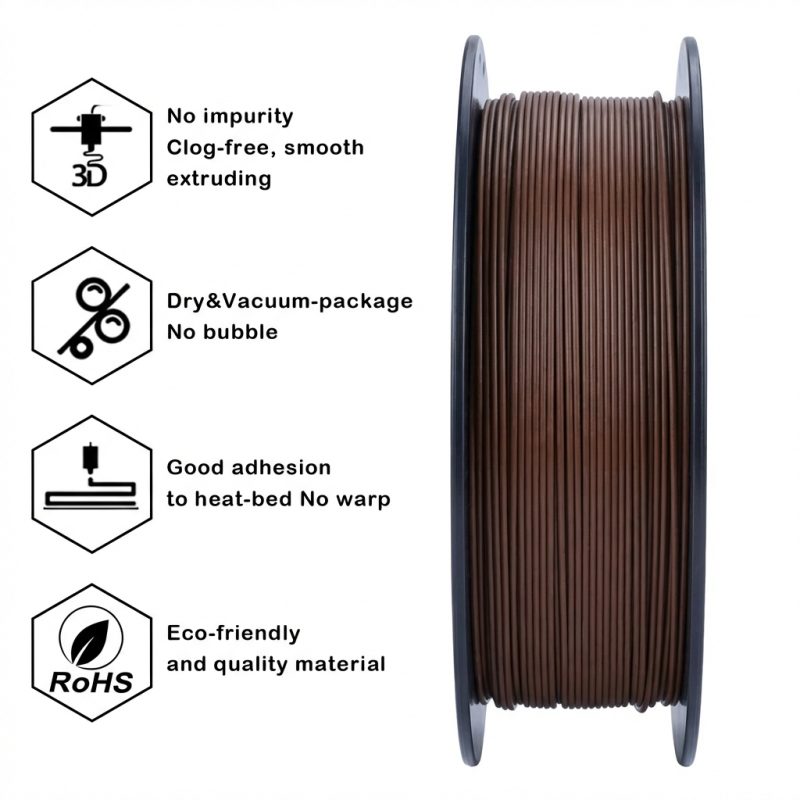
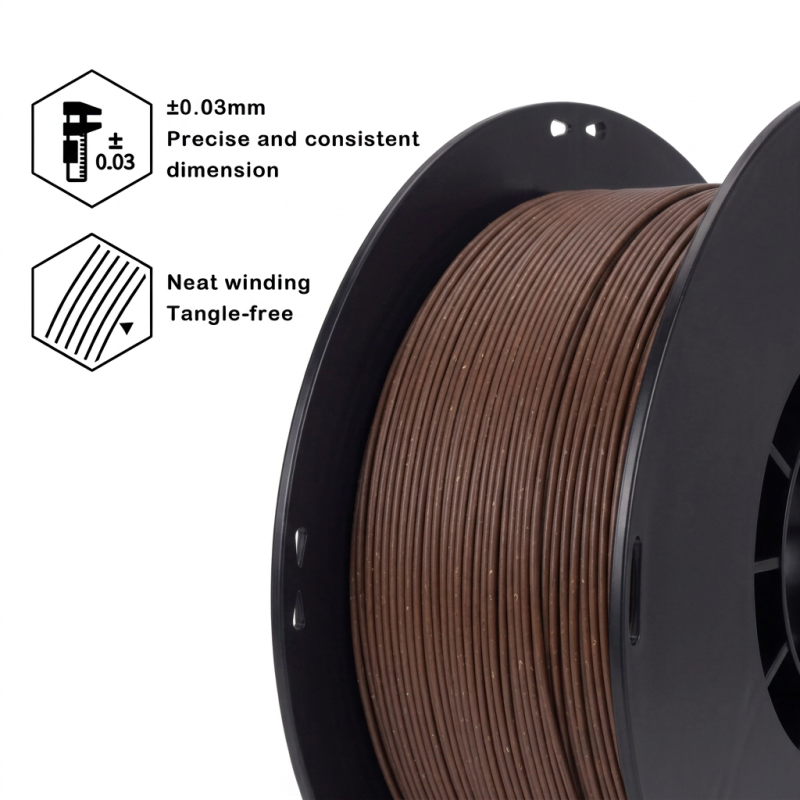
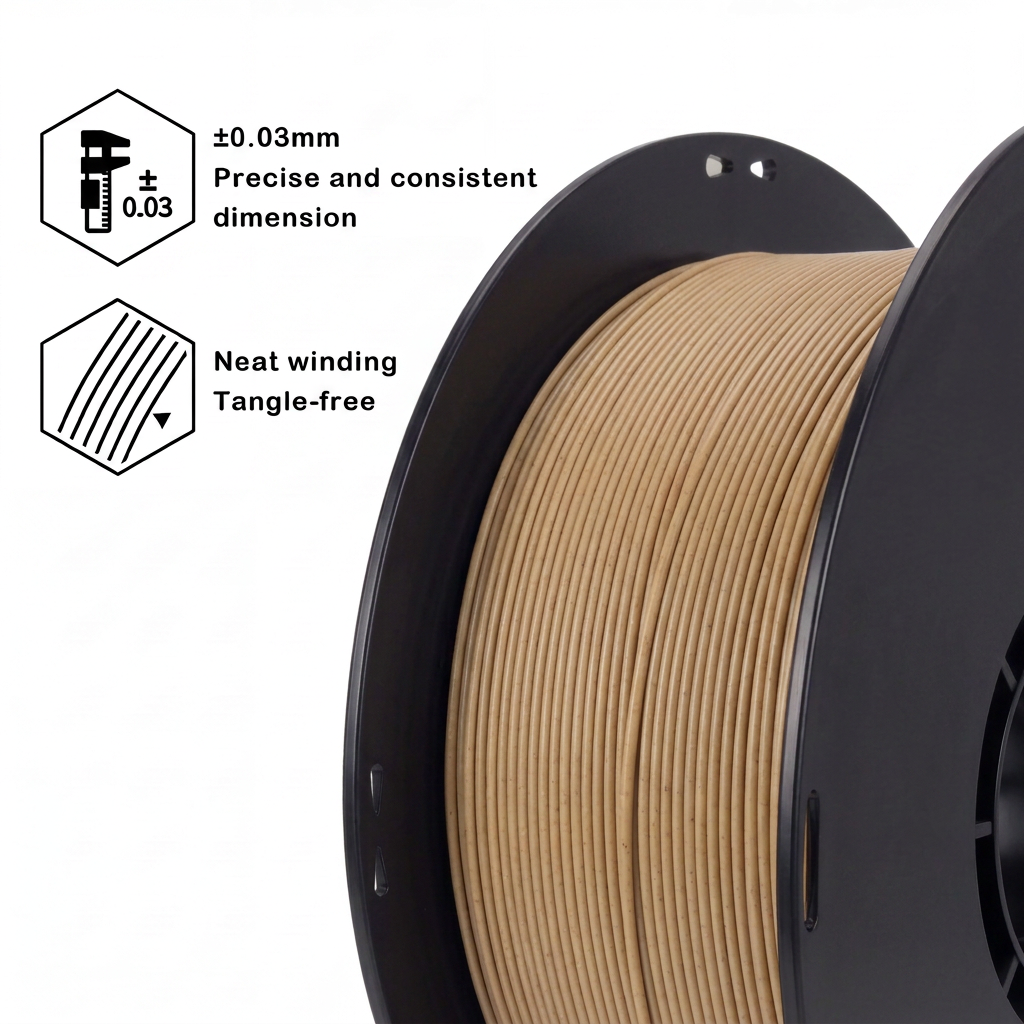
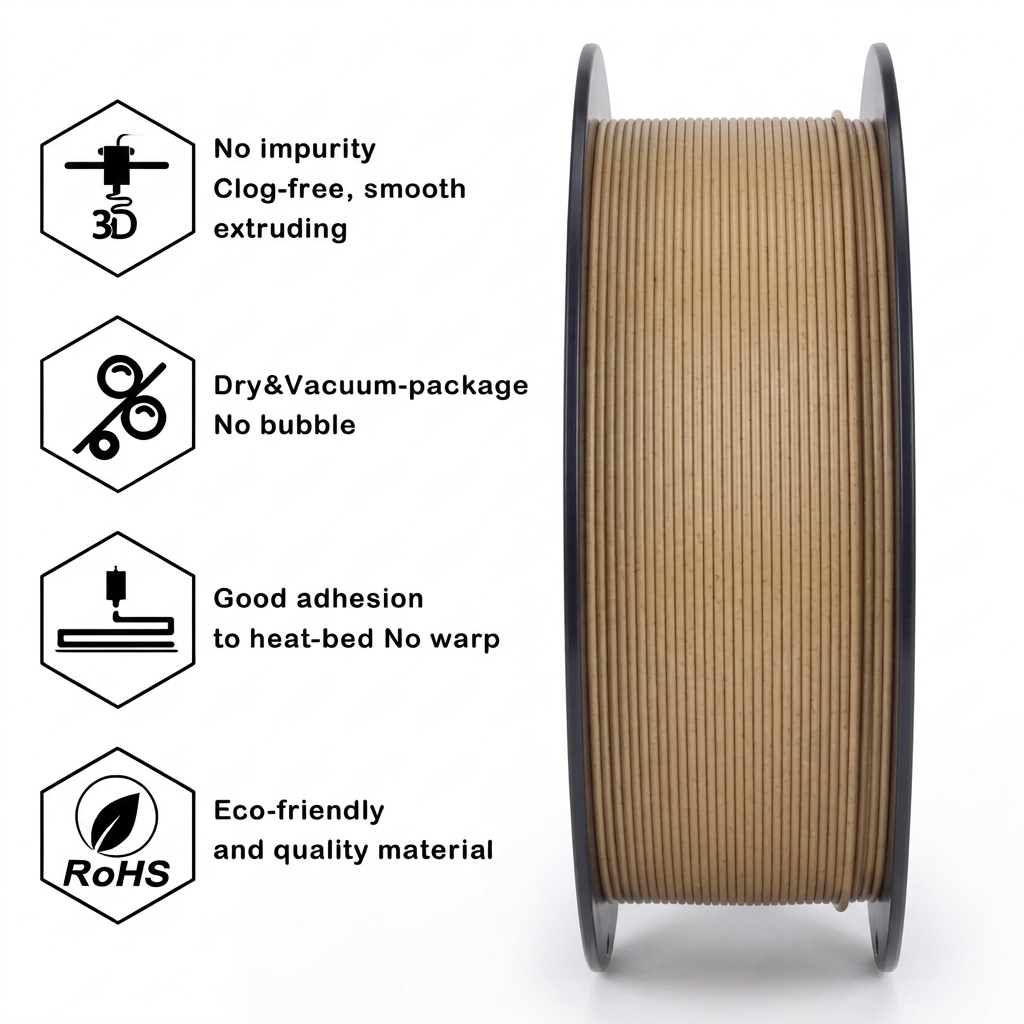
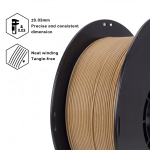
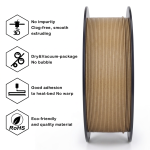
What makes wood-fiber composites special is also what makes them fussier than plain filament: the fibers are physically present in the melt, and a too-small or partially blocked nozzle will catch them and clog. This bamboo wood PLA filament is engineered around that reality. The wood fibers are milled fine and dispersed evenly through the PLA matrix so they flow cleanly, and the filament is held to a ±0.03mm diameter tolerance and wound tangle-free on a black open-lattice spool for steady, jam-free feeding. Pair it with a nozzle of 0.4mm or larger — 0.5–0.6mm is even more forgiving — and it prints about as easily as standard PLA, with none of the warping, enclosure or fume issues that come with engineering plastics.
The party trick of a good wood composite is that its color is not fixed. Because the fibers lightly toast as extrusion temperature rises, you can dial the finished shade from a pale, fresh bamboo at the low end of the range to a warmer toasted-oak brown at the top — and if you deliberately step the temperature layer by layer, you can even create the banded look of natural wood grain in a single object. That single-material tonal range is why designers keep bamboo wood PLA filament on the shelf: one spool covers a whole family of wood finishes without swapping materials.
As a factory-direct product, this bamboo wood PLA filament is stocked for both single-spool makers and volume programs. If you are sourcing for production — a homeware line, retail giftware, architectural models, hospitality décor — it is available through our direct manufacturer wholesale program and through full OEM/ODM services with custom wood tone, fiber loading, spool and private-label packaging. Below you will find the print settings, material data, finishing guidance and design tips that make this wood composite reliable in practice, not just attractive in a photo.
Why This Bamboo Wood PLA Filament Stands Out
- Genuine wood fibers, not a wood-look pigment: real milled wood is blended into the PLA, so parts have an authentic matte grain, a woody warmth and a light, natural weight — a printed coaster feels like craft, not plastic.
- Warm, pale bamboo tone: a light, fresh base color that suits Scandinavian, minimalist and natural-décor styling — and one that can be pushed darker on demand rather than being locked in.
- Temperature-tunable shade: print pale at 195–200 °C or toasted at 215–220 °C, or step the temperature per layer to fake real wood-grain banding in a single part.
- Finishes exactly like timber: it sands smooth, takes wood stain and dye, accepts wax and oil, and can be sealed — post-processing techniques from real woodworking transfer directly.
- Layer lines that hide themselves: the fiber texture and matte surface diffuse light and camouflage the stepping that shows on glossy filaments, so prints look finished straight off the bed.
- Prints as easily as PLA: low warp, no enclosure required, low odor and standard bed temperatures — the only special rule is a ≥0.4–0.5mm nozzle to keep the wood fibers flowing.
Premium Bamboo Wood PLA at Factory-Direct Pricing
| Quality You Get | How We Deliver It | What It Means For You |
|---|---|---|
| Even wood-fiber dispersion | Fine-milled fiber, controlled blend, batch-verified | Consistent grain and far fewer clogs |
| Reliable feeding | ±0.03mm diameter + tangle-free winding | Fewer jams and failed decorative prints |
| Repeatable wood tone | Consistent fiber loading spool to spool | A set of coasters or bowls matches across a batch |
Why Choose Bamboo Wood PLA for Your Projects
| Looks like real wood | Authentic matte grain and warm bamboo tone, not a plastic sheen. |
| Tunable color | Pale bamboo to toasted oak by temperature — no new material needed. |
| Woodworking finishes | Sand, stain, wax, oil and seal for a true crafted look. |
| Hides layer lines | Matte fiber surface diffuses light and camouflages stepping. |
| Natural & eco-minded | Plant-based PLA plus real wood fiber suits sustainable branding. |
| Volume-ready supply | Consistent stock for production, wholesale and OEM. |
How Bamboo Wood PLA Compares
| Property | Bamboo Wood PLA | Standard PLA | Wood-look painted plastic |
|---|---|---|---|
| Surface & feel | Real matte wood grain, woody warmth | Smooth, often glossy plastic | Depends on paint job; still plastic underneath |
| Color control | Tunable pale→dark by temperature | Fixed pigment | Fixed after painting |
| Post-processing | Sand, stain, wax, seal like timber | Sands; stains poorly | Repaint only |
| Nozzle requirement | ≥0.4–0.5mm (anti-clog) | Any nozzle | Any nozzle |
| Best use | Décor, coasters, bowls, models | General prototyping | Cost props |
Bamboo vs Darker Wood Tones — A Sourcing Note
Wood composites come in a spread of natural tones — walnut, birch, ebony, oak — and each has its place, but bamboo occupies the most versatile position on that shelf. Because it starts pale, it can be pushed in almost any direction: leave it light for a clean, contemporary Scandinavian look, raise the print temperature for a warmer honey-oak, or stain and wax it toward a rich walnut after printing. A darker composite cannot be lightened, but a pale bamboo base can be taken almost anywhere. For a contract manufacturer, a maker studio, or a reseller serving mixed customers, a spool of pale bamboo wood PLA filament simply covers a wider range of finished looks than the same spool in a dark tone. It also photographs honestly for prototype review — the light surface shows grain, geometry and print quality clearly under studio light, where dark composites swallow detail.
For buyers standardizing a homeware or giftware BOM, the pale base also simplifies quality control. Tone drift between batches is easy to spot against a clean light reference, so incoming-goods checks are faster and disputes are rarer. Combined with the ±0.03mm diameter control and even fiber dispersion, that makes this bamboo wood PLA filament a low-variance input you can design a repeatable finished product around rather than re-tune around every delivery.
Recommended Print Settings
| Parameter | Recommended |
|---|---|
| Nozzle temperature | 190–220 °C (200–210 °C typical) |
| Wood-shade tuning | ~195 °C pale bamboo → ~220 °C toasted oak |
| Bed temperature | 45–60 °C |
| Print speed | 40–60 mm/s (40 mm/s for fine detail) |
| Nozzle size | ≥0.4mm (0.5–0.6mm hardened preferred) |
| Retraction | 1–2mm (direct) / 3–5mm (Bowden) |
| Cooling fan | 100% (as with standard PLA) |
| Enclosure | Not required |
Troubleshooting Wood-Fiber Prints
| Symptom | Likely Cause | Fix |
|---|---|---|
| Nozzle clogs or under-extrudes mid-print | Wood fibers bridging a fine/partly blocked nozzle | Move to a 0.5–0.6mm nozzle; raise temp 5–10 °C; cold-pull to clear fibers |
| Fine hairy stringing between parts | Wood composites string more than glossy PLA; retraction/temp off | Lower temp slightly, reduce retraction distance, add a small travel-speed bump |
| Color came out darker/patchier than expected | Temperature too high or heat soak on slow small parts | Drop toward 195–205 °C for pale, keep flow steady, avoid long dwell over small areas |
| Rough or gritty top surface | Normal fiber texture — or slight over-extrusion | Embrace it, or lightly sand; trim flow to ~98–100% for a smoother face |
| First layer won’t stick | Bed too cool or nozzle too high | Bed 55–60 °C, slow first layer, slightly lower Z-offset; clean bed |
Technical Specifications
| Material | Wood-fiber PLA composite (PLA + real wood fibers) |
| Wood content | Genuine milled wood fiber blend |
| Color | Natural bamboo (pale warm tan, temperature-tunable) |
| Surface finish | Matte natural wood grain (non-reflective) |
| Diameter | 1.75mm |
| Diameter tolerance | ±0.03mm |
| Net weight | 1kg (spool) |
| Approx. length | ~330m at 1.75mm (varies with fiber density) |
| Recommended nozzle | ≥0.4mm (0.5–0.6mm hardened preferred) |
| Nozzle temperature | 190–220 °C |
| Bed temperature | 45–60 °C |
| Print speed | 40–60 mm/s |
| Cooling | 100% part cooling |
| Enclosure | Not required |
| Heated bed | Recommended |
| Warping | Low (PLA base) |
| Odor | Low, faint pleasant woody scent |
| Post-processing | Sandable, stainable, waxable, sealable |
| Moisture sensitivity | Moderate — keep sealed, dry if stringy |
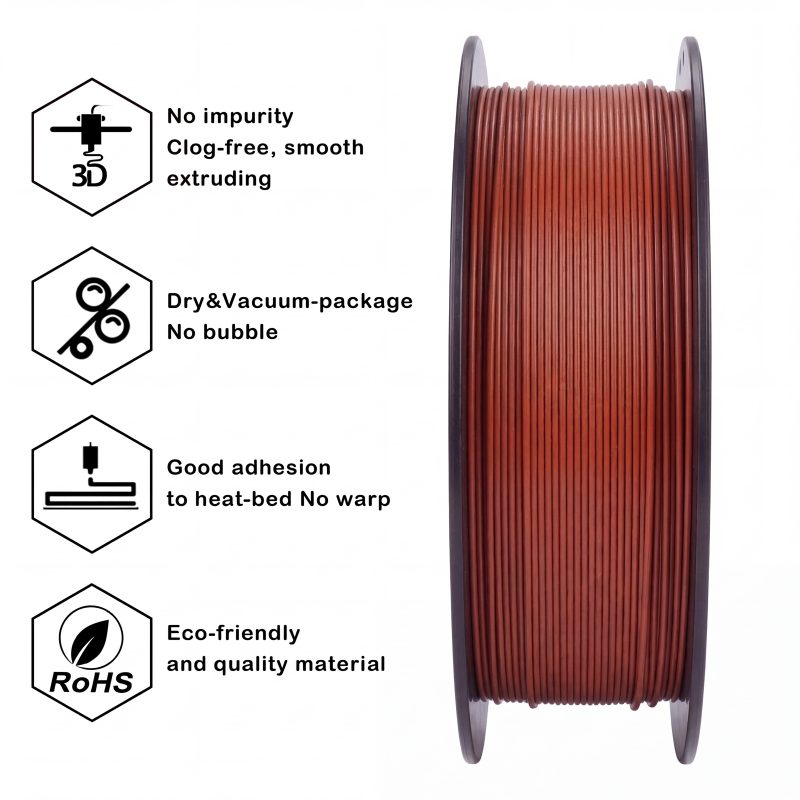
| Compliance | RoHS / REACH |
Material Properties & Performance
The value of a wood composite is aesthetic and tactile rather than structural. On the mechanical side it behaves broadly like PLA — rigid, dimensionally stable, easy to print — but the added wood fiber makes it a touch more brittle and slightly less strong than unfilled PLA, which is exactly the right trade for decorative and display parts. This is a material for objects that are seen and handled, not for load-bearing brackets or gears. What you gain in exchange is a surface no plain plastic can match: a warm matte grain, a light natural weight, a faint woody scent, and a finish that responds to real woodworking tools.
Because the fibers are physically suspended in the melt, process discipline shifts from “keep it dry and hot” toward “keep the fibers flowing.” That is why nozzle choice matters so much: a fine nozzle catches fibers and clogs, while a 0.4mm-or-larger opening lets them pass freely. Every quality-control step on this bamboo wood PLA filament — even fiber dispersion, tight ±0.03mm diameter, tangle-free winding, dry packaging — exists to keep that fiber-laden melt moving cleanly so the wood character reaches the print bed without a jam. Get the nozzle and the temperature right and the material rewards you with décor-grade results that look hand-finished.
| Property | Typical Behavior | Note |
|---|---|---|
| Stiffness | Rigid, PLA-like | Great dimensional stability for décor |
| Toughness | Slightly more brittle than plain PLA | Best for display, not load-bearing |
| Surface | Matte wood grain | Diffuses light, hides layer lines |
| Color response | Darkens with temperature | Tunable pale→toasted; grain-banding possible |
| Finishing | Sands / stains / waxes | Woodworking techniques transfer |
Printer-Specific Settings
| Bambu Lab X1/P1 (0.4mm+) | 205 °C / bed 55 °C / 40–50 mm/s, generic PLA profile |
| Prusa MK4 (0.4/0.6mm) | 210 °C / bed 55 °C / 40 mm/s, reduced retraction |
| Creality K1 / Ender | 205 °C / bed 55 °C / 45 mm/s, 0.4mm+ nozzle |
| Anycubic Kobra | 205 °C / bed 55 °C / 40–50 mm/s |
| Voron / custom | 200–210 °C / bed 55 °C / 50–60 mm/s, hardened 0.6mm |
| Elegoo Neptune | 205 °C / bed 55 °C / 40 mm/s, 0.4mm+ nozzle |
Applications
| Coasters & tabletop pieces | Warm bamboo coasters, trivets and trays with a real-wood feel. |
| Bowls & vessels | Decorative bowls, planters and catch-alls (non-food-contact décor). |
| Ornaments & figurines | Sculptures, statuettes and giftware with a carved-wood look. |
| Home & interior décor | Wall art, shelf objects, lamp bases and natural-style accents. |
| Architectural & scale models | Timber-look massing models and terrain with realistic warmth. |
| Signage & branded gifts | Rustic signs, plaques and eco-styled promotional pieces. |
Industry Use Cases
Wood-composite filament shows up wherever a printed object needs to read as natural, warm and crafted rather than manufactured. In homeware and giftware, bamboo wood PLA becomes coasters, trivets, tea-light holders, small bowls and ornaments that sell on their tactile, sustainable-looking appeal — the light bamboo tone photographs beautifully in lifestyle catalog shots. In interior design and hospitality, it prints lamp bases, shelf sculptures, room-number plaques and natural-style décor that complements wood and stone environments without the cost or waste of machining real timber. In architecture and model-making, its warm grain gives massing models and dioramas a realistic material read that white plastic never achieves. In retail and events, it produces rustic signage, branded plaques and eco-styled promotional gifts that lean into a green, back-to-nature aesthetic. And for hobbyists and makers, it is the go-to for anything meant to imitate carved wood — from board-game pieces to picture frames — where the ability to sand and stain the finished print unlocks a genuinely handmade result.
Because a single spool spans so many of these decorative jobs — and its shade can be tuned by temperature — standardizing on one dependable bamboo wood PLA filament simplifies purchasing: one input, one dial-in profile, one finishing workflow, reused across coasters, bowls, ornaments and models instead of qualifying a different material for each product line.
Designing & Finishing Parts in Wood PLA
Getting the most out of bamboo wood PLA filament is as much about design and finishing as it is about slicer settings. Start with the mechanicals: use a 0.5–0.6mm nozzle when you can, keep walls at 2–3 perimeters, and avoid tiny bridging features that a fiber-laden melt struggles with. For color, decide your look up front — print near 195–205 °C for a pale, fresh bamboo, or 215–220 °C for a warmer toasted tone — and remember that slow, small parts heat-soak and darken, so keep flow moving. To fake real wood grain, use a temperature-tower style script or a slicer plugin to step nozzle heat every few layers, which lays down alternating light and dark bands.
The finishing stage is where wood PLA truly separates from plastic. Sand progressively from around 220 up to 400 grit to knock down layer lines and open the grain; the surface takes on a smoother, more timber-like feel with each pass. From there it accepts wood stain, alcohol-based dye, and wax or oil finishes — a coat of stain sinks into the exposed fibers and deepens the grain just as it would on real wood, and a wax or matte sealer protects the surface and enriches the color. Because these parts are decorative, treat food, drink and outdoor exposure as out of scope unless the piece is properly sealed. Handled this way, a printed coaster or bowl ends up looking and feeling like something turned on a lathe rather than pushed through a nozzle.
Environmental & Safety Standards
| ✅ RoHS Restricted substances compliant | ✅ REACH SVHC compliant | ✅ Low odor Faint pleasant woody scent | ✅ Vacuum sealed Dry, desiccant-protected |
Packaging & Global Shipping
| Region | Method | Typical Time |
|---|---|---|
| North America | Air / express + sea for bulk | 7–20 days |
| Europe | Air / express + sea for bulk | 7–20 days |
| Asia-Pacific | Air / express | 5–12 days |
| Rest of world | Air + freight forwarding | 10–25 days |
Bulk Orders & OEM/ODM Services
| Custom wood tone | Bamboo, birch, oak, walnut and ebony shades to match your line. |
| Custom fiber loading | Dial grain intensity vs. printability for your parts. |
| Private label | Your spool, label and packaging design. |
| Volume pricing | Contact us for 10+ spool and pallet quotes via our OEM/ODM services. |
Storage & Handling Guidelines
| Reseal in the vacuum bag with desiccant after each print session. |
| Store below 20% RH; wood fiber can pick up moisture over time. |
| Dry at 45–55 °C for 4–6h if you see hairy stringing or hear popping. |
| Keep away from direct sunlight and heat sources. |
| Run a cold pull between long jobs to clear any accumulated fiber. |
| Handle spools by the hub to keep windings tight and tangle-free. |
Printer Compatibility
| Bambu Lab | Prusa | Creality | Anycubic | Voron | Elegoo |
|---|---|---|---|---|---|
| ✅ 0.4mm+ | ✅ MK4/Mini | ✅ K1/Ender | ✅ Kobra | ✅ 0.6mm | ✅ Neptune |
Any 1.75mm printer with a heated bed can run this wood composite; a 0.4mm-or-larger nozzle keeps the fibers flowing. If you also work with tougher engineering materials, see our strongest 3D printer filament guide.
Why Choose SigmaFilament for Bamboo Wood PLA
| Factory-direct | We manufacture the filament — no middle-man markup. |
| Even fiber blend | Controlled dispersion for consistent grain and fewer clogs. |
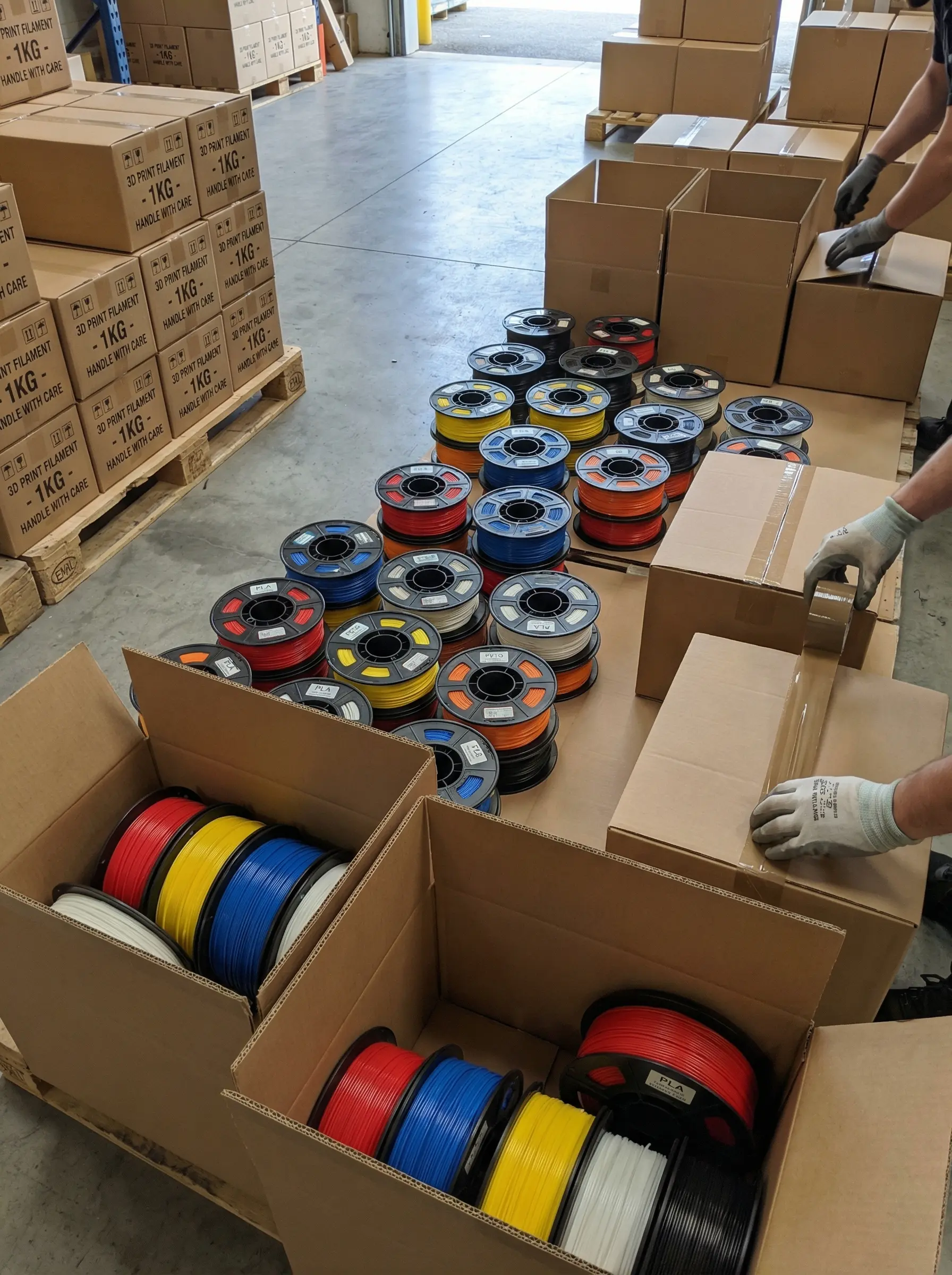
| Dry packaging | Vacuum-sealed to protect wood fiber in transit. |
| OEM/ODM ready | Custom tone, fiber loading and private-label programs. |
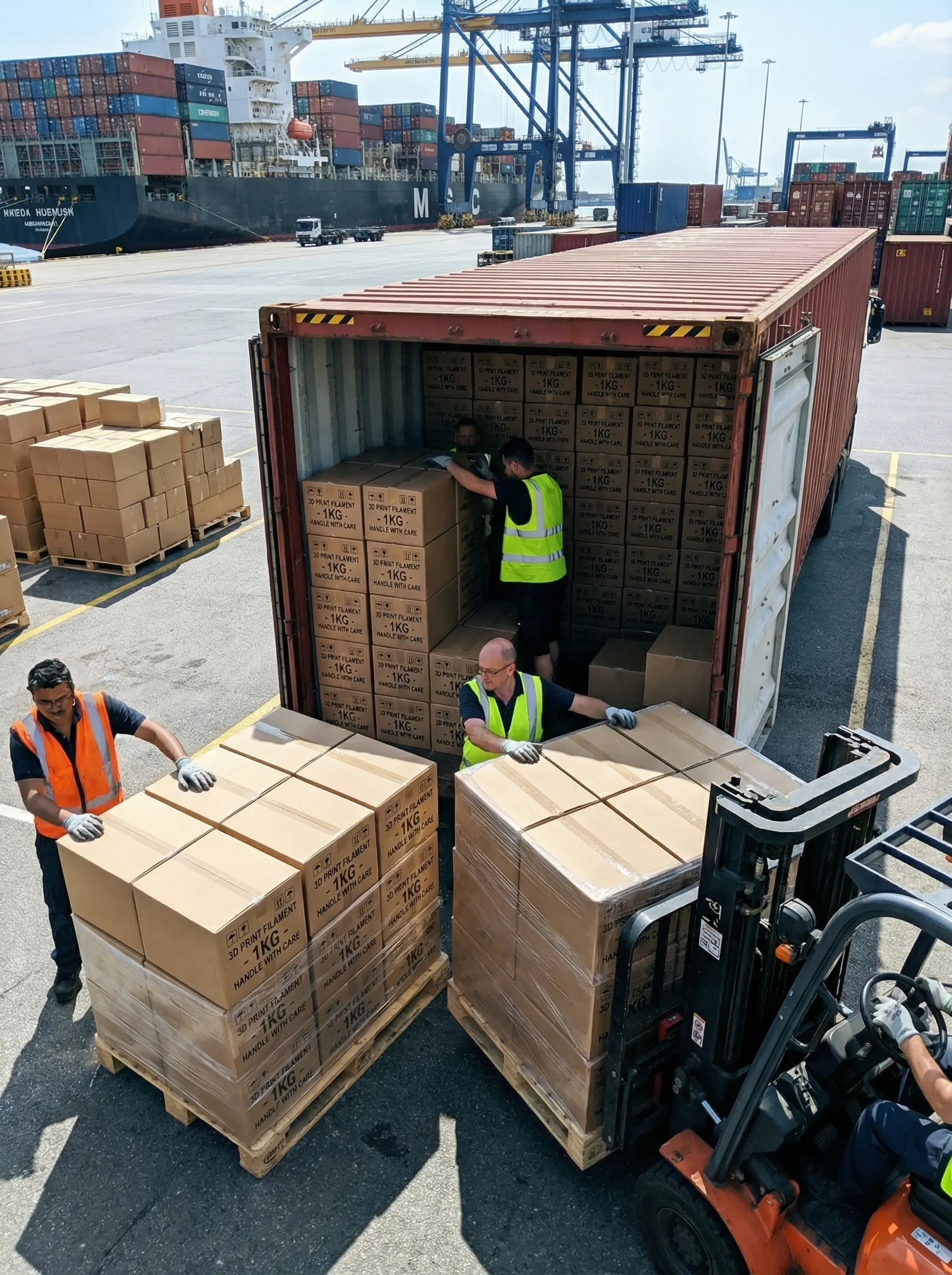
| Global logistics | Reliable worldwide shipping for samples and pallets. |
For maker studios and homeware producers, the value of a decorative filament is measured in finished-product consistency — whether a run of coasters or ornaments comes off the printers looking like a matched set, batch after batch. That is exactly where a manufacturer-controlled input pays off. Diameter is held to ±0.03mm so multi-machine profiles stay valid; the wood fiber is dispersed evenly so grain and tone stay consistent from spool to spool; and vacuum-sealed dry packaging means a fresh spool prints clean, clog-free and true-to-color out of the box. When you are producing dozens of décor pieces a day, those controls are the difference between a product line you can catalog and one you have to hand-sort. If you are scaling wood-look production, talk to us about a standing wholesale supply or an OEM program tuned to your exact tone and finish.
Buying Bamboo Wood PLA With Confidence
Whether you are printing a single decorative piece or specifying a production input, this bamboo wood PLA filament is built to remove the usual wood-composite friction. New to wood filament? Fit a 0.5–0.6mm nozzle, start around 205 °C, print at a relaxed pace and you will get clean, warm wood-tone parts on the first or second attempt — then sand and stain one to see how far the finish can go. Already producing wood-look décor? This bamboo wood PLA filament slots into an existing PLA-style profile with only a nozzle-size and retraction tweak, and its pale tunable base keeps your finishing and styling options open. Buyers who have been burned by inconsistent wood composites — a spool that clogs on one part and prints patchy on the next — tend to appreciate that a bamboo wood PLA filament made with evenly dispersed fiber and tight diameter control behaves the same way every time.
Every spool of this bamboo wood PLA filament is manufactured, wound and packed under the same controls, and we back the material with responsive technical support and sample availability for qualified buyers. If your application needs a darker walnut or ebony tone, a heavier or lighter fiber loading, or private-label spools, our team can take this bamboo wood PLA filament and adapt it to your specification without you having to re-qualify a new supplier. That combination — a dependable off-the-shelf wood composite plus a factory that can customize the tone and finish — is what makes SigmaFilament a practical long-term source rather than a one-off purchase. Whether you are printing a single prototype coaster today or standardizing a wood-look homeware line across a full catalog, the same spool, the same tolerances and the same support are behind every order, so the material you qualify once keeps behaving the same way as your volumes grow.
Frequently Asked Questions
Does bamboo wood PLA filament contain real wood?
What nozzle size should I use, and why?
Can I change the wood color, and how?
Can I sand, stain and finish it like real wood?
Is it as easy to print as normal PLA?
Do you offer bamboo wood PLA for wholesale or OEM/private-label?
Source Bamboo Wood PLA Direct From the Factory
Real wood fiber, a warm matte grain, temperature-tunable tone and easy PLA-style printing — ready for coasters, bowls, ornaments and natural-style décor. Order a spool to test, or request wholesale & OEM pricing for production volumes.
Free samples for qualified buyers · Wholesale & OEM/ODM available
| Material | Wood PLA |
|---|---|
| Color | Bamboo |
| Filament Diameter | 1.75mm ,2.85mm (3.00mm) |
| Spool Weight | 1kg ,3kg ,5kg ,Sample (200g) |