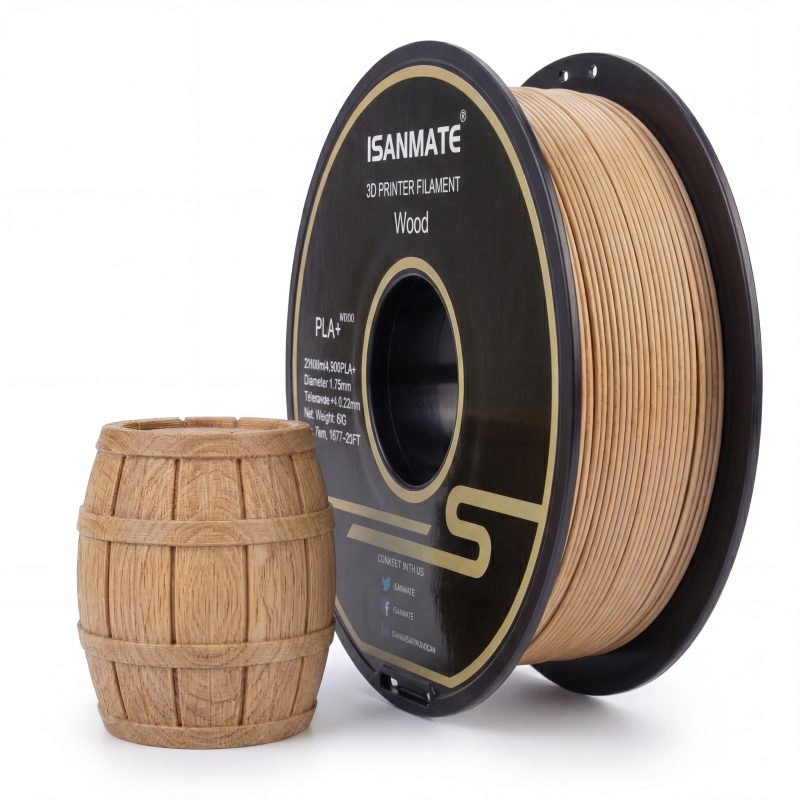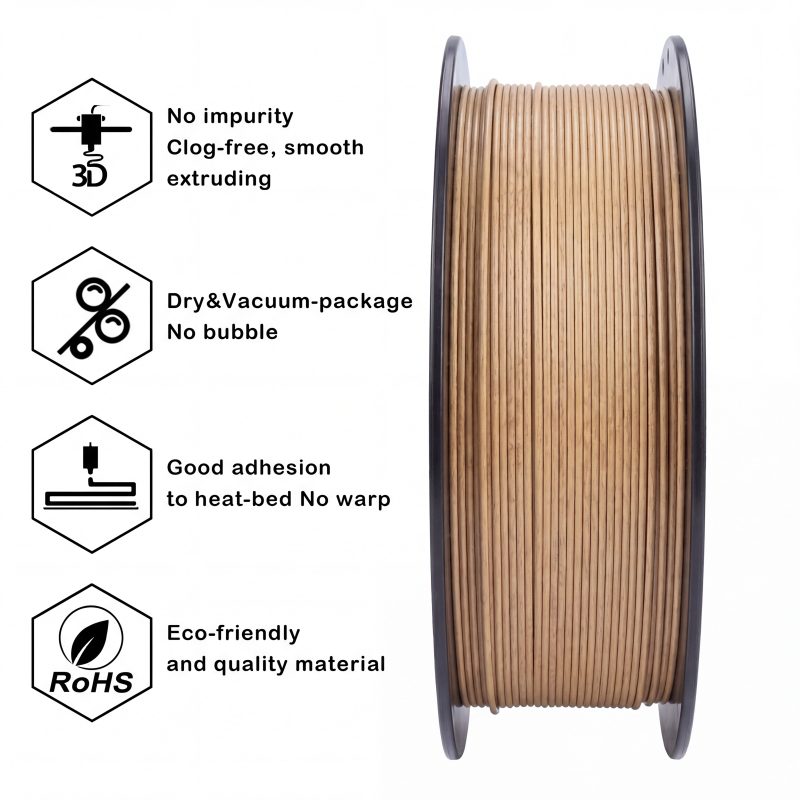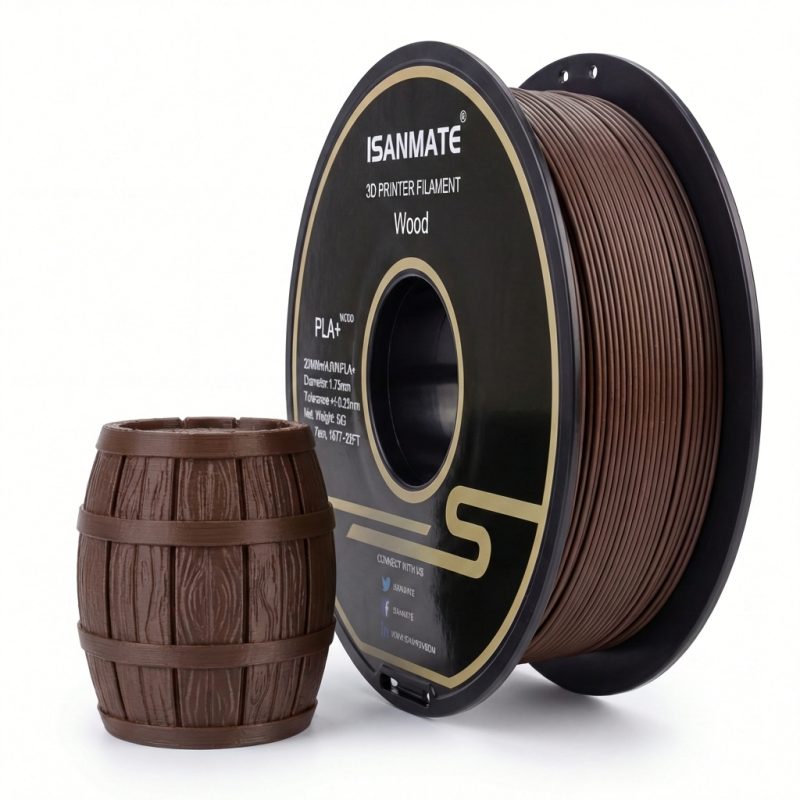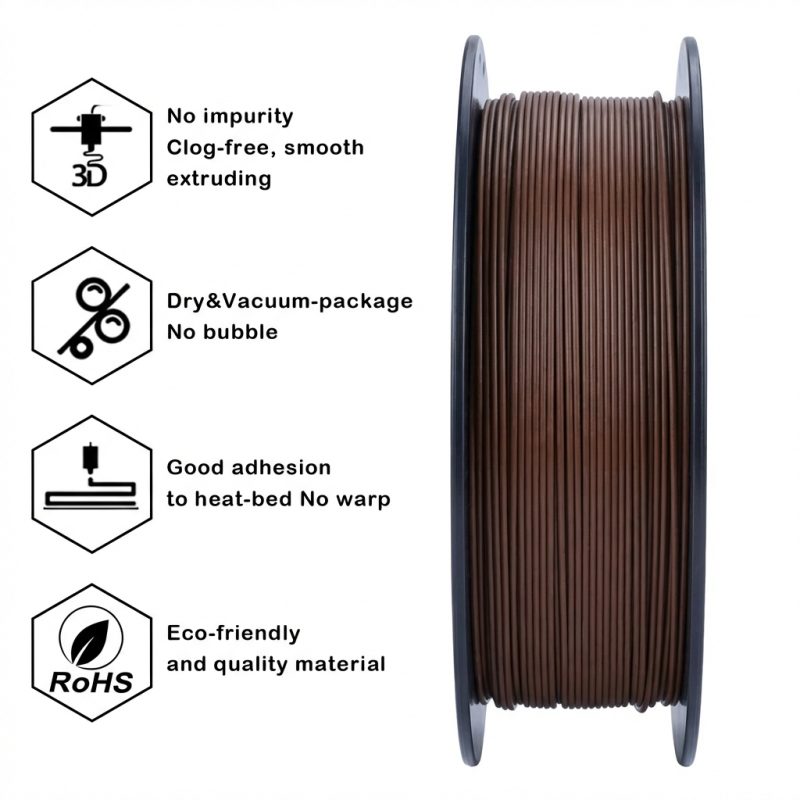
Walnut Wood PLA Filament — Real Wood Fiber, Warm Matte Grain, Ready to Sand and Stain
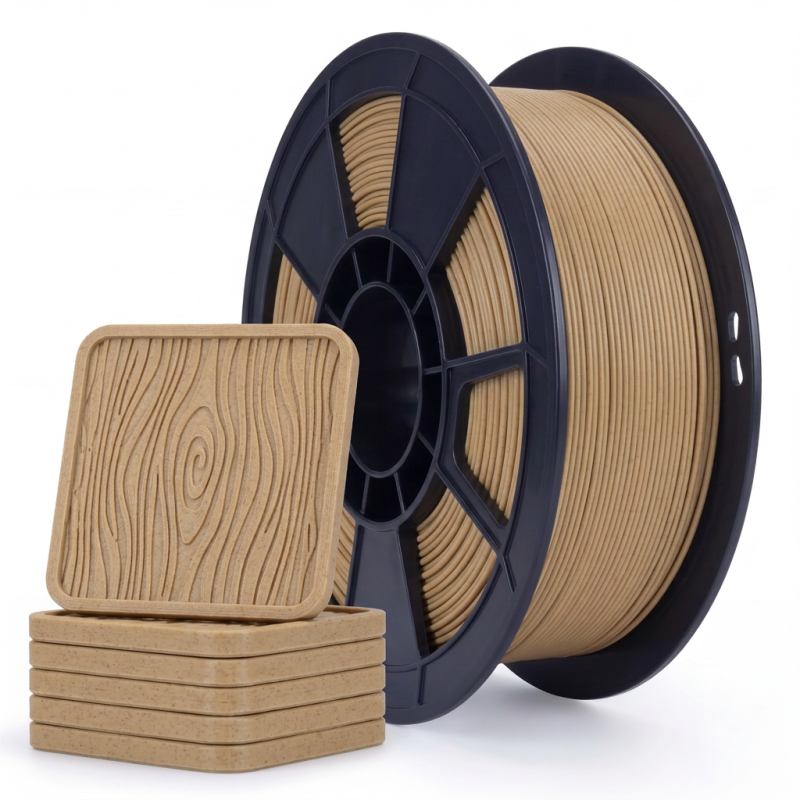
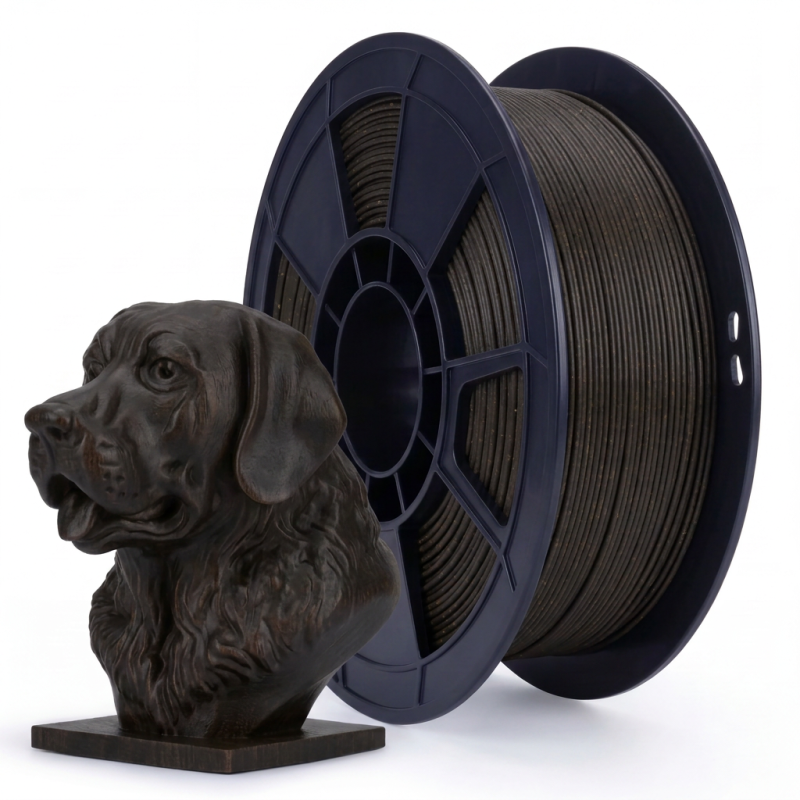
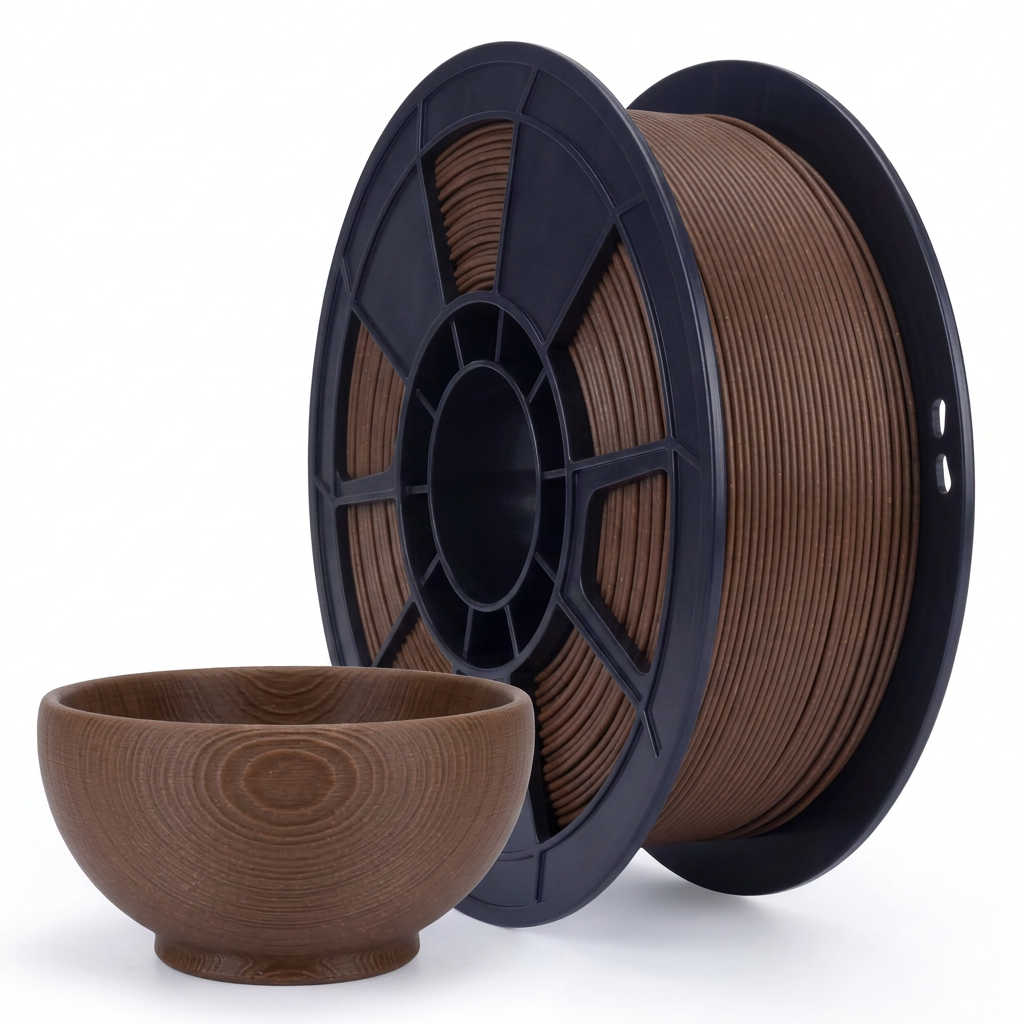
Walnut wood PLA filament is a PLA base blended with real, finely-milled wood particles, and that single fact changes everything about how it looks, feels and finishes. Where standard PLA leaves a glossy, obviously-plastic surface, this material prints a warm, matte, natural walnut-grain finish that reads and even smells like worked timber coming off the bed. The wood fibers scatter light instead of reflecting it, so layer lines soften and the part takes on the organic, slightly tactile quality of a piece cut from walnut rather than moulded from plastic. For anyone making decorative bowls, coasters, picture frames, sculptures, vases or homeware, that authentic wood look is the entire reason to reach for this filament over a plain brown PLA.
What makes real wood-fill material special is that it behaves like wood after printing, not just during it. A finished part in this wood-fill material can be sanded smooth, stained darker, sealed with oil or wax, and even lightly wood-burned — the same post-processing you would use on a real timber blank. Sanding knocks back the layer lines and brings up a soft sheen; a coat of wax or wood oil deepens the grain and gives the surface the warm, hand-finished feel that plain PLA can never reach. This is why makers who care about presentation — gift items, awards, home décor, prop and set pieces — keep a spool of wood filament on the shelf even when they print mostly in standard plastics.
There is also a trick unique to wood-fill material: you can tune the walnut tone with temperature. Printing at the lower end of the range (around 190–200 °C) keeps the color lighter and cleaner, while pushing toward the upper end (210–220 °C) gently “toasts” the wood fibers and darkens the part toward a richer, deeper walnut. Some makers deliberately vary temperature by layer height to create natural-looking tonal banding, mimicking the grain variation of real timber. That temperature-driven color control is a genuine creative tool, and it is one more reason this walnut wood PLA filament rewards a little experimentation.
As a factory-direct product, walnut wood PLA filament is stocked for both single-spool makers and volume buyers. If you are sourcing for a homeware line, a gift range or a décor production run, it is available through our direct manufacturer wholesale program and through full OEM/ODM services with custom wood tone, spool, and private-label packaging. Below you will find the print settings, the wood-fiber handling notes, application guidance and design tips that make this material reliable in practice — including the one thing every wood filament needs that plain PLA does not.
Why This Walnut Wood PLA Filament Stands Out
- Genuine wood fiber, not a brown dye: real milled wood particles give a matte, light-scattering grain that looks and feels like worked timber — no plastic gloss, and softened layer lines straight off the printer.
- Finishes like real wood: sand it smooth, stain it darker, seal it with oil or wax, or lightly wood-burn it. The same finishing you use on a timber blank works here, which is what makes parts look hand-crafted.
- Temperature-tunable walnut tone: lower temperatures keep the color light and clean; higher temperatures toast the fibers to a deeper walnut. Vary it by layer for natural-looking grain banding.
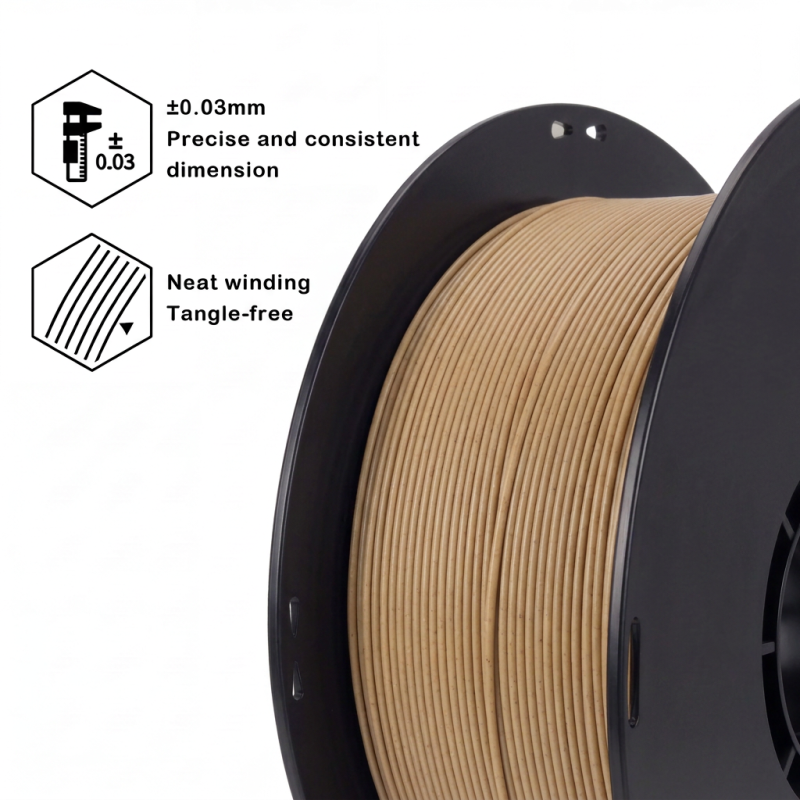
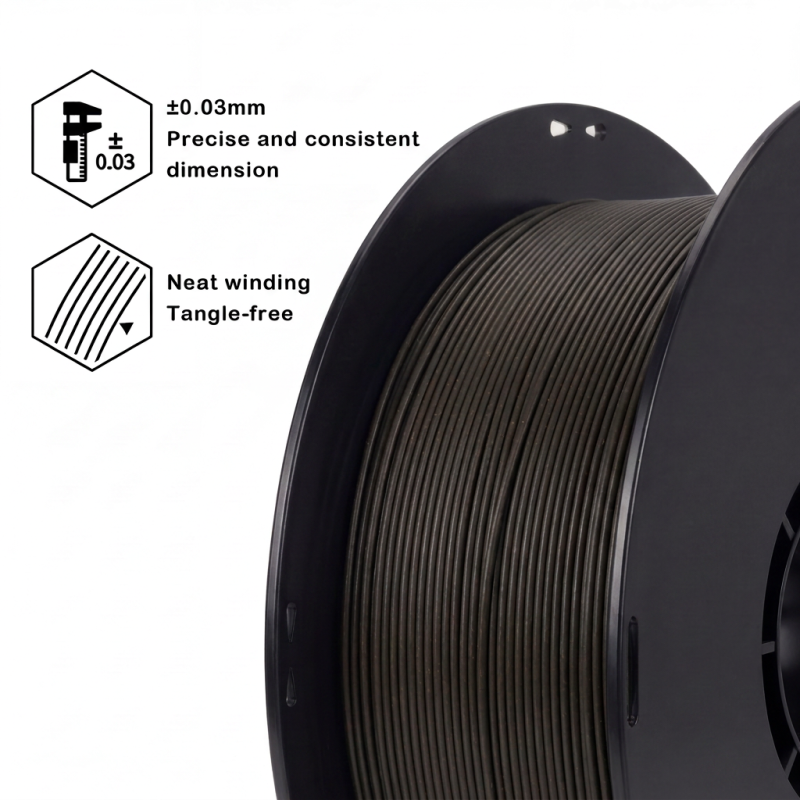
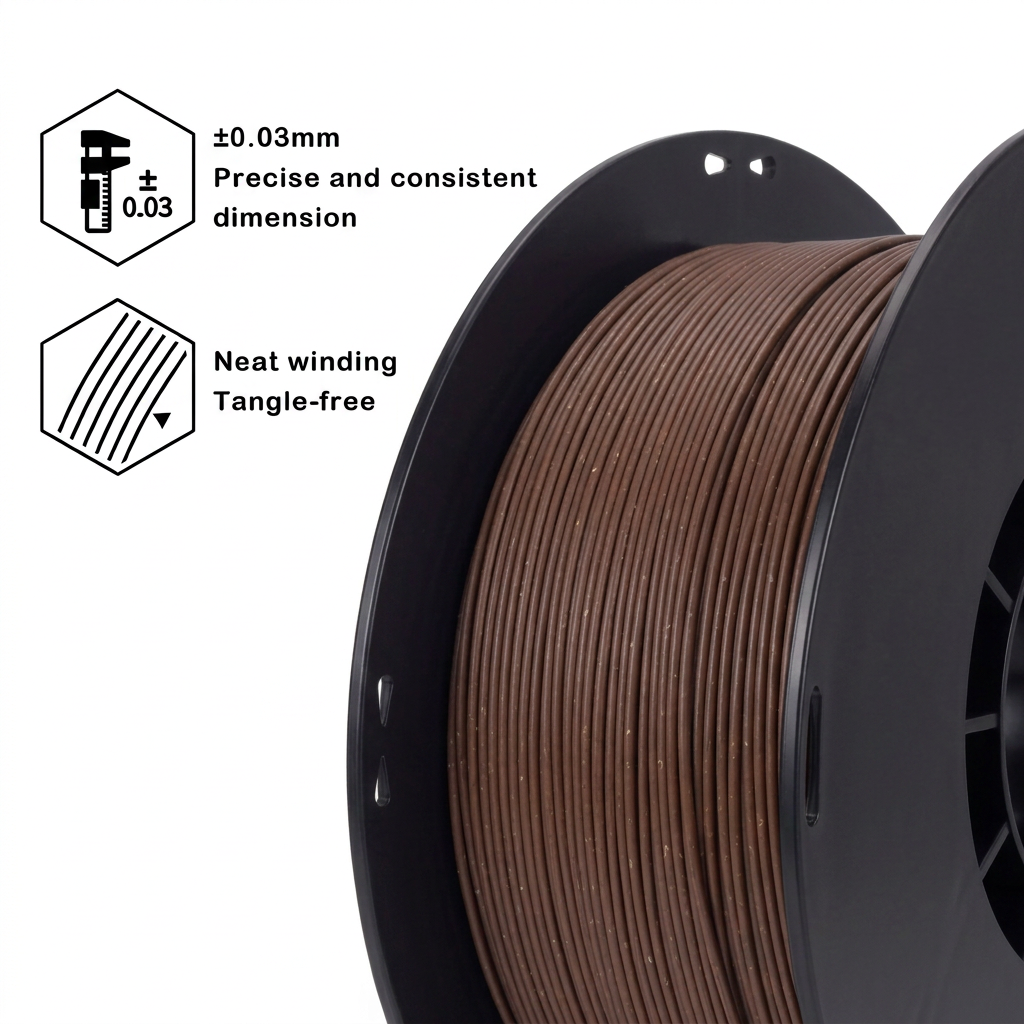
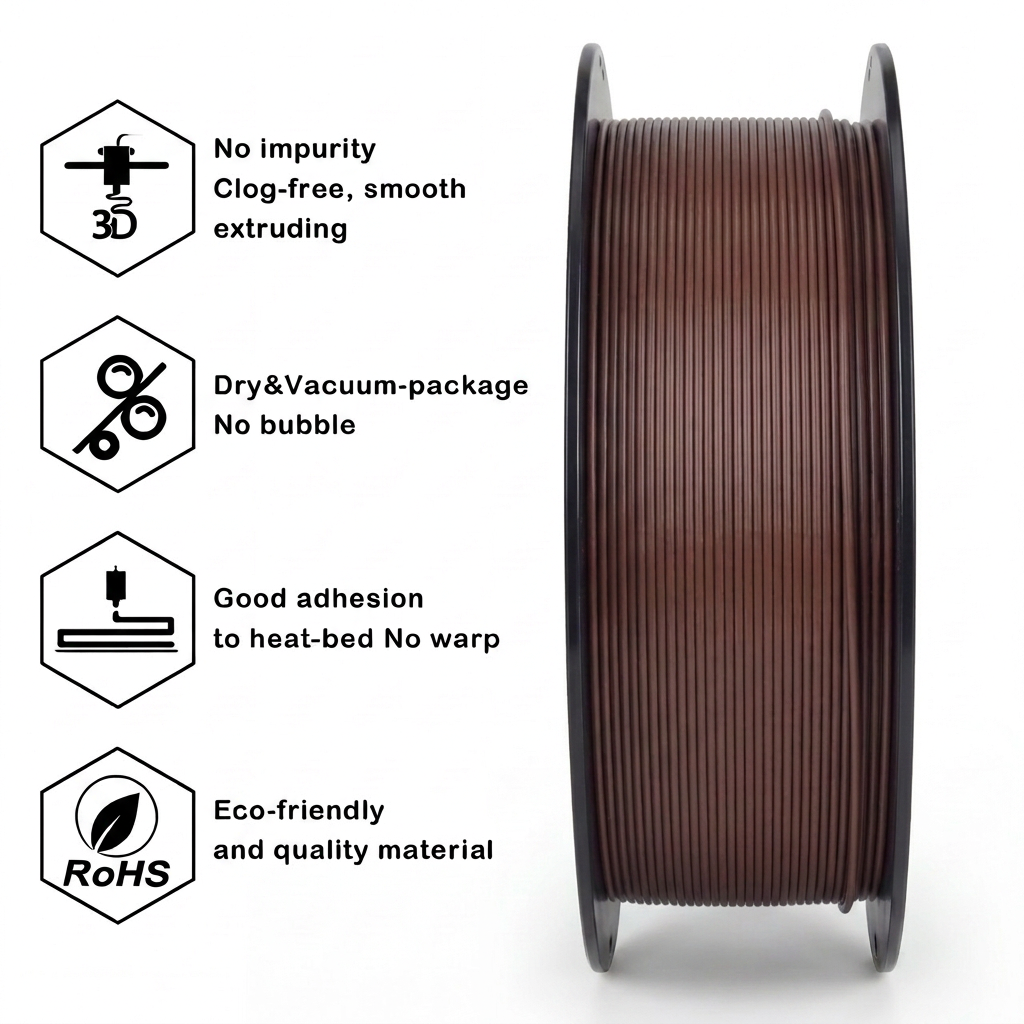
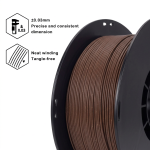
- ±0.03mm tolerance for steady flow: consistent diameter keeps the wood-fiber blend feeding evenly, which directly reduces the nozzle clogs that plague cheaper wood filaments.
- Warm, forgiving PLA print window (190–220 °C): no enclosure, no exotic hotend — it prints as easily as PLA on almost any machine, with just a larger nozzle recommended.
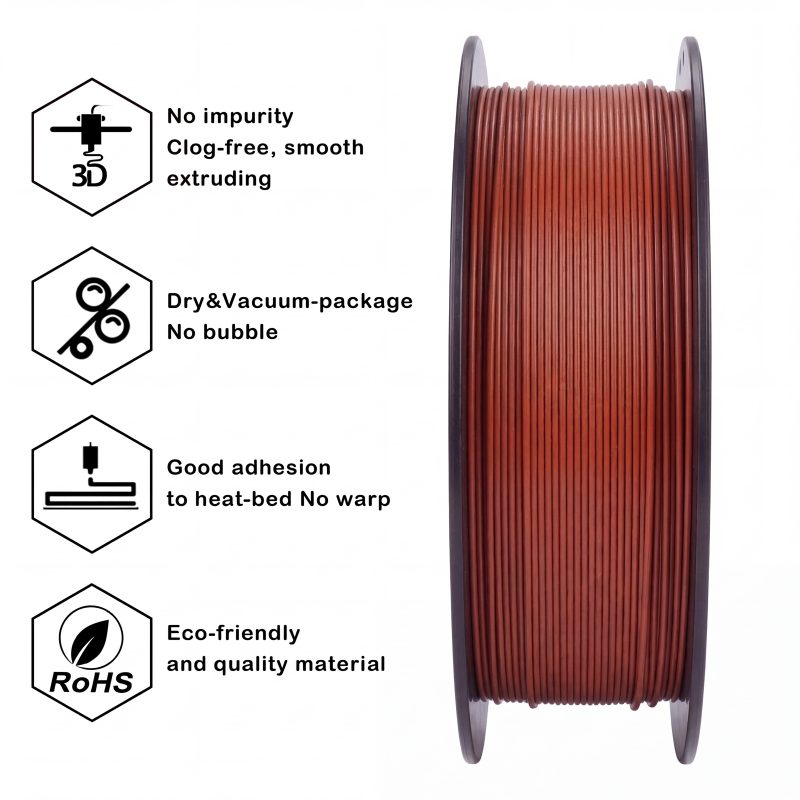
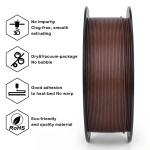
- Vacuum-sealed and dried at packing: the wood-PLA blend is protected against moisture at the factory, so it prints clean out of the bag instead of fuzzing or popping.
Premium Wood-Fiber PLA at Factory-Direct Pricing
| Quality You Get | How We Deliver It | What It Means For You |
|---|---|---|
| Consistent wood tone | Evenly dispersed wood fiber, batch-verified | Bowls and sets that match, batch to batch |
| Clog-free flow | ±0.03mm diameter + finely-milled fiber | Fewer jams on wood-fill printing |
| Dry on arrival | Vacuum seal + desiccant, sealed at packing | No fuzzing or popping out of the box |
Why Choose Walnut Wood PLA for Your Projects
| Authentic wood look | Matte, non-reflective walnut grain that reads as real timber. |
| Real wood finishing | Sand, stain, oil, wax and wood-burn like a timber blank. |
| Tunable shade | Lighter or deeper walnut by adjusting print temperature. |
| Hides layer lines | Wood fiber scatters light, softening visible layers. |
| Easy PLA workflow | No enclosure; prints cool and low-warp like PLA. |
| Volume-ready supply | Consistent stock for décor, gift and homeware production. |
How Walnut Wood PLA Compares
| Property | Walnut Wood PLA | Standard Brown PLA | PETG / ABS |
|---|---|---|---|
| Surface look | Matte real wood grain | Glossy plastic brown | Glossy / satin plastic |
| Post-processing | Sand, stain, wax, wood-burn | Sand & paint only | Sand & paint (harder) |
| Layer-line visibility | Low (fiber scatters light) | High (gloss shows lines) | Moderate–high |
| Best use | Décor, bowls, frames, art | General prints, prototypes | Functional / durable parts |
Why a Larger Nozzle Matters for Wood Filament
The one thing every wood-fill material asks for that plain PLA does not is a bigger nozzle. Because this wood-fill material carries real wood particles suspended in the plastic, those particles have to pass through the nozzle opening cleanly. A standard 0.4mm nozzle works, but a 0.5mm or 0.6mm nozzle dramatically reduces the chance of a partial clog and gives a smoother, more consistent flow of the fiber-loaded melt. We recommend at least a 0.4mm nozzle and prefer 0.5mm+ for long unattended prints. A hardened or stainless nozzle is a sensible upgrade too: while wood fiber is far less abrasive than carbon or glass fill, the fine particles do add a little wear over time, and a hardened tip simply outlasts brass. Pair a larger nozzle with a slightly reduced retraction distance and you eliminate the two most common wood-filament frustrations — clogging and grinding — before they start.
This is also why diameter control matters more than buyers expect. A filament that wanders in diameter forces the extruder to work unevenly, and with a fiber-loaded melt that unevenness is exactly what packs particles against the nozzle wall and starts a clog. Holding this walnut wood PLA filament to ±0.03mm keeps the flow steady and predictable, so the material feeds like a well-behaved PLA rather than a temperamental specialty. Combined with vacuum-dry packaging that stops the wood fibers from absorbing moisture and fuzzing the print, that tolerance is the difference between a spool you trust for a 12-hour décor print and one you have to babysit.
Recommended Print Settings
| Parameter | Recommended |
|---|---|
| Nozzle temperature | 190–220 °C (low = light, high = dark walnut) |
| Bed temperature | 45–60 °C |
| Print speed | 40–60 mm/s (40 mm/s for best surface) |
| Nozzle size | ≥0.4mm, 0.5–0.6mm preferred (hardened ideal) |
| Retraction | Low (1–4mm) to avoid fiber packing/clogs |
| Cooling fan | 50–100% (as with standard PLA) |
| Enclosure | Not required |
| Drying | 45–55 °C for 4–6h if exposed to air |
Troubleshooting Wood-Fill Prints
| Symptom | Likely Cause | Fix |
|---|---|---|
| Nozzle clogs or flow drops mid-print | Wood fiber packing in a small nozzle | Move to 0.5–0.6mm nozzle; do a cold pull; lower retraction distance |
| Fuzzy or hairy surface | Damp filament — wood fiber absorbs moisture | Dry at 45–55 °C for 4–6h; print from a dry box |
| Color darker/lighter than expected | Print temperature toasting the fibers | Lower temp for lighter walnut, raise for deeper; run a temp tower |
| Under-extrusion / gaps | Partial clog or speed too high for the melt | Slow to 40 mm/s, raise temp 5–10 °C, clear the nozzle |
| Stringing between parts | Moisture or over-retraction | Dry the spool; keep retraction modest to avoid clogs |
Technical Specifications
| Material | Wood-Fill PLA (PLA + real wood fiber) |
| Wood tone | Walnut (temperature-tunable light↔deep) |
| Surface finish | Matte natural wood grain (low reflectivity) |
| Diameter | 1.75mm |
| Diameter tolerance | ±0.03mm |
| Net weight | 1kg (spool) |
| Approx. length | ~330m at 1.75mm |
| Post-processing | Sandable · stainable · waxable · wood-burnable |
| Recommended nozzle | ≥0.4mm, 0.5–0.6mm preferred (hardened ideal) |
| Nozzle temperature | 190–220 °C |
| Bed temperature | 45–60 °C |
| Print speed | 40–60 mm/s |
| Enclosure | Not required |
| Heated bed | Recommended |
| Odor | Pleasant, faint toasted-wood scent |
| Moisture sensitivity | Moderate — keep sealed/dry to avoid fuzzing |
| Compliance | RoHS / REACH |
Material Properties & Performance
Wood-fill PLA is chosen for how it looks and finishes, not for structural strength — and that is exactly the right lens for judging it. Mechanically it behaves broadly like PLA: rigid, dimensionally stable, low-warp and easy to print, though the wood fiber makes it slightly more brittle and a touch less strong than unfilled PLA. That trade is deliberate. You are not printing a load-bearing bracket in this wood PLA; you are printing a bowl, a lamp base, a picture frame, a trophy, a decorative sculpture — parts where surface beauty and a genuine wood feel matter far more than tensile numbers.
The wood fibers do two useful things beyond the look. First, they scatter light across the surface, which visually softens layer lines and hides the stepping that would be obvious on a glossy print — a real advantage for large, curved décor pieces. Second, they open the surface up to true wood finishing. A printed part can be block-sanded to feather the layers together, then stained to deepen or shift the tone, and sealed with oil or wax for a warm satin finish that feels hand-made. You can even take a wood-burning pen to the surface for pyrography-style detailing. None of this is possible on standard PLA, and it is the reason a wood-fill part photographs and gifts so much better than its plastic equivalent. Every quality-control step on this walnut wood PLA filament — even fiber dispersion, tight diameter, dry vacuum packaging — exists to make sure that beautiful surface arrives on your bed intact rather than fuzzed, blotchy or clog-marred.
| Property | Typical Value | Note |
|---|---|---|
| Base polymer | PLA + wood fiber | Real milled wood particles |
| Rigidity | High (PLA-like) | Stiff, low-warp |
| Impact toughness | Lower than plain PLA | Slightly more brittle (fiber) |
| Surface finish | Matte wood grain | Hides layer lines |
| Finishing | Sand / stain / wax / burn | Works like real timber |
Printer-Specific Settings
| Bambu Lab X1/P1 (0.4/0.6mm) | 205 °C / bed 55 °C / 40–50 mm/s, Generic PLA profile |
| Prusa MK4 | 200 °C / bed 55 °C / 40 mm/s, low retract |
| Creality K1C / Ender 3 | 205 °C / bed 55 °C / 40 mm/s, 0.5mm nozzle ideal |
| Voron / direct drive | 210 °C / bed 55 °C / 40–60 mm/s, hardened 0.6mm |
| Anycubic Kobra | 200 °C / bed 55 °C / 40 mm/s |
| Light walnut vs deep walnut | 190–200 °C = light · 210–220 °C = deep toasted tone |
Applications
| Bowls & homeware | Decorative bowls, trays and catch-alls with a real wood look. |
| Coasters & desk pieces | Warm, matte coasters, organizers and pen holders. |
| Sculptures & art | Busts, figurines and carvings that sand and stain like wood. |
| Frames & décor | Picture frames, wall art and shelf ornaments. |
| Vases & lamp bases | Vase-mode planters and warm-toned lamp bodies. |
| Gifts & awards | Trophies, plaques and keepsakes with a hand-finished feel. |
Industry & Maker Use Cases
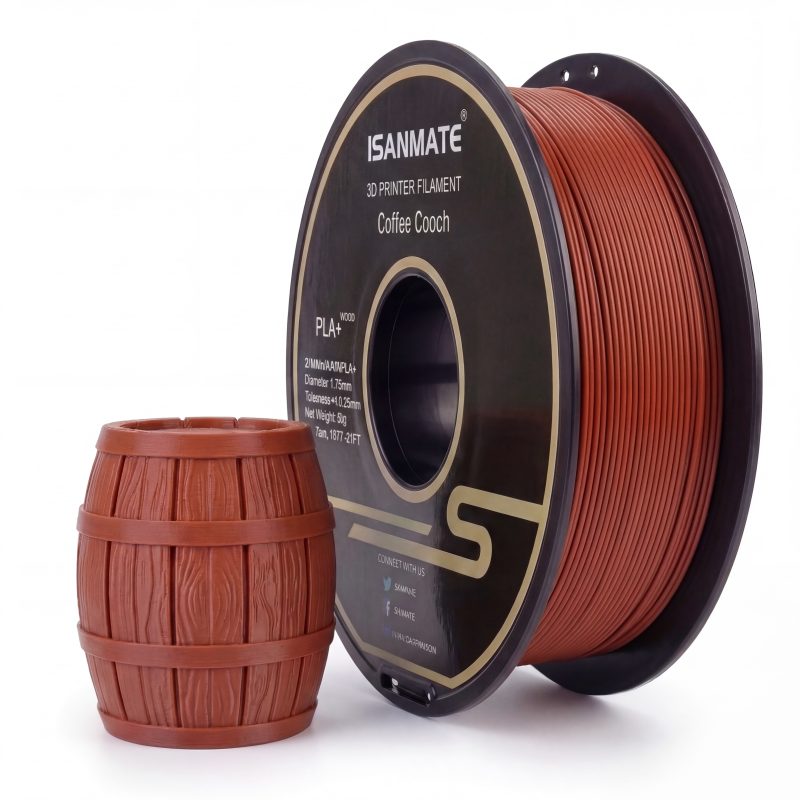
Wherever a design wants to feel warm, natural and hand-made rather than moulded, walnut wood PLA filament earns its place. In home décor and homeware, it prints decorative bowls, trays, vases, coasters and shelf ornaments that pass for turned or carved timber at a glance — and that customers pay a premium for over plain-plastic equivalents. In gifting and awards, it becomes trophies, plaques, keepsakes and personalized pieces where a wood finish signals care and quality. In art and sculpture, makers print busts, reliefs and figurines that they then sand and stain into finished pieces, exploiting the fact that the material carves and burns like real wood. In model-making, props and set design, it stands in for wooden beams, barrels, crates, furniture miniatures and architectural detailing without the weight or labor of real timber. And in interior and product prototyping, designers use it to mock up wood-look concepts — handles, panels, fixtures — before committing to expensive machined samples. The common thread is presentation: a part that has to look and feel like wood, in one print, with real-wood finishing on the other side.
Because one dependable wood tone spans so many of these products, standardizing on a single walnut wood PLA filament simplifies a décor or gift line: one input, one dial-in profile, one finishing routine — reused across bowls, frames, coasters and ornaments instead of re-qualifying a filament for each product.
Designing and Finishing Parts in Wood PLA
Getting the most out of this wood PLA is as much about finishing as it is about slicer settings. A few habits pay off: print with a larger nozzle and slightly thicker layers, since a 0.5–0.6mm nozzle both prevents clogs and lays down a chunkier, more wood-like texture. Design pieces with generous, rounded forms — vases, bowls, organic sculpture — where the matte grain reads best, rather than tiny high-detail parts where the fiber can blur fine features. After printing, block-sand from coarse to fine grit to feather the layer lines together; the surface responds just like sanding real wood, revealing a smoother, warmer face. Then choose your finish: a wood stain shifts and deepens the tone, an oil or wax seal brings out the grain and gives a soft satin sheen, and a wood-burning pen adds pyrography detail. For a two-tone effect, print the lower layers cool for a light walnut and ramp the temperature up higher in the model so the crown toasts to a deeper shade. These small choices are what turn a good wood-look print into a piece people assume was carved from real timber.
Environmental & Safety Standards
| ✅ RoHS Restricted substances compliant | ✅ REACH SVHC compliant | ✅ Real wood fiber PLA base from renewable sources | ✅ Vacuum sealed Dry, desiccant-protected |
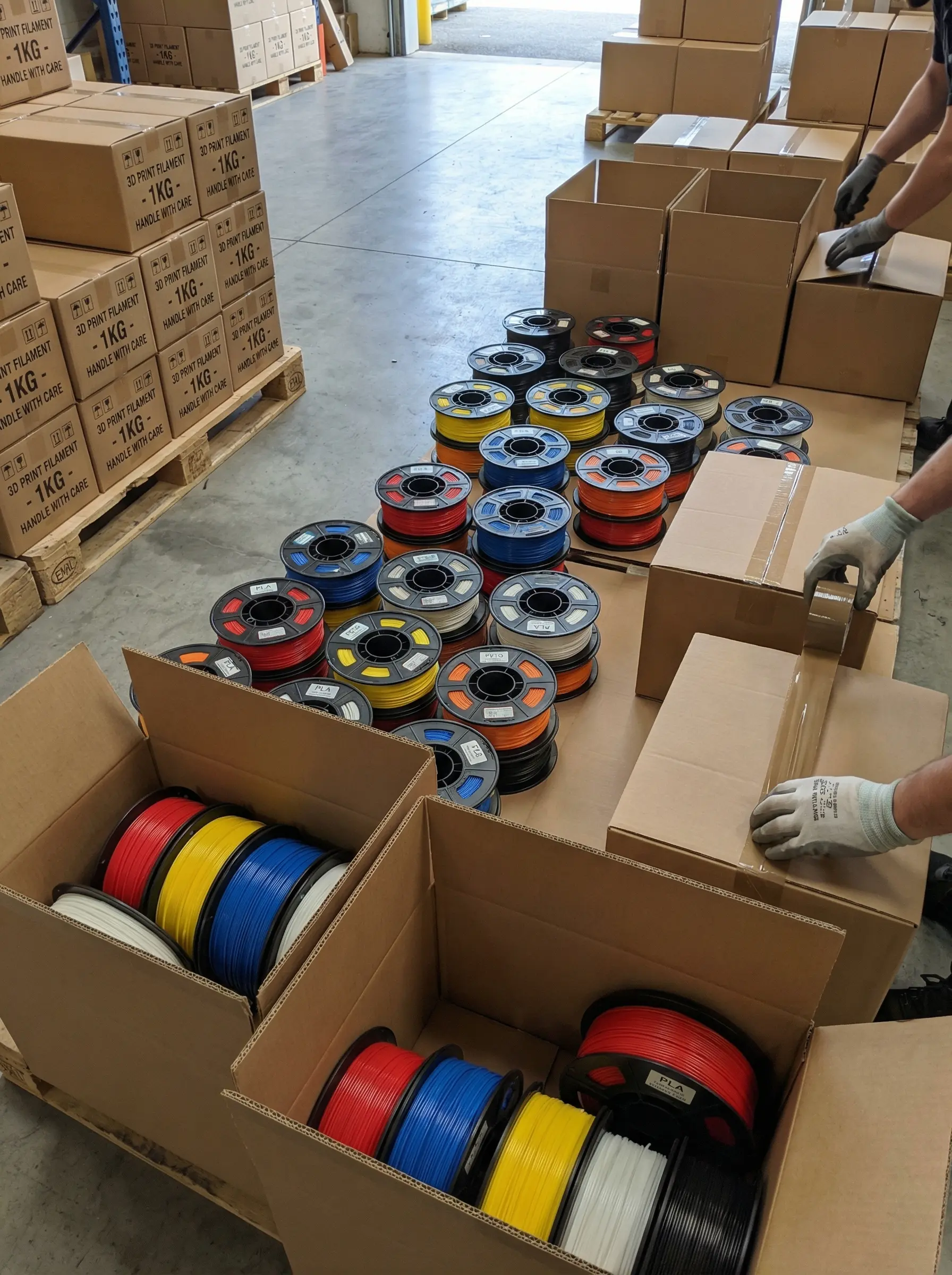
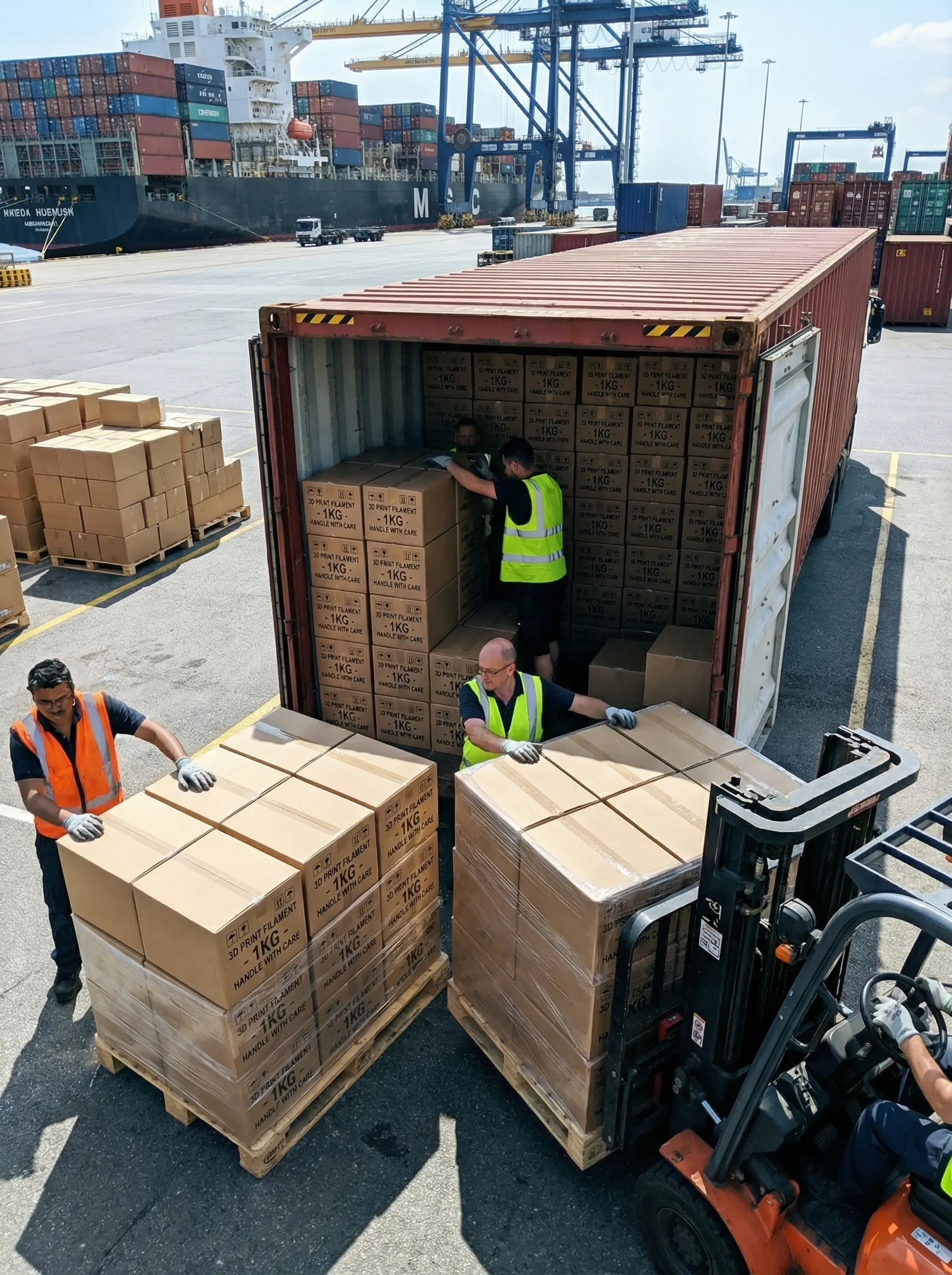
Packaging & Global Shipping
| Region | Method | Typical Time |
|---|---|---|
| North America | Air / express + sea for bulk | 7–20 days |
| Europe | Air / express + sea for bulk | 7–20 days |
| Asia-Pacific | Air / express | 5–12 days |
| Rest of world | Air + freight forwarding | 10–25 days |
Bulk Orders & OEM/ODM Services
| Custom wood tone | Walnut, oak, bamboo, ebony and birch shades to match your range. |
| Custom fiber level | Adjustable wood loading for texture vs printability. |
| Private label | Your spool, label and packaging design. |
| Volume pricing | Contact us for 10+ spool and pallet quotes via our OEM/ODM services. |
Storage & Handling Guidelines
| Reseal in the vacuum bag with desiccant after each print session. |
| Store below 20% RH; wood fiber fuzzes prints if it absorbs moisture. |
| Dry at 45–55 °C for 4–6h if you see a fuzzy or hairy surface. |
| Keep away from direct sunlight and heat sources. |
| Do a cold pull to clear the nozzle if flow drops on long prints. |
| Handle spools by the hub to keep windings tight and tangle-free. |
Printer Compatibility
| Bambu Lab | Prusa | Creality | Anycubic | Voron | Elegoo |
|---|---|---|---|---|---|
| ✅ 0.4/0.6mm | ✅ MK4/Mini | ✅ K1/Ender | ✅ Kobra | ✅ Hardened | ✅ Neptune |
Any 1.75mm printer with a heated bed can run this wood PLA — just fit a ≥0.4mm (ideally 0.5mm+) nozzle so the wood fibers flow freely. If your project needs a tougher, load-bearing material instead of a decorative one, see our strongest 3D printer filament guide.
Why Choose SigmaFilament for Wood PLA
| Factory-direct | We manufacture the filament — no middle-man markup. |
| Even fiber dispersion | Consistent wood tone and clog-free flow spool to spool. |
| Dry packaging | Vacuum-sealed to keep wood fiber from fuzzing prints. |
| OEM/ODM ready | Custom wood tones, fiber levels and private-label programs. |
| Global logistics | Reliable worldwide shipping for samples and pallets. |
For workshops and décor producers, the value of a wood filament is measured in how many parts come off the bed with a clean, sellable surface — no clogs, no fuzz, no batch-to-batch color drift. That is exactly where a manufacturer-controlled input pays off. Diameter is held to ±0.03mm so the fiber-loaded melt flows steadily; wood fiber is dispersed evenly so a bowl printed today matches one printed next quarter; and vacuum-sealed dry packaging means a fresh spool prints crisp out of the bag instead of fuzzing. When you are running a homeware or gift line, those controls are the difference between a product you can list with confidence and one you re-print half of. If you are scaling wood-look production, talk to us about a standing wholesale supply or an OEM program tuned to your exact tone.
Buying Walnut Wood PLA With Confidence
Whether you are printing a single showpiece or specifying a production input, this walnut wood PLA filament is built to remove the usual wood-filament friction. New to wood-fill? Fit a 0.5mm nozzle, print at 40 mm/s, keep the spool dry, and run a quick temperature tower to pick your walnut shade — you will get a clean, warm wood-grain part on the first or second attempt. Already printing décor at volume? This wood filament slots into a standard PLA profile with only a nozzle and retraction tweak, and its finishing behavior — sand, stain, wax, burn — is consistent enough to build a repeatable production routine around. Makers who have been burned by cheap wood filament that clogs on every spool tend to appreciate that a wood PLA held to tight diameter and dryness tolerances actually flows and finishes the same every time.
Every spool of walnut wood PLA filament is manufactured, wound and packed under the same controls, and we back the material with responsive technical support and sample availability for qualified buyers. If your range needs a lighter oak, a deep ebony or a warm bamboo tone, a different fiber loading, or private-label spools, our team can adapt this walnut wood PLA filament to your specification without you having to re-qualify a new supplier. That combination — a dependable off-the-shelf wood filament plus a factory that can customize the tone and packaging — is what makes SigmaFilament a practical long-term source rather than a one-off purchase, so the wood-look product you qualify once keeps looking and finishing the same way as your volumes grow.
Frequently Asked Questions
What is walnut wood PLA filament actually made of?
What nozzle size should I use for walnut wood PLA filament?
Can I change the wood color by adjusting print temperature?
Can I sand, stain and wax printed walnut wood PLA parts?
Does walnut wood PLA filament need an enclosure or special printer?
Do you offer walnut wood PLA filament for wholesale or OEM/private-label?
Source Walnut Wood PLA Direct From the Factory
Real wood fiber, warm matte grain, sandable and stainable, dry-packed and consistent — ready for bowls, frames, sculptures and décor. Order a spool to test, or request wholesale & OEM pricing for production volumes.
Free samples for qualified buyers · Wholesale & OEM/ODM available
| Material | Wood PLA |
|---|---|
| Color | Walnut |
| Filament Diameter | 1.75mm ,2.85mm (3.00mm) |
| Spool Weight | 1kg ,3kg ,5kg ,Sample (200g) |