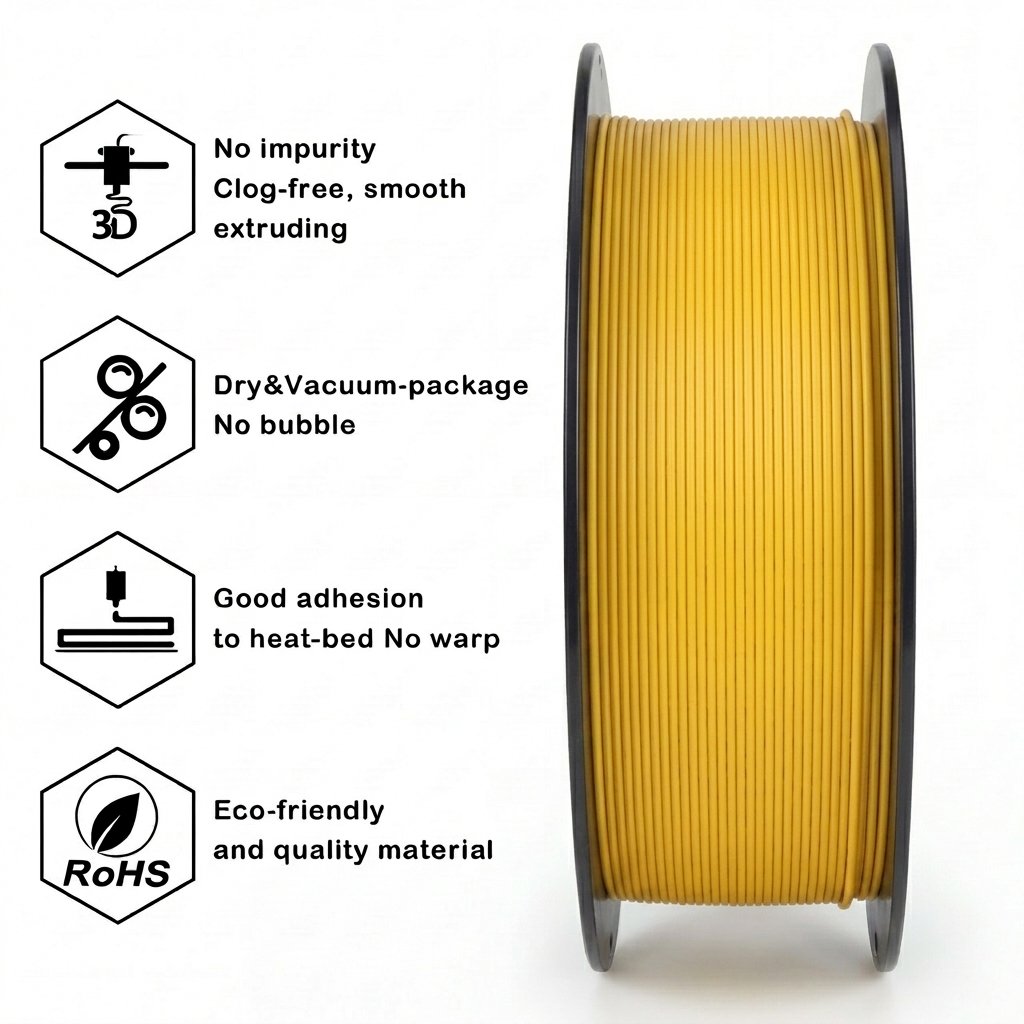
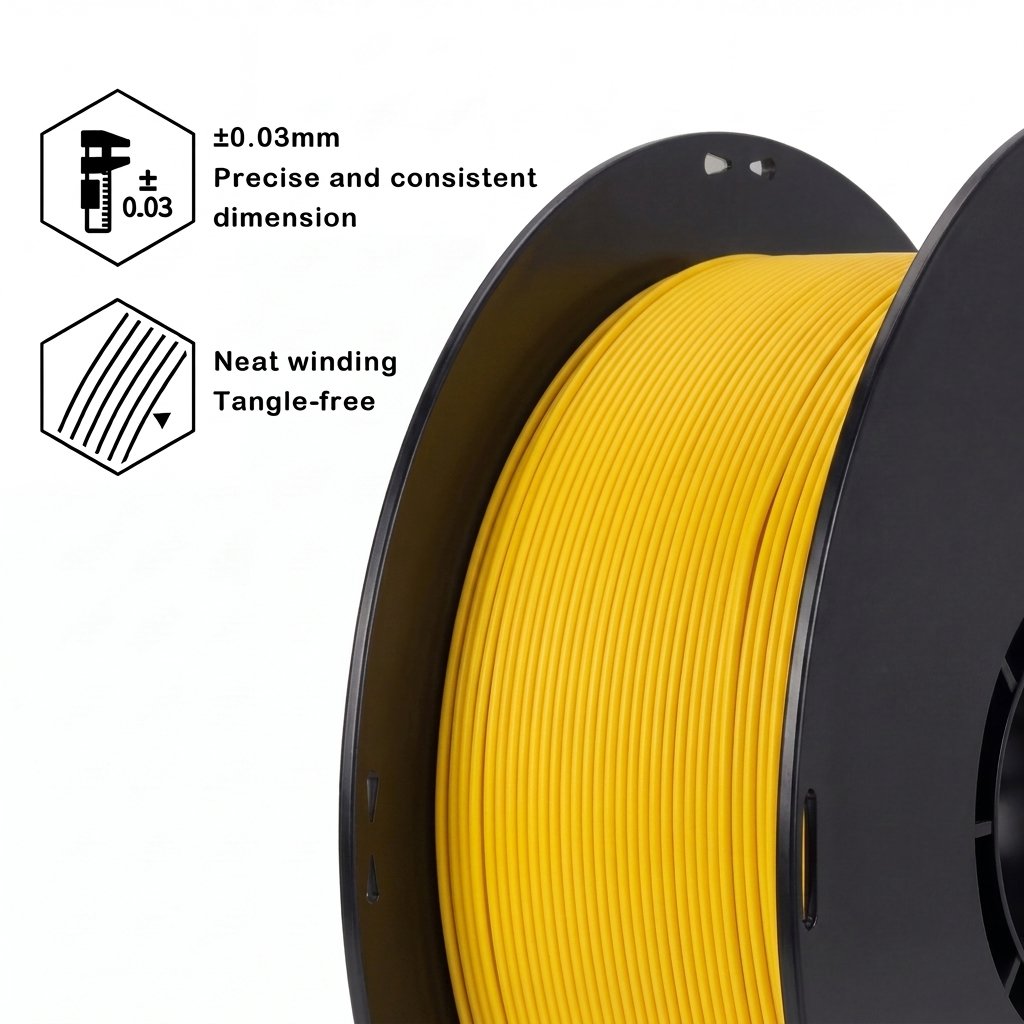
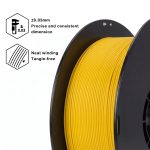
ASA Filament Yellow – Product Overview
The SigmaFilament ASA filament in Yellow is the go-to engineering material for any 3D printed part that needs to survive outdoors. Unlike ABS – which cracks, yellows, and degrades under UV exposure – ASA (Acrylonitrile Styrene Acrylate) is purpose-engineered with an acrylic rubber modifier that delivers exceptional UV resistance, weatherability, and long-term color stability, making it the industry standard for outdoor functional parts.
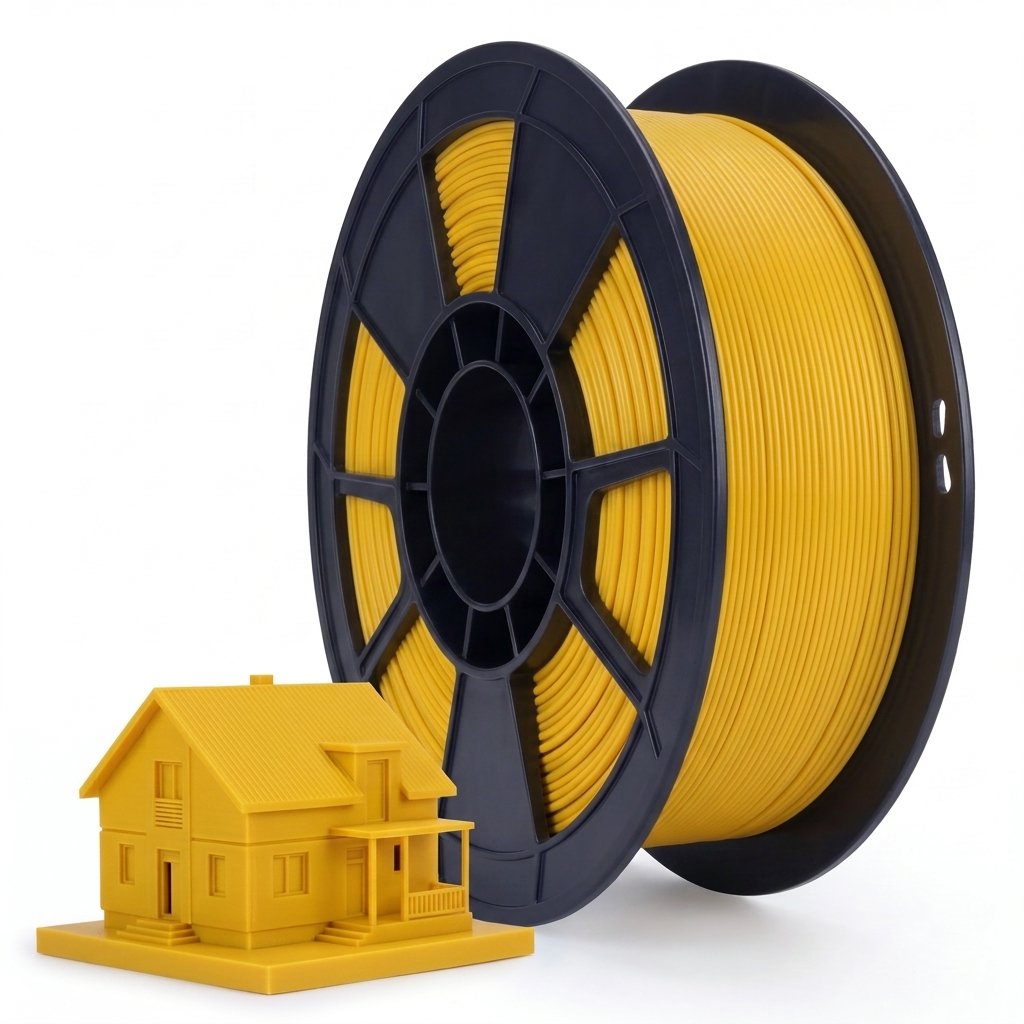
This yellow ASA filament produces parts with a vibrant, high-visibility yellow tone and an attractive glossy surface finish that holds up in direct sunlight, rain, humidity, and temperature extremes. Where ABS parts start showing stress cracks and color shift within weeks of outdoor exposure, ASA parts maintain their mechanical integrity and appearance for years. If you’re evaluating outdoor-rated materials, our filament categories guide covers the full spectrum of engineering-grade options, and our strongest filament guide benchmarks ASA against other high-performance materials.
Why yellow? Because in professional and industrial settings, yellow is the universal color for caution, high visibility, and safety marking. Yellow ASA parts are immediately identifiable in outdoor installations, construction zones, equipment housings, and safety barriers – while delivering the mechanical strength and weatherability that these demanding applications require.
Manufactured under ISO 9001 quality management in Guangdong, China. Full RoHS compliance, OEM/ODM services, and free samples available for qualified business customers.
Why This ASA Filament Stands Out
☀️ Built for the Outdoors – UV Stable, Weather Proof, Color Fast
Why settle for materials that degrade in sunlight? SigmaFilament’s ASA filament is purpose-built for outdoor permanence – delivering ABS-class strength and printability with vastly superior UV stability and weatherability.
- UV Resistance That Lasts – ASA’s acrylic rubber modifier absorbs UV radiation without breaking down polymer chains. Parts maintain mechanical strength and color accuracy for years of direct sun exposure – where ABS starts degrading in weeks
- Full Weatherability – Rain, humidity, frost, heat cycling, salt spray – ASA handles it all. Low moisture absorption (0.2-0.4%) means parts don’t swell, warp, or crack from environmental moisture exposure
- Chemical & Oil Resistance – Resists automotive fluids, oils, greases, and many industrial chemicals. Ideal for under-hood automotive parts, machinery housings, and chemical processing environments
- High Visibility Yellow – Vibrant yellow color for safety markings, caution indicators, high-visibility outdoor installations, and branded equipment. Color remains stable under prolonged UV exposure without fading or shifting
- Professional Surface Finish – ASA produces a smooth, glossy surface with excellent interlayer adhesion and minimal visible layer lines. Parts look injection-molded, not 3D printed
- ABS-Compatible Processing – Prints at 250-270°C with 80-100°C heated bed. Compatible with ABS print profiles and post-processing methods including acetone vapor smoothing
The outdoor 3D printing material that doesn’t compromise – engineering strength meets environmental durability.
Premium ASA Filament at Competitive Factory-Direct Price
SigmaFilament is a direct manufacturer based in Guangdong, China, offering factory-direct pricing on this ASA filament with consistent outdoor-grade performance.
| ☀️ UV-Rated Quality | 💰 Competitive Pricing | 🔁 Batch Consistency |
| UV-stabilized ASA with ±0.05mm tolerance for reliable outdoor performance | Factory-direct, no middlemen, volume discounts from 100kg+ | Consistent color, UV stability, and mechanical strength across every spool |
Why Choose ASA Filament for Your Outdoor & Engineering Projects
| ☀️ Superior UV Resistance | The #1 reason to choose ASA filament over ABS: UV stability. ASA’s acrylic rubber component absorbs ultraviolet radiation without degrading the polymer structure. Where ABS parts become brittle and discolored within 2-4 weeks of outdoor sun exposure, ASA maintains its mechanical properties and color for years. This yellow ASA filament is tested for long-term outdoor color retention – the vibrant yellow stays vibrant. |
| 💪 High Mechanical Strength | ASA delivers mechanical properties comparable to ABS – high tensile strength (40-50 MPa), good impact resistance, and excellent rigidity. Parts resist bending, impact, and sustained load without deformation. The ASA 3D printer filament is a true engineering material suitable for functional prototypes, end-use parts, and load-bearing components in outdoor environments. |
| 🌧️ All-Weather Durability | Beyond UV resistance, this ASA filament withstands rain, humidity, temperature cycling (-20°C to 80°C service), and salt environments. Low moisture absorption rate (0.2-0.4%) means parts don’t swell or lose dimensional accuracy in humid climates. Ideal for coastal, tropical, and high-altitude installations where weather conditions are extreme and unpredictable. |
| 🧪 Chemical & Oil Resistance | ASA resists a wide range of chemicals including automotive fluids, motor oil, diesel, greases, dilute acids, and alkalis. This makes yellow ASA filament ideal for automotive under-hood components, industrial equipment housings, fuel system fixtures, and chemical processing tools where material-chemical interaction is a primary concern. |
| ✨ Professional Glossy Finish | ASA naturally produces a smooth, slightly glossy surface finish with excellent interlayer adhesion. Layer lines are less visible than with ABS, and the surface has a premium, injection-molded quality. The yellow ASA 3D printing filament delivers a clean, high-visibility finish that looks professional straight off the print bed – minimal post-processing required for presentable parts. |
| 🔧 ABS-Compatible Processing | If your team already prints ABS, switching to ASA filament is nearly seamless. Same temperature range, same bed adhesion methods, same post-processing options. ASA can be acetone vapor smoothed, sanded, painted, glued with standard ABS cement, and tapped/drilled with standard tools. Upgrade from ABS to ASA for outdoor projects without changing your workflow. |
ASA vs. ABS vs. PETG vs. PLA – Outdoor Performance Comparison
| Property | ASA (This) | ABS | PETG | PLA |
|---|---|---|---|---|
| UV Resistance | ★★★★★ (Excellent) | ★★☆☆☆ (Poor) | ★★★☆☆ (Moderate) | ★☆☆☆☆ (Very Poor) |
| Weather Resistance | ★★★★★ (Excellent) | ★★★☆☆ | ★★★★☆ | ★★☆☆☆ |
| Mechanical Strength | ★★★★☆ (High) | ★★★★☆ | ★★★★☆ | ★★★☆☆ |
| Chemical Resistance | ★★★★☆ (Good) | ★★★★☆ | ★★★★☆ | ★★☆☆☆ |
| Surface Finish | ★★★★★ (Glossy) | ★★★★☆ (Good) | ★★★☆☆ (Semi-glossy) | ★★★☆☆ (Variable) |
| Ease of Printing | ★★★☆☆ (Enclosure recommended) | ★★★☆☆ | ★★★★☆ | ★★★★★ |
| Color Retention Outdoors | ★★★★★ (Years) | ★★☆☆☆ (Weeks) | ★★★☆☆ (Months) | ★☆☆☆☆ (Days) |
| Best For | Outdoor functional parts | Indoor engineering | General functional parts | Indoor prototyping |
Recommended Print Settings for ASA Filament
This ASA filament requires slightly higher temperatures and more controlled conditions than PLA. An enclosed printer is strongly recommended for best results.
⚠️ Critical: Enclosure & Ventilation
1. Enclosed printer strongly recommended – ASA is sensitive to drafts and ambient temperature drops. An enclosure maintains consistent chamber temperature (40-60°C) to prevent warping, cracking, and layer delamination.
2. Ventilation required – ASA emits styrene fumes during printing. Use a printer with a carbon filter, print in a ventilated room, or use an extraction system. Do not print in enclosed living spaces without proper ventilation.
3. Heated bed essential – 80-100°C bed temperature is mandatory for proper first layer adhesion and warp prevention.
Optimal Print Settings
| Nozzle Temperature | 250-270°C (255-265°C optimal) |
| Bed Temperature | 80-100°C (90-95°C recommended) |
| Print Speed | 30-80mm/s (40-60mm/s for best quality) |
| Layer Height | 0.12-0.28mm (0.2mm recommended) |
| Cooling Fan | 0-30% (minimal cooling – 0% first 5 layers, 15-30% after) |
| Wall Count | 3-4 walls (4+ for outdoor structural parts) |
| Retraction | 3-6mm at 30-45mm/s (Bowden); 0.5-2mm (direct drive) |
| Infill | 20-40% (gyroid recommended for outdoor parts; 50%+ for structural) |
| Enclosure | Strongly recommended (chamber temp 40-60°C ideal) |
| Bed Adhesion | ABS slurry or glue stick on glass; PEI sheet (scuffed); Kapton tape + glue stick |
| First Layer Speed | 15-25mm/s (slow first layer critical for adhesion) |
| Drying (if needed) | 75-80°C for 4-6 hours. See our filament dryer settings guide |
💡 Pro Tip – Getting the Best Results with Yellow ASA Filament: The yellow color shows its most vibrant, consistent tone at 255-260°C. Temperatures above 265°C may slightly darken the shade toward amber. For the smoothest glossy surface, print at 0.16-0.20mm layer height with 40-50mm/s outer wall speed and minimal part cooling (10-15%). The single most important factor for successful ASA printing is draft prevention – even a small air current from an open door can cause cracking on tall parts. If you don’t have an enclosed printer, a simple cardboard box enclosure with a cutout for the filament path dramatically improves results. For the best bed adhesion, apply a thin layer of ABS/ASA slurry (dissolved ASA scraps in acetone) to your heated glass or PEI bed – this creates a chemical bond that virtually eliminates warping even on large, flat parts.
Technical Specifications
| Parameter | Specification |
|---|---|
| Material | ASA (Acrylonitrile Styrene Acrylate) |
| Color | Yellow (Glossy Finish) |
| Model | ASA |
| Filament Diameter | 1.75mm (0.069 inches) |
| Diameter Tolerance | ±0.05mm |
| Net Weight | 1kg (2.2 lbs) per spool |
| Nozzle Temperature | 250-270°C (482-518°F) |
| Optimal Nozzle Temperature | 255-265°C (491-509°F) |
| Bed Temperature | 80-100°C (176-212°F) |
| Print Speed | 30-80mm/s |
| Enclosure | Strongly recommended (prevents warping and cracking) |
| Ventilation | Required – ASA emits styrene fumes during printing |
| Surface Finish | Glossy (smooth, professional appearance) |
| Post-Processing | Acetone vapor smoothing, sanding, painting, ABS cement bonding |
| Drying Temperature | 75-80°C for 4-6 hours |
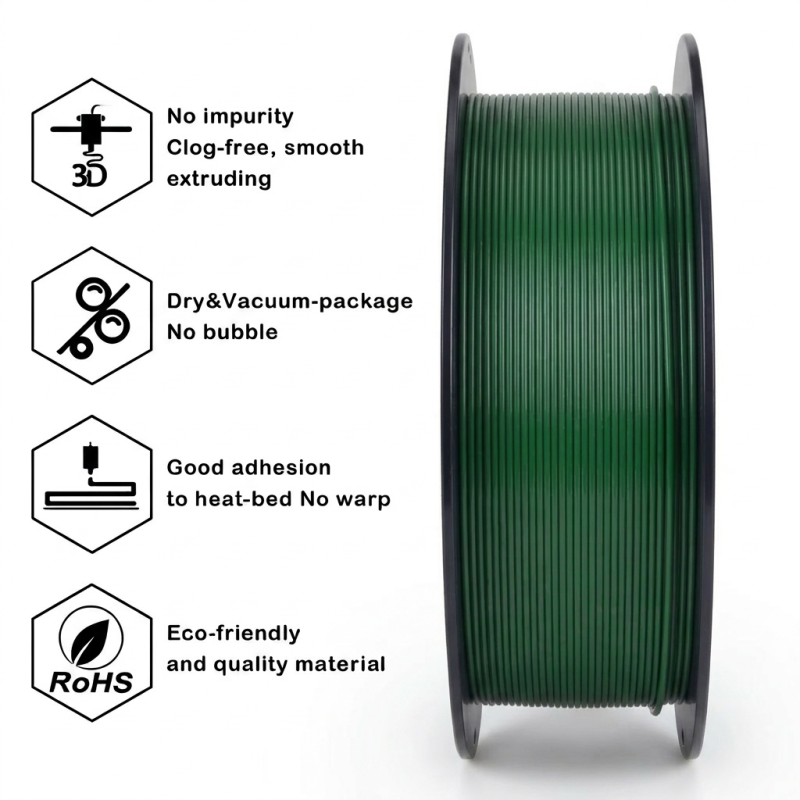
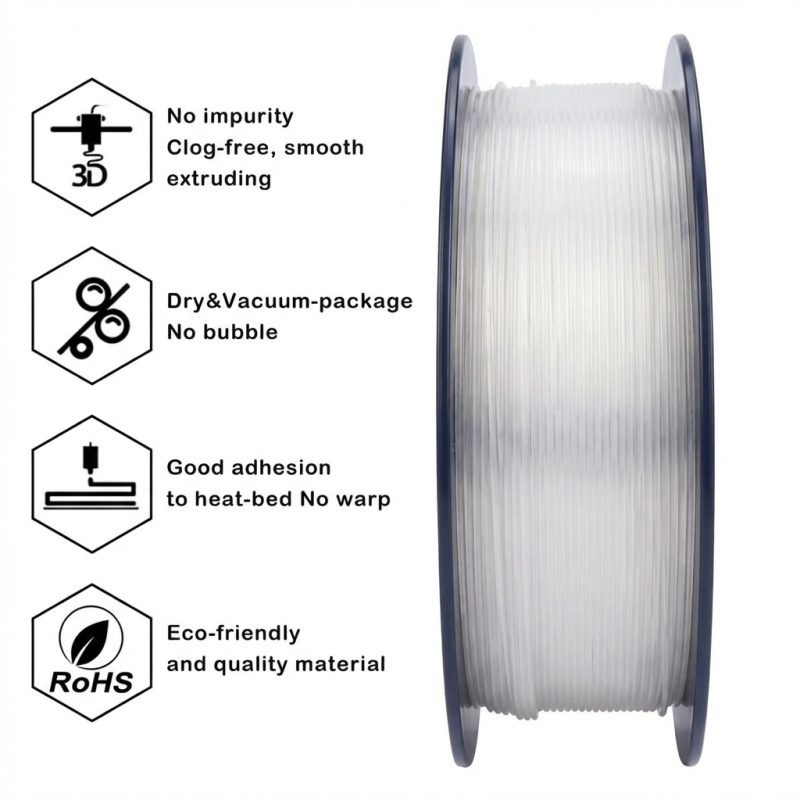
| Packaging | Vacuum sealed with desiccant |
| Manufacturing Origin | Guangdong, China |
| Free Sample | Available |
| OEM/ODM | Available – Learn about our OEM services |
Material Properties & Performance
This ASA filament delivers engineering-grade mechanical performance with industry-leading outdoor durability. For detailed material comparisons, see our strongest filament guide.
Mechanical & Thermal Properties
| Property | Value | Test Standard |
|---|---|---|
| Tensile Strength | 40-50 MPa | ISO 527 / ASTM D638 |
| Flexural Modulus | 1,800-2,200 MPa | ISO 178 / ASTM D790 |
| Impact Strength (Izod, Notched) | 10-15 kJ/m² | ISO 180 / ASTM D256 |
| Elongation at Break | 20-40% | ISO 527 / ASTM D638 |
| Glass Transition Temperature (Tg) | ~100°C (212°F) | ISO 11357 |
| Heat Deflection Temperature | 88-98°C (0.45 MPa) | ISO 75 / ASTM D648 |
| Vicat Softening Point | 96-108°C | ISO 306 / ASTM D1525 |
| Density | 1.04-1.07 g/cm³ | ISO 1183 |
| Moisture Absorption | 0.2-0.4% (24h) | ISO 62 / ASTM D570 |
| Shrinkage | 0.4-0.7% | ISO 294-4 |
| UV Resistance | Excellent (acrylic rubber UV stabilizer) | ASTM G154 / ISO 4892 |
Printer-Specific Settings
| Printer | Nozzle | Bed | Speed | Notes |
|---|---|---|---|---|
| Bambu Lab X1C / P1S | 260°C | 95°C | 40-70mm/s | Enclosed; use ABS profile as base, fan 15-20% |
| Prusa MK4 / MK3S+ | 260°C | 100°C | 40-60mm/s | Enclosure needed for MK3S+; smooth PEI + glue |
| Creality K1 / K1 Max | 260°C | 95°C | 40-70mm/s | Enclosed; reduce speed for tall parts |
| Creality Ender 3 V2/S1 | 255°C | 95°C | 30-50mm/s | DIY enclosure essential; all-metal hotend required |
| Anycubic Kobra 2 | 260°C | 95°C | 40-60mm/s | Enclosure recommended; reduce retraction 20% |
| Voron 2.4 / Trident | 260°C | 100°C | 50-80mm/s | Fully enclosed; ideal platform for ASA; fan 10-20% |
Applications for ASA Filament
This ASA filament unlocks applications where outdoor durability meets engineering performance – the material of choice when parts must survive real-world environmental exposure.
| 🚗 Automotive Parts | Exterior trim pieces, mirror housings, grille components, spoiler prototypes, under-hood brackets, and custom emblems. ASA filament withstands engine bay heat, UV exposure, rain, and road chemicals without degradation. The yellow color is ideal for safety-related components, racing accents, and high-visibility markers. Parts can be acetone-smoothed for an injection-molded appearance. |
| 🏗️ Outdoor Signage & Fixtures | Garden markers, trail signs, address plaques, directional indicators, and outdoor decorative elements. The yellow ASA 3D printing filament maintains its vibrant color for years of direct sun exposure where PLA and ABS would crack, fade, and disintegrate. Perfect for property markers, park installations, and commercial outdoor signage that needs to last. |
| 🚁 Drone & UAV Components | Drone housings, gimbal mounts, landing gear, propeller guards, and antenna enclosures for outdoor UAV operations. ASA’s combination of UV stability, impact resistance, and all-weather durability makes it the preferred material for drone parts that fly in direct sunlight, rain, and varying temperatures. The yellow color provides excellent visibility for aircraft tracking. |
| 🏠 Architecture & Construction | Outdoor architectural models, scale building prototypes, construction jigs, pipe fittings, cable management, and weatherproof enclosures. ASA filament is used by architects and builders for presentation models that will be displayed outdoors and for functional parts installed in exposed building environments. UV-stable color ensures models look accurate for the life of the project. |
| ⚙️ Industrial Equipment | Custom enclosures, sensor housings, cable conduit, equipment guards, safety covers, and maintenance tool holders for outdoor industrial installations. The yellow ASA filament is ideal for safety-marked components – yellow parts immediately indicate caution zones, equipment boundaries, and hazard markings. Chemical resistance protects against industrial fluids and cleaning agents. |
| 🌿 Garden & Outdoor Living | Plant markers, irrigation fittings, tool organizers, birdhouse components, outdoor furniture brackets, and garden decoration. ASA is the only common FDM filament that truly survives full-season outdoor exposure without significant degradation. The yellow color adds cheerful, high-visibility accents to garden setups and outdoor living spaces. |
Environmental & Safety Standards
| ✅RoHS Compliant | Full RoHS compliance for European and global market requirements. |
| 🏭ISO 9001 Certified | Manufactured under certified quality management for consistent color, UV stabilizer content, and mechanical performance. |
| ⚠️Ventilation Required | ASA emits styrene fumes during printing. Use a carbon-filtered enclosure or ensure adequate room ventilation. Do not print unventilated in occupied living spaces. |
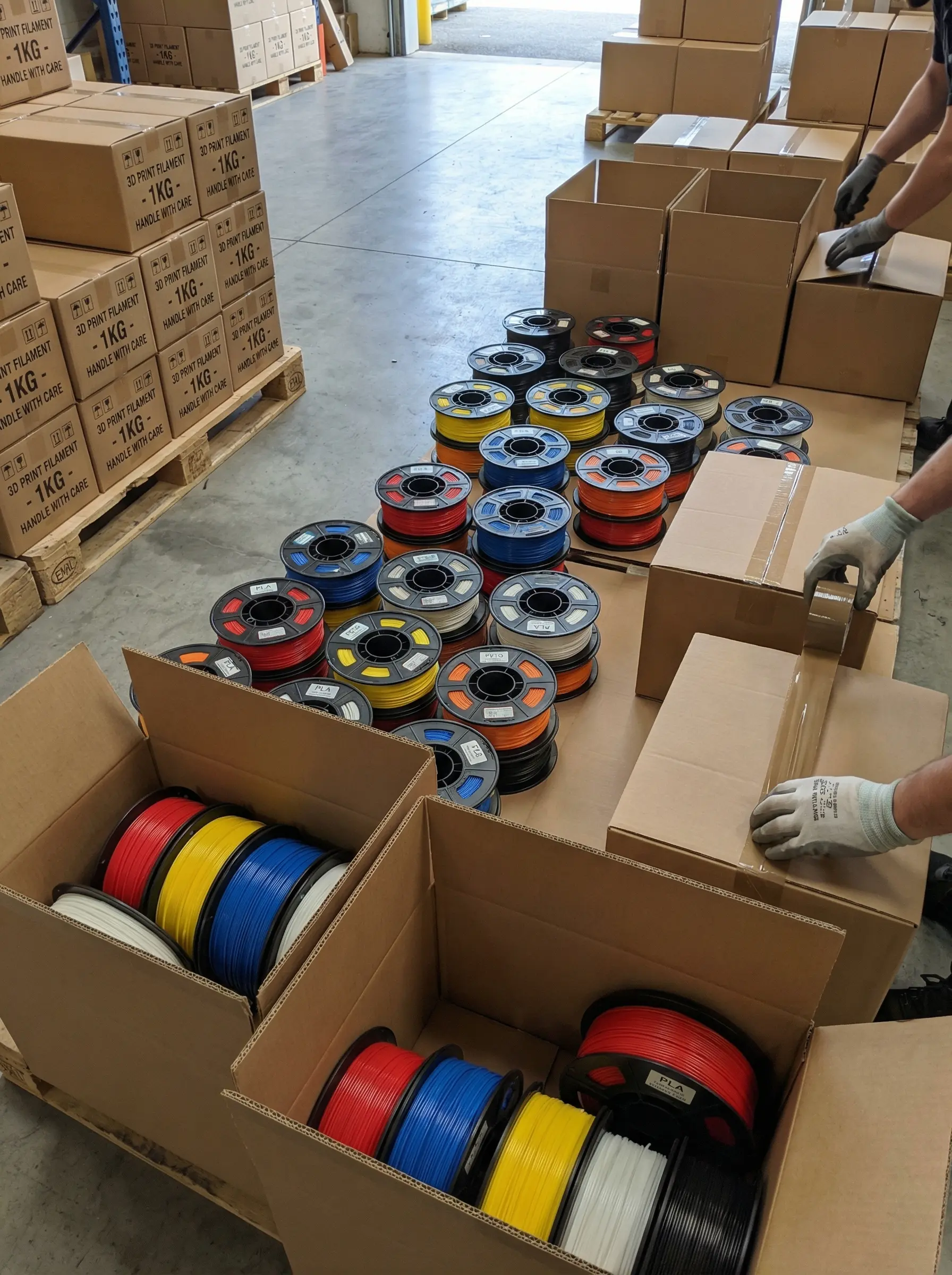
| 📦Vacuum Sealed | Moisture-proof vacuum packaging with desiccant for optimal first-print quality. ASA is less moisture-sensitive than nylon but benefits from dry storage. |
Packaging & Global Shipping
| Destination | Standard | Express |
|---|---|---|
| European Union | 5-10 business days | ✓ 3-5 days |
| United States | 7-12 business days | ✓ 4-6 days |
| United Kingdom | 7-12 business days | ✓ 4-6 days |
| Canada | 8-14 business days | ✓ 5-7 days |
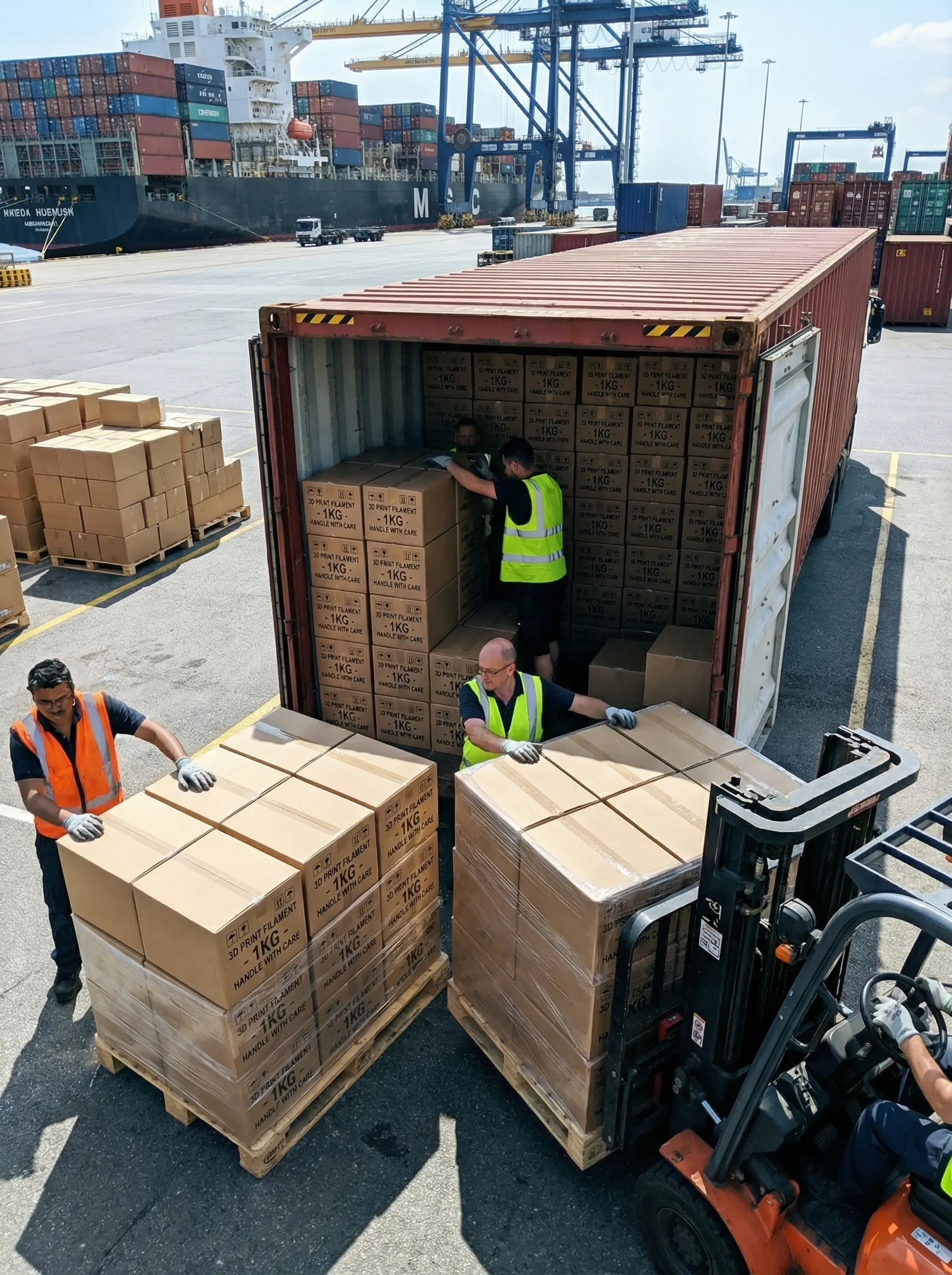
Packaging: Vacuum sealed with desiccant. Customs: DDP and DAP terms available.
Bulk Orders & OEM/ODM Services
| 📊Flexible MOQ | Trial orders to large-volume production. Free samples available. |
| 💰Volume Pricing | 100kg+, 500kg+, 1000kg+ with progressive discounts. |
| 🔧OEM/ODM | • Custom colors – Full RAL/Pantone color matching for ASA – Custom UV stabilizer formulations for specific outdoor environments – Custom base material blends (ASA+PC, ASA+GF) – Private label packaging; custom spool sizes (0.5kg-5kg) |
| 🎁Free Samples | Test UV stability, color accuracy, and print quality before ordering. |
Storage & Handling Guidelines
| Storage Guidelines | |
|---|---|
| Temperature | 15-25°C (59-77°F) |
| Humidity | Below 40% RH (dry storage recommended) |
| Shelf Life | 12 months (unopened, vacuum sealed) |
| Drying | 75-80°C for 4-6 hours (do not exceed 85°C) |
| Light | Store away from direct sunlight (filament on spool is UV-stable once printed, but prolonged storage under UV is unnecessary) |
Printer Compatibility
Compatible with all FDM/FFF 3D printers using 1.75mm filament that reach 250°C+ nozzle temperature. All-metal hotend required. Enclosed printer strongly recommended.
| Bambu Lab X1C, P1S (enclosed) | Prusa MK4, MK3S+ (w/ enclosure), XL | Creality K1, K1 Max (enclosed) | Voron 2.4, Trident (ideal) | Anycubic Kobra 2 (w/ enclosure) | QIDI X-Max 3, X-Plus 3 |
Why Choose SigmaFilament
| 🏭Direct Manufacturer | Factory-direct pricing with full control over ASA compounding, UV stabilizer formulation, color matching, and packaging. |
| ✅Quality Assured | ±0.05mm tolerance, ISO 9001, RoHS. Consistent color, UV stability, and mechanical strength batch-to-batch. |
| 🌍Global Service | English-speaking support, EU/US business hours, DDP/DAP shipping. |
| 🔧Full OEM/ODM | Custom ASA colors (RAL/Pantone), custom UV formulations, ASA blends (ASA+PC, ASA+GF), private label packaging. |
| 🤝Technical Support | ASA print optimization, enclosure design guidance, post-processing consultation, and outdoor application engineering. |
Frequently Asked Questions About ASA Filament
Ready to Get Started with ASA Filament?
Contact SigmaFilament today for bulk pricing, free samples, or to discuss custom ASA color matching for your OEM/ODM requirements.
📧 Email us for a quick quote | 🌍 Worldwide shipping with DDP/DAP terms | 🎁 Free samples for qualified customers
| Filament Diameter | 1.75mm ,2.85mm (3.00mm) |
|---|---|
| Color | Yellow |
| Spool Weight | 1kg ,3kg ,5kg ,Sample (200g) |