PETG Glass Fiber Filament – Product Overview
The SigmaFilament PETG Glass Fiber (PETG-GF) Filament answers the question every engineer eventually asks: “I need something stronger than PETG, but I don’t want to deal with nylon.”
Standard PETG is an excellent general-purpose engineering material – tough, chemical-resistant, and forgiving to print. But it has a well-known limitation: it’s not stiff enough for structural applications. PETG flexes under load where a truly rigid material would hold firm. Brackets sag. Jigs deflect. Housings bow. The traditional solution – switching to nylon carbon fiber – solves the stiffness problem but introduces a cascade of new ones: mandatory 8-12 hour drying, aggressive warping, enclosure requirements, 280°C+ hotend temperatures, and print failures that would make a beginner quit.
PETG-GF splits the difference perfectly. Chopped glass fiber reinforcement dramatically increases PETG’s stiffness and strength – eliminating the flex that makes standard PETG unsuitable for structural work – while retaining PETG’s famously cooperative print behavior. No hygroscopic moisture nightmares. No mandatory heated chamber. No 300°C hotend. Just a slightly higher print temperature (240-260°C vs. PETG’s 230-250°C) and a hardened nozzle to handle the glass fiber. Everything else stays the same.
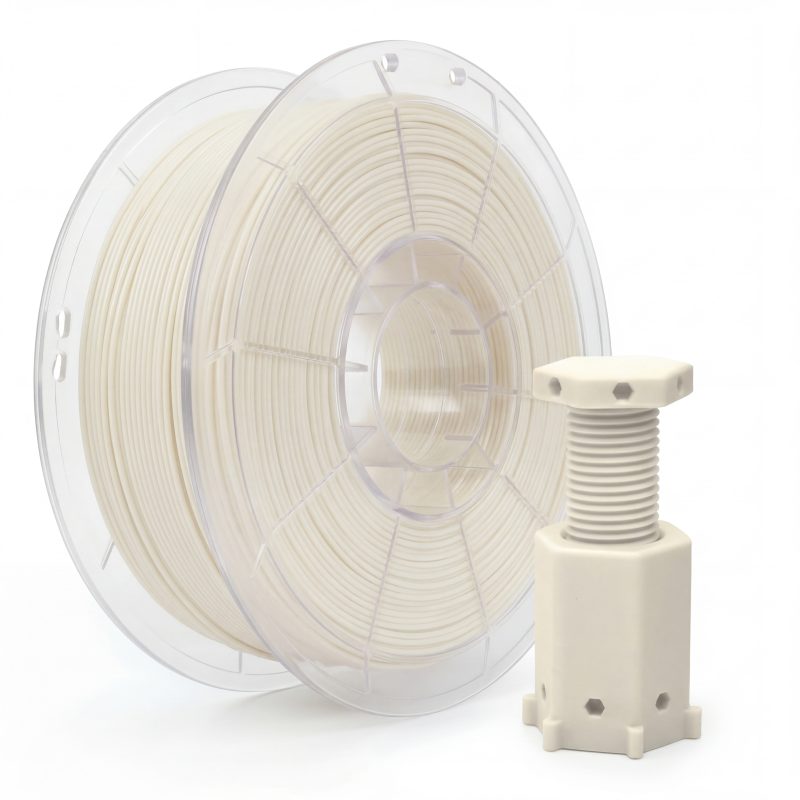
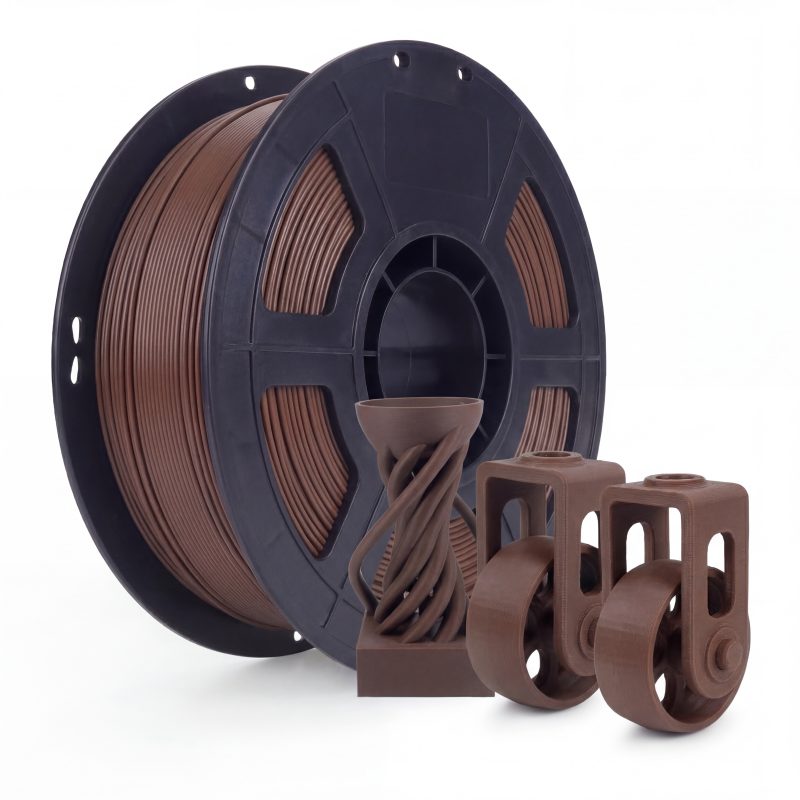
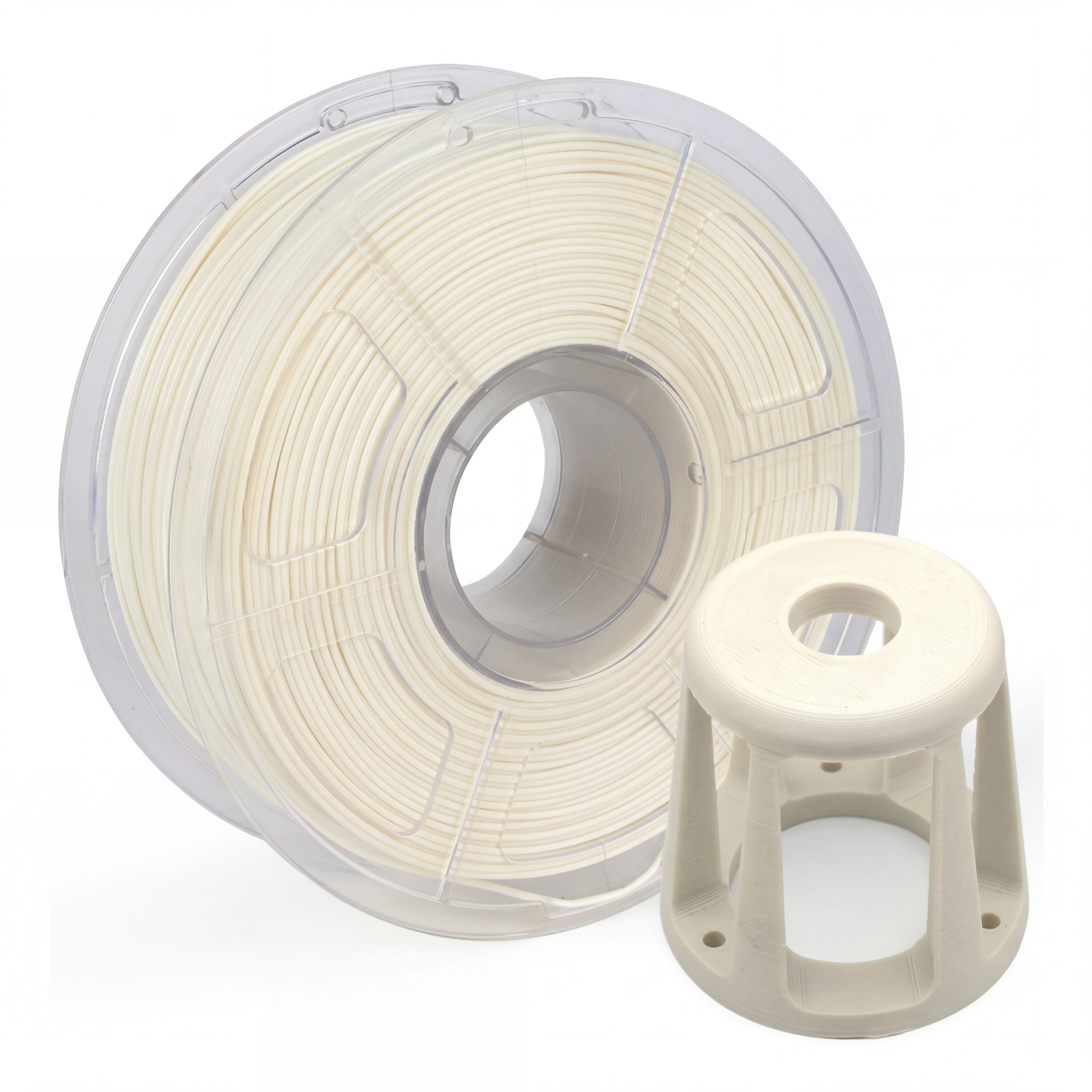
The structural stool in our product image demonstrates what PETG-GF can do: a weight-bearing functional part with thin walls and open lattice geometry that holds its shape under load – an application where standard PETG would visibly flex and creep over time.
For engineers and workshops that need an accessible step up from standard PETG without the complexity of nylon, PETG-GF is the practical answer.
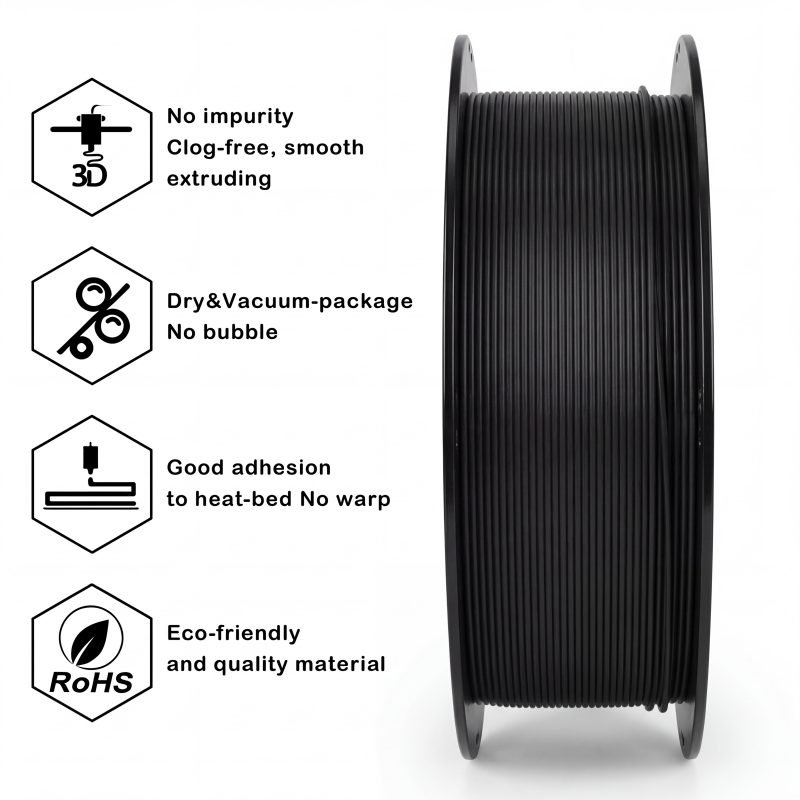
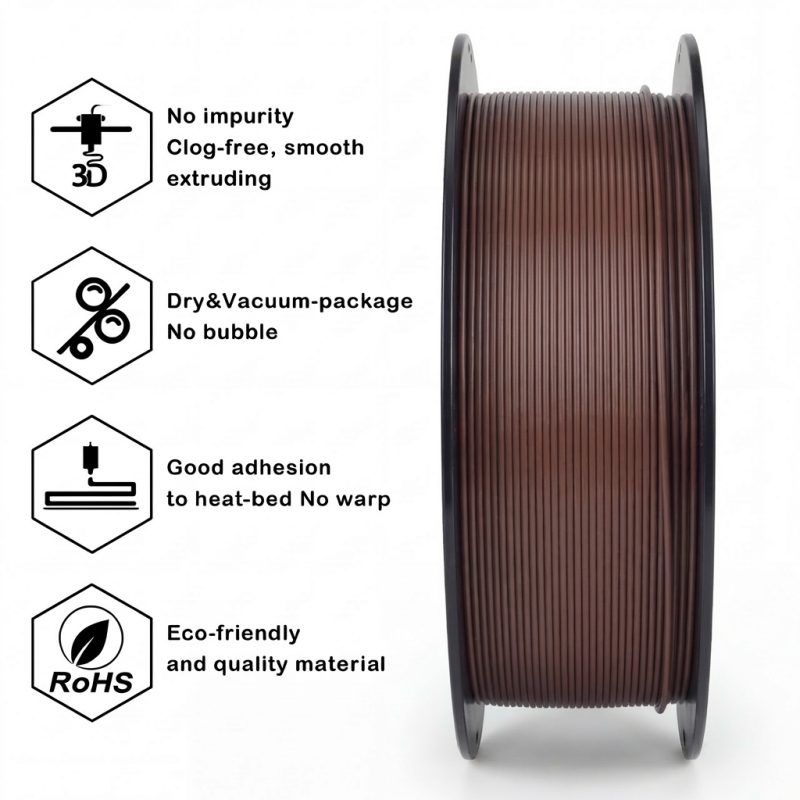
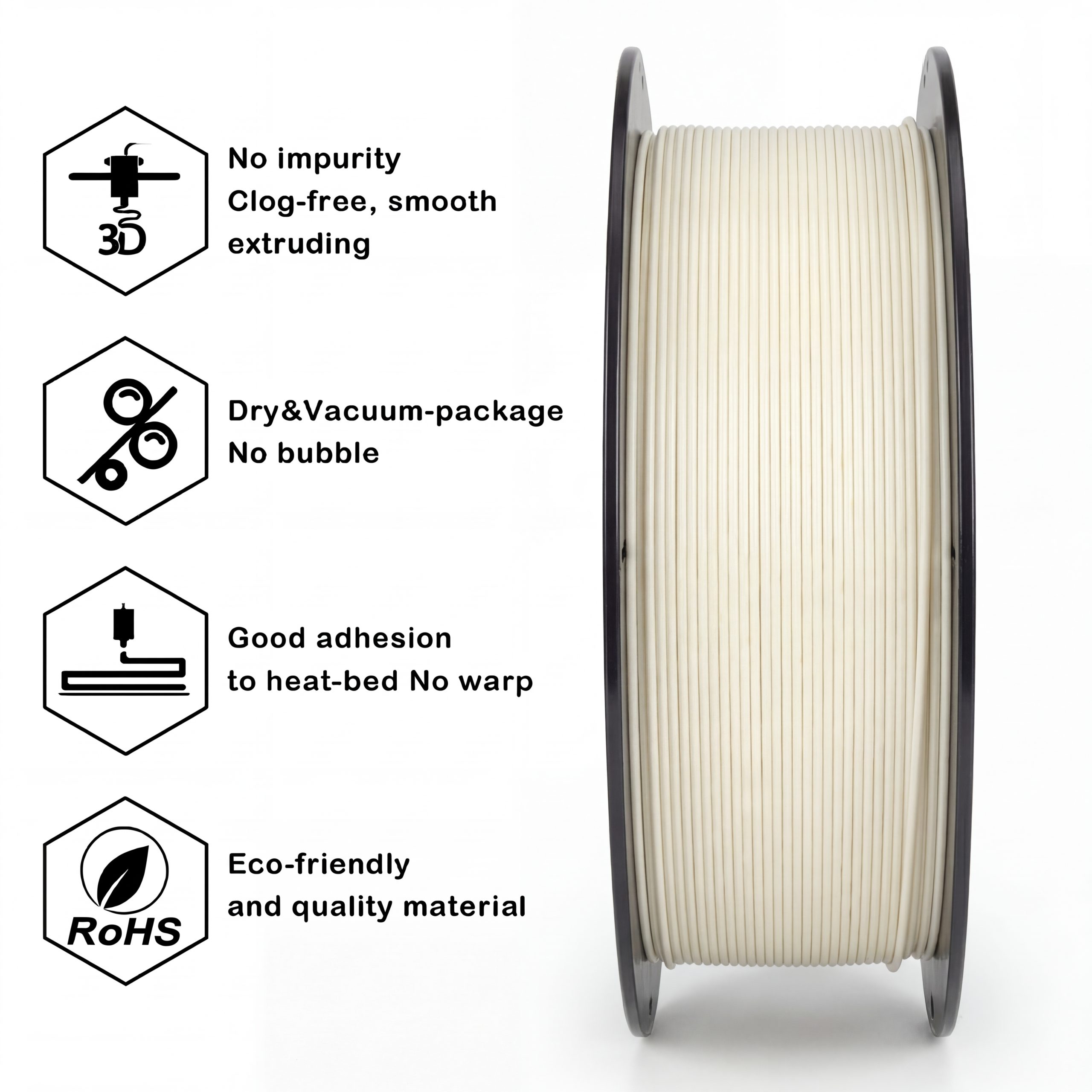
Manufactured under ISO 9001 quality management. Full RoHS compliance, OEM/ODM services, and free samples available.
Why PETG Glass Fiber Stands Out
⚙️ Nylon Strength, PETG Simplicity – The Best of Both Worlds
Stronger than PETG. Easier than nylon. PETG-GF is the engineering material for people who value their time as much as their parts.
- Stiffness Where PETG Fails – Glass fiber reinforcement increases flexural modulus by 50-100% compared to standard PETG. Parts that flexed, sagged, or crept under load in PETG now hold firm in PETG-GF. This single property change unlocks entire categories of functional applications that standard PETG couldn’t serve reliably
- No Nylon Headaches – Unlike PA6-CF or PA12-CF, PETG-GF doesn’t absorb atmospheric moisture aggressively. No 8-12 hour mandatory drying rituals. No daily re-drying in humid climates. No catastrophic print failures from overnight moisture absorption. PETG-GF prints reliably day after day with standard PETG-level storage discipline – a game-changing practical advantage for busy workshops
- Your Existing Printer Works – 240-260°C is within reach of any all-metal hotend (most modern printers include one). 70-85°C bed is standard PETG territory. No enclosure required for most parts. The only hardware change: swap your brass nozzle for hardened steel (glass fiber is abrasive). Total upgrade cost: one $10 nozzle
- Improved Heat Resistance – Glass fiber reinforcement raises the effective heat deflection temperature above standard PETG’s ~80°C. Parts maintain structural integrity at temperatures where standard PETG begins to soften – important for applications near heat sources, in vehicles, or in warm industrial environments
- Better Dimensional Stability – Glass fiber reduces thermal expansion and shrinkage, producing parts with tighter dimensional accuracy than standard PETG. For jigs, fixtures, and precision fit applications, this translates to less post-print dimensional compensation and more reliable assembly
- Chemical + Wear Upgraded – Retains PETG’s excellent chemical resistance (oils, greases, solvents) while the glass fiber improves surface hardness and abrasion resistance – extending the service life of parts in moving assemblies and high-friction environments
The upgrade path that doesn’t require upgrading your printer, your workflow, or your patience.
Why Choose PETG Glass Fiber
| ⚙️ Functional Brackets & Mounts | The #1 application for PETG-GF. Every workshop prints brackets, mounts, and supports – and every workshop has experienced the frustration of PETG parts that flex under load. PETG-GF brackets hold firm. Motor mounts don’t vibrate loose. Sensor brackets maintain alignment. Equipment mounts stay rigid. The glass fiber stiffness transforms PETG from “adequate for light duty” to “reliable for real loads.” |
| 🔧 Tooling & Jigs | Assembly jigs, alignment fixtures, drill guides, and workholding tools. PETG-GF’s improved dimensional stability means tools maintain accuracy over repeated use. Chemical resistance handles workshop fluids (cutting oil, lubricant, cleaning solvents). And unlike nylon tooling, you can reprint a replacement in 2 hours without drying a spool overnight first. |
| 🏗️ Structural Prototypes | Functional prototypes that must demonstrate realistic stiffness and load behavior. Standard PETG prototypes flex too much to provide meaningful mechanical evaluation. PETG-GF prototypes give engineers a more accurate feel for how the final part will behave – closer to injection-molded GF-filled engineering plastics. |
| 🌧️ Outdoor Equipment | PETG’s inherent UV resistance (better than PLA and ABS) combined with glass fiber’s dimensional stability makes PETG-GF well-suited for outdoor applications: garden tool holders, equipment mounts, outdoor signage brackets, and weather-exposed fixtures. Parts maintain stiffness and appearance through rain, sun, and temperature cycling. |
| 🚗 Automotive Interior | Dashboard mounts, phone holders, cable clips, and interior trim pieces for automotive applications. PETG-GF’s improved heat resistance means parts survive summer vehicle interior temperatures (which routinely exceed 80°C) that would soften standard PETG. Chemical resistance handles interior cleaning products. |
| 📦 Production Parts | Low-to-medium volume functional parts where standard PETG isn’t rigid enough but nylon is overkill. PETG-GF fills this middle ground: strong enough for real-world use, easy enough for consistent batch production without the print-failure anxiety that nylon composites introduce. |
PETG-GF vs. Standard PETG vs. PA6-CF vs. PLA-CF – Finding Your Material
| Property | PETG-GF (This) | Standard PETG | PA6-CF | PLA-CF |
|---|---|---|---|---|
| Stiffness | ★★★★☆ (50-100% over PETG) | ★★★☆☆ | ★★★★★ | ★★★★☆ |
| Print Ease | ★★★★☆ (PETG-level easy) | ★★★★★ | ★★☆☆☆ (Expert) | ★★★★★ |
| Moisture Sensitivity | ★★☆☆☆ (Low – like PETG) | ★★☆☆☆ | ★★★★★ (Very high) | ★☆☆☆☆ |
| Heat Resistance | ★★★☆☆ (Above PETG’s 80°C) | ★★★☆☆ (~80°C) | ★★★★★ (180°C+) | ★★☆☆☆ (~55°C) |
| Impact Toughness | ★★★★☆ (Good – PETG base) | ★★★★★ | ★★★★☆ | ★★☆☆☆ (Brittle) |
| Best For | Accessible engineering upgrade | General purpose | Maximum performance | Stiff decorative |
Recommended Print Settings
2. All-metal hotend required – 240-260°C exceeds PTFE limits on some older printers. Most modern printers include all-metal hotends.
3. No enclosure needed for most parts – PETG-GF has low warping tendency. An enclosure helps for very large parts but isn’t mandatory.
4. Drying recommended but not panic-level – 65°C for 4-6 hours if stored improperly. PETG-GF is far more forgiving than nylon regarding moisture.
Optimal Settings
| Nozzle Temperature | 240-260°C (250°C optimal) |
| Bed Temperature | 70-85°C (80°C recommended) |
| Print Speed | 30-50mm/s (40mm/s balanced) |
| Layer Height | 0.15-0.28mm (0.20mm typical) |
| Cooling Fan | 30-50% (similar to standard PETG) |
| Wall Count | 3-4 for structural; 2 for general |
| Retraction | 1-3mm / 30-45mm/s (direct); 4-6mm (Bowden) |
| Infill | 20-40% functional; 50%+ heavy-duty |
| Nozzle | Hardened steel recommended (glass fiber wears brass) |
| Enclosure | Not required (helps for large prints) |
| Drying | 65°C for 4-6 hours if needed (not panic-level critical) |
Technical Specifications
| Parameter | Specification |
|---|---|
| Material | PETG + Chopped Glass Fiber |
| Color | Natural (Cream/Off-White) |
| Model | PETG-GF |
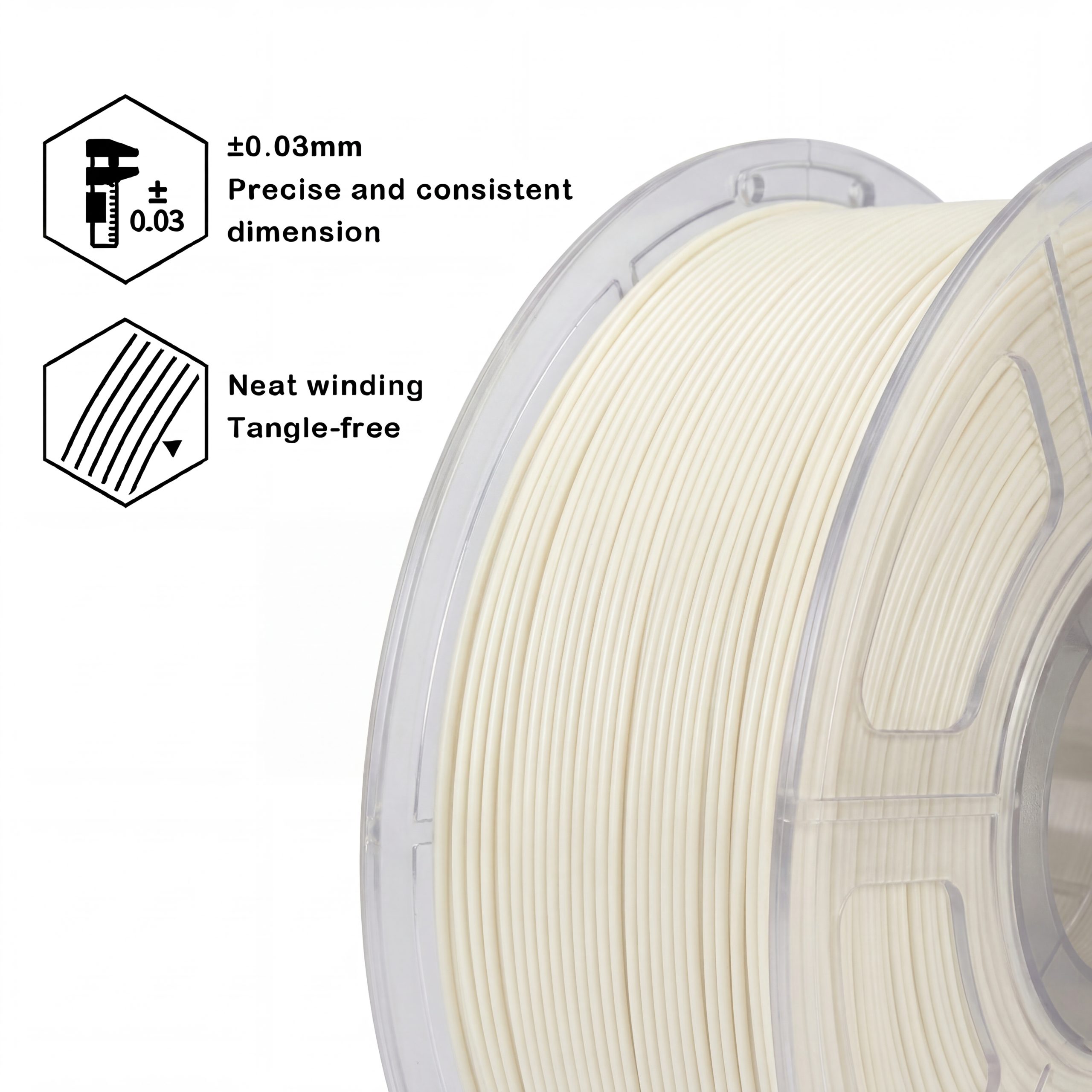
| Diameter | 1.75mm ± 0.05mm |
| Net Weight | 1kg (2.2 lbs) |
| Nozzle Temp | 240-260°C |
| Bed Temp | 70-85°C |
| Speed | 30-50mm/s |
| Nozzle Type | Hardened steel recommended (GF is abrasive) |
| Enclosure | Not required |
| Drying | 65°C for 4-6 hours (if needed) |
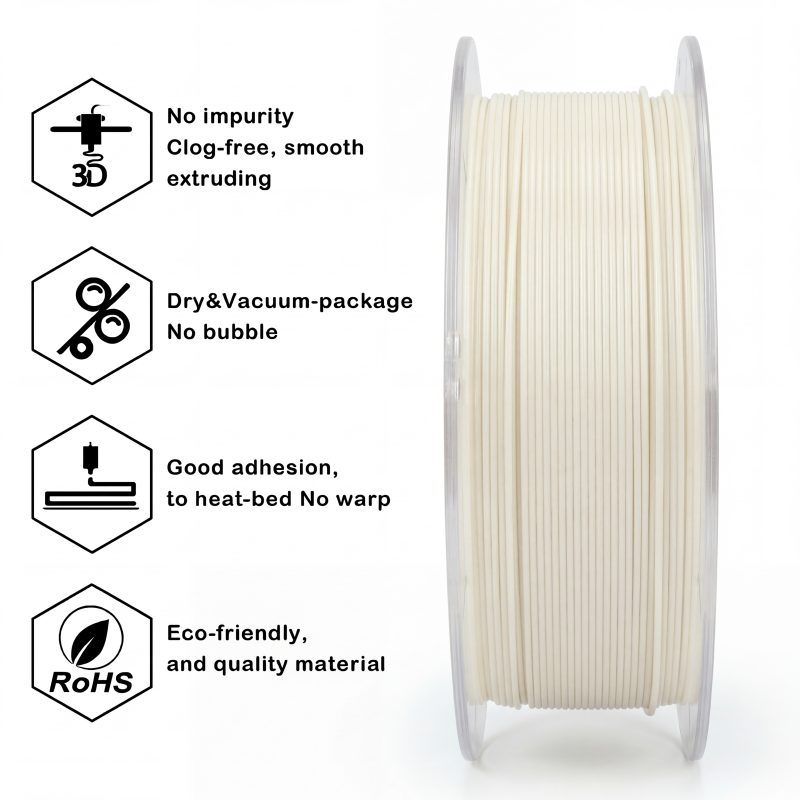
| Packaging | Vacuum sealed with desiccant |
| Origin | Guangdong, China |
| Free Sample | Available |
| OEM/ODM | Available – Learn more |
Material Properties
| Property | Value | Standard |
|---|---|---|
| Tensile Strength | 55-65 MPa | ISO 527 |
| Flexural Modulus | 3,500-5,000 MPa (50-100% above PETG) | ISO 178 |
| Impact Strength (Izod) | 4-6 kJ/m² | ISO 180 |
| Elongation at Break | 5-10% | ISO 527 |
| HDT (0.45 MPa) | 85-95°C (above standard PETG) | ISO 75 |
| Density | 1.35-1.45 g/cm³ | ISO 1183 |
| Shrinkage | 0.2-0.5% (lower than standard PETG) | ISO 294-4 |
Applications
| ⚙️ Functional Brackets | Motor mounts, sensor brackets, equipment mounting plates, and structural supports. PETG-GF holds rigid under load where standard PETG flexes. The most common upgrade reason. |
| 🔧 Tooling & Jigs | Assembly fixtures, alignment jigs, drill guides, and workholding tools. Improved dimensional stability and wear resistance vs. PETG. No nylon-level drying required. |
| 🏗️ Structural Prototypes | Functional prototypes that must demonstrate realistic stiffness. PETG-GF provides more representative mechanical behavior than standard PETG for engineering evaluation. |
| 🌧️ Outdoor Parts | Weather-exposed equipment, garden tool holders, outdoor signage mounts. PETG’s UV resistance + GF dimensional stability = reliable outdoor performance. |
| 🚗 Vehicle Components | Dashboard mounts, interior clips, phone holders, and cable management. Improved heat resistance handles vehicle interior temperatures. Chemical resistance for automotive fluids. |
| 📦 Production Parts | Low-volume functional parts filling the gap between PETG and nylon. Consistent batch production without nylon’s moisture management complexity. |
Environmental & Safety
✅ RoHS compliant | 🏭 ISO 9001 | ♻️ PETG recyclable | 📦 Vacuum sealed with desiccant
Shipping
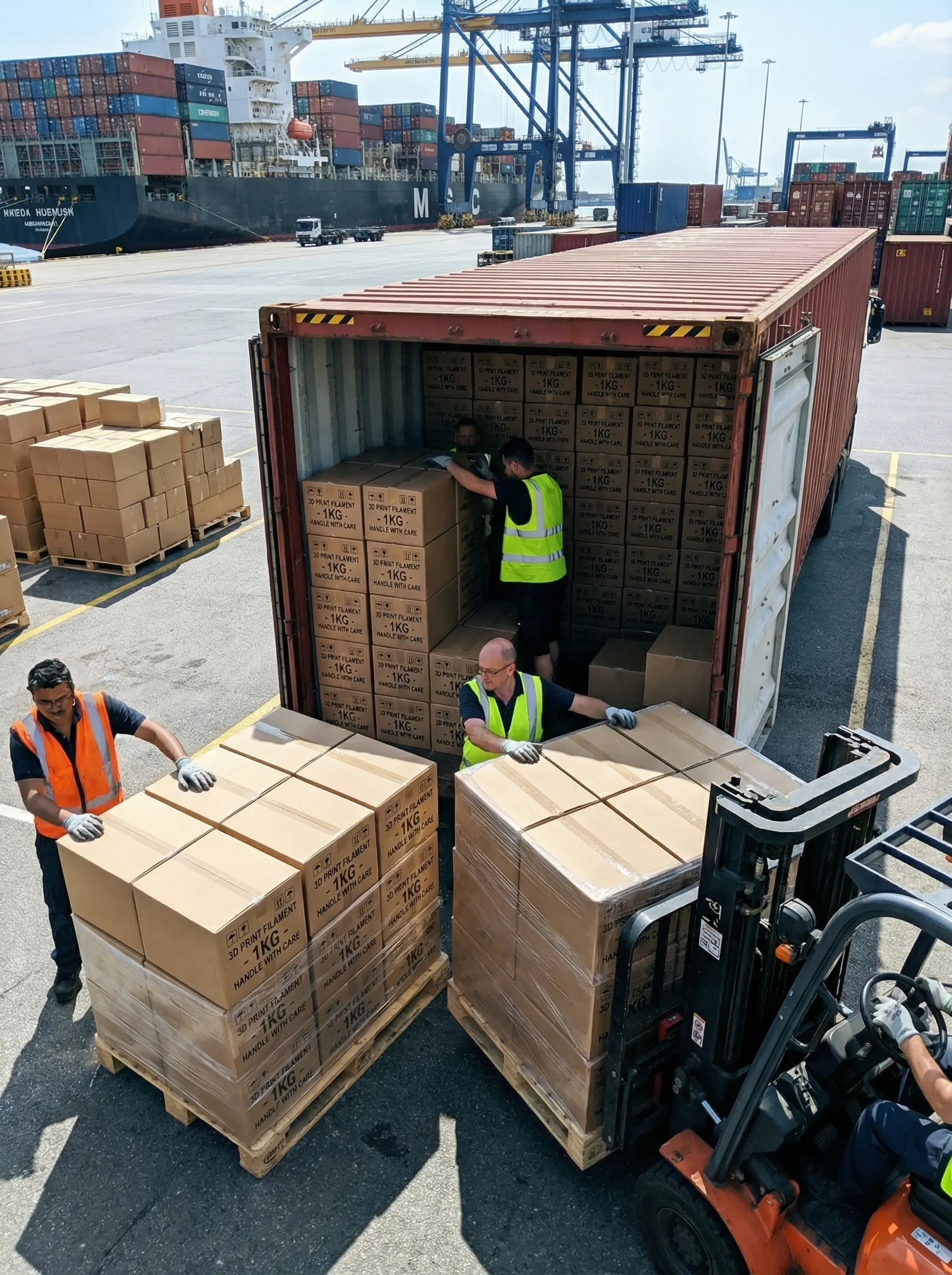
EU: 5-10 days (Express 3-5) | US: 7-12 days (Express 4-6) | UK: 7-12 days (Express 4-6) | Canada: 8-14 days (Express 5-7). DDP/DAP available.
Bulk & OEM/ODM
Flexible MOQ, free samples, 100kg+/500kg+/1000kg+. Custom GF content (10-30%), custom colors (black, grey, custom), PETG-CF (carbon fiber) also available. Private label; custom spool sizes. Learn more.
Storage
15-25°C, below 40% RH, 12 months sealed. PETG-GF is significantly less moisture-sensitive than nylon. Dry 65°C 4-6h if stored open for extended periods.
Printer Compatibility
Any FDM/FFF 1.75mm printer with all-metal hotend (260°C+). Hardened nozzle recommended. No enclosure required.
| Bambu Lab ✓ All models | Prusa ✓ MK4, MK3S+ | Creality ✓ K1, Ender S1 Pro | Voron ✓ | Anycubic ✓ Kobra 2 | QIDI ✓ |
FAQ
Ready for the Practical Engineering Upgrade?
Contact SigmaFilament today for bulk pricing, free samples, or to discuss custom PETG-GF formulations for your applications.
📧 Email us for a quick quote | 🌍 Worldwide shipping with DDP/DAP | 🎁 Free samples for qualified customers
| Filament Diameter | 1.75mm ,2.85mm (3.00mm) |
|---|---|
| Color | White |
| Spool Weight | 1kg ,3kg ,5kg ,Sample (200g) |