

The 2026 Truth: Who Makes Bambu Labs Filament and 3 Factors to Consider

Abstract
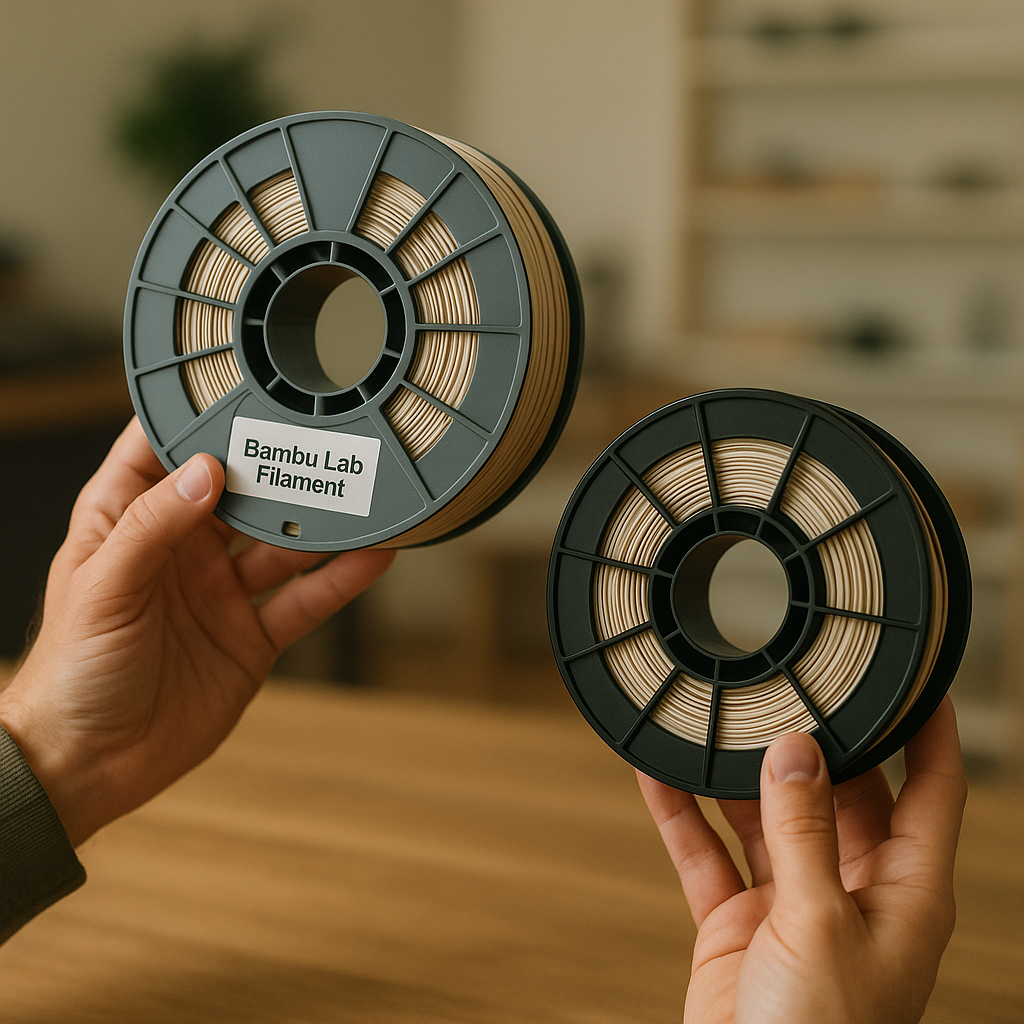
The inquiry into the manufacturing origins of Bambu Lab’s filament portfolio reveals a complex and sophisticated supply chain strategy rather than a single, in-house production facility. This analysis examines the prevalent Original Equipment Manufacturer (OEM) model within the 3D printing industry, where established filament producers manufacture materials to the specifications of another brand. Evidence from community discussions and industry observation strongly suggests that Bambu Lab collaborates with several leading manufacturers, including eSun and Polymaker, to produce its various filament lines . This approach allows Bambu Lab to focus on its core competencies—printer technology, software integration, and user experience—while leveraging the specialized expertise and scaled production capacity of established filament experts. The investigation further deconstructs the key factors that define Bambu-branded filament: the integration of RFID technology for seamless printer communication, the specific formulation of materials for high-speed performance, and the rigorous quality control standards necessary to ensure consistency. Understanding this OEM framework is fundamental for consumers and professionals seeking to comprehend the filament’s performance characteristics and to identify comparable or alternative materials on the market.
Key Takeaways
- Bambu Lab utilizes an OEM model, partnering with multiple established filament manufacturers.
- Leading companies like eSun and Polymaker are widely believed to be key suppliers .
- The RFID tag on spools is a major differentiator, enabling seamless user experience.
- Filaments are specifically formulated to meet the demands of high-speed 3D printing.
- Understanding who makes Bambu Labs filament helps in sourcing comparable materials.
- Quality control and consistency are managed through the OEM partnership standards.
- Working with a production partner offers access to similar high-quality, customized filaments.
Table of Contents
- Deconstructing the Bambu Filament Ecosystem: The OEM Partnership Model
- Factor 1: The RFID Chip and the Pursuit of a Seamless Workflow
- Factor 2: The Material Science of Speed and Performance
- Factor 3: Quality Control, Consistency, and the Global Supply Chain
- Frequently Asked Questions (FAQ)
- Conclusion
- References
Deconstructing the Bambu Filament Ecosystem: The OEM Partnership Model
When we pose the question, “Who makes Bambu Labs filament?”, we are, perhaps without realizing it, tapping into a much larger narrative about modern manufacturing, brand identity, and the intricate dance of global supply chains. It is a tempting and intellectually tidy thought to imagine a single, massive Bambu Lab factory, where raw polymer pellets enter one end and perfectly spooled, RFID-tagged filament emerges from the other. The reality, however, is far more nuanced and, I would argue, far more interesting. It speaks to a strategic decision to focus on core competencies, a practice common across the tech industry, from smartphones to electric vehicles.
Bambu Lab, as a company, has demonstrated a profound mastery of hardware engineering, software development, and user-centric design. Their printers arrived on the scene and fundamentally shifted our expectations for speed, quality, and accessibility. The true innovation here is the holistic system—the printer, the software, and the materials all working in concert. To achieve this level of integration, it is not necessary to personally control every single element of production. It is often wiser to partner with those who have already achieved mastery in their respective domains. This is the world of the Original Equipment Manufacturer, or OEM.
What is an OEM and Why Do Companies Like Bambu Lab Use Them?
Let’s think about this through an analogy. Imagine a world-renowned chef who is celebrated for creating revolutionary culinary experiences. Does this chef personally grow every vegetable, raise every animal, and mill every grain of flour? Almost certainly not. Instead, they build relationships with the best farmers, ranchers, and artisans—specialists who have dedicated their lives to producing the finest possible ingredients. The chef provides the specifications: the exact marbling for a cut of beef, the precise sugar content for a variety of tomato. The specialist supplier then delivers that ingredient, produced to the chef’s exacting standard. The chef’s genius lies not in farming, but in the selection, combination, and transformation of those perfect components into a transcendent dish.
This is precisely the OEM model. Bambu Lab is the “chef,” defining the recipe for their filament—the precise polymer blend, the required flow characteristics for high-speed printing, the specific color, and the strict dimensional accuracy. They then contract with a specialized filament manufacturer—our “artisan farmer”—to produce that material on a massive scale. This manufacturer already possesses the infrastructure, the chemical engineering expertise, and the quality control systems honed over years of production.
This strategy carries several profound advantages. It allows Bambu Lab to scale production rapidly without the colossal capital investment required to build and operate a global filament manufacturing network. It grants them access to a diverse range of material expertise, enabling them to offer everything from standard PLA to exotic carbon-fiber composites. Most importantly, it frees up their internal resources to focus on what they do best: pushing the boundaries of 3D printer technology and refining the ecosystem that makes it all work together so seamlessly. The question is not a mark of deficiency but a sign of strategic acumen.
Identifying the Players: Who Are the Likely Manufacturers?
The 3D printing community, a wonderfully inquisitive and collaborative collective, has done a fair bit of sleuthing on this topic. While Bambu Lab has not made official, public declarations naming their suppliers, a strong consensus has formed around a few key players in the filament industry . Through observation, comparison of filament characteristics, and even anecdotal reports from industry events, a few names consistently surface.
eSun is perhaps the most frequently mentioned candidate . As one of the largest and most established filament manufacturers in the world, they possess the production capacity and the material science background to handle a contract of this scale. Forum discussions and videos from trade shows have included reports of eSun representatives acknowledging a supplier relationship, particularly for materials like PLA . Given their extensive portfolio and their development of high-flow filaments, this alignment is logically sound.
Polymaker is another name that circulates, especially in discussions about Bambu Lab’s more specialized or engineering-grade materials . Polymaker has built a formidable reputation for quality, consistency, and innovation, particularly with materials like their PolySupport, which shares characteristics with Bambu’s support filaments. The inclusion of Polymaker profiles directly within the Bambu Studio slicer software also suggests a close working relationship, even if it doesn’t confirm an OEM contract for all materials.
It is a common misconception to believe that a single supplier is responsible for the entire product line. The reality is almost certainly a multi-supplier strategy.
The Myth of a Single Supplier: A Portfolio Approach
A portfolio approach to suppliers is not just likely; it is strategically intelligent. Different manufacturers have different strengths. One might excel at producing bulk PLA with incredible consistency and cost-effectiveness. Another might be a leader in developing high-temperature composites like carbon fiber-reinforced nylon. A third could be the go-to expert for flexible TPU materials.
By engaging multiple OEM partners, Bambu Lab can select the “best-in-class” manufacturer for each specific type of filament in their catalog. This diversification also builds resilience into their supply chain. If one supplier experiences a production issue, a raw material shortage, or a logistical bottleneck, the entire Bambu filament ecosystem does not grind to a halt. This multi-pronged approach ensures a more stable and reliable supply for the end user. It transforms the question from “Who makes the filament?” to “Which specialist makes this specific filament?”.
| Potential OEM Partner | Known Specializations & Strengths | Likely Contribution to Bambu Portfolio |
|---|---|---|
| eSun | Massive production scale, cost-effective PLA/PETG, development of high-flow variants. | Core materials like PLA, PETG, and ABS in high volume. |
| Polymaker | High-quality engineering materials, innovative support materials, strong brand reputation. | Support filaments (Support W/G), PA-CF, and other engineering-grade composites. |
| Other Specialists | Expertise in specific niches like high-temperature polymers (PEEK/PEI) or unique aesthetic filaments. | Potentially contracted for smaller, more specialized runs of exotic materials. |
This table illustrates how a brand can leverage the distinct capabilities of various production partners to build a comprehensive and high-quality product line without needing to internalize every single manufacturing discipline.
Factor 1: The RFID Chip and the Pursuit of a Seamless Workflow
If the OEM partnership is the invisible foundation of the Bambu filament ecosystem, the Radio-Frequency Identification (RFID) chip embedded in each spool is its most visible and interactive feature. This small, unassuming tag represents a monumental leap in user experience, and it is arguably the single greatest differentiator between Bambu-branded filament and a generic spool from a third party. It is the critical piece of technology that allows the material to communicate directly with the machine, bridging the gap between the physical and the digital.
To truly appreciate its significance, we must first understand the typical workflow that existed before. A user would purchase a spool of filament, manually load it into the printer, and then proceed to the slicer software. There, they would have to create a profile for that specific material, manually inputting a dozen or more parameters: nozzle temperature, bed temperature, max volumetric speed, retraction settings, cooling fan speeds, and so on. Getting these settings right required experience, research, and often, a frustrating amount of trial and error. Forgetting to switch profiles when changing materials was a common and costly mistake, leading to failed prints and wasted filament. The cognitive load on the user was significant.
How Bambu’s RFID System Works
RFID technology, in its essence, is quite simple. It consists of a small tag (or transponder) and a reader. The tag contains a microchip that stores data and an antenna to transmit it. When the reader emits a radio signal, the tag is powered up and broadcasts its stored information back to the reader. You encounter this technology every day in things like keyless entry fobs for cars, contactless payment cards, and inventory tracking systems in warehouses.
In the Bambu ecosystem, the Automatic Material System (AMS) unit contains an RFID reader. When a spool of Bambu filament is loaded, the reader instantly queries the RFID tag on the spool. The tag responds by transmitting its data packet, which contains crucial information:
- Material Type: PLA, PETG, ABS, etc.
- Sub-Type/Series: Basic, Matte, Tough, Carbon Fiber, etc.
- Color: The specific color name and hex code.
- Printing Profile: A unique identifier that tells Bambu Studio to load the professionally tuned printing parameters for that exact filament.
- Spool Data: The amount of filament remaining on the spool (this is updated by the printer as it consumes material).
This entire exchange happens automatically in seconds. The printer knows exactly what it has been fed, and the software adjusts accordingly.
The Benefits: Seamless Integration and Print-Ready Profiles
The practical benefit of this system is transformative. It virtually eliminates the possibility of user error in material setup. You can load four different materials into the AMS, and the printer knows precisely what they are and how to print with them. When you send a multi-color or multi-material print from the slicer, the software already has all the information it needs. The process becomes as close to “plug-and-play” as Fused Deposition Modeling (FDM) printing has ever been.
This is more than just a convenience; it is a pillar of reliability. The print profiles associated with each RFID tag are not generic. They have been meticulously developed and tested by Bambu Lab’s engineers to work perfectly with their machines and that specific filament formulation. They have already done the difficult work of calibration and optimization for you. For a professional running a print farm or an enthusiast who just wants a perfect print without fuss, the value of this reliability cannot be overstated. It democratizes high-quality results, making them accessible even to beginners.
The Drawbacks: Vendor Lock-in and Third-Party Hurdles
Of course, this elegant system is not without its trade-offs. The most significant is the creation of a “walled garden” or a closed ecosystem. The full, seamless experience is reserved for users of Bambu-branded filament. While you can certainly use third-party filaments with Bambu printers, the process reverts to the old, manual method. You have to select a generic profile and hope it works, or spend time creating and tuning your own. You also lose the automatic tracking of filament usage.
This creates a powerful incentive to stay within the Bambu ecosystem, a phenomenon known as vendor lock-in. The convenience is so compelling that many users are willing to pay a premium for the branded filament to avoid the hassle of manual configuration. While some clever users have developed methods for transferring RFID tags to third-party spools, it remains a workaround rather than a feature. This strategic choice is central to Bambu Lab’s business model, ensuring a recurring revenue stream from material sales long after the initial printer purchase. It is a brilliant fusion of hardware, software, and consumable goods that creates a powerful and cohesive, if somewhat restrictive, user experience.
Factor 2: The Material Science of Speed and Performance
The second defining characteristic of Bambu Lab’s filament is its formulation, specifically engineered to withstand the rigors of high-speed printing. When Bambu printers shattered existing speed benchmarks, they created a new set of demands on the materials themselves. A standard PLA or PETG filament, formulated for slower, more traditional printers, can fail spectacularly when pushed to the volumetric flow rates that Bambu machines can achieve. This is where the deep expertise of an OEM production partner becomes invaluable. The “recipe” for the filament must be fundamentally different.
Let’s consider what happens inside the hotend of a 3D printer. The solid filament is pushed into a heated melt zone, where it must absorb enough thermal energy to transition from a solid to a molten liquid of the correct viscosity. It is then forced through a tiny nozzle. At low speeds, there is ample time for this melting process to occur. As you dramatically increase the speed at which the filament is pushed through, you decrease the amount of time it spends in the melt zone. If the material cannot melt fast enough, you get under-extrusion, which leads to weak, porous parts with poor layer adhesion. It is like trying to squeeze a tube of cold honey; it simply will not flow quickly enough.
The Demands of High-Speed Printing
To solve this challenge, high-speed filaments must be engineered with specific thermal and rheological properties. Rheology is the study of how materials flow, a critical discipline in polymer science. A filament designed for speed needs a higher Melt Flow Index (MFI). The MFI is a measure of how easily a molten polymer flows under a specific pressure and temperature. A higher MFI means the material becomes less viscous when melted, allowing it to be extruded at a much faster rate without excessive pressure buildup in the hotend.
Achieving a higher MFI is not as simple as just using a different base polymer. It often involves the careful introduction of additives and flow modifiers. These are specialized ingredients, mixed in with the base resin in precise quantities, that alter the behavior of the polymer at a molecular level. They act like a lubricant, helping the long polymer chains slide past each other more easily when in a molten state. The development of these proprietary blends is a core competency of major filament manufacturers and a key part of the value they bring to an OEM partnership.
Analyzing Bambu’s Filament Portfolio
If we examine the common thermoplastics, we can see how these high-speed considerations apply. The choice between materials like PLA, PETG, and ABS is a foundational decision in any FDM project, governed by the intended application of the final part (SigmaFilament, 2026a).
| Filament Type | Standard Formulation Characteristics | High-Speed Formulation Adjustments | Typical Applications |
|---|---|---|---|
| PLA | Rigid, easy to print, low temperature resistance. Prone to heat creep in all-metal hotends. | Higher MFI for faster melting. Additives to increase crystallization speed for better cooling and overhang performance. | Prototypes, detailed models, aesthetic objects. |
| PETG | Tough, good temperature/chemical resistance, prone to stringing. More viscous than PLA. | Flow modifiers to reduce viscosity and mitigate stringing at high speeds. Optimized for better layer adhesion under rapid cooling. | Functional parts, mechanical components, items needing durability. |
| ABS | High temperature resistance, durable, requires an enclosure. Prone to warping. | Blended with other polymers (like ASA) to reduce warping. Additives to improve flow and reduce volatile organic compound (VOC) emissions. | Parts for high-heat environments, items requiring vapor smoothing. |
| Composites (CF) | Base polymer (PETG, Nylon) with chopped carbon fibers for increased stiffness and strength. | Higher MFI base polymer to compensate for the viscosity increase from fibers. May require higher temperatures. | Jigs, fixtures, drone frames, lightweight structural parts. |
This table shows that creating a “high-speed” version of a filament is a deliberate act of chemical engineering. It’s about more than just the base material; it’s about the entire formulation. For instance, a high-quality carbon fiber PETG filament suitable for rapid printing must balance the stiffness benefits of the fibers with a polymer base that can actually keep up with the printer’s extruder (SigmaFilament, 2026c).
Beyond the Label: What Makes a Filament “High-Speed”?
So, what are we really getting in a spool of Bambu filament, or any other filament marketed as “high-speed”? We are getting a product of meticulous material science.
First, you have the optimized base polymer. The manufacturer selects a specific grade of PLA, PETG, or ABS resin with inherent properties conducive to better flow.
Second, you have a proprietary package of additives. This is the “secret sauce.” It may include flow enhancers, nucleating agents to control how the plastic cools and solidifies, impact modifiers for toughness, and colorants that are stable at higher processing temperatures. The science behind these additives is complex. For example, research has shown that even the pigment used for color can significantly affect the mechanical properties of a final print (Singh, 2025).
Third, you have rigorous testing and validation. The filament is not just formulated and shipped. It is tested extensively on the target machines—in this case, Bambu Lab printers. Engineers print calibration models, benchmark tests, and real-world parts at a range of speeds and temperatures to create the perfect, locked-in print profile that gets loaded via the RFID chip.
This synergy of polymer chemistry and hardware-specific testing is what creates the reliable performance that users expect. It underscores the depth of the relationship between the brand and its OEM production partner, a collaboration that goes far beyond simply putting a label on a generic box.
Factor 3: Quality Control, Consistency, and the Global Supply Chain
The third and final pillar supporting the Bambu filament ecosystem is one that operates almost entirely behind the scenes, yet it is arguably the most vital for a positive user experience: an unwavering commitment to quality control and consistency. Anyone who has been involved in 3D printing for some time has likely experienced the frustration of a “bad spool” of filament. One spool from a brand prints flawlessly, while the next, seemingly identical one, clogs the nozzle, has poor layer adhesion, or produces a completely different color. This inconsistency is the enemy of reliable production.
For a system like Bambu’s, which is built on the promise of seamless, hassle-free printing, such variability is unacceptable. The locked-in profiles delivered by the RFID system are only effective if the filament itself is manufactured to an incredibly tight set of tolerances, spool after spool, batch after batch. This is where the operational expertise of a world-class OEM, governed by international standards like ISO 9001, becomes a non-negotiable requirement.
The Importance of Dimensional Accuracy and Drying
Let’s break down what “quality” means in the context of 3D printing filament. Two of the most critical parameters are dimensional accuracy and moisture content.
Dimensional Accuracy refers to the consistency of the filament’s diameter. Most filament is sold as either 1.75mm or 2.85mm. However, no manufacturing process is perfect; there will always be some slight variation. The key is to minimize this variation. A high-quality filament will typically have a diameter tolerance of ±0.03mm or even ±0.02mm. This means a 1.75mm filament will reliably measure between 1.73mm and 1.77mm along its entire length. Why is this so important? The printer’s extruder is calibrated to push a specific volume of plastic through the nozzle. It calculates this volume based on the assumption that the filament has a consistent diameter. If the diameter suddenly widens, the extruder pushes too much plastic, leading to over-extrusion and blobs. If it narrows, it pushes too little, causing under-extrusion and weak parts. Laser micrometers are used in real-time during production to constantly monitor the filament’s diameter and ensure it stays within the specified tolerance.
Moisture Content is the silent killer of print quality, particularly for materials like PETG, Nylon, and TPU, which are hygroscopic (meaning they readily absorb moisture from the air). When moist filament enters the hotend, the trapped water instantly turns to steam, creating bubbles in the extruded plastic. This results in a weak, stringy, and visually unappealing print with a characteristic crackling or popping sound during extrusion. To prevent this, filament must be thoroughly dried after it is extruded and before it is vacuum-sealed in its packaging with a desiccant packet. Reputable manufacturers operate vast drying systems to ensure the material arrives at your door with the lowest possible moisture content, ready to print. The difference between a properly dried material like PETG and one that is not is the difference between a functional part and a ball of string (SigmaFilament, 2026b).
How OEMs Maintain Brand Standards
When Bambu Lab contracts with an OEM, they are not just buying a product; they are buying a process. The contract will include a detailed technical specification sheet that outlines every critical quality parameter. This includes:
- Raw Material Certification: Specifying the exact grade and supplier of the base polymer resin.
- Additive Formulation: The precise recipe for any flow enhancers, colorants, or other modifiers.
- Dimensional Tolerance: The required diameter and ovality (roundness) standards (e.g., 1.75mm ±0.02mm).
- Moisture Content Limit: The maximum allowable parts-per-million of water in the final product.
- Spooling and Packaging: Mandates for consistent winding to prevent tangles, and specific vacuum-sealing and packaging requirements.
The OEM is then responsible for implementing and documenting the quality control procedures needed to meet these standards on every single spool. This often involves conforming to a quality management system like ISO 9001:2015, which provides a framework for ensuring consistency and continuous improvement. It is a system of checks and balances, from inspecting incoming raw materials to final batch testing of the finished product, that guarantees the filament arriving at a customer’s door in London is identical to one arriving in Los Angeles.
Sourcing Directly: The Advantages of a Production Partner
Understanding this entire OEM model opens up a new perspective for businesses, print farms, and high-volume users. While the Bambu ecosystem offers incredible convenience, its closed nature can be limiting for those who need custom solutions or want to optimize their supply chain. The very same factories that produce filament for major brands also work directly with other businesses as a production partner.
By engaging directly with an ISO-certified manufacturer, a business can gain access to the same level of quality and consistency while unlocking a host of other benefits. You can work with their R&D department to develop a —perhaps a unique color matched to your brand’s Pantone, or a composite material tuned for a specific engineering application. You can leverage their massive production scale for cost-effective bulk purchasing, significantly lowering your cost per kilogram. This OEM/ODM (Original Design Manufacturer) model allows you to create your own line of high-performance materials, built to your exact specifications, by the same experts trusted by the industry’s biggest names. It is a path to moving beyond being just a consumer of filament to becoming a creator of material solutions.
Frequently Asked Questions (FAQ)
Is Bambu Lab filament just rebranded eSun?
While eSun is widely believed to be a primary OEM partner, it is an oversimplification to call Bambu filament a simple rebrand. Bambu Lab provides a specific formulation and set of quality requirements to its OEM partners. The filament is manufactured for Bambu Lab, likely with unique additives for high-speed performance and subjected to their quality standards, rather than being an off-the-shelf eSun product with a different label.
Why does Bambu Lab not make its own filament?
Bambu Lab’s core expertise lies in designing and engineering high-speed 3D printers and the software ecosystem that runs them. By outsourcing filament production to specialized OEMs, they can focus their resources on their primary business while leveraging the existing scale, expertise, and infrastructure of established filament manufacturers. This is a common and efficient business strategy in the tech industry.
Can I use third-party filaments in a Bambu Lab printer?
Yes, you can absolutely use filaments from other manufacturers in a Bambu Lab printer and its AMS. However, you will not get the full “plug-and-play” experience provided by the RFID system. You will need to manually select a generic filament profile in the slicer or create and tune your own custom profile to achieve the best results.
What is the purpose of the RFID tag on the spool?
The RFID tag stores information about the filament, including its type, color, and a unique identifier for its print profile. When loaded into a Bambu Lab AMS, a reader scans this tag and automatically configures the printer and slicer with the optimal, pre-tuned settings for that specific material. It also tracks how much filament is remaining on the spool.
How can I find filament with similar quality to Bambu Lab’s?
To find filament of a similar quality, you should look for manufacturers that emphasize tight dimensional accuracy (±0.03mm or better), provide detailed technical data sheets, and adhere to quality management standards like ISO 9001. Many reputable brands, including those who operate as OEM production partners for others, sell their own high-quality filaments directly.
Is high-speed filament just a marketing term?
No, it is not just marketing. Filaments designated for high-speed printing are chemically formulated differently from standard filaments. They typically have a higher Melt Flow Index (MFI) due to the use of specific base polymers and flow-enhancing additives, which allows them to melt faster and extrude more easily at the high volumetric flow rates demanded by printers like Bambu Lab’s.
Why is drying filament so important for print quality?
Many 3D printing filaments, especially PETG, Nylon, and TPU, are hygroscopic, meaning they absorb moisture from the atmosphere. When this moisture-laden filament is heated in the nozzle, the water turns to steam, causing bubbles, poor layer adhesion, stringing, and weak parts. Proper drying before printing is essential for achieving optimal material performance and print quality.
Conclusion
The question of who makes Bambu Labs filament serves as a fascinating entry point into the sophisticated world of modern manufacturing and product development. The answer is not a single name, but a strategy. Bambu Lab has masterfully employed the OEM partnership model, collaborating with specialized, high-volume filament manufacturers to create a portfolio of materials tailored to their high-speed printing ecosystem. This approach allows them to deliver a product defined by three core factors: the seamless user experience enabled by RFID technology, the advanced material science required for high-speed performance, and the rigorous quality control that underpins the system’s reliability.
This investigation reveals that the “secret” to their filament is not a hidden factory, but an intelligent synergy between a visionary hardware company and expert material producers. For the end user, this understanding demystifies the product and empowers them to make more informed choices. It clarifies why the branded filament works so flawlessly within its native ecosystem and provides a roadmap for what to look for in third-party alternatives. For businesses and professionals, it illuminates the power of the production partner model—a pathway to sourcing high-quality, customized, and cost-effective materials by engaging directly with the very same manufacturing experts that power the industry’s leading brands. The true story of Bambu Lab’s filament is not about a single origin, but about a network of expertise, a commitment to quality, and a clear vision for the future of 3D printing.
References
- SigmaFilament. (2026a, January 27). A practical 2026 buyer’s guide: PLA vs PETG vs ABS. https://sigmafilament.com/pla-vs-petg-vs-abs-filament-guide/
- SigmaFilament. (2026b, January 24). PLA vs PETG: 7 data-backed differences for a practical choice in 2026. https://sigmafilament.com/pla-vs-petg-data-backed-comparison/
- SigmaFilament. (2026c, January 25). Actionable buyer’s guide: 7 factors for success with carbon fiber PETG in 2026. https://sigmafilament.com/carbon-fiber-petg-printing-guide/
- Singh, S. (2025, December 15). The complete 3D printer filament guide: Technical data, brand analysis & scientific research (2025). 3D Printed Decor.
Last reviewed and updated: February 2026. Author: SigmaFilament Engineering Team. For custom filament solutions and wholesale inquiries, contact our team.