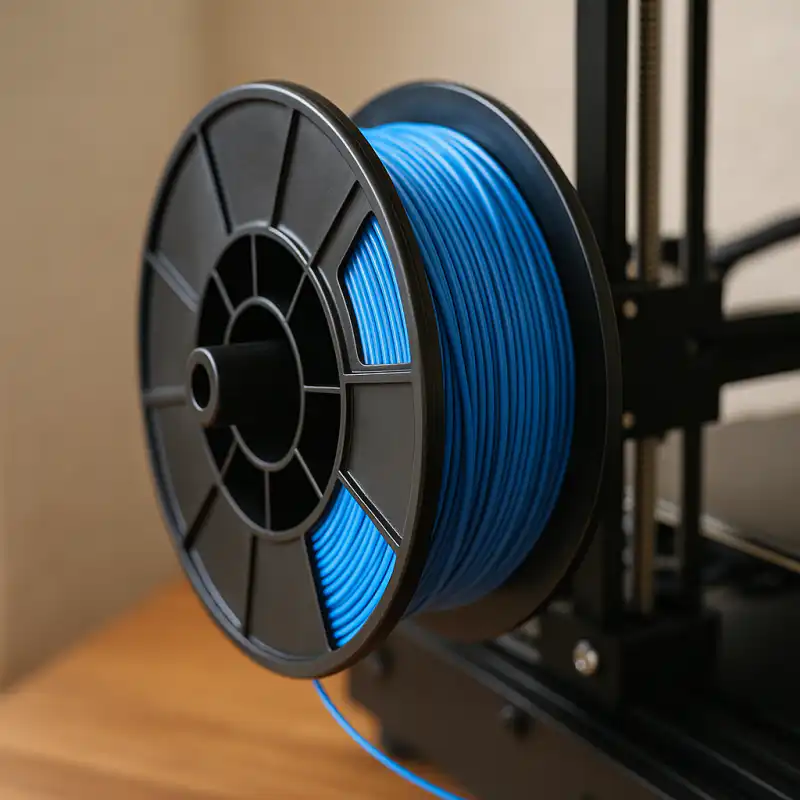
5 Hidden Costs: Why Batch-to-Batch Consistency is the Most Overlooked Factor in Large-Scale 3D Manufacturing


Abstract
In the transition of additive manufacturing from a prototyping tool to a viable method for serial production, the challenge of maintaining consistent quality at scale becomes paramount. A frequently underestimated variable in this equation is the consistency of the feedstock material, specifically 3D printing filament, from one production batch to the next. Seemingly negligible variations in filament diameter, chemical composition, colorant dispersion, and moisture content can precipitate a cascade of negative consequences, including print failures, compromised mechanical properties of finished parts, and significant production delays. These issues undermine the economic viability and reliability of large-scale 3D manufacturing. This analysis examines the multifaceted impact of inconsistent filament, articulating the hidden costs associated with material waste, machine downtime, diminished part performance, and reputational damage. It posits that establishing rigorous standards for batch-to-batch consistency, through strategic supplier partnerships and robust internal quality control, is not a peripheral concern but a foundational requirement for achieving scalable, repeatable, and economically sound industrial 3D printing operations.
Key Takeaways
- Prioritize suppliers who demonstrate verifiable, data-backed batch-to-batch consistency.
- Implement incoming quality control checks for filament diameter and moisture content.
- Standardize print profiles for specific material batches to minimize mid-production adjustments.
- Understand that consistent filament is the bedrock of reliable large-scale 3D manufacturing.
- Factor the total cost of ownership, including failures, over just the per-kilogram price.
- Partner with an OEM/ODM manufacturer to secure a stable, customized material supply.
- View material consistency as a direct investment in production uptime and part reliability.
Table of Contents
- The Industrial Promise and a Silent Saboteur
- Cost #1: The Compounding Expense of Failed Prints
- Cost #2: The Erosion of Mechanical Integrity and Part Performance
- Cost #3: The Domino Effect on Production Timelines and Scalability
- Cost #4: The Quiet Corrosion of Brand Reputation and Customer Trust
- Cost #5: The Hidden Overhead of Reactive Quality Control
- A Strategic Framework for Ensuring Batch-to-Batch Consistency
- Frequently Asked Questions (FAQ)
- Conclusion
- References
The Industrial Promise and a Silent Saboteur
The narrative of 3D printing has undergone a profound transformation. What began as a novel technology for creating one-off prototypes and conceptual models has matured into a formidable force in industrial production. Companies are now leveraging large-scale 3D manufacturing to produce end-use parts, complex jigs and fixtures, and even customized medical implants. This evolution from a single machine in a lab to a fleet of printers running around the clock marks a significant leap in ambition and operational complexity. Yet, within this promising landscape of on-demand, distributed manufacturing, a persistent and often unacknowledged factor threatens to undermine its very foundation: the lack of batch-to-batch consistency in filament feedstock. It operates as a silent saboteur, quietly introducing variability that can derail production, compromise quality, and inflate costs in ways that are not immediately obvious.
From Rapid Prototyping to Serial Production: The Shift in Scale
In the realm of rapid prototyping, the primary goal is to produce a physical representation of a digital design quickly. The emphasis is on form and fit, not necessarily on ultimate mechanical performance or absolute repeatability. If a print fails, or if one prototype feels slightly different from the next, the consequences are often minimal. The designer can simply tweak the settings and print again. The cost is measured in a few hours of machine time and a small amount of material. This low-stakes environment has shaped many of the early habits and expectations around 3D printing.
However, the logic of serial production operates on an entirely different set of principles. Here, the objective is to manufacture hundreds or thousands of identical parts that meet stringent functional and quality requirements. Each part must be dimensionally accurate, mechanically robust, and visually indistinguishable from the last. In this context, variability is not a minor inconvenience; it is the primary adversary. A single failed print is no longer just a lost prototype but a disruption to a production schedule, representing wasted capacity on a machine that could have been producing a valuable part. When you are running a farm of 50 printers, a 5% failure rate caused by material inconsistency does not mean 2 or 3 failed prints; it means a constant, draining battle against inefficiency that directly impacts the bottom line. The very economic model of large-scale 3D manufacturing hinges on predictability and repeatability, two qualities that are directly threatened by inconsistent filament.
Defining Batch-to-Batch Consistency: Beyond the Spec Sheet
When we speak of batch-to-batch consistency, it is tempting to reduce the concept to a single number on a specification sheet, most commonly the filament diameter. A manufacturer might advertise a diameter of 1.75mm with a tolerance of ±0.03mm, and on the surface, this appears to be a guarantee of quality. While diameter is undoubtedly a vital parameter, true consistency encompasses a much richer and more complex set of material properties. Imagine you are baking bread. You could use flour from two different bags, both labeled “All-Purpose Flour,” yet find that one absorbs more water or produces a denser loaf. The label tells part of the story, but the actual performance reveals a deeper truth.
True batch-to-batch consistency in 3D printing filament involves several interconnected factors:
- Dimensional Stability: This goes beyond average diameter. It includes ovality (how round the filament is) and the consistency of the diameter along the entire length of the spool. Even small, intermittent fluctuations can lead to over- or under-extrusion, creating visible defects and weak points in a print.
- Chemical and Rheological Properties: The base polymer itself can have variations. Differences in molecular weight or polymer chain length distribution between batches affect the material’s viscosity and how it flows when melted (its rheology). One batch might require a printing temperature of 210°C for optimal layer adhesion, while the next, from the same supplier and of the same “material,” may require 215°C to achieve the same result.
- Colorant and Additive Dispersion: The pigments used to color filament are not inert. They can alter the thermal and mechanical properties of the base polymer. If the pigment is not mixed uniformly, or if the percentage of pigment varies from batch to batch, it can cause significant changes in performance. A “Signal White” from March might print differently from a “Signal White” produced in April because the masterbatch concentration or dispersion quality changed.
- Moisture Content: Many 3D printing polymers, especially nylons, PETG, and even PLA to some extent, are hygroscopic, meaning they absorb moisture from the air. Filament that is not dried properly before being spooled and packaged will contain excess moisture. When heated in the hotend, this water turns to steam, creating bubbles in the extruded plastic. This leads to poor surface finish, weak and brittle parts, and nozzle blockages. Consistency in pre-production drying is a non-negotiable aspect of quality manufacturing.
A failure to control any one of these elements can render the advertised diameter tolerance meaningless. The promise of consistency must be a holistic one, rooted in a deep understanding of polymer science and a rigorous process control methodology that governs every step of production.
The Core of the Problem: Why Do Batches Vary?
Understanding why these variations occur is the first step toward mitigating them. The variability is not born from malice or intentional neglect but from the inherent complexities of industrial polymer processing. A filament manufacturer is engaged in a continuous process of transforming raw material into a finished product, and at each stage, there are opportunities for deviation.
The journey begins with the raw polymer resin. These resins are produced in massive quantities by petrochemical companies. While they are made to a specific grade, there can be slight variations from one production lot to another in terms of molecular weight, melt flow index (MFI), and purity. A high-quality filament manufacturer will source resins from reliable suppliers and, ideally, perform incoming quality control to test these properties. A lower-cost producer might engage in “lot-to-lot” sourcing, buying whatever resin is cheapest on the spot market, introducing a massive source of inconsistency right at the start of the process.
Next comes the introduction of additives and color masterbatches. Pigments, UV stabilizers, impact modifiers, and reinforcing fibers (like carbon or glass) are typically added in the form of a concentrated masterbatch. The quality of this masterbatch, the precision of the dosing equipment that mixes it with the base resin, and the efficiency of the extruder screw in dispersing it evenly are all critical. A poorly calibrated doser might add 1.8% colorant for one batch and 2.2% for the next. This seemingly small difference can be enough to alter the required printing temperature or affect the final part’s strength.
Finally, the extrusion process itself is a delicate dance of temperature, pressure, and speed. The polymer must be melted uniformly, pushed through a die, and then cooled at a precisely controlled rate to achieve the target diameter and roundness. The temperature profile along the extruder barrel, the speed of the puller wheels that draw the filament, and the temperature of the water bath used for cooling all interact. Laser micrometers provide real-time feedback on diameter, allowing for automatic adjustments. However, a system that is constantly making large, reactive adjustments is a sign of an unstable process. A truly stable process, the hallmark of excellent batch-to-batch consistency, requires minimal adjustment because the inputs (resin, additives, temperature) are already so well-controlled (Hockmeyer, n.d.).
Cost #1: The Compounding Expense of Failed Prints
The most immediate and visceral cost of inconsistent filament is the failed print. It is a familiar sight to any 3D printing operator: a tangled mess of plastic on the print bed, a part that has detached halfway through, or a piece with such severe defects that it must be discarded. In a production environment, these failures are not just minor annoyances; they are a significant and compounding financial drain. The cost of a failed print is a multifaceted liability that extends far beyond the plastic itself, eating into profit margins and undermining the efficiency of the entire operation. Thinking about this in purely economic terms helps clarify the gravity of the situation. Every failed print represents a direct loss of revenue-generating potential.
Material Waste: More Than Just Discarded Plastic
The most obvious component of a failed print’s cost is the material consumed. If a 20-hour, 800-gram print fails at the 19-hour mark, that is nearly a full kilogram of high-quality, and often expensive, engineering-grade filament that is now destined for the trash bin. For materials like PEEK or carbon-fiber-reinforced nylon, this can represent a loss of hundreds of dollars in a single incident. When these failures occur sporadically across a fleet of printers due to a “bad batch” of filament, the costs quickly multiply. A production manager might see a 10% increase in material purchasing for the month without a corresponding increase in shippable parts, a clear indicator of a systemic problem.
However, the cost of material waste transcends the purchase price of the filament. There is an associated energy cost. The 3D printer consumed electricity for 19 hours—heating the bed, running the motors, powering the control board—all for a null result. While the energy cost of a single printer may seem small, when scaled across a print farm, this wasted energy becomes a notable operational expense. Furthermore, there is the environmental consideration. Most failed prints, especially those made from composite or mixed materials, are not easily recyclable. They represent a stream of industrial waste that must be disposed of, often incurring its own costs and contributing to the operation’s environmental footprint. A commitment to sustainability, a value increasingly important to modern manufacturing enterprises and their customers, is directly compromised by the waste generated from unreliable processes.
Machine Time: The Irrecoverable Cost of a Tied-Up Printer
Perhaps a more significant, though less tangible, cost is the loss of productive machine time. Each printer in a large-scale 3D manufacturing facility is a capital asset, an investment that must generate a return. When a printer is occupied for 20 hours on a print that ultimately fails, that is 20 hours of production capacity that has been irrevocably lost. It is not time that can be “made up” later; it is a permanent hole in the production schedule. That machine could have been printing a valuable part for a customer, generating revenue and contributing to the business’s profitability.
Consider a print farm with 50 machines, each with an operational availability of 20 hours per day. That represents 1,000 hours of potential production capacity daily. If a bad batch of filament causes a failure rate that wastes just 50 of those hours, that is equivalent to having two and a half printers sitting completely idle for the entire day. This lost opportunity cost is immense. The machine is still depreciating, it still occupies floor space, and it still requires maintenance, but it is producing nothing of value. For businesses that rely on selling printing capacity or manufacturing products on tight deadlines, this loss of output can be the difference between a profitable quarter and a loss. The reliability of the printing process, which is fundamentally tied to the reliability of the material, is therefore a direct driver of asset utilization and financial performance.
Labor and Post-Processing: The Human Effort Down the Drain
The final piece of the failed-print puzzle is the human cost. A person had to prepare the printer, load the file, and initiate the print. After the failure, someone has to diagnose the problem, clean the mess, and potentially perform maintenance. This might involve scraping hardened plastic off the print bed, clearing a clogged nozzle, or even partially disassembling the extruder. This is all non-value-added labor. It is time that skilled technicians could have spent on preventative maintenance, quality control of finished parts, or process improvement initiatives. Instead, they are engaged in “firefighting,” a reactive cycle of fixing problems caused by an unreliable input.
Moreover, a print might not fail catastrophically but instead finish with defects that render it unusable. It might have poor layer adhesion, incorrect dimensions, or a warped base. An operator might spend time removing supports and performing initial finishing steps before the fatal flaw is even discovered during a quality inspection. All that post-processing labor is then wasted. This human element is often the most frustrating part of the equation. It drains morale and creates a work environment defined by constant problem-solving rather than efficient production. When operators start to distrust the materials they are given, they become hesitant and less efficient, further compounding the costs of inconsistency. The simple act of using a reliable, consistent filament can transform the role of a technician from a janitor of failed prints to a true production specialist.
Cost #2: The Erosion of Mechanical Integrity and Part Performance
Beyond the immediate and visible expense of failed prints lies a more insidious cost: the degradation of the final part’s quality. For large-scale 3D manufacturing to be a viable alternative to traditional methods like injection molding or CNC machining, the parts produced must be more than just dimensionally accurate; they must be reliable and perform their intended function over their expected lifespan. Inconsistent filament directly attacks this requirement, introducing unseen weaknesses and unpredictable performance characteristics that can lead to part failure in the field. This erosion of mechanical integrity undermines the very value proposition of using 3D printing for end-use applications and can have severe consequences for both the manufacturer and the end-user.
The Unseen Flaw: How Diameter Variation Compromises Strength
Let’s return to the concept of filament diameter. A slicer software calculates the precise volume of material that needs to be extruded for every single movement the print head makes. This calculation is based on the assumption that the filament diameter is constant and known. For example, if the slicer is set to use 1.75mm filament, it calculates the length of filament to feed into the extruder to produce a specific volume of molten plastic.
Now, imagine the filament from a new batch has an average diameter of 1.72mm, a seemingly tiny deviation, but still within a loose tolerance of ±0.03mm. The printer, unaware of this change, continues to feed the same length of filament as before. Because the filament is thinner, the actual volume of plastic being extruded is less than what the slicer intended. This results in under-extrusion. The extruded lines of plastic will be thinner, and they may not press firmly enough against their neighbors. The consequence is microscopic voids and gaps between the layers and perimeters of the part.
While the part may look acceptable from a distance, these voids are stress concentrators. When the part is put under load, stress will build up around these tiny imperfections, much like how a small crack in a windshield can spread across the entire glass. The result is a part that is significantly weaker than a part printed with correctly-sized filament. The layer-to-layer adhesion, which is the primary determinant of strength in the Z-axis for Fused Deposition Modeling (FDM) parts, is severely compromised. A part that was designed to withstand a certain tensile or impact load may now fail at a fraction of that value. This is a hidden flaw; the part passes a visual inspection but is a functional failure waiting to happen.
Chemical Inconsistency: The Impact on Layer Adhesion and Durability
The chemical makeup of the filament is just as important as its physical dimensions. The strength of a 3D printed part is fundamentally about how well the individual layers of molten plastic have fused together. This fusion is a process of polymer chain entanglement. As a new layer of hot plastic is deposited onto the previous, slightly cooler layer, the polymer chains from both layers need to intermingle and form strong bonds as they solidify. The quality of this bond depends on several factors that can be affected by batch-to-batch chemical variations.
A change in the base polymer’s molecular weight can alter the ideal printing temperature. A batch with a higher molecular weight might be more viscous and require a higher temperature to flow properly and achieve good intermolecular diffusion with the layer below. If the operator is still using the print settings optimized for the previous batch, the new material may be deposited too “cold,” resulting in poor layer adhesion. The part might feel solid, but it can be easily delaminated or split along the layer lines when stressed.
Similarly, the type and concentration of colorant can have a surprising effect. Some pigments, particularly carbon black, can act as nucleating agents, causing the polymer to crystallize and solidify faster. Other pigments can have a plasticizing effect. A change in the pigment package from one batch to another can subtly alter the thermal properties of the filament. This is why many production facilities will dedicate specific printers and print profiles to specific colors, and why they are so wary of changing material suppliers. They are trying to control for the chemical variability that they know exists, even when the material is sold under the same product name. A reliable OEM/ODM filament manufacturer provides detailed material data sheets (MDS) and guarantees the consistency of their formulations, which is indispensable for applications where mechanical performance is a primary concern.
A Tale of Two Spools: An Anecdotal Case Study
Consider the case of a company that manufactures custom drone frames for agricultural use. These frames need to be lightweight but also strong and rigid enough to withstand the vibrations of the motors and the occasional rough landing. The company has qualified a specific brand of carbon-fiber-reinforced PETG (PETG-CF) for their production. For months, everything works perfectly. They have a well-tuned print profile, and the frames they produce consistently pass their quality control tests, which include a static load test.
One day, a new shipment of the same PETG-CF arrives. The spools look the same, the boxes are the same, and the filament diameter measures within the advertised tolerance. The operators load the new spools and continue production as usual. A week later, reports start coming in from the field: several drones have failed in mid-air due to cracked arms. An investigation begins. The company pulls frames from the new batch and subjects them to the same static load test. They discover that the new frames are failing at only 60% of the load capacity of the old frames.
After a painstaking analysis, they trace the problem back to the new filament batch. Although it was sold as the same product, a deeper investigation reveals that the carbon fiber content was slightly lower, and the base PETG resin had a different melt flow index. This resulted in poorer layer adhesion and a less rigid final part. The cost to the company was enormous: they had to recall and replace dozens of units, their reputation for quality was damaged, and they lost weeks of production time re-qualifying a new, more reliable material. This story, a composite of real-world experiences, perfectly illustrates how the hidden threat of chemical and compositional inconsistency can lead to catastrophic and expensive failures long after the part has left the factory.
| Performance Metric | Consistent Filament Batch | Inconsistent Filament Batch (Subtle Variation) | Impact on Production |
|---|---|---|---|
| Dimensional Accuracy | ±0.1mm on a 100mm part | ±0.3mm to ±0.5mm on the same part | Parts fail QC, require rework, or are scrapped. Mating parts may not fit. |
| Tensile Strength (Z-axis) | 35 MPa (Meets Spec) | 20 MPa (60% of Spec) | Parts are brittle and fail under expected operational loads, leading to field failures. |
| Layer Adhesion | Excellent, part is solid | Poor, layers can be split with moderate force | High risk of delamination during use, especially under vibration or impact. |
| Surface Finish | Smooth, uniform sheen | Visible banding, inconsistent texture, zits/blobs | Parts are cosmetically unacceptable and may require extensive post-processing. |
| Print Success Rate | >98% | 80-85% | Increased material waste, lost machine time, and higher labor costs per part. |
Cost #3: The Domino Effect on Production Timelines and Scalability
In large-scale manufacturing, time is a currency. Production schedules are carefully orchestrated ballets of machines, materials, and personnel, all designed to meet customer deadlines and maintain a profitable flow of goods. Inconsistent filament throws a wrench into this delicate machinery, creating a domino effect of delays and inefficiencies that ripple through the entire operation. The promise of additive manufacturing is agility and speed, but that promise is broken when operators are constantly battling their materials. This struggle not only jeopardizes current timelines but also erects a formidable barrier to the ultimate goal of true, seamless scalability.
The Myth of “Set It and Forget It”: Constant Re-calibration
The ideal state for a print farm is a “lights-out” manufacturing environment, where printers run continuously with minimal human intervention. An operator should be able to load a validated print file, select a qualified material profile, and press “start,” confident that a perfect part will be ready hours later. This “set it and forget it” vision is the cornerstone of efficient large-scale 3D manufacturing.
Inconsistent filament shatters this vision. When a new batch of material is introduced, even if it is from the same supplier, operators often find that the old, trusted print settings no longer work. A profile that was perfectly tuned for the previous batch might now produce stringing, warping, or poor surface finish. The operator must then embark on a time-consuming process of re-calibration. They have to print temperature towers, retraction tests, and flow rate cubes, incrementally adjusting settings to find the new “sweet spot” for this specific batch.
This is not a quick process. It can take several hours of trial and error to dial in a new profile. During this time, a valuable production machine is not producing sellable parts; it is being used as a testbed. If a company has dozens of printers, they face a difficult choice: do they spend the time to create a new profile and deploy it to all machines, or do they allow individual operators to tweak settings on the fly? The first option consumes significant time and resources upfront. The second option leads to a loss of standardization, where every printer is running a slightly different process, making quality control a nightmare. This constant need for re-calibration turns what should be a stable production process into an endless series of R&D projects, bleeding time and efficiency at every turn.
Supply Chain Disruptions: When a “Bad Batch” Halts Everything
Imagine a scenario where a manufacturer is in the middle of a production run for 1,000 identical parts for a major client, with a firm delivery date. They have 50 printers dedicated to the job, running smoothly. Halfway through the production run, they exhaust their current stock of filament and switch to a new pallet that just arrived. Suddenly, print failures begin to skyrocket. Parts start warping off the build plate, nozzles begin to clog, and the surface finish becomes unacceptable. Production grinds to a halt.
The team scrambles to diagnose the issue and quickly identifies the new filament batch as the culprit. They now face a crisis. They do not have enough of the old, good filament to finish the job. They cannot use the new filament without spending days re-calibrating every machine, a delay that will cause them to miss their deadline. Their entire production line is held hostage by their material supply. They have to make frantic calls to their filament supplier, who may or may not have a better batch available for immediate shipment. They may have to air-freight a new shipment at exorbitant cost.
This is not a hypothetical situation; it is a real and recurring nightmare for many companies that have embraced large-scale 3D manufacturing. It shows how a lack of batch-to-batch consistency makes the supply chain fragile. The manufacturer becomes completely dependent on the luck of the draw with each new material order. This level of uncertainty is untenable for any serious manufacturing operation. It makes it impossible to confidently commit to deadlines or to accurately forecast production capacity. The entire operation becomes reactive, lurching from one material-induced crisis to the next.
The Barrier to True Scalability: Why Consistency is the Foundation
Scalability is about more than just buying more printers. True scalability is the ability to increase production output without a proportional increase in complexity or a decrease in quality. It is the ability to produce the 10,000th part with the same quality and efficiency as the 10th part. It is also the ability to set up a new production line in a different geographic location and have it produce identical parts.
Inconsistent filament is a fundamental barrier to achieving this. If every new batch of material requires re-calibration, then scaling up production from 10 printers to 100 printers means multiplying the calibration workload by ten. If the process is not stable and predictable, it cannot be reliably duplicated. A company cannot simply copy the print profiles from their headquarters in Ohio to a new facility in Germany and expect them to work if the filament being supplied to the German facility has different properties.
This is why establishing a partnership with a filament manufacturer that can guarantee global batch-to-batch consistency is so vital for ambitious companies. They need a supplier that operates under a single, rigorous quality management system, like ISO 9001:2015, across all its production sites. They need a supplier that can provide the exact same formulation, produced with the exact same process parameters, whether it is delivered to a factory in the US, Europe, or Asia. Without this foundational material consistency, any attempt at large-scale, distributed manufacturing will devolve into a chaotic and unmanageable collection of disparate, localized processes. The dream of a global, agile manufacturing network remains just a dream, crippled by the mundane reality of an unreliable raw material.
Cost #4: The Quiet Corrosion of Brand Reputation and Customer Trust
The financial costs of failed prints and production delays are relatively easy to quantify. They appear on balance sheets as increased material expenses or decreased revenue. However, there is a far more damaging, long-term cost associated with inconsistent manufacturing: the erosion of your company’s reputation and the trust of your customers. This cost does not appear on a spreadsheet, but it can be the most devastating of all. In a competitive marketplace, reputation is a company’s most valuable asset. Once lost, it is incredibly difficult to regain. Inconsistent filament, by leading to inconsistent product quality, wages a quiet war on this asset.
Inconsistent Products: The End-User’s Frustration
Let’s shift our perspective from the factory floor to the end-user. This could be a hobbyist who buys a 3D-printed accessory for their drone, an engineer who orders a custom jig for their assembly line, or a patient receiving a custom-fitted medical device. Their expectation is straightforward: the product they receive should work as advertised and be of high quality.
Now, imagine the experience of that end-user when they receive a product that fails to meet this basic expectation. The custom jig cracks the first time it is used because it was printed with a batch of filament that had poor layer adhesion. The drone accessory does not fit properly because dimensional inaccuracies caused by under-extrusion made it too small. The surface of the medical device is rough and porous, making it difficult to clean and raising concerns about hygiene.
The customer does not know or care about the intricacies of your filament supply chain. They only know one thing: the product they received from your company is defective. Their immediate feeling is one of frustration and disappointment. If they ordered two identical parts and one is visibly different from the other—perhaps a slight difference in color sheen or texture—their confidence in your company’s professionalism and attention to detail is immediately shaken. They start to wonder, “If they can’t even get the appearance right, can I trust the structural integrity of this part?” This single negative experience can be enough to ensure they never order from you again.
Missed Deadlines and Broken Promises
The production delays caused by fighting with inconsistent material have a direct impact on your customers. When you are forced to halt production to re-calibrate machines or wait for a new shipment of usable filament, you are at high risk of missing your promised delivery dates. For a business-to-business customer, this can have serious knock-on effects. That custom jig your company was supposed to deliver might be the critical component holding up the start of their own new production line. Your delay becomes their delay, costing them money and potentially damaging their relationship with their own customers.
When you have to call a client and explain that their order will be late, you are breaking a promise. Doing this once might be forgivable if handled well. Doing it repeatedly because of recurring internal production problems is a recipe for losing that customer permanently. They will seek out a more reliable supplier, one who can deliver on time, every time. The reputation for being “unreliable” or “always late” is incredibly difficult to shake in an industrial context. Word travels quickly within industries, and soon, potential new customers will be wary of engaging with your company, even if you have since solved your production issues. The damage to your brand’s credibility can far outlast the technical problem that caused it.
The Long-Term Cost of a Single Defective Shipment
The power of negative word-of-mouth, especially in the age of social media and online reviews, cannot be overstated. A single customer who receives a shipment of defective parts can become a very vocal critic. They might post pictures of the failed parts on Twitter, write a detailed negative review on a B2B platform, or share their bad experience on an industry forum. This one piece of negative feedback can be seen by thousands of potential customers, instantly poisoning their perception of your brand before you ever have a chance to interact with them.
The long-term cost of this reputational damage is the loss of future business. It is the customers who never even contact you for a quote because they read a bad review. It is the large contract you were not even considered for because a key decision-maker heard from a colleague that your company “has quality issues.” This is the quiet corrosion of your brand. It happens in the background, a slow and steady erosion of market confidence.
Building a brand known for quality, reliability, and consistency takes years of hard work and investment. It requires delivering excellent products and meeting commitments time and time again. All of that hard-won brand equity can be jeopardized by the failure to control a single, fundamental variable in the production process: the consistency of your raw materials. Investing in a highly reliable, consistent filament supply is therefore not just a technical decision; it is a strategic investment in brand protection. It is a commitment to ensuring that every part that leaves your factory is a positive ambassador for your company, reinforcing the trust you have worked so hard to build.
Cost #5: The Hidden Overhead of Reactive Quality Control
Many manufacturing operations, particularly those new to large-scale production, fall into a trap of “reactive” quality control. They operate under the assumption that their materials and processes are stable, and they only invest significant effort into problem-solving after a failure has occurred. This “firefighting” mentality might seem efficient on the surface because it avoids upfront investment, but in reality, it creates a massive and often hidden layer of operational overhead. It fosters a chaotic and stressful work environment and ultimately costs far more in the long run than a proactive approach. The struggle against inconsistent filament is a primary driver of this costly reactive cycle.
The Firefighting Mentality: Shifting from Proactive to Reactive
A proactive quality control system is designed to prevent defects from happening in the first place. It involves carefully vetting suppliers, testing incoming raw materials, and establishing stable, well-documented processes. The goal is to ensure that only good material enters a process that is known to produce good parts.
A reactive system, by contrast, waits for the “fire alarm” of a failed print or a customer complaint. When the alarm sounds, a team is scrambled to put out the fire. They investigate the cause, quarantine bad parts, and implement a quick fix to get production running again. The focus is on immediate problem resolution, not on fundamental process improvement. This creates a vicious cycle. Because the root cause—often an inconsistent input like filament—is not systematically addressed, the same fires flare up again and again.
Technicians and engineers become perpetual firefighters, their days consumed by diagnosing nozzle clogs, tweaking print settings for a new batch, and explaining to managers why production targets were missed. There is no time for strategic work like optimizing print parameters for speed, testing new materials, or developing preventative maintenance schedules. The entire quality apparatus of the organization becomes dedicated to inspection and containment—sorting good parts from bad—rather than on assurance and prevention. This is an incredibly inefficient use of skilled labor and a sure sign of an immature production system.
The High Cost of Incoming Inspection for Every Spool
When a company has been burned multiple times by bad batches of filament, a common reaction is to implement a stringent incoming quality control (IQC) program for every single spool of material. Before a spool is allowed onto the production floor, a technician might unseal it, measure the diameter at several points, perform a “brittleness test” by bending it, and perhaps even print a small test object.
While this is a step up from having no inspection at all, it represents a significant operational cost. Consider the labor involved. If a company receives a shipment of 500 spools, a technician could spend days or even weeks just performing these basic checks. This is time and money spent simply verifying that the supplier has done their job correctly. It is a cost of mistrust. Furthermore, these simple manual checks are often insufficient. They might catch a spool with a wildly incorrect diameter, but they are unlikely to detect subtle but critical variations in chemical composition, colorant dispersion, or moisture content that can still lead to print failures.
The ultimate reactive approach is to have to dry every single spool of filament upon arrival, regardless of how it was packaged. Many companies are forced to invest in large industrial ovens and dedicate significant labor to loading and unloading spools, all because they cannot trust their supplier to provide properly dried and sealed material. This entire department of “material correction” is a hidden factory within the factory, a pure overhead cost necessitated by the failure to solve the problem at its source: the filament supplier.
Building a Proactive Framework: The Path to Reliability
The alternative to this costly reactive cycle is to build a proactive framework for quality, with material consistency at its core. This approach shifts the focus from inspecting every spool to qualifying every supplier. It is about building a partnership with a filament manufacturer that can provide verifiable proof of their process control and batch-to-batch consistency.
This involves a more rigorous upfront investment. It means auditing potential suppliers, reviewing their quality management system (QMS) documentation, and requesting certificates of analysis (CoA) for their materials that show key properties for each batch. It means running a thorough validation process on a new supplier’s material, printing complex test geometries and performing mechanical tests to ensure it meets all specifications before it is approved for production use.
The payoff for this upfront work is immense. Once a supplier is qualified, the need for extensive incoming inspection is drastically reduced. The company can move to a “dock-to-stock” model, where material from a trusted supplier can go directly into inventory, ready for use, with only occasional spot checks to verify continued compliance. This frees up labor, reduces material handling overhead, and, most importantly, creates a stable and predictable production environment. The firefighting stops. The focus can shift from fixing problems to improving performance and growing the business. The table below illustrates the stark difference between these two operational models.
| Quality Control Aspect | Reactive Model (Post-Failure) | Proactive Model (Pre-Production) |
|---|---|---|
| Supplier Vetting | Based primarily on price and availability. | Based on rigorous audits, QMS review, and material validation. |
| Material Testing | Done only after a print failure occurs to diagnose the problem. | Incoming material is certified by the supplier; spot checks verify consistency. |
| Process Calibration | Constant re-calibration for each new, untrusted batch of material. | Standardized, locked-down print profiles for qualified materials. |
| Cost Implications | High costs from waste, downtime, and extensive inspection labor. | Higher upfront investment in qualification, but much lower long-term operational cost. |
| Production Stability | Chaotic and unpredictable. Frequent “fires” and production halts. | Stable, predictable, and scalable. Minimal unplanned downtime. |
A Strategic Framework for Ensuring Batch-to-Batch Consistency
Acknowledging the profound costs of inconsistent filament is the first step. The next, more constructive step is to develop a systematic framework for ensuring that the material flowing into your production facility is a reliable asset, not a latent liability. This is not a matter of finding a “magic” filament brand, but of adopting a professional manufacturing discipline in how you source, validate, and manage your materials. It involves moving from a transactional relationship with suppliers to a strategic partnership built on data, trust, and a shared commitment to quality. This framework is the bedrock upon which scalable and profitable large-scale 3D manufacturing is built.
Vetting Your Filament Manufacturer: Beyond the Price Tag
The single most impactful decision you can make to ensure batch-to-batch consistency is the selection of your filament supplier. In a market flooded with options ranging from low-cost hobbyist brands to specialized industrial producers, it is easy to be swayed by a low per-kilogram price. This is often a false economy. The true cost of a filament must include the downstream costs of failures, downtime, and quality issues it may cause. A professional vetting process looks beyond the price.
Your investigation should focus on the manufacturer’s process and philosophy. Ask potential suppliers direct questions:
- What are your raw material sourcing policies? Do you use a single, certified supplier for your base resins, or do you source from the open market?
- Can you provide a Certificate of Analysis (CoA) with each batch that details key parameters like melt flow index, moisture content, and final diameter measurements from your laser micrometers?
- What is your process for controlling colorant and additive percentages? Is it gravimetric and automated?
- How do you manage moisture? What is your drying procedure for hygroscopic materials before extrusion and packaging?
- What is your lot tracking capability? If I have an issue with a spool, can you trace it back to the specific production run, machine, and raw material lot?
A reputable, industrial-focused manufacturer will not only have ready answers to these questions but will welcome them. They will be proud to show you their quality control documentation and explain their processes. A supplier who is evasive, cannot provide data, or competes solely on price is a significant red flag. They are effectively asking you to bear the risk of their unproven process.
The Significance of ISO 9001:2015 Certification
One of the most powerful tools for vetting a supplier is to look for internationally recognized quality certifications, with ISO 9001:2015 being the most relevant for manufacturing. This is not just a certificate to hang on the wall. Achieving ISO 9001:2015 certification requires a company to establish, document, and maintain a comprehensive Quality Management System (QMS).
An ISO 9001-certified manufacturer is required to have robust procedures for:
- Supplier Management: A process for evaluating and selecting suppliers of raw materials.
- Process Control: Documented procedures for every step of the manufacturing process to ensure it is performed consistently.
- Monitoring and Measurement: Using calibrated equipment (like laser micrometers) to monitor the process and the final product to ensure it meets specifications. Live print monitoring is also a key technology for improving consistency (Industrial Analyst, 2024).
- Traceability: The ability to trace a product back through the production process to its raw material inputs.
- Non-conforming Product: A procedure for identifying, quarantining, and dealing with any product that does not meet quality standards.
- Continuous Improvement: A commitment to analyzing data and continuously improving processes.
Partnering with an ISO 9001-certified filament manufacturer like SigmaFilament provides a high degree of assurance that they are not just making promises about quality, but that they have a verified system in place to deliver it. It shifts the burden of proof from you to them and provides a common language and framework for discussing quality.
Implementing a Robust Incoming Quality Control (IQC) Program
Even when working with a trusted, certified supplier, it is prudent to have your own streamlined IQC program. This is not the costly, spool-by-spool inspection forced by unreliable suppliers, but a more strategic “trust but verify” approach. This program could involve:
- Certificate of Analysis Review: For every new batch that arrives, review the supplier-provided CoA to ensure the reported values are within your accepted specifications.
- Sample Testing: Select one or two spools at random from each new pallet or large batch.
- Visual and Dimensional Check: Quickly check the sample spools for proper vacuum sealing, desiccant presence, and spool winding quality. Take a few diameter measurements with a calibrated digital caliper to verify against the CoA.
- The “Golden Print” Test: Have a standardized test print—a small but challenging object that is sensitive to variations in temperature, retraction, and overhangs. Print this “golden print” with the sample spool using your standard production print profile. The result should be visually and dimensionally identical to the golden prints from previous batches.
If the sample passes these checks, you can release the entire batch into your production inventory with a high degree of confidence. If it fails, you have caught the problem before it contaminated your production floor. Because you are working with a qualified supplier, this should be a rare event, and you will have the data (your test results and their CoA) to have a productive, data-driven conversation with them to resolve the issue.
The Role of OEM/ODM Partnerships in Securing a Consistent Supply Chain
For companies operating at a very large scale, the ultimate solution for ensuring batch-to-batch consistency is to move beyond off-the-shelf products and engage in an Original Equipment Manufacturer (OEM) or Original Design Manufacturer (ODM) partnership.
An OEM partnership allows you to have a filament produced to your exact specifications but branded as your own. More importantly, it often involves a supply agreement that contractually guarantees the formulation and process will not change without your explicit approval. This locks in the consistency you need.
An ODM partnership goes a step further. It involves collaborating with the filament manufacturer’s R&D team to develop a completely custom material formulation tailored to your specific application. Perhaps you need a PLA with a higher heat resistance, or an ASA with specific UV-blocking characteristics. By co-developing the material, you gain complete control and transparency. The formulation is your intellectual property, protected by non-disclosure agreements. The manufacturer produces this exclusive material only for you, ensuring a unique and perfectly consistent supply chain. This is the pinnacle of proactive quality management, transforming the filament from a commodity you buy into a competitive advantage you control.
Frequently Asked Questions (FAQ)
What exactly is batch-to-batch consistency in 3D printing filament?
Batch-to-batch consistency refers to the uniformity of properties between different production runs, or “batches,” of the same filament product. It goes beyond the advertised diameter and includes the material’s chemical composition, colorant concentration, moisture content, and rheological (flow) properties. True consistency means a spool of filament produced in May will perform identically to a spool produced in August, using the same print settings.
My prints are failing, could inconsistent filament be the cause?
Yes, it is a very common but often overlooked cause. If you notice a sudden increase in print failures—like warping, poor layer adhesion, nozzle clogs, or bad surface finish—after starting a new spool of filament (even from the same brand), inconsistency is a prime suspect. Before spending hours troubleshooting your printer, try printing a known-good file with a spool from a previous, successful batch to see if the problem disappears.
How can I test a new filament batch for consistency?
A simple and effective method is to use a “golden print.” This is a small, standardized 3D model that you print with every new batch of material using your established print settings. Compare the new print to a reference “golden” version. Look for differences in surface finish, dimensional accuracy, stringing, and strength. Any deviation indicates a change in the filament’s properties.
Is filament from the same brand always consistent?
Unfortunately, no. Consistency varies dramatically between manufacturers. Some brands prioritize it through rigorous process controls like ISO 9001, while others may have more variable processes or source raw materials from different suppliers, leading to significant batch-to-batch differences. It is crucial to vet the manufacturer, not just rely on the brand name.
Why is a ±0.02mm diameter tolerance so important for large-scale manufacturing?
In large-scale manufacturing, precision is key. A slicer calculates extrusion volume based on a precise filament diameter. A tight tolerance like ±0.02mm ensures that the amount of material being extruded is extremely consistent. This prevents issues like under-extrusion (which creates weak, porous parts) or over-extrusion (which causes dimensional inaccuracies and jams). This level of precision is fundamental for achieving the repeatable quality required for end-use parts.
What does ISO 9001 certification mean for a filament manufacturer?
ISO 9001:2015 is an international standard for a Quality Management System (QMS). For a filament manufacturer, it signifies a deep commitment to process control. It means they have documented and auditable procedures for everything from raw material inspection and process calibration to lot traceability and continuous improvement. It provides you, the customer, with a high degree of confidence that they have a robust system in place to deliver consistent quality.
Conclusion
The journey of 3D printing from a niche prototyping technology to a mainstream manufacturing powerhouse is a testament to its potential. However, realizing this potential at an industrial scale requires a fundamental shift in mindset. We must move beyond the habits of the hobbyist and adopt the rigorous discipline of a professional manufacturer. At the heart of this discipline lies a deep respect for the importance of raw materials. The conversation can no longer be dominated solely by the per-kilogram price of a spool. It must evolve to encompass the total cost of ownership, where the price of a material is weighed against the costs of failure, downtime, and reputational harm that inconsistency can inflict.
Batch-to-batch consistency is not a luxury feature for premium filaments; it is the non-negotiable foundation of a reliable, scalable, and profitable large-scale 3D manufacturing operation. It is the invisible thread that connects a well-designed digital file to a physically perfect, functional part, time and time again. By strategically vetting suppliers, leveraging quality systems like ISO 9001, implementing intelligent quality control, and forming true partnerships, manufacturers can transform filament from a source of frustrating variability into a pillar of production stability. In doing so, they not only protect their bottom line but also uphold the very promise of additive manufacturing: to deliver quality parts, on-demand, anywhere in the world.
References
- Hockmeyer. (n.d.). Batch consistency and the path to more uniform production. Hockmeyer. Retrieved January 26, 2026, from https://www.hockmeyer.com/batch-consistency-and-the-path-to-more-uniform-production/
- Industrial Analyst. (2024, May 15). 3D printing’s forgotten future: A deep dive into the industry and its…. Industrial Analyst. Retrieved January 26, 2026, from https://industrialanalyst.substack.com/p/3d-printings-forgotten-future-a-deep
- Turner, B. N., Strong, R., & Gold, S. A. (2014). A review of melt extrusion additive manufacturing processes. Rapid Prototyping Journal, 20(3), 192-204. https://doi.org/10.1108/RPJ-01-2013-0012
- Vidakis, N., Petousis, M., Vairis, A., Savvakis, K., & Maniadi, A. (2020). On the compressive behavior of a 3D printed CYPET/pristine MWCNTs nanocomposite using fused filament fabrication. Polymers, 12(12), 2997. https://doi.org/10.3390/polym12122997
- Wickramasinghe, S., Do, T., & Tran, P. (2020). FDM-based 3D printing of polymer and associated composite: A review on mechanical properties, defects and treatments. Polymers, 12(7), 1529. https://doi.org/10.3390/polym12071529
- ISO. (2015). ISO 9001:2015(en) Quality management systems — Requirements. International Organization for Standardization. Retrieved January 26, 2026, from https://www.iso.org/standard/62085.html
- Spoerk, M., Gonzalez-Gutierrez, J., Sapkota, J., Schuschnigg, S., & Holzer, C. (2018). Effect of the printing orientation on the mechanical properties of PLA and PETG samples manufactured by fused filament fabrication. Journal of Applied Polymer Science, 135(19), 46233. https://doi.org/10.1002/app.46233
- Lederle, F., Alscher, D., & Müssig, J. (2021). The influence of pigments on the properties of poly(lactic acid) (PLA). Polymers, 13(9), 1362. https://doi.org/10.3390/polym13091362
- Gilmer, E. L., Miller, C. A., Chawla, N., & Williams, C. B. (2019). The influence of feedstock variation on the properties of parts fabricated using material extrusion additive manufacturing. Additive Manufacturing, 27, 138-148. https://doi.org/10.1016/j.addma.2018.11.004
Last reviewed and updated: January 2026. Author: SigmaFilament Engineering Team. For custom filament solutions and wholesale inquiries, contact our team.