Sourcing Blue PLA in 2026: A 5-Point Checklist for Consistent Color & Performance

Abstract
The procurement of colored 3D printing filaments, specifically blue polylactic acid (PLA), presents significant challenges related to batch-to-batch consistency in both coloration and mechanical performance. This analysis examines the multifaceted nature of blue PLA filament, dissecting the variables that influence its final properties, from the base polymer chemistry to the manufacturing process controls. It posits that a superficial assessment based on color appearance alone is insufficient for professional and industrial applications. The article establishes a systematic, five-point framework for evaluating and sourcing high-quality blue PLA, emphasizing the verification of raw materials, manufacturing tolerances, mechanical and thermal properties, supplier scalability, and robust quality control documentation. By exploring the science of colorimetry in polymers, the intricacies of filament extrusion, and the strategic importance of a reliable supply chain, this guide provides a comprehensive methodology for brands and manufacturers to secure a consistent and high-performing material. This approach mitigates production risks, ensures brand integrity through precise color matching to standards like Pantone, and fosters a stable, long-term partnership with a qualified filament producer.
Key Takeaways
- Verify color consistency using spectrophotometry and standards like Pantone or RAL.
- Insist on a filament diameter tolerance of ±0.02mm, verified by laser micrometers.
- Evaluate the mechanical and thermal properties, not just the aesthetic color.
- Assess a supplier’s OEM/ODM capabilities for custom branding and scalability.
- Demand comprehensive documentation, including a Certificate of Analysis (COA).
- Source high-quality blue PLA to ensure print reliability and part performance.
- Partner with a factory-direct manufacturer for better control and consistency.
Table of Contents
- Understanding the Spectrum: Deconstructing ‘Blue’ in PLA Filament
- Point 1: Verify the Base Resin and Colorant Chemistry
- Point 2: Scrutinize Manufacturing Tolerances and Process Controls
- Point 3: Evaluate Material Performance Beyond Aesthetics
- Point 4: Assess the Supplier’s OEM/ODM Capabilities for Scalability
- Point 5: Demand Comprehensive Quality Control and Documentation
- Frequently Asked Questions (FAQ)
- Conclusion
- References
Understanding the Spectrum: Deconstructing ‘Blue’ in PLA Filament
The perception of “blue” is a profoundly human experience, yet in the world of polymer science and manufacturing, it transforms into a precise, measurable, and often challenging variable. When a 3D printing project fails, the cause is frequently attributed to mechanical issues like poor layer adhesion or a clogged nozzle. However, an often-overlooked culprit is the material itself, especially when color consistency is paramount. Imagine producing a batch of 1,000 branded enclosures, only to discover halfway through that the “corporate blue” of the first 500 units is a noticeably different shade from the last 500. The aesthetic discrepancy can render the entire production run useless, wasting time, resources, and undermining brand integrity. This problem originates from a failure to appreciate that blue PLA is not a monolithic category; it is a complex composite whose final appearance and performance are determined by a cascade of decisions made long before the filament reaches your printer.
This initial section serves as a foundation, a way to calibrate our understanding before we begin the technical evaluation. We will explore what “blue” means in a material context, moving beyond subjective perception to the objective language of color science. We will also touch upon the common additives that create the diverse palette of blue PLA filaments available today—from shimmering silks to muted mattes—and explain the fundamental reasons why two spools of what is ostensibly the same blue PLA can yield such dramatically different results.
Beyond a Single Hue: The Science of Color in Polymers
At its core, the color of an opaque object is a result of light interaction. When white light, which contains all wavelengths of the visible spectrum, strikes a spool of blue PLA filament, the material’s chemical composition dictates which wavelengths are absorbed and which are reflected. The blue hue we perceive is the set of wavelengths that the material reflects back to our eyes. The agents responsible for this selective absorption are the colorants—pigments or dyes—mixed into the base PLA resin.
Pigments are insoluble, finely ground solid particles dispersed within the polymer matrix. Dyes, conversely, are soluble and integrate into the polymer at a molecular level. For a durable and lightfast color in PLA, pigments are far more common. The specific chemical structure of the pigment particles, known as chromophores, determines their light-absorbing properties. A slight change in the pigment’s chemical makeup, particle size, or concentration can alter the reflected wavelengths, leading to a different shade of blue.
This brings us to the phenomenon of metamerism, a critical concept for anyone concerned with color consistency. Metamerism occurs when two colored objects appear to match under one lighting condition but not under another. For instance, two spools of blue PLA might look identical under the fluorescent lights of a workshop but reveal distinct differences when viewed in natural daylight. This happens because the two filaments, while appearing to be the same color, are made with different pigment formulations that have different spectral reflectance curves. A reliable filament manufacturer controls for this by using a consistent pigment formulation from a single source, ensuring that the spectral curve of their blue PLA remains the same from batch to batch, thus producing a color that is stable across various lighting environments.
Pantone, RAL, and HEX: Speaking the Language of Color Specification
To escape the ambiguity of subjective color descriptions like “sky blue” or “navy blue,” industries rely on standardized color systems. These systems provide a universal, objective language for defining and reproducing color. For brands and product designers, specifying a color using one of these standards is the first step toward achieving consistency.
- Pantone Matching System (PMS): Predominantly used in the printing and design industries, the Pantone system assigns a unique code to thousands of specific color shades. When a company defines its brand color as “Pantone 285 C,” it refers to a precise shade of blue. A filament manufacturer with robust OEM capabilities can use this code to formulate a masterbatch that produces blue PLA matching this exact specification. You can explore the vast Pantone color library on their official website to understand the level of precision possible.
- RAL Colour Standard: Originating in Germany, the RAL system is widely used in Europe for varnish, powder coating, and plastics. It is a common standard in industrial design and architecture. Like Pantone, it uses a four-digit code to define specific colors (e.g., RAL 5015 Sky Blue), providing another unambiguous target for filament production.
- HEX Codes: In the digital world, colors are often defined by a hexadecimal code (e.g., #0B7BC1). While originating in web design, these codes can be converted into physical color targets using colorimetric instruments. Some filament manufacturers even provide the approximate HEX or PMS code for their standard colors.
When sourcing blue PLA for a specific project, providing a Pantone or RAL code to your supplier is not a mere suggestion; it is a technical requirement. It shifts the responsibility of color matching from you, the end-user, to the manufacturer, who should possess the tools and expertise to meet that specification.
The Impact of Additives: Shimmer, Silk, Matte, and Translucency
The aesthetic diversity of blue PLA filament goes far beyond simple hue. Manufacturers create a wide range of visual effects by incorporating various additives into the PLA and colorant mixture. Each of these additives interacts with light differently and can also influence the filament’s mechanical properties and printability.
| PLA Finish | Additive Composition | Visual Effect | Potential Impact on Printing |
|---|---|---|---|
| Silk PLA | Contains elastomeric copolymers (like TPU or TPE) | High gloss, light-scattering surface that hides layer lines | May require slightly higher temperatures; can be more brittle than standard PLA. |
| Matte PLA | Contains microscopic particles (e.g., calcium carbonate) | Diffuses light, creating a non-reflective, textured surface | Can be slightly more abrasive to nozzles; may have lower layer adhesion. |
| Shimmer/Glitter PLA | Contains small, reflective particles (e.g., aluminum flakes, mica) | Creates a sparkling or iridescent effect | Can increase nozzle wear, especially with abrasive glitters. |
| Translucent PLA | Uses dyes or low concentrations of fine pigments | Allows light to pass through, creating a colored glass effect | Properties are very close to standard PLA; effect depends on part thickness. |
Understanding these additives is crucial. A “Witches Blue” PLA with an iridescent purple tint is not just blue; it’s a complex system where the shimmer additive plays a key role in the final look (Cookiecad, n.d.). When you choose a specialty blue PLA, you are also choosing a set of additives that will affect how the part prints and performs. A supplier should be able to provide information on what additives are used and offer guidance on any necessary adjustments to your print settings.
A Tale of Two Spools: Why Batch Variation Occurs
So, why can two spools of blue PLA, bought from the same supplier just months apart, produce different results? The variation almost always traces back to a lack of process control at the manufacturing level. There are several common points of failure:
- Inconsistent Raw Materials: The manufacturer may have switched its supplier for the base PLA resin or the blue pigment. Different PLA grades have different melt flow indexes (MFI), and different pigment batches can have subtle color variations.
- Incorrect Masterbatch Dosing: The colored masterbatch (a concentrated pellet of pigment mixed with a carrier resin) might be dosed into the natural PLA at slightly different ratios between production runs. Even a 0.1% change in dosing can cause a visible color shift.
- Variable Processing Parameters: The temperature of the extruder barrel, the screw speed, and the cooling rate of the filament can all affect the final color. Excessive heat can degrade the polymer or the pigment, altering the color.
- Recycled Content: Some budget filaments may incorporate recycled PLA of unknown origin and color, which can introduce unpredictable variations into the final product.
A high-quality, factory-direct manufacturer mitigates these risks through rigorous process control. They maintain long-term relationships with their raw material suppliers, use precise gravimetric feeders for dosing masterbatch, and operate their extrusion lines within a narrow, well-documented window of parameters. This dedication to consistency is the defining characteristic that separates a reliable production partner from a simple filament reseller.
Point 1: Verify the Base Resin and Colorant Chemistry
The first principle in sourcing any reliable manufacturing material, including blue PLA, is to scrutinize its fundamental composition. A filament is not merely melted and extruded plastic; it is an engineered composite. The final product’s consistency, printability, and strength are direct consequences of the purity of its base resin and the quality of its colorant system. To treat the filament as a “black box” is to invite variability and failure. A discerning buyer must look past the alluring blue color and inquire about the material’s very essence. This involves understanding the grade of the polylactic acid itself, the method by which color is introduced, and the scientific tools used to ensure that the color in batch 100 is identical to the color in batch 1.
The Foundation of Quality: PLA Resin Purity and Grade
Polylactic acid (PLA) is not a single, uniform substance. It is a family of biodegradable thermoplastic polyesters derived from renewable crops such as corn and sugarcane (Simplify3D, 2019). Commercial PLA resins are produced by different chemical companies, and they come in various grades, each optimized for specific applications (e.g., injection molding, thermoforming, or extrusion). The most critical property for 3D printing filament is the Melt Flow Index (MFI) or Melt Flow Rate (MFR), which measures how easily the molten polymer flows at a given temperature and pressure.
Imagine two different types of honey: a thick, slow-moving one and a thin, runny one. Trying to extrude them through the same small nozzle at the same pressure would yield vastly different results. Similarly, a PLA resin with a low MFI (thicker) will behave differently in a 3D printer’s hotend than one with a high MFI (runnier). A filament manufacturer that switches between PLA grades with different MFIs from batch to batch will produce a product that lacks consistent extrusion behavior. This can lead to the need for different print temperatures, and it can cause issues like under- or over-extrusion, even if all other printer settings remain the same.
Furthermore, the purity of the base resin is paramount. High-quality PLA, often referred to as “virgin” resin, is free from contaminants. Lower-cost alternatives may be “off-spec” batches or contain recycled content, which can introduce impurities that cause nozzle clogs, inconsistent diameter, and weak spots in the final print. When evaluating a supplier, one should inquire about the source and grade of their PLA resin. A transparent supplier should be able to provide a technical data sheet (TDS) for their base resin, specifying properties like MFI, density, and tensile strength. This is your first guarantee that the foundation of your blue PLA is solid and consistent.
Masterbatch vs. Compounding: How Color is Introduced
Introducing color into a polymer is a science in itself. There are two primary methods used in the filament industry:
- Masterbatch Dosing: This is the most common method. It involves using a “masterbatch,” which is a highly concentrated mixture of pigment (e.g., the blue colorant) and a carrier polymer. This carrier is typically the same as or compatible with the base resin (PLA). During extrusion, a precise amount of these masterbatch pellets is mixed with the natural, uncolored PLA pellets. The mixture is then melted and homogenized in the extruder screw before being formed into a filament. The advantage of this method is its flexibility and cost-effectiveness for producing various colors. The key to consistency here is the precision of the dosing equipment. High-end production lines use gravimetric blenders that weigh the components in real-time to ensure the exact ratio (e.g., 2% masterbatch to 98% natural PLA) is maintained throughout the entire production run.
- Full Compounding: In this method, the pigment is mixed with the raw PLA resin powder before it is even pelletized. This process is done in a separate, specialized twin-screw extruder to create a fully homogenized, pre-colored batch of blue PLA pellets. These pellets are then used in the filament extrusion line. Compounding generally results in the most uniform color dispersion possible, but it is less flexible and more expensive, typically reserved for very large, single-color production runs.
For most blue PLA, the masterbatch method is used. A critical question for your supplier is what kind of dosing system they employ. Is it a less accurate volumetric feeder (which dispenses by volume) or a high-precision gravimetric feeder (which dispenses by weight)? The latter is the hallmark of a manufacturer dedicated to process control and is essential for achieving the unwavering color consistency required for professional applications.
The Role of Spectrophotometry in Color Verification
How does a manufacturer ensure that “Neptune Blue” produced in January is identical to the “Neptune Blue” produced in June? The human eye is a remarkably sensitive instrument, but it is also subjective and easily fooled. The objective, scientific standard for color measurement is the spectrophotometer.
A spectrophotometer is an instrument that measures the intensity of light reflected from a surface at various wavelengths across the visible spectrum. It doesn’t “see” color; it generates a spectral reflectance curve—a unique fingerprint for that specific color. This data can then be translated into coordinates within a standardized color space, such as CIELAB. The CIELAB space defines color using three values:
- L*: Lightness (0 = black, 100 = white)
- a*: The red/green axis
- b*: The yellow/blue axis
When a manufacturer develops a specific shade of blue PLA, they first measure a target sample (e.g., a Pantone chip or a customer-provided part) with a spectrophotometer to get its CIELAB coordinates. This becomes the “gold standard.” During production, quality control technicians take samples of the extruded filament and measure them. The software compares the sample’s CIELAB values to the standard and calculates the difference, known as Delta E (ΔE).
A Delta E value of less than 1.0 is generally considered imperceptible to the human eye. A stringent quality control process will define an acceptable Delta E tolerance (e.g., ΔE < 1.5) for a product to pass inspection. Asking a potential supplier about their use of spectrophotometry and their internal Delta E standards is a powerful way to gauge their commitment to color quality. A supplier who cannot speak to this is likely relying on subjective visual checks, which is a significant red flag.
Case Study: The Pitfalls of Inconsistent Masterbatch Ratios
Consider a hypothetical company, “AquaGadgets,” that produces a popular line of blue waterproof speaker casings using 3D printing. For the first year, they source their signature “Aqua Blue” PLA from Supplier A. The products are a success. To increase margins, their procurement department switches to Supplier B, who offers a visually similar blue PLA at a 15% discount.
Initially, everything seems fine. However, customer complaints soon begin to trickle in. Some customers who bought a speaker and a matching accessory at different times notice that the blues do not match. The marketing team finds that the color of the new products clashes with their branding photos.
An investigation reveals the root cause. Supplier A used a gravimetric dosing system and a high-quality masterbatch, maintaining a pigment concentration with a variance of less than 0.05% between batches. Their internal QC process required a Delta E value below 1.5. Supplier B, on the other hand, used a less precise volumetric feeder and sourced their masterbatch from multiple vendors to get the lowest price. Their QC process was a simple visual comparison against a reference swatch. This led to pigment concentration fluctuating by as much as 0.5% between batches, resulting in multiple distinct shades of “Aqua Blue” entering the market, diluting the brand’s identity and creating customer dissatisfaction. This case illustrates that the small, upfront savings were dwarfed by the long-term cost to the brand’s reputation.
Point 2: Scrutinize Manufacturing Tolerances and Process Controls
Once we are confident in the chemical foundation of the blue PLA—the resin and the colorant—our focus must shift to its physical form. A 3D printer is a precision machine that operates on a simple principle: it pushes a specific volume of molten material through a nozzle to draw a layer. The entire system is calibrated with the assumption that the filament being fed into it has a constant, known diameter. When this assumption is violated, even slightly, the carefully orchestrated process collapses. The resulting prints can suffer from a range of defects, from subtle surface blemishes to complete structural failure.
Therefore, scrutinizing a filament’s manufacturing tolerances is not a matter of pedantic detail; it is fundamental to achieving repeatable, high-quality prints. This section will delve into the critical importance of diameter consistency, the technology used to achieve it, and the hidden metrics like ovality that separate premium filaments from their budget counterparts. We will also discuss the significance of international standards like ISO 9001, which provide a framework for the very process controls that guarantee these tolerances.
Why Diameter Consistency (±0.02mm) is Non-Negotiable
Most Fused Deposition Modeling (FDM) 3D printers are available for filaments with a nominal diameter of either 1.75mm or 2.85mm. The printer’s slicer software calculates the volume of plastic needed for any given extrusion path. It translates this volume into a specific length of filament to be pushed by the extruder motor, based on the assumption that the filament’s diameter is exactly 1.75mm (or 2.85mm).
Let’s consider what happens when the diameter deviates. The volume (V) of a cylinder (a segment of filament) is given by the formula V = π * r² * L, where ‘r’ is the radius and ‘L’ is the length. Since the radius is squared, even a small change in diameter has an amplified effect on the volume.
- If the diameter is too large (e.g., 1.80mm): The slicer tells the extruder to push a certain length of filament, but because the filament is thicker than expected, the actual volume of plastic being forced through the nozzle is greater. This leads to over-extrusion. Symptoms include a rough surface finish, loss of fine detail, blobs or zits on the print surface, and dimensional inaccuracy (parts being too large).
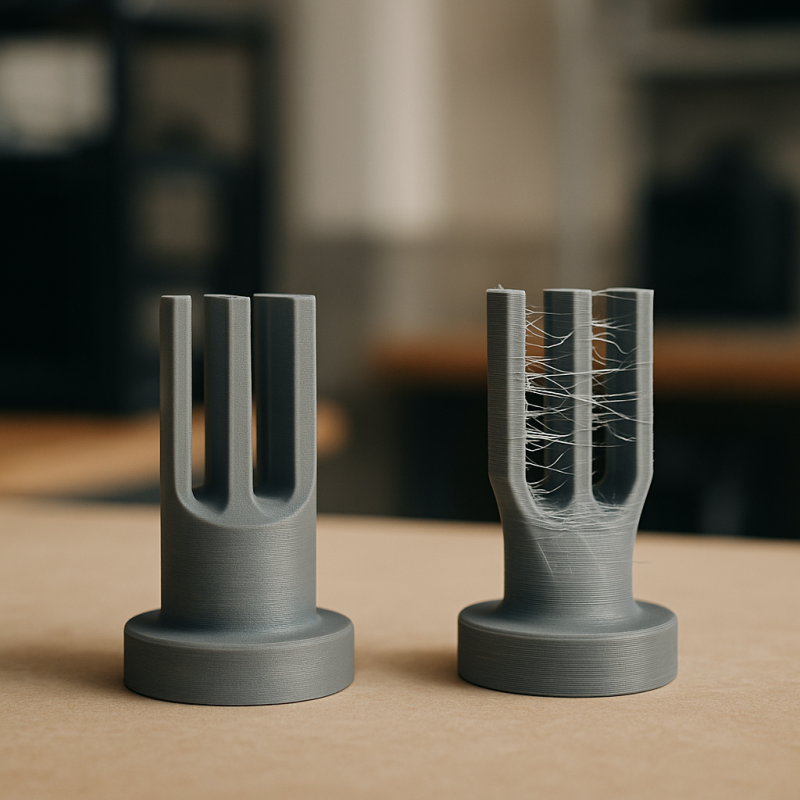
- If the diameter is too small (e.g., 1.70mm): The opposite occurs. The commanded length of filament carries less volume than the printer expects. This results in under-extrusion. Symptoms include gaps between layer lines, poor layer adhesion, weak and brittle parts, and stringing.
A common industry standard for high-quality filament is a diameter tolerance of ±0.03mm. However, top-tier manufacturers, like ‘s ELEGOO example, have pushed this to ±0.02mm. This means for a 1.75mm filament, the diameter is guaranteed to be between 1.73mm and 1.77mm at all points along the spool. This tight tolerance minimizes the volumetric error, ensuring a consistent flow of material and leading to predictable, reliable printing. It is one of the most important specifications to look for when sourcing any filament, including blue PLA.
The Role of Laser Micrometers in Modern Filament Production
How can a manufacturer guarantee a tolerance as tight as ±0.02mm over a one-kilometer length of filament? The answer lies in advanced, real-time measurement and feedback systems integrated directly into the extrusion line. The core of this system is a dual-axis laser micrometer.
Imagine the filament, after being extruded and while it is being pulled and cooled, passing through a small box. Inside this box, two laser beams scan across the filament from perpendicular directions (X and Y axes), thousands of times per second. The filament casts a shadow, and sensors on the other side measure the width of this shadow with incredible precision.
This is not just a passive measurement tool for quality control checks at the end of the process. It is part of an active feedback loop. The data from the laser micrometer is fed back to the line’s central controller in real-time.
- If the laser detects the diameter is starting to trend larger, the controller can slightly increase the speed of the “puller” wheels that draw the filament away from the extruder die. Stretching the still-malleable filament more makes it thinner.
- If the diameter starts to trend smaller, the puller speed is slightly decreased, allowing the filament to thicken a bit.
This constant, automated adjustment keeps the filament diameter locked onto the target (e.g., 1.75mm) with minimal deviation. A manufacturer that invests in this technology is demonstrating a serious commitment to quality. When discussing sourcing with a potential partner, asking them to describe their diameter measurement and control system is a very telling inquiry. A confident supplier will be proud to explain their use of real-time laser micrometers.
Ovality: The Hidden Metric of Filament Quality
While diameter tolerance is the headline specification, a more subtle metric that distinguishes premium filament is ovality (or out-of-roundness). A filament can have a correct average diameter but still be problematic if its cross-section is not perfectly circular. For example, a filament might measure 1.80mm on its X-axis but 1.70mm on its Y-axis. The average diameter is 1.75mm, but as this oval filament twists and turns on its way to the hotend, the effective diameter being presented to the extruder gear and nozzle will fluctuate, causing inconsistent extrusion similar to a filament with poor diameter tolerance.
What causes ovality? It’s often a result of improper cooling or tension on the extrusion line. If the filament is laid onto a surface while still too soft, it can flatten. If the cooling bath is not uniform, one side might shrink differently than the other.
This is why the dual-axis laser micrometer is so important. By measuring both the X and Y axes simultaneously, it can not only control the average diameter but also calculate and monitor the filament’s ovality in real-time. The production system can then flag or alarm if the ovality exceeds a predefined limit (e.g., 0.01mm). While not always advertised on the box, low ovality is a key characteristic of a well-made filament and a direct result of a finely tuned and controlled manufacturing process. It’s a testament to the manufacturer’s mastery over the complex interplay of polymer physics, heat transfer, and mechanical tension.
ISO 9001:2015: What It Means for Your Filament Supply Chain
When a filament manufacturer states they are “ISO 9001:2015 certified,” it is more than just a marketing buzzword. The ISO 9001 standard, published by the International Organization for Standardization, does not define product quality itself. Instead, it specifies the requirements for a Quality Management System (QMS). It is a standard for how a company runs its processes to consistently meet customer and regulatory requirements.
For a blue PLA filament manufacturer, being ISO 9001 certified implies that they have:
- Documented Processes: Every step, from receiving raw materials to final packaging, is documented. This includes procedures for inspecting incoming PLA resin, calibrating the laser micrometers, and defining the exact parameters for an extrusion run of “Royal Blue PLA.”
- A Focus on Customer Requirements: The system is designed to ensure that customer needs (e.g., a specific Pantone color, a ±0.02mm tolerance) are clearly understood, communicated, and met.
- A Commitment to Continual Improvement: The standard requires the company to monitor its processes, address non-conformities (like a batch of filament that is out of spec), and take corrective actions to prevent recurrence.
- Traceability: The QMS ensures that if a problem is found with a spool of filament, the company can trace it back to its specific production date, machine, operator, and raw material lot.
Choosing an ISO 9001-certified supplier like SigmaFilament provides a significant layer of assurance. It tells you that the supplier is not just producing filament, but is managing their production with a disciplined, systematic approach that is independently audited. It is a strong indicator that the consistency you see in a sample spool has a high probability of being maintained across future orders, which is the cornerstone of a reliable supply chain.
Point 3: Evaluate Material Performance Beyond Aesthetics
A spool of blue PLA filament that possesses a perfect, consistent color and a flawless diameter is still only halfway to being a truly high-quality product. The ultimate purpose of the filament is to be transformed into a physical object, and that object must perform its intended function. This performance is governed by the material’s inherent mechanical and thermal properties. The very pigments and additives that create a beautiful deep blue or a silky sheen can also subtly—or sometimes dramatically—alter these properties.
An evaluation that stops at aesthetics is dangerously incomplete. It is like buying a car based solely on its paint color without ever checking the engine. This section will guide you through the critical performance characteristics to consider, such as strength, stiffness, and heat resistance. We will explore how the blue colorants themselves can influence printing behavior and part integrity, and we will compare the common variants of blue PLA to help you select the right material for your specific application, whether it’s a simple decorative model or a functional engineering prototype.
Mechanical Properties: Tensile Strength, Modulus, and Impact Resistance
When we talk about the “strength” of a material, we are often referring to a collection of distinct mechanical properties. For 3D printed parts, the most relevant ones are:
- Tensile Strength: This measures the maximum stress a material can withstand while being pulled or stretched before it breaks. It is a crucial metric for parts that will be under tension, such as brackets, hooks, or fasteners. A higher tensile strength means the part can hold more load before failing. It is typically measured in megapascals (MPa).
- Flexural Modulus (or Bending Modulus): This is a measure of the material’s stiffness or rigidity. A material with a high flexural modulus will resist bending, while one with a low modulus will be more flexible. For a part that needs to hold its shape under load, like a rigid enclosure or a structural frame, a high flexural modulus is desirable. It is usually measured in gigapascals (GPa).
- Impact Resistance (or Toughness): This describes the material’s ability to absorb energy and resist fracturing when subjected to a sudden force or impact. It is often measured using an Izod or Charpy impact test. Standard PLA is known for being relatively brittle, meaning it has low impact resistance. It will often shatter on impact rather than deforming.
How do these relate to blue PLA? The pigments and additives used to create the color and finish can act as stress concentrators within the polymer matrix or interfere with the polymer chains’ ability to bond. For instance, some metallic or glitter particles can create microscopic points of weakness. While the effect is often minor in well-formulated filaments, it can be significant in lower-quality ones. A reputable manufacturer should be able to provide a Technical Data Sheet (TDS) for their specific blue PLA that lists these key mechanical properties. When comparing two blue PLA filaments, don’t just compare their colors; compare their rated tensile strength and modulus to ensure the one you choose meets the structural requirements of your application. For parts requiring higher durability, it is often wise to consider specialized materials like engineering-grade PLA filaments.
Thermal Properties: Glass Transition and Print Temperature Nuances
The thermal properties of a filament dictate how it behaves in the printer’s hotend and the service temperature of the final part. The two most important temperatures for PLA are:
- Glass Transition Temperature (Tg): This is the temperature at which the amorphous polymer transitions from a hard, glassy state to a soft, rubbery state. For standard PLA, the Tg is typically around 55-60°C (131-140°F). This is a critical number because it represents the approximate maximum service temperature for a printed part. A PLA part left in a hot car on a summer day, where temperatures can easily exceed 60°C, will soften, deform, and lose its structural integrity.
- Printing Temperature: This is the temperature at which the filament is heated in the hotend to achieve a viscosity suitable for extrusion. For most PLA filaments, this is in the range of 190-220°C.
The additives used in blue PLA can affect these properties. For example, some additives in “PLA+” or “high-speed” formulations are designed to slightly raise the Tg or broaden the ideal printing temperature window. Conversely, certain pigments might absorb heat differently, potentially requiring a small adjustment (e.g., +/- 5°C) to the print temperature to achieve optimal flow and layer adhesion compared to an uncolored or differently colored PLA from the same brand.
A good supplier will provide a recommended range for the printing temperature. However, it is always best practice to print a “temperature tower” calibration model with any new spool of filament, including a new batch of blue PLA. This simple test print helps you dial in the exact optimal temperature for that specific spool on your specific machine, ensuring the best possible layer adhesion and surface finish. Weak layer adhesion is a primary cause of part failure, and it is directly linked to extruding at a sub-optimal temperature.
The Influence of Blue Pigments on Printability and Layer Adhesion
Could the choice of a blue pigment, in itself, affect how well a filament prints? The answer is a qualified yes. While the base PLA resin is the dominant factor, the type, size, and concentration of pigment particles can have subtle effects.
- Flow Characteristics (Rheology): The solid pigment particles are suspended in the molten PLA. A high concentration of pigment can increase the viscosity of the melt, making it flow more like thick syrup than thin oil. This might require a slightly higher print temperature or a slower print speed to ensure the nozzle can extrude the material consistently.
- Nozzle Abrasion: Most common organic and inorganic blue pigments are not significantly abrasive. However, some specialty filaments, particularly those with glitter or shimmer effects, use metallic or ceramic-based particles. These can be abrasive and cause accelerated wear on a standard brass nozzle over time. For frequent printing with such materials, upgrading to a hardened steel or ruby-tipped nozzle is a wise investment to maintain print quality.
- Interlayer Bonding: The ultimate strength of an FDM printed part is determined by how well the individual layers fuse together. For a strong bond to form, the molten plastic from the new layer must transfer enough heat to the previous layer to partially re-melt its surface, allowing the polymer chains to intermingle. The pigment particles are non-fusible; they do not melt. If the pigment concentration is excessively high, or if the particles are poorly dispersed, they can accumulate at the layer interface and act as a physical barrier, weakening the bond. This is another reason why sourcing from a manufacturer who uses high-quality, well-dispersed pigments and controls their masterbatch ratios is so important.
Comparing Standard PLA, PLA+, and High-Speed Blue PLA
The “PLA” family has expanded to include several common variants, each offering a different balance of properties. When you see a blue PLA filament, it could fall into one of these categories:
| PLA Variant | Key Differentiator | Typical Use Case | Blue PLA Considerations |
|---|---|---|---|
| Standard PLA | The baseline material. Good stiffness, easy to print, low cost. | General prototyping, decorative models, low-stress applications. | The widest variety of blue shades and finishes are available. |
| PLA+ / Pro PLA | Contains additives to improve toughness and impact resistance. | Functional parts, mechanical prototypes, items that might be dropped. | Additives can slightly alter the color’s appearance (e.g., less glossy). Verify mechanical data. |
| High-Speed PLA | Formulated with a higher melt flow index for rapid printing. | High-volume production on fast printers (e.g., Bambu Lab, Creality K1). | Must have excellent diameter control to prevent issues at high flow rates. Color consistency is key for production runs. |
| Silk PLA | Contains elastomeric additives for a high-gloss, silky finish. | Vases, trophies, aesthetic prints where layer lines are undesirable. | The blue color can appear very vibrant due to the finish but may be more brittle. |
Choosing between these depends entirely on your application. For a decorative blue statue, a Silk PLA might be the perfect choice. For a blue drone frame, a PLA+ would be far more suitable due to its improved toughness. For a business that needs to print hundreds of blue jigs quickly, a High-Speed PLA is the logical option. A knowledgeable supplier should not only offer these variants but also be able to clearly articulate the performance trade-offs between their standard blue PLA and their blue PLA+, backing it up with data sheets.
Point 4: Assess the Supplier’s OEM/ODM Capabilities for Scalability
For an individual hobbyist, a single spool of blue PLA is a simple purchase. For a business, a university, or a product designer, it is the beginning of a supply chain. As your project or business grows, your need for filament will scale. The ability of your supplier to grow with you—maintaining consistency from a single sample spool to a pallet of 500 spools—is paramount. This is where the distinction between a simple reseller and a true manufacturing partner becomes starkly clear.
Assessing a supplier’s Original Equipment Manufacturer (OEM) and Original Design Manufacturer (ODM) capabilities is a crucial step in future-proofing your operations. An OEM/ODM partner does not just sell you a product off the shelf; they offer a service that integrates their manufacturing prowess with your brand’s specific needs. This section explores the key facets of these capabilities, from creating a custom blue to match your brand identity, to private labeling, to navigating the complexities of international logistics. Choosing a supplier with strong OEM/ODM services is an investment in scalability, brand control, and long-term stability.
From Sample to Mass Production: The OEM Partnership Model
The OEM partnership model is a collaborative process. It typically begins not with a large order, but with a conversation and a sample. Here is how a typical journey unfolds with a factory-direct OEM supplier:
- Initial Inquiry & Requirement Definition: You approach the supplier not just asking for “blue PLA,” but with a set of technical requirements. This includes the base material (e.g., PLA+), the exact color standard (e.g., Pantone 300 C), the diameter (1.75mm), the tolerance (±0.02mm), and the required mechanical properties.
- Sample Development & Approval: The manufacturer’s R&D team uses your specifications to produce a small batch of custom filament. They might create several slight variations around your target color for you to choose from. They will send you these physical samples, along with their corresponding spectrophotometer data (CIELAB values). You then test this sample filament on your own printers to verify its printability and approve the final color and performance.
- Small Batch (Pilot) Run: Before committing to a large volume, you might place a smaller pilot order (e.g., 50-100 kg). This allows you to test the material in a real production environment and confirm that the consistency is maintained from the initial sample.
- Mass Production & Scaling: Once the pilot run is successful, you can confidently place larger orders. A capable OEM manufacturer will have the production capacity (e.g., multiple tons per day) to handle your growing demand without introducing delays or quality issues. Because they have all the parameters for your specific “Brand Blue PLA” documented within their ISO 9001 system, they can recall that exact formulation and process for every future order.
This structured approach de-risks the sourcing process. It ensures that there are no surprises when you scale up from one spool to one thousand.
Custom Color Development: Matching Your Brand’s Exact Blue
One of the most powerful services an ODM supplier offers is custom color development. While many suppliers offer a range of standard blues like “Dark Blue” or “Cobalt Blue” , your brand might use a very specific shade that isn’t available off the shelf. An ODM partner can create this color exclusively for you.
The process leverages the tools we have already discussed:
- Target Submission: You provide the manufacturer with a physical color target. This could be a Pantone swatch, a painted object, or even a piece of an existing product.
- Colorimetric Analysis: The supplier uses their lab-grade spectrophotometer to analyze your target and generate its precise spectral curve and CIELAB coordinates.
- Formulation & Iteration: Their polymer chemists then work to create a pigment masterbatch formulation that replicates this spectral curve. This can be a complex process of blending different pigments to achieve the exact hue, saturation, and brightness. It may take a few iterations to get a perfect match that also works well with the base PLA resin.
- NDA Protection: For a truly unique brand color, this process is often done under a Non-Disclosure Agreement (NDA). This ensures that the custom color formulation developed for you remains your exclusive intellectual property and will not be sold to your competitors.
This capability transforms filament from a generic commodity into a bespoke component of your product’s identity. Having custom color filament solutions that perfectly match your branding is a powerful competitive advantage.
Private Labeling: Spools, Boxing, and Documentation
Once you have your custom blue PLA, the next step is to present it as your own. OEM services extend beyond the filament itself to encompass the entire product package. This is known as private labeling. A full-service OEM partner can offer:
- Custom Spools: While many filaments come on standard black plastic spools, you can have your filament wound onto spools of a specific color or even spools embossed with your company’s logo. Some manufacturers also offer more sustainable options like cardboard spools .
- Custom Packaging: The box is a key piece of brand real estate. An OEM supplier can print boxes using your custom artwork and branding. This includes the outer product box, the master cartons for shipping, and any vacuum-seal bags used.
- Branded Documentation: Any included materials, such as a small user guide with recommended print settings or a quality control checklist, can be printed with your logo and branding.
- Labeling and Barcoding: The supplier can apply labels to the spool and the box that include your brand name, the specific product name (e.g., “Azure Blue Pro PLA”), a batch number for traceability, and any necessary barcodes (like UPC or EAN) for retail distribution.
This end-to-end service allows even a small startup to present a professional, retail-ready product to the market without investing in their own winding, packaging, and labeling infrastructure.
Navigating Supply Chain Logistics: EXW, FOB, CIF, DDP
When partnering with an international, factory-direct manufacturer, understanding the language of global shipping is essential. These terms, known as Incoterms, define the responsibilities of the buyer and seller in a transaction. A flexible OEM supplier will be able to work with you under various terms:
- EXW (Ex Works): This is the most basic term. Your responsibility begins at the factory door. You are responsible for arranging and paying for all transportation, from picking up the goods at the manufacturer’s warehouse in their country to getting it to your final destination.
- FOB (Free On Board): This is a very common term. The seller is responsible for all costs and risks until the goods are loaded onto the shipping vessel at a specified port in their country. From that point on, the buyer is responsible for the ocean freight, insurance, customs clearance, and final delivery.
- CIF (Cost, Insurance, and Freight): The seller arranges and pays for the cost of the goods, the insurance, and the freight to a port of destination in your country. However, your responsibility for the risk of loss or damage begins once the goods are loaded onto the ship in the origin country. You are still responsible for customs clearance and inland delivery.
- DDP (Delivered Duty Paid): This represents the maximum obligation for the seller. They are responsible for delivering the goods to your final destination, cleared for import, with all duties and taxes paid. This is the most hassle-free option for the buyer, but it is also typically the most expensive as the seller prices in all the risk and logistics management.
A good OEM partner will have an experienced logistics team that can clearly explain these options and provide quotes for each. This allows you to choose the shipping arrangement that best balances cost, control, and convenience for your business.
Point 5: Demand Comprehensive Quality Control and Documentation
The final, and perhaps most crucial, point in our checklist for sourcing reliable blue PLA is the verification of quality through documentation. Assertions of quality are meaningless without evidence. A trustworthy manufacturing partner does not just claim to have a controlled process; they prove it with a paper trail. This documentation is your window into their quality management system and your ultimate assurance that the spool in your hand meets the specifications you agreed upon.
In a professional or industrial context, receiving a material without proper documentation is like accepting a legal document without a signature. It leaves you exposed to risk and with no recourse if a problem arises. This final section emphasizes the non-negotiable requirement for comprehensive quality control data. We will discuss the key documents you should demand, such as a Certificate of Analysis, and explain the importance of certifications related to material safety and environmental compliance. This commitment to documented proof is the capstone of a secure and transparent supply chain.
The Importance of a Certificate of Analysis (COA)
A Certificate of Analysis (COA) is a formal document issued by a manufacturer’s Quality Control (QC) department that confirms a specific batch of product has been tested and meets its defined specifications. It is not a generic marketing document; it is tied to a specific production lot or batch number. For a spool of your custom “Pantone 300 C” blue PLA, a proper COA should include:
- Product Identification: Your product name, SKU, and the specific batch number.
- Date of Manufacture: When the batch was produced.
- Key Specification Tests and Results: This is the core of the COA. It should list the critical parameters, the target specification, and the actual measured result for that batch.
- Color: The target CIELAB values and the measured CIELAB values, along with the calculated Delta E. (e.g., Target L*: 35.2, a*: -10.5, b*: -45.1; Measured L*: 35.4, a*: -10.3, b*: -45.5; Result: ΔE = 0.52 – PASS).
- Diameter: The target diameter and tolerance (e.g., 1.75 ± 0.02mm) and the measured average diameter and standard deviation for the batch.
- Ovality: The maximum allowable ovality and the measured value.
- Melt Flow Index (MFI): The MFI of the batch, confirming that the correct grade of base resin was used.
- Signature of Authorization: The signature of the QC manager or authorized personnel.
Receiving a COA with every shipment provides an objective record of quality. It allows you to track consistency over time and provides clear evidence if a batch ever falls out of specification. A supplier who is unable or unwilling to provide a batch-specific COA should be viewed with extreme skepticism.
RoHS, REACH, and FDA-Compliance: Ensuring Material Safety
Beyond performance and aesthetics, material safety is a critical consideration, especially for products that may come into contact with people or are sold in regulated markets like the European Union or the United States. A responsible manufacturer will be able to provide documentation certifying their compliance with key safety standards.
- RoHS (Restriction of Hazardous Substances): This is a directive originating from the European Union that restricts the use of specific hazardous materials found in electrical and electronic products. The restricted substances include lead, mercury, cadmium, and certain flame retardants. While a spool of filament itself may not be an electronic product, parts printed from it often are (e.g., enclosures for electronics). RoHS compliant blue PLA ensures that your final products will meet this important environmental and safety standard.
- REACH (Registration, Evaluation, Authorisation and Restriction of Chemicals): Also an EU regulation, REACH is broader than RoHS and deals with the production and use of chemical substances and their potential impacts on both human health and the environment. It requires companies to identify and manage the risks linked to the substances they manufacture and market. Compliance indicates that the manufacturer, including the producers of their pigments and additives, is managing their chemical safety responsibly.
- FDA-Compliant Materials: For applications that may involve contact with food, it is essential to use materials that are compliant with regulations from the U.S. Food and Drug Administration (FDA). This does not mean the final 3D printed part is automatically “food safe” (as the printing process itself can introduce contaminants and the layered nature of the part can harbor bacteria). However, it means that the raw material—the blue PLA filament itself—is made from components that are considered safe for food contact under FDA guidelines. A supplier should be able to provide a statement of FDA compliance for specific food-grade filaments.
Demanding this documentation is not just about ticking boxes; it is about protecting your customers and your brand from potential liability and ensuring access to global markets.
Archiving Batch Samples for Future Consistency Checks
A robust quality partnership involves more than just documentation. A best practice for both the manufacturer and the customer is the archiving of batch samples.
- Manufacturer’s Responsibility: A good ISO 9001-certified manufacturer will retain a labeled sample from every single batch of filament they produce for a set period (e.g., two years). If a customer reports an issue with a spool from Batch #12345, the manufacturer can pull their archived sample of that exact batch and re-test it in their lab to verify the customer’s claim. This is an invaluable tool for troubleshooting.
- Customer’s Responsibility: It is also wise for you, the customer, to maintain your own archive. When you receive a new shipment and approve it, label a small, vacuum-sealed portion of the filament with the batch number and date and store it in a cool, dark place. If, six months later, you suspect a new batch is different, you have a physical “gold standard” from a previous, approved batch to compare it against. This objective comparison is far more powerful than relying on memory.
This shared practice of archiving creates a physical library of your product’s history, providing an indisputable reference for maintaining long-term consistency.
Building a Long-Term Partnership with a Factory-Direct Manufacturer
Ultimately, the five points of this checklist all lead to a single, overarching goal: moving away from a transactional relationship with a “supplier” and toward a strategic partnership with a “manufacturer.” A reseller buys and sells boxes. A manufacturing partner collaborates with you to produce a consistent, high-quality component for your product.
This partnership is built on a foundation of:
- Transparency: They are open about their processes, materials, and quality control data.
- Expertise: They have the technical knowledge in polymer science, colorimetry, and extrusion to not only produce a product but also to help you solve problems and develop new solutions.
- Consistency: They have the systems (like ISO 9001, gravimetric feeders, and laser micrometers) in place to deliver the same result, time after time.
- Scalability: They have the capacity and the OEM/ODM services to support your growth.
When you source your blue PLA from a factory-direct partner who embodies these principles, you are not just buying filament. You are investing in predictability, reliability, and peace of mind for your production process.
Frequently Asked Questions (FAQ)
What causes color differences between spools of blue PLA?
Color differences primarily arise from a lack of strict process control during manufacturing. The main causes include using different batches of blue pigment or base PLA resin, inconsistent ratios of color masterbatch to natural PLA, and variations in extruder temperature, which can alter the final shade.
Can I get a specific Pantone blue PLA filament made for my brand?
Yes, this is a core service offered by Original Design Manufacturers (ODMs). By providing a Pantone code or a physical color sample, the manufacturer can use a spectrophotometer to analyze the color and create a custom pigment masterbatch to produce blue PLA that precisely matches your brand’s color specification.
Does the blue dye affect the strength of the PLA?
The pigments used for coloring can have a minor effect on the filament’s mechanical properties. In a well-formulated filament, this effect is negligible. However, very high pigment concentrations or the use of low-quality, poorly dispersed pigments can potentially create microscopic weak points at the layer interface, slightly reducing the final part’s strength and layer adhesion.
What is the difference between standard blue PLA and blue PLA+?
Blue PLA+ (or PLA Pro) is a modified formulation that includes additives designed to improve the material’s toughness and impact resistance compared to standard PLA. While standard blue PLA is quite rigid and brittle, a part printed in blue PLA+ will be more durable and less likely to shatter upon impact.
How do I test a new supplier of blue PLA filament?
Start by requesting a technical data sheet (TDS) and a Certificate of Analysis (COA) for a recent batch. Then, order a sample spool. Measure the diameter at several points with calipers. Print a temperature tower to find the optimal print temperature, then print calibration models like a Benchy or a calibration cube to check for dimensional accuracy, surface finish, and stringing. Finally, print a test part to evaluate its strength and layer adhesion.
Is blue PLA food safe?
It depends. For a filament to be considered for food-contact applications, it must be made from raw materials that are certified as compliant with FDA regulations. You must request this specific documentation from the supplier. However, even with a food-grade filament, the 3D printing process itself can introduce contaminants, and the microscopic crevices between layers can harbor bacteria.
Why is diameter consistency so important for 3D printing?
3D printers extrude a precise volume of plastic based on the assumption of a constant filament diameter. If the diameter is too thick, it causes over-extrusion (blobs, poor detail). If it is too thin, it causes under-extrusion (gaps, weak parts). A tight tolerance, like ±0.02mm, ensures a consistent flow rate, which is essential for print quality, reliability, and dimensional accuracy.
What does ISO 9001 certification mean for a filament manufacturer?
ISO 9001:2015 is a standard for a Quality Management System. It means the manufacturer has documented, repeatable processes for everything from inspecting raw materials to final product testing. It ensures traceability, a focus on meeting customer requirements, and a commitment to continual improvement. It is a strong indicator of a supplier’s ability to produce a consistent product.
Conclusion
The journey to sourcing a reliable supply of blue PLA filament is an exercise in diligence and technical understanding. We have moved beyond a superficial appreciation of color to a nuanced examination of the material’s chemical, physical, and functional properties. The five-point framework presented here—verifying chemistry, scrutinizing tolerances, evaluating performance, assessing scalability, and demanding documentation—provides a robust methodology for navigating the complexities of the global filament market. It reframes the procurement process not as a search for the cheapest price, but as a strategic selection of a manufacturing partner.
The color blue, in this context, serves as a powerful case study for a universal principle: in manufacturing, consistency is not an accident. It is the result of deliberate investment in quality materials, precision machinery, rigorous process control, and a culture of transparency. By adopting this analytical approach, businesses and creators can mitigate the risks of production failures, protect the integrity of their brand, and build a resilient supply chain. The ideal spool of blue PLA is not just one that looks right; it is one that is born from a process you can trust, enabling you to transform your digital designs into physical realities with confidence and repeatability.
References
- Cookiecad. (n.d.). Witches blue PLA filament 1.75mm, 1kg. Retrieved January 25, 2026, from
- Giles, C. H., & McKay, R. B. (1964). The light-fastness of dyes: A review. Textile Research Journal, 34(6), 527–558. https://doi.org/10.1177/004051756403400609
- International Organization for Standardization. (2015). ISO 9001:2015 Quality management systems — Requirements. ISO.
- Ligon, S. C., Liska, R., Stampfl, J., Gurr, M., & Mülhaupt, R. (2017). Polymers for 3D printing and customized additive manufacturing. Chemical Reviews, 117(15), 10212–10290. https://doi.org/10.1021/acs.chemrev.7b00074
- Mokhtari, F., & Latibari, S. T. (2015). The effect of pigment concentration and particle size on the colorimetric properties of polypropylene-based composites. Journal of Applied Polymer Science, 132(48), 42876. https://doi.org/10.1002/app.42876
- Pantone. (n.d.). Pantone matching system. Retrieved January 25, 2026, from
- RAL. (n.d.). RAL colours. Retrieved January 25, 2026, from
- Robertson, A. R. (1977). The CIE 1976 color-difference formulae. Color Research & Application, 2(1), 7–11.
- Simplify3D. (2019). Ultimate materials guide: Tips for 3D printing with PLA. Simplify3D. https://www.simplify3d.com/resources/materials-guide/pla/
- Wittbrodt, B., & Pearce, J. M. (2015). The effects of PLA color on material properties of 3-D printed components. Additive Manufacturing, 8, 110–116.
Last reviewed and updated: January 2026. Author: SigmaFilament Engineering Team. For custom filament solutions and wholesale inquiries, contact our team.