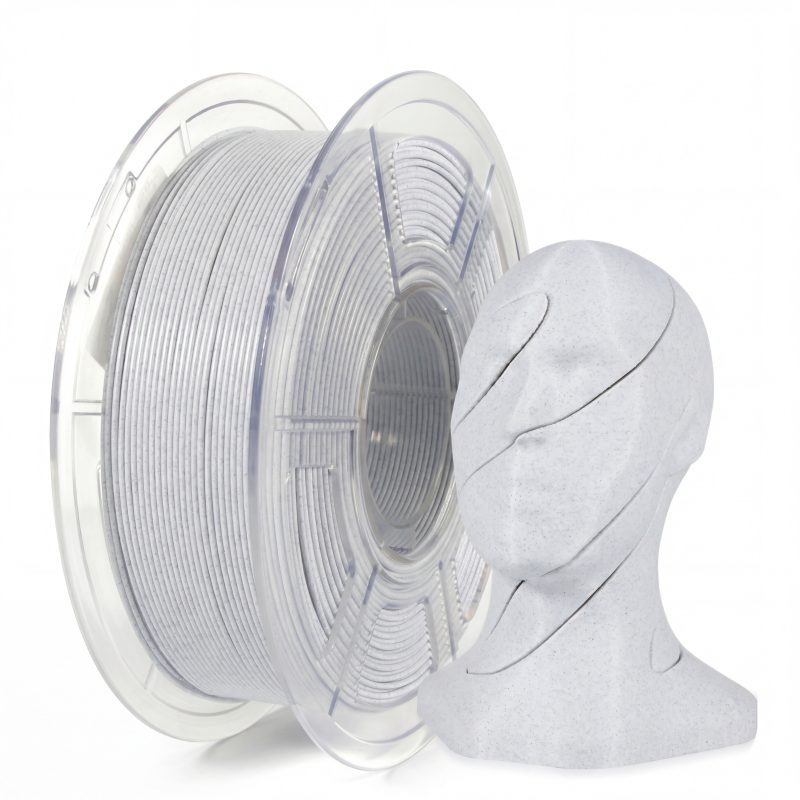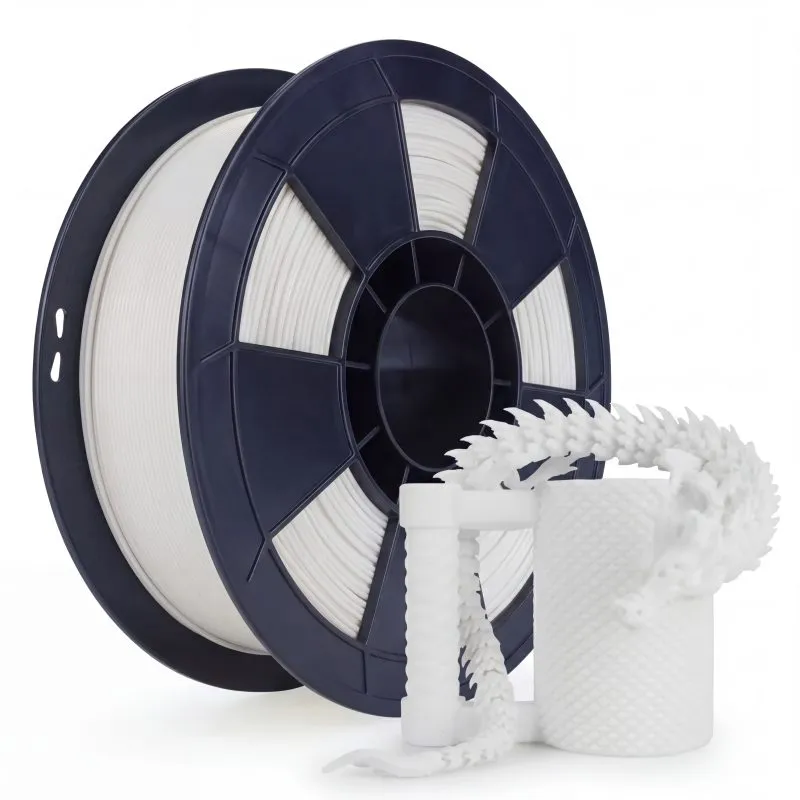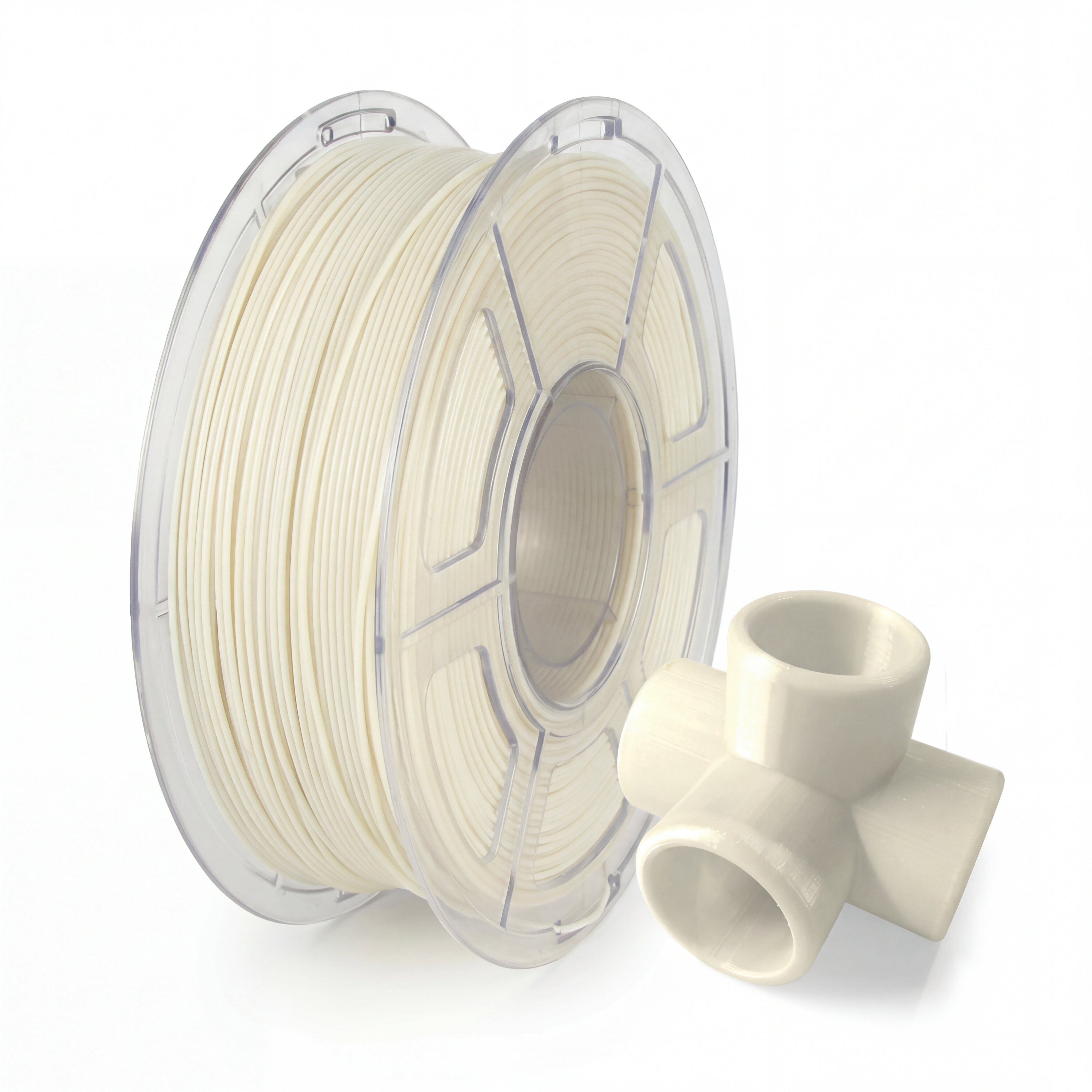
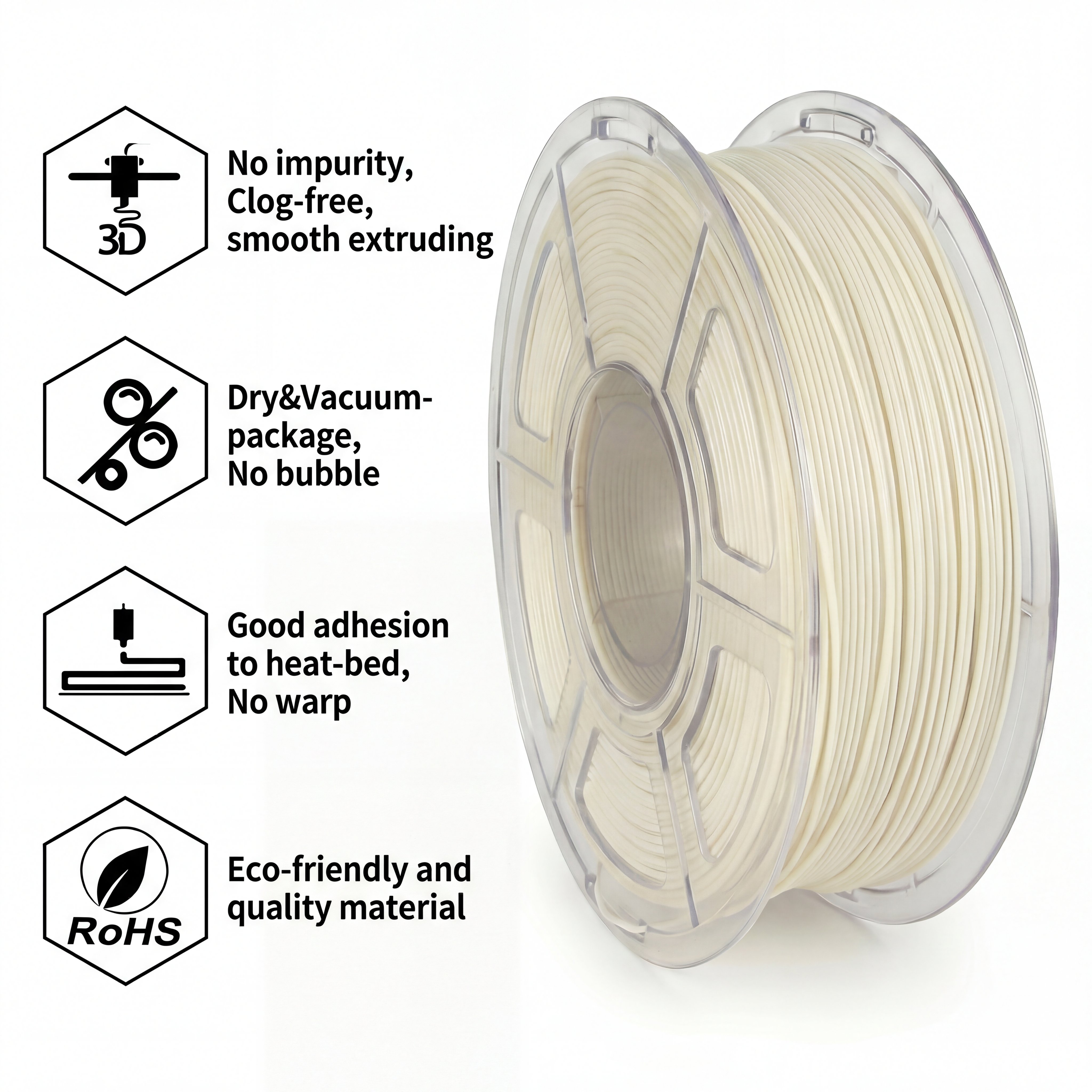
PLA Glass Fiber Filament (PLA-GF) – Engineering-Grade Strength for 3D Printing
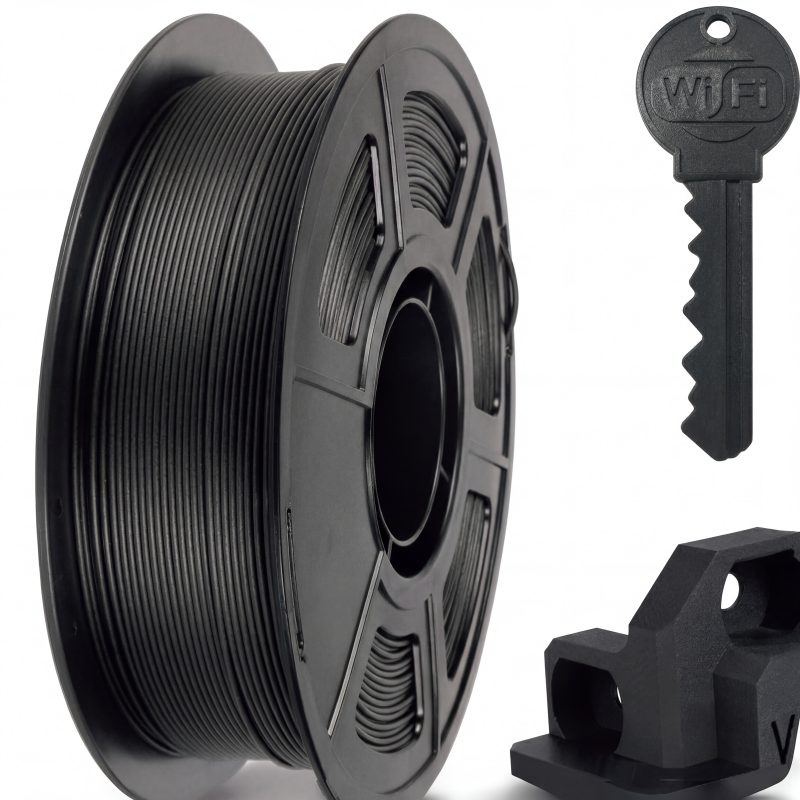
The SigmaFilament PLA Glass Fiber Filament (PLA-GF) brings professional engineering-grade performance to your 3D printing projects. This advanced composite material combines the eco-friendly, easy-printing characteristics of PLA with glass fiber reinforcement – delivering significantly higher mechanical strength, rigidity, and heat resistance for demanding functional applications.
What makes this glass fiber reinforced PLA filament exceptional is its ability to bridge the gap between standard PLA and industrial engineering materials. The glass fiber content dramatically improves strength-to-weight ratio, dimensional stability, and wear resistance – making printed parts suitable for real-world functional use rather than just prototyping.
The PLA-GF composite filament maintains PLA’s user-friendly printing characteristics while offering mechanical properties that approach those of more difficult-to-print engineering plastics. This means you can create load-bearing structures, functional tools, industrial jigs and fixtures, and durable components using familiar PLA print settings with only minor adjustments.
Engineered with diameter tolerance of ±0.05mm and manufactured in our Guangdong, China facility, this PLA glass fiber filament is ideal for professionals, engineers, and makers who need parts that can withstand real mechanical loads and elevated temperatures.
The PLA Glass Fiber Advantage – Strength Meets Printability
🔧 Glass Fiber Reinforced Engineering Performance
Our PLA-GF filament delivers significant improvements over standard PLA:
- Higher Mechanical Strength – Glass fibers dramatically increase tensile and flexural strength
- Superior Rigidity – Reduced flex and deformation under load
- Improved Heat Resistance – Higher heat deflection temperature than pure PLA
- Enhanced Wear Resistance – Longer lifespan for moving parts and tools
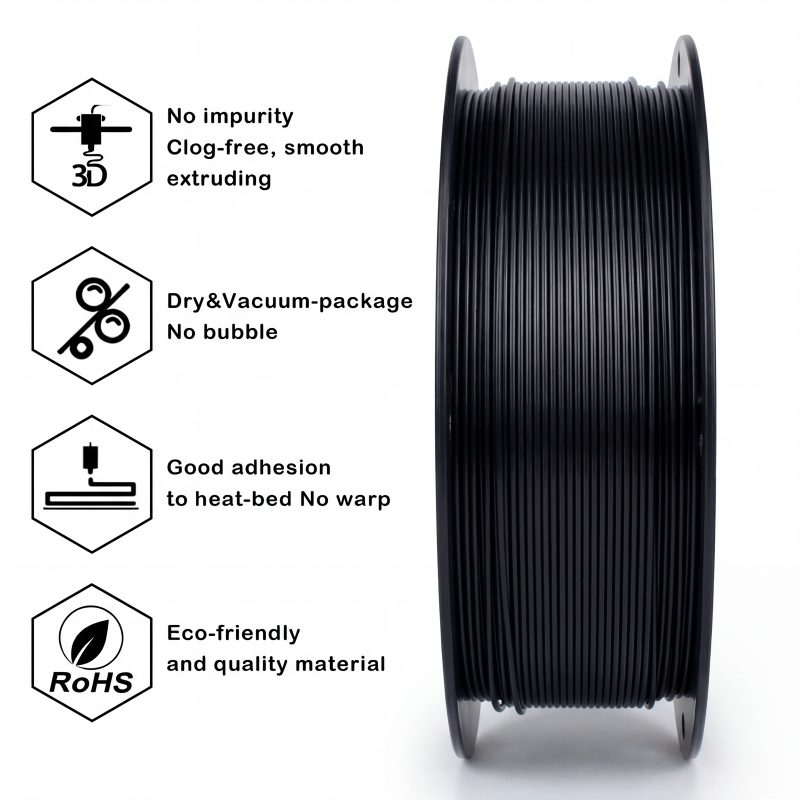
- Better Dimensional Stability – Less warping and shrinkage
Perfect for creating functional parts, industrial prototypes, tools, jigs, fixtures, and any application where standard PLA isn’t strong enough.
PLA Glass Fiber Filament – Engineering Performance
High Strength
2-3x stronger than standard PLA for functional parts
Superior Rigidity
Minimal flex and deformation under mechanical stress
Heat Resistant
Higher operating temperature than standard PLA
Why Choose PLA Glass Fiber Filament?
PLA-GF offers the best of both worlds: easy PLA printing with engineering-grade performance:
| Benefit | Description |
|---|---|
| 💪 Dramatically Stronger | Glass fiber reinforcement increases tensile strength by 2-3x over standard PLA |
| 📐 Reduced Warping | Glass fibers improve dimensional stability and minimize shrinkage |
| 🔥 Better Heat Resistance | Higher heat deflection temperature for elevated temperature applications |
| ⚙️ Wear Resistant | Extended lifespan for tools, jigs, and moving parts |
| 🖨️ Easy to Print | Maintains PLA-like printability – no heated enclosure required |
| 🌱 Eco-Friendly Base | PLA matrix remains biodegradable and derived from renewable resources |
PLA Glass Fiber vs Other Materials – Complete Comparison
Understanding how PLA-GF compares to standard PLA and other engineering filaments:
| Property | PLA Glass Fiber | Standard PLA | ABS | Nylon |
|---|---|---|---|---|
| Tensile Strength | ★★★★★ Excellent | ★★★☆☆ Moderate | ★★★★☆ Good | ★★★★☆ Good |
| Rigidity/Stiffness | ★★★★★ Superior | ★★★☆☆ Moderate | ★★★☆☆ Moderate | ★★★☆☆ Flexible |
| Heat Resistance | ★★★★☆ Good | ★★☆☆☆ Poor | ★★★★☆ Good | ★★★★☆ Good |
| Ease of Printing | ★★★★☆ Easy | ★★★★★ Easiest | ★★★☆☆ Moderate | ★★☆☆☆ Difficult |
| Enclosure Required | No | No | Recommended | Required |
| Best Application | Functional parts | Prototypes, décor | General functional | High-wear parts |
How to Print PLA Glass Fiber Filament – Optimal Settings
Achieve the best results with PLA-GF using these recommended settings:
| Setting | Recommended Value | Notes |
|---|---|---|
| Print Temperature | 210-230°C (optimal: 220°C) | Slightly higher than standard PLA |
| Bed Temperature | 50-70°C (optimal: 60°C) | Heated bed recommended for adhesion |
| Print Speed | 30-60mm/s | Slower speeds for better fiber distribution |
| Layer Height | 0.15-0.3mm | 0.2mm recommended for balance |
| Nozzle Type | Hardened Steel / Ruby / Tungsten | ⚠️ Required – brass will wear quickly |
| Nozzle Diameter | ≥0.4mm (0.5-0.6mm preferred) | Larger nozzle reduces clogging risk |
| Cooling Fan | 50-100% | Standard PLA cooling settings |
| Retraction | 2-4mm (direct) / 5-7mm (Bowden) | Similar to standard PLA settings |
PLA Glass Fiber Filament Technical Specifications
Our PLA-GF filament is manufactured to precise specifications for consistent, reliable 3D printing:
| Material Type | PLA-GF (Glass Fiber Reinforced PLA) |
| Glass Fiber Content | ~15-20% by weight |
| Color/Finish | Natural / Off-White (Cream) |
| Filament Diameter | 1.75mm (0.069 inches) |
| Diameter Tolerance | ±0.05mm (±0.002 inches) |
| Net Weight | 1kg (2.2 lbs) per spool |
| Recommended Nozzle Temp | 210-230°C (410-446°F) |
| Recommended Bed Temp | 50-70°C (122-158°F) |
| Print Speed Range | 30-60mm/s |
| Nozzle Requirement | Hardened Steel / Ruby / Tungsten Carbide |
| Recommended Nozzle Size | ≥0.4mm (0.5-0.6mm preferred) |
| Enclosure Required | No – works on open-frame printers |
| Bed Surface | PEI (recommended), glass with adhesive, BuildTak |
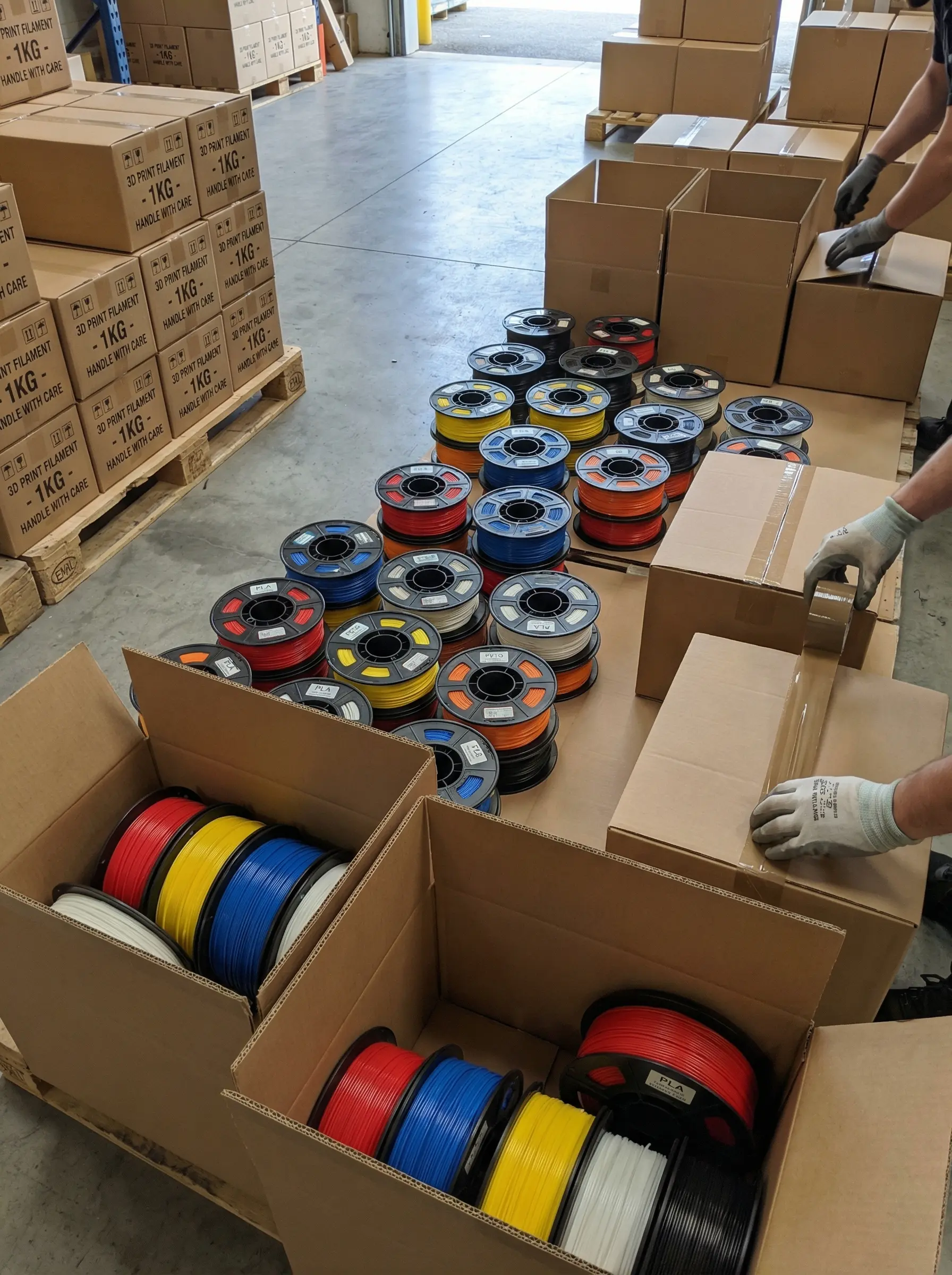
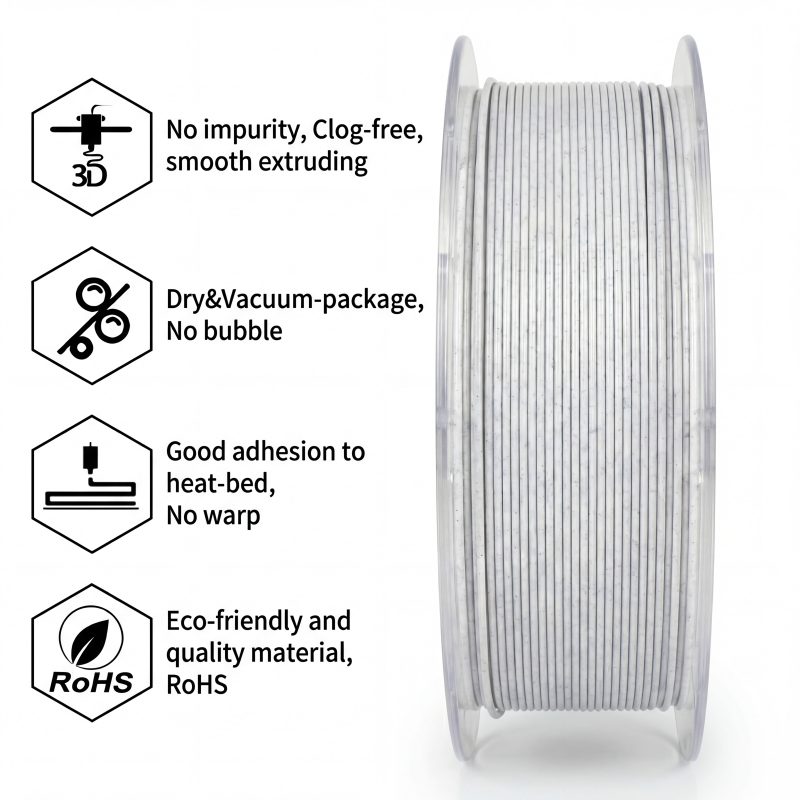
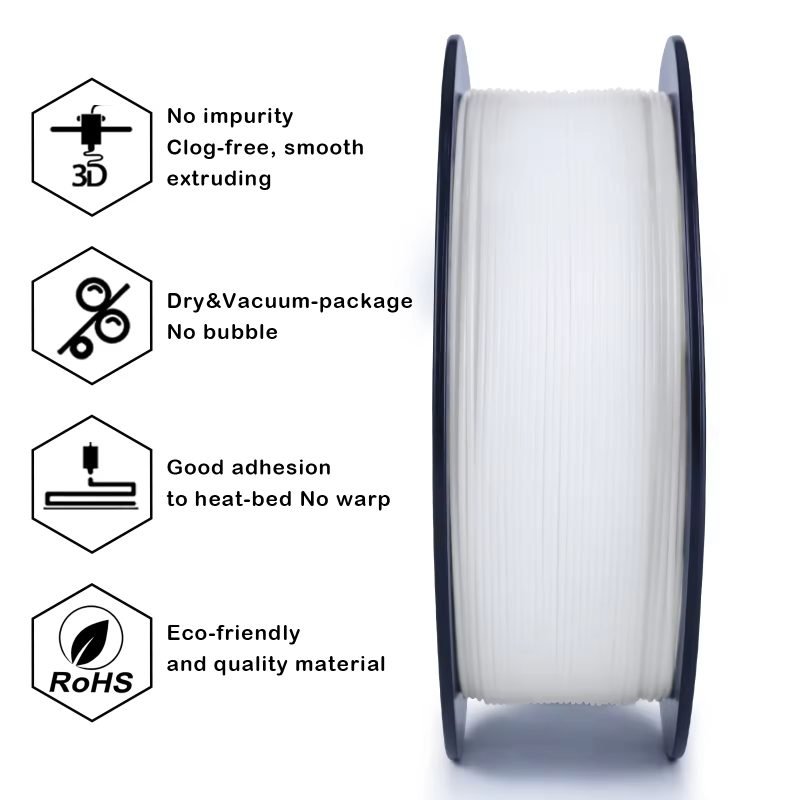
| Packaging | Vacuum sealed with desiccant |
| Manufacturing Origin | Guangdong, China |
| OEM/ODM Service | Available |
PLA Glass Fiber Filament Mechanical Properties
This PLA-GF filament delivers significantly improved mechanical properties compared to standard PLA:
| Property | PLA-GF Value | vs Standard PLA |
|---|---|---|
| Tensile Strength | 70-90 MPa | ↑ 50-80% stronger |
| Flexural Modulus | 5,000-7,000 MPa | ↑ 100-150% stiffer |
| Flexural Strength | 90-120 MPa | ↑ 50-70% stronger |
| Heat Deflection Temp | 65-80°C (149-176°F) | ↑ 10-25°C higher |
| Impact Strength | 4-6 kJ/m² | Similar (slightly lower) |
| Density | 1.35-1.45 g/cm³ | Slightly higher than PLA |
| Shrinkage | 0.2-0.4% | ↓ Lower shrinkage |
PLA Glass Fiber Filament Printer Settings by Brand
PLA-GF works with most FDM 3D printers. Here are optimized settings (remember to use a hardened nozzle!):
| 3D Printer | Nozzle Temp | Bed Temp | Print Speed | Notes |
|---|---|---|---|---|
| Prusa MK3S/MK4 | 220°C | 60°C | 40-50mm/s | Use hardened nozzle option |
| Bambu Lab X1/P1 | 220°C | 60°C | 40-60mm/s | Hardened steel nozzle available |
| Creality Ender 3/5 | 215-225°C | 55-65°C | 30-45mm/s | Upgrade nozzle before printing |
| Creality K1 Series | 220°C | 60°C | 40-60mm/s | Hardened nozzle recommended |
| Anycubic Kobra | 220°C | 60°C | 35-50mm/s | Works well with nozzle upgrade |
| Artillery Sidewinder | 220°C | 60°C | 35-50mm/s | Good results with proper nozzle |
PLA Glass Fiber Filament Applications – What Can You Create?
PLA-GF is ideal for applications requiring mechanical performance beyond standard PLA:
| ⚙️ Functional Parts | Create load-bearing brackets, housings, enclosures, and mechanical components that need to withstand real-world forces. PLA-GF’s strength and rigidity make it suitable for parts that standard PLA cannot handle. |
| 🏭 Industrial Prototypes | Produce engineering prototypes that accurately simulate production part performance. Test form, fit, and function with material properties closer to final injection-molded parts. |
| 🔧 Tools & Jigs | Design custom tools, assembly jigs, alignment fixtures, and manufacturing aids that need to maintain dimensional accuracy under repeated use. The wear resistance extends tool lifespan significantly. |
| 📐 Fixtures & Holders | Create positioning fixtures, workholding devices, and precision holders that maintain accuracy over time. The low warpage and high rigidity ensure consistent performance. |
| 🚗 Automotive Components | Prototype interior trim pieces, brackets, mounts, and under-hood components. The improved heat resistance allows testing in elevated temperature environments. |
| 🔬 Scientific Equipment | Build laboratory fixtures, equipment housings, and precision mounting systems. The dimensional stability and chemical resistance make PLA-GF suitable for many lab applications. |
PLA Glass Fiber Filament Packaging and Worldwide Shipping
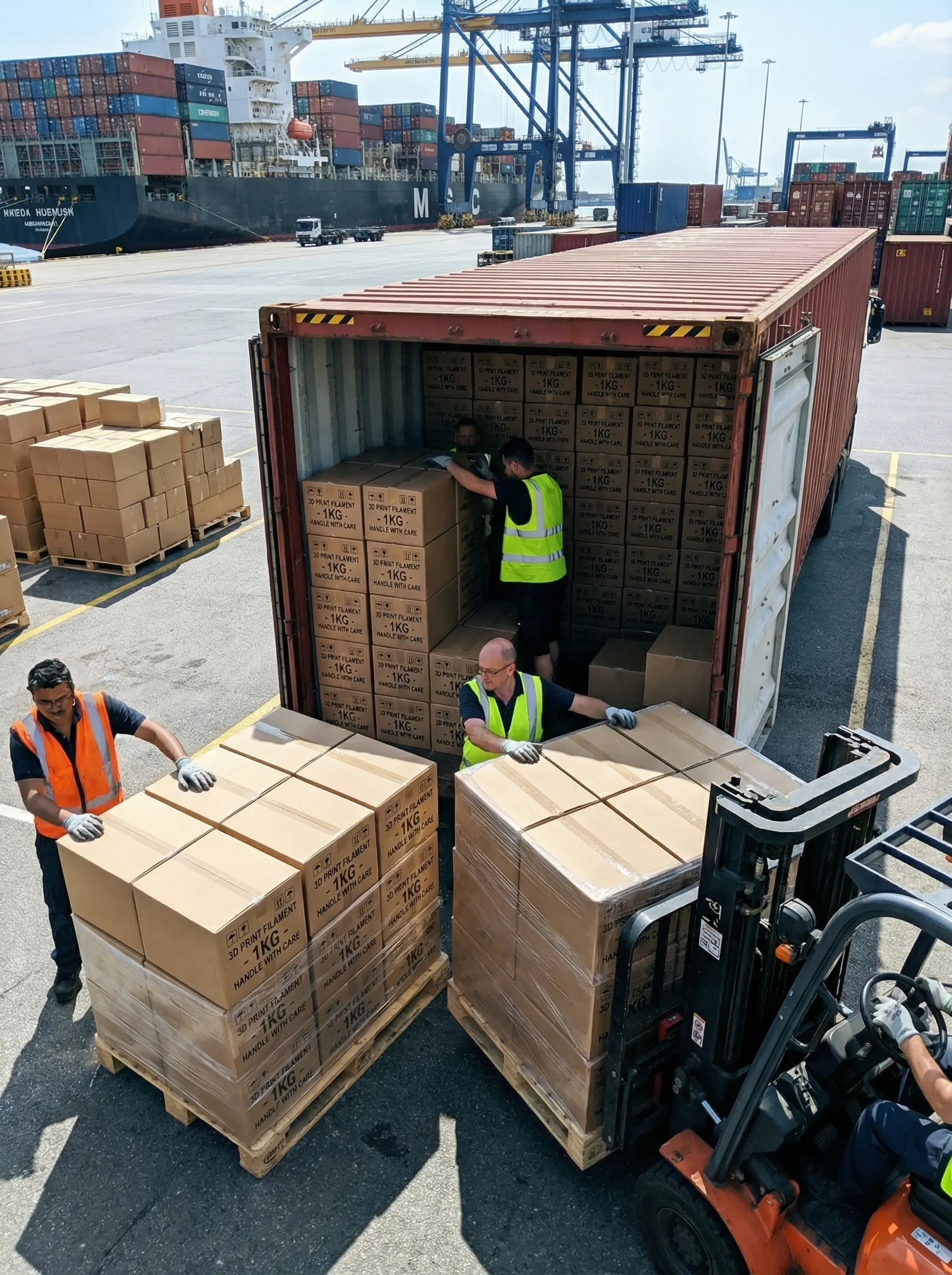
We ship PLA-GF filament worldwide with fast, reliable delivery:
| Destination | Standard Delivery | Express Shipping |
|---|---|---|
| European Union | 5-10 business days | ✓ 3-5 days |
| United States | 7-12 business days | ✓ 4-6 days |
| United Kingdom | 7-12 business days | ✓ 4-6 days |
| Canada | 8-14 business days | ✓ 5-7 days |
| Australia / Asia Pacific | 10-15 business days | ✓ 5-8 days |
Packaging: Vacuum sealed with desiccant for moisture protection. Customs: DDP and DAP terms available.
Bulk PLA Glass Fiber Filament Orders and OEM Services
| 📊 Flexible MOQ | From small trial orders to large production volumes. Perfect for engineering firms, manufacturers, and industrial users. |
| 💰 Volume Pricing | Tiered pricing: 100kg+, 500kg+, 1000kg+ with progressive discounts. |
| 🔧 OEM/ODM Services | • Custom glass fiber percentages (10-30%) • Other reinforcement options (carbon fiber) • Private label packaging • Custom spool sizes |
| 🎁 Sample Program | Evaluation samples available for qualified business customers and engineering teams. |
How to Store PLA Glass Fiber Filament
| Temperature | 15-25°C (59-77°F) |
| Humidity | Below 50% relative humidity |
| Shelf Life | 12 months (unopened, stored properly) |
| Drying | 50-55°C for 4-6 hours if moisture absorbed |
| Storage Container | Resealable bag or dry box with desiccant |
Frequently Asked Questions About PLA Glass Fiber Filament
Do I really need a hardened nozzle for PLA-GF?
Yes, a hardened nozzle is strongly recommended. Glass fibers are highly abrasive and will quickly wear through standard brass nozzles – sometimes in just a few hours of printing. Hardened steel, ruby-tipped, or tungsten carbide nozzles resist this wear and maintain consistent extrusion quality over time.
How much stronger is PLA-GF compared to regular PLA?
PLA-GF offers approximately 50-80% higher tensile strength and 100-150% higher stiffness (flexural modulus) compared to standard PLA. This makes it suitable for load-bearing and functional applications where standard PLA would flex or fail.
Can I print PLA-GF on a budget printer like Ender 3?
Yes! PLA-GF prints well on budget printers. The main requirement is upgrading to a hardened nozzle (usually $10-20). No heated enclosure is needed. Print at 210-230°C nozzle temp and 50-70°C bed temp with speeds of 30-60mm/s.
Is PLA-GF suitable for outdoor use?
PLA-GF has improved heat resistance and dimensional stability compared to standard PLA, but it’s still PLA-based and can degrade under prolonged UV exposure and high temperatures. For demanding outdoor applications, consider PETG-GF or ASA instead.
Why is the diameter tolerance ±0.05mm instead of ±0.03mm?
Glass fiber reinforced filaments have slightly wider tolerances due to the nature of the composite material. The glass fibers create minor variations that make extremely tight tolerances impractical. The ±0.05mm tolerance still provides consistent, reliable printing for engineering applications.
Contact Us for PLA Glass Fiber Filament Orders
Engineering filament specialists
Print optimization for PLA-GF
Consistent fiber distribution
Test before bulk orders
| Color | White |
|---|---|
| Filament Diameter | 1.75mm ,2.85mm (3.00mm) |
| Spool Weight | 1kg ,3kg ,5kg ,Sample (200g) |