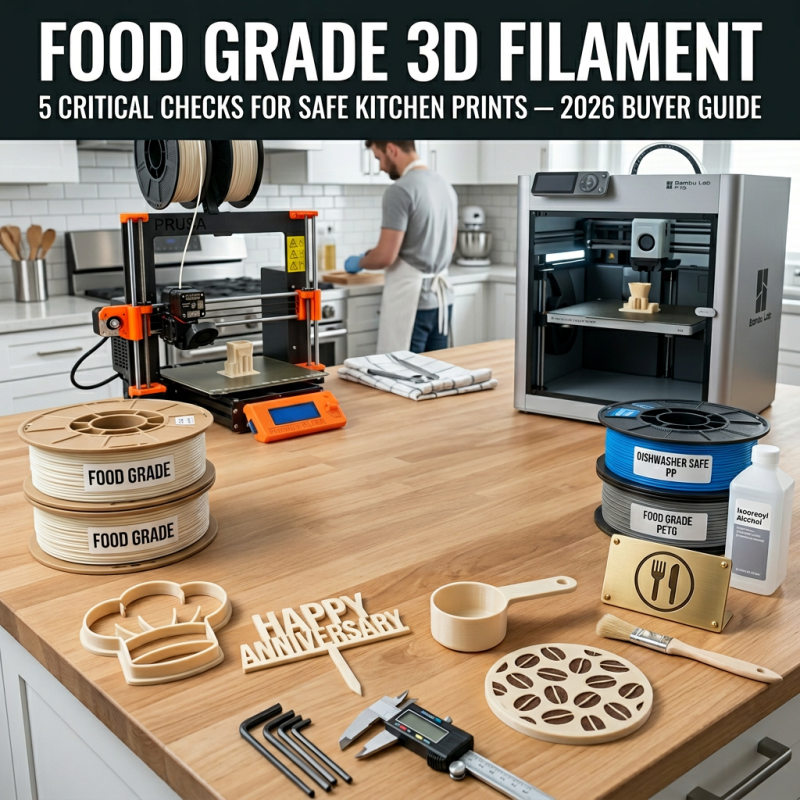
An Expert Guide to PLA Food Safe Prints: 5 Critical Factors for 2026


Abstract
The food safety of objects produced via Fused Deposition Modeling (FDM) using Polylactic Acid (PLA) is a subject of considerable nuance and debate. While virgin PLA resin is a bioplastic derived from renewable resources and often complies with food-contact regulations, the 3D printing process itself introduces multiple variables that can compromise the safety of the final product. This analysis investigates the critical factors determining whether a PLA print can be considered food safe. Key areas of examination include the chemical composition of the filament, which may contain non-compliant additives and colorants; contamination from printer hardware, such as lead leaching from brass nozzles; the inherent porosity of 3D printed objects, which creates an environment conducive to bacterial proliferation; and the material’s low thermal and chemical resistance, leading to potential degradation and chemical migration when in contact with certain foods or cleaning methods. The investigation concludes that while PLA is not intrinsically unsafe, achieving a food-safe outcome requires a holistic approach encompassing careful material selection, dedicated hardware, appropriate post-processing, and a clear understanding of the application’s limitations.
Key Takeaways
- Virgin PLA resin is generally safe, but additives and colorants can introduce toxins.
- Your 3D printer’s brass nozzle can contaminate prints with lead; use stainless steel.
- The layer lines in prints create microscopic gaps where harmful bacteria can multiply.
- To determine if PLA is food safe, you must consider the entire printing process.
- For repeated use, seal PLA prints with a certified food-grade epoxy or sealant.
- PLA has a low melting point and should not be used with hot foods or dishwashers.
- Consider short-term, single-use applications like cookie cutters for safer practices.
Table of Contents
- An Introduction to PLA and the Food Safety Question
- Factor 1: The Filament Itself – Purity, Additives, and Colorants
- Factor 2: The Printing Process – Contamination from Your 3D Printer
- Factor 3: The Printed Object’s Physical Structure – A Haven for Bacteria
- Factor 4: Post-Processing – Sealing the Surface for Enhanced Safety
- Factor 5: Chemical Leaching and Material Degradation Over Time
- Practical Applications: When is it Acceptable to Use PLA with Food?
- Frequently Asked Questions (FAQ)
- Conclusion
- References
An Introduction to PLA and the Food Safety Question
The allure of 3D printing is deeply rooted in its power to transform a digital idea into a tangible object, right on your desktop. You can design and create custom tools, replacement parts, artistic models, and, perhaps most enticingly, bespoke items for your kitchen. Imagine printing the perfect cookie cutter for a child’s birthday party, a unique stencil for decorating a latte, or a custom-fit citrus juicer. This capability brings a profound sense of empowerment, but with it comes an equally profound responsibility, especially when the objects we create are intended to come into contact with the food we eat. This brings us to a fundamental and frequently asked question within the 3D printing community: is PLA food safe?
The answer, frustratingly, is not a simple yes or no. It is a complex issue that resides in the murky territory of “it depends.” To navigate this complexity, we must think less like a consumer asking a binary question and more like a scientist examining a complete system. The food safety of a 3D printed part is not determined by the material alone but by a chain of custody that begins with raw chemical pellets and ends with how the final object is used and cleaned.
What Exactly is Polylactic Acid (PLA)? A Look at its Origins
Before we can properly assess its safety, let’s establish what PLA actually is. Polylactic Acid is a thermoplastic polyester, which means it’s a type of plastic that becomes soft and moldable when heated and solidifies upon cooling. What makes PLA particularly special in the world of plastics is its origin. Unlike most common plastics derived from finite petroleum reserves, PLA is a bioplastic. It is typically derived from the fermentation of carbohydrate-rich plant starches, such as those from corn, sugarcane, or sugar beet pulp.
This process begins by breaking down the starch into sugar (dextrose). Microorganisms then ferment this sugar to produce lactic acid. Through a chemical process involving polymerization, these lactic acid molecules are linked together to form long chains of polylactic acid. These chains are the building blocks of the PLA plastic we know. Because of its renewable, plant-based origins, PLA is often touted for its environmental benefits, including its potential to biodegrade under specific industrial composting conditions (Garlotta, 2001). This “green” reputation contributes to a general perception of PLA as being natural and inherently safe, but as we will see, this is a dangerous oversimplification when considering food contact.
The Core Dilemma: Virgin Resin vs. The Printed Object
Herein lies the central paradox of PLA food safety. The raw, unmodified PLA resin, in its pure pellet form as it leaves the chemical plant, is generally considered safe for food contact. Major manufacturers like NatureWorks, with their Ingeo brand, produce PLA resins that comply with numerous international standards, including the U.S. Food and Drug Administration (FDA) regulations for food-contact surfaces. The material itself is biocompatible and has been used for years in medical applications like dissolvable sutures and surgical implants.
However, the spool of filament you buy is rarely just pure PLA. To improve printing performance, durability, and appearance, manufacturers blend in a cocktail of additives. These can include plasticizers for flexibility, impact modifiers for strength, and a wide array of pigments for color. These additives are often proprietary trade secrets, and they are not always subject to the same food-grade regulations as the base resin.
Furthermore, the FDM 3D printing process itself is a transformative, and potentially contaminating, act. The filament is pushed through a heated metal nozzle, laid down in thin layers, and fused together. This process creates a physical object with a unique microscopic topography and exposes the material to hardware that may not be food safe. Therefore, the question “is PLA food safe?” is flawed. We must instead ask, “Can a 3D printed object, created from a specific PLA filament on a specific printer and used for a specific purpose, be considered food safe?” This reframing shifts our focus from the material in a vacuum to the entire lifecycle of the printed part.
Why This Question Matters in 2026: The Rise of At-Home Manufacturing
In 2026, 3D printing is no longer a niche hobby for engineers and tinkerers. High-speed, reliable, and affordable printers are common in homes, schools, and small businesses. We are in the midst of a decentralized manufacturing revolution, where individuals have the power to create functional, end-use products. This democratization of production is incredibly exciting, but it also outpaces the development of clear safety standards and consumer awareness.
People are printing kitchen utensils, food storage containers, and even parts for food-processing equipment. The desire to create is outpacing the knowledge of how to create safely. A lack of clear information leads to a cycle of assumptions and misinformation, putting people at unnecessary risk. Answering the question of PLA’s food safety is therefore not just an academic exercise; it is a matter of public health and responsible making. It requires a deep, evidence-based exploration of every potential point of failure, from the filament factory to your kitchen sink.
Factor 1: The Filament Itself – Purity, Additives, and Colorants
The journey to a food-safe print begins with the most fundamental component: the filament. Before you even think about your printer’s hardware or post-processing techniques, the material you choose dictates the ultimate potential for safety. A common misconception is that all PLA filaments are created equal. In reality, a spool of filament is a complex chemical product, and its composition can vary dramatically from one manufacturer to another. Understanding what goes into your filament is the first and most critical step in evaluating its suitability for food-contact applications.
The Promise of Virgin PLA Resin: FDA Compliance and GRAS Status
At its core, pure polylactic acid has an excellent safety profile. The FDA has evaluated specific PLA resin formulations and has determined that they are suitable for use in food packaging and food-contact articles. This is often referred to as being “FDA-compliant.” For a material to achieve this status, it must be listed in Title 21 of the Code of Federal Regulations (CFR), which outlines the substances permitted for food contact.
Specifically, the FDA maintains a list of substances that are “Generally Recognized As Safe” (GRAS). A substance can achieve GRAS status if its safety is widely accepted by qualified experts based on scientific evidence. Pure PLA resin falls into this category, meaning that in its unmodified state, it is not expected to migrate harmful substances into food in significant quantities under normal conditions of use (FDA, 2023). This is the foundation upon which the argument for PLA’s food safety is built. When a filament manufacturer states they use “FDA-compliant materials,” they are typically referring to this base resin. This is a good starting point, but it’s only the beginning of the story.
The Hidden Dangers: Additives That Compromise Food Safety
Pure PLA, while safe, does not always exhibit the ideal properties for 3D printing or for end-use applications. It can be brittle and has a relatively low melting temperature. To counteract these limitations and improve the printing experience, manufacturers introduce a variety of additives. This is where the clear line of food safety begins to blur.
These additives can include:
- Plasticizers: Chemicals added to increase flexibility and reduce brittleness. Some common plasticizers, such as certain phthalates, have been linked to health concerns and are not approved for food contact.
- Impact Modifiers: These are blended into the PLA to improve its toughness and ability to withstand sudden shocks. The chemical nature of these modifiers can be complex and is often proprietary information.
- Heat Stabilizers: Added to prevent the polymer from degrading during the high-temperature extrusion process, both during filament manufacturing and 3D printing.
- UV Stabilizers: Included to protect the final object from breaking down when exposed to sunlight.
- Flow Enhancers: These help the molten plastic move more smoothly through the printer’s nozzle, which is especially important for high-speed printing.
Unless the manufacturer explicitly certifies that every single one of these additives is also FDA-compliant for food contact, their presence automatically voids the food-safe status of the base resin. The problem for the consumer is that this information is rarely disclosed.
The Color Conundrum: Are Pigments and Dyes Safe for Consumption?
Perhaps the most obvious additive is the colorant used to give the filament its vibrant hue. The pigments and dyes used in plastics are complex chemicals, and some may contain heavy metals like cadmium, lead, or chromium to achieve specific colors. These heavy metals are toxic and should never come into contact with food.
While many reputable manufacturers use organic pigments or other safer alternatives, there is no universal standard. A cheap, unbranded filament from an unknown source might use industrial-grade colorants that are perfectly fine for printing a decorative vase but dangerous for printing a fork. The color white, for example, often uses titanium dioxide as a pigment. While it is generally considered safe, the particle size and concentration matter. The simple truth is that the color itself is a chemical additive. Without a specific declaration from the manufacturer that their entire colorant package is food-grade, you must assume that it is not. “Natural” or unpigmented PLA is often recommended for food-contact items, as it eliminates at least one major variable from the equation.
| Additive Type | Potential Risk to Food Safety | How to Mitigate Risk |
|---|---|---|
| Colorants (Pigments/Dyes) | May contain heavy metals (e.g., lead, cadmium) or other toxic compounds. | Use “natural” or unpigmented filament. Only use colored filament that is explicitly certified as food-safe by the manufacturer. |
| Plasticizers | May contain non-food-grade chemicals like certain phthalates that can leach into food. | Choose filaments known for their purity or those specifically marketed for toughness without these additives (e.g., PLA+ from a reputable source). |
| Impact Modifiers | Proprietary chemical blends that are not typically certified for food contact. | Avoid using filaments with enhanced impact resistance for food items unless the full formulation is certified. |
| Recycled Content | The source of the recycled material is unknown and could contain contaminants or non-food-safe plastics. | Never use filament containing recycled material for food-contact applications. Insist on 100% virgin resin. |
Sourcing with Confidence: How to Vet Your Filament Supplier
Given these complexities, how can you make an informed choice? The responsibility falls on you to be a discerning consumer. Here’s what to look for:
- Transparency: A reputable manufacturer will be open about their materials. Look for detailed technical data sheets (TDS) and safety data sheets (SDS) on their website. While they may not reveal their exact formula, they should be able to state clearly whether their product is intended for food-contact applications.
- Certifications: Look for manufacturers who adhere to recognized quality standards. For instance, an ISO 9001 certification indicates a commitment to quality control and process consistency. Companies that supply to industrial or medical clients are often more rigorous in their material documentation.
- 100% Virgin Resin: As the table above indicates, recycled filament is a complete unknown. A trustworthy supplier will guarantee they use only 100% virgin resin. For example, a supplier focused on industrial consistency, like a wholesale 3D printer filament manufacturer, often emphasizes the use of prime, virgin materials to ensure batch-to-batch reliability for their business customers. This focus on quality control is a positive indicator for consumers concerned about purity.
- Country of Origin: While not a perfect measure, filaments manufactured in regions with strict consumer protection and environmental laws (like the EU or North America) may offer greater traceability and accountability.
- Ask Directly: Do not hesitate to contact the manufacturer’s support team. Ask them directly: “Is this specific filament, including all additives and colorants, certified as food-safe according to FDA or EU standards?” A vague or non-committal answer should be treated as a “no.”
Ultimately, the filament is your foundation. If you begin with a material of unknown composition, no amount of careful printing or post-processing can guarantee a safe result. Choosing a high-purity, well-documented filament from a transparent manufacturer is the non-negotiable first step.
Factor 2: The Printing Process – Contamination from Your 3D Printer
Even if you have sourced the purest, certified food-grade PLA filament available, the journey toward a food-safe object has just begun. The 3D printer is not a sterile, inert machine. It is a piece of mechanical hardware with various components that can, and often do, introduce contaminants into the very object you are trying to create. The path the filament takes from the spool to the build plate is fraught with potential points of contamination. Ignoring the machine itself is a critical oversight that can render even the best filament unsafe for food contact.
The Hotend: A Potential Source of Heavy Metals
The hotend is the heart of your 3D printer. It’s where the solid filament is melted into a liquid state just before being extruded. A typical hotend assembly consists of a heat block, a heat break, a heatsink, and, most importantly, a nozzle. The materials used in these components are chosen for their thermal conductivity and durability, not necessarily for their food-safe properties.
The most significant concern within the hotend is the nozzle. For many years, the standard, default nozzle shipped with most consumer 3D printers has been made of brass. Brass is a popular choice because it is inexpensive and has excellent thermal conductivity, allowing for stable and efficient melting of the plastic. However, brass is an alloy primarily composed of copper and zinc, and it often contains a small but significant amount of lead. Lead is added to brass to improve its machinability, making it easier to manufacture the nozzles with high precision. Lead is a potent neurotoxin, and there is no safe level of exposure. The concern is that as the filament passes through the heated brass nozzle, microscopic particles of lead could be abraded from the nozzle’s inner surface and become embedded in the printed object (Wollin et al., 2021). While the amount may be minuscule for a single print, the risk is not zero, and it is a risk that is easily avoidable.
Brass Nozzles vs. Stainless Steel: A Critical Choice for Food Contact
If you are serious about printing objects for food contact, the first hardware upgrade you must make is to replace your brass nozzle with one made from food-grade stainless steel. Stainless steel is an iron-based alloy containing chromium, which forms a passive, non-reactive layer on the surface, making it highly resistant to corrosion and leaching. This is why nearly all commercial kitchen equipment and food processing machinery is made from stainless steel.
When selecting a nozzle, look for one specifically made from 303, 304, or 316 stainless steel. These grades are considered food-safe. While stainless steel has lower thermal conductivity than brass, which may require you to increase your print temperature by a few degrees to compensate, this is a small price to pay for peace of mind. Other materials like hardened steel or ruby-tipped nozzles are designed for abrasive filaments and are also generally considered safe from a leaching perspective, but stainless steel remains the industry standard for food applications. This single, inexpensive change is one of the most impactful actions you can take to improve the food safety of your prints.
Beyond the Nozzle: Contaminants in the Extruder and on the Build Plate
The nozzle is the most obvious point of concern, but contamination can occur earlier in the filament’s path. The extruder gear, the small, toothed wheel that grips the filament and pushes it toward the hotend, can potentially shed tiny metal particles as it bites into the plastic. While this is a lower risk than the nozzle, it’s a reminder that the entire filament path matters.
Furthermore, consider your build plate. What chemicals do you use to ensure bed adhesion? Many people use hairspray, glue sticks, or specialized adhesive solutions. These substances are absolutely not food-safe. Any residue on the bottom surface of your print will contaminate it. For food-contact prints, you should use a clean, sterile build surface like glass or PEI and rely on proper calibration (like Z-offset) for adhesion rather than chemical aids. If you must use an interface material, a layer of blue painter’s tape can work, but it should be removed, and the surface should be cleaned afterward.
A Protocol for a Food-Safe Printing Environment
To mitigate these risks, it is best practice to dedicate a specific printer, or at least a specific set of hardware, exclusively for food-contact prints. This “clean” setup would involve:
- A Dedicated Stainless Steel Nozzle: Install a food-grade stainless steel nozzle and use it only for printing with your designated food-safe filaments. Never swap it out to print with abrasive or potentially toxic materials like ABS or carbon-fiber composites.
- A Clean Filament Path: Before printing, ensure the extruder gear and the PTFE tube (if you have a Bowden setup) are clean and free of debris from previously used filaments. It can be wise to have a dedicated, separate Bowden tube for your food-safe setup.
- A Sterile Build Surface: Use a glass or PEI build plate that has been thoroughly cleaned with isopropyl alcohol to remove any oils or residues. Avoid using any chemical bed adhesives.
- Isolate Your Filaments: Store your food-safe filament in a sealed bag with desiccant, away from your other filaments, to prevent cross-contamination from dust or airborne particles in your workspace.
By treating your printer not just as a tool but as part of your “kitchen,” you can begin to control the many variables that the printing process introduces. Neglecting the hardware is like cooking a meal in a dirty pan; no matter how high-quality your ingredients are, the final result will be compromised.
Factor 3: The Printed Object’s Physical Structure – A Haven for Bacteria
We have now selected a pure filament and prepared a clean printing environment. The print is complete, and the object looks perfect. It feels solid and smooth to the touch. It is at this stage that we encounter the most insidious and perhaps the most significant barrier to achieving a truly food-safe 3D printed object: the microscopic physical structure of the part itself. An object made via Fused Deposition Modeling is fundamentally different from a solid object made by injection molding. This difference in structure has profound implications for cleanliness and bacterial growth.
The Problem of Porosity: Understanding Layer Lines at a Microscopic Level
FDM 3D printing works by depositing thin, successive layers of molten plastic, one on top of the other, which then fuse together as they cool. Imagine building a wall not with solid bricks and mortar, but by laying down thousands of tiny, parallel ropes of semi-molten material. Even under the most perfectly calibrated conditions, this process inevitably creates microscopic gaps, crevices, and voids between the layers and between adjacent lines of extrusion within a single layer.
These features, which we see with the naked eye as “layer lines,” create an incredibly complex and vast surface area. Under a microscope, the surface of a 3D print is not a smooth plain but a rugged landscape of peaks and valleys. A study by researchers at the University of Nebraska-Lincoln examining the surface topography of 3D printed objects found them to be significantly rougher than smooth plastic surfaces, providing an ideal terrain for microbial attachment (Neches et al., 2016). This inherent porosity is a direct consequence of the FDM process and is virtually impossible to eliminate completely through slicer settings alone. While you can reduce the visibility of layer lines by using smaller layer heights, you cannot erase the microscopic gaps.
Why Bacteria Thrive in 3D Prints
This rough, porous surface is a paradise for bacteria. Pathogens commonly found in food, such as Salmonella, E. coli, and Listeria, can easily become trapped within these microscopic crevices. Once lodged in these tiny safe havens, they are shielded from cleaning efforts. A simple rinse or even a scrub with a sponge may not be able to physically reach and dislodge them.
Worse yet, these bacteria can then begin to multiply, feeding on the microscopic food particles and moisture that also become trapped in the porous surface. They can form what is known as a biofilm—a complex community of microorganisms that secrete a slimy, protective matrix. This biofilm acts like a shield, making the bacteria even more resistant to cleaning agents and sanitizers (Donlan, 2002). Within a very short period, a 3D printed kitchen tool can become a thriving bacterial colony, re-contaminating any food it touches. This is the primary reason why most health authorities advise against using 3D printed items for repeated food contact.
Can You Effectively Clean a 3D Printed Object? The Dishwasher Debate
A common suggestion is to simply wash the 3D printed item in a dishwasher. However, this presents two major problems. First, as mentioned previously, PLA has a very low glass transition temperature (the temperature at which it begins to soften and deform), typically around 60°C (140°F). Most dishwashers use water heated well above this temperature to effectively sanitize dishes. Placing a PLA object in a dishwasher will almost certainly cause it to warp, deform, and potentially ruin the item.
Second, even if the object were made from a more heat-resistant material like PETG or ABS, the high-pressure water jets of a dishwasher may still not be able to penetrate the deepest microscopic voids to remove all bacteria and biofilm. The porous nature of the print makes true sterilization outside of a medical autoclave (which would melt any consumer plastic) extremely difficult.
| Cleaning/Sealing Method | Efficacy for Bacterial Removal | Impact on PLA Material Integrity | Recommendation for Food Safety |
|---|---|---|---|
| Hand Washing (Soap & Water) | Low. Cannot penetrate microscopic pores to remove trapped bacteria or biofilms. | Minimal impact if using cool or lukewarm water. | Not recommended for making a print safe for repeated use. |
| Dishwasher | Ineffective. The high heat will deform or melt the PLA object before sanitization can occur. | High. Guaranteed to cause warping and structural failure. | Do not use. Destroys the print and does not guarantee sanitation. |
| Chemical Sanitizers (e.g., Bleach Solution) | Moderate. Can kill surface bacteria but may not fully penetrate deep crevices or established biofilms. | Can cause material degradation or discoloration over time. Potential for chemical residue. | Not a reliable method for ensuring long-term food safety. |
| Food-Grade Epoxy/Sealant Coating | High. Fills in the porous surface, creating a smooth, non-porous, and cleanable barrier. | No negative impact if applied correctly. The sealant protects the PLA. | Highly Recommended. This is the most effective method for making a PLA print safer for repeated food contact. |
Limited Use Applications: The “One-Time Use” Guideline
Because of this insurmountable cleaning challenge, the most responsible advice for using uncoated PLA prints with food is to treat them as single-use items. If you print a cookie cutter, use it for your batch of cookies, and then discard it. If you print a cake topper, use it for the party, and then throw it away.
This approach sidesteps the problem of bacterial growth over time. The risk of significant bacterial colonization during a single, short-term use with low-moisture foods (like cookie dough) is relatively low. The risk comes from washing and reusing the item, which introduces moisture and allows trapped bacteria the time and resources to multiply. By embracing a “one-and-done” philosophy for any uncoated PLA print that touches food, you are practicing the safest possible method and acknowledging the inherent limitations of the technology.
Factor 4: Post-Processing – Sealing the Surface for Enhanced Safety
We have established that the porous surface of a raw 3D print is its greatest weakness from a food safety perspective. It is a microscopic minefield of crevices perfect for harboring bacteria. So, what can be done? If we cannot eliminate the porosity from the printing process itself, can we address it after the fact? This is where post-processing comes into play. By applying a food-safe sealant, we can effectively fill in those microscopic gaps, creating a smooth, non-porous, and glass-like surface that is far easier to clean and significantly safer for repeated contact with food. This step is not just an enhancement; for any multi-use item, it is an absolute necessity.
The Role of Food-Grade Coatings and Sealants
The goal of sealing a 3D print is to create an impermeable barrier between the printed PLA and the food. This barrier serves two critical functions. First, it fills the layer lines and voids, eliminating the terrain where bacteria can hide and multiply. A sealed surface is smooth, much like the surface of a ceramic plate or a glass, making it physically possible to wash away food residue and microbes. Second, this coating encapsulates the print, preventing any potential leaching of colorants or additives from the plastic itself into the food.
However, it is absolutely critical that the coating you use is itself certified as “food-safe” or “food-grade.” Simply grabbing any clear coat or varnish from a hardware store is extremely dangerous, as these products contain solvents and chemicals that are toxic if ingested. You must use a product that has been specifically formulated and tested for food contact and complies with FDA or equivalent regulations.
Selecting the Right Sealant: Epoxy Resins, Polyurethane, and Silicone
There are several types of food-safe sealants available, each with its own properties and application methods. The most common and effective choice is a two-part epoxy resin.
- Food-Grade Epoxy Resins: These products consist of a resin and a hardener that, when mixed, undergo a chemical reaction to cure into a hard, durable, and non-porous plastic coating. It is crucial to look for epoxies that explicitly state they are “FDA compliant for direct food contact” once fully cured. Brands like ArtResin or MAX CLR are often cited for this purpose. The key is to allow the epoxy to cure completely, which can take up to 72 hours, according to the manufacturer’s instructions. During the curing process, components can still be volatile, but once fully cross-linked, the resulting surface is inert and stable.
- Food-Safe Polyurethane: Certain water-based polyurethane varnishes are also available with food-grade certification. These are often easier to apply than epoxy, as they can be brushed on in thin layers. They may not be as thick or as durable as epoxy, but they can provide a sufficient seal for items that do not undergo heavy wear and tear.
- Silicone Coatings: Food-grade silicone coatings can also be used. These offer a more flexible finish, which might be suitable for certain applications. However, achieving a thin, even coat can be more challenging than with epoxy or polyurethane.
When choosing a sealant, always read the product’s technical data sheet to confirm its food-safe status and to understand the specific instructions for application and curing.
Application Techniques for a Non-Porous Finish
Applying the sealant correctly is just as important as choosing the right one. The goal is to achieve a complete, bubble-free coating that fully encapsulates the print.
- Preparation: Start with a clean, dry print. Lightly sanding the surface can sometimes help the sealant adhere better, but ensure you thoroughly remove all dust afterward with a tack cloth or compressed air.
- Mixing (for Epoxy): If using a two-part epoxy, mix the resin and hardener in the precise ratio specified by the manufacturer. Mix slowly but thoroughly for several minutes to ensure a complete chemical reaction and to avoid whipping too many air bubbles into the mixture.
- Application: Use a disposable foam brush or a small spatula to apply a thin, even coat over the entire surface of the print. Pay special attention to getting the sealant into all the nooks and crannies. It’s often better to apply two thin coats rather than one thick coat, which might drip or pool.
- Removing Bubbles: After applying epoxy, small air bubbles may rise to the surface. These can be easily popped by passing the flame from a small propane torch or a heat gun quickly over the surface. The heat lowers the viscosity of the epoxy, allowing the bubbles to release.
- Curing: This is the most critical step. Place the coated object in a clean, dust-free environment to cure for the full duration recommended by the manufacturer. This is not the time to be impatient. Curing is the chemical process that makes the surface inert and safe. An under-cured coating can leach uncured chemicals into food.
The Limitations and Durability of Coated Prints
A properly sealed print is significantly safer than a raw print. However, it is not indestructible. The coating can be scratched or chipped over time, especially if the object is used with metal utensils or cleaned with abrasive scrubbers. Any breach in the sealed surface exposes the porous PLA underneath, re-introducing the risk of bacterial growth.
Therefore, even sealed prints should be treated with care. They should be washed by hand with a soft sponge and non-abrasive soap. You should periodically inspect the surface for any signs of damage. If you see a deep scratch or a chip, the object should no longer be considered food safe and should be retired from kitchen use. Sealing is a powerful mitigation strategy, but it does not make a 3D printed object equivalent to a commercially manufactured, injection-molded kitchen tool. It makes it safer, but a degree of caution and vigilance is still required.
Factor 5: Chemical Leaching and Material Degradation Over Time
The final piece of the food safety puzzle involves the chemical stability of PLA itself, particularly when it interacts with different types of food and various environmental conditions. Even if we have a pure filament, a clean printer, and a perfectly sealed surface, we must still consider how the material behaves over time. The concepts of chemical migration and material degradation are crucial for understanding the long-term safety and suitability of PLA for any food-related application. Safety is not a static property; it is a state that must be maintained throughout the object’s entire service life.
Understanding Chemical Migration from Plastic to Food
Chemical migration, or leaching, is the process by which chemical substances from a material transfer into the food that it is in contact with. All plastics, to some extent, will have some level of migration. The goal of food safety regulations is to ensure that this migration is well below any level that could be harmful to human health. In the case of pure PLA, the primary substance that could migrate is lactic acid, which is harmless.
However, the concern arises again from the additives we discussed in Factor 1. Colorants, plasticizers, or other processing aids that are not chemically bound to the polymer chains can potentially leach out of the plastic matrix and into the food. The rate and amount of this migration are not constant; they are heavily influenced by several factors, creating a complex risk profile that depends entirely on how the object is used.
The Influence of Temperature, Acidity, and Alcohol Content
The conditions of use play a massive role in chemical migration. Three factors, in particular, are known to accelerate the rate at which chemicals can leach from plastics:
- Temperature: Higher temperatures increase the mobility of molecules within the plastic, making it easier for additives to migrate out. This is a primary reason why using PLA with hot liquids or foods is strongly discouraged. A hot cup of coffee or soup could significantly increase the potential for leaching compared to contact with cold or room-temperature food.
- Acidity: Highly acidic foods, such as tomato sauce, citrus juices, or vinegar-based dressings, can be more aggressive in breaking down the surface of the plastic and drawing out chemical components.
- Fat and Alcohol Content: Fatty or oily foods and alcoholic beverages can also act as solvents, increasing the rate of migration for certain types of additives.
An object printed from PLA might be perfectly safe for serving dry crackers, but that same object could become a source of contamination if used to store a vinaigrette dressing for a week in the refrigerator. This is why a blanket statement about whether PLA is food safe is impossible; the context of its use is paramount.
PLA’s Low Glass Transition Temperature: A Major Weakness
We have already touched upon PLA’s low glass transition temperature (Tg) of around 60°C (140°F) in the context of dishwasher safety. This property is also central to the issue of chemical leaching and degradation. The glass transition temperature is the point at which an amorphous solid, like PLA, begins to transition from a hard, glassy state to a softer, more rubbery state.
When PLA is heated above its Tg, the polymer chains have more freedom to move. This not only causes the object to soften and deform but also dramatically increases the rate at which any unbound additives can migrate to the surface. Any application that involves temperatures approaching or exceeding this threshold is inherently high-risk. This effectively rules out PLA for use as coffee mugs, soup bowls, or any utensil that will be used for cooking or serving hot food.
Long-Term Durability: Is PLA a Suitable Material for Reusable Kitchenware?
Beyond the immediate chemical risks, we must also consider the physical degradation of PLA over time. While it feels like a hard and durable plastic, PLA is susceptible to hydrolysis, a process where water molecules break down the polymer chains. This process is very slow at room temperature but can be accelerated by heat and acidic or alkaline conditions.
Over time, with repeated washing and use, the surface of a PLA object can begin to degrade, becoming more brittle and potentially creating micro-cracks. These new cracks, even in a sealed print, create new havens for bacteria and can compromise the integrity of the object. Compared to more chemically robust plastics like PETG or polypropylene (the material used for most commercial food containers), PLA is not well-suited for applications requiring long-term durability and repeated, rigorous cleaning cycles. Its identity as a biodegradable plastic, while an environmental advantage, is a functional disadvantage when it comes to creating permanent, reusable, and food-safe kitchenware. This inherent lack of long-term stability is a final, compelling argument for treating PLA items as either single-use or short-term, special-purpose tools rather than everyday replacements for conventional kitchen items.
Practical Applications: When is it Acceptable to Use PLA with Food?
After dissecting the five critical factors—filament composition, printer contamination, physical porosity, post-processing, and chemical degradation—we can now move from theory to practice. The question is no longer a simple “is PLA food safe?” but rather, “Under what specific conditions and for what specific applications can I use PLA in a way that minimizes risk?” By establishing a clear framework of low-risk and high-risk scenarios, you can make responsible decisions and still enjoy the benefits of creating custom kitchen items with your 3D printer.
Low-Risk Applications: Cookie Cutters, Cake Toppers, and Dry Food Molds
Low-risk applications are those that cleverly sidestep the major hazards we have identified. They typically involve brief, one-time contact with food that is low in moisture, low in acidity, and at room temperature.
- Cookie Cutters: This is the quintessential low-risk application. A PLA cookie cutter makes contact with cool, relatively dry dough for only a few seconds. After use, it can be discarded. The brief contact time and nature of the food minimize the opportunity for bacterial growth or chemical leaching.
- Fondant Stamps and Molds: Similar to cookie cutters, these tools are used with cool, low-moisture materials for short periods.
- Cake Toppers and Decorations: These items often don’t touch the edible part of the cake at all, or only make superficial contact. They are used once for a special occasion and then removed.
- Dry Food Stencils: A stencil used to dust powdered sugar or cocoa onto a dessert is another excellent example. The contact is brief, indirect, and involves a dry substance.
- Food Molds for Dry or Solid Items: Molds for things like forming candy or chocolate can be considered low-risk, provided they are treated as single-use items and the food is poured in at a temperature well below PLA’s softening point.
For these types of items, using a well-sourced, unpigmented PLA filament and a clean printer setup is generally considered an acceptable practice by the 3D printing community, as the combination of single-use and limited contact mitigates the most severe risks.
High-Risk Applications to Avoid: Coffee Mugs, Utensils, and Long-Term Storage
High-risk applications are those that directly conflict with PLA’s inherent weaknesses. These applications should be avoided entirely, even with sealing, as the potential for failure and contamination is too great.
- Coffee Mugs, Cups, or Bowls for Hot Liquids: This is the most dangerous application. The high temperature of the liquid will cause the PLA to soften, deform, and dramatically increase the rate of chemical leaching. It is a guaranteed failure point.
- Cutting Boards: The surface of a cutting board is constantly being scored by knives. A PLA cutting board would quickly become a web of deep scratches that are impossible to clean, creating a massive risk for bacterial cross-contamination between foods like raw chicken and fresh vegetables.
- Everyday Utensils (Forks, Spoons): These items are subject to repeated mechanical stress and washing. A coated utensil could easily have its sealant scratched off by teeth or other dishes, exposing the porous PLA underneath.
- Long-Term Food Storage Containers: Storing food, especially acidic or liquid food, for extended periods in a PLA container is unwise. The prolonged contact increases the window for chemical migration and potential material degradation.
- Anything for an Infant or Toddler: The developing bodies of young children are more vulnerable to chemicals and bacteria. Never use 3D printed items for baby bottles, teething toys, or children’s dishes.
- Anything Involving Alcohol: As alcohol can act as a solvent, printing items like shot glasses or cocktail shakers from PLA is a high-risk activity.
A Note on PETG as a Food-Safe Alternative
Throughout this discussion, the focus has been on PLA. However, it is worth noting that another common 3D printing material, PETG (Polyethylene Terephthalate Glycol), is often considered a better choice for food-contact applications. PETG is the same family of plastic used to make water bottles and many commercial food containers.
PETG offers several advantages over PLA:
- Higher Temperature Resistance: PETG’s glass transition temperature is around 80°C, making it more resistant to hot water (though still not recommended for boiling liquids or dishwashers).
- Better Chemical Resistance: It holds up better against acids and solvents.
- Less Brittle: It is more durable and impact-resistant.
However, it is crucial to understand that PETG is not a magic bullet. It is still subject to the same risks from non-food-grade additives and colorants. The printing process can still introduce contaminants. And most importantly, a 3D printed PETG object is still porous due to layer lines. While it is a more robust material, it still must be sealed with a food-grade coating for any multi-use application. The same principles of responsible sourcing and safe practices apply. Some manufacturers offer that provides more detailed specifications, which can be helpful when evaluating materials for more demanding applications.
Frequently Asked Questions (FAQ)
Is PLA plastic safe for food?
The raw, virgin PLA plastic resin is generally considered safe and is often FDA-compliant for food contact. However, the final 3D printed object is not automatically food safe. Food safety depends on the filament’s additives and colorants, contamination from the printer’s hardware (like lead from a brass nozzle), the porous surface of the print which can harbor bacteria, and how the item is used.
Can you drink from a 3D printed PLA cup?
No, you should never drink hot beverages from a 3D printed PLA cup. PLA’s low softening temperature (around 60°C or 140°F) means a hot liquid like coffee or tea will cause the plastic to warp and potentially leach chemicals. Even for cold drinks, the unsealed porous surface can harbor bacteria, making it unsafe for repeated use.
Is PLA biodegradable and does that affect its food safety?
PLA is biodegradable, but only under specific industrial composting conditions of high heat and humidity. This property does affect its food safety for long-term use because it is susceptible to degradation from heat and moisture (hydrolysis) over time. This makes it less durable and stable than traditional, non-biodegradable plastics used for kitchenware.
Are all colors of PLA filament food safe?
No. The pigments used to color filament are chemical additives. Unless the manufacturer explicitly certifies that their specific colorants are food-grade and non-toxic, you must assume they are not. Heavy metals are sometimes used in pigments, which can be toxic. For the highest level of safety, use “natural” or unpigmented PLA filament.
How can I make my PLA print truly food safe?
For multi-use items, the most effective method is to seal the print with a coating that is certified as food-grade and FDA-compliant. A two-part epoxy resin designed for food contact is the best option. This fills the porous layer lines, creating a smooth, non-porous, and cleanable surface. This step is essential for any item that will be washed and reused.
Is PETG a better choice for food-contact items?
PETG is often considered a better choice than PLA because it has higher heat resistance and better chemical resistance. However, it is not inherently food safe. A 3D printed PETG object is still porous and subject to contamination from additives and the printer itself. It still requires the same precautions, including using a food-grade filament and sealing the final print for repeated use.
Does annealing PLA make it more food safe?
Annealing (heat-treating) PLA can increase its heat resistance and strength. However, it does not solve the primary food safety problems. The surface remains porous, and the process does not remove any non-food-grade additives from the filament. While the part may be less likely to warp from warm water, it does not eliminate the risk of bacterial growth or chemical leaching.
Conclusion
Navigating the question of whether PLA is food safe reveals a landscape of complexity, where the material’s potential is constantly checked by the realities of the manufacturing process. We have seen that PLA, in its pure, virgin state, offers a promising, biocompatible starting point. Yet, this initial promise is contingent upon a series of critical factors that the user must control. The journey from a spool of filament to a safe, usable kitchen object is one of diligence and scientific awareness.
The composition of the filament itself is the first hurdle; the undisclosed additives and pigments in many consumer-grade materials present an unknown risk that can only be mitigated through careful sourcing from transparent manufacturers. The 3D printer, far from being a neutral intermediary, can introduce its own contaminants, with lead from brass nozzles being a primary concern. This necessitates a conscious choice in hardware, favoring inert materials like stainless steel.
Perhaps the most stubborn challenge is the very nature of the FDM process, which gifts every print a porous, microscopic texture—an ideal sanctuary for bacteria. This inherent structural flaw makes cleaning ineffective and renders unsealed prints unsuitable for anything beyond a single, limited use. The solution, applying a food-grade sealant, is an effective but delicate one, requiring proper application and ongoing vigilance against wear and tear. Finally, the material’s own chemical and thermal limitations define a strict set of boundaries for its use, precluding contact with high heat, strong acids, or alcohol.
To declare a 3D printed object “food safe” is to make a bold claim, one that rests not on the name of the plastic but on a chain of evidence. It requires a holistic understanding of the entire system: the filament’s origin, the printer’s configuration, the object’s design, the necessity of post-processing, and the specific context of its final application. The power to create custom objects for our lives brings with it the responsibility to do so safely, armed with knowledge and a healthy respect for the material’s limitations.
References
- Donlan, R. M. (2002). Biofilms: Microbial life on surfaces. Emerging Infectious Diseases, 8(9), 881–890. https://doi.org/10.3201/eid0809.020063
- Garlotta, D. (2001). A literature review of poly(lactic acid). Journal of Polymers and the Environment, 9(2), 63–84. :1020200822435
- Neches, R. Y., Flynn, K. J., & Zaman, M. H. (2016). A protocol for 3-D printing scaffolds for analyzing cell-scaffold interactions and tissue engineering. Journal of Visualized Experiments, (116), 54539.
- SigmaFilament. (2026). About Sigma Filament | ISO Certified 3D Filament Manufacturer. SigmaFilament.
- SigmaFilament. (2026). Wholesale & Bulk 3D Printer Filament. SigmaFilament.
- U.S. Food and Drug Administration. (2023). Code of Federal Regulations Title 21. U.S. Government Publishing Office.
- Wollin, K. M., Mun-Sik, K., & Tuffek, A. (2021). Migration of metals from kitchenware and food contact materials: A review. Environmental Science and Pollution Research, 28(32), 43075–43091.
Last reviewed and updated: April 2026. Author: SigmaFilament Engineering Team. For custom filament solutions and wholesale inquiries, contact our team.