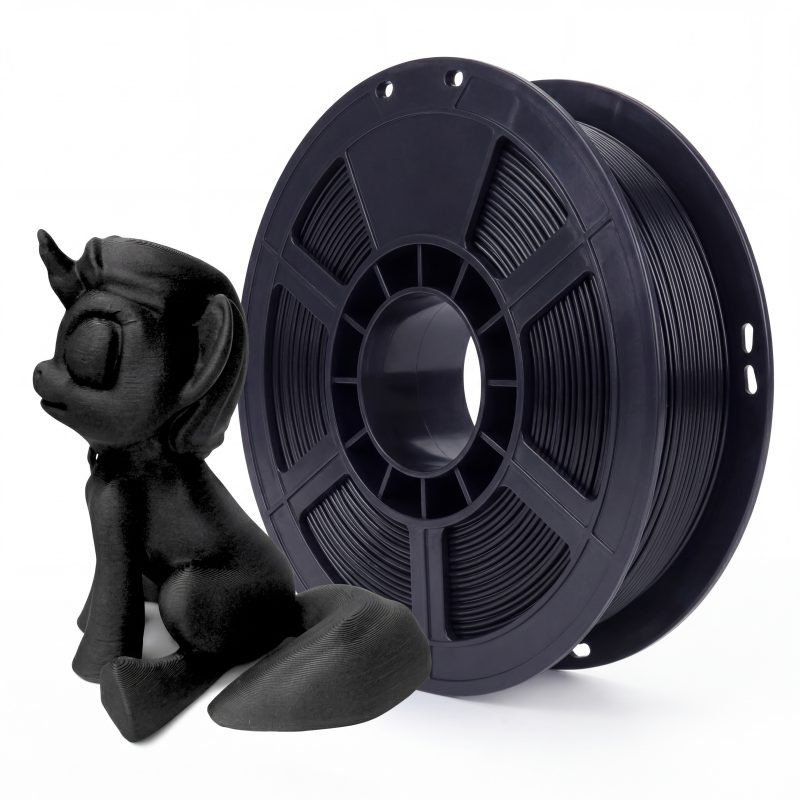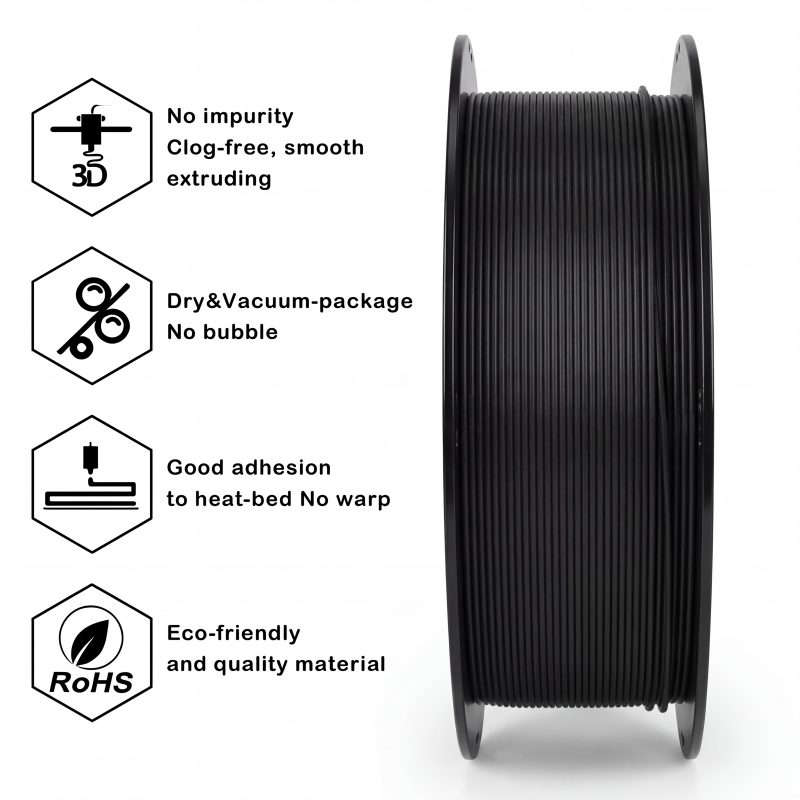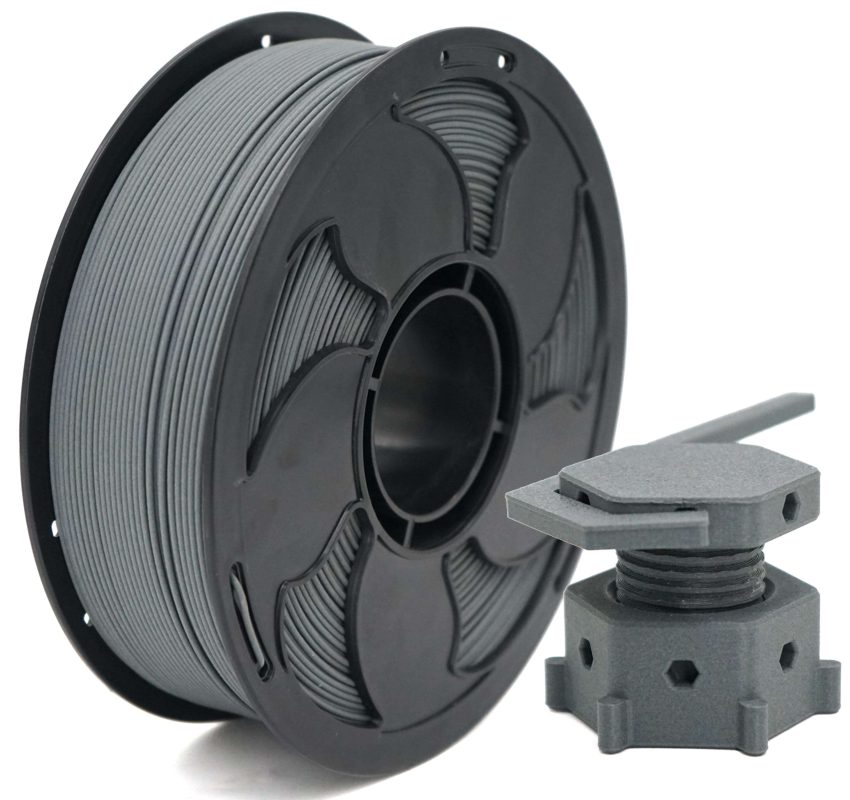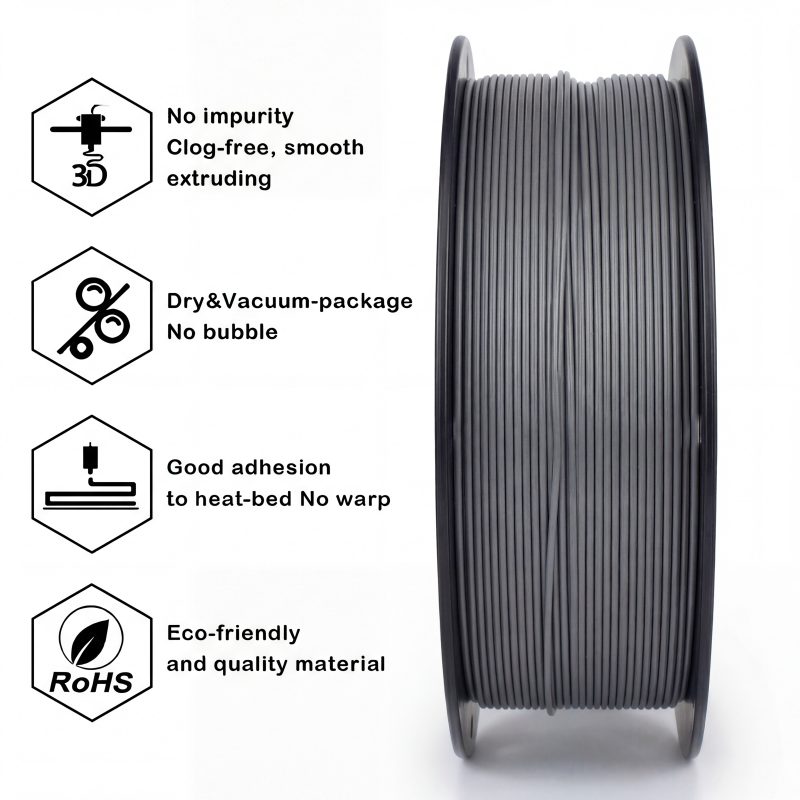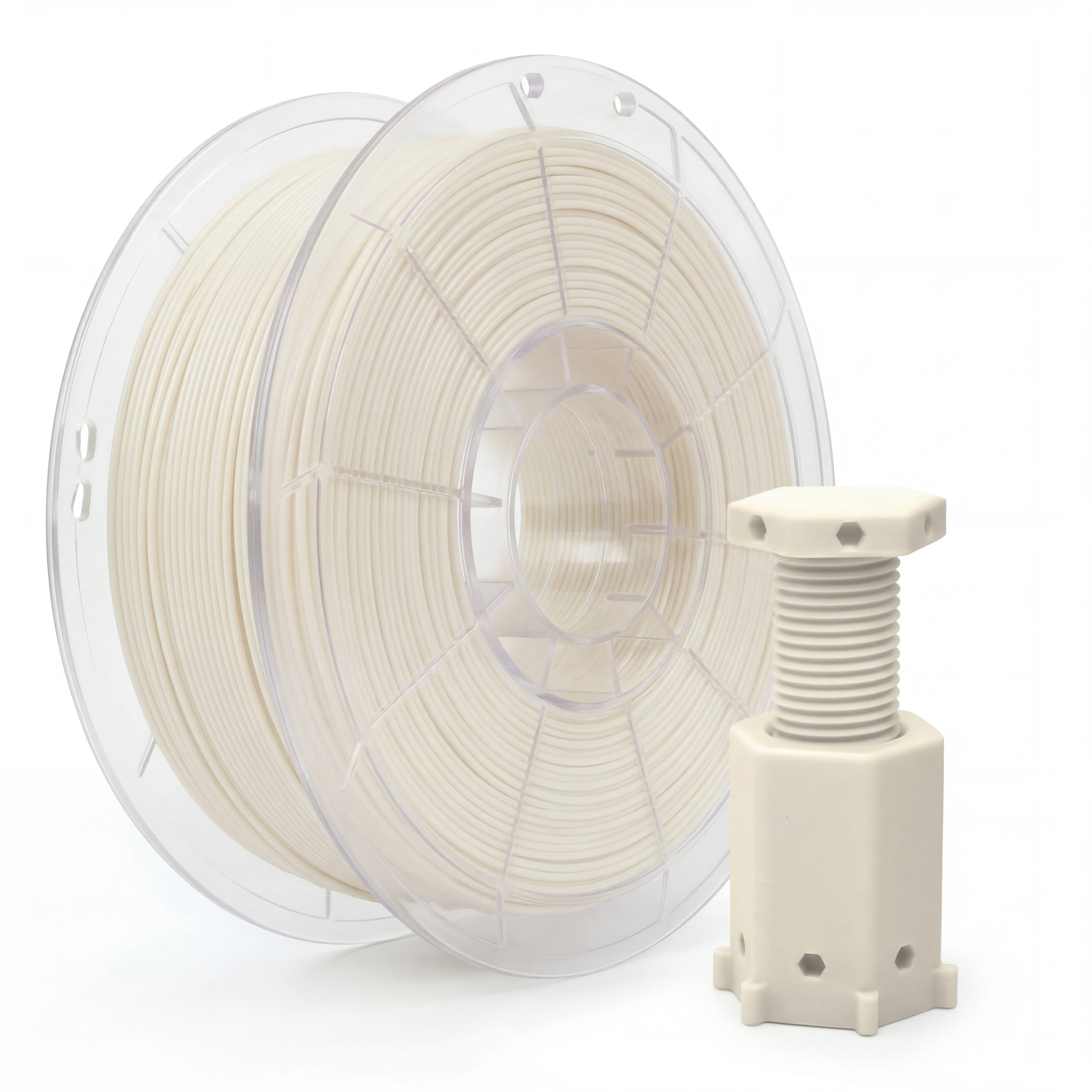
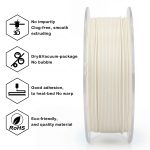
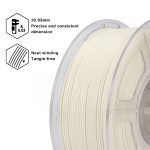
ABS Glass Fiber Filament – Product Overview
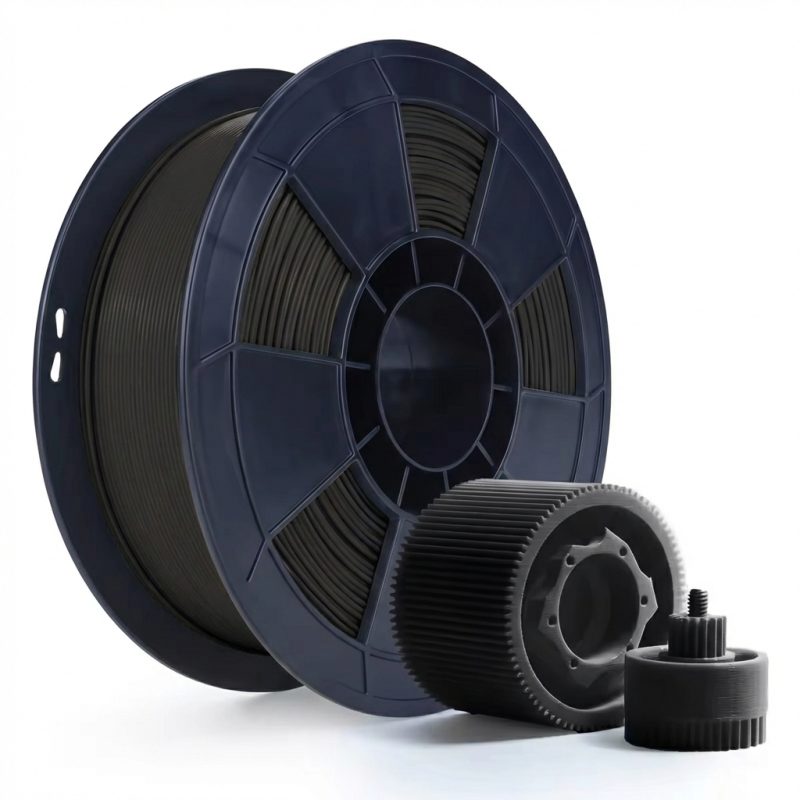
The SigmaFilament ABS Glass Fiber Filament (ABS-GF) in Natural is an advanced composite 3D printing material that combines the proven toughness of ABS with short-strand glass fiber reinforcement – delivering significantly higher strength, rigidity, and dimensional stability than standard ABS, PETG, or PLA filaments. This is the material choice when your printed parts need to perform like injection-molded engineering components.
Standard ABS already offers excellent impact resistance and heat tolerance, but adding glass fiber takes performance to the next level: the ABS glass fiber filament produces parts with dramatically increased stiffness, reduced warping and shrinkage during printing, improved creep resistance under sustained loads, and enhanced wear resistance for moving or contact surfaces. If you’re new to fiber-reinforced composites in 3D printing, our comprehensive filament categories guide explains where glass fiber composites fit among standard and specialty materials.
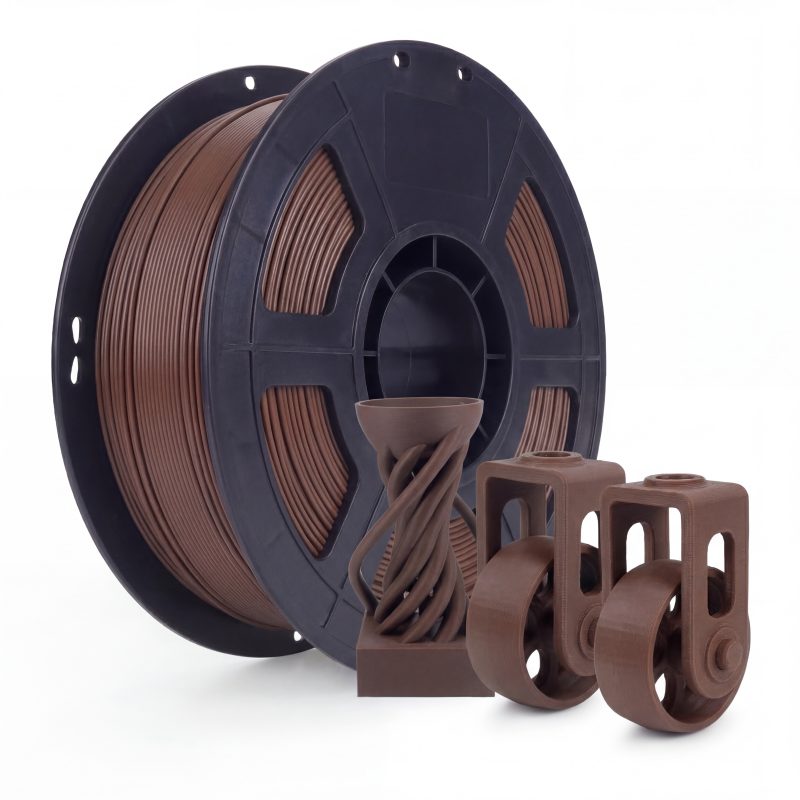
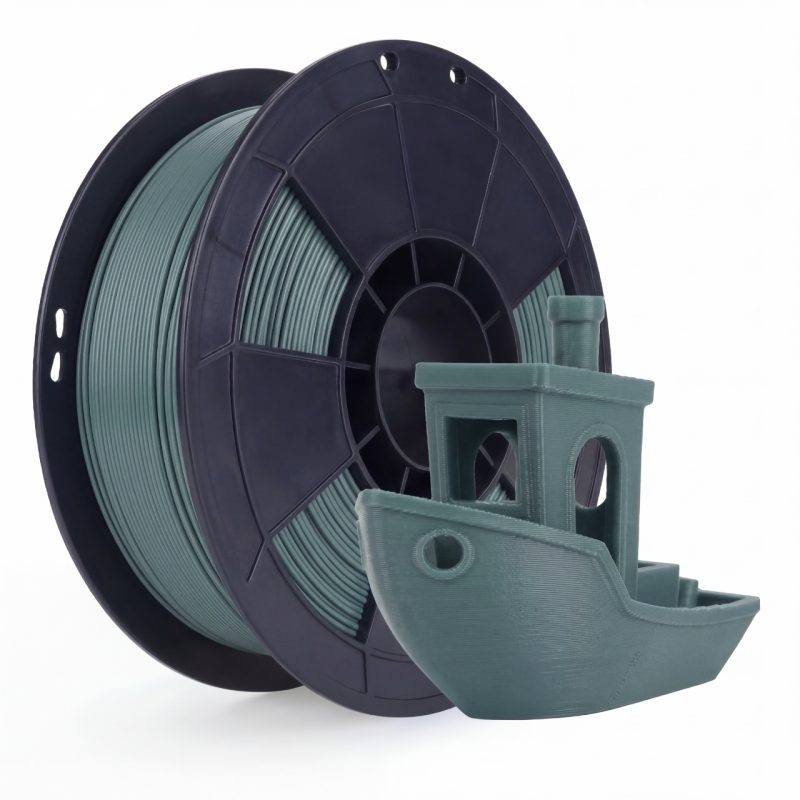
The Natural color provides a clean, professional, industrial aesthetic – the raw, uncolored appearance of the ABS-GF compound that signals engineering intent. It’s ideal for functional prototypes, production tooling, automotive components, and any application where mechanical performance matters more than cosmetics. Combined with ABS-grade chemical resistance, a heat deflection temperature exceeding 100°C, and the rigidity approaching aluminum for thin-wall structures, this ABS-GF 3D printer filament is the practical choice for engineers and manufacturers who need real composite performance from desktop 3D printing.
Manufactured under ISO 9001 quality management in Guangdong, China. Full RoHS compliance, OEM/ODM services, and free samples available for qualified business customers.
Why This ABS Glass Fiber Filament Stands Out
🔩 Glass Fiber Reinforced – Engineering-Grade Composite Performance from Your 3D Printer
Standard filaments hit a performance ceiling when parts need real structural integrity. SigmaFilament’s ABS glass fiber filament shatters that ceiling – delivering composite-level strength and stiffness with the printability of a well-tuned thermoplastic.
- Dramatically Increased Strength – Short-strand glass fiber reinforcement boosts tensile strength to 55-70 MPa, significantly exceeding standard ABS (40-50 MPa) and far surpassing PLA and PETG
- Exceptional Rigidity – Flexural modulus of 4,500-6,000 MPa means parts resist bending and deflection under load, approaching the stiffness of thin aluminum structures
- Reduced Warping & Shrinkage – Glass fibers constrain polymer chain movement during cooling, resulting in significantly less warping and better dimensional accuracy than unfilled ABS
- Enhanced Heat Resistance – Heat deflection temperature exceeds 100°C (212°F), handling continuous elevated temperatures in engine bays, factory floors, and heated enclosures
- Superior Wear Resistance – Glass fiber reinforcement increases surface hardness, reducing abrasion and extending part life for gears, guides, bearings, and contact surfaces
- Improved Creep Resistance – Parts maintain dimensions under sustained mechanical loads over time – critical for jigs, fixtures, and structural brackets
The composite material that brings injection-molding-grade performance to FDM 3D printing – for engineers who won’t settle for standard thermoplastics.
Premium ABS Glass Fiber Filament at Competitive Price
SigmaFilament is a direct manufacturer based in Guangdong, China, offering factory-direct pricing on this ABS glass fiber filament engineered for demanding industrial and engineering applications.
| 🔩 Composite Performance | 💰 Competitive Pricing | 🔁 Batch Consistency |
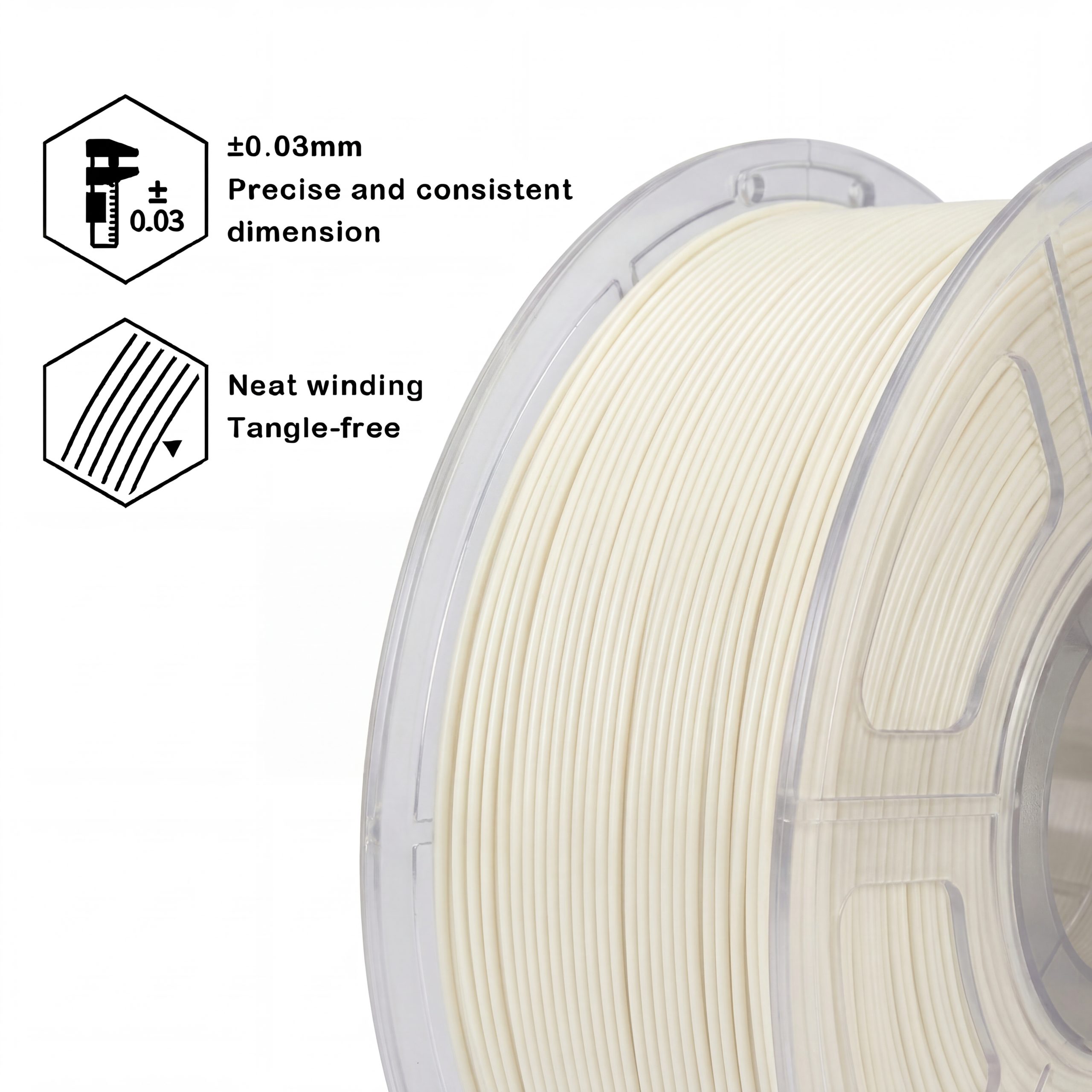
| Glass fiber reinforced ABS with ±0.05mm tolerance and uniform fiber distribution | Factory-direct, no middlemen, volume discounts from 100kg+ | Consistent fiber content, mechanical properties, and extrusion quality across every spool |
Why Choose This ABS Glass Fiber Filament for Your Projects
| 💪 Composite-Level Strength | The addition of short-strand glass fibers boosts tensile strength by 30-50% compared to standard ABS. Parts printed with this ABS glass fiber filament can handle structural loads, snap-fit assemblies, and mechanical stress that would deform or break unfilled thermoplastics – making it suitable for functional end-use parts, not just prototypes. |
| 🔩 Exceptional Rigidity | With a flexural modulus of 4,500-6,000 MPa – roughly double that of standard ABS – this glass fiber reinforced ABS filament produces parts that resist bending and maintain shape under sustained pressure. Ideal for brackets, housings, mounting plates, and any component where flex is the enemy. |
| 📐 Dimensional Stability | Glass fibers act as an internal skeleton that constrains polymer shrinkage during cooling. The result: significantly less warping, better first-layer adhesion, and tighter dimensional tolerances in finished parts compared to unfilled ABS. Critical for parts that must mate with other components or fit into assemblies. |
| 🔥 Heat & Chemical Resistant | With a heat deflection temperature exceeding 100°C (212°F), this ABS-GF filament handles continuous elevated temperatures that would soften PLA (~55°C) and PETG (~80°C). Also resistant to many chemicals, oils, greases, and automotive fluids. For even higher thermal and chemical performance, consider our PETG Carbon Fiber filament. |
| ⚙️ Superior Wear Resistance | Glass fiber reinforcement increases surface hardness and abrasion resistance, making printed parts last significantly longer in friction, sliding, or contact applications. Gears, bushings, guides, cam followers, and conveyor components all benefit from the extended service life. |
| 🏭 Industrial Natural Finish | The Natural color provides an honest, engineering-grade appearance that communicates functional intent. The slight matte, textured surface finish characteristic of glass fiber composites also hides layer lines better than smooth unfilled plastics. Parts can be sanded, primed, and painted for cosmetic applications when needed. |
ABS Glass Fiber vs. Standard ABS vs. ABS Carbon Fiber vs. Nylon-GF – Comparison
| Property | ABS-GF (This) | Standard ABS | ABS-CF | Nylon-GF |
|---|---|---|---|---|
| Tensile Strength | ★★★★☆ (55-70 MPa) | ★★★☆☆ (40-50 MPa) | ★★★★★ (65-80 MPa) | ★★★★☆ (60-75 MPa) |
| Rigidity (Flexural Modulus) | ★★★★☆ (4,500-6,000 MPa) | ★★★☆☆ (2,000-2,400 MPa) | ★★★★★ (7,000-9,000 MPa) | ★★★★☆ (4,000-5,500 MPa) |
| Impact Toughness | ★★★☆☆ (Moderate) | ★★★★☆ (High) | ★★★☆☆ (Moderate) | ★★★★☆ (High) |
| Heat Resistance | ★★★★★ (>100°C) | ★★★★★ (~100°C) | ★★★★★ (~105°C) | ★★★★☆ (~90°C dry) |
| Warping Resistance | ★★★★☆ (Fiber-stabilized) | ★★☆☆☆ | ★★★★☆ | ★★★☆☆ |
| Wear Resistance | ★★★★☆ (Glass fiber surface) | ★★★☆☆ | ★★★★★ | ★★★★★ |
| Moisture Sensitivity | ★★★★☆ (Low) | ★★★★☆ (Low) | ★★★★☆ (Low) | ★★☆☆☆ (High – Nylon absorbs moisture) |
| Price Point | ★★★★☆ (Mid-range) | ★★★★★ (Budget) | ★★★☆☆ (Premium) | ★★☆☆☆ (Premium+) |
| Best For | Structural parts, tooling & industrial use | General engineering | Max stiffness, lightweight | Max toughness + stiffness |
Recommended Print Settings for ABS Glass Fiber Filament
This ABS glass fiber filament requires careful attention to nozzle selection and print parameters to achieve optimal results. The glass fiber reinforcement changes the material’s flow behavior compared to standard ABS, and the abrasive nature of the fibers necessitates specific hardware.
⚠️ Critical Notes Before Printing:
1. Hardened nozzle is MANDATORY – Glass fibers will rapidly wear through standard brass nozzles. Use hardened steel, ruby-tipped, or tungsten carbide nozzles (0.4mm minimum, 0.6mm recommended for best flow).
2. Enclosed printer strongly recommended – While the glass fiber reinforcement reduces warping compared to standard ABS, an enclosure helps maintain consistent ambient temperature for large parts and minimizes ABS fumes.
3. Slower print speeds – ABS-GF requires 30-50mm/s for optimal fiber alignment and layer bonding. This is not a high-speed filament – the benefit is in the finished part’s mechanical performance, not print time.
4. Larger nozzle diameter preferred – A 0.6mm nozzle provides better flow and reduces clogging risk. If using 0.4mm, ensure temperature is at the higher end (255-260°C).
Optimal Print Settings for This ABS Glass Fiber Filament
| Nozzle Temperature | 240-260°C (250°C optimal for 0.6mm nozzle) |
| Bed Temperature | 90-110°C (100°C recommended) |
| Print Speed | 30-50mm/s (40mm/s for best quality-strength balance) |
| Layer Height | 0.15-0.3mm (0.2mm recommended; higher layers improve interlayer strength) |
| Cooling Fan | 0-20% (minimal cooling for best layer adhesion; use only for bridges/overhangs) |
| Wall Count | 4-5 walls (more walls = stronger parts with fiber-reinforced materials) |
| Retraction | 2-4mm at 30-40mm/s (Bowden); 0.5-1.5mm (direct drive) – slower than standard ABS to prevent clogging |
| Infill | 20-40% (grid or gyroid pattern; 50%+ for maximum structural parts) |
| Nozzle Type | Hardened steel, ruby, or tungsten carbide REQUIRED (brass will wear in hours) |
| Nozzle Diameter | 0.6mm recommended (0.4mm minimum – higher clog risk) |
| Enclosure | Strongly recommended (essential for parts >100mm) |
| Bed Adhesion | PEI sheet (best), glass with ABS slurry/glue stick, or Kapton tape; brim recommended |
| Drying (if needed) | 80°C for 4-6 hours. See our filament dryer settings guide for detailed instructions |
💡 Pro Tip – Getting the Best Results with ABS Glass Fiber Filament: Fiber-reinforced filaments perform best with thicker layer heights (0.2-0.3mm) because the glass fibers bridge across layers more effectively when there’s more material per layer. Use a 0.6mm nozzle for the best balance of flow, strength, and reliability – this also reduces the chance of fiber-induced clogging. For maximum part strength, orient your print so that the primary load direction aligns with the print XY plane (perpendicular to layer lines), as glass fibers align along the extrusion direction, making parts significantly stronger in-plane than between layers. Consider using concentric infill patterns for cylindrical parts and aligned rectilinear for flat panels to maximize fiber orientation benefits.
Technical Specifications
| Parameter | Specification |
|---|---|
| Material | ABS-GF (ABS + Short-Strand Glass Fiber Composite) |
| Color | Natural (off-white / cream) |
| Model | ABS-GF |
| Glass Fiber Content | 15-20% by weight (short-strand) |
| Filament Diameter | 1.75mm (0.069 inches) |
| Diameter Tolerance | ±0.05mm |
| Net Weight | 1kg (2.2 lbs) per spool |
| Nozzle Temperature | 240-260°C (464-500°F) |
| Bed Temperature | 90-110°C (194-230°F) |
| Print Speed | 30-50mm/s |
| Recommended Speed | 35-45mm/s (quality-strength balance) |
| Required Nozzle Type | Hardened Steel / Ruby / Tungsten Carbide (0.6mm recommended) |
| Enclosure | Strongly Recommended |
| Post-Processing | Sanding, painting, epoxy coating (acetone smoothing not recommended for GF composites) |
| Drying Temperature | 80°C for 4-6 hours |
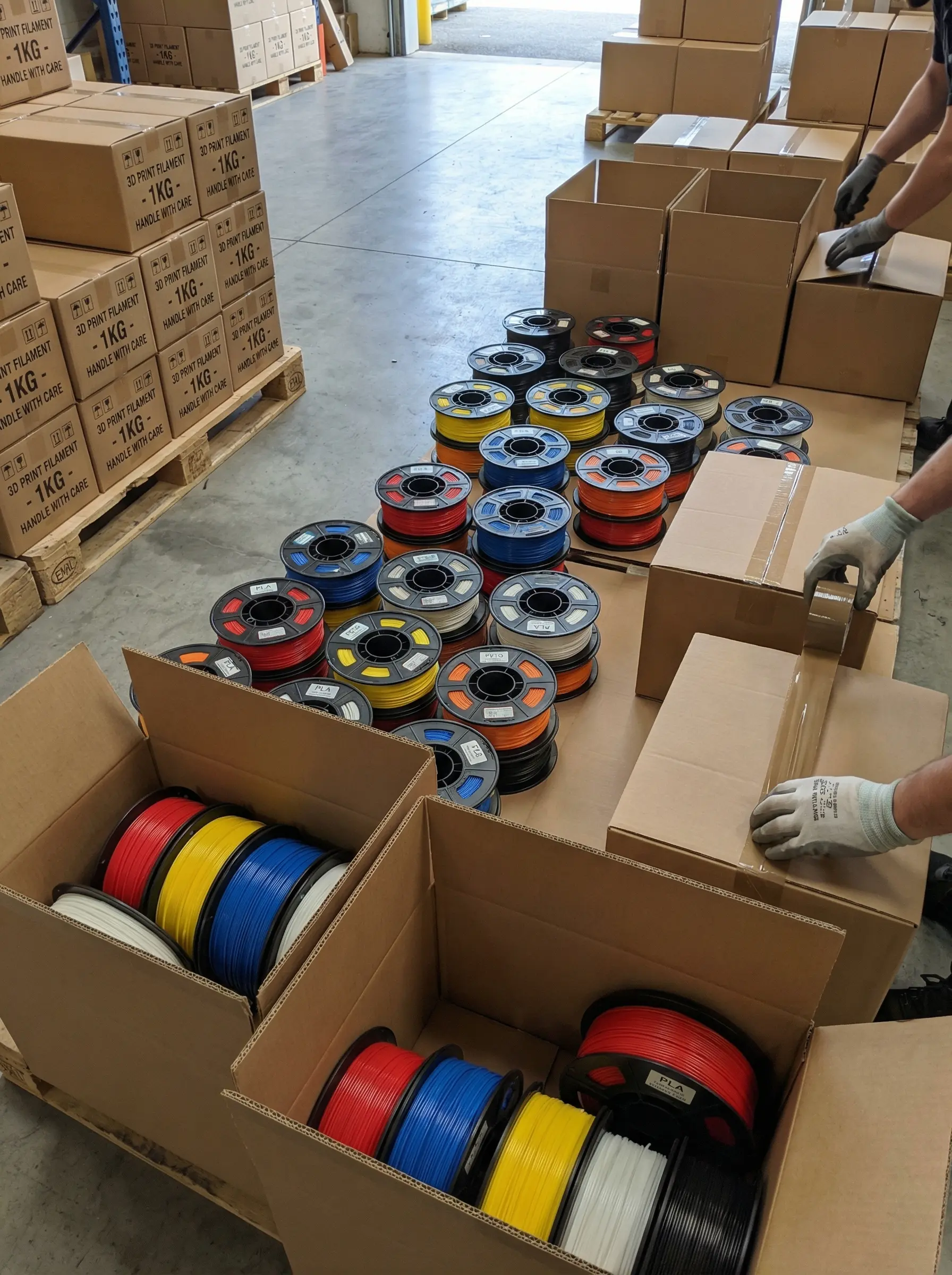
| Packaging | Vacuum sealed with desiccant |
| Processing Service | Extruding (compound blending + filament extrusion) |
| Company Type | Manufacturer |
| Manufacturing Origin | Guangdong, China |
| Free Sample | Available |
| OEM/ODM | Available – Learn about our OEM services |
Material Properties & Performance
This ABS glass fiber filament delivers significantly enhanced mechanical and thermal performance compared to unfilled ABS, thanks to the uniform dispersion of short-strand glass fibers throughout the polymer matrix. The glass fiber reinforcement creates a composite structure where the rigid fibers carry load while the ABS matrix distributes stress and provides impact absorption. For a deeper comparison of how fiber-reinforced composites rank among all filament material types, see our strongest 3D printer filament guide.
Mechanical & Thermal Properties
| Property | Value | Test Standard |
|---|---|---|
| Tensile Strength | 55-70 MPa | ISO 527 / ASTM D638 |
| Flexural Modulus | 4,500-6,000 MPa | ISO 178 / ASTM D790 |
| Flexural Strength | 80-100 MPa | ISO 178 / ASTM D790 |
| Impact Strength (Izod, Notched) | 8-15 kJ/m² | ISO 180 / ASTM D256 |
| Elongation at Break | 3-6% | ISO 527 / ASTM D638 |
| Glass Transition Temperature | ~108°C (226°F) | ISO 11357 |
| Heat Deflection Temperature | 100-110°C (0.45 MPa) | ISO 75 / ASTM D648 |
| Density | 1.15-1.20 g/cm³ | ISO 1183 |
| Shrinkage | 0.2-0.5% (significantly reduced vs. standard ABS) | ISO 294-4 |
| Glass Fiber Content | 15-20% by weight | ISO 3451 (Ash content) |
Printer-Specific Settings for ABS Glass Fiber Filament
| Printer | Nozzle | Bed | Speed | Notes |
|---|---|---|---|---|
| Bambu Lab X1C / P1S | 250°C | 100°C | 30-50mm/s | Install hardened nozzle; use enclosed mode; ABS profile base with speed reduced |
| Prusa MK4 / MK3S+ | 250°C | 100°C | 30-40mm/s | Hardened nozzle required; enclosure recommended; use textured PEI with glue stick |
| Creality K1 / K1 Max | 255°C | 100°C | 30-50mm/s | Enclosed, swap to hardened nozzle; reduce speed from default high-speed profiles |
| Creality Ender 3 S1 Pro | 250°C | 100°C | 30-40mm/s | All-metal hotend + hardened nozzle required; add enclosure; ABS slurry for adhesion |
| Anycubic Kobra 2 Max | 250°C | 100°C | 30-45mm/s | Hardened nozzle required; enclosure strongly recommended; use brim for large parts |
| Voron 2.4 / Trident | 255°C | 105°C | 30-50mm/s | Enclosed, high-flow hotend + hardened nozzle; excellent platform for ABS-GF composites |
Applications for ABS Glass Fiber Filament
This ABS glass fiber filament excels wherever you need high-rigidity, dimensionally stable, heat-resistant parts with composite-level mechanical performance that standard thermoplastics cannot deliver.
| ⚙️ Functional Prototypes | Produce functional prototypes that accurately simulate the mechanical behavior of injection-molded glass-filled ABS parts. The enhanced rigidity and heat resistance allow prototypes to be tested under realistic load, temperature, and fitment conditions – giving engineers confidence before committing to production tooling. |
| 🔧 Tooling, Jigs & Fixtures | Print production jigs, assembly fixtures, alignment tools, and drill guides that maintain dimensional accuracy under repeated use. The glass fiber reinforcement provides the creep resistance and rigidity that standard plastics lack – your tooling stays accurate on the 1,000th use, not just the first. |
| 🚗 Automotive Components | Under-hood brackets, sensor housings, cable routing clips, HVAC duct prototypes, and interior trim tools. ABS-GF handles engine-bay temperatures, resists automotive fluids (oil, coolant, brake fluid), and maintains structural integrity under vibration – the same reasons injection-molded ABS-GF is used throughout the automotive industry. |
| 🏭 Industrial & Mechanical Parts | Print structural housings, equipment enclosures, conveyor guides, machine guards, and load-bearing brackets for factory environments. The combination of heat resistance, chemical resistance, rigidity, and wear resistance makes ABS-GF the workhorse composite for industrial 3D printing applications. |
| 🖥️ Electronics & Electrical Enclosures | Custom enclosures for PCBs, power supplies, sensors, and control systems. ABS-GF’s dimensional stability ensures precise fitment around electronic components, while its heat resistance protects against thermal runaway. The rigid walls provide excellent EMI shielding when metallized or lined with copper tape. |
| 🔬 Scientific & Lab Equipment | Custom lab fixtures, specimen holders, equipment mounts, and chemical-resistant containers. ABS-GF’s combination of chemical resistance, dimensional stability, and heat tolerance makes it suitable for laboratory environments where standard PLA or PETG would degrade or deform. |
Environmental & Safety Standards
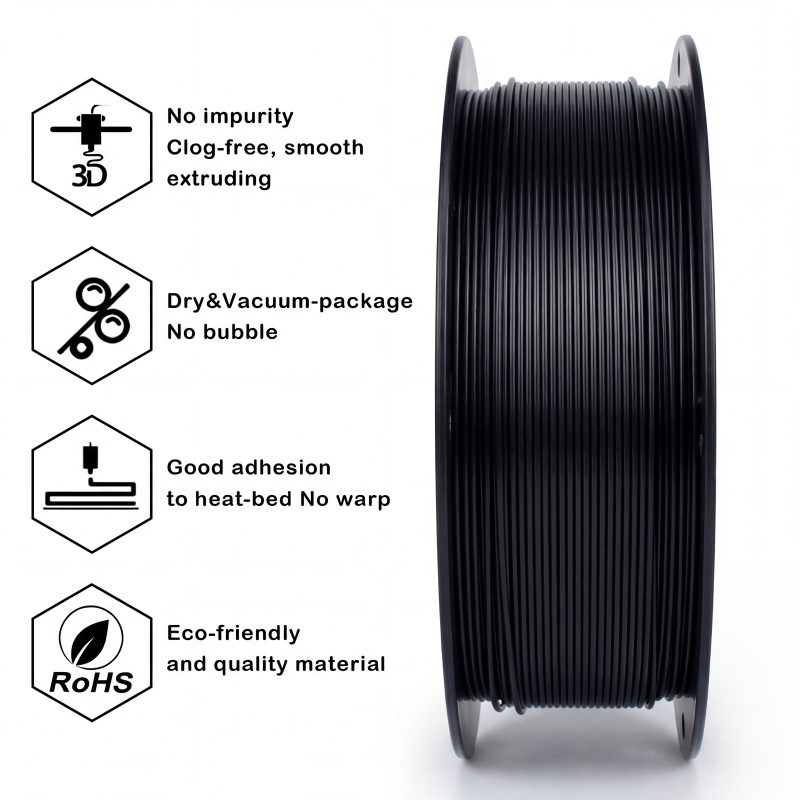
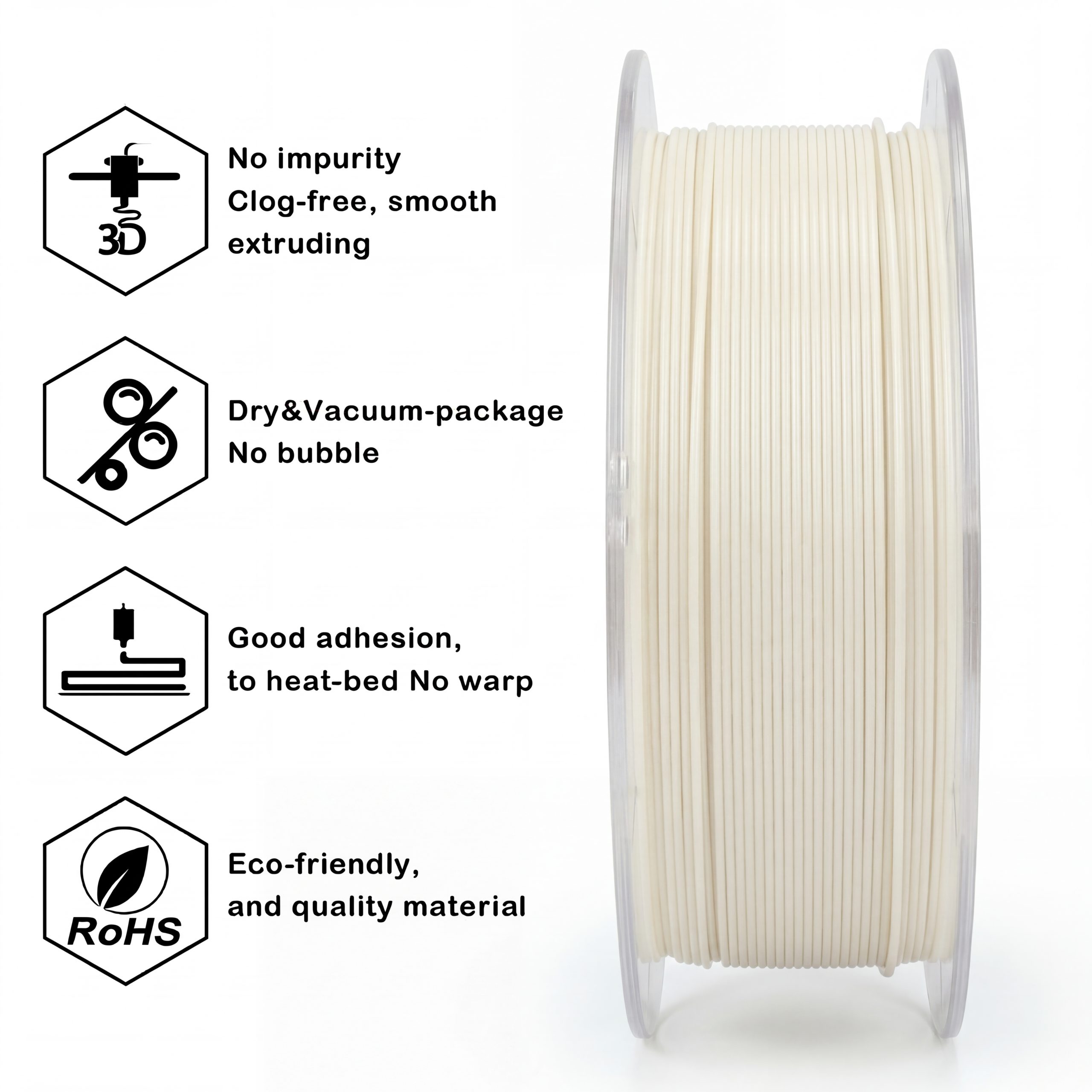
| ✅ RoHS Compliant | Full RoHS compliance for European and global market requirements. No restricted heavy metals or hazardous substances. |
| 🏭 ISO 9001 Certified | Manufactured under certified quality management for consistent fiber content, mechanical properties, and extrusion quality. |
| 🔬 Uniform Fiber Distribution | Advanced compound blending ensures even glass fiber distribution throughout the filament, preventing weak spots and ensuring consistent mechanical performance. |
| 📦 Vacuum Sealed | Moisture-proof vacuum packaging with desiccant for optimal first-print quality and extended shelf life. |
Packaging & Global Shipping
| Destination | Standard Delivery | Express Available |
|---|---|---|
| European Union | 5-10 business days | ✓ 3-5 days |
| United States | 7-12 business days | ✓ 4-6 days |
| United Kingdom | 7-12 business days | ✓ 4-6 days |
| Canada | 8-14 business days | ✓ 5-7 days |
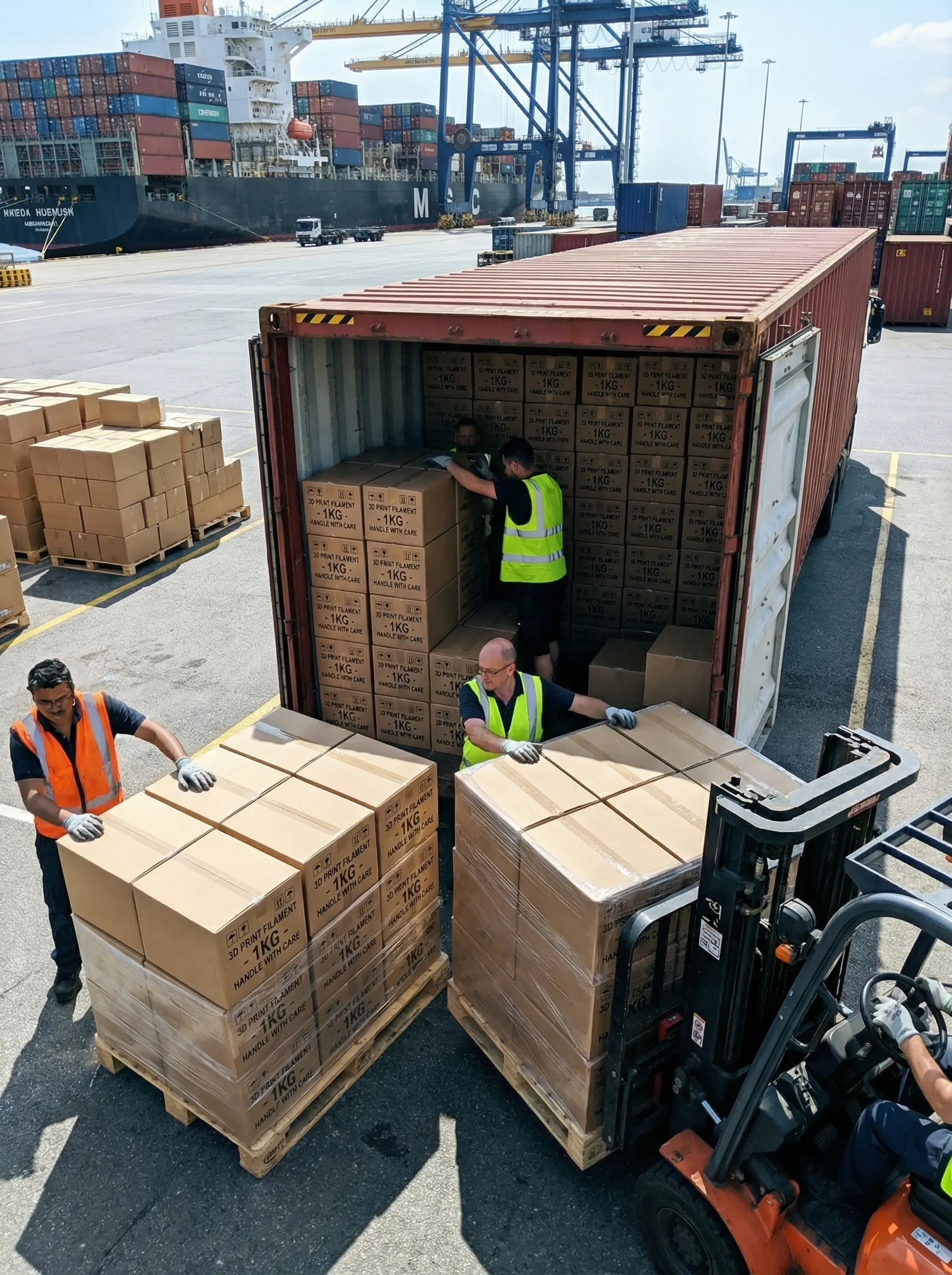
Packaging: Vacuum sealed with desiccant. Customs: DDP and DAP terms available.
Bulk Orders & OEM/ODM Services
| 📊 Flexible MOQ | Trial orders to large-volume production. Free samples available for qualified customers. |
| 💰 Volume Pricing | Tier breakpoints: 100kg+, 500kg+, 1000kg+ with progressive discounts. |
| 🔧 OEM/ODM Services | • Custom glass fiber content (10%, 15%, 20%, 25%, 30% by weight) – Custom colors (full RAL and Pantone matching available) – Custom formulation (adjusted fiber length, impact modifiers, or heat stabilizers) – Private label packaging – Custom spool sizes (0.5kg, 2kg, 3kg, 5kg) |
| 🎁 Free Sample Program | Evaluation samples available for qualified business customers. Test print quality, fiber distribution, and mechanical performance before you commit to volume orders. |
Storage & Handling Guidelines
| Storage Guidelines | |
|---|---|
| Temperature | 15-25°C (59-77°F) |
| Humidity | Below 40% RH (ABS-GF is moderately hygroscopic; dry storage recommended) |
| Shelf Life | 12 months (unopened, vacuum sealed) |
| Drying (if needed) | 80°C for 4-6 hours (recommended if stored open for extended periods) |
| Light Exposure | Store away from direct sunlight (ABS can yellow with prolonged UV exposure) |
| Handling | Handle with care – glass fiber filament is stiffer and more brittle than unfilled ABS; avoid sharp bends at the spool edge |
Printer Compatibility
This ABS glass fiber filament is compatible with all FDM/FFF 3D printers using 1.75mm filament that can reach 240°C+ and are equipped with a hardened nozzle. Enclosed printers are strongly recommended. All-metal hotend required for all printer types.
| Bambu Lab X1C, P1S (w/ hardened nozzle) | Prusa MK4, MK3S+, XL (w/ hardened nozzle) | Creality K1, K1 Max (w/ hardened nozzle) | Voron 2.4, Trident, 0.2 | QIDI X-Max 3, X-Plus 3 | Raise3D Pro3, E2 series |
Why Choose SigmaFilament for Glass Fiber Composite Filaments
| 🏭 Direct Manufacturer | Factory-direct pricing from Guangdong, China with full quality control over compounding, fiber dispersion, extrusion, and packaging. |
| ✅ Quality Assured | ±0.05mm tolerance, ISO 9001, RoHS. Consistent fiber content, mechanical properties, and extrusion quality batch-to-batch. |
| 🔬 Composite Expertise | In-house compound blending for glass fiber and carbon fiber composites. Custom fiber content, fiber length, and matrix formulation available. |
| 🌍 Global Service | English-speaking support, EU/US business hours, DDP/DAP shipping terms. |
| 🔧 Full OEM/ODM | Custom fiber content, custom colors, private label, custom spools, and specialized ABS glass fiber filament variants. |
Frequently Asked Questions About ABS Glass Fiber Filament
Ready to Get Started with ABS Glass Fiber Filament?
Contact SigmaFilament today for bulk pricing, free samples, or to discuss your OEM/ODM requirements for custom ABS glass fiber filament solutions – including custom fiber content, colors, and formulations.
📧 Email us for a quick quote | 🌍 Worldwide shipping with DDP/DAP terms | 🎁 Free samples for qualified customers
| Color | White |
|---|---|
| Filament Diameter | 1.75mm ,2.85mm (3.00mm) |
| Spool Weight | 1kg ,3kg ,5kg ,Sample (200g) |