Data-Backed Analysis (2026): What is the Difference Between PLA and PETG for 7 Key Applications?


Abstract
An examination of the two most prevalent thermoplastics in fused deposition modeling, Polylactic Acid (PLA) and Polyethylene Terephthalate Glycol (PETG), reveals a fundamental divergence in material capabilities that dictates their suitability for specific applications. This analysis moves beyond a superficial comparison to explore the nuanced interplay between their chemical origins, mechanical performance, thermal resistance, and printability. PLA, a biodegradable polyester derived from renewable resources, is characterized by its rigidity, ease of use, and ability to capture fine detail, making it the default choice for aesthetic prototypes, educational models, and low-stress objects. In contrast, PETG, a copolyester known for its use in consumer packaging, offers superior toughness, chemical resilience, and temperature tolerance. These properties position it as a pragmatic material for functional parts, mechanical components, and items intended for outdoor use. A thorough understanding of what is the difference between PLA and PETG is therefore not merely a technical exercise but a foundational element of effective design and manufacturing in the additive space, enabling creators to align material selection with the intended function and environment of the final printed object.
Key Takeaways
- Use PLA for visual prototypes and models due to its rigidity and ease of printing.
- Choose PETG for functional parts that require durability, heat, and chemical resistance.
- Understanding what is the difference between PLA and PETG is key to reducing print failures.
- Properly dry PETG filament before printing to ensure optimal layer adhesion and strength.
- PLA prints with lower temperatures and requires less tuning than PETG.
- PETG offers superior UV resistance, making it suitable for outdoor applications.
- For structural components, PETG’s impact resistance is significantly higher than PLA’s brittleness.
Table of Contents
- Foundational Concepts: Understanding the Polymer Personalities of PLA and PETG
- Factor 1: Mechanical Properties and Structural Integrity
- Factor 2: Thermal and Environmental Resistance
- Factor 3: Printability and User Experience
- Factor 4: Post-Processing and Finishing
- Factor 5: Food Safety and Biomedical Considerations
- Factor 6: Aesthetics, Visuals, and Special Variants
- Factor 7: Cost, Availability, and Environmental Impact
- Frequently Asked Questions (FAQ)
- Conclusion
- References
Foundational Concepts: Understanding the Polymer Personalities of PLA and PETG
Before we can meaningfully dissect the capabilities of these two materials, it is helpful to step back and appreciate their distinct origins and chemical identities. Every plastic has a story, a molecular architecture that dictates its behavior—how it responds to heat, stress, and the world around it. Thinking of PLA and PETG not just as spools of filament but as materials with unique personalities can transform how we approach printing with them. The question of what is the difference between PLA and PETG is not answered by a single data point but by a holistic understanding of their character.
What is PLA? The Bioplastic Workhorse
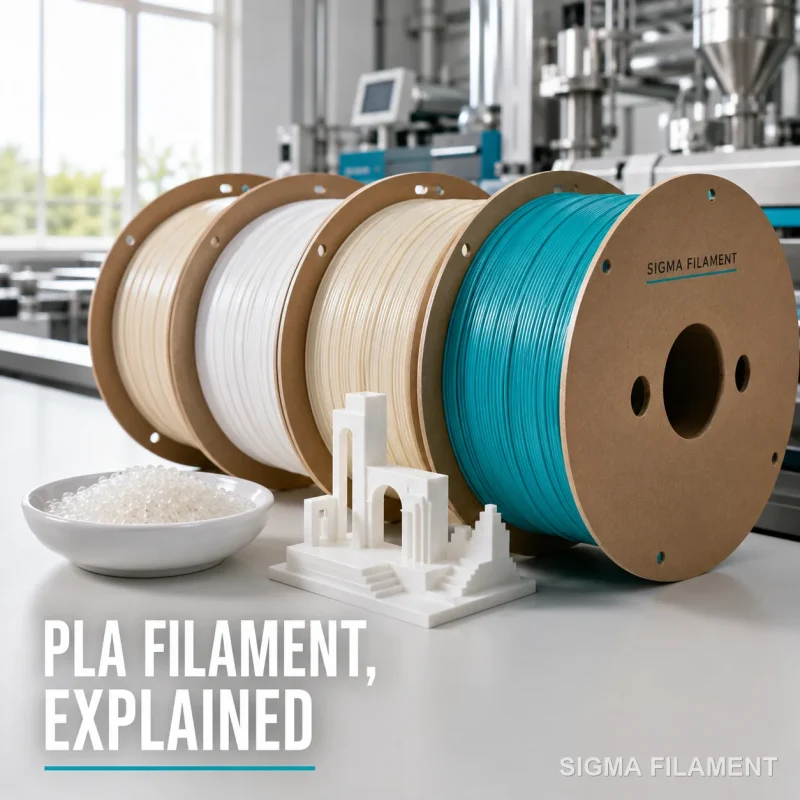
Polylactic Acid, or PLA, holds a special place in the 3D printing community. For many, it is the very first material they ever extrude through a hotend. Its popularity is not accidental. PLA is a thermoplastic polyester, but unlike most plastics derived from petroleum, it is a bioplastic. Its journey begins in a field, typically of corn or sugarcane. These crops are harvested, and the sugar or starch is extracted. Through a process of fermentation and polymerization, this plant-based sugar is transformed into long chains of polylactic acid molecules.
This organic origin story is central to PLA’s identity. It contributes to its relatively low printing temperature and its signature sweet smell during printing, a stark contrast to the acrid fumes of other plastics. Its molecular structure results in a material that is quite rigid and hard. When it cools from a molten state, its molecules tend to arrange themselves in a more ordered, semi-crystalline fashion, which contributes to this stiffness. However, this same structure makes it brittle. Like a piece of uncooked spaghetti, it will snap cleanly when bent too far rather than flexing. Its low glass transition temperature—the point at which it begins to soften—is a direct consequence of its chemistry, making it unsuitable for environments where it might get warm, such as the inside of a car on a summer day.
What is PETG? The Tough and Versatile Contender
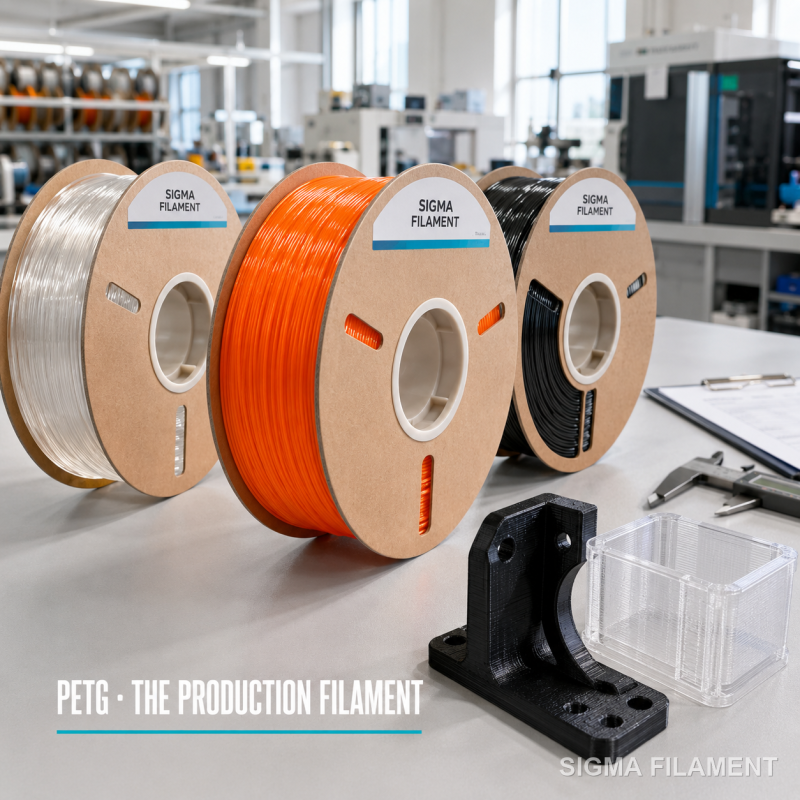
Polyethylene Terephthalate Glycol, or PETG, comes from a different lineage. It is a member of the same polyester family as the PET used to make water bottles. In fact, PETG is a modified version of PET. The ‘G’ stands for glycol, which is introduced during polymerization. This addition is a game-changer. The glycol molecules disrupt the polymer chains, preventing them from neatly aligning and crystallizing as they cool. This results in an amorphous structure, meaning its molecules are arranged in a more random, jumbled state.
Think of the difference between a stack of neatly packed logs (crystalline) and a random pile of logs (amorphous). The jumbled pile has more space and less rigid order. This amorphous nature is the secret to PETG’s famed toughness and clarity. Instead of shattering under impact, the jumbled polymer chains can slide past one another, absorbing and dissipating the energy. This is why PETG can bend and deform without breaking, giving it excellent impact resistance. The glycol modification also lowers the melting point compared to standard PET, making it printable on a wider range of desktop 3D printers. It inherits PET’s excellent chemical resistance and durability, creating a material that bridges the gap between the ease of PLA and the strength of more demanding engineering plastics like ABS.
A Quick Analogy: PLA as Pine Wood, PETG as Poplar
To bring these concepts into a more tangible realm, we can use an analogy from woodworking.
Think of PLA as being similar to a soft pine wood. It is widely available, relatively inexpensive, and incredibly easy to work with. It cuts cleanly, sands smoothly, and takes paint well. It is perfect for decorative items, models, and furniture that won’t see a lot of abuse. You can build a beautiful bookshelf from pine. However, you would not use it to build a playground swing set. It is too brittle and lacks the durability to withstand repeated stress and weather. It will warp in the heat and degrade in the sun.
Now, consider PETG as being like poplar or even a tougher hardwood like maple. It is stronger, more durable, and more flexible. It can withstand knocks and bumps without splintering. It holds up better to moisture and temperature changes. You could confidently build that playground swing set from it. However, it requires a bit more skill and the right tools to work with. It might gum up sandpaper if you’re not careful, and it requires more force to cut. The final result is a functional, long-lasting object, but the process to get there demands more attention and respect for the material’s properties.
This analogy helps frame our investigation. The choice between PLA and PETG is rarely about which is “best” in an absolute sense, but about which material’s inherent personality—its strengths and weaknesses—is best suited for the life of the object you intend to create.
Factor 1: Mechanical Properties and Structural Integrity
The mechanical behavior of a printed part is arguably the most critical consideration for any functional application. When we ask what is the difference between PLA and PETG, we are often, at our core, asking: “Which one is stronger?” The answer, however, is not a simple one. “Strength” is not a single property but a collection of behaviors—stiffness, toughness, and the bond between layers. Understanding how PLA and PETG perform across these metrics is essential for designing parts that work as intended.
Stiffness and Rigidity: PLA’s Advantage for Static Models
Stiffness, or modulus, refers to a material’s resistance to being deformed elastically when a force is applied. A stiff material will bend very little under load. In this domain, PLA is the clear winner. Due to its semi-crystalline molecular structure, PLA is harder and more rigid than PETG. A part printed in PLA will feel more solid and will exhibit less flex than an identical part printed in PETG.
This high stiffness makes PLA an excellent choice for applications where dimensional stability under a light, constant load is paramount. Think of architectural models, display pieces, tabletop gaming miniatures, or enclosures for electronics that are not expected to be dropped or impacted. For a phone stand that simply needs to hold a device at a specific angle, PLA’s rigidity is an asset. It will hold its shape perfectly without any sagging. However, this rigidity comes at a cost. When the load exceeds what the material can handle, PLA does not gracefully bend; it fails suddenly and catastrophically. This brittle failure mode is a significant limitation for any part that might experience unexpected stress.
Toughness and Impact Resistance: Where PETG Truly Shines
Toughness is a material’s ability to absorb energy and plastically deform without fracturing. It is the opposite of brittleness. This is the realm where PETG demonstrates its most significant advantage over PLA. Thanks to its amorphous molecular structure, PETG can flex and yield under stress, absorbing impacts that would shatter a PLA part.
Imagine you print a simple bracket to mount a security camera to the side of your house. A bracket printed in PLA might be perfectly rigid and hold the camera steady on a calm day. But if a ladder accidentally bumps against it or a hailstorm hits, the PLA’s brittleness makes it likely to snap. A PETG bracket, in the same situation, would flex upon impact, absorb the energy, and likely return to its original shape, leaving the camera secure. This makes PETG the superior choice for any part that needs to be durable: protective drone parts, snap-fit enclosures, mechanical components in robotics, or any object that might be dropped, squeezed, or hit. While PETG is less stiff than PLA—a PETG part will feel more flexible in your hands—this “give” is precisely what makes it so resilient.
Layer Adhesion: The Unsung Hero of Part Strength
In fused deposition modeling, a part’s strength is not solely determined by the raw properties of the plastic. The bond between the individual extruded layers is just as, if not more, important. A part can have fantastic material properties but fail prematurely if the layers delaminate.
Here again, PETG generally has an advantage, though it comes with printing caveats. PETG’s chemical nature and its higher printing temperature mean that as a new layer is deposited, it can more effectively re-melt and fuse with the layer below it. This results in exceptionally strong layer-to-layer bonds, often approaching the strength of the material itself. A well-printed PETG part can be watertight and exhibit more isotropic properties, meaning its strength is more consistent regardless of the direction of the applied force.
PLA can also achieve good layer adhesion, but it is less forgiving. Because it cools and solidifies so quickly, there is a smaller window of opportunity for the polymer chains to entangle between layers. Printing too cool or with too much part cooling can result in weaker bonds, creating a part that is much more likely to split along its layer lines. The superior layer adhesion of a high-quality PETG is a key reason it is trusted for functional parts that must not fail under load.
| Property | PLA (Polylactic Acid) | PETG (Polyethylene Terephthalate Glycol) | Unit | Significance |
|---|---|---|---|---|
| Tensile Strength | ~50 – 70 | ~45 – 55 | MPa | The force required to pull the material apart. Higher values mean more resistance to stretching. |
| Flexural Modulus | ~3.0 – 4.0 | ~1.8 – 2.2 | GPa | A measure of stiffness or rigidity. Higher values mean the material bends less under load. |
| Impact Strength (Izod) | ~2 – 4 | ~8 – 12 | kJ/m² | The ability to withstand sudden impacts or shock. Higher values indicate greater toughness. |
| Elongation at Break | ~3 – 6% | ~15 – 30% | % | How much the material can stretch before it breaks. Higher values indicate more ductility and less brittleness. |
Note: These values are typical ranges and can vary significantly based on the specific filament brand, additives, and print settings. Data is aggregated from various material datasheets for general comparison.
Factor 2: Thermal and Environmental Resistance
A 3D printed part does not exist in a vacuum. It must contend with the environment around it—heat, sunlight, and chemicals. A material’s ability to withstand these external factors is a crucial aspect of what is the difference between PLA and PETG, often dictating whether a project will succeed or fail in the long term. For parts that will live anywhere outside of a climate-controlled office, this factor becomes paramount.
Heat Deflection Temperature: The Achilles’ Heel of PLA
The most dramatic and well-known weakness of standard PLA is its poor resistance to heat. The relevant metric here is the Glass Transition Temperature (Tg), which is the temperature at which the polymer begins to transition from a rigid, glassy state to a soft, rubbery one. For most standard PLA filaments, this temperature is around 55-60°C (131-140°F).
What does this mean in practical terms? It means that a PLA part can deform, warp, and lose all structural integrity at temperatures easily reached in common environments. The most classic example is leaving a PLA object in a car on a sunny day. The interior of a car can soar well above 60°C, causing a PLA phone mount on the dashboard to sag into a useless puddle of plastic. Other scenarios include parts placed near electronic components that generate heat, objects left in direct sunlight, or items that need to be washed in a dishwasher. This low thermal resistance is the single biggest disqualifier for using PLA in many functional applications. If your part will ever get warm, PLA is likely the wrong choice.
PETG, by contrast, offers a significant step up in thermal performance. Its glass transition temperature is typically around 80-85°C (176-185°F). While not in the same league as high-temperature materials like ABS or Polycarbonate, this 20-25°C improvement over PLA is substantial. A part printed in PETG is far more likely to survive inside a hot car. It can be used for enclosures for moderately hot electronics and can generally withstand outdoor conditions without deforming from solar heat gain. This higher heat resistance is a primary driver for choosing PETG for any part that requires a degree of durability beyond a simple desktop model.
UV Resistance: Why PETG is the Choice for Outdoor Applications
Another critical environmental factor, especially for parts used outside, is resistance to ultraviolet (UV) radiation from the sun. Prolonged exposure to UV light can wreak havoc on many polymers, causing them to become brittle, discolored, and weak.
PLA performs very poorly in this regard. When exposed to direct sunlight over weeks and months, PLA will degrade noticeably. The UV radiation breaks down its polymer chains, leading to a significant loss in strength and toughness. The material becomes extremely brittle, and colors will fade. A PLA part left outdoors for a year may crumble in your hands.
PETG, on its own, offers substantially better UV resistance. It is the same family of plastic used for outdoor signage and other applications where weatherability is important. It will resist yellowing and degradation from sunlight for a much longer period than PLA. While it is not completely immune—for multi-year outdoor applications, a dedicated weather-resistant material like ASA is often recommended—PETG is more than sufficient for many outdoor projects like garden tools, custom sprinkler heads, or enclosures for outdoor sensors. This inherent UV stability, combined with its toughness and heat resistance, makes PETG the default, go-to material for printing objects that will live outside.
Chemical Resistance: A Clear Win for PETG
The final piece of the environmental puzzle is chemical resistance. This refers to a material’s ability to maintain its integrity when exposed to various solvents, oils, and acids. This is particularly important for parts used in workshops, garages, or industrial settings.
PLA has very limited chemical resistance. It is susceptible to attack from many common solvents. For example, acetone will not dissolve it (unlike ABS), but stronger chemicals like dichloromethane or ethyl acetate will. It also has poor resistance to strong acids and bases.
PETG, inheriting the robust chemical nature of its parent, PET, is a different story. It boasts excellent resistance to a wide range of common chemicals. It holds up well against many acids, bases, alcohols, oils, and greases. This makes it a fantastic material for printing things like custom jigs in a workshop, containers for storing parts and fluids, or protective covers for machinery. If you need to print a custom funnel for changing the oil in your car, PETG is the material that can handle the job without degrading. This chemical resilience, often overlooked by hobbyists, is a major reason PETG is considered a true engineering-grade material for functional part manufacturing.
Factor 3: Printability and User Experience
A material’s theoretical properties are meaningless if you cannot successfully transform it from a spool of filament into a finished part. The printing process itself—the ease of use, the required settings, and the common failure modes—is a huge part of the lived experience of using a material. Here, the narrative flips. While PETG excels in performance, PLA is the undisputed champion of printability, which explains its enduring popularity. Understanding what is the difference between PLA and PETG in terms of user experience is key to avoiding frustration.
The Forgiving Nature of PLA: Why It’s the Default Choice
PLA is beloved by beginners and print farm operators for one simple reason: it is incredibly easy to print. It has a wide processing window, meaning it produces good results across a relatively broad range of temperatures and settings.
- Low Printing Temperature: PLA prints at a lower temperature, typically between 190°C and 220°C. This reduces the energy consumption of the printer and puts less thermal stress on the hotend components.
- No Heated Bed Required: While a heated bed set to 50-60°C improves adhesion, PLA can often be printed successfully on a cold bed with an adhesion aid like painter’s tape or a glue stick. This makes it compatible with even the most basic, entry-level 3D printers.
- Minimal Warping: PLA exhibits very low thermal shrinkage as it cools. This means the corners of large prints are much less likely to lift off the print bed, a frustrating issue known as warping. This stability allows for large, flat parts to be printed reliably without needing an enclosed printer.
- Low Stringing: When tuned correctly, PLA is not prone to significant stringing or oozing, resulting in cleaner prints with less post-processing required.
- High Part Cooling: PLA loves cooling. You can run your part cooling fan at 100% after the first few layers. This rapid solidification helps produce sharp details, clean overhangs, and excellent bridges.
This combination of factors makes printing with PLA a forgiving and rewarding experience, especially for newcomers. It allows the user to focus on the design rather than constantly battling with print settings.
Taming PETG: Dialing in Settings for Success
Switching from PLA to PETG can be a jarring experience if you are not prepared. PETG is not difficult to print, but it is different. It has a specific set of preferences that must be respected to achieve good results. It is less of a wild beast and more of a discerning partner that requires you to listen to its needs.
- Higher Printing Temperature: PETG requires higher temperatures, typically in the 230°C to 250°C range. The bed temperature also needs to be hotter, around 70-85°C, to ensure good adhesion and prevent warping.
- The Importance of the First Layer: PETG has a reputation for being sticky. It loves to stick to itself, which is great for layer adhesion, but it also loves to stick to the nozzle. Unlike PLA, where you might “squish” the first layer onto the bed for strong adhesion, doing so with PETG is a recipe for disaster. The nozzle will drag the molten plastic, causing blobs and failures. The key is to set the Z-offset slightly higher than for PLA, leaving a bit more room for the filament to lay down a rounded bead rather than a flattened one.
- Slower and Steadier: While modern printers can push PETG at high speeds, it generally prefers slower print speeds than PLA, especially for outer walls and top surfaces. A speed of 40-60 mm/s is a good starting point. Printing too fast can exacerbate stringing and reduce surface quality.
Warping, Bed Adhesion, and Enclosures
While PETG has less warping than a material like ABS, it does have more thermal shrinkage than PLA. For very large prints with sharp corners, warping can still be an issue. A heated bed is non-negotiable, and using a build surface like PEI (Polyetherimide) or a specialized coating can dramatically improve adhesion. For parts that fill a large portion of the build plate, an enclosure can be beneficial. It helps maintain a stable, warm ambient temperature, reducing thermal stresses and minimizing the chance of warping or layers splitting on very tall parts. PLA, in contrast, rarely needs an enclosure and can even perform worse in one if the chamber temperature gets too high and causes heat creep in the hotend.
Stringing and Oozing: Managing PETG’s “Personality”
The most infamous characteristic of printing with PETG is its tendency to string and ooze. Because it remains molten and sticky for longer than PLA, it has a habit of dripping from the nozzle during travel moves, creating fine, spiderweb-like hairs all over the print. This can be managed, but it requires careful tuning of retraction settings.
Retraction is the process of the extruder motor pulling the filament backward to relieve pressure in the nozzle before a travel move. For PETG, you often need to tune both the retraction distance (how far it pulls back) and the retraction speed (how quickly it pulls back). It may also require experimenting with features like Z-hop (lifting the nozzle slightly during travel) and coasting (shutting off the extruder just before a travel move ends). A heat gun is a PETG printer’s best friend; a quick pass over the finished print will cause the fine strings to shrivel up and disappear. PLA is far less prone to this issue, leading to a cleaner out-of-the-box print. This difference in post-print cleanup is a significant part of the user experience when evaluating what is the difference between PLA and PETG.
| Application Scenario | Recommended Material | Justification |
|---|---|---|
| Visual Prototypes & Models | PLA | Excellent detail, rigidity, wide color selection, and ease of printing make it ideal for non-functional items. |
| Tabletop Miniatures | PLA | Superior ability to capture fine details and sharp edges. Brittleness is not a major concern for display pieces. |
| Functional/Mechanical Parts | PETG | Superior toughness, impact resistance, and layer adhesion ensure parts can withstand stress and strain. |
| Outdoor Items (e.g., Garden Stakes) | PETG | Good UV resistance and higher heat tolerance prevent degradation and warping from sun exposure. |
| Snap-Fit Enclosures | PETG | Flexibility and toughness allow for durable snap-fit features that won’t break after repeated use. |
| Jigs & Fixtures for Workshops | PETG | Excellent chemical resistance to oils and solvents, plus high impact strength for a workshop environment. |
| Large, Flat Objects | PLA | Minimal warping tendency makes it much easier to print large objects without lifting corners. |
| Beginner’s First Prints | PLA | Forgiving nature, low temperature requirements, and reliability build confidence for new users. |
Factor 4: Post-Processing and Finishing
The journey of a 3D printed part doesn’t always end when it comes off the build plate. Often, parts need to be sanded, painted, glued, or otherwise finished to meet aesthetic or functional requirements. The ease with which a material can be post-processed is an important, practical consideration that contributes to the overall understanding of what is the difference between PLA and PETG.
Sanding and Painting: Similarities and Subtle Differences
Both PLA and PETG can be sanded to smooth out layer lines and achieve a more polished surface finish. The process is similar for both: start with a coarse grit sandpaper (e.g., 120 or 220 grit) to remove the most prominent lines, then progressively move to finer grits (400, 800, 1500+) to achieve a smooth finish. Wet sanding is highly recommended for both materials, as it helps to prevent friction heat buildup and keeps the sandpaper from getting clogged with plastic dust.
However, there is a subtle difference in the experience. PLA, being harder and more brittle, tends to sand into a fine, dry powder. It sands relatively easily and cleanly. PETG, due to its lower glass transition temperature and softer nature, can be a bit more “gummy.” If you sand too aggressively or without water, the friction can generate enough heat to soften the plastic, causing it to melt and clog the sandpaper. A lighter touch and plenty of water are key to successfully sanding PETG.
When it comes to painting, both materials are quite receptive. For best results with either PLA or PETG, it is crucial to first apply a primer. A good quality automotive filler primer is an excellent choice, as it helps to fill in the microscopic layer lines and creates a uniform surface for the paint to adhere to. After priming and a light sanding, virtually any type of paint, such as acrylics or spray paints, can be used to achieve a professional-looking finish. There is no significant advantage for either material in this regard, provided the surface is properly prepared.
Gluing and Assembly: Choosing the Right Adhesive
For complex projects, it is often necessary to print a model in multiple parts and assemble them later. The choice of adhesive is critical for creating a strong, permanent bond.
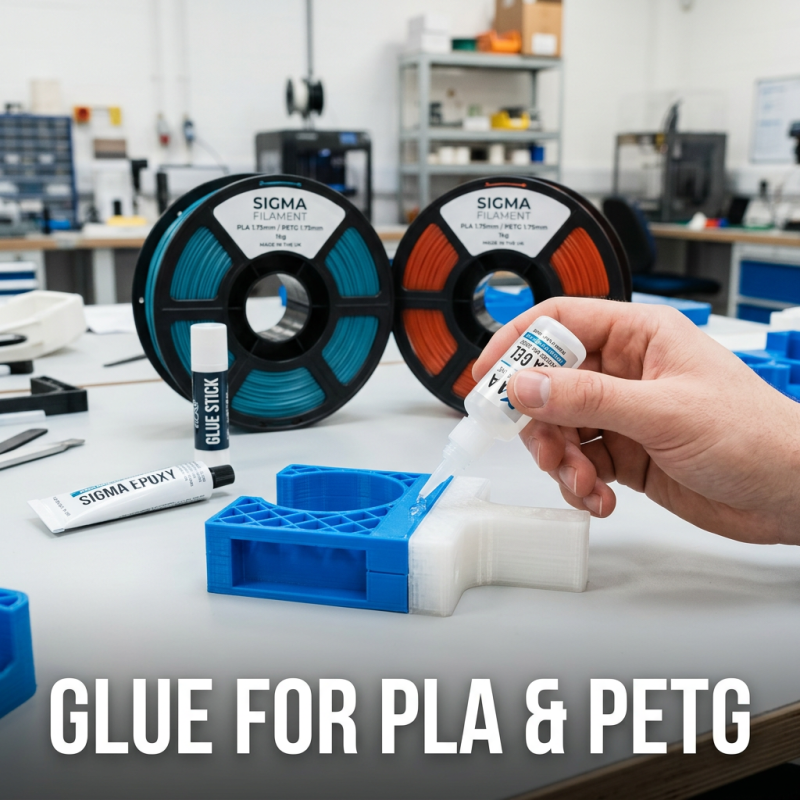
For PLA, a wide variety of glues work well. Cyanoacrylate (super glue) is a very common and effective choice, especially when used with an accelerator spray to create an instant bond. For stronger, more structural bonds, a two-part epoxy provides a very robust connection that is often stronger than the PLA itself. Solvents are not typically used for welding PLA parts together.
PETG can also be glued effectively with cyanoacrylate and epoxy. The process is largely the same as with PLA: ensure the surfaces are clean and free of dust or oils before applying the adhesive. However, PETG’s chemical resistance means that some weaker adhesives might not bond as effectively. A medium-viscosity super glue or a 5-minute epoxy are reliable choices. Additionally, PETG offers another option not available for PLA: friction welding. By taking a small piece of PETG filament and spinning it at high speed in a rotary tool (like a Dremel), you can press it into the seam between two PETG parts. The intense friction melts the filament and the surface of the parts, creating a true, strong weld as the plastic fuses together. This technique requires some practice but can create incredibly strong joints.
Vapor Smoothing: A Technique Not for PLA or PETG
One post-processing technique that is popular for another common filament, ABS, is vapor smoothing. This involves exposing the part to a vapor of a solvent (typically acetone for ABS), which melts the outer surface of the print, causing the layer lines to dissolve and flow together, resulting in a glossy, injection-molded appearance.
It is important to note that this technique does not work for either PLA or PETG with common, relatively safe solvents. PLA is not soluble in acetone. While it can be smoothed with more aggressive and hazardous chemicals like dichloromethane or chloroform, these are dangerous to handle without proper safety equipment (like a fume hood and respirator) and are not recommended for hobbyist use.
Similarly, PETG is also resistant to acetone. It cannot be vapor smoothed using any readily available or safe solvent. Therefore, if a perfectly smooth, glossy surface is the primary goal and sanding is not desired, a material like ABS or ASA would be a more appropriate choice. For PLA and PETG, achieving a smooth surface is a manual process of sanding and priming.
Factor 5: Food Safety and Biomedical Considerations
The ability to print custom kitchen tools, cookie cutters, or even medical devices opens up a world of possibilities. However, it also introduces serious considerations about safety and biocompatibility. The term “food safe” is frequently misused in the 3D printing community, and a nuanced understanding is necessary. The choice between PLA and PETG in this context is not just about material properties, but about the entire printing process and the structure of the final part.
The Nuances of “Food Safe” 3D Printing
First, it is crucial to establish that a 3D printed part is never inherently “food safe” right off the printer, regardless of the material. There are three main areas of concern:
- The Filament Material: While some filaments are made from resins that are FDA-compliant for food contact in their raw, unprocessed state, the filament itself may contain colorants or additives that are not. It is essential to use “natural” or “virgin” filament from a reputable manufacturer that explicitly states the base resin complies with food contact regulations. A wholesale 3D printer filament manufacturer that serves industrial clients, for instance, is more likely to provide detailed material safety data sheets (MSDS) and compliance documentation (SigmaFilament, 2026).
- The Printing Process: The filament’s path from the spool to the part can introduce contaminants. A brass nozzle, common on many printers, can contain small amounts of lead. The extruder gears and PTFE tube can also potentially shed microscopic particles. For true food safety, a stainless steel nozzle and an all-metal hotend are recommended.
- The Part’s Structure: This is the most significant and often overlooked issue. The very nature of FDM printing creates microscopic crevices between the layers. These tiny gaps are perfect breeding grounds for bacteria. Even after washing, bacteria can remain trapped, grow, and then contaminate food during subsequent use.
Therefore, any 3D printed item intended for repeated food contact should be considered unsafe unless it has been post-processed to create a non-porous surface. This is typically done by coating the part in a food-safe epoxy or sealant. For single-use items, like a custom cookie cutter, the risk is much lower.
Why PETG is Often Preferred for Food-Contact Items
Given the caveats above, when a choice must be made, PETG is generally considered the better option for food-related applications. There are several reasons for this preference.
First, PETG is a form of polyester, the same family of plastic as PET, which is ubiquitously used for water bottles and food containers. Natural, uncolored PETG filament is generally considered inert and safe for food contact. Its excellent chemical resistance also means it is less likely to leach chemicals when exposed to acidic foods or when being washed.
Second, its higher heat resistance is a significant advantage. A PETG part can be washed in a dishwasher, where the hot water can help to sanitize it more effectively than hand washing. A PLA part would warp and be destroyed in a dishwasher cycle.
Finally, PETG’s superior layer adhesion can result in a less porous surface than PLA, slightly reducing (but not eliminating) the issue of bacterial growth in layer lines. When combined with a food-safe coating, a PETG print can be made reasonably safe for repeated use.
Biocompatibility and PLA’s Role in Medical Applications
While PETG takes the lead in the kitchen, PLA has a unique and important role in the medical field. PLA is not only biodegradable but also biocompatible, meaning it is not harmful or toxic to living tissue. This property has made it a subject of extensive research and use in biomedical applications.
Because the human body can break down PLA over time into harmless lactic acid, it is an ideal material for creating temporary medical implants like sutures, screws, and plates that are designed to dissolve as the body heals, eliminating the need for a second surgery to remove them. Researchers have also demonstrated PLA’s use in creating custom, patient-specific surgical guides and scaffolds for tissue engineering (Vidakis et al., 2023).
It is critical to differentiate this medical-grade PLA from the hobbyist filament on your desk. Medical applications require extremely pure, specialized formulations of PLA manufactured and handled in a sterile environment. However, this inherent biocompatibility is a fascinating and important aspect of PLA’s character. For non-invasive, external medical devices like custom braces or prosthetic prototypes, both PLA and PETG can be used, with the choice again depending on the need for PLA’s rigidity versus PETG’s toughness and durability.
Factor 6: Aesthetics, Visuals, and Special Variants
While functional performance is key for engineering parts, many 3D prints are created for their visual appeal. The final look and feel of a part—its surface finish, color, and clarity—can be just as important as its strength. The aesthetic differences between PLA and PETG, as well as the vast ecosystem of special variants available for each, are significant factors in material selection. A deep dive into what is the difference between PLA and PETG from a visual perspective reveals distinct artistic palettes.
Surface Finish and Luster: Matte vs. Gloss
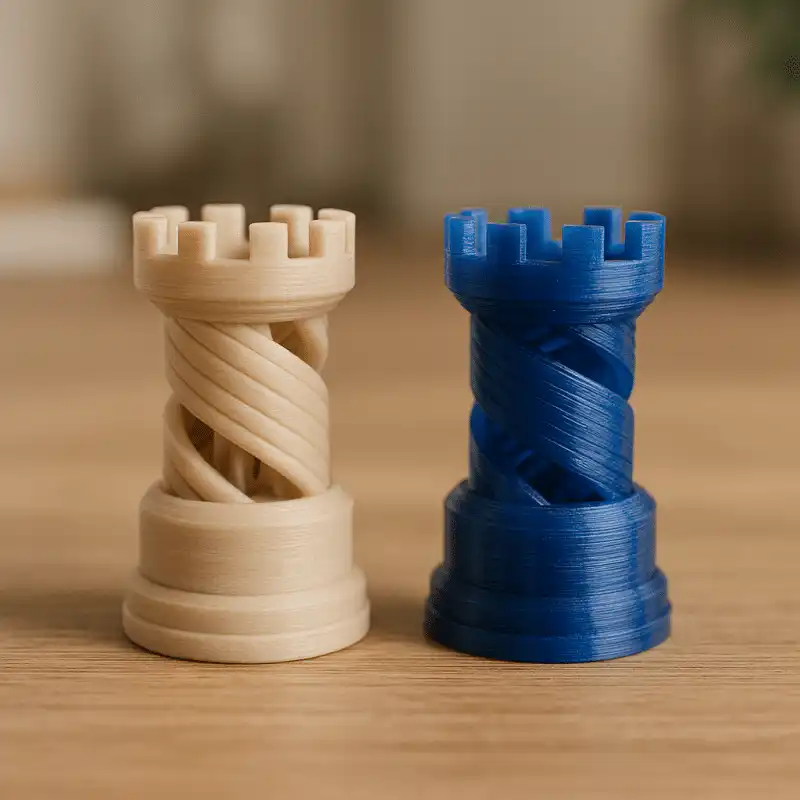
Out of the box, standard PLA and standard PETG have noticeably different surface finishes. PLA tends to have a slightly glossier, almost semi-gloss appearance. This can vary with print temperature—printing PLA hotter often results in a shinier finish, while printing cooler can produce a more matte look. This glossy finish can be very appealing for certain models, making colors pop and giving the object a vibrant, finished appearance. However, it also has a tendency to highlight any surface imperfections or layer lines.
Standard PETG, on the other hand, typically has a much glossier, almost wet look. This high-gloss finish is a signature trait of the material. While it can look very striking, especially in translucent colors, this extreme glossiness can sometimes make an object look “plasticky” and can be unforgiving in revealing surface flaws.
In recent years, the market has responded to user preferences for different aesthetics. “Matte” PLA filaments have become extremely popular, offering a non-reflective, textured finish that does an excellent job of hiding layer lines and giving prints a sophisticated, premium feel. Similarly, manufacturers have developed matte versions of PETG to tone down its natural glossiness for applications where a more understated, engineering-grade look is desired.
Color Vibrancy and Transparency
Both PLA and PETG are available in a massive spectrum of opaque colors. However, PLA has historically had the edge in terms of the sheer variety and vibrancy of special effect filaments. Due to its ease of printing and popularity, manufacturers have invested heavily in creating PLA variants like “Silk,” which have additives that create a highly reflective, almost metallic luster. Dual-color and tri-color co-extruded filaments, which shift color depending on the viewing angle, are also predominantly PLA-based. Wood-filled, marble-effect, and glow-in-the-dark PLA filaments are also common and reliable to print.
Where PETG has a unique aesthetic advantage is in its transparency. Because of its amorphous molecular structure, PETG is naturally clearer than PLA. While “transparent” PLA often has a hazy, translucent quality, a well-printed “clear” PETG part can achieve near-optical clarity, especially when printed with thick layers and a high flow rate. This makes PETG the ideal choice for projects that need to be see-through, such as enclosures where you want to view the electronics inside, or for creating light-diffusing elements like custom lampshades. Printing in “vase mode” with a large nozzle can produce stunningly clear PETG vessels.
The World of Composites: PLA-CF vs. PETG-CF
To push the performance and aesthetics of these base materials even further, manufacturers often create composite filaments by blending in chopped fibers, most commonly carbon fiber. This creates materials like PLA-CF (Carbon Fiber PLA) and PETG-CF (Carbon Fiber PETG).
Adding carbon fiber does several things. Aesthetically, it imparts a beautiful, professional-looking matte black finish that does an incredible job of hiding layer lines. A part printed in a carbon fiber composite often looks like a finished product straight off the printer.
Functionally, the carbon fibers significantly increase the stiffness (flexural modulus) of the base polymer. A PETG-CF part will be much more rigid than a standard PETG part, bringing its stiffness closer to that of standard PLA, while retaining PETG’s superior heat and chemical resistance. Similarly, PLA-CF is significantly stiffer than standard PLA. It is important to understand that adding short, chopped fibers does not necessarily increase the tensile strength or impact strength of a part; in some cases, it can make the material more brittle. The primary benefit is a massive increase in rigidity.
Printing with these abrasive composites requires a hardened steel nozzle, as the carbon fibers will quickly wear down a standard brass nozzle. The choice between PLA-CF and PETG-CF follows the same logic as the base materials: choose PLA-CF for highly rigid, aesthetic parts that will not see high temperatures or impacts. Choose PETG-CF for functional, engineering-grade parts that require high stiffness, heat resistance, and a professional finish (SigmaFilament, 2026).
Factor 7: Cost, Availability, and Environmental Impact
The final considerations in our comparison are the practical and ethical dimensions of material choice: the cost of the filament, its availability, and its impact on the planet. These factors may not affect the performance of the final print, but they are crucial to the sustainability and accessibility of the printing process itself. A full appreciation of what is the difference between PLA and PETG must account for their place in the broader economic and ecological landscape.
Price Per Kilogram: A Direct Comparison
Historically, PLA has been the undisputed king of affordability in the 3D printing world. Its production from corn starch is a mature and highly scaled process, and its immense popularity creates economies of scale that drive down the price. For a standard, 1kg spool of filament, PLA is almost always the cheapest option available. This low cost is a major factor in its adoption in schools, libraries, and by hobbyists on a budget. It allows for experimentation and iteration without a significant financial penalty for failed prints.
PETG is typically slightly more expensive than standard PLA, often by about 10-25%. This price difference is due to the cost of the raw copolyester resin and a slightly more complex manufacturing process. While the gap has narrowed over the years, you can generally expect to pay a small premium for the enhanced performance characteristics of PETG. For businesses or individuals running print farms, this cost difference can add up over hundreds of spools, making it a relevant factor in calculating the cost per part. However, for most users, the price difference for a single spool is minor and should not be the primary deciding factor.
The Total Cost of Ownership: Factoring in Failed Prints
The sticker price on a spool of filament only tells part of the story. A more insightful metric is the Total Cost of Ownership (TCO), which accounts for the material cost of successful parts. This is where the ease of printing becomes an economic factor.
Because PLA is so forgiving and reliable, the rate of failed prints due to material-related issues is very low. A well-tuned printer can run through spools of PLA with minimal waste. The cost of the filament consumed is very close to the cost of the successful parts produced.
PETG, being more finicky, can have a higher failure rate, especially for users who are new to the material. A poorly tuned first layer, incorrect retraction settings leading to a clogged nozzle, or warping on a large print can all result in a significant amount of wasted filament. In these cases, the “cheaper” material in theory can become more expensive in practice. If a $20 spool of PLA yields 950g of good parts, but a $25 spool of PETG only yields 700g of good parts due to failures, the effective cost of the successful PETG parts is much higher. Therefore, investing time in properly calibrating your printer for PETG is an economic necessity. Once dialed in, PETG can be just as reliable as PLA, but the initial learning curve has a real cost in both time and material.
Sustainability: Biodegradability vs. Recyclability
The environmental impact of 3D printing is a growing concern, and the end-of-life story for PLA and PETG is starkly different.
PLA is famous for being “biodegradable.” However, this term is often misunderstood. A PLA print will not biodegrade in a backyard compost pile or a landfill. It requires the specific high-temperature, high-humidity conditions of an industrial composting facility to break down. While this is a significant environmental advantage over petroleum-based plastics, access to such facilities is limited in many regions. So, while its plant-based origin is a plus, its end-of-life disposal is not as simple as many believe.
PETG is not biodegradable. Like its cousin PET, it will persist in the environment for hundreds of years. However, PETG is chemically very similar to PET (Recycle Code 1), which is one of the most widely recycled plastics in the world. In theory, PETG could be recycled alongside PET bottles. In practice, the situation is complicated. The glycol modification that gives PETG its desirable properties can act as a contaminant in the PET recycling stream, potentially lowering the quality of the recycled material. For this reason, many municipal recycling programs are not equipped to handle PETG, and you should never mix your PETG scraps with your PET bottle recycling unless your local facility explicitly allows it.
The debate over which is “greener” is complex. PLA comes from renewable resources and can be composted under the right conditions. PETG comes from fossil fuels but is more durable (leading to less waste from broken parts) and is theoretically recyclable within a system that does not yet fully exist at scale. The most sustainable practice for any hobbyist is to minimize waste by printing successfully and creating durable, long-lasting parts that will not need to be replaced.
Frequently Asked Questions (FAQ)
Can I use the same print settings for PLA and PETG?
No, you cannot. They require significantly different settings. PETG needs a higher nozzle temperature (around 230-250°C vs. 190-220°C for PLA) and a higher bed temperature (70-85°C vs. 50-60°C for PLA). You will also need to adjust your Z-offset, retraction settings, and cooling fan speed to get clean prints with PETG. It is best to create separate printer profiles for each material.
Is PETG stronger than PLA?
It depends on your definition of “strong.” PLA is stiffer and more rigid, so it will resist bending better under a constant load. However, PETG is much tougher and more impact-resistant. It can absorb shocks and flex without breaking, whereas PLA is brittle and will snap. For any part that needs to be durable or withstand impacts, PETG is the stronger choice.
Do I need a special printer to use PETG?
Not necessarily. Most modern desktop 3D printers are capable of printing PETG. The two key requirements are a hotend that can safely reach at least 250°C and a heated print bed that can reach 85°C. Almost all but the most basic entry-level printers meet these specifications. An all-metal hotend is recommended for printing PETG consistently as it reduces the risk of degrading the PTFE tube found in some hotend designs.
Why is my PETG print so stringy?
Stringing is the most common issue with PETG. It is caused by the material’s sticky, molten nature. To fix it, you need to tune your retraction settings. Try increasing the retraction distance or speed in small increments. Ensure your filament is dry, as moisture can make stringing worse. Printing a temperature tower can also help you find the lowest possible temperature that still gives good layer adhesion, as lower temperatures tend to ooze less.
Which material is better for beginners?
PLA is overwhelmingly the better choice for beginners. Its forgiving nature, low printing temperatures, and resistance to warping make it very easy to get successful prints. This helps build confidence and allows a new user to learn the basics of 3D printing without constantly troubleshooting material-specific issues.
Can PLA be used for functional parts?
Yes, but with significant limitations. PLA’s rigidity makes it suitable for static functional parts that are not exposed to heat, impact, or sustained loads that could cause creep (slow deformation over time). Examples include simple brackets, jigs for light-duty tasks, or enclosures for non-heat-producing electronics. For any dynamic or structural part, PETG is a much safer and more reliable choice.
What is the difference between PET and PETG?
PETG is a modified version of PET (Polyethylene Terephthalate). The ‘G’ stands for glycol, which is added during the polymerization process. This glycol modification disrupts PET’s crystalline structure, making the resulting copolyester (PETG) clearer, less brittle, more impact-resistant, and giving it a lower melting point, which is what makes it suitable for desktop 3D printing.
Conclusion
The inquiry into what is the difference between PLA and PETG resolves not into a simple verdict of superiority, but into a richer appreciation for the principle of fitness for purpose. The two materials, born of different chemistries, present the designer with a meaningful choice. PLA, with its rigidity, fine detail resolution, and supreme ease of use, remains the undisputed sovereign for the realm of the visual. It is the material for prototypes that must communicate form, for models that must capture artistry, and for educational tools that must be created reliably and affordably. Its limitations—brittleness and a low tolerance for heat—are not failures of the material, but simply boundaries defining its proper domain.
PETG, in contrast, is the pragmatist’s choice. It sacrifices some of PLA’s rigidity and effortless printability for a profound gain in resilience. Its toughness, its resistance to heat and chemicals, and its tenacious layer adhesion make it the workhorse for objects that must function in the real world. It is the material for the bracket that holds a shelf, the enclosure that protects a drone, and the jig that endures in a workshop. Choosing PETG is an acknowledgment that the part will have a life of stress, impact, and environmental challenge. The journey from spool to successful print may demand more patience and tuning, but the reward is a part that lasts. Ultimately, mastering the art of material selection is about developing the wisdom to see the future life of an object and choosing the polymer personality—the steadfast PLA or the durable PETG—best suited to flourish within it.
References
- SigmaFilament. (2026a). A practical buyer’s guide to engineering 3D printer filament: 5 key metrics for OEM & pro use in 2026. SigmaFilament. https://sigmafilament.com/engineering-3d-printer-filament-guide/
- SigmaFilament. (2026b). How to build a filament product line for your brand: A 7-step practical checklist for 2026. SigmaFilament. https://sigmafilament.com/build-filament-product-line-brand/
- SigmaFilament. (2026c). Wholesale ABS & ASA filament – bulk 3D printer filament supply. SigmaFilament. https://sigmafilament.com/wholesale-abs-asa-filament/
- SigmaFilament. (2026d). Wholesale PETG filament – bulk supply for 3D printing. SigmaFilament. https://sigmafilament.com/wholesale-petg-filament/
- Turner, B. N., Strong, R., & Gold, S. A. (2014). A review of melt extrusion additive manufacturing processes. Rapid Prototyping Journal, 20(3), 192–204. https://doi.org/10.1108/RPJ-01-2013-0012
- Vidakis, N., Petousis, M., Michailidis, N., Grammatikos, S., David, C. N., Mountakis, N., & Argyros, A. (2023). A comprehensive investigation of the mechanical behavior and printability of PLA, PETG, and ABS polymers for FFF-based 3D printing applications. Progress in Additive Manufacturing, 8(4), 867-886.
- Wickramasinghe, S., Do, T., & Tran, P. (2020). FDM-based 3D printing of polymer and associated composite: A review on mechanical properties, defects and treatments. Polymers, 12(7), 1529. https://doi.org/10.3390/polym12071529
- Wu, W., Geng, P., Li, G., Zhao, D., Zhang, H., & Zhao, J. (2020). Influence of layer thickness and printing pattern on the mechanical properties of FDM-printed PEEK parts. Journal of Materials Engineering and Performance, 29(1), 197–205.
Last reviewed and updated: March 2026. Author: SigmaFilament Engineering Team. For custom filament solutions and wholesale inquiries, contact our team.