3D Print Farm Filament Solutions | Bulk Supply for 10–500+ Printer Operations | SigmaFilament
Solution: 3D Print Farms

Filament Supply Built for Farms That Run 24/7

When you scale from 5 printers to 50 — or from 50 to 500 — every filament inconsistency compounds. A diameter shift that's invisible on one machine becomes dozens of failed prints across a fleet. We supply print farms that can't afford to troubleshoot their material.

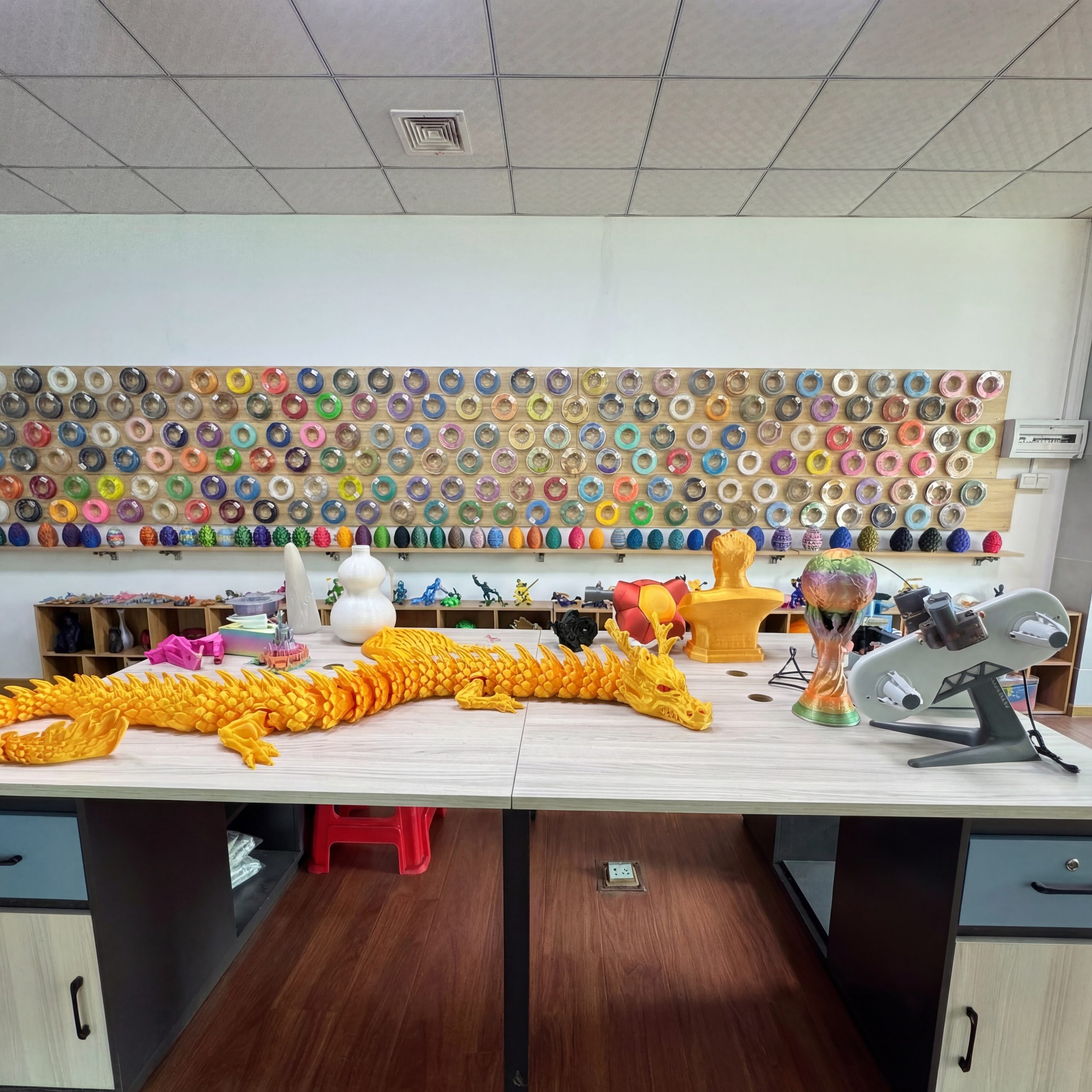
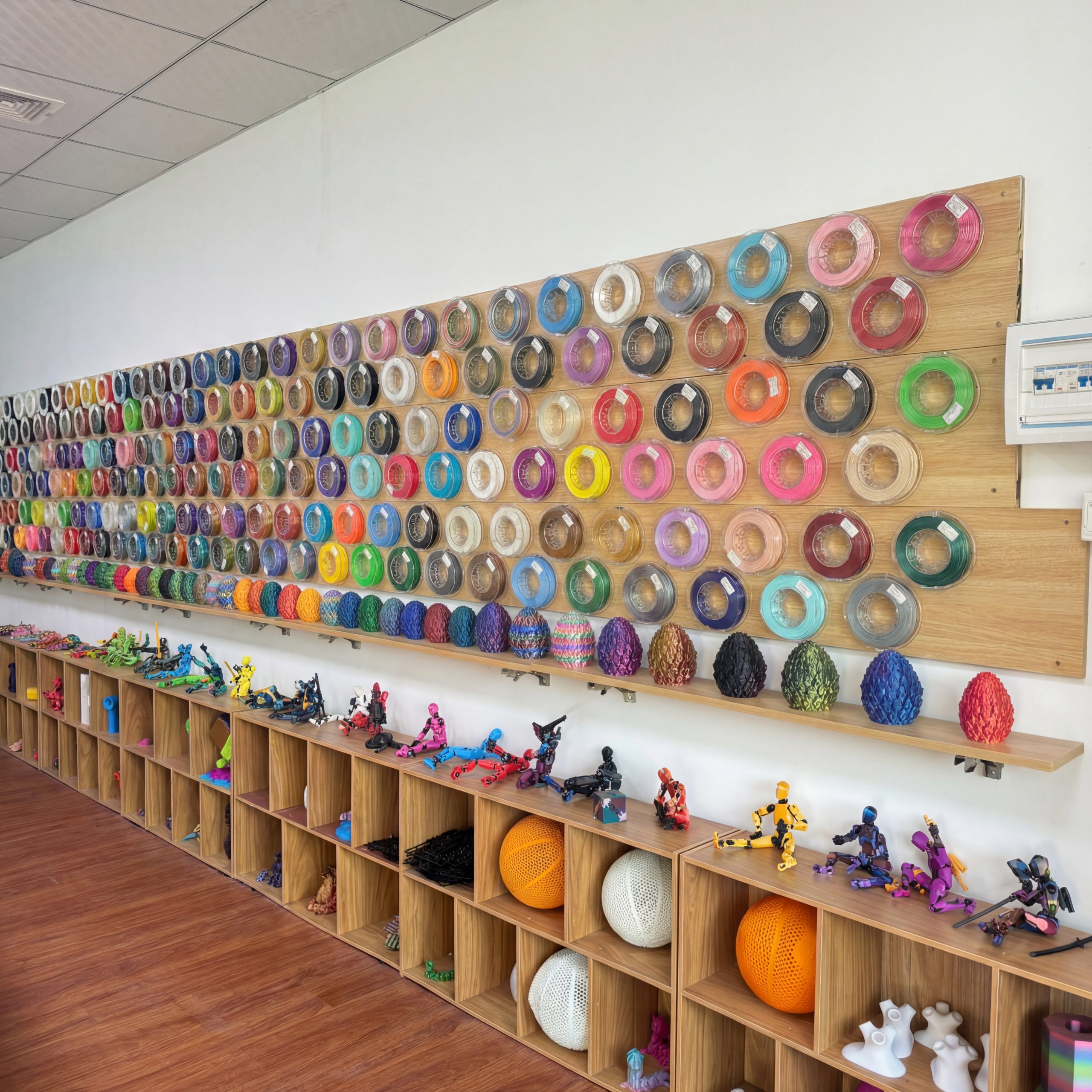
SigmaFilament ISO 9001 factory — bulk filament for print farms
10–500+
Printers Supported
6 Material Lines
PLA · PETG · ABS · ASA · HS · CF
±0.02mm
Every Spool, Every Batch
Dual-axis laser monitoring on SigmaFilament production line
Batch Stability

Calibrate Once, Trust Every Spool

When filament diameter varies ±0.05mm between spools, your slicer's flow calibration is wrong for half your fleet. On 50 printers, that's 15–30 failed prints per shift — $200–500/day in wasted material and machine time. Our ±0.02mm tolerance via dual-axis real-time laser monitoring means every spool in your batch performs identically.

±0.02mm
Diameter tolerance
every spool
ΔE <1.5
Color consistency
batch-to-batch
100%
Virgin resin
no regrind
70+
QC checkpoints
per spool
Learn about our quality standard
Reduce Downtime

5kg Spools Cut Changeover Time by 80%

A 1kg spool lasts ~33 hours. On a 50-printer farm running 16-hour shifts, that's 24+ spool swaps per day — each taking 3–5 minutes. That's 1–2 hours of pure operator time daily.
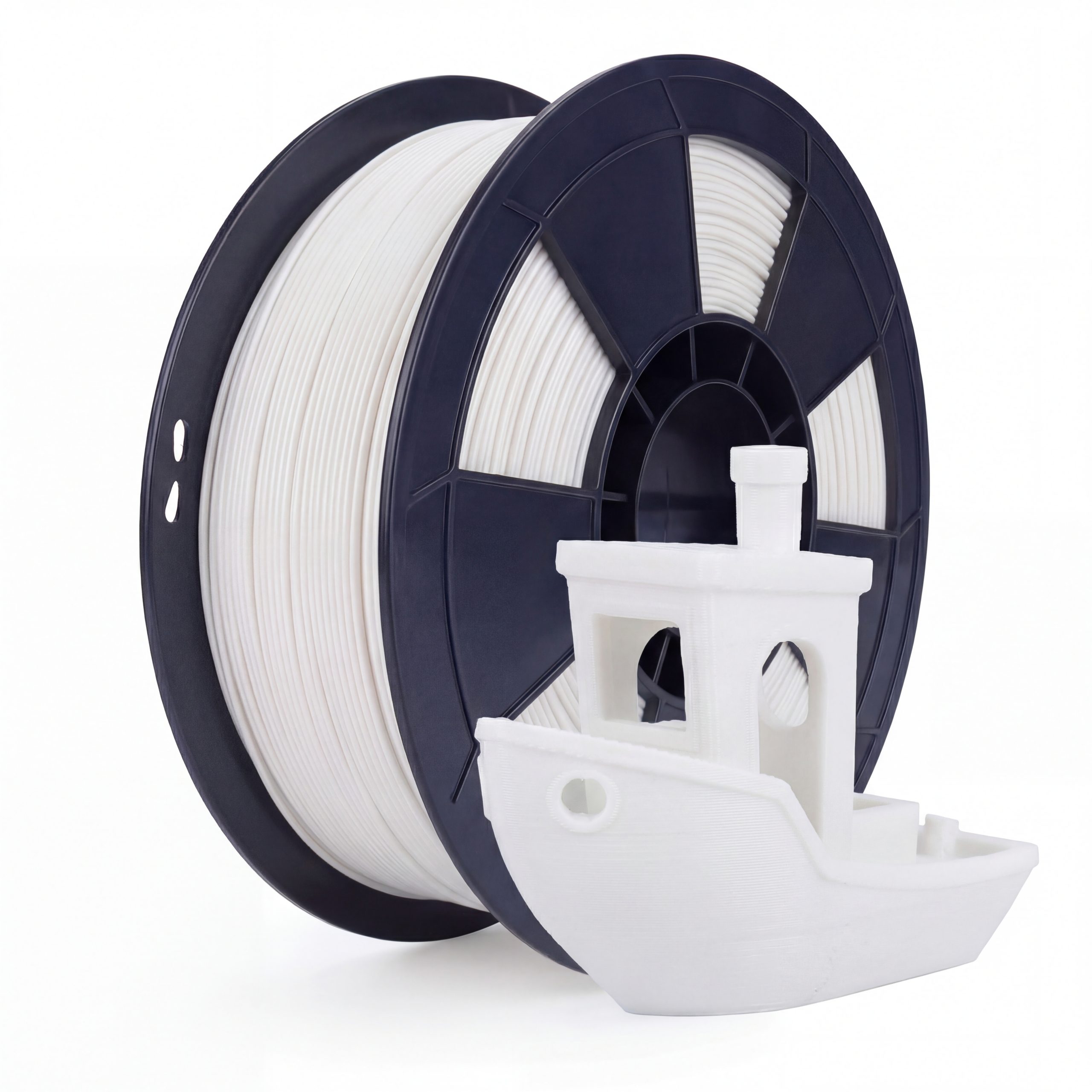
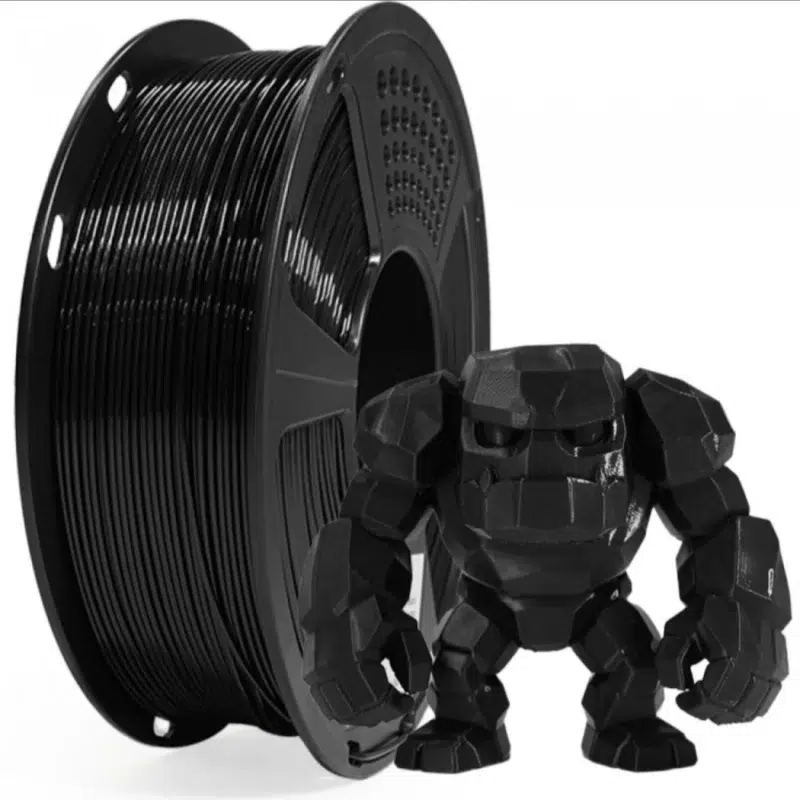
1kg filament spool
1kg
Standard Spool
Print time~33 hours
Changeovers/day (50 printers)24+
Operator time/day1–2 hours
Best forMulti-color, AMS
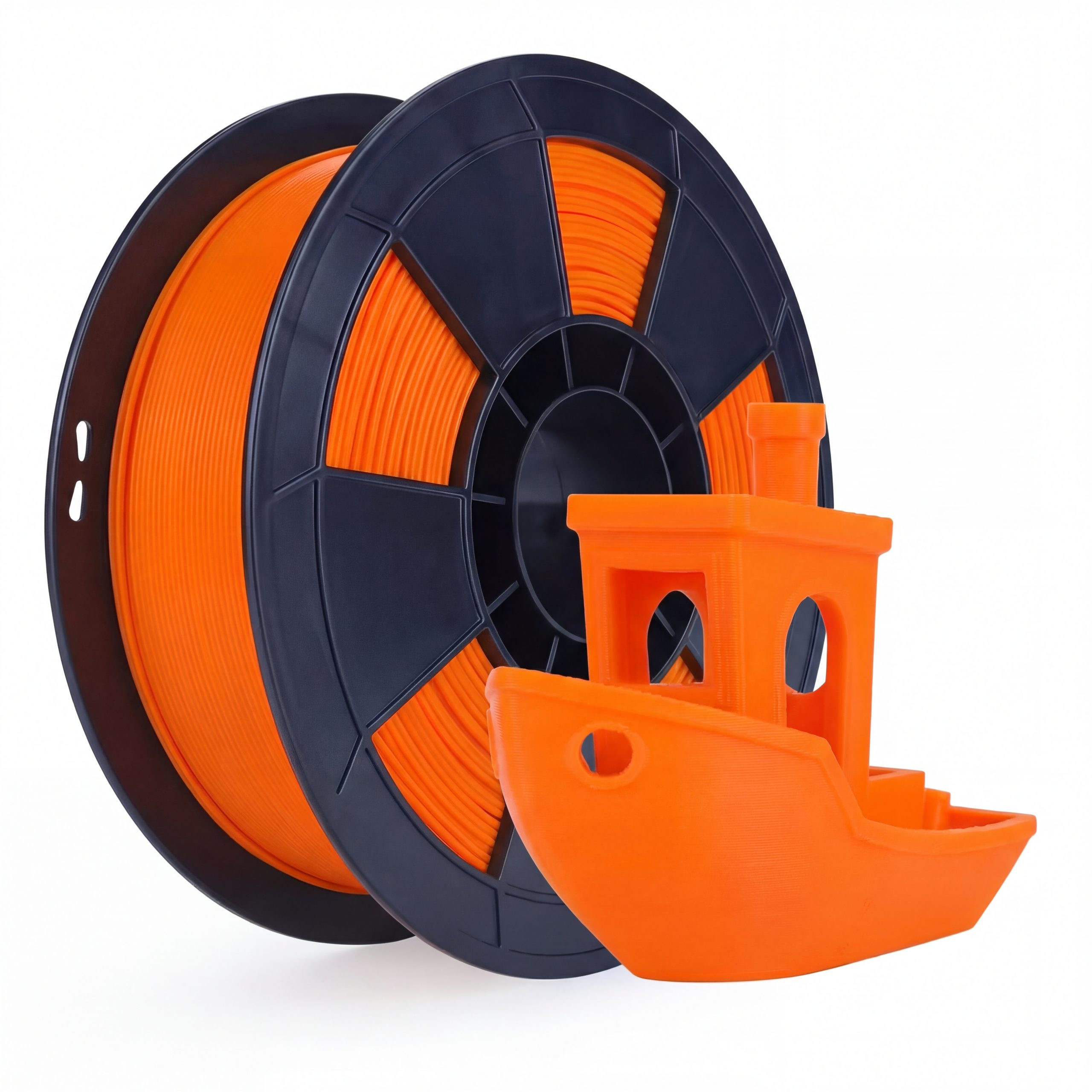
3kg bulk filament spool
3kg
Bulk Spool
Print time~100 hours
Changeovers/day (50 printers)8
Operator time/day25–40 min
Best forSingle-color runs
★ Recommended for Farms
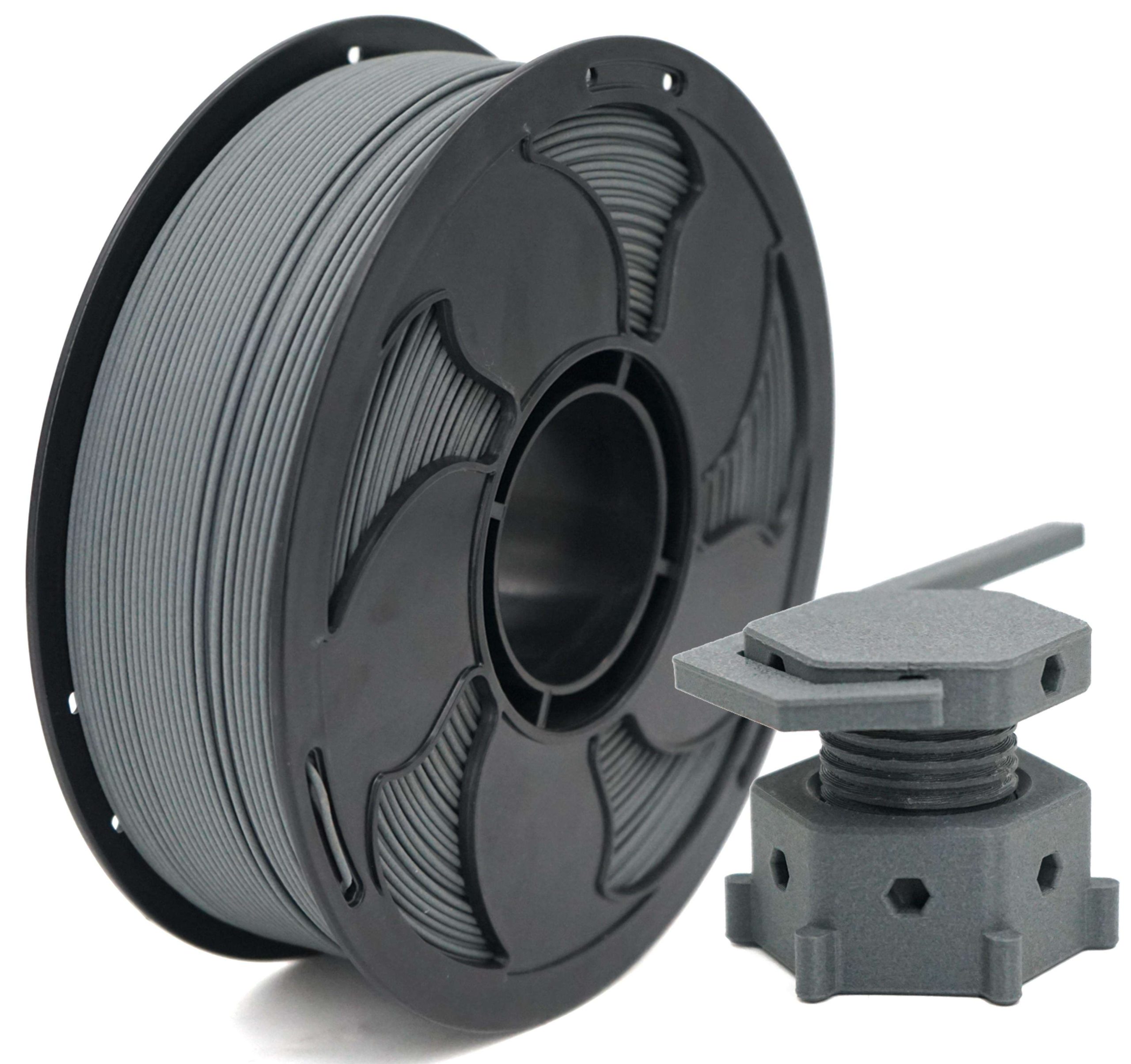
5kg production spool for print farms
5kg
Production Spool
Print time~165 hours
Changeovers/day (50 printers)5
Operator time/day15–25 min
Best forMax uptime farms
Explore PLA 3kg & 5kg spools

Note: 5kg spools need an external holder (most AMS units won't fit). Top-mount solutions work well in farm setups.
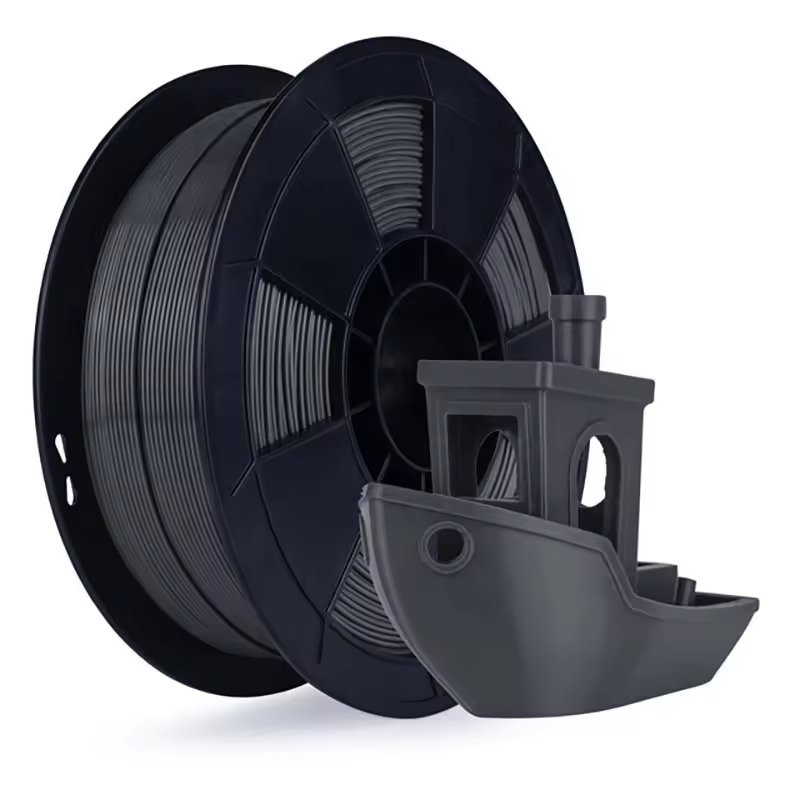
High-Speed filament for CoreXY print farms
High-Speed Filament

Your CoreXY Fleet Can Do 600 mm/s.
Your Filament Can't — Unless It's Made for Speed.

Standard filament is designed for 40–80 mm/s. Push it past 150 mm/s and the polymer can't melt fast enough — causing under-extrusion, poor layer adhesion, and failed prints. Our High-Speed Series has 2–3× higher melt flow index and rapid cooling formulation, validated on Bambu X1C, Creality K1, and Voron builds.

3–5×
Throughput increase
per machine
600mm/s
Max validated
print speed
3 Materials
HS-PLA · HS-PETG
HS-ABS
15–25%
Material premium
vs 300–500% throughput
View High-Speed wholesale page
Material Strategy

Recommended Material Combinations for Print Farms

Most successful farms don't use one material — they maintain a strategic mix. Here's how we see high-performing farms structure their filament inventory.

📦
Volume Production
Maximize Output, Minimize Cost
For farms where the priority is high-volume, low-cost-per-part production — consumer goods, prototypes, decorative items, and general fulfillment.
PLA / PLA+ PETG 5kg Spools
Primary materialPLA/PLA+ (70–80% of volume)
SecondaryPETG for impact/chemical needs
Spool size3kg or 5kg for max uptime
Typical farm20–200 printers, single-color runs
Cost per partLowest
⚡
★ Maximum Throughput
3–5× More Parts Per Machine
For CoreXY farms (Bambu X1C, Creality K1, Voron) that want to extract maximum output from existing hardware before buying more printers.
HS-PLA HS-PETG HS-ABS 5kg Spools
Primary materialHS-PLA @ 300–600 mm/s
SecondaryHS-PETG / HS-ABS for functional
Speed range200–600 mm/s (validated)
Material premium+15–25% vs standard
ROI paybackFirst week of production
🔧
Functional & Engineering Parts
Heat, UV, and Impact Resistance
For farms fulfilling engineering orders — automotive fixtures, outdoor enclosures, industrial jigs, and parts that face real-world stress.
ABS ASA PLA-CF / PETG-CF PA-CF (Nylon)
Indoor heat-resistantABS — ~100°C HDT
Outdoor / UV-stableASA — inherent UV resistance
High stiffnessPLA-CF / PETG-CF — 2–5× stiffer
RequiresEnclosed printer, hardened nozzle (CF)
Pricing power2–5× per-part premium

💡 Most farms run a 70/20/10 mix: 70% volume PLA, 20% high-speed, 10% engineering.

All six material families ship from the same factory in one combined order — one PO, one quality standard, one delivery.

Tell Us Your Material Mix — Get a Custom Quote →
Operational Challenges We Address

Pain Points That Cost Print Farms Real Money

⚠️ Problem

Supply Chain Disruptions Stop Production

Running out mid-order is a production emergency. Mixing suppliers means different tolerances, color shifts, and profile recalibration.

✅ Solution

Factory-direct from our own ISO 9001 facility. In-stock ships 3–5 days. Recurring supply with safety stock. See full catalog →

⚠️ Problem

Multi-Material = Multiple Suppliers

PLA from A, PETG from B, ABS from C. Three lead times, three quality standards, three shipping costs.

✅ Solution

Six families, one factory, one PO. Mix PLA, PETG, ABS/ASA, HS, CF in one order. 100-spool minimum combined.

⚠️ Problem

Moisture-Damaged Filament = Silent Failures

200+ spools in uncontrolled storage. PETG and Nylon absorb moisture within days. Symptoms get misdiagnosed as hardware issues.

✅ Solution

Every spool ships vacuum-sealed with desiccant. For PETG and PA-CF, <0.02% moisture at packaging. Material-specific drying guides included.

⚠️ Problem

No Dedicated Farm-Scale Support

Ordering 500 spools but getting hobbyist-level support. No batch QC reports, no priority scheduling, no recurring agreements.

✅ Solution

Farm accounts get dedicated support: assigned rep, priority production, batch QC documentation, scheduled recurring shipments. Volume discounts at 500+ and 1,000+ spools.

Farms at Every Scale

Whether You Run 10 Printers or 500 — We Scale With You

🏠
Starter Farm
5–20 printers

Validating product-market fit. Need reliable material without overcommitting on inventory.

  • Start with 1–3 sample spools
  • MOQ: 100 spools (mix freely)
  • Monthly consumption: ~30–80 spools
  • Recommended: 1kg spools for flexibility
🏭
Growth Farm
20–100 printers

Scaling production. One bad batch disrupts a week. You need consistent supply that keeps pace.

  • Quarterly or monthly recurring orders
  • Monthly consumption: ~80–400 spools
  • Upgrade to 3kg/5kg for uptime
  • Volume discounts at 500+ spools
🏗️
Industrial Farm
100–500+ printers

Full-scale manufacturing. Pallets of filament, multiple shifts. We become your supply chain.

  • Dedicated account manager
  • Monthly consumption: 400–2,000+ spools
  • Scheduled recurring + safety stock
  • Container-load pricing (FCL/LCL)
Vacuum-sealed filament storage
Storage at Scale

Managing 200+ Spools: Moisture Is Your Invisible Enemy

Wet filament causes popping, stringing, and rough surfaces — symptoms that waste entire shifts on troubleshooting.

Low RiskPLA / PLA+ — dry at 50°C 4h if needed
MediumPETG / ABS/ASA — dry at 65–70°C 4–6h
High RiskPA-CF (Nylon) — must dry 80°C 8–12h

Every spool ships vacuum-sealed with desiccant. Unopened spools stay dry 12+ months. For opened stock, use dry boxes or dehumidified room (<30% RH) with FIFO rotation.

Print Farm Sourcing & Operations FAQ

What Print Farm Operators Ask Before They Order

Common questions from 10-printer starter farms through 500+ printer industrial operations — material mix, MOQ, spool formats, consistency, and recurring supply.

Material Strategy
Most high-volume farms run a 70 / 20 / 10 material mix — 70% PLA / PLA+ for general production, 20% High-Speed filament for throughput-critical CoreXY runs, and 10% ABS / ASA or CF for engineering orders. The split shifts toward PETG / ABS / CF for farms that serve functional-part clients. All six material families ship from one factory in one combined order.
The decision usually comes down to the end-use environment: PLA / PLA+ is typically chosen when parts won't face heat or UV; PETG suits impact-resistant and chemical-contact parts up to ~70 °C; ABS suits indoor heat-resistant parts up to ~100 °C; ASA suits outdoor and UV-exposed parts; CF composites suit high-stiffness structural parts. For unknown or general jobs, PLA / PLA+ remains the most cost-effective default.
High-Speed filament typically pays off for farms running CoreXY printers (Bambu X1C / P1, Creality K1 / K2, Voron, RatRig V-Core) with high-flow hotends — the hardware required to sustain 200–600 mm/s. On bed-slinger fleets running 40–80 mm/s, standard filament remains more cost-effective. HS carries a 15–25% material premium and three stock variants (HS-PLA, HS-PETG, HS-ABS) — see the HS page for printer compatibility.
Ordering & Logistics
MOQ is 100 spools combined — you can mix PLA, PETG, ABS, ASA, High-Speed, and CF / GF composites across colors and 1 kg / 3 kg / 5 kg spool sizes in a single order. Private-label projects start at 500 spools per SKU, and volume discounts apply at 500+ and 1,000+ spool tiers. Sample evaluation starts with 1–3 spools per material, shipped within 3–5 business days.
For single-color, continuous production runs, 3 kg and 5 kg spools reduce changeover time — a 5 kg spool provides ~165 hours of print time (vs ~33 hours for 1 kg), cutting operator changeovers on a 50-printer farm from ~24/day to ~5/day. PLA and PLA+ are available in 1 kg / 3 kg / 5 kg; PETG, ABS, and High-Speed materials are standard 1 kg with 3 kg available on select SKUs. 5 kg spools need an external top-mount holder — most Bambu AMS and enclosed multi-spool units won't accept them.
Yes. Farms consuming 200+ spools/month can set up a recurring supply agreement with a dedicated account representative, priority production scheduling, batch QC documentation, and scheduled shipments so you don't compete with spot orders. In-stock orders ship in 3–5 business days; production orders take 10–15 business days for PLA / PETG / ABS standard lines, 10–18 for HS, 12–18 for CF / GF. Container-load (FCL / LCL) pricing is available for 100–500+ printer industrial farms.
Quality at Scale
Every spool is monitored in real time by dual-axis laser micrometers targeting ±0.02 mm diameter tolerance (±0.03 mm for composites) with 70+ QC checkpoints per spool. Color accuracy is held to ΔE < 1.5 batch-to-batch through automated gravimetric pigment dosing. Farm accounts ordering 200+ spools of a single color can request batch-level QC documentation including diameter logs and ΔE measurements before the shipment loads.
Moisture sensitivity is tiered: PLA / PLA+ is least sensitive (standard vacuum seal is sufficient); PETG, ABS, and ASA are moderately sensitive (store below 30% RH, dry at 65–70 °C for 4–6 h if stringing appears); PA-CF (Nylon) is the most sensitive and should be fed from a dry box during printing. Every SigmaFilament spool ships vacuum-sealed with desiccant — unopened spools typically stay dry 12+ months. Detailed drying guidance is included on each wholesale page.
WhatsApp
+86 15999903211
We typically reply within 1 business day
Get a Print Farm Quote
Replies within 1–2 business days

    10–500+ Printers
    6 Material Families
    ±0.02mm Tolerance
    Recurring Supply
    Operations Playbook

    Deep Reference for Print Farm Operators

    Technical guidance on tolerance math, moisture tiering, failure diagnosis, supplier evaluation, inventory planning, and color control — written for operators who need the mechanism, not just the answer.

    A single printer can compensate for diameter variance through manual flow calibration. But in a farm, you're running the same G-code on 20–200 machines simultaneously. If spool A is 1.73 mm and spool B is 1.77 mm, the volumetric flow difference is ~4.6% — enough to cause visible under-extrusion on one machine and over-extrusion (with stringing and blobs) on another, using identical slicer settings. A ±0.02 mm tolerance means the maximum flow variance between any two spools in your batch is under 2.3% — within most slicers' compensation range.
    Standard PLA has a melt flow index (MFI) of roughly 6–10 g/10min. High-speed PLA is formulated to reach 20–30+ g/10min by adjusting molecular weight distribution and adding flow modifiers, so the polymer transitions from solid to printable fluid faster and sustains adequate volumetric flow at 300–600 mm/s. The second difference is crystallization kinetics — high-speed formulations solidify faster after extrusion, which helps maintain overhangs and dimensional accuracy at speed. For CoreXY fleets with high-flow hotends, HS filament typically removes the bottleneck that existing hardware can't solve alone.
    Use a tiered system. Tier 1 (PLA / PLA+): store in original vacuum seal until use; opened spools can sit for 1–2 weeks in normal humidity (<60% RH); dry at 50 °C / 4 h if popping is heard. Tier 2 (PETG, ABS, ASA): resealable bags with fresh desiccant after each use; ideally a dehumidified cabinet or room at <30% RH; dry at 65–70 °C / 4–6 h if stringing appears. Tier 3 (Nylon / PA-CF): feed from a dry box during printing; dry at 80 °C for 8–12 h before first use, even from a sealed spool. A cost-effective farm setup is a closet-sized room with an industrial dehumidifier, shelving, and FIFO date labels.
    Farm-specific failure modes differ from single-printer troubleshooting. (1) Filament diameter inconsistency — if failures appear randomly across different printers running the same file, the filament is the variable (measure 5 points across the spool). (2) Moisture absorption — popping during extrusion, excessive stringing, and rough / matte finish on glossy material point to moisture; a 4 h dry cycle confirms or eliminates this. (3) Worn nozzles — brass nozzles typically degrade after 500–800 hours with standard material, much faster with CF composites. (4) Ambient temperature swings — ABS / ASA farms near dock doors or with seasonal HVAC changes see warping surges; correlate failure logs with ambient temp to identify this.
    A benchy tells you almost nothing at farm scale. A proper protocol: (1) Measure diameter at 10+ points across the spool (target ±0.02 mm or better with consistent ovality). (2) Run your highest-failure-rate production job — the one with overhangs, bridges, or thin walls that already pushes your settings. (3) Test across 5+ printers simultaneously with identical slicer profiles to reveal whether the filament is consistent enough for fleet-wide deployment. (4) Check color across spools — order 3+ spools and compare side-by-side. (5) Ask for batch QC data — any serious manufacturer can provide diameter logs, tensile test results, and ΔE color measurements per production lot.
    Use this formula: Monthly consumption (kg) = Printers × Avg hours/day × 30 × Avg flow rate (g/h) ÷ 1000. Typical flow rates: PLA at 60 mm/s ≈ 25–35 g/h; HS-PLA at 300 mm/s ≈ 80–120 g/h; PETG ≈ 20–30 g/h. Example: 50 printers × 14 h/day × 30 × 30 g/h = 630 kg/month ≈ 630 × 1 kg spools or 126 × 5 kg spools. Add a 15–20% buffer for failed prints, purge, and test prints, and maintain 3–4 weeks of safety stock for primary colors. Farms consuming 200+ spools/month benefit from a recurring supply agreement with pre-allocated production capacity.
    ΔE (Delta E) is the standard metric for color difference — a ΔE of 1.0 is roughly the threshold a trained human eye can distinguish, and below 1.5 differences are typically invisible to end users. Most consumer-grade brands don't measure ΔE at all. Color control happens at three stages: (1) incoming masterbatch testing with a spectrophotometer, (2) in-line color sampling during extrusion, (3) final spool-level spot checks against the reference standard. Every batch ships targeting ΔE < 1.5 from the color reference — critical for multi-panel assemblies and batched client orders where visible shifts between spools destroy perceived quality.
    PLA-CF and PETG-CF are farm-viable on any standard FDM machine with one hardware change — a hardened steel nozzle (brass wears in hours). With a hardened nozzle, CF composites typically print reliably for thousands of hours. PA-CF (Nylon Carbon Fiber) is more demanding and typically runs on a dedicated subset of enclosed machines with dry-box feeding. The business case for CF is usually premium service pricing — CF parts often command 2–5× per-part pricing from engineering clients, making the higher material cost easily justified.
    Get Started

    Ready to Fix Your Farm's Filament Problem?

    Tell us your printer fleet, materials, monthly volume, and what's frustrating you about your current supplier.

    📧 [email protected] · 💬 WhatsApp: +86 159-9990-3211 · 🌍 Shipping to 50+ countries