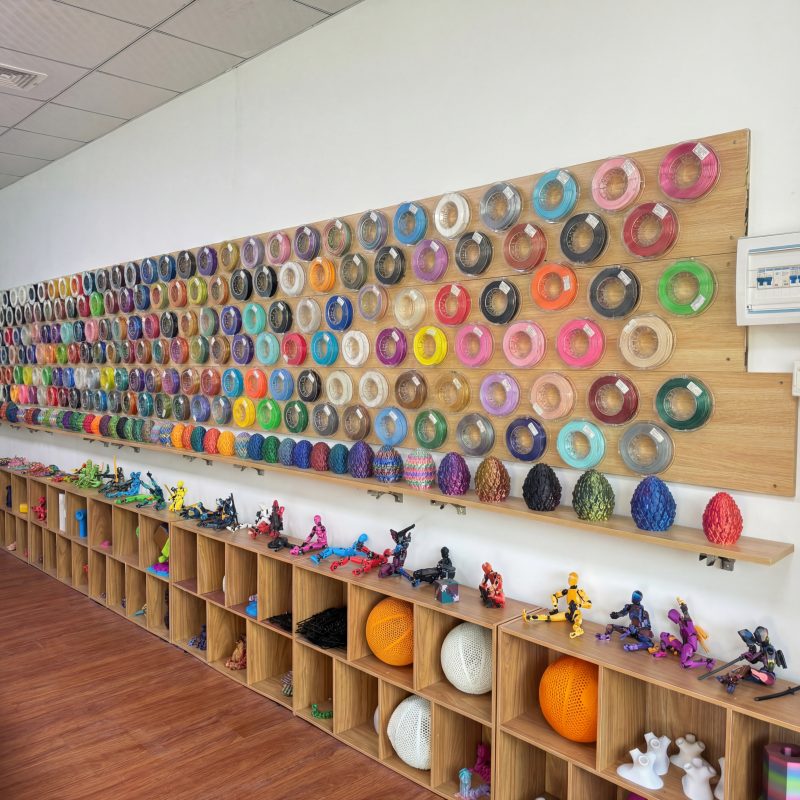
Actionable 7-Point Checklist for Vetting Your Next Online 3D Printing Partner in 2026


Abstract
The proliferation of online 3D printing services has fundamentally altered the landscape of manufacturing, prototyping, and product development. This analysis examines the critical factors businesses and professionals must evaluate when selecting a long-term production partner from a global field of suppliers in 2026. It posits that a successful partnership transcends mere transactional orders, requiring a holistic assessment of a manufacturer’s capabilities. The investigation focuses on seven pivotal domains: verifiable manufacturing capacity, material portfolio depth and consistency, bespoke OEM/ODM customization services, robust quality control systems like ISO 9001:2015, integrated supply chain logistics, responsive technical support, and the strategic use of pilot programs for cost-value analysis. The study reveals that superficial metrics such as per-unit cost are often misleading. A more rigorous evaluation, encompassing material science, process control, and logistical proficiency, is necessary to forge a resilient and scalable production relationship that mitigates risks and fosters innovation. True success lies in identifying a partner, not just a vendor, who can ensure quality and reliability from prototype to mass production.
Key Takeaways
- Vet a partner’s certified production capacity to ensure they can scale with your demand.
- Analyze the material portfolio for quality, consistency, and advanced composite options.
- Evaluate OEM/ODM services for custom branding and exclusive material formulation.
- Confirm ISO 9001:2015 and other certifications for process-driven quality control.
- Scrutinize logistics support and shipping terms to prevent supply chain bottlenecks.
- Assess the value of an online 3D printing service by its technical support and partnership ethos.
- Initiate a pilot project to test filament performance and validate the supplier’s reliability.
Table of Contents
- The Shifting Paradigm of Digital Manufacturing in 2026
- Checklist Point 1: Verifying True Manufacturing Capability and Scalability
- Checklist Point 2: A Deep Dive into Material Portfolio and Quality Consistency
- Checklist Point 3: Evaluating Customization with OEM and ODM Services
- Checklist Point 4: Scrutinizing Quality Control Systems and Certifications
- Checklist Point 5: Analyzing the Supply Chain and Global Logistics Support
- Checklist Point 6: Gauging Technical Support and the Partnership Ethos
- Checklist Point 7: The Strategic Imperative of a Pilot Program and Cost-Value Analysis
- Frequently Asked Questions (FAQ)
- Conclusion
- References
The Shifting Paradigm of Digital Manufacturing in 2026
The world of making things has undergone a quiet but profound revolution. Not so long ago, bringing a physical product to life was a journey fraught with immense barriers. It required massive capital investment in machinery, deep expertise in industrial processes, and complex supply chain negotiations. For a small business or an independent innovator, the path from a digital design to a tangible object was often prohibitively long and expensive. Today, in 2026, that landscape is almost unrecognizable. The rise of accessible, sophisticated online 3D printing services has democratized production, transforming it from a centralized, capital-intensive endeavor into a distributed, on-demand utility.
Imagine you are an engineer who has just perfected a design for a new drone component. In the past, you would have needed to create expensive molds for injection molding, a process that could take months and cost tens of thousands of dollars just to get your first prototype. Now, you can simply upload your CAD file to a service, select a material, and have a functional, high-fidelity part delivered to your door in a matter of days for a fraction of the cost. This is the power of online 3D printing. Platforms like Xometry and have built vast networks of machines, offering a menu of technologies and materials that were once the exclusive domain of large corporations.
This shift is not merely about convenience; it represents a fundamental change in how we think about inventory, customization, and speed to market. Companies no longer need to produce and store thousands of units of a product that might become obsolete. Instead, they can adopt a “digital inventory” model, printing parts only as they are needed. This “just-in-time” approach reduces waste, lowers storage costs, and allows for continuous product improvement. A design flaw can be corrected in the CAD file, and the next part printed can be the improved version, a process unheard of in traditional mass manufacturing.
However, this new paradigm brings with it a new set of challenges. The very ease of access that makes online 3D printing so attractive also creates a confusing and often opaque marketplace. A web search reveals a dizzying array of providers, from large industrial aggregators to smaller, specialized shops and even peer-to-peer networks. Some compete aggressively on price, offering parts for what seems like pennies. Forum discussions often center on finding the cheapest possible option. But as many have learned, often through costly mistakes, the price per part is only one small piece of a much larger puzzle.
When your goal is not just a one-off prototype but a scalable, repeatable, and reliable production run for your business, the criteria for selecting a partner must become far more rigorous. The questions you ask must change. You are no longer just buying a “print.” You are investing in a manufacturing relationship. Will this supplier be able to produce 10,000 parts with the same quality as the first 10? Do they have the material science expertise to help you select or even develop the perfect filament for your application? Is their quality control process robust enough to catch a deviation before it ruins an entire batch? Can they navigate the complexities of international logistics to ensure your production line is never idle?
This guide is designed to help you answer those deeper questions. It provides a structured, seven-point framework for vetting a potential online 3D printing partner, moving beyond surface-level price comparisons to a more holistic evaluation of capability, quality, and reliability. This is not about finding the cheapest supplier; it is about identifying a true production partner who can help your business scale, innovate, and thrive in the dynamic manufacturing ecosystem of 2026.
Checklist Point 1: Verifying True Manufacturing Capability and Scalability
When you begin your search for an online 3D printing partner, one of the first and most fundamental considerations must be their actual, verifiable manufacturing capacity. It is a question of scale. A service that is perfectly adequate for producing a handful of prototypes may crumble under the pressure of a sustained production order. The promise of “unlimited capacity” is easy to make on a website, but the reality of factory floors, machine maintenance schedules, and raw material inventory tells a much more complex story. Your task is to look behind the marketing curtain and assess whether a potential partner has the horsepower to not only meet your current needs but also grow with you.
### From Kilograms to Tons: Understanding Production Volume
The most direct measure of a filament manufacturer’s capacity is its output, typically measured in tons per day or month. A small-scale or boutique filament maker might produce a few hundred kilograms a month, which is excellent for specialized, small-batch orders. However, if your business plans to integrate 3D printed parts into a commercial product, you need a partner whose capacity is measured in tons. For instance, a manufacturer stating a capacity of 30 tons per day signals an industrial-scale operation capable of handling high-volume, consistent orders for global brands.
Why does this matter so much? Imagine your product suddenly gains traction, and your sales forecast triples overnight. If your filament supplier is already operating at their maximum capacity, they cannot scale with you. This creates a production bottleneck that can be catastrophic, leading to stockouts, missed revenue, and damage to your brand’s reputation. A partner with significant headroom in their production volume provides a crucial buffer, ensuring that your supply chain is a source of strength, not a point of failure. When vetting a partner, ask for specific figures on their production output and inquire about their current capacity utilization. A partner running at 50% capacity has room to grow with you; one running at 95% might not.
### The Technology Under the Hood: More Than Just FDM
The term “3D printing” is an umbrella for a wide range of technologies, each with its own strengths, weaknesses, and material compatibilities. While Fused Deposition Modeling (FDM) is the most common and widely understood process, a truly capable online 3D printing partner will often offer a suite of technologies. Understanding these options is vital because the right process can dramatically impact your part’s cost, strength, surface finish, and functionality.
| Technology | Common Materials | Typical Cost | Key Advantages | Best Use Cases |
|---|---|---|---|---|
| Fused Deposition Modeling (FDM) | PLA, PETG, ABS, ASA, Nylon, PC, Composites | Low | Fast, low cost, wide material variety, good for large parts. | Prototypes, jigs, fixtures, end-use parts not requiring fine detail. |
| Stereolithography (SLA) | Photopolymer Resins | Medium | Extremely high detail, smooth surface finish, isotropic properties. | Visual models, molds, dental applications, detailed miniatures. |
| Selective Laser Sintering (SLS) | Nylon (PA11, PA12), TPU | High | Strong, durable parts, no support structures needed, complex geometries. | Functional prototypes, end-use parts, flexible components, living hinges. |
| Multi Jet Fusion (MJF) | Nylon (PA11, PA12) | High | Fast production speeds for batches, good mechanical properties. | Series production of nylon parts, complex ductwork, enclosures. |
When you engage with a potential partner, their technological breadth is a proxy for their expertise. A supplier that only offers FDM might be excellent at it, but a partner with FDM, SLA, and SLS capabilities can provide more holistic advice. They can analyze your part’s geometry and functional requirements and recommend the most efficient and effective production method. For example, you might approach them for an FDM print, but they might suggest that the part’s need for intricate internal channels and a smooth finish makes it a better candidate for SLA or MJF. This level of consultative guidance is a hallmark of a true partner, not just an order-taker.
### Lead Times and Supply Chain Resilience
Production capacity is not just about the number of machines on the floor; it is also about the entire ecosystem that supports them. This includes raw material sourcing, production scheduling, quality control queues, and packaging and shipping logistics. All these factors combine to determine the lead time—the time from when you place an order to when you receive your parts.
A prospective partner should be able to provide you with clear and realistic lead time estimates for different technologies and order volumes. Be wary of providers who promise impossibly short turnarounds for large orders. This could be a sign that they are over-promising or that they might cut corners on quality control to meet the deadline.
Furthermore, inquire about their supply chain resilience. In a world still feeling the echoes of the supply chain disruptions of the early 2020s, this is not a trivial question. Ask them: Where do you source your raw polymers? Do you have multiple suppliers? What is your safety stock level for high-demand materials? A robust manufacturer will have a well-defined strategy for mitigating supply chain risks. They will have diversified their sourcing of raw materials and maintained sufficient inventory to weather unforeseen shortages or shipping delays. This foresight ensures that their production lines—and by extension, your production—keep running smoothly, regardless of external disruptions. This stability is an invisible but invaluable asset in a manufacturing partner.
Checklist Point 2: A Deep Dive into Material Portfolio and Quality Consistency
Once you have confirmed that a potential partner has the raw manufacturing power to meet your needs, the next layer of your investigation must focus on the very substance of 3D printing: the materials. The material you choose dictates nearly everything about your final part—its strength, flexibility, temperature resistance, appearance, and lifespan. A premier online 3D printing partner does not simply offer a list of materials; they curate a portfolio, guarantee its quality, and possess the expertise to guide you to the right choice. This scrutiny of materials is where many businesses falter, lured by low prices without understanding the hidden costs of poor quality.
### Beyond the Basics: The Breadth of the Material Portfolio
At a minimum, any serious filament manufacturer will offer the workhorse materials of FDM printing: PLA, PETG, and ABS. These are foundational polymers, each with a well-understood set of properties. PLA (Polylactic Acid) is easy to print and biodegradable, making it ideal for prototypes and non-functional parts. PETG (Polyethylene Terephthalate Glycol) is known for its ease of printability and is a semi-rigid material with good impact resistance, which makes it a go-to for many functional applications (Simplify3D, 2019). ABS (Acrylonitrile Butadiene Styrene) provides higher temperature resistance and toughness, though it can be more challenging to print.
A truly valuable partner, however, will offer a portfolio that extends far beyond these basics. Their catalog should be seen as a toolbox, filled with specialized instruments for specific jobs. Look for evidence of a commitment to material science, which often manifests in the following categories:
- Engineering-Grade Filaments: These materials are designed for demanding mechanical applications. This includes various grades of Nylon (PA) for toughness and wear resistance, Polycarbonate (PC) for high impact strength and temperature resistance, and ASA (Acrylonitrile Styrene Acrylate) for its UV resistance and durability in outdoor applications. The availability of these materials signals that the supplier caters to professional and industrial clients.
- Fiber-Reinforced Composites: This is a major area of innovation. By infusing a base polymer like PETG or Nylon with chopped carbon fibers (CF) or glass fibers (GF), the material’s properties can be dramatically enhanced. Carbon fiber PETG, for instance, offers a significant boost in stiffness and dimensional stability over standard PETG, making it suitable for functional parts like drone frames or automotive brackets (SigmaFilament, 2026). The presence of a robust line of fiber-reinforced filaments is a strong indicator of a manufacturer’s technical prowess.
- High-Performance Polymers: This is the top tier of 3D printing filaments, designed for the most extreme environments. Materials like PEEK (Polyether Ether Ketone) and PEI (Polyetherimide, often known by the brand name Ultem) offer exceptional chemical resistance, flame retardancy, and the ability to withstand very high operating temperatures. While not every project requires these exotic materials, a supplier who works with them possesses a level of process control and expertise that benefits their entire operation.
- Aesthetic and Specialty Filaments: A comprehensive portfolio also considers appearance and unique properties. This can include Silk PLAs for a glossy finish, Matte PLAs for a clean, layer-hiding surface, and flexible TPUs (Thermoplastic Polyurethane) for creating rubber-like parts.
### The Unyielding Importance of Quality and Consistency
Having a wide selection of materials is meaningless if the quality is inconsistent. This is arguably the most critical factor in selecting a filament supplier for production use. Inconsistent filament is a plague on 3D printing. It leads to failed prints, clogged nozzles, poor surface finish, and parts that do not meet their required mechanical specifications. These failures are not just annoying; they cost real money in wasted material, machine downtime, and missed deadlines.
The single most important metric for filament quality is its dimensional accuracy, or diameter tolerance. Filament is sold in standard diameters, most commonly 1.75mm or 2.85mm. The printer’s extruder is calibrated to push a precise volume of plastic through the nozzle based on this expected diameter. If the filament diameter varies—if it swells to 1.85mm in one section and shrinks to 1.65mm in another—the extruder will either under-extrude or over-extrude material. This leads to gaps, blobs, and weak layer adhesion.
A top-tier manufacturer will use laser-based monitoring systems on their extrusion lines to measure the filament’s diameter in real-time, thousands of times per second. This allows them to maintain an incredibly tight tolerance. A typical budget filament might advertise a tolerance of ±0.05mm. A professional-grade supplier, by contrast, will guarantee a tolerance of ±0.03mm or even ±0.02mm. While this difference seems minuscule, it has an enormous impact on print reliability. It is the difference between constant tinkering and “press print and walk away” confidence.
Beyond dimensional accuracy, other markers of quality include:
- Ovality: The filament should be perfectly round, not oval. Poor ovality can cause feeding issues and inconsistent extrusion.
- Raw Material Purity: The base polymer should be 100% virgin resin, free from contaminants that can cause clogs or compromise mechanical properties.
- Drying Protocols: Many filaments, especially PETG and Nylon, are hygroscopic, meaning they readily absorb moisture from the air. Printing with “wet” filament leads to steam bubbles forming in the nozzle, causing pops, hisses, and a weak, stringy print. A serious manufacturer dries all raw materials before extrusion and spools the finished filament in a humidity-controlled environment, immediately vacuum-sealing it with a desiccant pack. Ask a potential partner about their drying procedures—it is a non-negotiable step for quality.
### A Tale of Two Spools: Cost vs. Value
Let’s consider a practical scenario. You have two potential suppliers for PETG filament. Supplier A offers it for $15 per kilogram spool. Supplier B charges $22 per kilogram. The choice seems obvious.
But then you dig deeper. Supplier A has a stated diameter tolerance of ±0.05mm and makes no mention of their drying process. Supplier B guarantees a laser-measured tolerance of ±0.02mm and details their multi-stage drying and vacuum-sealing protocol.
You decide to run a test. With Supplier A’s filament, you experience a 15% print failure rate due to jams and poor layer adhesion. The successful prints have visible inconsistencies in the surface finish. With Supplier B’s filament, your failure rate drops to less than 1%, and the prints are dimensionally accurate with a clean, consistent finish.
The “cheaper” filament from Supplier A is now far more expensive. The cost of the wasted material, the operator time spent clearing jams, and the potential for a defective part to fail in the field far outweighs the initial $7 per spool savings. This is the core lesson in material selection: you are not buying a spool of plastic; you are buying reliability. A high-quality, consistent filament from a reputable manufacturer is an investment that pays for itself many times over in reduced failures and predictable results.
Checklist Point 3: Evaluating Customization with OEM and ODM Services
In the commoditized world of standard filaments, the ability to customize is what separates a mere supplier from a strategic production partner. For businesses looking to build a brand, protect intellectual property, or solve a unique engineering challenge, standard off-the-shelf solutions are often insufficient. This is where Original Equipment Manufacturer (OEM) and Original Design Manufacturer (ODM) services become invaluable. Understanding the distinction between these two models and evaluating a supplier’s proficiency in them is a critical step in forging a long-term, value-added relationship.
### OEM Services: Building Your Brand on a Solid Foundation
OEM services are fundamentally about private labeling. The filament manufacturer produces a high-quality, consistent product, and you, the client, brand it as your own. This is an incredibly powerful tool for businesses that want to build a reputation for quality without investing in the massive capital expenditure of a filament extrusion factory. A sophisticated OEM partner offers a comprehensive suite of branding options that go far beyond simply putting your logo on a box.
Consider the unboxing experience. When a customer receives your product, every detail contributes to their perception of your brand. A capable OEM partner can customize:
- The Spool: Instead of a generic black plastic spool, you could have spools molded in your brand’s specific Pantone color, or even spools made from recycled cardboard to align with a sustainability message, as seen with some modern filament brands (Plastics Industry Association, 2024). Your logo can be molded or printed directly onto the spool itself.
- The Box: The packaging is your primary marketing real estate. A good OEM partner will work with you to design and print fully custom boxes, featuring your branding, product information, and recommended printing parameters. This turns a simple container into a professional, retail-ready product.
- Labeling and Documentation: This includes custom labels on the spool and box with your part numbers, barcodes, and branding. It also extends to including custom user manuals, safety data sheets, or marketing inserts within the packaging.
The key to evaluating a potential OEM partner is their flexibility and their minimum order quantity (MOQ). A partner who is truly invested in helping other businesses grow will offer these services with a reasonably low MOQ. This allows smaller companies or startups to create their own professional-looking brand of filament without having to commit to a massive, bank-breaking initial order. It democratizes branding in the same way that online 3D printing has democratized manufacturing.
### ODM Services: Co-Creating the Future of Materials
If OEM is about branding an existing product, ODM is about creating a new one. Original Design Manufacturer services are a collaborative partnership where the supplier leverages their deep expertise in material science and polymer chemistry to develop a custom filament formulation exclusively for you. This is the pinnacle of a supplier-client relationship and is essential for companies pushing the boundaries of what is possible with 3D printing.
The possibilities with ODM are nearly limitless. A partner with strong R&D capabilities can:
- Develop Custom Colors: While many suppliers offer a standard range of colors, a true ODM partner can match a specific Pantone or RAL color code. This is critical for companies that need to maintain strict brand consistency across all their products. Imagine a power tool company that wants to 3D print jigs and fixtures in their signature shade of yellow—ODM makes this possible.
- Modify Mechanical Properties: This is where ODM becomes a powerful engineering tool. You might have an application that requires the chemical resistance of PETG but needs greater stiffness. An ODM partner could work with you to develop a custom carbon fiber-reinforced PETG with a specific percentage of carbon fiber fill to hit your target modulus. They could create a filament with enhanced UV resistance for outdoor applications or develop a grade of TPU with a specific Shore hardness for a flexible part.
- Introduce Functional Additives: The base polymer is just the beginning. An ODM partner can introduce a wide range of additives to create truly functional materials. This could include adding electrostatic dissipative (ESD) agents to create a filament for printing electronics enclosures that protect sensitive components. It could involve adding flame-retardant compounds to meet specific safety standards like UL 94 V-0, a critical requirement for parts used in electronics or aviation (UL Solutions, 2024).
When you engage with a potential partner about ODM services, the conversation should feel like a consultation with a team of material scientists. They should be asking deep questions about your application’s requirements: What is the operating temperature? What chemicals will the part be exposed to? What are the primary mechanical stresses? A key component of this relationship is trust. Because you are developing proprietary technology, a serious ODM partner will readily sign a Non-Disclosure Agreement (NDA) to protect your intellectual property. This ensures that the custom formula they develop for you remains exclusively yours.
| Service Type | Core Function | Typical Client Goal | Key Evaluation Metrics |
|---|---|---|---|
| OEM (Original Equipment Manufacturer) | Private labeling of existing, high-quality filaments. | Build a branded product line without owning a factory. | Low MOQ, custom spool/box/label options, print quality. |
| ODM (Original Design Manufacturer) | Collaborative R&D to create a new, custom filament formula. | Solve a unique engineering problem or create a proprietary material. | R&D team expertise, ability to add functional modifiers, NDA protection. |
Choosing a partner with strong OEM and ODM capabilities transforms your supply chain. Your supplier is no longer a faceless entity from which you order commodity goods. They become an extension of your research and development team, a key collaborator in bringing your most ambitious ideas to life. This collaborative spirit is the defining characteristic of a genuine production partnership.
Checklist Point 4: Scrutinizing Quality Control Systems and Certifications
In manufacturing, quality is not an accident. It is the result of a deliberate, systematic, and rigorous process. Any supplier can claim to produce “high-quality” products, but such claims are meaningless without a verifiable system to back them up. When you are entrusting a partner with your production, you need more than promises; you need proof. This proof comes in the form of internationally recognized certifications and a transparent quality control (QC) process that you can inspect and understand. Scrutinizing these systems is a non-negotiable step in mitigating risk and ensuring that every part you receive meets your specifications.
### Decoding ISO 9001:2015: More Than Just a Badge
You will often see the “ISO 9001:2015 Certified” logo on a manufacturer’s website. It is easy to dismiss this as just another piece of marketing jargon, but that would be a mistake. This certification is one of the most powerful indicators of a supplier’s commitment to quality. ISO 9001:2015 is not a product standard; it is a process standard. It does not certify that the filament itself is good. Instead, it certifies that the manufacturer has a robust Quality Management System (QMS) in place.
What does this mean in practice? An ISO 9001-certified company is required to:
- Document Everything: Every critical process, from the inspection of incoming raw materials to the calibration of manufacturing equipment to the final inspection of the finished product, must be documented. This creates a clear, repeatable playbook for quality.
- Focus on the Customer: The standard mandates that the organization must understand and meet customer requirements. This formalizes a customer-centric approach.
- Embrace Continuous Improvement: Certification is not a one-time event. The company must continually monitor its processes, identify areas for improvement, and take corrective actions. This creates a culture of ongoing refinement.
- Practice Risk-Based Thinking: The manufacturer must proactively identify potential risks to quality (like a contaminated batch of raw polymer or a drifting sensor on an extrusion line) and implement controls to mitigate them.
- Ensure Traceability: If a problem is found with a specific batch of filament, the QMS should allow the manufacturer to trace it back to its exact production date, the machine it was made on, and the raw materials that were used.
When you see an ISO 9001:2015 certification, it tells you that the company has opened its doors to an external auditor and proven that they have a disciplined, systematic approach to managing quality. It is a powerful antidote to the chaos of inconsistent production. It provides the peace of mind that comes from knowing your supplier is not just hoping for quality, but actively managing for it.
### Material-Specific Certifications: RoHS and FDA Compliance
Beyond process certifications like ISO 9001, you should also look for certifications that relate to the material itself. These are particularly important if your product will be used in electronics or will come into contact with food.
RoHS (Restriction of Hazardous Substances): This is a directive originating from the European Union that restricts the use of specific hazardous materials found in electrical and electronic products. The restricted substances include lead, mercury, cadmium, and others that can be harmful to the environment and human health. If you are manufacturing electronic enclosures, components, or any part that will be integrated into an electronic device, using a RoHS-compliant filament is often a legal and ethical requirement. A supplier who provides RoHS verification for their materials demonstrates an understanding of global regulatory standards and a commitment to safety and environmental responsibility.
FDA (Food and Drug Administration) Compliance: If your product is intended to come into contact with food—think cookie cutters, food containers, or kitchen gadgets—the material it is made from must be food-safe. Certain grades of polymers, like specific types of PETG and PLA, can be manufactured to be compliant with FDA regulations for food contact surfaces. However, this is not automatic. The manufacturer must use specific FDA-approved raw materials and colorants, and their process must ensure that no non-compliant substances are introduced during manufacturing. A supplier offering FDA-compliant materials should be able to provide you with documentation that substantiates this claim. It is also important to remember that while the filament itself may be food-safe, the 3D printing process itself, with its microscopic layer lines that can trap bacteria, introduces its own set of challenges for food safety that must be managed by the end-user.
### The Power of a Batch Test Report
Certifications provide a high-level assurance of quality systems. But how can you be sure that the specific spool of filament you are holding meets the advertised specifications? The answer lies in batch testing and the willingness of the supplier to share that data.
A top-tier manufacturer performs tests on every single batch of filament they produce. This goes beyond the real-time laser diameter monitoring on the line. After a batch is produced, a sample is taken to a quality control lab for a series of tests. These might include:
- Melt Flow Index (MFI) Testing: To ensure the polymer flows consistently.
- Tensile Strength Testing: To verify the mechanical properties of printed test coupons.
- Moisture Analysis: To confirm that the filament is properly dried.
- Colorimetric Analysis: To ensure the color is consistent with the standard.
The results of these tests are compiled into a batch test report. A transparent and confident manufacturer will be able to provide you with this report for the specific batch of filament you are purchasing. Some even print a QR code on the spool label that links directly to the online test report for that batch. This level of transparency is the ultimate proof of quality. It demonstrates that the supplier stands behind their product with empirical data and is not afraid to have their work scrutinized. When vetting a partner, ask for a sample batch test report. Their response—whether it is an enthusiastic “of course” or a hesitant deflection— will tell you a great deal about their confidence in their own processes.
Checklist Point 5: Analyzing the Supply Chain and Global Logistics Support
You can have a partner who produces the most exquisite, perfectly consistent filament in the world, but if they cannot get it to your factory door reliably and cost-effectively, the partnership is destined to fail. Logistics is the unsung hero of manufacturing. It is the complex dance of packaging, customs, freight, and delivery that connects the factory floor to your production line. In a globalized economy, a manufacturer’s proficiency in logistics is just as important as their proficiency in polymer extrusion. Evaluating this capability is essential to building a resilient and predictable supply chain.
### More Than a Box: Strategic Packaging
The journey for a spool of filament can be a rough one, involving trucks, ships, and warehouses. The packaging is its first and last line of defense. A supplier who skimps on packaging is setting you up for failure. A damaged spool, a broken vacuum seal, or a wet desiccant pack can render a perfectly good spool of filament unusable.
A professional production partner understands that packaging is a functional part of the product. Look for a multi-layered approach to protection:
- Primary Sealing: Each spool must be immediately sealed in a high-barrier vacuum bag with a fresh desiccant pack. This is the critical step that protects the filament from moisture, the enemy of print quality.
- Individual Boxing: Each vacuum-sealed spool should then be placed in its own sturdy, well-fitting cardboard box. This prevents the spool flanges from being cracked or broken during transit, which can cause tangles and feeding issues on the printer.
- Master Cartons: The individual boxes should be packed tightly into a heavy-duty master carton for shipment. This provides a final layer of protection and makes handling and inventory management easier on your end.
Beyond protection, a forward-thinking partner will also offer packaging options that align with your business goals. This could include using recycled and recyclable materials for boxes and spools, as mentioned earlier, to support a corporate sustainability initiative. Or it could involve developing custom packaging solutions that are optimized for your specific warehousing and distribution system.
### Decoding the Alphabet Soup of Incoterms (EXW, FOB, CIF, DDP)
When you purchase goods internationally, the terms of the sale are defined by a set of rules known as Incoterms. These three-letter acronyms define exactly who is responsible for the shipment—and who bears the risk and cost—at every stage of its journey. Understanding them is crucial for accurately calculating your total landed cost and avoiding unexpected fees. A good supplier will be able to quote you prices based on several different Incoterms, allowing you to choose the option that best fits your logistics strategy.
Here is a simplified breakdown of the most common terms:
- EXW (Ex Works): This places the maximum responsibility on you, the buyer. The seller’s only job is to make the goods available at their factory. You are responsible for arranging and paying for everything else: transport from their factory, export customs, international freight, import customs, and final delivery. This gives you the most control but also requires the most logistical work.
- FOB (Free On Board): This is a very common term. The seller is responsible for all costs and risks until the goods are loaded onto the vessel (the ship) at the designated port of export. From that point forward, you are responsible for the ocean freight, insurance, import duties, and final delivery.
- CIF (Cost, Insurance, and Freight): With CIF, the seller’s responsibility extends further. They pay for the cost of the goods, the insurance, and the freight to bring the goods to your country’s port. However, their risk ends once the goods are loaded on the ship. You are still responsible for import customs clearance and final delivery from the port to your facility.
- DDP (Delivered Duty Paid): This places the maximum responsibility on the seller. They are responsible for everything—including transport, export/import duties, and taxes—right up to the point of delivery at your final destination. This is the simplest option for the buyer, as the price you are quoted is the all-in, door-to-door cost.
A partner who can fluently discuss these options and provide clear, itemized quotes for each is demonstrating their experience in global trade. They can act as a valuable consultant, helping you determine which Incoterm provides the best balance of cost, control, and convenience for your business. For many businesses, especially those without a dedicated logistics department, a DDP solution can be a powerful way to simplify procurement and get a predictable, fixed cost for their bulk PLA and PETG orders.
### Building a Resilient Global Supply Chain
A supplier’s logistical prowess is ultimately about building a resilient supply chain. Resilience is the ability to withstand shocks and disruptions. A partner contributes to this resilience by:
- Working with Reliable Freight Forwarders: They should have established relationships with reputable global carriers and freight forwarders who have a track record of on-time performance and good communication.
- Providing Accurate Documentation: International shipping is a world of paperwork. A single error on a commercial invoice or bill of lading can cause a shipment to be held up in customs for weeks. An experienced supplier has a meticulous process for generating accurate and complete shipping documents.
- Offering Shipment Tracking and Proactive Communication: Once a shipment leaves their factory, you should not be left in the dark. A good partner will provide you with tracking information and will proactively communicate any potential delays they become aware of.
In 2026, the idea of a “local” supplier has been redefined. Your most effective production partner might be on the other side of the world. Their ability to expertly navigate the complexities of global logistics is what makes that distance disappear, transforming a potential liability into a seamless, reliable, and powerful extension of your own operations.
Checklist Point 6: Gauging Technical Support and the Partnership Ethos
There will come a time when a print fails, a new material proves tricky to dial in, or you have an ambitious idea that pushes the limits of your current knowledge. In these moments, the nature of your relationship with your supplier is laid bare. Are they merely a vendor who sells you a product, or are they a partner who invests in your success? The quality of a company’s technical support and the collaborative spirit of its team are intangible but deeply valuable assets. This “partnership ethos” is what elevates a transactional relationship into a strategic alliance.
### From Order Taker to Problem Solver
A basic level of customer service involves answering questions about order status and shipping. This is the bare minimum. A true production partner offers a far deeper level of technical support, acting as an extension of your own engineering team. Their support staff should not be reading from a script; they should be experienced technicians and material scientists who can help you solve real-world printing challenges.
Consider these scenarios:
- You are trying to print with a new carbon-fiber-reinforced nylon and are struggling with warping and poor bed adhesion. A vendor might tell you to “check your settings.” A partner will ask for your slicer settings, the type of printer you are using, and your bed surface. They might then suggest a specific bed temperature, a brim width, and perhaps the use of an adhesive like Magigoo or a specific PEI sheet, drawing from their deep experience with that exact material.
- You need to produce a part that requires high impact strength but also a degree of flexibility. You are unsure whether to use a tough PLA, PETG, or a semi-rigid TPU. A vendor might send you the technical data sheets for all three. A partner will engage in a conversation about the specific application, asking about the nature of the impacts and the degree of flex required, ultimately guiding you to the optimal material choice. This is the kind of consultative support that saves you weeks of trial and error.
When evaluating a potential partner, test their technical support. Send them a challenging, specific question. Do not ask, “Do you have good support?” Instead, ask, “I am trying to print a 200mm tall, thin-walled cylinder in your ASA filament on a printer with a G10 build plate. What temperature, speed, and cooling fan settings would you recommend to minimize layer splitting and warping?” The quality, detail, and speed of their response will be incredibly revealing.
### The Value of Proactive Education
The best partners do not just wait for you to have a problem; they actively work to prevent problems from happening in the first place. They see it as their mission to educate their customers and elevate the knowledge of the entire community. This commitment to education can take many forms:
- Comprehensive Online Resources: Look for a website that is more than just a storefront. Does it have a detailed blog, knowledge base, or academy section? This is where a company shares its expertise. A great example is a detailed, actionable guide on how to succeed with a challenging material like carbon fiber PETG, covering everything from the need for a hardened nozzle to specific slicer settings (SigmaFilament, 2026).
- Detailed Technical Data Sheets (TDS): A TDS should be more than a few bullet points. It should provide detailed mechanical, thermal, and electrical properties based on standardized testing (like ASTM or ISO). It should also include detailed, tested printing parameter recommendations—not just a wide temperature range, but a specific starting point for nozzle temp, bed temp, print speed, and cooling.
- Webinars and Case Studies: A partner invested in your success will share stories of how other customers have solved problems using their materials. They might host webinars on advanced topics or publish case studies that showcase innovative applications.
This educational content does more than just help you print better. It demonstrates the company’s deep institutional knowledge and its willingness to share that knowledge freely. It signals that they are passionate about the technology and committed to empowering their users.
### The Human Element: Building a Relationship
Ultimately, a partnership is a human relationship. Even in a world of online portals and automated quoting systems, the ability to pick up the phone or start a video call with a knowledgeable human being who knows you and your business is invaluable.
As you go through the vetting process, pay attention to the human interactions. Are their responses quick, professional, and helpful? Do they seem genuinely interested in your project, or are they just trying to close a sale? Do you get the sense that there is a consistent team that you can build a relationship with over time?
This human element is often the tie-breaker between two otherwise similar suppliers. A cheap, faceless online service might seem appealing for a one-off job, but when you are building a business, you need allies. You need a partner who will celebrate your successes, help you troubleshoot your failures, and collaborate with you to push the boundaries of what is possible. This partnership ethos is not something you can easily measure on a spreadsheet, but over the long term, it is often the most valuable service a supplier can offer.
Checklist Point 7: The Strategic Imperative of a Pilot Program and Cost-Value Analysis
You have meticulously worked through the first six points of the checklist. You have identified a potential partner who seems to have the manufacturing capacity, the material portfolio, the customization services, the quality systems, the logistics expertise, and the partnership ethos you are looking for. The temptation might be to sign a large contract and place a bulk order immediately. This would be a mistake. The final, and perhaps most crucial, step in the vetting process is to move from the theoretical to the practical. You must conduct a pilot program to validate all the claims and promises in the real world of your own printers and your own applications. This is also the point where you must perform a true cost-value analysis, looking beyond the sticker price to understand the total cost of ownership.
### Designing an Effective Pilot Program
A pilot program is a small, controlled trial run. It is your opportunity to test the filament, the service, and the relationship before making a significant financial commitment. A well-designed pilot program should be structured to answer specific questions:
- Does the filament perform as advertised on my specific hardware? Order small quantities of the key materials you plan to use. Do not just print decorative models. Print challenging test objects that push the material’s limits—overhang tests, bridging tests, tolerance tests, and strength test coupons. Most importantly, print your actual parts. Does the filament handle the specific geometries of your designs without issue?
- Is the quality consistent across spools and batches? If possible, your pilot order should include spools from different production batches to check for consistency. Does the color match perfectly? Does the filament behave identically from one spool to the next?
- How does the supplier handle a real order? Pay close attention to the entire process. How easy was it to place the order? Was the packaging robust? Did the shipment arrive on time? Was the documentation accurate? This tests their logistics and customer service in a live scenario.
- How do they respond when there is a problem? You might even consider intentionally introducing a (minor) issue or a complex technical question during the pilot program to test their support response. Their reaction to a small problem now will tell you how they will react to a big problem later.
The results of this pilot program provide you with invaluable empirical data. You are no longer relying on the supplier’s marketing materials; you are relying on your own first-hand experience. If the pilot is successful, it gives you the confidence to move forward. If it fails, it has saved you from a potentially disastrous large-scale commitment.
### Beyond the Price Tag: Calculating Total Cost of Ownership (TCO)
One of the most common mistakes in procurement is equating price with cost. The price of a spool of filament is just one component of its total cost of ownership. A sophisticated cost-value analysis looks at the entire picture. A “cheaper” filament can often be far more expensive in the long run.
Your TCO calculation should include:
- Material Price: The initial per-kilogram cost of the filament.
- Cost of Failures: This is a critical and often-underestimated cost. Calculate the financial impact of failed prints. This includes the cost of the wasted filament, the machine time lost, and the operator time spent diagnosing and fixing the failure. A filament with a 10% failure rate is not 10% more expensive; its true cost can be much higher due to these cascading effects.
- Post-Processing Costs: Does one filament produce a cleaner print that requires less post-processing (like support removal or sanding) than another? The labor saved can be significant.
- Inventory and Logistics Costs: Does one supplier offer better shipping terms (like DDP) that reduce your administrative overhead? Does their reliable delivery allow you to keep a leaner inventory, reducing your carrying costs?
- Risk and Opportunity Costs: What is the cost to your business if a batch of bad filament delays a product launch? What is the value of a partner who can co-develop a custom material that gives your product a competitive advantage? These are harder to quantify but are enormously important.
Let’s formalize this with a comparison:
| Factor | Supplier A (Low Price) | Supplier B (Value Partner) |
|---|---|---|
| Price per kg | $15 | $22 |
| Print Failure Rate | 15% | 1% |
| Diameter Tolerance | ±0.05mm (Inconsistent) | ±0.02mm (Laser-Verified) |
| Technical Support | Email form, 48hr response | Dedicated rep, live support |
| ODM/Customization | Not Available | Full R&D, NDA protection |
| Effective Cost per kg (incl. failures) | ~$17.65 + labor costs | ~$22.22 |
| Total Value Proposition | Low initial price, high risk, high hidden costs. | Higher initial price, high reliability, low hidden costs, strategic value. |
When viewed through this lens, the decision becomes much clearer. Supplier B, while having a higher sticker price, offers a far greater value. The predictability, reliability, and strategic potential they bring to the table far outweigh the marginal savings offered by Supplier A. This is the essence of a strategic sourcing decision: choosing a partner who minimizes your total cost and maximizes your long-term success, rather than one who simply offers the lowest price on an invoice. This final analytical step ensures that your choice is not just a guess, but a data-driven business decision.
Frequently Asked Questions (FAQ)
What is the difference between an online 3D printing service and an OEM/ODM filament manufacturer? An online 3D printing service (like Xometry or Sculpteo) is typically an aggregator or service bureau that prints parts for you on their machines using various technologies (FDM, SLA, SLS). You upload a model, and they deliver a finished part. An OEM/ODM filament manufacturer (like SigmaFilament) is the factory that produces the raw material—the spools of filament—used in FDM printing. They are the source of the supply chain. While some services do both, a business looking to scale its own FDM production would partner with a filament manufacturer to ensure a consistent supply of high-quality material.
Why is filament diameter consistency (e.g., ±0.02mm) so important? The 3D printer’s slicer software calculates the exact volume of plastic to extrude based on a presumed filament diameter (e.g., 1.75mm). If the actual diameter varies, the printer will either push out too much material (over-extrusion), causing blobs and dimensional inaccuracy, or too little (under-extrusion), leading to gaps and weak, fragile parts. A tight tolerance, guaranteed by laser measurement during production, is the single most important factor for print reliability and quality.
What is carbon fiber PETG, and why would I use it? Carbon fiber PETG (PETG-CF) is a composite material that infuses standard, user-friendly PETG plastic with small, chopped carbon fibers. The carbon fibers act like a reinforcing skeleton within the plastic, dramatically increasing the material’s stiffness, strength, and dimensional stability compared to regular PETG. This makes it an excellent choice for printing functional, load-bearing parts like drone frames, jigs, fixtures, or automotive components that require high rigidity without the printing difficulty of some other engineering materials (SigmaFilament, 2026).
Do I really need a hardened nozzle to print with fiber-reinforced filaments? Yes, absolutely. Carbon fiber and glass fiber are highly abrasive. Printing with these composite materials using a standard brass nozzle will wear it out very quickly, sometimes in a matter of hours. The abrasive fibers will enlarge and deform the nozzle orifice, leading to severe under-extrusion and failed prints. You must use a nozzle made from a wear-resistant material, such as hardened steel, a ruby-tipped nozzle, or a tungsten carbide nozzle, to achieve consistent results.
What does it mean if a filament is “hygroscopic”? Hygroscopic materials have a strong affinity for absorbing moisture from the ambient air. Many common 3D printing filaments, particularly Nylon, PETG, TPU, and PC, are hygroscopic. If these filaments are left out, they will become “wet.” When heated in the printer’s hotend, this trapped water turns to steam, creating bubbles that ruin the print’s surface finish, cause stringing and oozing, and severely compromise the mechanical strength of the part by weakening layer adhesion. This is why proper drying and storage, such as in a filament dryer or a sealed bag with desiccant, is critical.
What are Incoterms like FOB and DDP, and why do they matter? Incoterms are standardized international trade terms that define the responsibilities of the seller and buyer for a shipment. They clarify who pays for shipping, insurance, and customs duties, and at what point the risk for the goods transfers from seller to buyer. FOB (Free On Board) means the seller’s responsibility ends when the goods are loaded onto the ship at their port. DDP (Delivered Duty Paid) means the seller is responsible for all costs and risks until the goods are delivered to your final destination. Understanding these terms is vital for accurately calculating your total landed cost and avoiding unexpected fees in global procurement.
Conclusion
Navigating the expansive world of online 3D printing in 2026 requires a shift in perspective. The journey is not about finding the cheapest part or the lowest-cost spool of filament. It is about a deliberate and disciplined search for a true production partner—an entity that integrates seamlessly into your operations, enhances your capabilities, and mitigates your risks. The allure of a low price can be a siren’s call, leading to the rocky shores of inconsistent quality, failed prints, and catastrophic supply chain disruptions. True, sustainable success is built on a foundation of reliability.
By employing a rigorous, multi-faceted evaluation framework, you can look beyond the superficial claims of a marketing website to the substantive reality of a manufacturer’s processes. This involves verifying their industrial capacity, scrutinizing the scientific depth of their material portfolio, and assessing their ability to act as a collaborative R&D partner through custom OEM and ODM services. It demands a non-negotiable insistence on process-driven quality, evidenced by certifications like ISO 9001:2015 and a transparent willingness to share batch-level test data. It requires an understanding of the intricate dance of global logistics and an appreciation for the profound value of a responsive, expert technical support team.
Ultimately, the choice culminates in a practical test, a pilot program that serves as the final arbiter of all claims. This, combined with a sober analysis of total cost of ownership, illuminates the path forward. The goal is to forge a relationship that is not transactional, but transformational—a partnership that empowers you to innovate faster, scale with confidence, and build better products. By investing the time and diligence to vet your partner thoroughly, you are not just buying a material; you are securing a cornerstone for the future of your business.
References
- JLC3DP. (n.d.). JLC3DP: Online 3D printing service | Custom 3D printed parts. JLC3DP. Retrieved February 1, 2026, from
- Print a Thing. (n.d.). Custom 3D printing service from Print a Thing. Print a Thing. Retrieved February 1, 2026, from
- r/3Dprinting. (2024). What online 3d printing service is the cheapest? Reddit.
- Sculpteo. (n.d.). Sculpteo: Online 3D printing service | Instant quotes. Sculpteo. Retrieved February 1, 2026, from
- SigmaFilament. (2026, January 25). Actionable buyer’s guide: 7 factors for success with carbon fiber PETG in 2026. SigmaFilament. https://sigmafilament.com/carbon-fiber-petg-printing-guide/
- Simplify3D. (2019). Ultimate materials guide: Tips for 3D printing with PETG. Simplify3D. https://www.simplify3d.com/resources/materials-guide/petg/
- Plastics Industry Association. (2024). Innovative 3D printing filament spools are being created with recycled plastic. Plastics Industry Association. https://www.plasticsindustry.org/articles/innovative-3d-printing-filament-spools-are-being-created-with-recycled-plastic
- UL Solutions. (2024). Combustion (fire) tests for plastics. UL Solutions. https://www.ul.com/services/combustion-fire-tests-plastics
- Xometry. (n.d.). Custom online 3D printing services. Xometry. Retrieved February 1, 2026, from https://www.xometry.com/capabilities/3d-printing-service/
Last reviewed and updated: February 2026. Author: SigmaFilament Engineering Team. For custom filament solutions and wholesale inquiries, contact our team.