An Expert’s Guide to the 7 Strongest 3D Printing Materials for 2026

Abstract
The discourse surrounding the strongest 3d printing material necessitates a nuanced analysis that transcends a singular metric of performance. An examination of contemporary additive manufacturing materials reveals a significant evolution from basic prototyping polymers to engineering-grade thermoplastics and composites capable of producing functional, end-use parts. High-performance materials like Polyether Ether Ketone (PEEK), Polyetherimide (ULTEM), and Polycarbonate (PC) demonstrate exceptional thermal, chemical, and mechanical resistance. Moreover, the integration of reinforcing agents, such as chopped carbon or glass fibers into base polymers like Nylon (PA) or PETG, yields composite filaments with substantially increased stiffness, dimensional stability, and strength-to-weight ratios. The selection of an optimal material is contingent upon a comprehensive evaluation of the application’s specific demands, including tensile load, impact forces, operating temperature, and environmental exposure. Successful fabrication with these advanced materials also imposes rigorous hardware and process control requirements, including high-temperature extruders, heated build chambers, and meticulous filament management protocols.
Key Takeaways
- Strength is multifaceted; evaluate tensile, impact, and flexural properties for your application.
- Use a hardened steel nozzle for abrasive composites like carbon fiber to prevent rapid wear.
- Properly dry high-performance filaments before printing to avoid defects and ensure quality.
- The strongest 3d printing material for your project depends entirely on its specific functional needs.
- Printing advanced filaments often requires a high-temperature printer with an enclosed chamber.
- Composite materials offer immense stiffness but can be more brittle than their base polymers.
- Annealing post-processing can significantly improve the mechanical properties of many parts.
Table of Contents
- What Does “Strong” Truly Mean? A Multifaceted Examination
- An Expert’s Guide to the 7 Strongest 3D Printing Materials for 2026
- 1. Polycarbonate (PC): The Accessible Impact-Resistant Champion
- 2. Nylon (Polyamide): The Tough and Durable Workhorse
- 3. Carbon Fiber Reinforced Composites: The Kings of Stiffness
- 4. Glass Fiber Reinforced Composites: The Balanced and Resilient Alternative
- 5. ULTEM 1010 (PEI): The High-Temperature, Certified Performer
- 6. PEEK: The Apex Predator of Polymer Filaments
- 7. PEKK: The Refined and Processable High-Performance Alternative
- Frequently Asked Questions (FAQ)
- A Final Contemplation on Material Selection
- References
What Does “Strong” Truly Mean? A Multifaceted Examination
When we embark on a quest to identify the “strongest 3d printing material,” we must first pause and engage with the term “strong.” Like many words that carry great weight in our everyday language, its meaning in an engineering context is far more specific and plural than one might initially assume. To ask what is strongest is akin to asking a musician what is the “best” note; the answer is entirely dependent on the composition. In the orchestra of material science, strength is not a solo performance but a harmony of distinct properties. A material that excels in one capacity may be found wanting in another. A profound understanding of these distinctions is the foundation upon which all successful engineering applications are built.
Let us consider a few of the primary ways we measure the mechanical integrity of a material.
A Deeper Look at Mechanical Properties
First, we have Tensile Strength. Imagine you are pulling a rope in a game of tug-of-war. The maximum amount of pulling force that rope can withstand before it snaps is a measure of its tensile strength. In material science, we measure this as the stress (force per unit area) a material can endure while being stretched or pulled before necking—where the cross-sectional area begins to significantly contract—and ultimately fracturing. Materials with high tensile strength are ideal for parts that will be under tension, such as brackets, hooks, or structural ties.
Next, there is Impact Resistance, or toughness. Picture the difference between a ceramic plate and a rubber hockey puck. If you drop both from a height, the plate shatters while the puck likely bounces. The plate has low impact resistance; the puck has very high impact resistance. This property describes a material’s ability to absorb energy and deform without fracturing when subjected to a sudden, forceful blow. For applications like protective casings, drone frames, or components on a vehicle, high impact resistance is paramount, as it provides durability against drops, collisions, and sudden shocks.
Then we have Stiffness, technically referred to as Flexural Modulus or Modulus of Elasticity. Think of the difference between a steel ruler and a rubber one. The steel ruler resists bending to a much greater degree. Stiffness is a measure of a material’s resistance to elastic deformation. A stiff material will deform very little under a load, making it perfect for applications where precision and rigidity are necessary, such as jigs, fixtures, or housings for sensitive electronics that must not flex. A material with high stiffness is not necessarily one with high tensile strength, a common point of confusion.
To illustrate these differences, consider the following comparison between a standard consumer-grade material and a basic engineering-grade one.
| Property | Standard PLA | Polycarbonate (PC) | Interpretation |
|---|---|---|---|
| Tensile Strength (MPa) | ~50 MPa | ~65 MPa | PC can withstand more pulling force before breaking. |
| Flexural Modulus (GPa) | ~2.6 GPa | ~2.4 GPa | PLA and PC have similar stiffness or resistance to bending. |
| Impact Resistance (Izod) | Low (~16 J/m) | Very High (~600 J/m) | PC is vastly superior at absorbing sudden impacts without shattering. |
| Heat Deflection Temp (°C) | ~55 °C | ~130 °C | PC can maintain its shape at much higher temperatures. |
This table immediately complicates our search for the single “strongest 3d printing material.” While Polycarbonate has higher tensile strength and vastly superior impact and thermal resistance, its stiffness is comparable to PLA. An application requiring maximum rigidity might not benefit as much from the switch as one requiring toughness. The context of the part’s life and function dictates which of these “strengths” we must prioritize. A thoughtful consideration of these factors moves us from a simplistic search for a single champion to a more sophisticated process of selecting the right candidate for a specific role.
An Expert’s Guide to the 7 Strongest 3D Printing Materials for 2026
With a more nuanced understanding of “strength,” we can now explore the leading candidates for the most robust materials available for Fused Deposition Modeling (FDM) 3D printing in 2026. Each material presents a unique portfolio of properties, along with its own set of challenges and printing requirements. Our journey will ascend from the more accessible engineering polymers to the apex of high-performance materials that push the boundaries of what is possible with additive manufacturing.
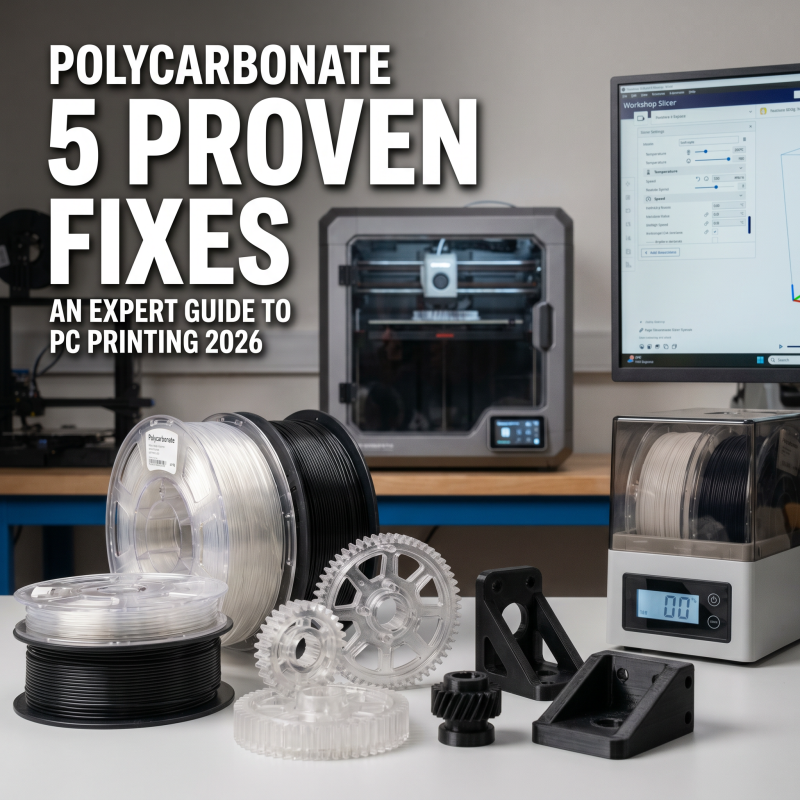
1. Polycarbonate (PC): The Accessible Impact-Resistant Champion
Polycarbonate is often the first material that comes to mind when makers and engineers seek a significant step up in toughness from consumer-grade filaments like PETG or ABS. According to many manufacturers and reviewers, PC is frequently regarded as the strongest consumer-level filament available. Its reputation is well-earned, built upon a foundation of exceptional impact resistance, good tensile strength, and impressive thermal performance.
The Essence of Polycarbonate
At its core, PC is a thermoplastic polymer whose name comes from the carbonate groups in its chemical backbone. You have likely encountered PC in your daily life without realizing it; it is the material used to make bullet-resistant glass, riot shields, and durable eyewear lenses. This real-world association gives us an immediate, intuitive sense of its primary virtue: toughness. It can absorb a tremendous amount of energy, deforming plastically where other materials would simply fracture.
Mechanical Properties and Performance
PC’s calling card is its phenomenal impact strength, which is leagues beyond that of ABS or PETG. This makes it a go-to choice for functional parts that must survive rough handling or potential collisions. Its tensile strength is also respectable, generally surpassing that of other common filaments, which means it holds up well under significant loads. Furthermore, with a glass transition temperature around 147°C, PC parts can operate in environments where PLA or PETG would soften and fail. This high heat resistance allows for its use in automotive components, electronics enclosures, or parts subjected to sterilization.
The Challenges of Printing PC
The power of Polycarbonate does not come without its demands. Printing PC successfully requires a departure from the simple workflows of PLA.
- High Temperature Requirements: PC has a high melting point, necessitating nozzle temperatures in the range of 260°C to 310°C. Likewise, a heated bed is not merely recommended but required, with temperatures of 100°C to 130°C needed to ensure first-layer adhesion and combat warping.
- Warping: PC is notoriously prone to warping, a phenomenon where the corners of a print lift off the build plate due to thermal contraction as the material cools. A heated build chamber is the most effective tool to mitigate this. By maintaining a high ambient temperature (e.g., 70°C or higher), the thermal gradient across the part is reduced, minimizing internal stresses. Without an enclosure, large PC prints are almost certain to fail.
- Hygroscopicity: Like many engineering polymers, PC is hygroscopic, meaning it readily absorbs moisture from the atmosphere. Printing wet PC filament leads to a host of problems, including weak, bubbly prints with a poor surface finish. The water turns to steam in the hot end, creating voids and compromising interlayer adhesion. It is imperative to dry PC filament in a dedicated filament dryer for several hours before printing and to store it in a dry box with desiccant.
Ideal Applications for PC
Given its profile, PC excels in applications where toughness is the primary concern. Its combination of impact strength, tensile strength, and heat resistance makes it suitable for:
- Functional prototypes that need to withstand physical testing.
- Protective housings for electronics or machinery.
- Mechanical parts like gears, levers, and connectors that experience stress.
- Drone frames and components for remote-controlled vehicles that must survive crashes.
For engineers seeking a robust material without venturing into the extreme cost of ultra-polymers, an engineering-grade Polycarbonate filament offers a compelling balance of performance and accessibility.
2. Nylon (Polyamide): The Tough and Durable Workhorse
If Polycarbonate is the rigid shield, Nylon is the flexible, resilient armor. Known chemically as Polyamide (PA), Nylon is a family of synthetic polymers that has been a mainstay in engineering for decades due to its exceptional durability, wear resistance, and low-friction properties. In the world of 3D printing, it serves a different purpose than PC, offering a unique combination of strength and flexibility that makes it one of the most versatile engineering materials.
Understanding the Nylon Family
Nylon is not a single material but a category, with common variants in 3D printing being PA6 and PA12. The number refers to the quantity of carbon atoms in the monomers that form the polymer chain. This seemingly small chemical difference has a significant impact on the material’s properties.
- PA6: Generally has slightly higher tensile strength and stiffness but is also more hygroscopic, meaning it absorbs more moisture from the air.
- PA12: Is more flexible, has better impact resistance at low temperatures, and, most importantly, absorbs significantly less water than PA6. This lower moisture absorption makes PA12 more dimensionally stable and easier to print reliably. For many 3D printing applications, PA12 is the preferred choice. HP’s Multi Jet Fusion technology, for instance, often utilizes PA11 and PA12 for their excellent mechanical properties and reusability (HP, n.d.).
The Unique Strength of Nylon
Nylon’s “strength” is best characterized by the word durability. It possesses good tensile strength, but its true value lies in its fatigue resistance and toughness.
- Fatigue Resistance: Think of bending a paperclip back and forth. After a few cycles, it breaks. This is failure due to fatigue. Nylon can withstand repeated cycles of stress and strain without failing, making it ideal for parts that are constantly moving or vibrating.
- Toughness and Flexibility: Unlike the rigidity of PC, Nylon has a degree of compliance. It can bend and deflect under load, then return to its original shape. This makes it incredibly tough, as it can absorb impact energy through deformation rather than cracking.
- Low Coefficient of Friction: Nylon surfaces are naturally slick, resulting in excellent wear resistance. This property makes it a superior material for creating gears, bearings, living hinges, and other parts that slide or rub against each other.
Printing Considerations for Nylon
Like PC, Nylon is an engineering material that demands respect for its specific needs.
- Extreme Hygroscopicity: Nylon is arguably the most hygroscopic of all common 3D printing filaments. It can absorb enough moisture in a matter of hours to ruin a print. A filament dryer is not optional; it is a fundamental piece of equipment for anyone serious about printing Nylon. Printing it directly from a dry box is the best practice.
- Warping and Adhesion: Nylon is also susceptible to significant warping. A heated bed is necessary (around 70°C to 90°C), but even then, bed adhesion can be tricky. Standard build surfaces like PEI can struggle to hold onto Nylon. Specialized bed adhesives like a PVA-based glue stick or dedicated adhesion surfaces like Garolite (G-10) are often required to ensure a successful first layer.
- Nozzle Temperature: Nylon prints at temperatures between 240°C and 270°C, depending on the specific blend. A high-quality, all-metal hot end is recommended to handle these temperatures reliably without degrading an internal PTFE liner.
Ideal Applications for Nylon
Nylon’s unique blend of toughness, flexibility, and wear resistance makes it the perfect choice for:
- Living hinges and snap-fit enclosures.
- Functional gears, bushings, and bearings.
- Jigs and fixtures that require high durability and are subject to repeated use.
- Parts that require a combination of strength and flexibility, where a rigid material like PC would be too brittle.
3. Carbon Fiber Reinforced Composites: The Kings of Stiffness
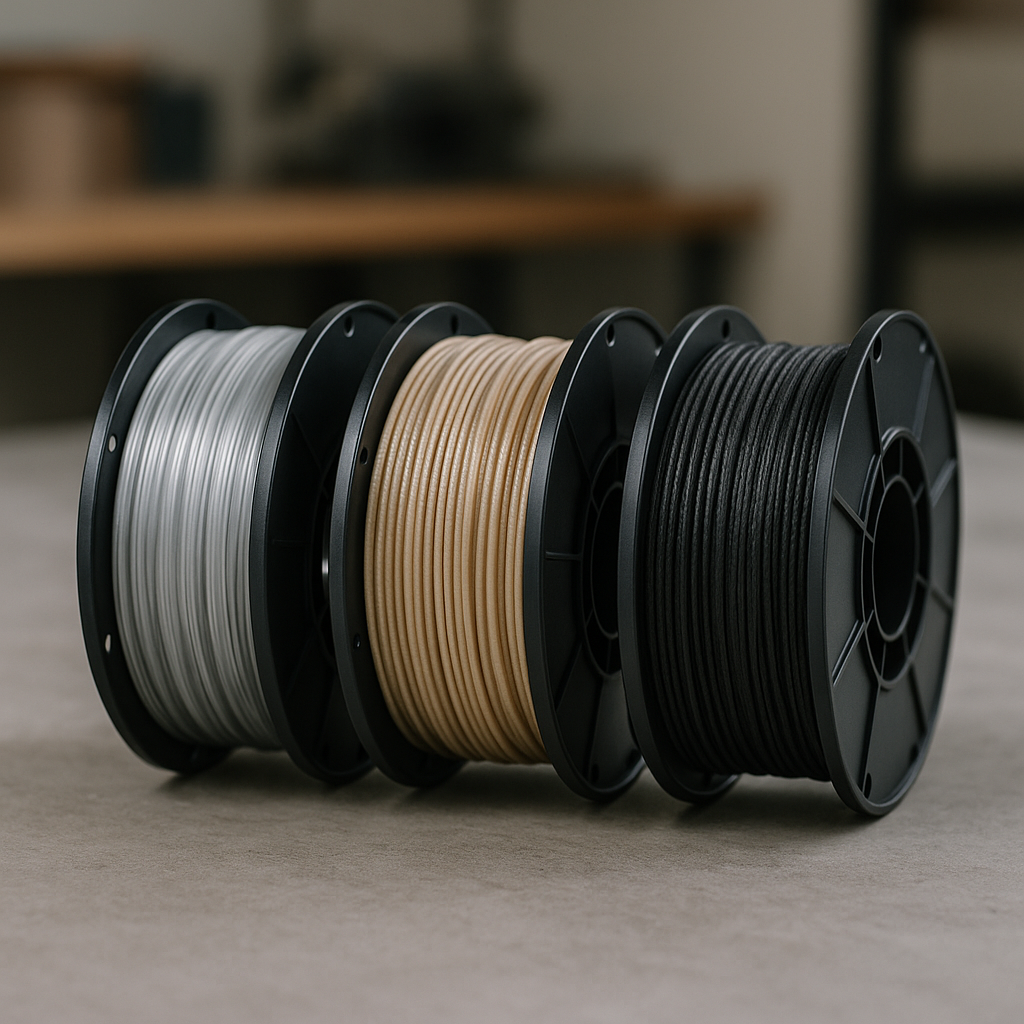
We now transition from pure polymers to composites. When we infuse a base polymer with chopped carbon fibers, we are not merely making a small improvement; we are creating an entirely new class of material. Carbon fiber (CF) reinforced filaments are among the absolute strongest and stiffest materials available to FDM printing, enabling the creation of parts with a strength-to-weight ratio that can rival that of some metals.
The Science of Reinforcement
Imagine making concrete. The mixture of sand, cement, and water is strong under compression but weak under tension. By adding steel rebar, we create reinforced concrete, which is dramatically stronger overall. Carbon fiber acts as the “rebar” for a polymer. The short, chopped fibers, typically mixed into the filament at a concentration of 10-20% by weight, provide a massive boost in stiffness (flexural modulus) and tensile strength.
The polymer matrix (like Nylon, PC, or PETG) binds the fibers together and transfers the load to them. The fibers, which are incredibly strong and stiff on their own, bear the brunt of the stress. The result is a composite part that is significantly more rigid and dimensionally stable than one printed from the base polymer alone. Aesthetically, these materials also produce a beautiful matte black finish that does an excellent job of hiding layer lines, lending a professional look to functional parts (SigmaFilament, 2026).
Let us examine how this reinforcement transforms a familiar material, PETG.
| Property | Standard PETG | Carbon Fiber PETG (CF-PETG) | Improvement |
|---|---|---|---|
| Tensile Strength | ~50 MPa | ~76 MPa | ~52% Increase |
| Flexural Modulus | ~2.1 GPa | ~5.4 GPa | ~157% Increase |
| Heat Deflection Temp | ~70 °C | ~85 °C | ~21% Increase |
| Dimensional Stability | Good | Excellent | Lower thermal expansion, less warping |
As the data shows, the addition of carbon fiber dramatically increases stiffness and moderately increases tensile strength and thermal performance. This makes CF-PETG a far more capable engineering material than its standard counterpart.
Common Carbon Fiber Composites
The beauty of this approach is that we can reinforce various polymers to leverage the best of both worlds.
- CF-Nylon (PA-CF): This is perhaps the most popular composite. It combines the incredible stiffness of carbon fiber with the durability and chemical resistance of Nylon. The resulting parts are exceptionally strong, stiff, and tough, making them suitable for the most demanding applications, such as end-use functional parts in automotive or aerospace, high-performance drone components, or manufacturing jigs.
- CF-Polycarbonate (PC-CF): This composite takes the high impact and heat resistance of PC and adds a major boost in stiffness. It is an excellent choice for parts that need to be both tough and rigid, such as protective equipment or structural components that operate at elevated temperatures.
- CF-PETG: As demonstrated in the table, this material offers a significant performance upgrade over standard PETG while remaining relatively easy to print. It is an excellent entry point into the world of composites, providing enhanced mechanical properties without the extreme printing demands of CF-Nylon or CF-PC.
The Critical Challenge: Abrasion
The incredible stiffness of carbon fiber comes with a significant downside: it is extremely abrasive. Printing a CF-reinforced filament with a standard brass nozzle is like trying to cut granite with a butter knife. The nozzle will be destroyed in a matter of hours, leading to print failures and dimensional inaccuracy.
An upgraded, hardened nozzle is absolutely mandatory for printing any composite filament. Common choices include:
- Hardened Steel: The most common and affordable option. It offers good wear resistance and will last for many kilograms of CF filament.
- Nozzle X (E3D): A proprietary coated nozzle that offers even better wear resistance than hardened steel, along with a non-stick coating that can help reduce material buildup.
- Tungsten Carbide or Ruby-Tipped: These are the ultimate in wear resistance and are essentially a lifetime investment for printing abrasive materials.
Beyond the nozzle, it is also wise to use a larger nozzle diameter (e.g., 0.5mm or 0.6mm) to reduce the chance of the chopped fibers causing a clog (SigmaFilament, 2026).
Ideal Applications for Carbon Fiber Composites
The high stiffness and strength-to-weight ratio of CF composites make them ideal for:
- Metal Replacement Parts: Creating lightweight parts that can replace aluminum components in certain applications.
- Manufacturing Aids: Jigs, fixtures, and end-of-arm tooling that must be lightweight for robotics but extremely rigid for precision.
- High-Performance Prototyping: Creating prototypes that can withstand real-world functional testing.
- End-Use Parts: Components for drones, motorsport, and industrial machinery where performance is paramount. A high-quality carbon fiber reinforced nylon can deliver parts with truly exceptional mechanical properties.
4. Glass Fiber Reinforced Composites: The Balanced and Resilient Alternative
While carbon fiber often steals the spotlight in the world of composites, its sibling, glass fiber (GF), offers a different and equally compelling set of advantages. By reinforcing a base polymer with chopped glass fibers instead of carbon, we create a material that strikes a unique balance between performance, cost, and specific functional properties. It is a mistake to view glass fiber as merely a “cheaper” version of carbon fiber; it is a distinct material class with its own areas of excellence.
Glass Fiber vs. Carbon Fiber: A Tale of Two Reinforcements
To understand the role of GF composites, one must appreciate their fundamental differences from CF composites.
- Stiffness and Strength: Carbon fiber is significantly stiffer and slightly stronger than glass fiber. For applications where maximum rigidity and minimal weight are the absolute priorities, CF remains the top choice.
- Toughness and Brittleness: Here, the tables turn. Glass fibers are less brittle than carbon fibers. This means that a GF-composite part will often have better impact resistance and be less prone to catastrophic failure (snapping) than its CF counterpart. It can flex more before breaking, making it a “tougher” material in that specific sense.
- Electrical Properties: Carbon fiber is electrically conductive. This can be an advantage for applications requiring static dissipation but is a major drawback for electronic housings or parts that need to be electrically insulated. Glass fiber, on the other hand, is an excellent electrical insulator, making GF composites the ideal choice for such applications.
- Cost and Color: Glass fiber is less expensive to produce than carbon fiber, which translates to a more affordable filament. Additionally, since glass fibers are transparent, it is possible to produce GF composites in a variety of colors, whereas CF composites are almost exclusively black.
A Common Example: ASA-GF
A popular glass fiber composite is ASA-GF, which reinforces Acrylonitrile Styrene Acrylate (ASA) with glass fibers. ASA is a polymer similar to ABS but with superior UV and weather resistance, making it suitable for outdoor applications. Adding glass fibers can significantly raise the stiffness and load-bearing capacity of ASA, a polymer that resists UV radiation and environmental degradation better than other common extrusion thermoplastics (Wickramasinghe et al., 2026). This creates a material perfect for durable outdoor fixtures, automotive exterior components, or sporting goods.
Printing Considerations for Glass Fiber Composites
The printing requirements for GF composites are very similar to those for CF composites, with one primary shared characteristic: abrasion.
- Hardened Nozzle Required: Just like carbon fiber, glass fibers are highly abrasive and will quickly destroy a brass nozzle. A hardened steel, coated, or ruby-tipped nozzle is essential for printing these materials.
- Base Polymer Dictates Settings: The printing temperatures, bed adhesion strategies, and enclosure requirements are determined by the base polymer. Printing ASA-GF will require settings suitable for ASA (high bed temperature, enclosure to prevent warping), while printing PA-GF will require settings for Nylon (drying, specific bed adhesives).
- Moisture Management: If the base polymer is hygroscopic (like Nylon or PETG), the GF composite filament will be as well. Proper drying and storage protocols remain just as important.
Ideal Applications for Glass Fiber Composites
GF composites shine in applications where a balance of properties is needed:
- Electronic Housings and Insulators: Their electrical insulating properties are a key advantage over CF composites.
- Outdoor and Automotive Parts: Materials like ASA-GF are perfect for parts that need to be strong, tough, and resistant to UV radiation and weathering.
- Functional Parts Requiring Durability: For components that may experience impacts or require a degree of flex without failing, the added toughness of GF can be preferable to the extreme stiffness of CF.
- Cost-Effective Strong Parts: When the absolute highest stiffness is not required, GF composites provide a significant mechanical boost over unfilled polymers at a more accessible price point than CF composites.
5. ULTEM 1010 (PEI): The High-Temperature, Certified Performer
We now ascend into the realm of high-performance polymers, materials developed for the most demanding industrial environments. The first of these is Polyetherimide (PEI), most commonly known by its trade name, ULTEM. Specifically, ULTEM 1010 resin is a grade that has found widespread use in additive manufacturing for its exceptional combination of thermal resistance, chemical inertness, and inherent flame retardancy.
The Power of PEI
ULTEM is an amorphous thermoplastic that boasts one of the highest dielectric strengths of any thermoplastic, making it an outstanding electrical insulator. But its primary claims to fame are its thermal stability and mechanical strength at elevated temperatures. While materials like PC or Nylon begin to soften well below 200°C, ULTEM 1010 maintains its structural integrity at continuous-use temperatures up to 170°C and possesses a glass transition temperature of 217°C.
According to industry analyses, ULTEM 1010 exhibits the highest heat resistance, chemical resistance, and tensile strength among FDM thermoplastics (xometry.pro). This allows it to be used in applications where parts are exposed to steam autoclaving for sterilization or are in close proximity to high-heat components.
Certifications and Special Properties
What truly sets ULTEM 1010 apart for certain industries are its certifications. It has biocompatibility ratings (ISO 10993/USP Class VI) and food-contact certifications (NSF 51), making it one of the few 3D printing materials suitable for creating custom medical tools, surgical guides, or food-production aids. Furthermore, it has inherent flame retardancy (UL94 V-0 rating), meaning it is self-extinguishing and produces low smoke, a property that is highly valued in aerospace and automotive applications.
The Extreme Demands of Printing ULTEM
Printing a material like ULTEM is not a task for a standard desktop 3D printer. It requires a specialized industrial machine designed for high-performance polymers.
- Extreme Temperatures: ULTEM 1010 requires an extruder temperature of 350-380°C and a build plate temperature of 120-160°C. These temperatures are far beyond the capabilities of most consumer-grade machines.
- Actively Heated Build Chamber: This is the most critical requirement. To print ULTEM successfully without catastrophic warping and delamination, the entire build environment must be heated to a temperature just below the material’s glass transition temperature. For ULTEM, this means a chamber temperature of 180°C or higher. This minimizes thermal stress and ensures strong interlayer adhesion.
- Filament Management: Like other engineering polymers, ULTEM is hygroscopic and must be meticulously dried at a high temperature (e.g., 120°C for at least 4 hours) before printing and stored in a heated dry box.
Ideal Applications for ULTEM 1010
The unique combination of high heat resistance, chemical inertness, strength, and certifications makes ULTEM 1010 the material of choice for:
- Aerospace Applications: Interior components, ducting, and jigs that require flame retardancy and low smoke production.
- Automotive “Under-the-Hood” Components: Housings, connectors, and prototypes that must withstand high temperatures.
- Medical and Food Production: Custom surgical guides, fixtures, and end-use parts that require biocompatibility and sterilizability.
- Advanced Manufacturing Tools: High-temperature molds, patterns, and fixtures for industrial processes.
6. PEEK: The Apex Predator of Polymer Filaments
At the very summit of the 3D printing material pyramid sits Polyether Ether Ketone, or PEEK. If ULTEM is a high-performance material, PEEK is an ultra-performance material. It represents the pinnacle of what is currently achievable with polymer-based FDM printing, offering a set of properties that allows it to replace metals like aluminum and even steel in some of the world’s most challenging applications.
Unparalleled Performance Characteristics
PEEK is a semi-crystalline thermoplastic belonging to the Polyaryletherketone (PAEK) family. Its performance profile is nothing short of extraordinary.
- Extreme Thermal Resistance: PEEK has a melting point of around 343°C and a continuous service temperature of up to 260°C. It retains a significant portion of its mechanical properties even at these extreme temperatures, where almost all other plastics would have melted or degraded.
- Exceptional Mechanical Strength: PEEK exhibits outstanding tensile strength, stiffness, and fatigue resistance, maintaining these properties across a very wide temperature range. There are even carbon-fiber-reinforced PEEK (PEEK-CF) grades that push these values into the territory of metals.
- Superb Chemical and Hydrolysis Resistance: PEEK is virtually inert to a vast range of organic and inorganic chemicals, including acids, bases, and hydrocarbons. It also shows minimal degradation when exposed to high-pressure steam over long periods, making it superior to even ULTEM in applications involving repeated sterilization.
- Biocompatibility: Medical-grade PEEK is widely used for creating long-term implantable devices in the human body, such as spinal fusion cages and cranial plates, due to its biocompatibility and radiolucency (it does not interfere with medical imaging).
The Pinnacle of Printing Difficulty
As one might expect, printing the highest-performing polymer comes with the highest level of difficulty. The requirements for printing PEEK are even more stringent than for ULTEM and are exclusively the domain of high-end, industrial 3D printers that can cost tens or hundreds of thousands of dollars.
- Astronomical Temperatures: PEEK requires an extruder temperature of 400-450°C. The build plate must be heated to 120-145°C.
- High-Temperature Heated Chamber: A chamber heated to at least 120°C is necessary to control the crystallization process of PEEK. As a semi-crystalline material, the rate at which it cools determines its internal structure and, therefore, its final mechanical properties. Improper thermal management results in a weak, brittle part full of internal stresses.
- Specialized Hardware: Everything in the printer’s ecosystem must be designed to withstand these temperatures, from the hot end and extruder components to the wiring and motion system.
Ideal Applications for PEEK
PEEK is not a material for everyday problems. It is a solution for the most extreme engineering challenges.
- Medical Implants: Custom spinal, orthopedic, and maxillofacial implants.
- Aerospace Components: Structural parts, thermal insulators, and high-performance connectors that require a combination of low weight, high strength, and extreme temperature resistance.
- Oil and Gas Industry: Seals, valves, and sensors that must operate in high-pressure, high-temperature, and chemically corrosive downhole environments.
- Metal Replacement: Replacing machined aluminum or stainless steel parts to save weight without a significant compromise in performance in specific applications.
7. PEKK: The Refined and Processable High-Performance Alternative
Our final material, Polyetherketoneketone (PEKK), is a close relative of PEEK, belonging to the same elite PAEK family of polymers. While it shares many of PEEK’s extraordinary properties, PEKK possesses a unique chemical structure that gives it a distinct processing advantage, making it a compelling alternative for certain advanced applications. It can be thought of not as a lesser PEEK, but as a more “tunable” one.
The Chemistry of Controllability
The key difference between PEEK and PEKK lies in their molecular backbone. The ratio of “ether” to “ketone” linkages in the polymer chain can be varied during the synthesis of PEKK. This ability to tune the molecular structure allows manufacturers to control the material’s melting temperature and, more importantly, its crystallization rate.
Why does this matter? As a semi-crystalline polymer, PEEK has a very narrow window between its melting temperature and its glass transition temperature. It crystallizes very rapidly as it cools, which can induce significant internal stresses in a 3D printed part, leading to warping and poor layer adhesion if not managed perfectly. PEKK, with its slower and more controllable crystallization rate, is more forgiving. It allows for a wider processing window and can result in parts with better interlayer adhesion and lower internal stress, making it somewhat easier to print successfully than PEEK. This improved processability can lead to superior mechanical performance in the final printed part, even if the raw datasheet values appear similar to PEEK’s.
Amorphous vs. Crystalline States
This “tunability” also allows PEKK to be printed in either an amorphous (transparent, less chemically resistant) or semi-crystalline (opaque, higher performance) state, depending on the thermal post-processing. A part can be printed in its amorphous state for better layer bonding and then annealed (heat-treated) to achieve the final, high-performance crystalline structure. This level of process control is a significant advantage for producing complex geometries.
Performance Profile of PEKK
PEKK stands shoulder-to-shoulder with PEEK in terms of performance:
- High Thermal Resistance: It offers a continuous service temperature and heat deflection temperature comparable to PEEK.
- Excellent Mechanical Properties: It boasts elite-level strength, stiffness, and fatigue resistance.
- Superior Chemical Resistance: Like PEEK, it is resistant to a wide array of aggressive chemicals.
- Inherent Flame Retardancy: It shares the low smoke, self-extinguishing properties of the PAEK family.
Printing Requirements for PEKK
The printing requirements for PEKK are nearly as demanding as for PEEK, requiring a high-performance industrial printer.
- High Temperatures: Extruder temperatures are in the 360-400°C range, with bed temperatures around 120-140°C.
- Heated Build Chamber: An actively heated chamber (120°C or higher) is still essential to control cooling and promote layer fusion.
- Filament Drying: Meticulous drying and moisture-controlled storage are non-negotiable.
Ideal Applications for PEKK
PEKK is often chosen over PEEK in applications where complex geometries might lead to high internal stresses or where the absolute best possible interlayer adhesion is required.
- Complex Aerospace and Industrial Parts: Where the improved processability can lead to a more reliable and stronger final part.
- Chemically Resistant Manifolds: For fluid handling systems in chemical processing or analytical equipment.
- Metal Replacement: In scenarios where part complexity makes PEEK difficult to print successfully.
- Applications requiring a balance of PEEK-level performance with a slightly more forgiving printing process.
Frequently Asked Questions (FAQ)
What is the strongest 3D printing material I can use on a basic desktop printer?
For a standard desktop printer without a heated enclosure, your strongest option is likely a Carbon Fiber reinforced PETG (CF-PETG). It offers a significant boost in stiffness and strength over standard materials like PLA or PETG and can often be printed without a heated chamber, although it absolutely requires a hardened steel nozzle to prevent abrasion.
How much stronger is a carbon fiber filament compared to regular PLA?
A carbon fiber reinforced filament, such as CF-Nylon, is dramatically stronger than PLA in almost every metric. It can have 2-4 times the tensile strength, over 5-10 times the stiffness (flexural modulus), and a much higher heat resistance. However, it is also more brittle and has lower impact strength than a tough material like unreinforced Nylon.
What is the difference between PEEK and ULTEM?
Both are high-performance polymers, but PEEK generally sits a tier above ULTEM. PEEK has a higher continuous service temperature (around 260°C vs. 170°C for ULTEM), superior chemical resistance, and better mechanical performance at extreme temperatures. ULTEM’s advantages are its lower cost and its exceptional dielectric strength, making it a top choice for high-performance electrical insulators.
Do I really need to dry my filament?
Yes, absolutely. For engineering materials like Nylon, PC, and their composites, drying is not an optional step. These materials are hygroscopic and absorb moisture from the air. Printing them “wet” leads to steam expansion in the nozzle, causing bubbles, voids, poor layer adhesion, and a drastic reduction in the part’s final strength. A dedicated filament dryer is a necessary investment for working with these materials.
How does the orientation I print my part in affect its strength?
Print orientation has a massive effect on the strength of an FDM part. Parts are strongest when tensile forces are applied along the length of the printed lines (the X-Y plane) and weakest when forces are applied across the layer lines (the Z-axis), trying to pull them apart. The bond between layers is much weaker than the extruded line itself. For a structural part, you should always orient it so that the primary forces are not pulling the layers apart.
Is there a single strongest 3d printing material for all applications?
No, there is no single “best” or “strongest” material. The ideal choice is entirely dependent on the application. A drone frame needs the impact resistance of Polycarbonate or the stiffness-to-weight of CF-Nylon. A gear needs the wear resistance and durability of Nylon. A medical implant needs the biocompatibility and strength of PEEK. The task of an engineer is to match the material’s properties to the part’s functional requirements.
Can 3D printed parts be as strong as traditionally manufactured parts?
For some applications, yes. With the right material, like PEEK-CF, and optimized print settings, 3D printed parts can replace machined aluminum components. However, FDM printed parts are inherently anisotropic (weaker in the Z-direction). They cannot match the isotropic strength of a solid block of metal or an injection-molded part. The advantage of 3D printing lies in its ability to create complex geometries and custom parts on demand.
A Final Contemplation on Material Selection
The journey through these seven remarkable materials illuminates a profound truth about engineering: the pursuit of strength is a journey of specialization. We began by deconstructing the very notion of “strong,” seeing it splinter into distinct concepts of tensile resistance, impact toughness, and rigidity. We have seen how each material, from the accessible toughness of Polycarbonate to the unyielding performance of PEEK, offers a unique answer to a specific set of challenges.
The selection of the strongest 3d printing material is not a simple choice of the one with the highest number on a datasheet. It is an act of careful consideration, a dialogue between the demands of the application and the character of the material. It requires us to ask not just “What is strong?” but “What kind of strength do I need, and what am I willing to do to achieve it?” The materials that demand the most from our machines and our processes are the ones that offer the greatest rewards in performance, pushing the boundary of what we can create, one layer at a time.
References
- HP. (n.d.). Which 3D printing material is the strongest? HP.
- SigmaFilament. (2026, January 25). Actionable buyer’s guide: 7 factors for success with carbon fiber PETG in 2026. https://sigmafilament.com/carbon-fiber-petg-printing-guide/
- Staff, A. (2023, November 28). The strongest 3D printer filament. All3DP.
- Wickramasinghe, S., Jeewantha, J., & Manalo, A. (2026). Low-velocity impact response and damage mechanisms of 3D printed ASA-glass fiber composites. Polymer Composites, 47(16), 14926–14939. https://doi.org/10.1002/pc.71261
- Xometry. (n.d.). 10 strongest materials for 3D printing. https://xometry.pro/en/articles/3d-printing-strong-materials/
Last reviewed and updated: January 2026. Author: SigmaFilament Engineering Team. For custom filament solutions and wholesale inquiries, contact our team.