

5 Data-Backed Reasons for The Economics of Bulk Spools: Why Print Farms Are Switching to 3kg, 5kg, and 10kg Formats

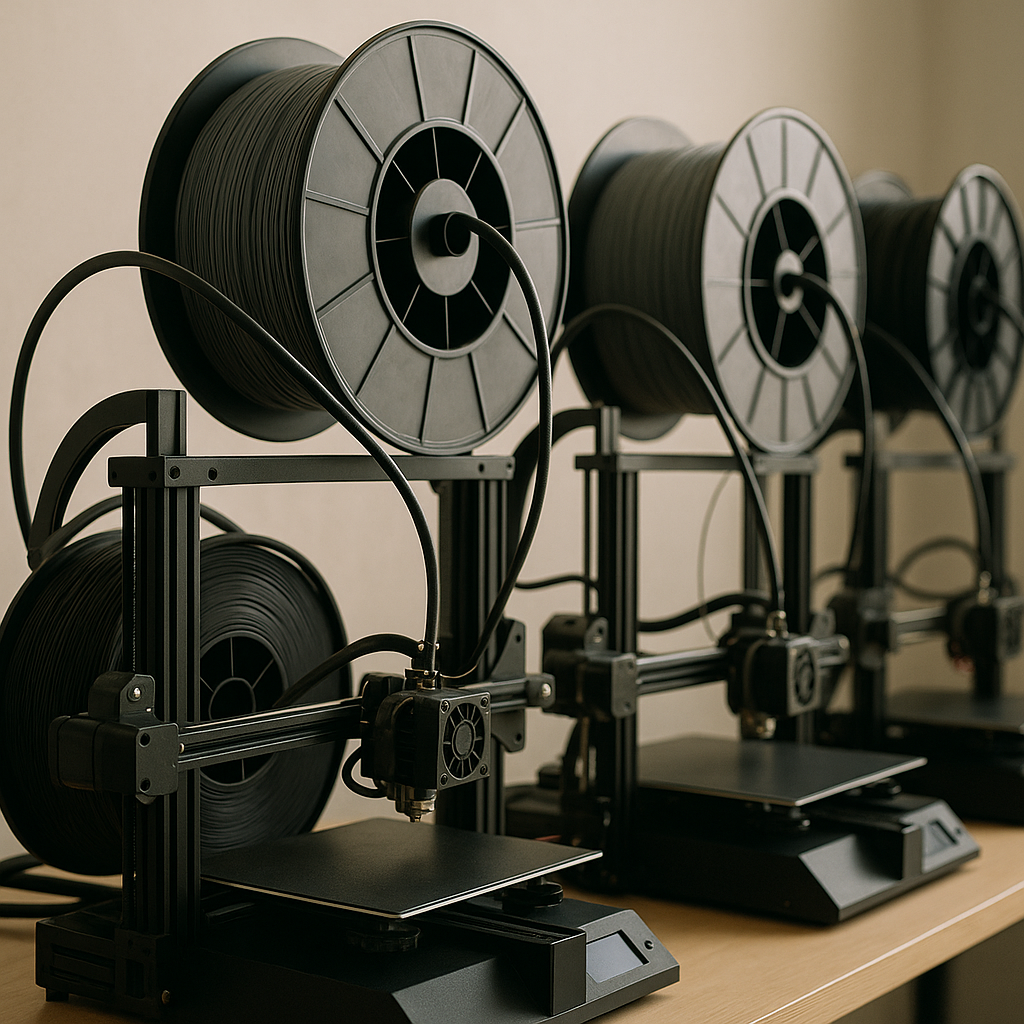
Abstract
The operational calculus of professional 3D printing services is undergoing a significant transformation, driven by a strategic shift away from conventional 1kg filament spools toward larger, bulk formats of 3kg, 5kg, and 10kg. This analysis examines the economic and logistical imperatives compelling this transition within commercial print farms. A central argument is that the adoption of bulk spools offers a multi-faceted value proposition that extends beyond simple material cost reduction. It encompasses substantial savings in labor through minimized spool changeovers, a marked increase in machine uptime and overall production throughput, and streamlined inventory management. Furthermore, the use of larger spools can contribute to enhanced print consistency by utilizing filament from a single manufacturing batch for large projects, thereby reducing variability. This investigation synthesizes cost-benefit analysis, operational efficiency metrics, and material science considerations to provide a comprehensive framework for understanding why the economics of bulk spools present a compelling case for scalability and profitability in the additive manufacturing sector.
Key Takeaways
- Reduce per-kilogram filament costs by up to 30% or more by purchasing in bulk.
- Minimize labor-intensive spool changes, freeing up technicians for more valuable tasks.
- Increase printer uptime and throughput by enabling longer, uninterrupted print jobs.
- Understand the economics of bulk spools to make your print farm more competitive.
- Simplify inventory and reduce packaging waste by consolidating filament stock.
- Improve print quality and consistency for large parts with single-batch filaments.
- Decrease the risk of print failures associated with mid-print filament run-outs.
Table of Contents
- Unpacking the Direct Cost Savings Per Kilogram
- Minimizing Labor Costs Through Reduced Changeovers
- Maximizing Printer Uptime and Production Throughput
- Streamlining Logistics and Inventory Management
- Enhancing Material Consistency and Print Quality
- Practical Considerations for Adopting Bulk Spools
- Frequently Asked Questions (FAQ)
- Conclusion
- References
Unpacking the Direct Cost Savings Per Kilogram
The journey into scaling a 3D printing operation often begins with a simple, yet profound, economic realization. The familiar 1kg spool, a staple of hobbyists and small-scale producers, carries with it a hidden overhead that becomes increasingly burdensome as production volume grows. To truly comprehend the shift towards bulk formats, one must first deconstruct the anatomy of a standard spool’s price tag. It is not merely the cost of the polymer itself; it is an amalgamation of manufacturing, packaging, marketing, and logistical expenses. When a print farm transitions from purchasing ten individual 1kg spools to a single 10kg spool, it is not just buying plastic; it is fundamentally altering its position within the supply chain and capitalizing on economies of scale.
This initial exploration delves into the foundational economic argument for bulk spools: the direct, quantifiable reduction in the cost per kilogram of filament. We will dissect the manufacturing and packaging costs that are disproportionately high for smaller spools, present a comparative analysis to illuminate the potential savings, and project the long-term financial impact of this strategic procurement decision. The numbers paint a clear picture of enhanced profitability and a more sustainable cost structure for any serious production environment.
The Mathematics of Manufacturing and Packaging
Let us consider the physical object of a 1kg spool of filament. The price you pay is a composite. It includes the raw polymer pellets, the energy to extrude them into a precise diameter, the plastic or cardboard spool it is wound onto, the vacuum-sealed bag with a desiccant packet, the printed cardboard box, and the labor involved in all stages of this process. Many of these costs—the spool, the bag, the box, the desiccant, and the packaging labor—are relatively fixed. The cost of a plastic spool for a 1kg roll is not significantly different from the core component of a larger roll system, and the packaging for a 1kg spool is not ten times cheaper than that for a 10kg spool.
Herein lies the economic inefficiency of small-scale purchasing for large-scale operations. With a 1kg spool, these fixed overhead costs are amortized over a relatively small quantity of material. Imagine these fixed costs amount to $3 per unit. For a 1kg spool where the material itself costs $15, those fixed costs represent 20% of the material cost. Now, consider a 10kg spool. The packaging might be larger and slightly more expensive, perhaps costing $6. If the material cost is $150 (10 x $15), the packaging now only represents 4% of the material cost. The manufacturer saves on packaging materials, reduces labor time per kilogram, and optimizes shipping and storage, as a single large box is more efficient to handle than ten smaller ones. These savings are then passed on to the consumer. This is the fundamental principle driving down the per-kilogram price of bulk filament. It is a classic example of economies of scale, where the cost per unit of production decreases as the volume of production increases.
A Comparative Cost Analysis: 1kg vs. Bulk Spools
To ground this concept in practical terms, let us construct a comparative model. The prices below are illustrative, reflecting typical market rates, but they effectively demonstrate the economic principle at play. A print farm must look beyond the sticker price of a single unit and evaluate the cost per unit of weight, which is the true metric of material expense.
| Spool Size | Typical Unit Price (USD) | Cost Per Kilogram (USD) | Percentage Savings vs. 1kg Spool |
|---|---|---|---|
| 1kg | $22.00 | $22.00 | 0% |
| 3kg | $57.00 | $19.00 | 13.6% |
| 5kg | $85.00 | $17.00 | 22.7% |
| 10kg | $150.00 | $15.00 | 31.8% |
As the table clearly illustrates, the financial incentive is substantial. A print farm consuming 100kg of PLA per month would spend $2,200 using standard 1kg spools. By switching to 5kg spools, that monthly expenditure drops to $1,700, a savings of $500. Annually, this translates to a $6,000 reduction in material costs alone. If the farm is able to adopt 10kg spools, the monthly cost falls to $1,500, saving $700 per month or $8,400 per year. This is not a marginal gain; it is a significant improvement to the bottom line that can be reinvested into new equipment, research and development, or passed on to clients in the form of more competitive pricing. The argument is not merely academic; it is a tangible path to increased profitability. The community has taken notice, with operators of small print farms often citing the economic advantages as a primary driver for their switch to 3kg or 5kg spools.
Quantifying the Long-Term Financial Impact
The financial benefits of adopting bulk spools compound over time and scale. For a nascent print farm, the initial savings of a few hundred dollars a month might seem modest. However, as the operation grows, so does its filament consumption, and the absolute value of the savings grows in lockstep. An operation that expands to consume 500kg of filament per month would save $42,000 annually by choosing 10kg spools over 1kg spools. This capital can be the difference between stagnation and growth, enabling the purchase of several new industrial-grade printers each year.
Furthermore, this cost advantage enhances a print farm’s competitive positioning. When bidding on large production runs, a farm with a lower material cost basis can offer a more attractive price without sacrificing its profit margin. This allows it to win contracts that might be unprofitable for competitors who are still reliant on more expensive 1kg spools. In a competitive market, such structural cost advantages are a powerful tool for capturing market share. The decision to integrate bulk filament is therefore not just an operational tweak; it is a strategic financial maneuver. It reflects a maturation of the business model from ad-hoc production to systematic, cost-optimized manufacturing. By partnering with a supplier that specializes in high-volume output, such as a production partner for OEM/ODM filament, a print farm can secure a stable and cost-effective supply chain, further solidifying its financial foundation.
Minimizing Labor Costs Through Reduced Changeovers
Beyond the direct and immediate savings on material costs, the economics of bulk spools reveal a second, equally compelling layer of value: the reduction of indirect labor costs. In any manufacturing environment, time is a finite and expensive resource. The process of changing a filament spool, while seemingly trivial, is a non-value-added activity. It is a necessary interruption that consumes technician time, halts production, and introduces a point of potential failure. When a print farm operates a fleet of machines, these small interruptions accumulate, creating a significant drain on labor resources and operational efficiency.
This section examines the hidden expense of manual intervention in the printing process. We will quantify the time and associated cost of a single spool changeover and then extrapolate that cost across the operational lifecycle of different spool sizes. The analysis will demonstrate how transitioning to 3kg, 5kg, and 10kg formats liberates valuable human resources, allowing them to be reallocated from mundane maintenance tasks to activities that generate real value, such as quality control, post-processing, and new product development.
The Hidden Expense of Manual Intervention
Let us meticulously break down the sequence of events involved in a typical filament changeover. It is not as simple as swapping one spool for another. The process involves several steps:
- Detection and Pause: A technician must first notice that a spool is nearing its end or rely on a sensor to pause the print. This pause, if not perfectly timed, can leave a visible seam on the printed object.
- Machine Interaction: The technician approaches the printer, navigates the interface to initiate the unload sequence.
- Heating and Unloading: The hotend must often be brought to temperature. The remaining filament is then retracted and removed from the extruder and filament path.
- Spool Replacement: The empty spool is removed from its holder, and the new spool is mounted. Bulk spools, due to their weight, may require more robust mounting solutions, a consideration we will address later.
- Filament Loading and Purging: The end of the new filament is trimmed and fed into the filament path and extruder. The technician then initiates the load sequence, purging the hotend of any old material or color until the new filament flows cleanly. This purge material is waste.
- Resumption and Verification: The print is resumed, and the technician must often monitor the first few subsequent layers to ensure proper adhesion and extrusion, confirming that the changeover did not introduce any defects.
Each of these steps takes time. A swift and practiced changeover might take five minutes, but a more realistic average, accounting for walking to the machine, minor troubleshooting, and verification, is closer to 10-15 minutes (Instagram, 2021). For a farm with 20 printers, if even five of them require a spool change during a single shift, that is over an hour of a technician’s time dedicated solely to feeding the machines. This is time that is not spent on finishing parts, preparing new jobs, or maintaining equipment.
Calculating the Time-Value of Uninterrupted Printing
The true cost of these interruptions becomes stark when we compare the operational reality of using different spool sizes for a large project. Let us imagine a print farm has a contract to produce an order requiring 50kg of PETG.
| Metric | Using 1kg Spools | Using 5kg Spools | Using 10kg Spools |
|---|---|---|---|
| Total Filament Required | 50 kg | 50 kg | 50 kg |
| Number of Spool Changes | 49 | 9 | 4 |
| Time per Changeover (avg.) | 10 minutes | 10 minutes | 10 minutes |
| Total Labor Time for Changes | 490 minutes (8.17 hours) | 90 minutes (1.5 hours) | 40 minutes (0.67 hours) |
| Labor Cost (at $25/hr) | $204.25 | $37.50 | $16.75 |
| Reduction in Labor Cost | – | $166.75 | $187.50 |
The analysis is illuminating. Simply by switching from 1kg to 5kg spools, the print farm saves nearly 7 hours of direct labor time and over $166 in wages for a single 50kg job. If the farm can utilize 10kg spools, the savings are even more dramatic. Extrapolated over a year of continuous production, this represents hundreds, if not thousands, of hours of reclaimed labor. This is time that can be used to expand the farm’s capacity without increasing headcount, directly boosting the productivity of each employee. The argument becomes undeniable: frequent spool changes are a systemic inefficiency that bulk filament directly resolves.
Reallocating Human Resources to Value-Added Tasks
The benefit of minimizing spool changes is not just about cost savings; it is about strategic resource allocation. A technician who is constantly reacting to filament run-outs is trapped in a cycle of low-value maintenance. A technician in a farm that uses bulk spools is freed to engage in higher-level, proactive work.
What are these value-added tasks?
- Enhanced Quality Control: More time can be dedicated to inspecting finished parts for dimensional accuracy, surface finish, and mechanical integrity, reducing the rate of defects that reach the client.
- Complex Post-Processing: Technicians can perform more intricate post-processing work, such as support removal on complex geometries, sanding, painting, or assembly of multi-part products. This allows the farm to offer more finished, higher-margin products.
- Proactive Machine Maintenance: Instead of reacting to problems, technicians can perform preventative maintenance, such as calibrating machines, cleaning components, and upgrading firmware, which reduces unexpected downtime.
- Process Optimization and R&D: Liberated time can be invested in testing new materials, optimizing print profiles for speed and quality, and developing new applications for the farm’s technology. This is the work that drives innovation and long-term competitive advantage.
By reducing the monotonous task of spool swapping, print farm managers empower their teams to become more engaged, skilled, and productive. The adoption of bulk spools facilitates a shift in the workforce’s focus from merely keeping the printers running to actively improving the quality and capability of the entire operation. This human element is a critical component of the economics of bulk spools, transforming a simple material choice into a catalyst for organizational development.
Maximizing Printer Uptime and Production Throughput
In the world of manufacturing, the most valuable asset is often time, specifically the productive time of the machinery. A 3D printer only generates revenue when it is extruding filament. Any period it sits idle—whether paused for a spool change, stopped due to a run-out failure, or waiting for manual intervention—is a direct loss of potential output and income. The transition to bulk 3kg, 5kg, and 10kg spools is a direct strategy for maximizing this productive time, known as printer uptime. By enabling longer, uninterrupted print jobs, these larger formats fundamentally increase the production capacity of each machine in a print farm.
This section will analyze how continuous operation, facilitated by bulk spools, compounds to create a significant increase in overall throughput. We will explore the critical issue of eliminating print failures caused by unexpected filament run-outs, a common and costly problem with smaller spools. Finally, we will demonstrate how this enhanced uptime allows a print farm to effectively scale its production output without necessarily needing to invest in a proportional number of new printers, representing a more capital-efficient path to growth.
The Compounding Effect of Continuous Operation
Consider a single 3D printer. If it is running a series of jobs that each take 12 hours, using 1kg spools might mean a changeover is required for every print. As established, each changeover can consume 10-15 minutes of non-productive time. While a single 15-minute pause may seem insignificant, the effect is cumulative. Over the course of a week with 14 such print jobs, that equates to 210 minutes, or 3.5 hours, of lost print time on a single machine. For a farm of 20 printers, this could represent 70 hours of lost production capacity every week—the equivalent of having nearly two entire printers sitting completely idle.
Now, let us re-examine this scenario with 5kg spools. A single spool can now sustain four consecutive 12-hour prints before needing a change. The number of changeovers per week on our hypothetical machine drops from 14 to about 3 or 4. The lost print time plummets from 3.5 hours to just under one hour. The machine’s uptime, the percentage of time it is actively printing, increases substantially. This is the compounding effect: small savings in time on each job add up to a massive increase in available production hours across the entire farm. This additional capacity does not require more space, more power, or more machines; it is unlocked simply by reducing the frequency of interruptions. This is a powerful lever for increasing revenue, as the farm can now take on more work with its existing hardware infrastructure.
Eliminating Print Failures from Mid-Print Spool Swaps
One of the most frustrating and costly events in a 3D printing operation is a print failure, especially one that occurs deep into a long print job. A 48-hour print that fails at the 47th hour represents a total loss of all the material, energy, and machine time invested up to that point. A primary and entirely preventable cause of such failures is the filament running out unexpectedly mid-print.
While filament run-out sensors are a standard feature on many modern printers, they are not infallible. Sometimes the sensor fails to trigger, the filament snaps just before the sensor, or the pause-and-resume function creates a weak point in the layer, causing the part to delaminate or break later. Even when the system works perfectly, the pause itself can create a visible “zipper” or seam on the surface of the print, which may be unacceptable for aesthetic or functional parts, forcing the part to be scrapped.
Bulk spools offer a simple and robust solution to this entire category of print failures. A 5kg spool contains approximately 1.6 kilometers of 1.75mm PLA filament. This is enough material to complete even extremely large or long-duration prints without any need for a mid-print swap. A farm operator can confidently start a 72-hour print on a Friday afternoon, knowing that the machine has more than enough material to run uninterrupted throughout the entire weekend. This peace of mind is invaluable, but the economic benefit is concrete. By virtually eliminating filament run-out as a cause of failure, the farm reduces material waste, saves on lost machine hours, and improves its overall success rate, leading to more predictable scheduling and more reliable delivery times for clients. Some operators have noted that they have seen print farms that “don’t go bigger than 5 kg usually” because that size provides a great balance of long print times and manageable spool handling (-while-1kg-spools-are-$13kg/)).
Scaling Production Without Scaling Printer Count
The logical conclusion of increased uptime and reduced failures is a direct increase in production throughput. If each printer in a 20-machine farm gains an average of three hours of productive time per week by switching to bulk spools, the farm as a whole gains 60 hours of production capacity. This is the equivalent of adding one and a half new printers to the fleet, running 24/7, without the associated capital expenditure of nearly $5,000-$10,000 for new machines, not to mention the additional space, power, and maintenance they would require.
This concept of “virtual expansion” is a cornerstone of lean manufacturing principles. Before investing in new capital equipment, an operation should first seek to maximize the efficiency of its existing assets. The adoption of bulk spools is a prime example of this principle in action. It allows a print farm to increase its revenue-generating potential and take on a larger volume of work by optimizing its internal processes rather than through costly expansion.
For a business looking to scale, this is a critical strategic advantage. It means that growth in revenue does not have to be directly tied to growth in capital expenditure. The business can become more profitable and more capital-efficient as it grows. By focusing on process improvements like the switch to bulk filament, a print farm can build a more resilient, scalable, and profitable business model, ready to compete in an increasingly demanding market. This is particularly true when dealing with a broad filament portfolio that includes engineering-grade materials, where print times are often longer and material costs are higher, making uptime and failure prevention even more significant.
Streamlining Logistics and Inventory Management
The benefits of transitioning to bulk filament spools extend beyond the production floor and into the back office, profoundly impacting the logistical and administrative functions of a print farm. Managing inventory and supply chains is a complex task that consumes time and resources. The standard 1kg spool, when multiplied by the hundreds or thousands needed for a large-scale operation, creates significant logistical friction. It leads to cluttered storage areas, complex ordering processes, and a surprising amount of packaging waste. The adoption of 3kg, 5kg, and 10kg formats serves to streamline these operations, bringing a sense of order and efficiency to material management.
This section will investigate how bulk purchasing simplifies the entire supply chain, from procurement to receiving. We will then analyze the practical benefits of optimizing physical storage space and material handling within the facility. Finally, we will address the often-overlooked environmental and cost-saving advantages of drastically reducing the volume of packaging waste generated by the operation.
The Simplification of Supply Chain and Procurement
Imagine the procurement process for a print farm that consumes 200kg of black PLA per month. Using 1kg spools, the purchasing manager must order, receive, and inventory 200 individual units. This involves generating a large purchase order, checking in 200 separate items upon delivery to ensure none are missing or damaged, and entering 200 units into the inventory management system. Each unit has its own barcode, its own space on a shelf, and its own lifecycle to track. This is a high-volume, transaction-intensive process that is prone to error.
Now, consider the same scenario with 10kg spools. The monthly requirement is fulfilled with just 20 units. The purchase order is simpler. The receiving process is twenty times faster—checking in 20 boxes is far less arduous than checking in 200. Inventory entry is simplified, and tracking becomes far more manageable. The number of supplier interactions, invoices to process, and payments to make can also be reduced, further cutting down on administrative overhead.
This simplification has a cascading effect. With fewer individual stock-keeping units (SKUs) to manage for a given material, stock-outs become less likely. It is easier to visually assess that you have 50kg of material on hand when it is five large boxes rather than 50 small ones. This leads to more reliable production planning and less need for expensive “emergency” orders of filament. By consolidating purchases, a print farm can also build stronger relationships with its suppliers, potentially unlocking better pricing, preferential stock allocation, and more favorable payment terms, as noted by industry observers discussing economical sourcing strategies (fabbaloo.com).
Optimizing Storage Space and Material Handling
Physical space is a valuable commodity in any workshop or factory. The inefficiency of storing 1kg spools becomes apparent very quickly as a print farm scales. One hundred 1kg spools, each in its own cardboard box, occupy a significant volume due not only to the spools themselves but also to the air and packaging material in each box. The total storage footprint is surprisingly large.
A single 10kg spool, while heavy, is far more space-efficient. The volume of a single 10kg package is considerably less than the combined volume of ten 1kg packages. This allows for denser storage, freeing up valuable shelf or floor space for other purposes, such as new machinery, post-processing stations, or a quality control area. For print farms operating in high-rent urban or industrial areas, this optimization of square footage can translate into real cost savings.
Material handling is also improved. While a 10kg spool is heavier and requires more care to lift and mount, the frequency of this handling is drastically reduced. It is often more efficient for a technician to use a cart to move a few 10kg spools to a designated storage area near the printers once a week than it is to ferry dozens of 1kg boxes back and forth daily. This reduces foot traffic on the production floor, minimizes the risk of trips and falls, and allows for a more organized and systematic workflow for replenishing materials. Some users who run multiple printers report using multiple 10kg spools per month, indicating that handling such sizes is a routine part of their workflow.
Reducing Packaging Waste and Environmental Footprint
In an era of increasing environmental awareness, the sustainability of an operation is not just a matter of corporate responsibility but also a factor in brand reputation. The 3D printing industry, while enabling on-demand manufacturing that can reduce waste in some areas, generates its own stream of refuse, much of it from packaging. For every 1kg of filament used, a cardboard box, a plastic vacuum bag, a desiccant packet, and often a plastic spool are discarded. For a farm using 200kg of filament a month, that is 200 boxes and 200 plastic bags added to the waste stream every single month.
Switching to 10kg spools reduces this packaging waste by 90%. Instead of 200 boxes and bags, the farm disposes of only 20. This has a direct impact on the company’s environmental footprint. It also has a direct financial benefit: in many commercial zones, waste disposal is a metered service, and reducing the volume of trash can lower monthly utility bills.
Furthermore, many manufacturers of bulk filament are innovating in the area of sustainable packaging. Some offer “refill” coils of filament that are designed to be loaded onto a reusable master spool, such as the system compatible with Bambu Lab printers, eliminating plastic spool waste entirely (3dnatives.com). Others are moving to recycled cardboard spools and minimalist packaging. By embracing bulk formats, print farms not only reap economic and logistical rewards but also align themselves with a more sustainable and responsible model of manufacturing, a quality that can be attractive to environmentally conscious clients and employees alike.
Enhancing Material Consistency and Print Quality
The pursuit of excellence in 3D printing is a quest for repeatability and consistency. For a print farm producing functional parts, prototypes, or end-use products, the reliability of the final object is paramount. Variations in material properties, even subtle ones, can lead to dimensional inaccuracies, changes in mechanical performance, and visible aesthetic defects. One of the more nuanced but critically important advantages of using bulk filament spools is the significant improvement in material consistency, which directly translates to higher and more predictable print quality.
This final section explores the material science benefits of sourcing filament in larger batches. We will discuss how using a single, continuous spool for a large part or a production run eliminates variability between different manufacturing batches. We will also examine how the reduced handling and exposure of bulk spools can mitigate risks from environmental factors like moisture absorption. Lastly, we will connect these quality improvements to the specific demands of industrial and high-performance applications, where material integrity is not just desired but essential.
The Benefit of a Single, Continuous Filament Batch
Filament manufacturing is a highly controlled process, but like any industrial process, it is subject to minute variations. From one production batch to the next, there can be almost imperceptible shifts in pigment concentration, polymer formulation, or diameter. A manufacturer might specify a diameter tolerance of ±0.03mm, for example, but one batch might average on the high side of that tolerance (+0.02mm) while the next averages on the low side (-0.02mm). Similarly, the color of “Signal White” from a batch made in May might be infinitesimally different from a batch made in August.
For most small prints, these variations are negligible and go unnoticed. However, when printing a very large object that requires more than 1kg of material, or when producing a run of 100 identical parts that must be visually and functionally indistinguishable, these batch-to-batch differences can become a serious problem. If a spool runs out mid-print on a large model, the new spool from a different batch might have a slightly different color, leaving a visible band on the object. Its different average diameter could cause subtle changes in extrusion, leading to lines of under- or over-extrusion that compromise surface finish.
A 5kg or 10kg spool elegantly solves this problem. It provides a single, continuous, and homogenous source of material from the exact same manufacturing batch. A large object can be printed from start to finish with filament that has consistent diameter, color, and polymer properties throughout. A production run of smaller parts can all be printed from the same spool, ensuring that every single part is a perfect match. This level of consistency is fundamental to achieving professional-grade quality and is a key reason why print farms producing high-value goods are moving towards bulk formats.
Mitigating Risks from Environmental Exposure
Many 3D printing filaments, particularly materials like Nylon, PETG, and certain flexible filaments (TPU), are hygroscopic, meaning they readily absorb moisture from the ambient air. When a filament becomes “wet,” it can cause a host of printing problems. The water trapped in the filament turns to steam in the hotend, leading to popping and sizzling sounds, inconsistent extrusion, poor layer adhesion, stringing, and a rough, bubbly surface finish. This dramatically compromises both the aesthetic quality and the mechanical strength of the printed part.
Every time a new spool of filament is opened, it is exposed to the environment. A 1kg spool, due to its smaller volume, has a higher surface-area-to-volume ratio and can become saturated with moisture more quickly if not stored properly. In a busy print farm, where spools might be left on printers for extended periods, this risk is magnified. The frequent handling of many small spools also increases the chances of a vacuum-sealed bag being compromised or a spool being left out of its dry box.
Bulk spools help mitigate this risk through reduced handling. A single 10kg spool is opened once. It can be mounted directly into a large, heated dry box or a specialized feeding system that protects it from humidity for its entire operational life. Because it is depleted less frequently, its total time of exposure to uncontrolled environments is minimized. This contributes to a more stable and dry supply of filament to the printer, which is essential for printing moisture-sensitive materials successfully. Maintaining a consistent, low-moisture state in the filament is a critical factor for achieving the full mechanical potential of many engineering-grade plastics, such as those used for industrial applications.
The Role of Bulk Spools in Industrial and High-Performance Applications
As 3D printing moves further into the realm of industrial production, the demands on material quality and process reliability intensify. When printing jigs, fixtures, manufacturing aids, or even end-use parts with advanced materials like carbon fiber-reinforced Nylon (PA-CF) or Polycarbonate (PC), there is no room for error. The material properties listed on a technical data sheet, such as tensile strength or heat deflection temperature, are only achievable if the printing process is perfectly controlled.
Bulk spools are an enabling technology for these high-stakes applications. The consistency of a single batch ensures that the mechanical properties of a large printed tool are uniform throughout its structure. The ability to print for long durations without interruption is essential, as many of these advanced materials require slow print speeds and long print times. A failure at hour 90 of a 100-hour print made from a $150/kg material is an unacceptable loss.
By providing a stable, consistent, and uninterrupted supply of high-quality material, bulk spools de-risk the process of printing with expensive, engineering-grade filaments. They are a foundational component of a reliable industrial additive manufacturing workflow. They allow a print farm to confidently take on challenging projects with advanced materials, knowing that the variable of filament inconsistency has been effectively eliminated from the equation. This solidifies the role of the print farm not just as a producer of plastic objects, but as a reliable manufacturing partner capable of producing mission-critical components.
Practical Considerations for Adopting Bulk Spools
While the economic and operational benefits of switching to bulk filament spools are clear, the transition is not without its practical challenges. These larger, heavier spools cannot simply be dropped into a workflow designed for 1kg formats. A thoughtful and systematic approach is required to adapt the printing environment to successfully accommodate them. Addressing these practicalities proactively is key to unlocking the full potential of bulk filament.
This section provides guidance on the necessary modifications and considerations for integrating large spools into a print farm. We will cover the mechanical requirements for spool mounting and feeding systems, the critical importance of proper drying and storage solutions for large-format filament, and the strategic process of selecting a reliable bulk filament supplier to ensure a successful long-term partnership.
Spool Mounting and Feeder System Modifications
The most immediate physical challenge presented by a 5kg or 10kg spool is its weight and size. A standard, printer-mounted spool holder designed for a 1kg spool is often inadequate. It may not be physically large enough to hold the spool, and it certainly is not structurally sound enough to support 10kg of weight, especially with the dynamic forces of the spool rotating and the printer moving. Placing such a heavy weight on top of a printer’s frame can also introduce vibrations that degrade print quality.
The solution is to use an external, freestanding spool holder. These can be purchased or fabricated and typically consist of a sturdy base with bearings that allow the heavy spool to rotate with minimal resistance. Key considerations for a bulk spool holder include:
- Low-Friction Rotation: The holder must use high-quality ball bearings to ensure the spool can turn smoothly. A heavy spool with high rotational inertia requires a powerful extruder motor to pull filament from it. If there is too much friction, it can lead to under-extrusion, extruder gear grinding, and failed prints.
- Stability: The base must be wide and heavy enough to prevent the entire assembly from tipping over as the filament is pulled, especially when the spool is nearly full and top-heavy.
- An Optimized Filament Path: The path from the external holder to the printer’s extruder needs to be as straight and low-friction as possible. This often involves using a reverse-Bowden setup, where a PTFE tube guides the filament from the spool holder to the printer’s extruder inlet. This prevents the filament from snagging, kinking, or collecting dust on its journey.
For print farms, standardizing a robust and reliable external mounting and feeding system across all printers is a worthwhile one-time investment that pays dividends in reliability and ease of use.
Material Drying and Storage Solutions for Large Formats
As discussed previously, moisture is the enemy of many filament types. While bulk spools reduce the frequency of exposure, their long operational life makes proper drying and storage even more critical. A 10kg spool might be in active use for weeks or even months. During this time, it must be protected from ambient humidity.
Standard consumer-grade filament dryers are typically designed for 1kg spools and will not fit larger formats. This necessitates a more industrial solution:
- Large-Capacity Commercial Dryers: Several manufacturers now offer filament dryers specifically designed for 5kg or larger spools. These are essentially heated, sealed chambers that can hold one or more bulk spools, keeping them at a constant, elevated temperature to drive off any moisture. Many of these units also incorporate rollers and a filament feed port, allowing the printer to pull directly from the drying chamber.
- DIY Dry Boxes: A cost-effective solution for print farms is to build large, custom dry boxes. These can be constructed from large, airtight plastic storage containers and modified to include a heating element (like a reptile tank heater or a dedicated dehydrator unit), a hygrometer to monitor humidity, and sealed feed-through ports for the filament. This allows for centralized, climate-controlled storage for multiple active spools.
Regardless of the solution chosen, an active drying strategy is non-negotiable when working with bulk spools of hygroscopic materials like PETG, Nylon, PC, or TPU. Investing in proper drying is an insurance policy against a whole category of print quality issues and failures.
Choosing the Right Bulk Filament Supplier
Transitioning to bulk spools means making a larger investment in a single purchase and forging a closer relationship with a supplier. The choice of that supplier becomes a critical strategic decision. A bad batch of 1kg filament is an inconvenience; a bad batch of 100kg of filament is a potential disaster.
When evaluating a potential bulk filament partner, consider the following criteria:
- Quality and Consistency: The supplier must demonstrate rigorous quality control. Look for manufacturers that provide detailed technical data sheets (TDS) for their materials and can guarantee tight diameter tolerances (e.g., ±0.02mm). An ISO 9001 certification is a strong indicator of a mature quality management system.
- Material Portfolio: The supplier should offer a wide range of materials in bulk formats. Your farm may need PLA today, but it might need or PETG-CF tomorrow. A supplier with a diverse portfolio can grow with your business and serve as a single source for all your material needs.
- Scalability and Reliability: The supplier must have the production capacity to reliably meet your demand as your farm grows. A factory-direct manufacturer is often preferable to a reseller, as they have direct control over production scheduling and can offer more competitive pricing. Inquire about their production capacity and lead times for large orders.
- Support and Partnership: A good supplier acts as more than just a vendor; they are a partner. They should offer technical support to help you dial in print settings for their materials, be transparent about their supply chain, and be willing to work with you on custom orders or logistics.
Making a larger commitment to bulk filament requires a higher degree of trust in your supplier. Performing due diligence—requesting samples, reviewing technical documentation, and understanding their manufacturing processes—is an essential step in building a resilient and profitable print farm.
Frequently Asked Questions (FAQ)
What is the primary economic benefit of switching to bulk filament spools?
The primary benefit is a significant reduction in the cost per kilogram of material. This is due to economies of scale in manufacturing and packaging; the fixed costs of the spool, box, and labor are spread over a larger quantity of filament, lowering the unit cost. Savings can often be in the range of 20-30% or more compared to buying standard 1kg spools.
Are bulk spools difficult to handle and store?
They present different handling challenges than 1kg spools. A 10kg spool can be heavy and requires a sturdy, external, low-friction spool holder, as standard printer-mounted holders are inadequate. For storage, while individual spools are heavy, they are more space-efficient in terms of volume per kilogram, allowing for denser and more organized inventory management.
Do I need special equipment to use 3kg, 5kg, or 10kg spools?
Yes, in most cases. You will need a robust, freestanding spool holder that uses bearings to allow the heavy spool to rotate smoothly. You will also need an effective drying solution for hygroscopic materials like PETG or Nylon, as standard 1kg dryers will not fit these larger formats. This may involve purchasing a commercial large-format dryer or building a custom heated dry box.
Will using bulk spools improve my print quality?
Yes, it can, in two key ways. First, by using a single, continuous spool for a very large print or a production run of many parts, you eliminate the minor inconsistencies in color and diameter that can exist between different 1kg spools from different batches. This leads to more uniform and consistent results. Second, by keeping the filament in a controlled, dry environment for its entire lifespan, you reduce print failures and quality issues caused by moisture absorption.
Is the switch to bulk spools worth it for a small print farm or a serious hobbyist?
For a serious hobbyist printing occasionally, the upfront cost and equipment modifications may not be justified. However, for a small but growing print farm with even a few printers running consistently, the math often works out very quickly. The savings on labor from reduced changeovers and the direct cost savings on material can lead to a rapid return on the investment in new spool holders and storage solutions. Even moving from 1kg to 3kg spools can offer substantial benefits.
How much time is really saved by reducing spool changes?
A single spool change can take 10-15 minutes when accounting for the entire process (pausing, unloading, loading, purging, and verifying). If a printer requires a change every day, that’s over an hour of lost time per week. A 5kg spool can reduce that to one change per week. Across a farm of 10 printers, this can easily save over 10 hours of technician labor and machine downtime every week, a very significant operational improvement.
What happens if I buy a 10kg spool and the filament is bad?
This is a valid concern and highlights the importance of choosing a reputable supplier. A high-quality, factory-direct supplier with strong quality control (like ISO 9001 certification) significantly reduces this risk. Before committing to a large order, it is wise to order a smaller sample spool from the supplier to test and validate its quality and performance with your specific printers and applications.
Conclusion
The decision to transition from standard 1kg filament spools to larger 3kg, 5kg, and 10kg formats represents a pivotal moment in the maturation of a 3D printing operation. It is a move away from a hobbyist-centric model of procurement towards a professional manufacturing strategy. The calculus is clear and compelling. The economics of bulk spools offer a powerful, multi-pronged advantage that directly addresses the core challenges of scaling a print farm: cost, labor, and efficiency.
The initial allure is the direct and substantial reduction in material cost per kilogram, a straightforward benefit that immediately impacts the bottom line. Yet, the true depth of the strategy is revealed in the cascading operational improvements. By drastically reducing the frequency of manual spool changeovers, print farms reclaim countless hours of valuable technician time, liberating their workforce to focus on tasks that create tangible value—quality control, post-processing, and innovation. This, in turn, fuels a virtuous cycle of increased printer uptime and production throughput, allowing a farm to expand its capacity and revenue potential without a proportional investment in new hardware.
Furthermore, the logistical simplification and enhancement in material consistency elevate the entire operation to a higher standard of professionalism and reliability. Inventory becomes more manageable, waste is reduced, and the quality of the final product becomes more predictable and repeatable. For print farms aspiring to produce industrial-grade parts with high-performance materials, this consistency is not a luxury; it is a fundamental requirement. Embracing bulk filament is, therefore, more than a cost-saving measure; it is an investment in scalability, quality, and long-term competitive resilience.
References
- Instagram. (2021, December 8). We’ve been using 3kg spools for years now and it’s been a game…
- Merck. (2026). 3d printing filament abs. Sigma-Aldrich. Retrieved from
- Mikula, K., Izydorczyk, G., Skrzypczak, D., Mironiuk, M., Moustakas, K., Witek-Krowiak, A., & Chojnacka, K. (2020). 3D printing filament as a second life of waste plastics—a review. Environmental Science and Pollution Research. Retrieved from https://doi.org/10.1007/s11356-020-10657-8
- Jackson, B. (2018). 3D printing, the Masterspool, and a bid to scrap plastic waste. 3D Printing Industry. Retrieved from https://3dprintingindustry.com/news/3d-printing-masterspool-bid-scrap-plastic-waste-132258/
- Reddit User “u/ps2jman”. (2013). Buying bulk filament. Reddit. Retrieved from
- Wright, B. (2024). Strategies for economical filament sourcing in 3D printing ventures. Fabbaloo. Retrieved from https://www.fabbaloo.com/news/strategies-for-economical-filament-sourcing-in-3d-printing-ventures
Last reviewed and updated: January 2026. Author: SigmaFilament Engineering Team. For custom filament solutions and wholesale inquiries, contact our team.